


Best Online Solar Consultation Companies: What a Remote Review Can and Cannot Tell You

Choosing among the best online solar consultation companies is not just a matter of finding a polished video call or a quick estimate. A useful remote review should help you understand how a system might fit your roof, electricity use, utility rules, and plans for the home, and make clear what still needs to be checked in person. This guide explains how to compare the process and the proposal without treating an early online estimate as a final design.
What should an online solar consultation include?
A remote consultation can be a practical first step. You share information about the property and household energy use, discuss priorities with a solar professional, and review a preliminary layout or proposal. The call should be a conversation about your project, not a one-size-fits-all presentation.
A strong process typically covers:
- Your goals: lowering grid purchases, planning for an electric vehicle, adding battery backup, coordinating solar with roof work, or some combination.
- Energy use: recent electricity bills or utility data, seasonal changes, and expected changes such as a heat pump or EV.
- Property details: roof shape, approximate age and condition, shading, electrical equipment, and any known constraints.
- System options: panel placement, inverter approach, battery choices if relevant, and the assumptions behind the proposed size.
- Next steps: what the remote team still needs to verify, who will verify it, and what would cause the design or estimate to change.
Some companies can offer a virtual-first process with screen sharing and digital proposals. AMECO Solar & Roofing works with California homeowners on solar installation, roofing, and battery storage, and can coordinate a conversation around those overlapping needs. The format matters less than whether the consultant explains assumptions and listens to the details of your home.
Pay attention to how the consultant handles unknowns. A responsible first meeting does not need to resolve every engineering detail; it should separate information already supported by your records from estimates that rely on imagery or assumptions. For example, the consultant might show a likely panel area while clearly noting that roof condition and final electrical requirements still need review. You should leave knowing which parts of the discussion are preliminary, what documentation supports them, and what would trigger a revised proposal.
How should you compare online solar consultation companies?
Compare the consultation method, not just how fast a company sends a number. Two proposals that look similar may use different assumptions about energy use, usable roof area, equipment, utility compensation, or work that is included. Ask each company to show how it got from your information to its recommendation.
The U.S. Department of Energy's Homeowner's Guide to Solar advises homeowners to thoroughly read reviews when choosing among solar companies. Use reviews as one input alongside a clear scope, project-specific answers, and a proposal you can examine. No single review or online estimate establishes that a system will perform as expected on your particular property.
Use a consistent checklist when you compare. For instance, note whether each company requests utility records, shows a roof layout, identifies equipment, describes what is provisional, and offers a clear route to site verification. If a proposal is based on limited information, ask the company to label it as preliminary rather than treating it as a final system plan.
It helps to compare process evidence rather than presentation polish. A screen-shared proposal should let you trace major choices: which usage period informed the design, which roof planes appear usable, whether storage is optional or part of the proposed system, and what work the estimate includes. If one company has not yet received utility data, mark the energy estimate as less verified instead of assuming it is equivalent to a proposal based on account records. You can also ask each representative to explain one significant assumption in plain language. Clear explanations make it easier to spot when two quotes differ because the homes are modeled differently, not simply because one company offers a lower figure.
What information should you prepare before the call?
A little preparation makes a remote meeting more useful. Gather what you have, but do not delay a first conversation just because one document is missing. Tell the consultant what is uncertain so the proposal can account for it instead of silently filling in gaps.
- Electricity bills or usage data: Recent bills help show how much electricity you use and how charges vary. If your utility account offers downloadable interval or annual data, ask how to share it securely.
- Utility and rate details: Have the utility name and rate plan available if you know them. If you are unsure, say so; the consultant should explain what information is needed to confirm the applicable rules.
- Roof photographs: Photos from the ground can show roof planes and visible shade. Do not climb onto the roof to take pictures. Aerial imagery can help with an early discussion but cannot verify every roof condition.
- Roof history: Share the approximate roof age, known repairs, leaks, or plans for replacement. If you have paperwork from prior roofing work, it may help establish what is known.
- Electrical information: A photo of the electrical panel label or equipment may be useful if it can be taken safely. Do not remove covers or touch wiring to gather details.
- Household plans: Mention likely changes in occupancy or major electric loads, such as an EV, pool equipment, or electrification project. A system sized only around past use may not reflect a planned change.
- Questions and priorities: Write down what you want to understand: upfront cost, payment arrangement, backup needs, roofing coordination, equipment choices, or long-term service.
For background before the appointment, AMECO's overview of its solar and roofing approach and its residential solar information can help you identify topics to raise. You can also review its plain-language explanation of a PV system if you want a quick refresher on common terms.
Before the meeting, make a short project brief that fits on one page or in a note. List your utility, approximate monthly or annual usage if available, any large upcoming changes, roof work you know is needed, and the top two goals for the system. Separate confirmed facts from guesses. For example, write "roof replaced around 2012, exact date unknown" rather than presenting an estimate as a record. Keep the latest bills handy so you can answer follow-up questions without relying on memory. If you are comparing multiple companies, send each the same basic information and ask them to identify any additional data they need. This makes the first proposals more comparable and reduces the chance that one estimate reflects a future EV while another ignores it.
Protect account details while sharing documents. Ask the company which secure method it prefers and whether a full account number is necessary for an initial review. You can often begin a discussion with usage information and the utility name, then provide more specific account records through the company's requested process if needed. Never send passwords or one-time login codes. During the call, confirm how the consultant will use the records and whether the design assumptions will be documented in the proposal.
How does a remote solar design use utility and roof data?
A preliminary design combines information about energy demand with an estimate of the roof area that may be suitable for solar. The consultant may review utility bills or usage data, an aerial view, roof orientation, visible obstructions, and the utility territory. These inputs help shape a conversation about system size and placement, but each has limits.
Usage data helps the designer understand when and how much electricity the home uses. An annual total is useful, but it does not tell the whole story if use changes by season or time of day. A planned EV or future electrical upgrade also matters. Ask whether the design reflects only the history you supplied or includes any future loads you discussed.
Roof imagery can show approximate dimensions and obvious obstructions. It may not show the condition of roofing materials, hidden damage, the exact location of vents, structural details, or every source of shade. A preliminary layout should therefore be treated as a planning tool. When the project advances, the company needs to confirm the property conditions that affect safe installation and final design.
Utility details matter as well. California homeowners should ask how the proposal accounts for the rules and rate plan that apply to their account, and whether those details have been verified or are still assumptions. AMECO's article on how net metering works offers background for a discussion, while its guide to an on-grid solar system explains the basic relationship between a home system and the grid. The effect on an individual bill depends on the specific utility rules and household use.
Ask the designer to walk through how the information appears in the proposal, not only how it was collected. Does the estimated annual production relate to the roof planes shown? Is the proposed system size tied to the usage history you provided? Are future loads displayed as a separate scenario or mixed into the base case? If a rate plan is unknown, is the bill analysis clearly marked as illustrative? These questions help you distinguish a useful model from a precise promise. A remote design can be valuable even when it is provisional, as long as the uncertainty is visible and the next verification step is clear.
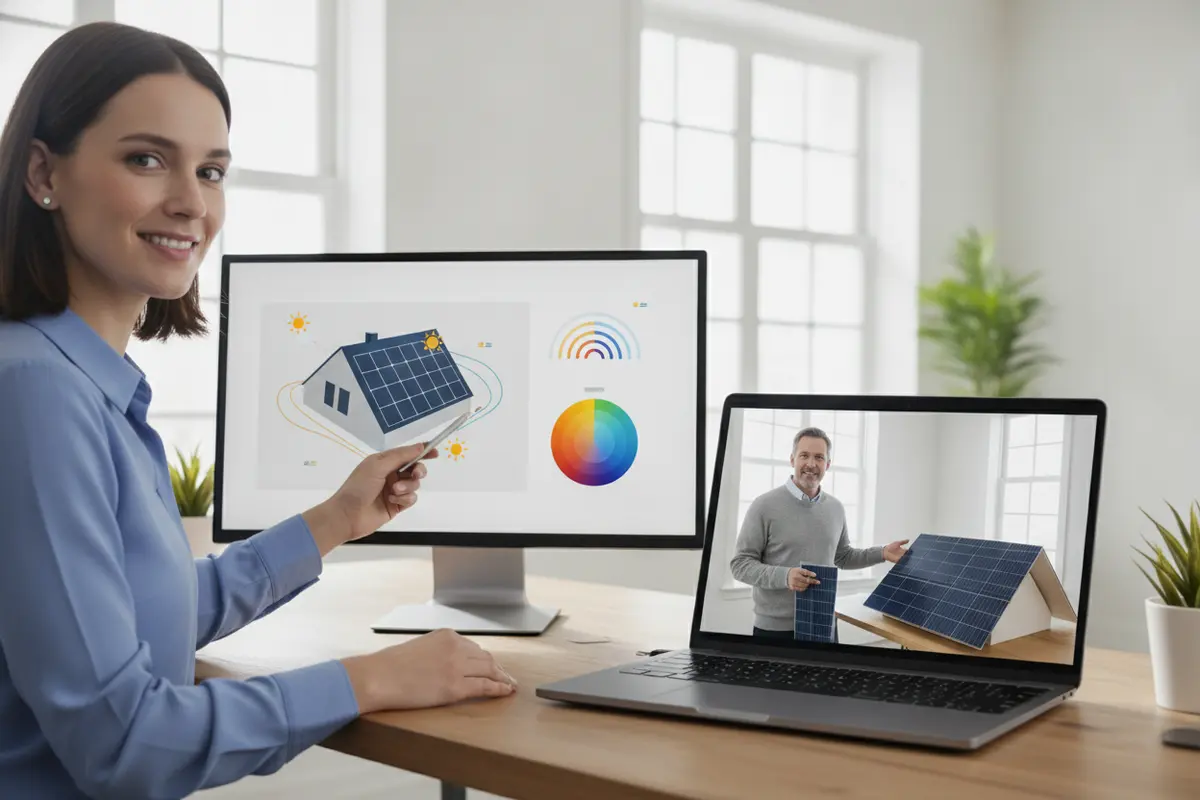
What can an online consultation not verify?
A video meeting and digital roof model cannot replace every property inspection. Remote tools can narrow down questions and support an initial design, but a professional may still need to inspect the roof, electrical equipment, access, or other site conditions before confirming the system and scope.
Ask the consultant to identify exactly what remains unconfirmed. Depending on the home, that may include:
- Roof condition, remaining service life, and whether repairs or replacement should happen before panels are installed.
- Structural or attachment details that cannot be established from photos or aerial images alone.
- Electrical panel capacity, wiring, grounding, or other conditions that require a closer technical assessment.
- Obstructions or shade patterns that differ from the imagery, including trees that have grown or new nearby construction.
- Equipment placement, conduit routes, clearances, and practical access for installation and future service.
If the roof may need attention, ask how roofing and solar work will be sequenced and who is responsible for coordinating the scopes. For a broader overview, AMECO's guide to solar and roofing projects explains why homeowners may want to consider both together. You can also review the company's roofing services to prepare questions about a roof-related scope.
There are practical reasons a remote model can miss a detail. A tree may shade a roof differently in the afternoon than the image suggests; a vent or skylight may be hard to distinguish from above; and a photograph of an electrical panel does not establish the condition of wiring behind its cover. Even access around the home can change where equipment or conduit can reasonably go. If the consultant identifies a possible issue, ask whether it could affect system size, installation scope, schedule, or cost, and whether the answer requires a site visit or another record. A clear response is more useful than a broad assurance that everything can be handled later.
What should you ask about the proposal and equipment?
A remote consultation is a good time to ask for a clear explanation rather than simply accepting a system size or a projected outcome. Request a written proposal and ask the consultant to walk through it on screen. Keep notes about the assumptions and any items that are still subject to inspection or utility confirmation.
- System layout: Which roof planes are proposed for panels, and what conditions could change that layout?
- Energy assumptions: What usage period is the design based on? Does it include the changes you described?
- Equipment: Which panels, inverter, and optional battery are proposed? Why do those choices fit the design?
- Scope: What is included in the proposal, and what work could be an added scope after site assessment?
- Utility steps: Who handles the project paperwork and coordination, and what approvals or inspections are part of the process?
- Monitoring and service: How will you see system performance, whom do you contact with a service question, and what support is available after installation?
- Payment arrangement: If you are comparing purchase, lease, or other payment options, ask for the terms in writing and compare the obligations over the full agreement. Do not infer terms from a monthly figure alone.
- Changes and cancellation: Ask what happens if the site visit, engineering review, or utility confirmation changes the design or scope.
When battery backup is important, distinguish backup capability from general bill savings. Ask which circuits or loads may be supported, how the proposed battery system operates during an outage, and whether the design requires additional equipment. AMECO's guide to home solar batteries in California and its information about battery backup solutions can help you build a list of project-specific questions.
For homeowners considering an electric vehicle, ask how charging could affect the energy-use assumptions and whether the proposed design accounts for it. AMECO also provides information about a solar-powered EV charger, which can help frame that conversation. Do not assume a future charger or battery is included unless the written scope says so.
Request a version of the proposal that makes the decision points easy to compare. If storage is optional, ask for the solar-only and solar-plus-storage configurations separately, with the added equipment and scope called out. If roof work may be required, ask whether the proposal assumes the existing roof remains in place or includes a separate roofing scope. If the company offers a prepaid lease or another payment arrangement, do not rely on a verbal summary: review the written agreement and ask how ownership, maintenance responsibilities, and transfer conditions work. The right questions depend on your priorities, so be direct about whether you value backup, future electrification, roof coordination, or a particular payment structure most.
It is also useful to distinguish equipment names from system function. Ask what role the inverter plays, how monitoring will work, and whether the proposed battery can provide the specific backup behavior you expect. If the consultant mentions an equipment feature, ask where it appears in the written specifications and what conditions apply. This avoids choosing based on a product label alone. A proposal should explain how the components work as a system and whether each stated capability is included in the actual scope.
How do you compare remote consultations side by side?
Use a simple comparison table to separate the completeness of the consultation from the headline estimate. A company can be responsive and still leave important items unresolved. Record what is documented, what is an assumption, and what the company says it will verify next.
| Review area | Useful evidence in the consultation | Follow-up to request |
|---|---|---|
| Energy use | Proposal names the bills or usage period reviewed and reflects the changes you discussed. | Ask how the design changes if usage or planned loads differ. |
| Roof fit | Preliminary layout identifies roof planes and visible obstructions. | Ask what roof and structural conditions still need an on-site check. |
| Equipment | Written proposal identifies major components and explains their role. | Ask why the selected equipment fits your goals and what alternatives exist. |
| Utility assumptions | Proposal identifies the relevant utility information and marks any unverified details. | Ask who confirms the rate plan, interconnection requirements, and next steps. |
| Scope and estimate | Included work, exclusions, and estimate assumptions are visible in writing. | Ask what could change after site assessment and how revisions are handled. |
| Support | Proposal explains monitoring, contacts, and post-installation support. | Ask whom to contact if equipment or system performance needs attention. |
For every company, mark each item as documented, discussed but not documented, or not yet verified. That makes it easier to compare like with like. If a representative gives a confident answer but does not include it in the proposal, ask for clarification in writing before you rely on it.
AMECO's guide to why solar installation estimates vary is a useful prompt to ask about differences in equipment, property conditions, and scope. For a project-specific estimate, you can use the solar cost calculator as a starting point and confirm assumptions directly with the company.
Consider adding a confidence note to each row of your own comparison: "confirmed," "reasonable preliminary estimate," or "open question." For example, a roof layout drawn from imagery may be useful but not confirmed, while your usage history may be supported by utility bills. Keep the written proposals, follow-up answers, and versions together so you can see what changed after a site review. If an estimate is revised, ask the company to identify the specific new information behind the change. A documented revision is easier to assess than two unexplained totals. This scorecard is not about picking the longest proposal; it is a way to understand risk, completeness, and fit before you make a decision.
When should a remote review lead to an on-site visit?
A remote review is most valuable when it clearly points to the next verification step. An on-site assessment may be important when roof condition is uncertain, the electrical setup needs closer review, imagery is incomplete, or the system design depends on details that cannot be confirmed from documents. The right timing depends on the home and the company's process.
Before an on-site visit, ask what the visit covers and what information the assessor needs. If a roof replacement may be part of the project, discuss how the roofing scope and solar design will be coordinated. If the company revises the proposal afterward, request a written explanation of what changed and why.
There is no need to treat the remote and in-person stages as competing alternatives. The remote consultation can help you organize your questions, understand a preliminary option, and decide whether it is worth proceeding. The site assessment then helps establish actual conditions so the project can be finalized appropriately.
A practical handoff includes more than scheduling a visit. Ask what the assessor plans to inspect, whether anyone needs access to the roof or electrical area, and whether you should have utility records or roofing documents ready. Afterward, compare the findings with the preliminary model: Did the usable roof area change? Was a panel or wiring condition identified? Did the scope or equipment recommendation shift? The company should be able to connect any revision to a specific finding. If the assessment confirms the original assumptions, that is useful too; it means the next stage rests on better-verified information rather than on a remote estimate alone.
Get An Estimate for Your Solar and Roofing Project
Frequently asked questions
Can an online consultation provide a final solar design?
It can provide a preliminary design or proposal, but the company should tell you which details remain unverified. Roof condition, structural details, electrical equipment, and other property conditions may require further assessment before the design and scope are final.
What should I send before a virtual solar appointment?
Share recent electricity bills or usage data, the utility name if known, any roof information or safe ground-level photos, and details about planned changes such as an EV. Do not climb onto the roof or remove electrical covers to collect information. Ask how the company wants documents transferred.
Can an online solar estimate tell me exactly how much I will save?
No estimate should be treated as exact without verified household use, system design, applicable utility details, equipment, and project terms. Ask the company to state its assumptions and explain which factors could change the estimate.
Do I need a battery with a solar system?
That depends on your priorities, utility arrangement, and whether backup during outages is important to you. Ask for a separate explanation of the solar-only and solar-plus-battery options, including what backup loads the design could support and what each proposal includes.
How can I tell whether a remote solar company is a good fit?
Look for clear written assumptions, project-specific answers, a defined path to site verification, transparent scope, and understandable information about equipment and support. Check reviews as one part of your research, then compare the actual proposal and follow-up process.
Ready to discuss your home's solar options?
A useful consultation should leave you with a better understanding of what a system might look like, what remains to be checked, and which questions matter for your home. AMECO Solar & Roofing serves California homeowners with solar and roofing solutions and can discuss how your goals, roof, and energy use shape the next steps.
Compare written proposals carefully, and make sure each company explains what it has verified and what still depends on a closer property assessment.


.svg)
