


3-Phase AC Coupled Battery Storage Guide
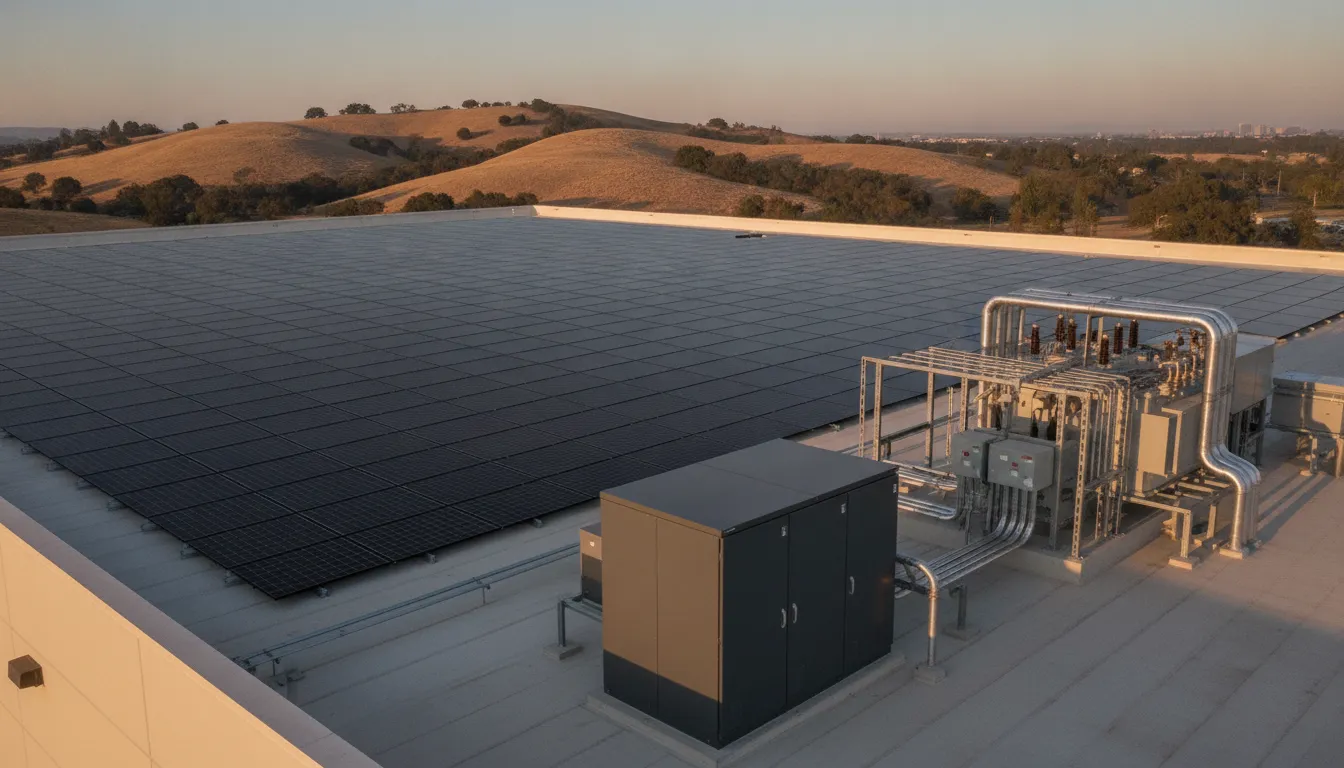
Commercial storage decisions begin with the electrical service, not the battery nameplate. A facility with three-phase loads, existing solar, and defined backup priorities needs an architecture that accounts for how power moves among the PV inverter, AC bus, battery inverter, utility meter, and critical equipment.
Get an estimate for your commercial project
3-phase ac coupled battery storage adds battery capacity on the AC side of a solar installation. It can be a potential fit for some operating commercial systems, but it requires careful review of phase configuration, inverter compatibility, controls, metering, and backup objectives.
That review should distinguish energy shifting from outage support, and retrofit convenience from the flexibility of a new-build design. Commercial systems are custom-sized for business power requirements, so the right path depends on the facility's loads, equipment, utility requirements, and engineered operating plan. First, it helps to establish what AC coupling means in a three-phase commercial system and where its architecture begins and ends.
What Is 3-Phase AC-Coupled Battery Storage?
3-phase AC-coupled battery storage is a commercial energy-storage architecture in which a battery connects to a building's alternating-current electrical system through its own battery inverter. The system is designed around three-phase service, where electrical power is delivered through three active supplies rather than a single phase. That distinction matters when a facility operates equipment that depends on coordinated three-phase power.
In an AC-coupled arrangement, solar panels first produce direct-current electricity. A solar inverter converts that DC electricity into AC electricity for the facility and grid, as explained by the U.S. Department of Energy. A separate battery inverter then converts AC to DC when charging the battery and converts stored DC back to AC when the building needs power. This approach can be useful when adding storage to an existing solar installation, but compatibility must be confirmed rather than assumed.
Three-phase service is not simply a larger battery connection. The design must account for how power moves across phases, which loads are connected to each phase, and whether the controls can maintain the required electrical relationships. Large HVAC equipment, machinery, pumps, and some EV charging equipment may have operating requirements that differ from ordinary single-phase loads.
It is also important to separate power from energy. Power, measured in kilowatts, describes how much electricity the system can deliver at a moment. Energy, measured in kilowatt-hours, describes how long the battery can sustain a load. A system with adequate stored energy may still be unable to start or operate a high-power load if its inverter and distribution equipment cannot deliver the required power.
NREL's commercial battery-storage model treats the battery pack, inverter, and installation balance-of-system equipment as parts of the complete system. Review the broader commercial solar system components before comparing equipment. Existing switchgear, metering, controls, critical loads, utility requirements, and outage objectives all belong in the engineering review.
How Does an AC-Coupled System Work With Existing 3-Phase Solar?
Short answer: Existing solar panels continue sending DC electricity to their PV inverter, which converts it to AC. That AC reaches the site's three-phase bus, where a separate battery inverter can direct surplus power into the battery and later return stored power to the loads. A properly engineered system also uses metering and islanding controls to coordinate the battery, building, and utility connection.
In normal operation, the existing PV inverter produces AC power when solar generation is available. The battery inverter monitors conditions at the electrical service, typically using utility and load measurements from approved metering equipment such as current transformers. If generation exceeds the building's immediate demand, the controls can command the battery inverter to charge, subject to the equipment design and operating limits. When demand rises or solar production falls, the battery inverter can discharge onto the AC bus to serve selected loads or the broader facility, depending on the design.
This arrangement adds storage on the AC side rather than requiring the existing PV inverter to be replaced. It can be useful when a commercial site already has operating solar equipment, but the existing inverter, switchgear, service configuration, controls, and utility requirements still need review. The system boundary includes more than the battery enclosure. NREL's commercial battery storage model accounts for the battery pack, inverter, and balance-of-system components needed for installation. See the related overview of commercial solar system components for broader context.
During an outage, an islanding controller must separate the facility's supported circuits from the utility so the system does not backfeed the grid. The battery inverter then establishes the local electrical reference and coordinates with the existing PV inverter. The Department of Energy explains that solar-plus-battery systems can operate without grid support during outages when they are designed for that function. Whether this works for a particular three-phase facility depends on phase coverage, critical loads, inverter coordination, and engineered protection settings. Battery energy storage can also help stabilize power flow during renewable-generation fluctuations and other disruptions, as described by the Department of Energy and EPA.
Should a Commercial Project Use a Retrofit or New-Build Design?
A retrofit starts with equipment that already exists. A new-build design starts with a blanker electrical and structural plan. Neither path is automatically better for 3-phase ac coupled battery storage. The decision depends on the condition and compatibility of the existing PV inverter, the service configuration. The loads that matter during an outage, and the controls required for the intended operating modes.
| Consideration | Retrofit | New build |
|---|---|---|
| Equipment | Review existing inverter, switchgear, metering, and available connection points. | Coordinate PV, battery inverter, switchgear, and service capacity from the outset. |
| Controls | Map the battery controls to existing protection, monitoring, and operating logic. | Plan metering, energy management, islanding, and commissioning requirements together. |
| Conversion path | AC coupling may add storage without replacing an operating PV array, if the equipment can be integrated. | Compare AC and DC coupling before selecting the final inverter arrangement. |
| Review needs | Expect a detailed audit of installed conditions, drawings, loads, and utility requirements. | Expect coordinated design, permitting, installation, and activation. |
Product literature can illustrate the range of possible approaches, but it cannot approve a particular commercial site. For example, Solis describes a three-phase storage inverter line that supports AC and DC coupling for retrofits and expansions. A Victron community discussion also describes a proposed AC-coupled addition to installed AC-coupled solar panels. These are examples of design concepts, not proof that a specific inverter, battery, or control scheme will work with every facility.
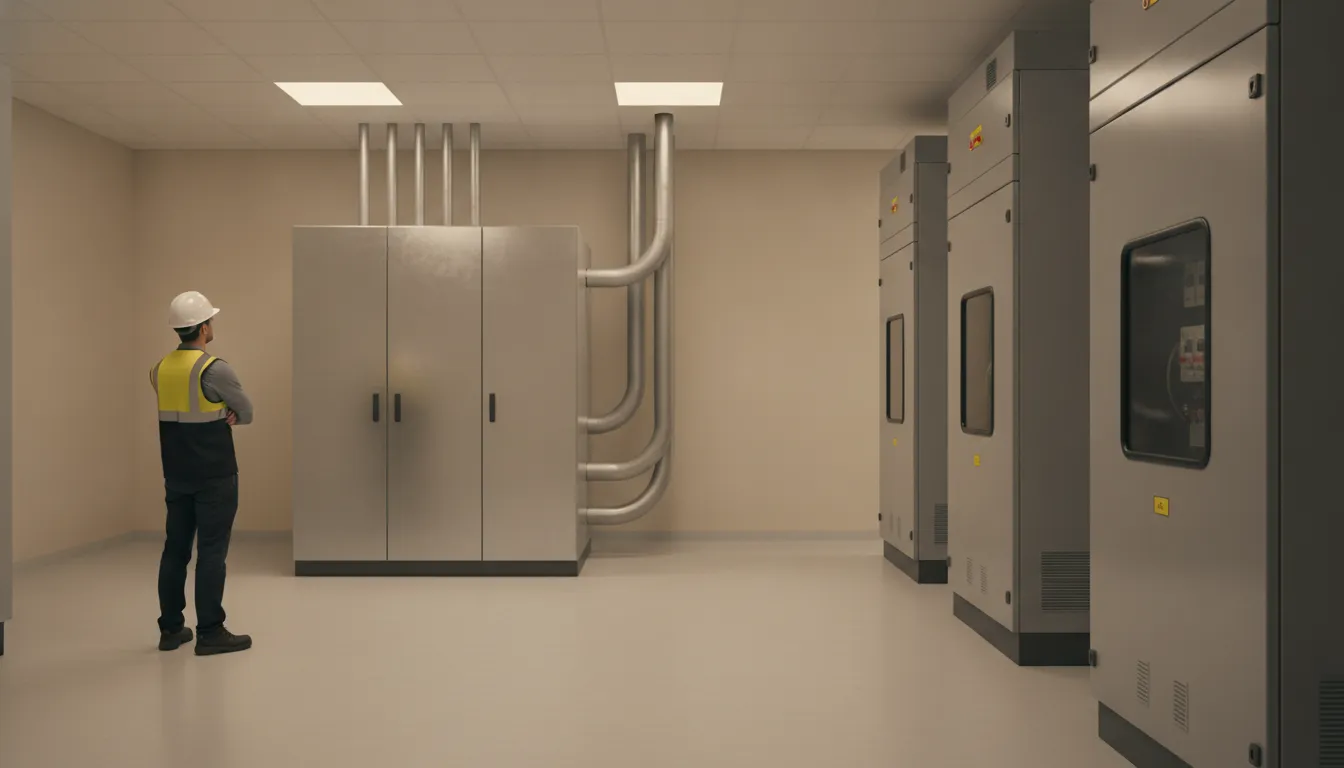
In a retrofit, the conversion path may preserve useful equipment, but it can also expose constraints that were not present in the original solar design. A new build may provide more flexibility, while requiring the project team to coordinate more decisions before construction. AMECO describes commercial installations as custom-sized for business power requirements and includes custom system design, permitting, installation, and activation in its commercial project services. Review the broader commercial solar solutions and commercial solar installation process before choosing a path.
How Should Three-Phase Loads and Backup Goals Shape the Design?
Backup planning starts with the loads that must remain operational, not with a battery nameplate. A commercial assessment should map critical circuits, their phase connections, starting current, operating schedules, and the consequences of an interruption. That list may include refrigeration, production controls, network equipment, life-safety systems, selected lighting, or charging infrastructure. Noncritical loads can remain outside the backed-up panel so available power is reserved for the functions the business actually needs.
Map phase requirements before selecting equipment
Three-phase service means that one, two, or three active supplies arrive from the utility, and the equipment connected to those supplies does not necessarily behave the same way. A single-phase battery cannot power a three-phase appliance. Large air-conditioning equipment, bakery machinery, industrial roller doors, and some EV chargers are examples of loads that may use all three supplies, according to SolarQuotes' three-phase battery guidance.
That makes phase balance part of the design rather than a commissioning detail. A system may have enough total stored energy yet still lack the instantaneous power or phase arrangement needed to start a motor. Run HVAC equipment, or support an EV charger. Motor inrush, compressor cycling, and simultaneous starts should be reviewed against the inverter's capabilities and the site's operating controls. The design may need load sequencing, selective backup, or a different distribution arrangement.
For a project-specific review of those constraints, get an estimate from AMECO based on the facility's equipment and operating priorities.
Design the islanding path around the real outage objective
Outage operation also depends on synchronization and controls. A three-phase solar inverter may need a synchronous three-phase supply before it can restart during an extended outage. The backup architecture therefore has to define how the battery inverter, solar inverter, switchgear, metering, and energy-management controls interact when the grid is unavailable. Advanced inverters can support operation without the grid when the solar-plus-battery system is designed for that function, but that capability is not automatic. See AMECO's guide to integrating solar panels with battery storage for broader system context.
Finally, backup scope changes the architecture, equipment review, and commissioning plan. A facility seeking short-duration support for selected controls has different requirements from one protecting three-phase production equipment or coordinating workplace EV charging. The load map, phase behavior, islanding sequence, and utility requirements should be validated by qualified designers before equipment is specified.
Which Controls, Metering, and Safety Checks Matter?
A commercial battery system is only as useful as the measurements and control logic behind it. The design team should begin with utility meter data, interval load information, and a clear map of the existing electrical equipment. Current transformers (CTs) can measure power flowing through selected conductors. Allowing the energy management system (EMS) to compare site demand, solar production, battery state, and grid import or export. The exact sensor locations and configuration must be determined from the site's one-line diagram and equipment.
Those inputs support operating priorities. A facility may want to absorb excess solar, limit demand during selected periods, preserve a reserve for outages, or charge and discharge according to utility rules. The EMS should define which objective takes precedence and how the system responds when conditions change. The U.S. Environmental Protection Agency notes that battery energy storage systems can help stabilize power flow during renewable-generation fluctuations and other disruptions. But that value depends on properly designed controls and integration. EPA's battery energy storage guidance provides useful context.
Commissioning is part of the design
Before operation, qualified professionals should verify metering accuracy, phase relationships, communications, charge and discharge limits, reserve settings, islanding behavior, and the coordination of protective devices. Accessible disconnects, labeled equipment, emergency procedures, and appropriate clearances also need review. Thermal management, ventilation, detection, and fire-response considerations should be evaluated for the selected equipment and installation environment, rather than assumed from a generic diagram.
Safety review should continue beyond permitting. The EPA specifically recommends consulting battery energy storage safety experts when considering and designing installations. For a commercial project, an experienced team can coordinate the battery, switchgear, solar equipment, building loads, and utility requirements through a documented solar system design and installation process. That review is especially important for 3-phase AC-coupled battery storage, where incorrect assumptions about measurement, phase coordination, or backup controls can undermine the intended operating strategy.
What Tradeoffs Matter Beyond the Nameplate?
A battery's nameplate capacity describes only part of its usefulness. A commercial system must move electricity through several conversion stages, including the battery pack, inverter, and installation balance-of-system components. NREL includes these elements in its commercial battery storage model, which is a useful reminder that the equipment list and site design matter alongside the battery itself: NREL's commercial BESS model.
In an AC-coupled arrangement, solar power and battery power may each pass through an inverter as they move between DC storage. The AC bus, building loads, and the grid. Each conversion introduces losses, so evaluating a system by battery capacity alone can obscure how much usable energy reaches the intended loads. The relevant question is not simply how much energy is stored, but how the complete system performs under the site's operating conditions.
Power and energy answer different questions
Energy, measured in kilowatt-hours, relates to how long the battery may support a load. Power, measured in kilowatts, relates to how much load it can serve at one time. A facility may need sustained energy for selected loads, high power for equipment startup, or both. Mapping those requirements helps prevent a large energy reserve from being paired with an inverter that cannot support the required instantaneous demand.
Duration, expansion, and operating priorities
Battery duration depends on the selected loads and their changing demand. A design intended for short interruptions may differ from one intended to shift solar energy, manage demand, or support longer outage periods. Expansion also requires planning. Additional battery capacity can affect inverter limits, controls, switchgear, space, ventilation, and utility review, so future growth should be considered before equipment is installed.
Lifecycle economics should remain conditional on the project. Commercial systems are custom-sized for business power requirements, and the value of storage depends on load patterns. Tariffs, operating priorities, equipment condition, and the cost of design, permitting, installation, and activation. A site-specific review of commercial solar solutions can compare those factors without treating one topology or operating strategy as universally best.
How Can a California Business Evaluate a Project?
A useful evaluation turns a storage concept into an engineered commercial project. Whether the site is a manufacturing, retail, office, or warehouse facility, the design should connect operating priorities with electrical conditions rather than begin with a battery nameplate. AMECO describes commercial work as custom-sized for business power requirements and includes design, permitting, installation, and activation in the project process. Review the broader commercial solar installation process alongside these storage-specific questions.
- Document the load profile. Gather interval utility data, demand patterns, operating schedules, seasonal changes, and critical versus deferrable loads. Identify starting currents and equipment that must remain available during an outage.
- Audit the equipment and roof. Confirm the service configuration, phase count, existing PV inverter, switchgear, meters, transformer constraints, and available interconnection points. Review roof condition and structural considerations before equipment locations are selected.
- Define backup objectives. Decide whether the priority is selected emergency loads, continuity for a defined operation, or broader site resilience. Those goals affect usable energy, discharge power, isolation equipment, and whether the architecture can support the intended three-phase loads.
- Design controls and interconnection. Coordinate battery inverters, current transformers or other metering, the energy management system, protection, and islanding controls. The design must account for utility requirements and how solar generation and storage behave together when grid power is unavailable.
- Complete permitting and utility review. Prepare electrical plans, equipment documentation, safety details, and interconnection materials for the authorities and utility involved. Requirements depend on the site and proposed equipment, so they should be confirmed project by project.
- Install and commission the system. Qualified installers should follow the approved plans, verify wiring and protection, configure controls, and test operating modes. Commissioning should include normal operation, charging and discharge behavior, shutdowns, and transitions where backup is part of the scope.
- Verify performance against the brief. Compare measured operation with the approved load and backup objectives. Record settings, test results, monitoring access, and any remaining limitations so facilities staff know what the system can and cannot support. See AMECO's solar system design and installation services for additional project context.
For a site-specific review of existing equipment, commercial loads, roof conditions, and backup objectives, get an estimate from AMECO.
Frequently Asked Questions
How does an AC-coupled battery inverter work with existing 3-phase solar?
The existing solar inverter continues converting panel DC into AC, while a separate battery inverter connects on the facility's AC bus. Controls and metering coordinate charging, discharging, grid interaction, and outage operation. During an outage, the equipment must be designed to form and maintain the required electrical reference, rather than assuming any battery inverter will keep the solar array operating. The U.S. Department of Energy explains that outage operation depends on advanced inverters and system design: energy.gov.
Do you need a 3-phase battery to back up a 3-phase system?
Not always, because the answer depends on the loads and the backup objective. A single-phase battery cannot power a three-phase appliance, such as some large air-conditioning equipment or EV chargers. If the goal is whole-facility backup, three-phase loads, phase synchronization, switchgear, and critical-load selection require specific engineering. A narrower backup plan may serve selected single-phase circuits instead. SolarQuotes describes the phase and synchronization constraints in more detail: solarquotes.com.au.
Is 3-phase AC-coupled battery storage a good retrofit for existing solar?
It can be a practical retrofit when the existing inverter, service configuration, switchgear, available space, controls, and utility requirements are compatible. AC coupling can avoid replacing a functioning PV inverter, but it adds another conversion stage and requires coordinated protection and commissioning. Product literature and field discussions show that AC-coupled additions are possible in some three-phase configurations, not that every existing system qualifies. An equipment audit should come before selecting a battery or inverter.
Is AC-coupled or DC-coupled storage more efficient?
Neither topology is universally more efficient for every commercial project. AC coupling may involve additional DC-to-AC and AC-to-DC conversion steps when solar energy charges the battery, while DC coupling can reduce some conversion steps but may require compatible hybrid equipment and more extensive design changes. Compare usable energy, power capacity, backup behavior, expansion plans, controls, and operating priorities rather than relying on a topology label or an assumed efficiency percentage.
Ready to Evaluate Your Commercial Storage Project?
A project-specific review can clarify how 3-phase AC-coupled battery storage fits your existing equipment, three-phase loads, roof, controls, interconnection requirements, and backup objectives. AMECO can assess those factors together so the design reflects your facility rather than a generic system. Request a commercial solar and battery storage evaluation to get started with a focused review of your project.


.svg)
