


AC Coupled Battery Storage Cost: What California Homeowners Should Budget For

Understanding AC coupled battery storage cost starts with a key distinction: adding a battery to an existing solar system is not the same project as designing solar and storage together from the start. An AC-coupled battery can often be added without replacing the solar inverter, but the final scope depends on your equipment, electrical layout, backup goals, and property conditions. There is no reliable one-price-fits-all estimate.
Request a property-specific solar and battery assessment
What does AC-coupled battery storage mean?
Solar panels produce direct current (DC) electricity. Most homes use alternating current (AC), so an inverter converts the solar electricity into a form that household circuits can use. In an AC-coupled design, the battery has its own inverter and connects to the home's AC electrical system. This is one reason AC coupling is commonly considered for an existing solar installation: the existing solar inverter may remain in place, subject to compatibility and system design.
In a DC-coupled design, solar energy and battery storage share a path on the DC side before electricity is converted for home use. Neither approach is automatically the better choice for every home. The right configuration depends on whether the system is new or existing, the current inverter, the battery equipment, the backup design, and the amount of electrical work required. AMECO's overview of AC-coupled solar batteries explains the configuration tradeoffs in more detail.
Cost comparisons need context. A 2017 National Renewable Energy Laboratory benchmark found a lower modeled price for a DC-coupled system than an AC-coupled system for a new PV-plus-storage installation. That historical benchmark is not a current quote and does not establish that DC coupling is less expensive for a retrofit. It compares a particular modeled new-installation scope, not the equipment and labor at your home. See the NREL residential solar-plus-storage cost benchmark for that limited comparison. Rocky Mountain Institute also discusses cost drivers for residential solar-plus-storage systems in its solar-plus-storage cost analysis.
Which factors shape the cost of an AC-coupled retrofit?
The battery hardware is only one part of the project. An estimate may also include an inverter or other power-conversion equipment, controls, electrical labor, protective equipment, permitting, inspection, and work to prepare the location. Some homes need only a straightforward tie-in; others require a more involved redesign. A complete proposal should show which items are included and which assumptions could change after a site review.
It helps to think of the estimate as several related scopes rather than a single battery price: storage equipment, the path that connects it to the existing solar and home circuits, backup controls, installation labor, and approvals. A proposal may group some of these together, but you should still be able to understand the function of each component. If two bids use different assumptions—for example, one backs up a few circuits and another proposes broader coverage—their totals do not describe the same project.
Battery capacity and the outcome you want
Battery capacity affects equipment selection, but choosing the largest available unit is not a reliable way to plan. Start by deciding what you expect the system to do. Do you want to cover a few essential circuits during an outage, or run more of the home? Do you want to shift some solar energy into evening use, or prioritize backup? Those goals affect usable energy capacity, power output, controls, and the number of batteries or related components needed.
Energy capacity and power are different. Capacity describes how much energy a battery can store. Power describes how much it can deliver at one time. A proposal should identify both and explain which loads the design can support. A larger capacity alone does not ensure that several high-demand appliances can run together, nor does it guarantee backup for every circuit.
List the loads that matter to you before requesting a design. Note whether you want to support refrigeration, lighting, internet equipment, medical devices, a well pump, or air conditioning. These examples have different power demands and operating patterns. The design team can use your priorities to discuss battery capacity, backed-up circuits, and any practical limits. For more on the purpose and configuration of storage, see AMECO's home battery backup overview.
A simple planning exercise can clarify the tradeoff. Make one list of loads you consider essential for a short interruption, then a second list of items you would like to use if the outage lasts longer. Include whether each appliance runs continuously, cycles on and off, or draws substantial power when it starts. This is not a substitute for an electrical load calculation, but it helps you explain priorities. Ask the installer to show which list the proposed design serves and what you would need to turn off when several loads are operating at once.
Existing solar equipment and system compatibility
An existing solar system is not automatically ready for a battery. The installer needs to identify the solar inverter make and model, system age, panel configuration, monitoring and communications equipment, and any previous upgrades. The proposed battery must be compatible with the electrical design and its controls. Product compatibility can depend on specific models and configuration details, so a general statement that a battery is “AC-coupled” is not enough to confirm that it will work with a particular system.
Some projects can retain the existing solar inverter; others may call for additional equipment or changes to the system design. The estimate should spell out what stays, what is added, and whether any existing components need to be replaced. If you do not have the original solar plans, utility paperwork, or equipment list, provide clear photos of equipment labels if available. An installer can tell you what further information is needed.
AMECO's guides to what a solar inverter does and how a grid-tied solar system works can help you identify the equipment and system type to discuss.
When gathering system details, note whether the equipment has been replaced or serviced since the original installation. A clear photo of the label is more useful than a guess based on appearance, because product families can include different models. Share any monitoring screenshots or system plans you still have, but avoid removing covers or handling wiring to find a label. If a key detail cannot be seen safely, flag it for the site assessment instead.
Electrical work, controls, and backup circuits
Electrical scope can make two apparently similar battery proposals differ. The layout of the main service panel, available breaker space, the location of the battery, the distance between equipment, and the desired backup arrangement all matter. A backup system may need a transfer device, gateway, critical-loads panel, or other controls, depending on the equipment and design. These are not interchangeable line items; ask the contractor to explain the specific function of each included component.
If only selected circuits will receive backup, the proposal should state which circuits and describe any load-management limits. Whole-home backup is a different design conversation. It may involve the home's peak demand, large appliances, electrical service, and the battery system's power capability. During a grid outage, a standard grid-tied solar system may shut down for safety unless it has suitable equipment and controls to operate in backup mode. Read AMECO's explanation of what happens to solar power during a blackout before assuming that existing panels will keep powering the home.
Ask for a circuit-by-circuit explanation rather than relying on phrases such as “backup ready” or “whole home” alone. Confirm whether the design supports the circuits you care about simultaneously, whether any loads must be managed, and what happens when the battery reaches its reserve setting. If you want solar to recharge storage during a prolonged outage, ask how the system is designed to operate in that condition and what factors can limit charging. These questions expose design differences before you compare totals.
Permits, inspection, and utility requirements
Permitting and inspection are part of the project, not optional extras. Requirements and review processes can vary by jurisdiction and project scope. A proposal should say who prepares and submits the plans, what permit and inspection work is included, and whether utility coordination is part of the service. Ask how changes requested during plan review would be handled and whether they could affect the final project scope.
Utility rules also matter to system configuration and operation. Do not assume a retrofit can simply be connected in the same way as the original solar installation. The project team should review the existing system documents and the applicable interconnection requirements. The timing and fees, if any, depend on the project and local process; confirm them for your address rather than relying on a generic estimate.
Before signing, make clear who is responsible for each approval step and what you may need to provide. Ask whether the proposal includes plans, application submissions, inspection coordination, and any required revisions, or whether some tasks are excluded. If an allowance or assumption appears in the bid, ask what would cause it to change. That way, a later adjustment has a documented reason rather than arriving as an unexplained addition.
Site conditions and installation access
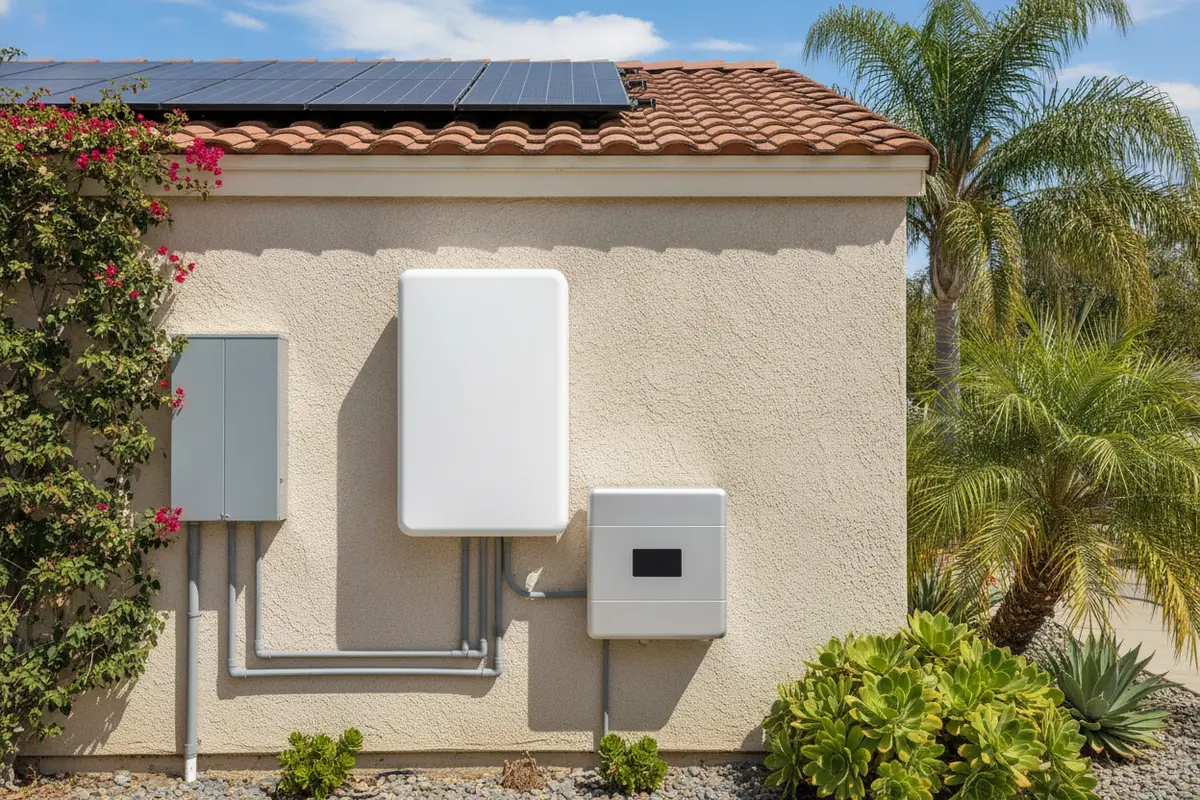
The battery needs a suitable location with appropriate clearances and conditions for the selected equipment. The route for conduit, distance to electrical equipment, wall or mounting conditions, exposure, and access for installation can affect labor and materials. A narrow side yard, finished surfaces that need protection, or equipment placed far from the service panel may require additional planning. A remote review can help identify questions, but photos alone may not verify every condition.
Think through the proposed location from both the installation and daily-use perspective. Is the area accessible for service? Would equipment or conduit interfere with a walkway, gate, or planned improvement? Are there site features that could affect the mounting surface or route to the panel? Share those constraints early, including any planned landscaping or construction, so the design does not assume an installation path that will later be blocked.
Roof condition is usually not the central cost driver for an AC-coupled battery added to an existing solar array, but it can matter if the solar system itself needs changes or if roof work is already planned. If the roof may need replacement, discuss sequencing before authorizing separate projects. Solar and roofing coordination can reduce the risk of overlooking removal, reinstall, or scheduling requirements. AMECO provides both solar services and roofing services, and its guide to planning solar and roofing together covers that coordination.
How do incentives affect the project budget?
Available incentives can change over time and may depend on the equipment, project structure, location, utility, and homeowner eligibility. Do not subtract a general incentive amount from a quote unless the program is current and the project has been checked against its rules. Ask the installer to separate the gross project price from any incentive assumptions and to identify who confirms eligibility.
Also distinguish an incentive from a payment arrangement. If a proposal includes a lease or another financing structure, review the full written terms, including payment schedule, ownership, maintenance responsibilities, and what happens if you sell the home. Do not compare a financed or leased figure directly with a cash price without understanding what each figure includes. Incentive treatment can differ by ownership and project structure, so verify details with the relevant program administrator or a qualified tax professional where appropriate.
For a careful comparison, record incentives in a separate line from the installed project amount. Write down the program name, the date the estimate was prepared, the eligibility conditions still to be checked, and whether the benefit is applied upfront or claimed later. Do not treat an estimated incentive as guaranteed cash available at installation. If the quote uses a net figure, request the gross amount as well so you can compare proposals on the same basis and understand the amount due under the stated contract terms.
How can you compare AC-coupled battery proposals?
Compare the scope, not just the headline price. Ask each installer to specify the equipment, backup capability, electrical work, permits, and exclusions. The table below is a checklist for reviewing proposals; it does not assign universal prices because costs depend on the home and selected design.
| Proposal item | What to check | Why it can change the scope |
|---|---|---|
| Battery equipment | Model, number of units, usable capacity, power rating, and included controls | Capacity and output should match the loads and backup goals, not an assumed one-size-fits-all design. |
| Compatibility | Existing solar inverter and system details; components retained or replaced | Existing equipment may affect the connection method and required hardware. |
| Electrical work | Panel work, gateway or transfer equipment, backed-up circuits, conduit, and labor | Panel layout, equipment distance, and backup coverage can change installation effort. |
| Permits and utility process | Plan preparation, application, inspection, and coordination responsibilities | Requirements vary by location and project; responsibilities should be explicit. |
| Site and access | Battery location, mounting, clearances, access, and any site preparation | Property layout and installation conditions can add work or constrain placement. |
| Incentive assumptions | Program name, eligibility basis, timing, and whether the price assumes approval | Programs and eligibility are not universal; separate confirmed benefits from estimates. |
| Warranty and support | Equipment coverage, workmanship terms, monitoring, and service process | Coverage and responsibilities depend on the specific contract and equipment. |
For each proposal, ask the installer to answer these questions in writing:
- Which circuits will operate during a grid outage, and what limits apply?
- Will the current solar inverter remain? If not, what is the reason for replacing it?
- Does the design include battery controls, required electrical equipment, permit work, and inspection?
- What site details still need an in-person check before the price and scope are final?
- Are incentive assumptions included in the quoted total, and who is responsible for verifying eligibility?
- What monitoring and support are included after installation?
Use the answers to make a side-by-side scope sheet. For each bid, note the battery model and capacity, power rating, backed-up circuits, equipment to be retained, permit responsibilities, and exclusions. Mark any item as “not stated” rather than assuming it is included. Then send the same follow-up questions to each provider. If a detail changes the design, request an updated written proposal instead of comparing an old total with a revised verbal description.
Pay attention to exclusions. A proposal that omits electrical upgrades or permitting may appear less expensive while leaving costs unresolved. If a contractor cannot yet confirm an item, ask for the condition that would trigger a change and how that change would be documented. For more background on price differences among solar projects, see AMECO's explainer on why solar installation estimates vary.
A remote review can be a useful starting point when you have the solar equipment details, utility bill, and photos of the electrical panel and proposed battery location. It cannot always verify wall conditions, clearances, wiring routes, or code requirements. Your final scope may require an on-site assessment and review of system records.
If you are ready to compare a design against your actual home and solar equipment, request an estimate and discuss your battery goals with AMECO. AMECO has served California since 1974 and coordinates solar and roofing services under one company.
What should you prepare before requesting an estimate?
A few details can make the first conversation more useful. Gather what you have; you do not need to know the technical answer to every question.
- Your recent electricity bills and utility name, if readily available.
- The solar installation year, system size, inverter make and model, and any available system plans.
- Photos of the inverter, main electrical panel, meter area, and potential battery location.
- A short list of appliances or circuits you want to operate during an outage.
- Any planned roof work, electrical upgrades, or home additions that could affect the design.
- Your preferred project structure, such as a purchase or a prepaid lease, so the proposal can explain the applicable terms.
For useful photos, take one image that shows the full panel or inverter location and closer views of equipment labels if they are accessible. Keep the surrounding area in the frame so the reviewer can understand access and spacing. Do not open electrical equipment or move installed components to get a better picture. If you have a utility bill, share it through the process the installer specifies and remove unrelated personal information if appropriate.
These details help an installer identify likely compatibility questions and the right next steps. They do not replace a site-specific design, permit review, or written proposal. If you are still comparing battery options, AMECO's home solar battery guide offers additional context.
Request a project-specific battery estimate
Frequently asked questions
Is an AC-coupled battery always cheaper to add to existing solar?
No. AC coupling can be a practical retrofit option, but the total depends on the existing inverter, battery compatibility, controls, electrical work, site conditions, and backup scope. A cost comparison should use the same assumptions for capacity, backed-up loads, permitting, and included equipment.
Can an AC-coupled battery work with any existing solar system?
No. Compatibility depends on the specific solar inverter, battery equipment, controls, and system configuration. An installer should review model numbers and system records before confirming a design. A general description of a battery as AC-coupled is not proof that it works with every existing system.
Will my solar panels charge the battery during an outage?
Not necessarily. The system needs equipment and controls designed for backup operation, and the design must account for the battery, solar system, and backed-up loads. Ask the installer to explain how the system behaves during an outage and what operating limits apply.
Do incentives make the battery cost predictable?
No. Incentives can depend on current program rules, location, equipment, ownership, and individual eligibility. Treat an incentive as an assumption until the applicable program and your project have been verified. Request separate figures for the project price and any estimated incentive.
How can you budget with confidence?
The most useful AC-coupled battery budget is a property-specific proposal that makes the system design and assumptions visible. Confirm battery capacity and output, what solar equipment stays in place, which circuits receive backup, what electrical and permit work is included, and which incentive assumptions remain unverified. That gives you a fair basis for comparing proposals without treating a generic price as a promise.
To discuss your existing system, backup priorities, and site conditions, request a project-specific evaluation from AMECO Solar & Roofing. A clear review can help you understand the scope before you decide how to proceed.


