


How to Add a Battery to an Existing Solar System
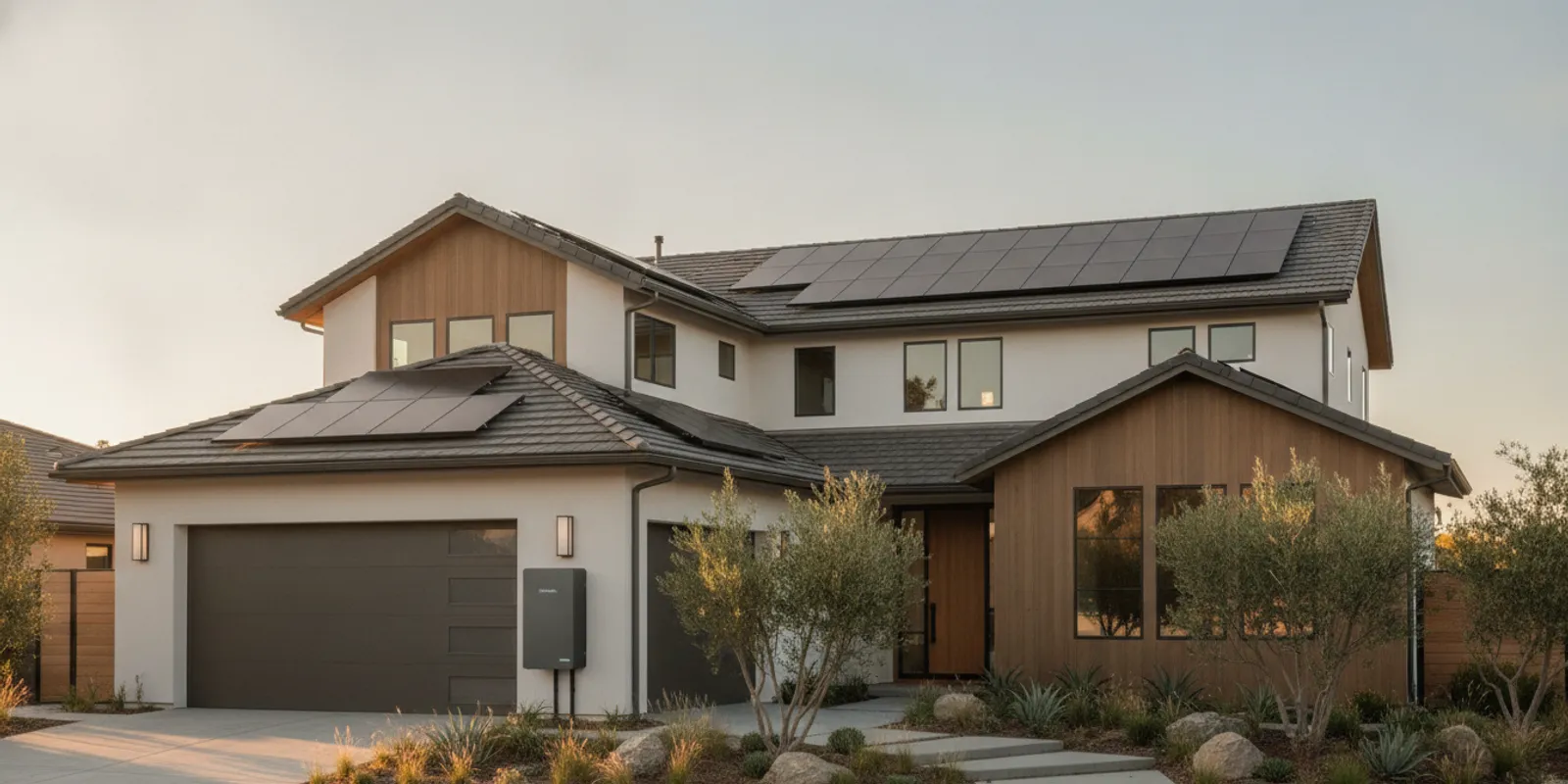
If you are considering adding a battery to an existing solar system, start with the system you already have—not with a battery model or a promised backup duration. The panels, inverter, electrical service, utility rules, and the circuits you want to keep running all affect what a retrofit can do. A qualified review can show whether your current setup can be adapted, which components may need to change, and whether the result fits your goals.
Request a solar and battery assessment
What does adding a battery to an existing solar system involve?
A solar battery stores electricity for later use. Depending on its configuration and controls, it may store energy produced by your panels, charge from the grid, or do both. It can then supply selected household loads when solar production is low or, if the system is designed and configured for it, during an outage.
Those functions are not automatic just because a battery is connected to solar equipment. The system must be able to manage power safely, isolate from the grid when required, and route energy to the circuits intended for backup. An existing solar array may remain in place, but the inverter, wiring, protection equipment, or electrical layout might need additions or changes.
There are two broad paths:
- AC-coupled retrofit: A battery system connects on the AC side of the existing solar inverter. This can be useful when the solar equipment is already installed and may allow the existing inverter to remain, subject to compatibility and the backup design.
- DC-coupled or hybrid-inverter design: Solar and battery power connect through compatible equipment that manages DC power. Depending on the current installation, this can involve replacing or reconfiguring the existing inverter rather than simply adding a battery.
These are design approaches, not guarantees of compatibility. The exact hardware, backup operation, and permitted configuration depend on the equipment already on site and the proposed battery. For a general overview of storage paired with solar, see the U.S. Department of Energy's solar energy and storage basics. AMECO also describes its battery backup solutions for homeowners exploring storage.
Can your current solar equipment work with a battery?
Compatibility is a system-level question. A panel model or battery name alone cannot answer it. An assessor needs to identify how the solar array is wired, what inverter converts its output, how the home connects to the utility, and how the proposed battery will control power. Installation records, equipment labels, and monitoring details can help establish what is already there.
Identify the inverter and system architecture
The inverter is central to a retrofit because it converts and controls energy moving between the panels, home, battery, and grid. Some solar systems use a central string inverter; others use microinverters at the panels or power optimizers with an inverter. Some installations were designed with storage in mind, while others were not. The nameplate, model number, and system diagram can help a professional determine which configurations are feasible.
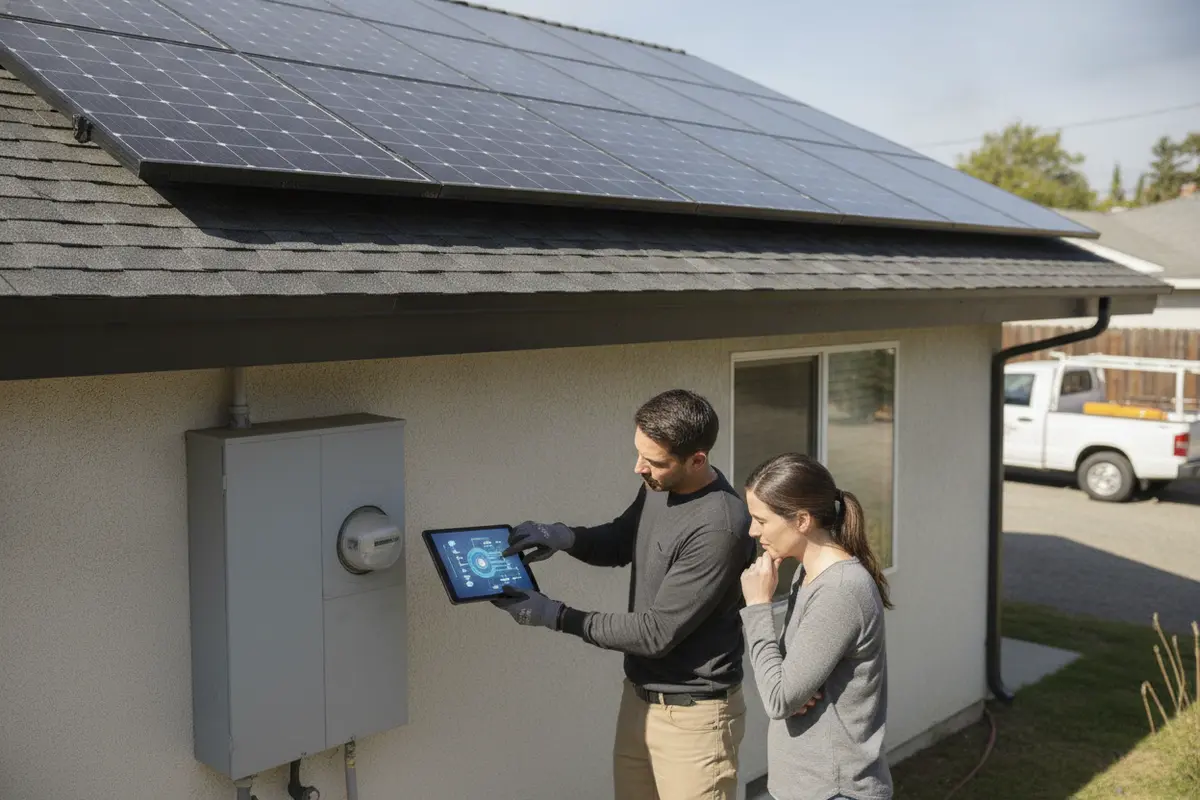
For an AC-coupled design, the battery typically uses its own power conversion equipment alongside the existing solar inverter. That may avoid replacing the solar inverter, but it does not automatically make the installation compatible or provide backup. A DC-coupled design may require a compatible hybrid inverter or changes to the equipment that currently manages the array. Ask whether the proposal keeps the existing inverter, adds equipment, or replaces any components—and why.
If you are unsure what type of system you own, AMECO's guide to what a solar inverter does and its explanation of a photovoltaic system offer useful starting points. Do not open electrical enclosures or remove covers to identify equipment. A licensed professional can inspect labels and wiring safely.
Check the age, condition, and documentation
Existing equipment condition can shape the design. If an inverter is nearing the end of its expected service life, it may be worth comparing a battery retrofit that preserves it with a coordinated upgrade. That does not mean replacement is always necessary. It means the proposal should account for the current equipment and explain how the battery controls will communicate with it.
Gather what you can before an assessment:
- Solar proposal, permit documents, and final inspection records, if available.
- Inverter and panel model information visible on equipment labels or in the monitoring app.
- Recent electric bills that show usage patterns and the utility account or rate plan.
- A list of appliances and circuits you want available during an outage.
- Any known roof work, electrical upgrades, or changes to the solar system since installation.
Missing documents do not necessarily prevent an assessment. A site visit can help verify the installed equipment and electrical conditions. AMECO's solar and roofing approach includes consultation and custom system design; a retrofit review should similarly begin by understanding the actual property and installed system.
What do you want the battery to do?
Choose the job before choosing the equipment. Homeowners may want backup for selected circuits, more use of their own solar production after sunset, or flexibility to manage electricity use. These goals can overlap, but they are not identical. A design intended mainly for bill management may not provide the same outage capability as a system configured to power designated loads when the grid is down.
Start with a practical list. Is backup for refrigeration, lighting, internet, and a few outlets enough? Do you also expect to run a well pump, air conditioning, or other large equipment? How long should those loads operate, and are you prepared to reduce consumption during an outage? The answers help determine the needed battery energy, power output, and circuit arrangement.
Battery capacity and power are different measures. Capacity describes how much energy can be stored and delivered over time. Power describes how much electricity the system can supply at once. A battery may have enough stored energy for a long period of light use but still be unable to start or operate multiple high-demand appliances together. Conversely, high output does not by itself mean long runtime.
Make a critical-load inventory with approximate running wattage where available, and note any appliance with a motor or compressor that may draw more power at startup. An installer can help verify those loads. It is also useful to distinguish between the circuits you want backed up and every circuit in the home; whole-home backup can have different equipment and design requirements.
| Retrofit question | Why it matters | What to verify |
|---|---|---|
| Which circuits need backup? | Backup may serve selected loads or a broader portion of the home. | Essential circuits, panel layout, and any loads with high starting demand. |
| How much energy should be stored? | Capacity affects how long supported loads can run between charges. | Typical and outage-time use, desired operating period, and recharge assumptions. |
| What equipment is already installed? | Inverter type and system architecture shape AC- or DC-coupled options. | Model numbers, system diagram, condition, and control compatibility. |
| What should happen during a grid outage? | Solar may not keep operating during an outage unless the system is designed to isolate and provide backup. | Transfer or isolation equipment, backed-up circuits, operating limits, and restart behavior. |
| How will the project be approved? | Utility interconnection, permits, and inspection requirements can affect the final design. | Applicable local authority and utility process for this specific property. |
Be cautious with estimates that promise a fixed number of backup hours without stating which loads are included and how much energy they use. Runtime changes with household demand, battery state of charge, weather, solar production, and equipment limits. A clear proposal should state its assumptions and show what the system is designed to support.
Will your solar panels charge the battery during a blackout?
Not necessarily. Many grid-tied solar systems shut down during an outage to avoid sending electricity to lines that utility crews may be working on. To operate safely while the grid is unavailable, the system needs equipment and controls that can separate the home from the utility and manage the available solar and battery power.
Ask the designer to explain how the proposed system behaves in several conditions: normal grid service, a grid outage in daylight, an outage overnight, and a prolonged outage with limited sunlight. The answer should identify which loads remain energized, whether solar can recharge the battery while islanded, and what happens if the battery becomes depleted or solar output changes. Exact behavior varies by equipment and configuration.
Solar production during an outage may also need to be managed to match what the home and battery can accept. This is another reason not to assume an existing array will simply continue operating unchanged after a battery is added. The installer should explain how the proposed controls balance solar generation, battery charging, and household demand under the conditions you care about.
For a plain-language overview, the Department of Energy explains that storage can be paired with a solar photovoltaic system in its solar integration and storage guide. New York State's energy agency also notes that home batteries may charge from the grid or from on-site solar in its home energy storage overview. Whether those options are available and suitable for your system depends on local rules and the chosen equipment.
Discuss battery backup for your existing system
What electrical and roof details can affect a retrofit?
The battery is only one part of the project. The electrical service and panel layout determine how equipment can connect and which circuits can be supported. The installation may need space for battery equipment, clear access, appropriate wiring routes, and protective devices. A professional should inspect the site rather than assume the existing panel has room or that a particular location is suitable.
Roof condition matters too, even when the battery is installed at ground level or in a garage. A battery retrofit may not require removing the solar panels, but planned roof work can affect the best sequence for electrical and solar work. If a roof replacement is coming soon, discuss whether to coordinate it with the storage project. AMECO provides both solar solutions and roofing services, which can help homeowners consider those scopes together.
Other site-specific considerations include manufacturer installation clearances, local building and fire requirements, and the route for conduit or wiring. These conditions can affect equipment placement and project scope. Do not choose a battery location based only on appearance or convenience; the design must satisfy the applicable safety and installation requirements.
How do utility rules and permits fit into the process?
A battery added to a grid-connected solar system can require utility coordination and local permits or inspections. The applicable steps depend on the utility territory, local authority, equipment, and whether the existing solar system or interconnection arrangement will change. California homeowners should ask who will confirm the requirements for their address and whether the proposed configuration needs an updated application or inspection.
Clarify whether the battery can charge from the grid, how it will be controlled, and whether the utility's rules or the homeowner's rate plan affect that operation. A plan that is technically possible is not automatically approved for every utility or property. Do not rely on a generic rebate or savings statement; any incentives and their eligibility should be verified for the specific project at the time of review.
For an existing solar system, also ask how the battery addition will be documented alongside the original installation. Keep the final plans, approvals, inspection records, operating instructions, and equipment information with your solar records. These documents are useful for future service or system changes.
How should you compare battery retrofit proposals?
Compare the design, scope, and assumptions—not just the battery's advertised capacity. Two proposals may use different backup boundaries, control equipment, or assumptions about which loads operate. Ask each installer to describe the same household goals in writing.
- Compatibility: Which existing components will remain, and which will be added, reconfigured, or replaced?
- Backup scope: Which circuits are backed up, and what power limits apply when multiple loads run?
- Solar during outages: Can the array recharge the battery when the grid is down, and under what conditions?
- Utility and permit scope: Who handles the required applications, permits, and inspections?
- Controls and monitoring: How can you see battery status, change operating settings, and identify an issue?
- Project assumptions: What household use, weather, and operating conditions are used in any performance or runtime estimate?
- Service after installation: Who handles questions about the integrated solar and storage equipment?
Request a written explanation of any limits. For example, a proposal should not imply that every appliance will run during an outage if only selected circuits are connected to backup. It should also identify any work excluded from the scope, such as panel changes or repairs that could be needed after inspection.
If your current setup is a grid-connected system, AMECO's guide to on-grid solar systems can help explain the grid relationship. Its blackout and solar FAQ is another useful starting point when preparing questions about existing equipment.
What happens during a professional battery assessment?
A useful assessment connects your goals to the actual site. It typically begins with a discussion of electricity use, outage priorities, and the existing solar equipment. The reviewer may examine the inverter, service panel, meter, potential battery locations, and available records. If the system's components or wiring are unclear, the proposal should state what needs to be verified before the design is final.
The next step is a design that explains the electrical configuration and operating behavior. It should identify the equipment being kept or changed, the loads intended for backup, how the battery charges, and what happens during an outage. It should also account for utility and permit requirements relevant to the address. Ask for project-specific figures rather than treating a typical system size or sample estimate as a recommendation for your home.
Before agreeing to work, review the scope, equipment, exclusions, and assumptions. Make sure you understand whether the project is designed for selected-load backup or a broader backup arrangement, and what coordination is included. If roof work is also planned, confirm how the schedules and responsibilities fit together. AMECO has served California homeowners with solar and roofing since 1974; an initial company overview provides more background on its integrated approach.
Frequently Asked Questions
Can I add a battery if my solar panels are already installed?
Often, an existing solar array can be part of a storage project, but compatibility depends on its inverter, controls, electrical layout, and the battery configuration. A site-specific review is needed to determine what can remain and what changes may be required.
Do I have to replace my solar inverter?
Not in every project. Some retrofit designs may work alongside an existing solar inverter, while other designs may require different or additional inverter equipment. The answer depends on the installed system and the desired backup functions, so ask the proposal to name the equipment that will stay and the equipment that will change.
Will a battery keep my whole home running during an outage?
That depends on the design, battery power and energy limits, and the home's loads. Some systems support selected circuits, while broader backup may require a different electrical arrangement. Have the installer list the supported circuits and explain limits for appliances with high running or startup demand.
Can my existing panels recharge a battery during a blackout?
Only if the system includes the equipment and controls needed to operate safely while disconnected from the grid. A standard grid-tied array may shut down during an outage. Ask how the specific proposed system isolates from the grid and whether solar can recharge the battery during backup operation.
What information should I prepare before requesting an estimate?
Collect solar and inverter details, recent utility bills, installation documents if available, and a list of the loads you want backed up. If you know about upcoming roof work or changes to your electrical service, mention those as well. The installer can identify any remaining details that require an on-site review.
Ready to evaluate your existing solar system?
Adding storage can be a practical next step, but the right design starts with compatibility, household priorities, and the way your system should operate in normal conditions and during an outage. AMECO Solar & Roofing can review your goals and the property-specific details before you decide which configuration makes sense.
Request a project-specific solar and battery estimate
With a clear assessment, you can compare retrofit options on their actual equipment, backup scope, and operating assumptions—not on a battery label alone.


.svg)
