


California Commercial Solar Incentives Guide
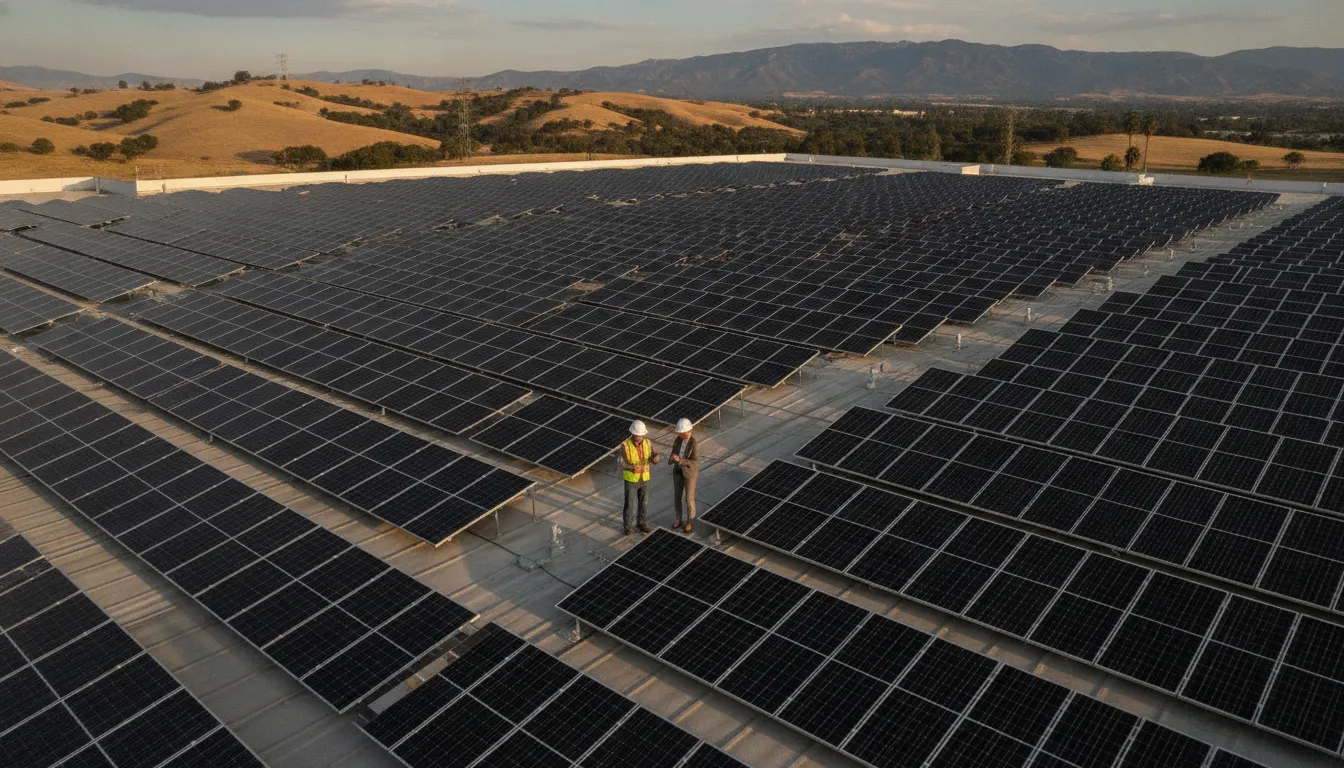
For a California business, the financial case for solar is shaped by more than the panels on the roof. Federal tax treatment, depreciation, utility rules, storage programs, and property-tax treatment can each affect the project, but they do not all follow the same eligibility test.
California commercial solar incentives may include the federal Clean Electricity Investment Credit for qualifying facilities and storage placed in service after December 31, 2024, potential depreciation treatment, utility bill-credit structures, and California property-tax provisions. The details depend on ownership, project design, placed-in-service timing, utility territory, and current program rules. Review the IRS guidance and confirm project-specific treatment with qualified tax and utility professionals.
Review your commercial project with AMECO
Before evaluating a projected benefit, it helps to separate tax credits from deductions, utility tariffs, storage incentives, and assessment rules. That framework makes it easier to identify which opportunities may apply and which require additional verification.
What Do California Commercial Solar Incentives Cover?
California commercial solar incentives are not one rebate or tax line. They are a combination of federal tax treatment, utility rules, state programs, and property-tax provisions. The right mix depends on who owns the system, when it is placed in service, where the facility is located, how electricity is used, and whether the project includes storage.
At a high level, a commercial property owner may need to evaluate:
- Federal tax credits: The federal Clean Electricity Investment Credit under Section 48E can apply to qualifying facilities and energy storage placed in service after December 31, 2024. The IRS also describes elective pay and transferability options for certain eligible entities and taxpayers. Eligibility and filing requirements should be confirmed with a qualified tax professional. Review current IRS guidance on the Clean Electricity Investment Credit.
- Depreciation: Qualified clean-energy facilities, property, and storage may be treated as five-year MACRS property when placed in service after the applicable date. The deduction is generally claimed on Form 4562, subject to the taxpayer's facts and accounting treatment.
- Utility tariffs: Customer-generation tariffs can provide bill credits for surplus electricity exported to the utility. The California Public Utilities Commission says new interconnection applicants within the covered investor-owned utility territories use net billing, while existing NEM tariffs are closed to new enrollments. Territory and project configuration matter.
- Storage programs: California's Self-Generation Incentive Program, or SGIP, may support qualifying behind-the-meter technologies, including advanced storage and combined solar-and-storage systems. Commercial eligibility, funding, performance requirements, and administrator rules must be checked rather than assumed.
- Property-tax treatment: California treats the active solar incentive as a new-construction exclusion, not an exemption. The Board of Equalization says a qualifying installation does not increase or decrease the assessment of the existing property, subject to applicable rules.
These categories can affect a project's economics in different ways, so they should be modeled separately. For broader planning context, see AMECO's guide to commercial solar for businesses. Treat the list as a starting framework, then confirm current requirements with the IRS, the relevant utility, the program administrator, and your tax adviser.
How Does the Federal 48E Credit Work for Commercial Solar?
For qualifying commercial solar facilities and energy storage technology placed in service after December 31, 2024, Section 48E provides a federal investment tax credit based on qualified investment. The current IRS guidance on the Clean Electricity Investment Credit lists a 6% base amount. A project may qualify for a larger credit when it satisfies additional statutory requirements, but the percentage is not automatic for every commercial installation.
Base credit and potential increases
The credit can increase up to 30% when a facility meets prevailing-wage and registered-apprenticeship requirements. The IRS also identifies potential 10-percentage-point additions for certain domestic-content requirements and for locating a qualifying project in an energy community. These additions depend on detailed project facts, documentation, and applicable rules. A taxpayer also cannot claim both the investment credit and the production credit for the same facility.
- Base amount: 6% of the qualified investment under the cited IRS guidance.
- Labor requirements: The credit may increase up to 30% when prevailing-wage and registered-apprenticeship conditions are met.
- Potential additions: Domestic-content and energy-community requirements may each support a 10-percentage-point increase when applicable.
How a business claims and monetizes the credit
The taxpayer generally claims the credit by completing Form 3468 and filing it with the annual return for the first tax year in which the clean-energy investment credit is reported. The IRS describes additional options for organizations that may not use a traditional tax-credit structure. Under elective pay, certain applicable entities, including some tax-exempt and governmental organizations, may receive the value as a payment treated as an overpayment. Transferability may allow an eligible taxpayer that cannot use elective pay to transfer all or part of an eligible credit to a third-party buyer for cash. The buyer and seller negotiate the transaction terms.
Both elective pay and transfer elections require pre-filing registration with the IRS, and the registration number must be included on the tax return for the election to be effective. The IRS identifies 48E as a transferable credit in its transferability FAQ. These are general rules, not a project eligibility determination. The IRS does not provide personalized eligibility advice, so a business should review ownership, construction, labor, equipment, placed-in-service, and filing facts with a qualified tax advisor before relying on a projected credit.
How Does MACRS Depreciation Affect a Commercial Solar Project?
MACRS depreciation can affect how a business recovers the tax basis of qualifying clean-energy property over time, but it is not an automatic cash rebate or guaranteed project saving. The IRS says owners of qualified facilities, qualified property, and energy storage technology placed in service after December 31, 2024, may be eligible for five-year MACRS depreciation. The applicable property and taxpayer facts still need to be confirmed for the project.
For this purpose, the IRS identifies several property categories that may qualify, including a qualified facility, qualified property associated with a qualified investment, and energy storage technology. Those categories are treated as five-year property under Internal Revenue Code Section 168(e)(3)(B) and may be recoverable through the Modified Accelerated Cost Recovery System. See the IRS cost-recovery guidance for the current federal description.
What does Form 4562 have to do with the deduction?
The IRS states that the deduction is claimed on Form 4562, Depreciation and Amortization. A business should coordinate that filing with its tax return and accounting records rather than treating a proposal's estimated depreciation line as a final tax result. The timing of when the system is placed in service matters, as does the amount properly included in the project's depreciable basis.
Ownership and financing structure can also change the analysis. A building owner, tenant, partnership, tax-exempt organization, and third-party owner may not hold the same tax position or claim the same deductions. Review should address who owns the equipment, which costs belong in basis, whether the property qualifies, and how the project is placed in service. A tax professional should also evaluate interactions with other credits, elections, basis adjustments, and applicable accounting methods.
For a broader view of how incentives fit into project economics, review AMECO's business solar savings overview. Use any estimate as planning information, then have a qualified tax advisor confirm the treatment before relying on depreciation in a commercial investment decision.
Which California Utility and State Programs May Apply?
Utility treatment is territory-specific, so a commercial proposal should begin with the property's serving utility and interconnection path. California's CPUC customer-generation guidance covers retail transactions in PG&E, SCE, and SDG&E territories. It does not cover every California utility, wholesale transactions, avoided-cost energy sales, or non-export interconnections. Confirm the applicable tariff with the utility before relying on an export-credit assumption.
For the large investor-owned utilities covered by the CPUC guidance, existing net energy metering tariffs are closed to new enrollments. Customers applying for interconnection since April 15, 2023 generally use the newer net billing tariff, subject to the tariff's scope and project facts. Net billing can provide credits for exported energy, but its treatment is not the same as assuming a legacy NEM arrangement. Participation in a customer-generation tariff also does not, by itself, eliminate eligibility for another utility rebate, incentive, or credit.
| Category | What it may address | What to verify |
|---|---|---|
| Federal credit | Section 48E may apply to qualifying facilities and storage placed in service after December 31, 2024. The IRS lists a 6% base amount, with potential increases tied to specific requirements. | Taxpayer status, project qualification, labor and other bonus conditions, placed-in-service date, and filing requirements with a tax professional. Review current IRS guidance. |
| Utility tariff | Interconnection and the treatment of electricity exported to the serving utility, including the applicable customer-generation or net billing rules. | Utility territory, application date, export or non-export design, rate structure, and interconnection approval. Check CPUC customer-generation scope. |
| Property-tax treatment | California's active-solar provision is a new-construction exclusion, not a blanket exemption. A qualifying installation does not increase or decrease the assessment of the existing property under the cited guidance. | System type, ownership or lease structure, assessor process, and current law. The BOE page currently states a scheduled sunset of January 1, 2027, so do not promise future treatment. |
The California active-solar exclusion may apply whether a system is leased or owned, but ownership is not the only eligibility question. The California State Board of Equalization distinguishes active systems from excluded categories such as solar swimming-pool and hot-tub heaters. Review the current BOE guidance and local assessment process rather than treating the exclusion as automatic.
For a broader planning view, AMECO's commercial solar services can help organize the system, roof, utility, and documentation questions before tax or utility review.
Request a commercial project estimate and incentive-readiness discussion.
What Changes When a Project Includes Battery Storage?
Battery storage adds another layer to incentive planning because the equipment may be evaluated under both federal tax rules and California's separate storage programs. Under current IRS guidance, energy storage technology placed in service after December 31, 2024, can be included within the federal Clean Electricity Investment Credit framework when the project and taxpayer meet the applicable requirements. Qualified storage may also be eligible for five-year MACRS treatment, subject to the project's ownership, tax, and property facts. See the IRS guidance on the 48E credit and discuss the filing position with a qualified tax professional.
California's Self-Generation Incentive Program, or SGIP, is a different path. The CPUC describes SGIP as supporting qualifying distributed energy systems installed behind the customer's utility meter. Its listed technologies include advanced energy storage and combined solar-and-storage systems. That description does not mean every commercial battery qualifies, however. Eligibility can depend on the program administrator, available budget, sector rules, equipment requirements, performance obligations, and utility territory. SGIP funds and rules can change, so a business should confirm current availability before treating a potential rebate as part of its project economics.
For a useful starting point, review AMECO's guide to California battery incentive eligibility. Do not carry residential SGIP amounts or assumptions into a commercial proposal. The CPUC directs applicants to the SGIP Handbook and their utility's program administrator for current criteria and application details.
Review your solar-plus-storage project with AMECO
- Will the battery be owned, leased, or installed under another contract structure?
- Which utility territory and SGIP program administrator apply to the property?
- What operating, performance, demand-response, or metering requirements must the system meet?
- Are the federal credit and any California program being evaluated separately by the tax and project teams?
These checks help keep a storage incentive discussion grounded in the actual project rather than a generic residential example.
What Should a Business Verify Before Claiming an Incentive?
A preliminary incentive model is useful for comparing project options, but it is not a final eligibility determination. Before a California business includes an incentive in its budget, confirm the following items with a qualified tax professional, the serving utility, and the applicable program administrator.
- Confirm the taxpayer and ownership structure. Identify the entity that will own the solar facility, energy storage technology, or other qualified property. Review whether the project is owned, leased, or held through a partnership or other structure. The federal rules for claiming a credit, using elective pay, or transferring a credit can differ by entity type. The IRS says it does not make personalized determinations about whether a specific project qualifies, so the business should document this conclusion with its tax advisor. IRS guidance on elective pay and transferability explains the available pathways.
- Establish the placed-in-service date and eligible property basis. Confirm when each system is ready and available for its intended use, rather than relying only on the contract date or construction start. Separate eligible facility, storage, and related property costs, then have the tax professional determine the applicable basis. The IRS identifies qualified facilities, property, and storage placed in service after December 31, 2024 as potentially eligible for five-year MACRS treatment, claimed on Form 4562.
- Substantiate labor and bonus facts. If the model assumes the higher 48E amount, verify prevailing-wage and registered-apprenticeship compliance before work begins, and retain the required records. Separately substantiate any domestic-content or energy-community position. Do not treat a proposed equipment list or project address as proof that a bonus applies. The IRS Clean Electricity Investment Credit guidance describes these requirements and potential increases, but project-specific review remains necessary.
- Confirm the utility territory, tariff, and interconnection path. Identify whether the property is served by PG&E, SCE, SDG&E, or another utility, then confirm the current tariff and export treatment. CPUC guidance says existing NEM tariffs are closed to new enrollments and that many new interconnection applicants have used net billing since April 15, 2023. The utility must confirm the project's applicable tariff, interconnection requirements, and any assumptions about exported energy or non-export operation.
- Check property-tax treatment separately. Ask the county assessor or qualified tax advisor how California's active-solar new-construction exclusion applies to the specific property, equipment, ownership arrangement, and fixture classification. The California BOE describes the treatment as an exclusion rather than an exemption, and its current guidance lists a scheduled sunset of January 1, 2027. Do not assume the exclusion applies to every energy improvement or remains unchanged.
- Verify every filing and program deadline. Confirm which federal forms, registrations, elections, and supporting records are required. For 48E, the IRS identifies Form 3468 and, for elective pay or transferability, pre-filing registration before the return is filed. For storage incentives, ask the utility program administrator to confirm current SGIP eligibility, budget availability, performance requirements, and reservation deadlines. CPUC guidance directs applicants to the SGIP Handbook and the local administrator, so treat an incentive line in a proposal as conditional until those parties confirm it.
Once these points are documented, a business can review a proposal with clearer assumptions. Separate confirmed benefits from possibilities, and identify questions that need tax or utility approval before financial decisions are made.
How Can a Commercial Solar Proposal Show Incentive Readiness?
A proposal is incentive-ready when it gives the business and its tax and utility advisors enough project detail to test eligibility, rather than treating California commercial solar incentives as automatic. It should connect the physical site, system design, ownership structure, and approval path in one transparent record.
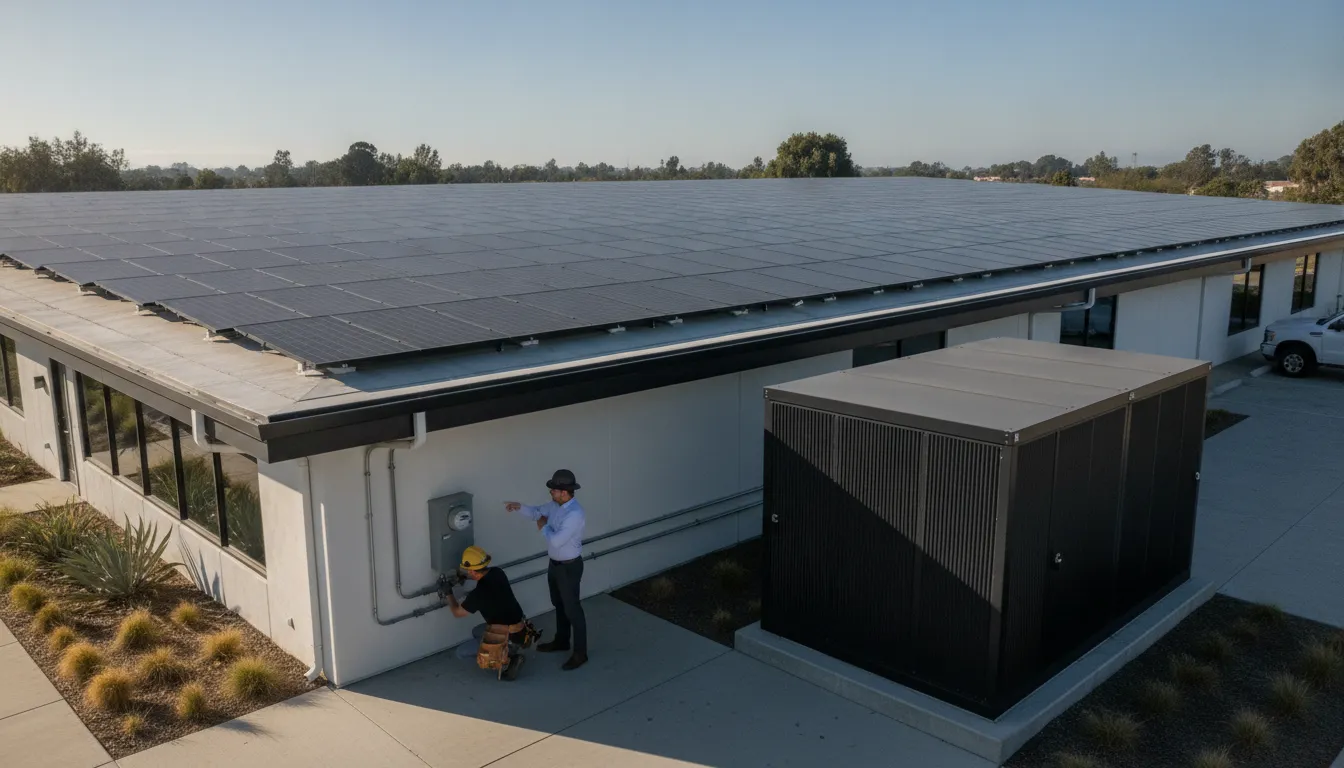
At minimum, ask the proposal to document:
- Site and roof condition: roof age, structural considerations, shading, usable area, and any repair or replacement work that could affect the installation sequence.
- System and load assumptions: proposed capacity, expected production approach, current and projected electricity use, service voltage, and the utility territory being evaluated.
- Interconnection path: the utility application responsibilities, export or non-export assumptions, required studies, and which party will coordinate communications and approvals.
- Equipment scope: modules, inverters, racking, monitoring, and any battery storage, including what is included now versus reserved for a later phase.
- Placed-in-service assumptions: the completion conditions and timing assumptions used for any tax or program analysis. The proposal should state that final treatment depends on the facts and rules in effect when the project is placed in service.
- Ownership and financing: whether the customer owns the system or uses another structure, who expects to claim available benefits, and which items require review by a qualified tax professional.
Coordination matters because roofing work, permitting, equipment procurement, construction, inspection, and utility approval can affect one another. AMECO is a California-owned solar and roofing contractor operating since 1974, with an integrated approach to commercial solar design, roofing coordination, installation, and interconnection support. Review AMECO's commercial solar services alongside the proposal so the scope and responsibilities are clear.
Request a commercial project review and discuss your proposal with AMECO.
Frequently Asked Questions
Can a California business receive a 30% federal solar tax credit?
Possibly. The federal 48E Clean Electricity Investment Credit starts at 6% of qualified investment and can increase to 30% when prevailing-wage and registered-apprenticeship requirements are met. Domestic-content and energy-community bonuses may also apply, but eligibility depends on the project, taxpayer, and current IRS rules. See the IRS 48E guidance and ask a qualified tax advisor to confirm the calculation.
Does battery storage qualify for the same federal credit as solar?
Qualified energy storage technology placed in service after December 31, 2024 may be eligible for 48E treatment. Storage may also be considered for California programs such as SGIP, but those programs have separate eligibility, budget, performance, and administrator requirements. Do not assume that adding a battery automatically qualifies a commercial project for a rebate.
Can a leased commercial solar system qualify for California property-tax treatment?
California's active solar property-tax incentive is a new-construction exclusion rather than an exemption. The California Board of Equalization says a qualifying system may be excluded whether it is leased or owned, subject to the applicable rules. The current BOE page states that the exclusion is scheduled to sunset on January 1, 2027, so verify timing with the local assessor and tax professionals.
Will a new commercial project use net metering in California?
Not necessarily. The California Public Utilities Commission says existing NEM tariffs are closed to new enrollments, and customers applying for interconnection since April 15, 2023 generally use the net billing tariff within the page's scope. The applicable tariff depends on the utility territory, project design, and interconnection circumstances. Confirm the treatment with the serving utility before modeling bill credits.
Who should verify eligibility before incentives are included in a project model?
Use a qualified tax advisor for 48E, MACRS depreciation, ownership, and filing questions, and consult the serving utility or program administrator for tariffs, interconnection, and storage incentives. The IRS does not make personalized determinations about whether a specific project qualifies, so a proposal should identify assumptions and the documents needed for final verification.
Get started with a commercial solar review
Incentive eligibility can depend on project design, ownership, utility territory, timing, and tax circumstances. A project review can help your team identify the questions to confirm with qualified tax and utility professionals before moving forward. Contact AMECO Solar & Roofing to review your commercial solar project and incentive questions.


.svg)
