


Commercial Solar Panel Cost: A Guide to Your ROI
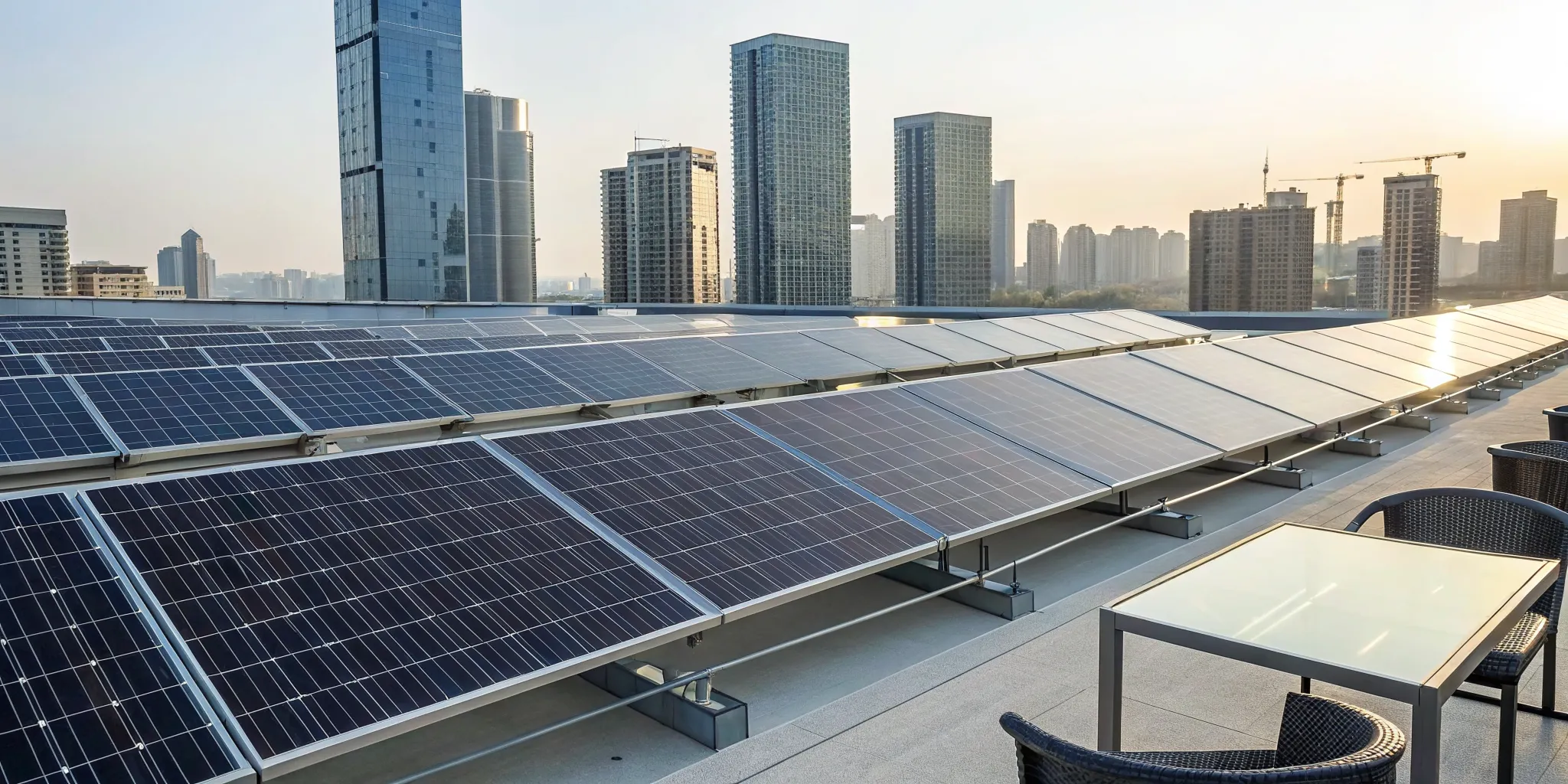
As a business owner, you’re used to turning expenses into assets. You invest in equipment that improves efficiency and property that appreciates in value. It’s time to start thinking about your electricity bill the same way. Right now, it’s a volatile and uncontrollable operating expense. A commercial solar installation transforms that liability into a predictable, power-generating asset that adds value to your property. Understanding the commercial solar panel cost is the first step in taking control of your energy future. This guide will walk you through the real numbers, from initial investment to long-term returns, showing you how to turn your roof into one of your company’s hardest-working assets.
Key Takeaways
- Look beyond the initial price to see the net cost: Your actual investment is the sticker price minus major financial incentives. The 30% federal tax credit and accelerated depreciation can drastically lower what you actually pay, making solar more affordable than you think.
- Recognize that your final cost is unique to your business: The price is customized based on your energy needs, system size, equipment quality, and your building's specific conditions. This is why a one-size-fits-all price doesn't exist and a professional site assessment is essential.
- Calculate your payback period to understand the real return: Your return on investment becomes clear when you see how quickly your energy savings pay off the system. After that payback period, the energy your system produces is pure profit that protects your business from rising utility rates.
What's the Real Cost of Commercial Solar?
When you start looking into solar for your business, the first question is always about the price. It’s a significant investment, and you need to know if the numbers make sense for your bottom line. The good news is that commercial solar is more affordable than ever, and understanding the cost isn't as complicated as it might seem. Instead of getting a single sticker price, the industry typically prices solar projects on a "cost per watt" basis. This simple metric helps you compare different systems and providers fairly.
Thinking about solar as a long-term asset rather than just an expense is key. It’s a move that can drastically reduce or even eliminate your electricity bills, protect your business from rising energy rates, and demonstrate a commitment to sustainability that resonates with modern customers. For commercial customers, the financial benefits are backed by powerful incentives that can shorten your payback period significantly. Let's break down what goes into the cost so you can see the full picture.
The Average Cost Per Watt
The most common way to measure the cost of a commercial solar installation is in dollars per watt. Before any incentives are applied, most commercial solar systems in the U.S. cost between $1.45 and $2.95 per watt. The national average hovers around $1.71 per watt. So, if you were installing a 100,000-watt (or 100-kilowatt) system, you could expect the initial cost to be somewhere around $171,000. This price gives you a solid baseline for budgeting and helps you compare quotes from different installers on an equal footing. It’s a straightforward way to begin your financial planning for a solar project.
Why Per-Watt Pricing Is Key
Focusing on the per-watt price is crucial because it helps you evaluate the true value of your investment. A lower per-watt cost generally means you're getting more power-generating capacity for your money. This metric is the foundation for calculating your long-term savings and return on investment. When you understand the cost per watt, you can more accurately project how incentives, like the federal tax credit, will reduce your overall expense. At AMECO, our approach involves walking you through these numbers, ensuring you see exactly how the upfront cost translates into decades of energy savings and financial stability for your business.
How System Size Affects Your Price
Just like buying in bulk, larger solar panel systems typically have a lower cost per watt. This is because of economies of scale; the fixed costs associated with project management, permitting, and engineering are spread out over a larger system. While the total project cost will be higher for a bigger system, the price per unit of power goes down. For example, a small 30 kW system might have a higher per-watt cost than a massive 200 kW system. This is an important factor for businesses planning for future growth, as investing in a larger system now can deliver greater long-term value and a more attractive ROI for your solar solutions.
Breaking Down Costs by System Size
One of the first questions every business owner asks is, "How much is this going to cost?" It's a fair question, and the answer isn't one-size-fits-all. While the final price tag depends on your specific site and energy needs, we can look at typical system sizes to get a solid idea of the investment. Think of these numbers as a starting point for your budget. The cost of a commercial solar installation scales with its size, which is measured in kilowatts (kW). A larger system will have a higher initial cost but will also generate more electricity, leading to greater long-term savings.
The key is to find the sweet spot: a system large enough to make a serious impact on your energy bills without being excessive for your needs. Whether you run a small retail shop or a large manufacturing plant, there is a solar solution that fits. These examples will help you visualize what's possible for your business. Remember, these are industry estimates, and the best way to get a precise figure is through a personalized consultation where we assess your property and goals. You can begin to explore your potential savings with our solar estimate calculator to get a preliminary idea of what a system could do for your bottom line. This will help you frame the conversation around real numbers for your company.
30 kW System Cost Example
A 30 kW solar system is a fantastic entry point for many small to medium-sized businesses. With an estimated cost between $50,000 and $85,000, this size is a great fit for businesses like local retail stores, independent restaurants, or small professional offices. A system of this size can offset a significant portion of your electricity bill, freeing up cash flow for other parts of your business. It’s a powerful way to lower your monthly operating expenses while visibly demonstrating your company’s commitment to sustainability to your customers and community.
50 kW System Cost Example
For businesses with a bit more square footage or higher energy consumption, a 50 kW system is a popular choice. The investment for a system this size typically ranges from $80,000 to $140,000. This is ideal for larger office buildings, medical clinics, or small grocery stores. Because a 50 kW system generates more power, it can lead to a quicker return on your investment. For many businesses, this size is enough to cover the majority of their daytime energy usage, which drastically reduces reliance on the utility grid and protects against rising electricity rates.
100 kW System Cost Example
When you move up to a 100 kW system, you’re looking at a serious energy-generating asset for your business. The cost generally falls between $145,000 and $295,000. This scale is well-suited for operations with substantial energy needs, such as manufacturing facilities, large auto dealerships, or multi-story commercial buildings. An investment of this size is a strategic financial decision that provides significant long-term savings and can even generate revenue under certain utility programs. Our comprehensive solar solutions are designed to maximize these financial benefits for larger commercial clients.
200 kW System Cost Example
A 200 kW system is a powerhouse designed for large commercial and industrial applications. With a cost ranging from $280,000 to $550,000, this system is built for properties like industrial warehouses, agricultural operations, or corporate campuses. While the upfront investment is significant, the financial returns are massive. A system this large can power your entire operation, support a fleet of electric vehicles, and provide incredible energy independence. When paired with a commercial battery backup system, it also offers unmatched protection from grid outages, ensuring your business can continue running no matter what.
What Factors Influence Your Commercial Solar Cost?
When you start looking into solar for your business, you’ll quickly find that the final price is more than just the cost of the panels. Several key factors influence your total investment, and understanding them will help you see the full picture of your project. Think of it like a custom-tailored suit; the final cost depends on the fabric, the fit, and all the fine details that make it uniquely yours. From the size of your system to the condition of your roof, each element plays a role. Our customized approach ensures we consider every variable to design a system that perfectly fits your business's needs and budget.
System Size and Equipment Quality
The most direct factor in your total cost is the size of the solar system you need, which is measured in kilowatts (kW). A larger system will naturally have a higher upfront cost; commercial installations can range anywhere from $50,000 to over $600,000. However, larger systems often have a lower cost per watt, giving you more generating power for your dollar.
Beyond size, the quality of the equipment matters. Opting for higher-efficiency panels and inverters might mean a larger initial investment, but it pays off with greater energy production and durability over the system's 25+ year lifespan. We can help you choose from a range of high-quality solar solutions to find the right balance between performance and price for your business.
Panel Technology
Solar technology is constantly improving, and these advancements can affect both cost and performance. One of the most exciting developments is bifacial panel technology. Unlike traditional panels that only capture sunlight from the top, bifacial panels can also absorb light reflected onto their underside. This can significantly increase your energy production without taking up any extra space on your roof.
While this advanced technology might come with a slightly higher price tag, the boost in efficiency often leads to a much faster return on your investment. By generating more power from each panel, you save more on your electricity bills over the long run, making it a smart choice for many commercial customers.
Your Roof and Site Conditions
Your building itself plays a huge role in the design and cost of your solar installation. The age, material, and condition of your roof are critical. If your roof needs repairs or a replacement, it’s best to handle that before installing panels, which can add to the project's scope. As a company with deep roots in both solar and roofing, we can provide integrated roofing solutions to ensure your property is fully prepared.
Other site conditions, like the roof's angle, its orientation toward the sun, and any shading from nearby trees or buildings, also impact system design. An ideal roof has plenty of unshaded, south-facing space, but our team can design an effective system for nearly any property.
Location and Labor Rates
Where your business is located also influences the final cost. Labor rates for experienced solar installers can vary by region, and these costs are a significant part of the total price. In addition, the cost of materials and equipment can fluctuate based on local supply chains and demand.
Working with a local, established installer is a major advantage. A company with a long history in your area, like AMECO, has a deep understanding of the local market and a network of trusted suppliers. This local expertise helps streamline the installation process and can prevent unexpected costs, ensuring your project runs smoothly from start to finish.
Local Permitting and Regulations
Before a single panel can be installed, your project needs to be approved by your local municipality and utility company. This process involves securing permits and following a web of local regulations, which can be surprisingly complex and time-consuming. Each city has its own set of rules, and delays in the permitting process can add unexpected costs to your project.
An experienced solar contractor knows how to handle this administrative work efficiently. We manage all the necessary paperwork and inspections to ensure your system is fully compliant with all local codes. This expertise helps avoid costly delays and ensures your project moves forward without a hitch. You can use our solar estimate calculator to get a preliminary idea of what a system might cost for your property.
Beyond the Panels: Other Costs to Consider
When you’re budgeting for a commercial solar installation, the price of the panels is just the starting point. To get a full picture of your investment, you need to account for a few other key expenses. Thinking about these costs upfront ensures there are no surprises down the road and helps you calculate a more accurate return on investment. Let’s walk through the three main areas to consider: your building’s readiness, administrative fees, and long-term care.
Roof Upgrades and Site Prep
Your roof is the foundation for your solar array, so its condition is critical. If your roof is nearing the end of its lifespan or needs structural reinforcement, you’ll want to address that before installing panels that will be there for 25 years or more. As a company with decades of experience in both solar and roofing, we can tell you it’s far more cost-effective to handle any necessary roofing solutions first. The cost of your project is also tied more to your building's energy consumption than its square footage, so a professional site assessment is essential to determine what preparation your specific property requires.
Permitting and Interconnection Fees
Navigating local regulations and utility requirements is a standard part of any solar project. Every city has its own permitting process, and each utility has specific rules for connecting your system to the grid, known as interconnection. These steps come with associated fees and paperwork that can vary depending on your location. While it might sound like a headache, this is a routine part of the installation. An experienced solar partner will manage this entire process for you, ensuring everything is filed correctly and on time. This is a core part of our approach and lets you focus on your business while we handle the logistics.
Ongoing Maintenance and Repairs
Modern solar panels are incredibly durable, but planning for routine maintenance will keep your system running at peak performance. To get the most out of your investment, we recommend budgeting for annual inspections and periodic cleanings. Professional cleaning can cost between $10 to $30 per panel, while a yearly inspection might run from $200 to $600. Factoring in these minor long-term costs helps you create a realistic savings forecast and ensures your system generates maximum power for decades. We see it as a small price to pay to protect a major asset for our commercial customers.
Debunking Common Myths About Solar Costs
It’s easy to get sticker shock when you first look into commercial solar. Many business owners are interested in the financial and environmental benefits but get discouraged by what they think it will cost. These assumptions are often based on outdated information or common misconceptions that don't account for the full financial picture, including long-term savings and powerful incentives. The truth is, the solar industry has changed dramatically, and what was true ten or even five years ago may not be accurate today. Technology has improved, costs have come down, and financial tools have made solar more accessible than ever.
Let's clear up some of the most persistent myths about the cost of going solar. Understanding the reality behind the price tag can help you see commercial solar for what it is: a strategic investment in your company's future. It’s not just about buying panels; it’s about taking control of one of your largest operating expenses. We'll look at the real factors that determine your return on investment and show you how accessible a solar installation can be for your business.
Myth: "Solar is too expensive for my business."
This is probably the most common concern we hear, and it’s completely understandable. The idea that solar is a luxury reserved for massive corporations is a persistent one, but it’s simply not true anymore. While a solar installation is a significant investment, the initial price doesn't reflect the true cost. Financial incentives like tax credits and depreciation can dramatically lower the net expense.
More importantly, a solar system starts generating savings from day one by reducing your reliance on the utility grid. Over time, these savings add up, making solar a practical and profitable decision for commercial customers of all sizes. It’s less about the upfront expense and more about the long-term financial strategy.
Myth: "The ROI isn't worth it."
Some business owners worry that even if they can afford solar, it will take too long to see a return on their investment. In reality, commercial solar panels offer one of the most reliable and predictable returns you can find. By generating your own electricity, you significantly cut down your monthly operating expenses. In a state like California with high electricity rates, the payback period is often much shorter than you might expect.
Think of it this way: you are already paying a hefty electricity bill every month with no return. Investing in solar redirects that expense into an asset that saves you money, increases your property value, and gives you predictable energy costs for decades. You can even use our solar panels costs calculator to get a preliminary estimate of your potential savings.
Myth: "The upfront cost is too high."
The thought of a large capital expenditure can be a major hurdle for any business. The good news is you don’t always need a massive amount of cash on hand to go solar. Many solar providers, including AMECO, offer a variety of financing options that can make a solar project possible with little to no upfront cost.
These financing solutions allow you to install a system and pay for it over time, often with payments that are lower than your current utility bill. This turns the project into a manageable monthly operating expense instead of a major capital investment. Our approach is to work with you to find a financial path that aligns with your budget and business goals, making the switch to solar seamless and affordable.
How to Save Money with Solar Incentives and Tax Credits
Going solar is a smart financial move, and a big reason for that is the variety of incentives designed to lower your initial investment. These programs can dramatically reduce the net cost of your system and shorten your payback period. From federal tax credits to state-level programs and special depreciation rules, these savings make solar an even more attractive option for commercial customers. Understanding how to use these incentives is key to maximizing your return on investment. Let’s walk through the most impactful ones available for your business.
The Federal Solar Tax Credit (ITC)
Think of the Federal Solar Tax Credit, also known as the Investment Tax Credit (ITC), as your first big win in making solar affordable. This powerful incentive allows your business to claim a tax credit for 30% of the total cost of your solar energy system. A tax credit is a dollar-for-dollar reduction of the income tax you owe, which makes it much more valuable than a simple deduction. This significant credit applies to the entire cost of the installation, helping you recover a huge portion of your initial investment right away and making the financial case for solar even stronger.
ITC Bonus Adders
On top of the 30% base credit, your project might qualify for bonus "adders" that can increase your total tax credit even further. These bonuses are designed to encourage specific types of solar development. You could earn an extra 10% credit if your solar components are sourced from the U.S. (Domestic Content) or another 10% if your project is in a designated energy community, like an area historically reliant on coal. There are also competitive 10% or 20% bonuses for smaller systems built in low-income communities. These add-ons can stack, making your project’s financials look even better.
MACRS and Bonus Depreciation
Beyond the ITC, businesses can take advantage of powerful tax deductions. The Modified Accelerated Cost Recovery System (MACRS) lets you deduct the cost of your solar equipment over a five-year schedule, reducing your taxable income. Even better, your business may be eligible for 100% Bonus Depreciation. This allows you to deduct the vast majority of your system’s cost in the very first year of service. Our team can help you understand how these depreciation rules fit into our approach to designing a financially sound solar project for your business.
California's Net Billing Tariff (NEM 3.0)
California’s Net Billing Tariff (NEM 3.0) is the program that governs how you get compensated for the extra solar energy you generate. When your panels produce more power than your business is using, that excess energy is sent to the grid. In return, you receive credits on your utility bill, which helps lower your overall energy costs. To get the most value out of NEM 3.0, we highly recommend pairing your solar panels with a battery backup system. This allows you to store your excess solar energy and use it during peak hours when electricity from the grid is most expensive.
Financing, Leases, and PPAs
A high upfront cost shouldn't be a barrier to going solar. Today, there are more financing options than ever to make a commercial solar installation accessible. While a cash purchase often provides the best long-term return, you can also explore solar loans or Commercial Property Assessed Clean Energy (C-PACE) financing, which ties the payment to your property taxes. Alternatively, Power Purchase Agreements (PPAs) and operating leases allow you to get solar with little to no upfront cost. You can use our solar estimate calculator to get a preliminary idea of costs and explore which financial path best suits your business goals.
How Your Location Impacts Your Solar ROI
Where your business operates has a major impact on how quickly you’ll see a return on your solar investment. Local electricity rates, weather patterns, and state-level incentives all play a part in your payback period. For businesses in California, the combination of high utility costs and abundant sunshine creates a powerful financial case for switching to solar. Understanding these local factors is key to accurately projecting your savings and long-term gains.
Why High Electricity Rates Mean a Faster Payback
It might sound counterintuitive, but the higher your current electricity bill, the faster your solar panel system will pay for itself. Think of it this way: every kilowatt-hour of energy your panels produce is one you don’t have to buy from the utility company. When electricity prices are high, the value of each of those self-generated kilowatt-hours is also high.
For example, if your business pays $1,000 a month for electricity, a solar system could potentially cut that bill down to around $250, saving you $750 each month. That adds up to $9,000 in savings per year, which could help you pay off the entire system in just a few years. This is why focusing on the initial price tag alone is misleading; the real story is in the long-term savings you’ll accumulate.
The California Advantage
California is one of the best places in the country for a commercial solar investment, largely because the state has some of the highest electricity rates. This makes going solar an especially effective strategy for reducing your operating costs. When you generate your own power, you protect your business from unpredictable rate hikes and gain control over your energy expenses.
Fortunately, the cost of solar panels has dropped significantly, making the upfront investment more manageable than ever. While your exact savings will depend on your building’s energy consumption and the size of your system, the financial benefits for commercial customers in California are clear. Choosing solar here isn’t just a green initiative; it’s a smart financial move that delivers a strong, predictable return.
How to Calculate Your Commercial Solar ROI
Figuring out the return on investment for a commercial solar system might seem complicated, but it boils down to a few key numbers. Understanding your potential savings, payback period, and long-term financial benefits will give you a clear picture of how solar can be a powerful financial tool for your business. It’s about looking beyond the initial price tag to see the full value a solar installation delivers over its lifetime. Let's walk through how you can calculate these figures for your own business.
Estimate Your Annual Energy Savings
The first step is to look at what you currently spend on electricity. Your utility bills are the baseline for measuring potential savings. For example, if your business typically pays $1,000 a month for electricity, a solar system could reduce that bill to just a few hundred dollars, saving you around $750 each month. That adds up to approximately $9,000 in savings per year. These savings are what will ultimately pay for your system over time. To get a personalized idea of what you could save, you can use an estimate calculator to input your current energy usage and see the numbers for yourself.
Calculate Your Payback Period
Your payback period is the amount of time it takes for your solar system to pay for itself through energy savings. You can find this by taking your total installed cost, subtracting any incentives you receive, and then dividing that number by your annual energy savings. For many businesses, the payback period for a solar installation is between three and seven years. After that point, every bit of energy your system produces represents pure profit for your business. Our team helps commercial customers map out this timeline so you know exactly when to expect a return on your investment.
Understand the Long-Term Financial Gains
The financial benefits of solar extend far beyond the payback period. With the cost of commercial solar panels dropping significantly over the past decade, the long-term value is greater than ever. Many business owners get stuck on the initial expense, but this overlooks the substantial savings and incentives available. Once your system is paid for, you gain decades of protection against rising utility rates. Think of it as locking in your energy costs for the next 25 years or more. Exploring modern solar solutions reveals how this technology has become one of the most reliable and financially sound investments a business can make.
Is Commercial Solar a Smart Investment for Your Business?
After looking at the costs, incentives, and potential ROI, the big question remains: is going solar a smart move for your business? The short answer is a definite yes. Thinking of solar panels as a luxury is an outdated idea. Today, they are a strategic investment that can seriously reduce your operating costs and secure a reliable source of power for years to come. Many business owners worry about the initial expense, but this view often overlooks the long-term savings and powerful financial incentives available.
The cost of commercial solar has dropped by more than 66% over the last decade, making it more accessible than ever. Plus, advancements in technology mean that modern panels are incredibly efficient, so you need fewer of them to meet your energy needs. This is great news for businesses with limited roof space. At AMECO, we’ve seen firsthand how our commercial customers transform their energy expenses into an asset. By generating your own power, you gain control over a volatile expense and protect your business from unpredictable rate hikes.
Beyond the numbers, a solar installation is a visible commitment to sustainability that can enhance your brand and attract new customers. It’s a powerful way to invest in your business’s future, your community, and the planet. With modern monitoring tools, managing your system is straightforward, ensuring it performs at its best. Our customized approach ensures your solar solution is designed to maximize these benefits, turning your roof into a revenue-generating asset.
Related Articles
- How to Use a Commercial Solar Panel Cost Calculator
- Solar Installation Costs Continue To Fall
- Solar Panel Installation Cost Calculator: A 2026 Guide
- The Inflation Reduction Act: Everything You Need To Know | AMECO Solar
- How Much Do Solar Panels Cost for a House? A Full Guide
Frequently Asked Questions
Is my business too small for solar to be worthwhile? Not at all. Solar is a scalable investment that works for businesses of all sizes, from small retail shops to large industrial facilities. A smaller system, like the 30 kW example, can still make a huge dent in your monthly electricity bill and free up cash for other business needs. The key is that the savings are proportional to your energy use, so even if your bills aren't massive, the financial and environmental benefits are still very real.
Do I have to pay for the entire system upfront? This is a common concern, but the answer is no. While paying with cash often yields the best long-term return, it's not the only path. There are many financing options available, including solar loans and leases, that allow you to get started with little or no initial payment. Often, the monthly payment on a loan is less than what you were paying the utility company, so you can start saving from day one without a major capital expense.
My roof is a bit old. Do I need to replace it before installing solar panels? It’s a great question, and generally, yes. A solar panel system is designed to last for 25 years or more, so you want the roof underneath it to be just as durable. It is much more practical and cost-effective to handle any necessary roof repairs or replacements before the solar installation begins. Addressing this first ensures you won't have to remove and reinstall the panels later, which would be a significant extra cost.
How do I figure out the right system size for my business? The ideal system size isn't based on your building's square footage but on your energy consumption. The first step is to look at your past utility bills to see how much electricity you use throughout the year. A professional solar consultant will analyze this data, assess your property for factors like roof space and sun exposure, and then design a system that meets your specific energy needs and financial goals.
Besides the federal tax credit, are there other financial benefits I should know about? Yes, definitely. Beyond the 30% tax credit, your business can also benefit from accelerated depreciation (MACRS), which allows you to deduct the system's cost from your taxable income over just a few years. The most significant long-term benefit, however, is gaining control over your energy costs. By generating your own power, you protect your business from unpredictable utility rate hikes for decades to come.


.svg)
