


How Do Home Solar Panels Work? From Sun to Socket
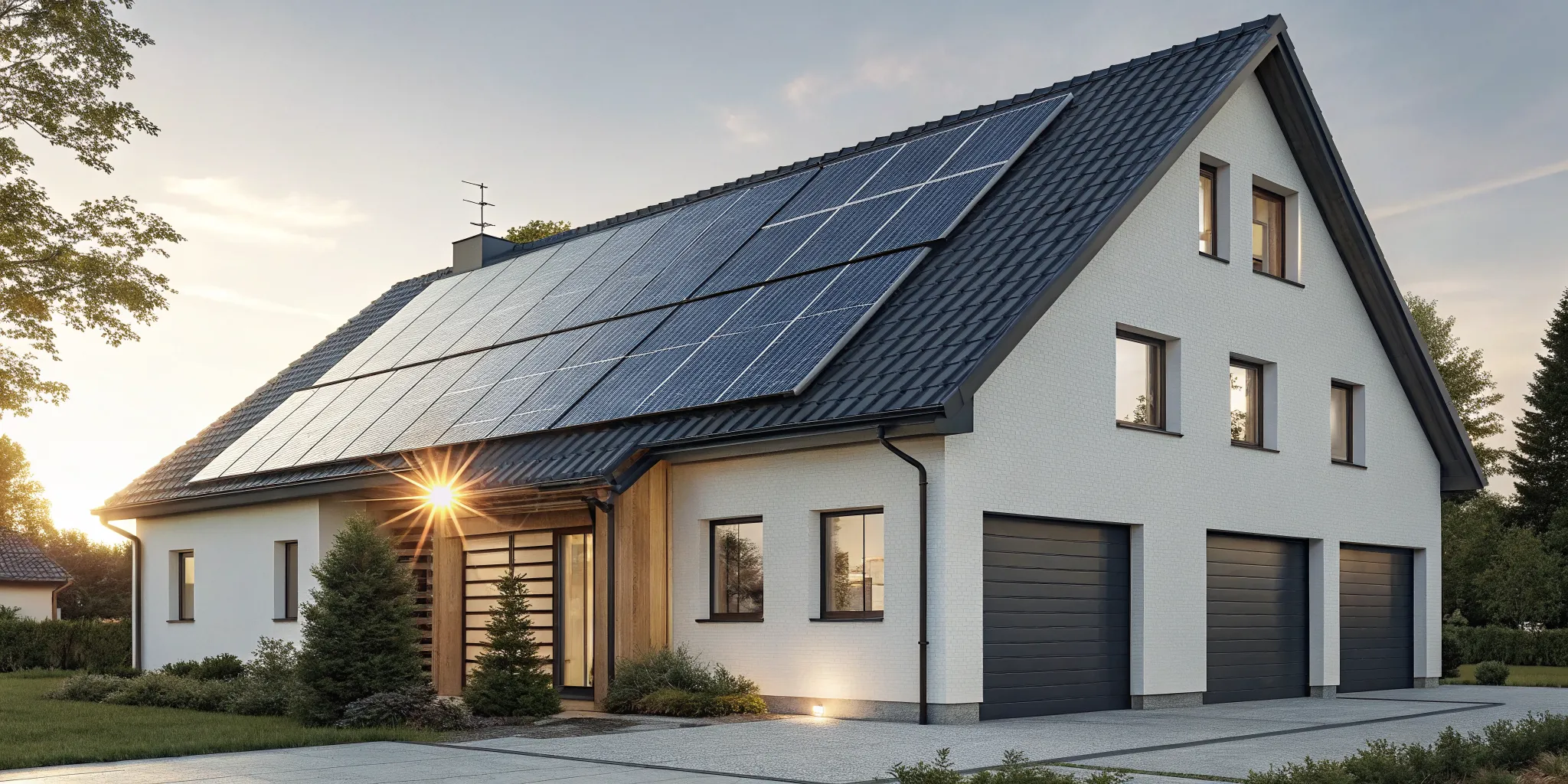
The journey of solar energy is a fascinating one. It starts 93 million miles away, travels to your roof, and ends at the light switch in your living room. This entire process happens silently and instantly, every single day. But what exactly happens between the moment a sunbeam hits a panel and the moment you turn on your air conditioner? Answering the question of how do home solar panels work reveals a simple and efficient system. We’ll trace the path of power from the sun, through your panels and inverter, and directly to your home’s appliances, showing you how seamless the transition to clean energy really is.
Key Takeaways
- Your system is more than just panels: A solar inverter is the brain of the operation, converting the raw energy captured by your panels into the standard electricity needed to power everything in your home.
- Every bit of solar power has a purpose: When your system generates more energy than you need, it's either sent to the grid for credit on your utility bill or stored in a home battery, ensuring you have power at night or during an outage.
- Smart design makes all the difference: The amount of energy you produce is directly affected by factors like your roof's direction, potential shade, and the type of panel used, which is why a professional assessment is crucial for peak performance.
What's in a Solar Panel System?
When you picture a home with solar power, you probably think of the sleek panels on the roof. While those are definitely the star of the show, a complete solar energy system is actually a team of components working together to power your home. Think of it less as a single product and more as a complete power plant, scaled down to fit your roof. It’s designed to seamlessly integrate with your home’s existing electrical setup, so you can flip a switch and use clean energy without a second thought. This integration is key; the goal is to make your transition to solar feel effortless.
The main players in this system are the solar panels, an inverter, and the racking that secures everything to your roof. Each part has a specific job, from capturing sunlight to converting it into usable electricity for your appliances. For homeowners looking for extra energy security, especially with California's grid instability, a battery backup can also be added to store power for use during an outage or at night. Understanding how these pieces fit together is the first step in seeing how you can generate your own power right from your rooftop. Our team designs comprehensive solar solutions tailored to your home's specific needs, ensuring every component works in perfect harmony.
The Cells That Capture Sunlight
Let's start with the panels. Each solar panel is made up of smaller units called photovoltaic cells, which are typically made from silicon. These cells are what do the heavy lifting. When sunlight, which is made of tiny energy particles called photons, strikes the solar cells, it excites the electrons within the silicon atoms and knocks them loose. This creates a flow of electrons, which is exactly what electricity is. The electricity generated at this stage is called Direct Current (DC) power. It’s the same type of power you get from a standard battery, but it's not quite ready to run your home just yet.
Other Essential Parts of Your System
The DC electricity from your panels isn't quite ready to power your TV or coffee maker. That’s where the inverter comes in. An inverter is a crucial device that acts as the brain of your system, converting the DC electricity from the panels into Alternating Current (AC) electricity. AC power is the standard form of electricity used in our homes. From the inverter, this usable AC power flows directly into your home’s main electrical panel (your breaker box), ready to power everything from your lights to your laundry machine. It's a smooth, automatic process that happens in the background, delivering clean power right where you need it.
How Do Solar Panels Actually Make Electricity?
It might seem like magic, but the process of turning sunlight into electricity is a fascinating and straightforward bit of science. Your solar panels aren't just sitting on your roof looking pretty; they're tiny power plants working hard every time the sun is out. The entire system is designed to capture solar energy and convert it into a form that your home can use to power everything from your coffee maker to your air conditioner.
This conversion happens in two main steps. First, the panels capture sunlight and create an electrical current. Then, another key piece of equipment changes that current into the type of electricity your home's appliances need. Let's break down exactly how your solar solutions make this happen.
Understanding the Photovoltaic Effect
At the heart of every solar panel are solar cells, which are typically made from silicon. Think of the sun as constantly sending out tiny packets of energy called photons. When these photons travel all the way to your roof and strike the solar cells, they transfer their energy, knocking electrons loose from the silicon atoms.
This is where the "photovoltaic effect" comes into play. The solar cell is designed to create an electric field, which acts like a slide, directing all those loose electrons to flow in one direction. This flow of electrons is what we call an electrical current. Specifically, it creates Direct Current (DC) electricity, which is the first step in powering your home with the sun.
Turning Sunlight into a Usable Current
The DC electricity generated by your panels isn't quite ready to power your home. Most household appliances and the electrical grid itself run on Alternating Current (AC) electricity. While DC electricity flows in a single, constant direction, AC electricity reverses direction periodically. To make the solar energy useful, it needs to be converted from DC to AC.
This is the job of a crucial component called an inverter. The DC electricity from your solar panels travels to the inverter, which transforms it into standard 120V/240V AC electricity. From there, the power is ready to be sent to your home's electrical panel and distributed to all your outlets and appliances, seamlessly powering your daily life.
What Does a Solar Inverter Do?
If solar panels are the heart of your system, the inverter is the brain. It’s a crucial piece of equipment that takes the raw energy your panels produce and transforms it into a format your home can actually use. Without an inverter, the electricity generated on your roof would be incompatible with your appliances, lights, and outlets. Think of it as a translator, converting the sun’s energy into a language your home understands.
This small but mighty box does more than just convert power. It also optimizes your energy production and includes critical safety features that protect both your home and the electrical grid. Understanding what your inverter does helps you appreciate how your entire solar solution works together to provide clean, reliable energy for your family.
Making Solar Power Safe for Your Home
Your solar panels generate direct current (DC) electricity, which flows in a single direction. However, every home in the U.S. runs on alternating current (AC) electricity, where the current changes direction many times per second. The primary job of a solar inverter is to perform this essential conversion from DC to AC.
This conversion process ensures that the power flowing from your panels is perfectly synchronized with the power from the utility grid. It makes the solar energy safe and usable for everything from your refrigerator to your phone charger. By managing the voltage and frequency, the inverter delivers a smooth, consistent stream of electricity, seamlessly integrating the sun’s power into your daily life.
Different Types of Inverters
Not all inverters are the same, and the right one for you depends on your home’s specific needs, like your roof layout and any potential shading. The most common options are string inverters, microinverters, and power optimizers. A string inverter connects a group (or “string”) of panels, converting their combined DC output into AC power.
Microinverters, on the other hand, are installed on each individual panel, converting the power right at the source. This is especially useful if some of your panels are partially shaded during the day, as it prevents one shaded panel from reducing the output of the entire string. Power optimizers offer a hybrid approach, pairing with a central inverter to optimize each panel’s output. Our team can help you determine the best fit during your personalized consultation.
How Inverters Keep Your System and the Grid Safe
Modern inverters are incredibly smart. Beyond converting electricity, they constantly monitor your solar panel system’s performance to maximize energy production. They track output and can even identify issues with specific panels, making maintenance easier.
Most importantly, inverters have a critical safety feature called "anti-islanding." If the public power grid goes down, the inverter automatically shuts off your solar system to prevent it from sending power back to the grid. This protects utility workers who are making repairs from unexpected electrical shocks. When paired with a battery backup, the inverter also manages how and when your stored energy is used, giving you a reliable power source during an outage.
How Does Solar Power Get to Your Appliances?
So, your panels are on the roof, the inverter is installed, and the system is ready to go. But how does the energy captured from the sun actually run your refrigerator or charge your phone? The journey from sunlight to socket is surprisingly direct. Once the inverter converts the solar energy into electricity your home can use, it’s sent straight to your appliances through your existing wiring. It’s a seamless process that happens in real-time, letting you power your home with clean energy the moment it’s generated.
Connecting to Your Home's Electrical Panel
Your solar panels produce a type of electricity called direct current (DC), but your home’s appliances run on alternating current (AC). The inverter acts as the crucial translator, converting that DC power into usable AC power. From the inverter, the electricity travels directly to your home's main electrical panel. Think of this panel as the command center for all the power in your house. It takes the clean energy from your solar system and distributes it to your outlets and appliances, just as it would with power from the utility grid. This simple connection is what makes solar a practical choice for homeowners looking to integrate renewable energy.
Using Power the Moment It's Made
One of the best parts about having a solar system is that you get to use the power as soon as it’s created. The moment sunlight hits your panels, you're generating electricity that can be used immediately. If the sun is shining while you're doing laundry or working on your computer, that power is coming directly from your roof, not the utility company. This instant access to your own clean energy is what helps you reduce your dependence on the grid. You’re essentially powering your daytime life with the sun, which is a fantastic way to lower your monthly electricity bills. This process of using solar power in real-time is the foundation of how you save money.
What Happens to the Extra Solar Power You Generate?
It’s a common question: what if my panels make more power than I can use? On bright, sunny days, it’s very likely they will. This isn't a waste; it's an opportunity. Your excess solar energy doesn't just disappear. Instead, you have two great options for putting it to work for you. You can either send it back to the utility grid for credit or save it in a home battery for later. Both paths help you get the most value out of your solar solutions and reduce your reliance on traditional power.
Sending Power Back to the Grid with Net Metering
Think of the utility grid as a giant, shared battery. When your solar panels produce more electricity than your home needs, that extra power flows back into the grid for others to use. In return, your utility company gives you credit for the energy you contribute. This system, known as net metering, helps you offset your electricity costs by allowing you to draw power from the grid at night or on cloudy days using the credits you’ve earned. It’s a smart system that ensures none of the clean energy you generate goes to waste.
Storing Power for Later with a Battery
If you want true energy independence, especially during blackouts, storing your own power is the way to go. A home battery backup system connects directly to your solar panels and saves the excess energy they generate. Instead of sending that power to the grid, you keep it right at home. According to Energy.gov, a solar battery can "store energy generated by your solar panels for use at night or during power outages." This means when the grid goes down, your lights, refrigerator, and essential devices can stay on. It gives you peace of mind and control over your own power supply, day or night.
How Can You Get the Most Out of Your Solar Panels?
Once your solar panels are installed, you want to make sure they’re working as hard as possible for you. Getting the most out of your system is what leads to lower electricity bills and greater energy independence. It’s not just about having panels on your roof; it’s about having them in the right place and keeping them in good shape. A few key factors can make a significant difference in your system’s daily energy production, and understanding them will help you maximize your investment for years to come.
Why Your Roof's Angle and Direction Matter
The placement of your solar panels is one of the most critical factors for energy production. Think of your panels as tiny sunbathers; they need to be in the best spot to soak up the most rays. In the Northern Hemisphere, a south-facing roof is the ideal location because it receives the most direct sunlight throughout the day. East- and west-facing roofs are also good candidates, as they capture strong morning or afternoon sun. The one direction to avoid is north, as it gets the least sun exposure. The tilt, or angle, of your panels also plays a role. A professional assessment is key to finding the sweet spot for your specific roof, which is a core part of our approach to designing every system.
How Weather, Shade, and Maintenance Affect Performance
Your solar panels are tough, but their output can be affected by their environment. They will naturally produce less energy on cloudy days or during the shorter days of winter, but they still generate power. A more significant factor to consider is shade. If a tree branch or chimney casts a shadow over even one panel, it can reduce the performance of the entire string of panels. We carefully map out your roof to avoid these problem areas. Finally, a little upkeep goes a long way. In California, dust, pollen, or ash can settle on your panels. A quick rinse with a hose once or twice a year is usually all it takes to keep them clean and operating efficiently. Our durable solar solutions are designed for long-term performance with minimal fuss.
Do Solar Panels Work When It's Cloudy or Dark?
One of the biggest questions people have about solar is what happens when the sun isn't shining. It’s a fair question, especially since we all want a reliable source of power. The short answer is yes, your home will still have power. While solar panels are most productive in direct sunlight, they don't just shut down completely on a cloudy day or after sunset.
Modern solar technology is designed to handle real-world conditions, not just perfect sunny days. Your system has ways to keep the lights on, whether it's by drawing from the grid or using stored energy. Let's break down how it all works.
Generating Power in Different Weather Conditions
Think of it like getting a sunburn on an overcast day. Even though you can't see the sun directly, its UV rays are still getting through the clouds. Solar panels work in a similar way. They capture photons from sunlight to create electricity, and photons still reach your panels on cloudy, foggy, or rainy days.
Of course, production will be lower than on a bright, clear day. The amount of energy generated depends on the thickness of the cloud cover. However, today’s high-quality solar solutions are incredibly efficient and can still produce a significant amount of power even in less-than-ideal weather. Your system is designed with these variations in mind, accounting for your local climate to ensure you have enough power year-round.
Why You Still Have Power at Night
At night, your panels aren't generating new electricity, but your home stays powered in one of two ways. The most common method is through a grid-tied system with net metering. During the day, your panels often produce more electricity than your home needs. This excess power is sent back to the utility grid, and you earn credits on your bill. At night, you simply draw power from the grid, using those credits to offset the cost.
For true energy independence, especially during power outages, a battery backup system is the answer. A solar battery stores the excess energy your panels generate during the day. When the sun goes down, your home automatically switches to using that stored, clean energy instead of pulling from the grid.
Are All Solar Panels Created Equal?
When you start looking at solar panels, you’ll quickly notice they don’t all look or cost the same. So, are they all created equal? The short answer is no. The main differences come down to how the solar cells inside them are manufactured, which directly impacts their efficiency, appearance, and price tag. Think of it like choosing an engine for a car; different types offer different levels of performance and fit different budgets. While all modern solar solutions are designed for durability and long-term power generation, the technology inside can vary significantly.
The two most common types of panels you’ll see on homes today are monocrystalline and polycrystalline. Each has its own set of strengths, and understanding them is the first step toward picking the perfect system for your home. One isn't universally "better" than the other, but one will likely be a better fit for your specific roof, energy goals, and financial plan. Knowing the distinction will help you have a more productive conversation with your solar installer and ensure you get a system that truly meets your needs for decades to come. Let's break down what sets them apart so you can feel confident in your choice.
Monocrystalline vs. Polycrystalline Panels
Monocrystalline panels are made from a single, pure crystal of silicon. This uniform structure gives them their signature sleek, black look and allows electrons to move more freely, making the panels highly efficient. They often have efficiency ratings over 20% and tend to perform better in low-light conditions. Because they can generate more power in a smaller footprint, they are a fantastic option if you have limited roof space.
Polycrystalline panels, on the other hand, are made by melting multiple silicon fragments together. This process is less expensive, but it results in a panel with a speckled, blueish appearance and slightly lower efficiency, typically in the 15-20% range. While they may require a bit more surface area to produce the same amount of power as their monocrystalline counterparts, they are a very reliable and budget-friendly choice.
Which Type Is Right for Your Home?
So, how do you choose? It really comes down to your specific situation. If you have a small roof but high energy needs, the higher efficiency of monocrystalline panels makes them the clear winner. You’ll get the power you need without covering every square inch of your roof.
However, if you have plenty of available roof space and are focused on the most cost-effective solution, polycrystalline panels are an excellent choice. They can help you achieve your energy independence goals with a lower upfront investment. The best way to decide is to get a professional assessment. Our customized approach involves analyzing your roof, energy usage, and budget to recommend the ideal panel type for your home.
What Is the Solar Installation Process Like?
Going solar is an exciting step, but it’s natural to wonder what the actual process involves. While the physical installation on your roof is relatively quick, the full journey from signing a contract to flipping the switch takes a bit longer. The total timeline can range from two to six months, with much of that time dedicated to planning, custom design, permitting with your city, and coordinating with your utility company. This might sound like a lot, but these steps ensure your system is safe, efficient, and built to last.
The good news is you don’t have to figure this out on your own. A professional team handles all the complex steps behind the scenes. The process starts with a thorough site assessment where we evaluate your roof’s condition, sun exposure, and your home’s energy usage. From there, we create a custom solar panel design tailored specifically to your needs. Once you approve the design, we handle all the engineering plans and submit the applications for permits from your local jurisdiction. We also manage the interconnection agreement with your utility company, which is a crucial step before your system can be connected to the grid. At AMECO, we manage the entire project, from the initial site assessment to the final inspection, to make your transition to solar power seamless. Understanding our approach can help you feel confident and informed from start to finish.
A Step-by-Step Look at Installation Day
When installation day arrives, our certified crew gets to work making your solar plans a reality. The first step is preparing your roof and setting up a secure mounting system that will hold your panels in place. Since the health of your roof is essential for a long-lasting solar installation, we always ensure it's in great shape before we begin. We then mount the solar panels onto the racking.
Next, we install the inverter, which is the device that converts the solar energy into usable electricity for your home. This is usually placed in a convenient but out-of-the-way spot like your garage or an exterior wall. Our electricians will connect the panels to the inverter and then link the inverter to your home’s main electrical panel. After everything is connected, we conduct a thorough inspection to ensure the system is installed to code and operating safely.
How to Monitor Your System's Performance
Once your system is installed and has passed its final inspection, you get access to one of the best parts: the monitoring system. This is usually a simple app on your phone or computer that gives you a real-time look at how much power your panels are producing. You can see your energy generation change throughout the day and track your home’s consumption. It’s a great way to understand your energy habits and see your investment at work.
Your system will also include a meter that measures all the electricity your panels generate. Any power you don’t use immediately can be sent back to the utility grid for credit on your bill, a process known as net metering. Alternatively, if you have a home battery, that excess energy gets stored for you to use later, like at night or during a power outage. Adding a battery backup is a fantastic way to achieve greater energy independence and keep your lights on no matter what.
Frequently Asked Questions
How long does the entire solar installation process take? While the physical installation on your roof usually only takes a day or two, the full journey from signing the paperwork to powering your home with the sun typically takes a few months. Most of that time is spent on custom system design, securing permits from your city, and coordinating with the utility company. Your solar partner handles all of these details, so you can relax while the behind-the-scenes work gets done.
Will my power stay on during a blackout? A standard solar system is designed to shut down during a grid outage for safety reasons. This protects utility workers who are making repairs. However, if your goal is to keep your lights on during a blackout, you can add a battery backup to your system. A battery stores the extra solar power you generate, creating your own personal energy reserve to use whenever you need it, day or night.
What kind of maintenance do solar panels require? Solar panels are incredibly durable and require very little upkeep. Rain usually takes care of most of the cleaning for you. Here in California, where we can get dust or ash buildup, a simple rinse with a garden hose once or twice a year is typically all that’s needed to keep your panels working efficiently.
What if my roof isn't in perfect condition? A healthy roof is the best foundation for a solar panel system that will last for decades. During our initial site assessment, we conduct a thorough evaluation of your roof's structure and condition. If we find any issues that need attention, we can address them before the solar installation begins, ensuring your home is fully prepared for a secure and long-lasting system.
How do I know if my home is a good fit for solar panels? The best homes for solar have a roof that gets several hours of direct, unobstructed sunlight each day. In California, a south-facing roof is ideal, but east- and west-facing roofs are also excellent candidates. The most important thing is to minimize shade from trees, chimneys, or nearby buildings. A professional site evaluation is the best way to get a clear answer, as we can analyze your specific property and energy needs.


.svg)
