


Licensed Electrician for EV Charger Installation
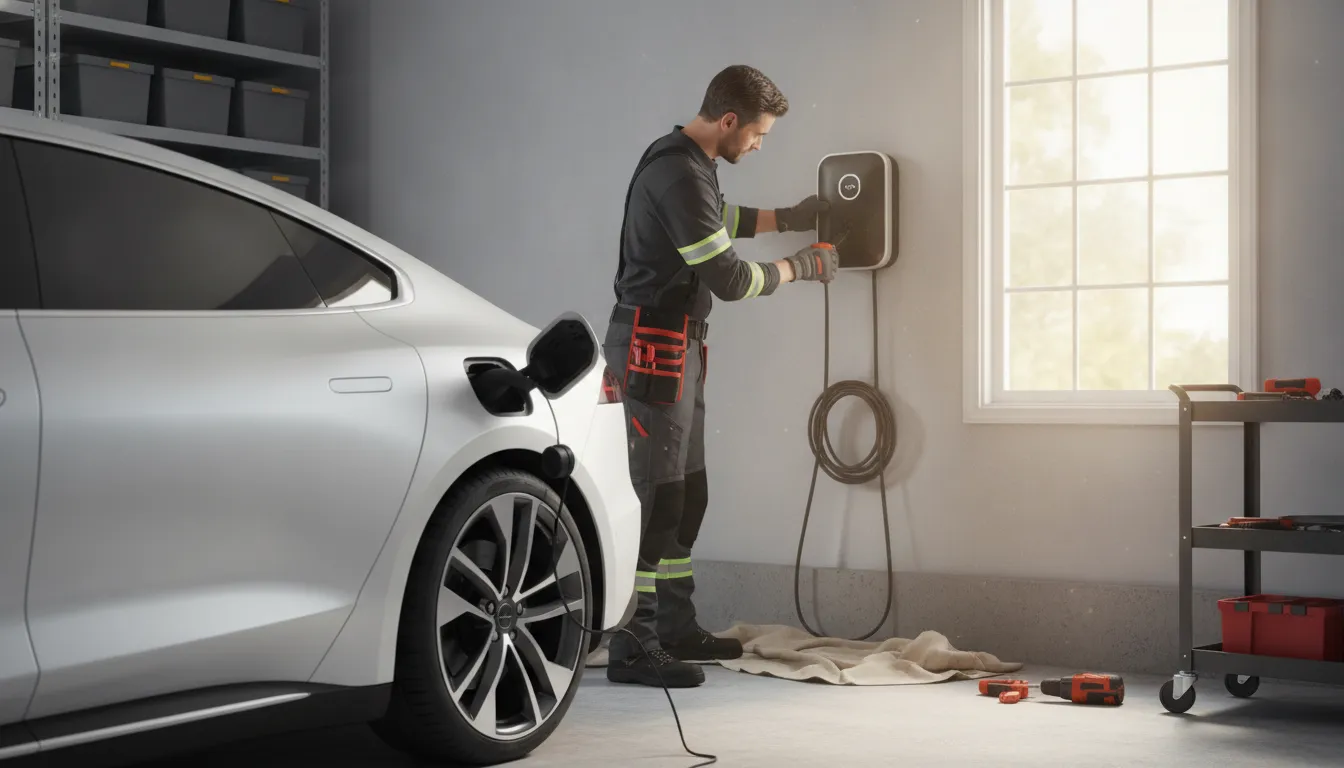
Installing an electric vehicle charger at home is an electrical project, not simply an appliance upgrade. The work can affect your service panel, require a dedicated circuit, involve local permits, and influence how safely your vehicle charges every day. For California homeowners, a licensed electrician for EV charger installation can evaluate the property before equipment is selected or wiring begins.
Short answer: A licensed electrician checks the home's available electrical capacity, designs the circuit and protective equipment. Installs the charger according to applicable requirements, and coordinates permits or inspections when required. Professional planning is especially important for hardwired Level 2 chargers because EV charging is a sustained electrical load.
AMECO Solar & Roofing helps California homeowners consider EV charging as part of a broader home energy plan. That can include solar, roofing, battery backup, and electrical planning when those services fit the property. Start with AMECO's home EV charging station installation guide for a related overview, then use the sections below to understand the professional work behind a safe installation.
Why Do You Need a Licensed Electrician for EV Charger Installation?
A home charger connects to the electrical system that also serves air conditioning, heating, cooking equipment, water heating, solar equipment, and other major loads. A licensed professional evaluates those existing demands instead of assuming that an open breaker space means the service can support a charger. The electrician then matches the charger, circuit, wire, overcurrent protection, grounding, and mounting location to the home's actual conditions.
The U.S. Department of Energy's Alternative Fuels Data Center explains that electric vehicle charging is a continuous load. That means the circuit must be designed for sustained operation, not treated like an occasional plug-in device. Read the Department of Energy home charging guidance for additional context.
Safety starts with the electrical design
Electrical problems are not always visible when a charger is first switched on. A loose termination, undersized conductor, incorrect breaker, poor grounding connection, or unsuitable receptacle can become a reliability or safety issue over repeated charging cycles. A licensed electrician can inspect the service equipment, confirm the proposed circuit, protect wiring from physical damage, and test the completed installation.
Code compliance creates a documented path
Electrical work may need to satisfy state requirements and the rules of the local authority having jurisdiction. A professional can identify which requirements apply, prepare the installation for inspection, and explain what documentation the homeowner should retain. The U.S. Fire Administration identifies qualified electrical installation and appropriate permitting as important safety steps for EV charging equipment. Its electric vehicle safety information provides useful background.
- Capacity: The service and panel must be evaluated alongside the home's existing loads.
- Protection: Breakers, grounding, wiring, and required protective devices must match the design.
- Placement: The charger and cable route should be practical, protected, and appropriate for the location.
- Documentation: Permits, inspection records, equipment information, and installation details should be retained.
What Does a Licensed Electrician for EV Charger Installation Check First?
Before installation, the electrician typically reviews the home's service rating, panel condition, available capacity, existing major loads, charger location, circuit route, and local permitting requirements. This evaluation determines whether a standard circuit installation is appropriate or whether the project needs additional electrical work.
The assessment should happen before a homeowner commits to a specific charger output. A unit with more power is not automatically the best choice. The useful design is the one that fits the vehicle, driving routine, parking location, electrical service, and future plans without creating unnecessary work.
Service rating and panel condition
The electrician examines the service equipment and panel, including its rating, condition, breaker arrangement, available spaces, and the age of major components. Older equipment may need closer review. A crowded panel or limited service does not automatically rule out EV charging, but it does make a load calculation and design review more important.
Distance, route, and mounting location
The distance between the panel and charger affects the conductor route, conduit, labor, and installation details. The professional also considers whether the charger will be installed in a garage, carport, exterior wall, or another location. Outdoor equipment needs protection appropriate for weather exposure. Cable placement should reduce trip hazards and avoid unnecessary stress on the connector.
Homeowners can make the evaluation more useful by sharing the vehicle model, typical daily driving distance, preferred parking position. Photos of the panel and proposed mounting area, and any plans for solar or a second EV. These details help the electrician compare practical options instead of designing around incomplete information.
For California homeowners planning solar and charging together, AMECO's solar solutions page explains the broader system-planning conversation. The final design still depends on the property, equipment, utility territory, and electrical assessment.
Which EV Charger Level Fits Your California Home?
The charger level describes the electrical service and charging capability, but it does not guarantee a particular range increase. Actual results vary by the vehicle, battery state, temperature, charger output, and the home's available power. A professional can help determine whether the equipment fits the electrical system.
| Charger level. | Typical connection. | Common home use. |
|---|---|---|
| Level 1. | 120-volt household outlet. | Lower daily driving and long overnight parking. |
| Level 2. | Dedicated 240-volt circuit. | Routine home charging when the panel supports it. |
| Level 3 DC fast charging. | High-power commercial equipment. | Public and commercial locations, not typical homes. |
Level 1 for lower daily demand
Level 1 charging uses a standard household outlet and may work for a short daily commute when the vehicle remains parked for long periods. It may not require the same dedicated-circuit work as a Level 2 installation, but the outlet and circuit still need to be suitable. A homeowner should not use an extension cord or an outlet with signs of heat, damage, looseness, or overloading.
Level 2 for routine home charging
Level 2 equipment commonly operates on a dedicated 240-volt circuit. It can be a practical choice for drivers who want more charging capacity during overnight parking, but the circuit must be designed for sustained operation. The right amperage depends on the equipment, vehicle, panel, wiring, and installation instructions. A hardwired charger can offer a permanent connection, while a plug-in unit may fit a properly installed receptacle. The choice should follow the electrical design, not appearance alone.
Level 3 is generally a commercial and public application
Level 3 direct-current fast charging uses substantially higher-power equipment and is generally associated with public or commercial charging locations. It is not the normal solution for a California residence. If a homeowner sees unusually high output claims, the first question should be whether the equipment is intended for a home and whether the property can support it.
- Start with the vehicle's charging capability and daily driving pattern.
- Review the home's service and panel before choosing a circuit size.
- Compare the charger location, cable route, equipment rating, and future needs.
- Confirm permits, inspections, and manufacturer requirements before work begins.
How Does Panel Capacity Affect EV Charger Installation?
Panel capacity affects whether the home can support the proposed charger while serving its other loads. A load calculation considers the service rating, existing demand, charger draw, and future electrical plans. If capacity is limited, the electrician can discuss alternatives such as a lower-output charger, load management, additional electrical work, or a service upgrade when appropriate.
A breaker space is only one part of the analysis. The panel can have an open position while the service lacks enough capacity for another sustained load. Conversely, a panel that looks crowded may still support a well-designed project after a professional calculation. The answer depends on measured and documented conditions.
Existing loads matter
California homes may have electric heat pumps, air conditioning, induction cooking, electric water heating, pool equipment, solar inverters, batteries, and other equipment operating on the same service. The electrician considers how those loads interact with EV charging. This is also why a generic online amperage example should not replace an evaluation of the actual property.
Panel upgrades are not automatic
A service or panel upgrade may be appropriate in some homes, but it is not a universal requirement. The professional should explain why additional work is needed, what alternatives were considered, and how the proposed design affects the project. In some situations, equipment settings or managed charging may help align charging with the home's available capacity. Those options must be reviewed for compatibility with the charger, vehicle, and electrical system.
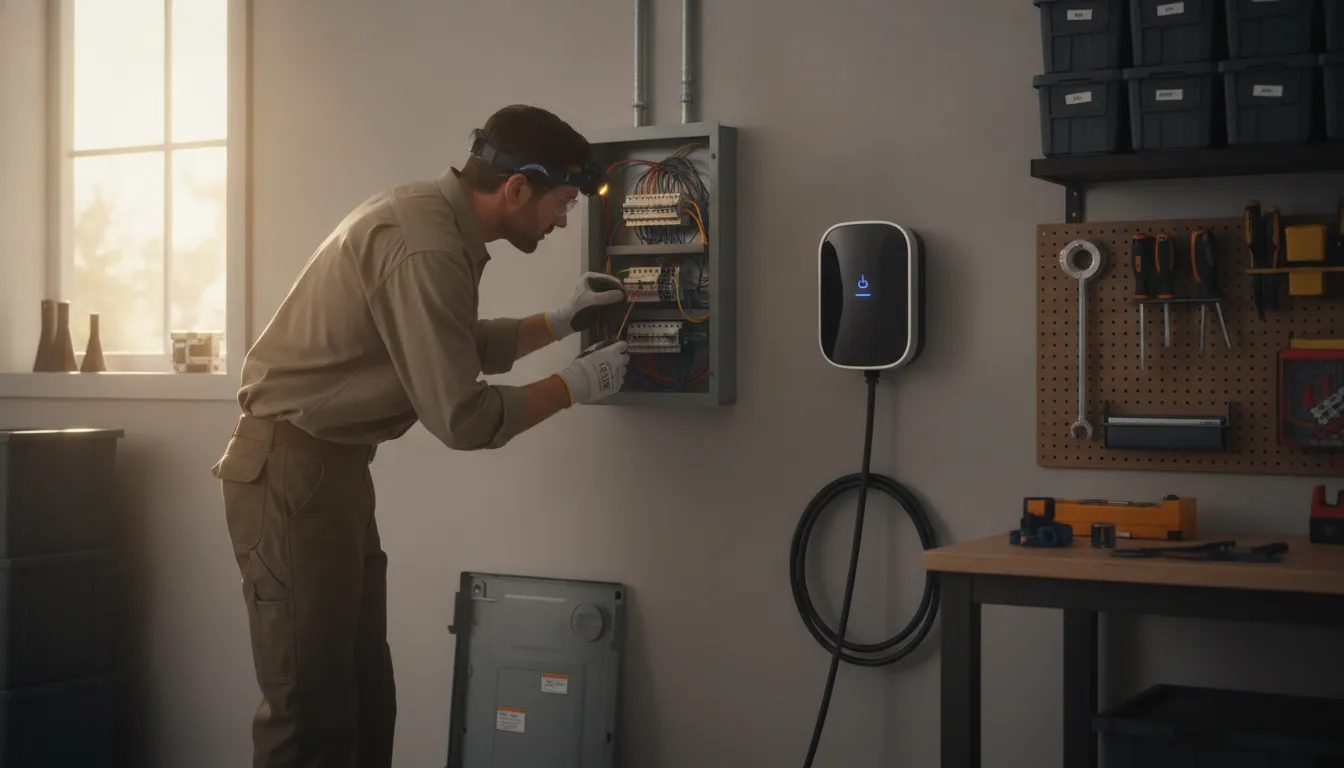
If you want a property-specific discussion, Get An Estimate for a coordinated review of your EV charging and home energy needs.
Do You Need a Permit for an EV Charger in California?
Permit requirements depend on the location and scope of work, but a new circuit, hardwired charger, panel modification, or service change commonly requires local review. California jurisdictions administer permits and inspections through local building departments, so the exact process can vary by city or county. A licensed electrical contractor can help identify the authority having jurisdiction and the steps that apply.
Permits and inspections are part of the project
A permit gives the local authority an opportunity to review the work and an inspection confirms that the installed system matches the approved plan. The requirements may address circuit protection, conductor sizing, grounding, equipment location, disconnecting means, and other details. The U.S. Department of Energy notes that local and state requirements apply to home charging installations, which is why homeowners should not rely on a one-size-fits-all assumption.
Keep the project record
Homeowners should retain the permit, inspection result, equipment information, and any electrical documentation provided by the contractor. These records can help explain what was installed during future electrical work or a property transaction. They also give the homeowner a clearer basis for discussing repairs or changes later.
AMECO's approach to solar and energy projects emphasizes planning around the property rather than promising the same outcome for every home. Project-specific electrical and permitting requirements should be confirmed before installation.
Can You Install a Home EV Charger Yourself?
Some homeowners can handle non-electrical preparation, such as clearing the mounting area, comparing equipment features, and deciding where the vehicle will park. The circuit, panel connection, grounding, and other electrical work are different. For a hardwired Level 2 charger, using a qualified professional is the safer approach and may be required by local rules or the equipment instructions.
Why DIY mistakes can be difficult to spot
A charger may appear to work even when the circuit or connection is not properly designed. Heat at a connection, nuisance tripping, inconsistent charging, and damaged equipment can develop over time. Unpermitted work can also complicate a later inspection, sale, remodel, or insurance conversation. Insurance terms vary, so homeowners should confirm policy questions with their insurer instead of assuming an outcome.
What homeowners should ask the electrician
- What electrical capacity does the home have for the proposed charger?
- Will the installation use a dedicated circuit, and why is that design appropriate?
- Which permits and inspections apply in this city or county?
- How will the wiring be routed and protected?
- What records will be provided after the installation?
California's Department of Industrial Relations explains electrician certification requirements for people working for licensed electrical contractors. Review the California electrician certification information when comparing professionals. A license or certification does not remove the need to discuss scope, permits, equipment, and inspection, but it is an important part of a responsible selection process.
How Can Solar and EV Charging Work Together?
Solar and EV charging can be considered together when the homeowner wants to use more of the property's energy production for transportation. Daytime solar production may create an opportunity to charge while the system is producing. But the practical result depends on production, driving schedule, vehicle needs, utility rules, electrical capacity, and equipment controls. It is not accurate to promise the same savings or charging schedule for every home.
Coordinate the electrical plan
When solar, battery storage, and EV charging are planned separately, equipment locations and conduit routes may conflict. A coordinated review can consider the service panel, inverter, battery, charger, roof work, and future loads in one sequence. This does not guarantee that every component will fit every property, but it helps identify constraints earlier.
Battery backup changes the conversation
A battery may support selected home loads during an outage, but backup capability and EV charging capability depend on system design and equipment. Homeowners should ask which loads are backed up, whether the charger is included, and how charging behaves when the grid is unavailable. AMECO's battery backup information can help start that discussion. A professional must confirm the final configuration for the property.
Before the FAQ, Get An Estimate to discuss a charger plan that accounts for your home's electrical system and any solar, roofing, or battery goals.
Frequently Asked Questions
Why do I need a licensed electrician for EV charger installation?
A licensed electrician can evaluate service capacity, design the circuit, connect the equipment, and help coordinate local requirements. EV charging is a sustained electrical load, so a professional review is especially important for a hardwired Level 2 charger.
How much electrical capacity does a home EV charger need?
There is no single capacity answer for every home. The requirement depends on charger output, vehicle limits, existing loads, service rating, wiring distance, and equipment instructions. A load calculation determines what the property can support and whether alternatives should be considered.
Do I need a permit for EV charger installation in California?
Permit requirements vary by jurisdiction and by the work involved. New circuits, hardwired equipment, panel changes, and service work commonly require local review. Confirm the requirements with the local building department or have a qualified electrical contractor manage the permitting process.
Can I install a Level 2 charger myself?
Homeowners can compare products and prepare the space, but the electrical connection should be handled by a qualified professional. Incorrect circuit sizing, grounding, wiring, or panel work can create reliability and safety concerns. The installer should also explain inspection and documentation requirements.
Plan Your EV Charger Installation with AMECO
The right home charging project begins with the property, not a generic equipment recommendation. A professional review can clarify charger level, electrical capacity, circuit routing, permitting, and how EV charging may interact with solar, roofing, or battery plans. Final recommendations and costs depend on the home, vehicle, equipment, utility territory, and local requirements.
AMECO Solar & Roofing is a California-owned company that has operated since 1974. Its integrated solar and roofing experience allows homeowners to discuss related energy and building considerations with one contractor. Learn more about roofing solutions if roof condition or future roof work is part of the planning conversation.


.svg)
