


Solar Battery Sizing for California Homes

AMECO Solar & Roofing approaches solar battery sizing by matching usable storage and power output to a home's essential loads, outage goals, solar production, and utility rate plan. The right design is not simply the largest battery; it is a balanced system that can support the appliances a homeowner values most.
Explore AMECO battery backup options for your California home.
Start With a Clear Backup Goal
Battery capacity only becomes meaningful after you define what the system should accomplish. One homeowner may want a refrigerator, lights, internet, and medical equipment to operate during a brief outage. Another may want to run larger loads, reduce grid use during expensive evening hours, or maintain essential service through a multi-day disruption.
Begin by separating must-have loads from nice-to-have loads. That decision affects required storage capacity, battery power output, electrical panel configuration, and the amount of solar energy available for recharging. It also keeps the design focused on real household priorities instead of an arbitrary battery count.
Know the Difference Between kW and kWh
Two measurements guide every battery design. Kilowatts, or kW, measure power, meaning how much electricity the battery can deliver at one moment. Kilowatt-hours, or kWh, measure energy, meaning how much electricity the battery can store and supply over time.
A battery could have enough kWh to operate essential loads overnight but lack enough kW to start a large air conditioner or pump. Conversely, it could deliver high power briefly yet run out of stored energy before morning. A sound design checks continuous output, short-duration surge output, and usable capacity together.
Choose an Outage Strategy
There are three practical starting strategies. Essential-load backup supports a limited group of circuits. Whole-home backup makes more circuits available but still requires active energy management. Rate optimization charges and discharges storage around a utility schedule, while preserving a selected reserve for outages. Many homeowners combine the last two goals.
The phrase "whole-home backup" does not mean every appliance can run without limits for any duration. Available power, stored energy, weather, and household behavior still matter. A homeowner who turns off pool equipment and avoids simultaneous high-draw appliances during an outage can make the same battery bank last substantially longer.
How Do You Calculate Essential Backup Loads?
Calculate essential backup loads by listing each appliance that must run, recording its watts, estimating daily operating hours, and converting the result to kWh. Then account for startup surges, battery reserve, conversion losses, and desired outage duration. This produces a practical starting estimate, which a site-specific design can validate.
Build a Household Load Inventory
Use appliance labels, manuals, monitoring data, or a qualified assessment to estimate demand. A nameplate rating may show the maximum draw rather than typical consumption, so actual operating data is especially useful for variable loads. Review at least a year of utility bills to understand seasonal changes, then examine hourly usage when that information is available.
A useful inventory includes the following seven items:
- List the circuits and appliances that must remain available during an outage.
- Record each item's running watts and any startup or surge requirement.
- Estimate how many hours per day each item will operate.
- Multiply watts by operating hours, then divide by 1,000 to estimate kWh.
- Add the daily kWh for all selected loads.
- Choose the number of outage hours or days the system should support.
- Add an appropriate design margin for reserve settings and conversion losses.
For example, a 100-watt load used for five hours consumes about 0.5 kWh. An appliance that cycles on and off should be estimated using its expected total run time, not all 24 hours. Actual consumption varies by equipment, age, settings, climate, and household behavior.
Check Simultaneous Demand
Daily kWh alone cannot confirm whether a battery can operate the selected loads. Add the power demand of appliances likely to run at the same time, then check for motor startup surges. Refrigerators, pumps, heating and cooling equipment, and some power tools may briefly demand more power when starting.
A load-management plan can reduce the required peak output. Homeowners might avoid using an electric oven, dryer, and air conditioner simultaneously during an outage. Critical-load panels and smart controls can also prioritize important circuits. Read more about planning home solar battery backup before deciding which loads belong in the backup plan.
Usable Capacity and Power Rating Both Matter
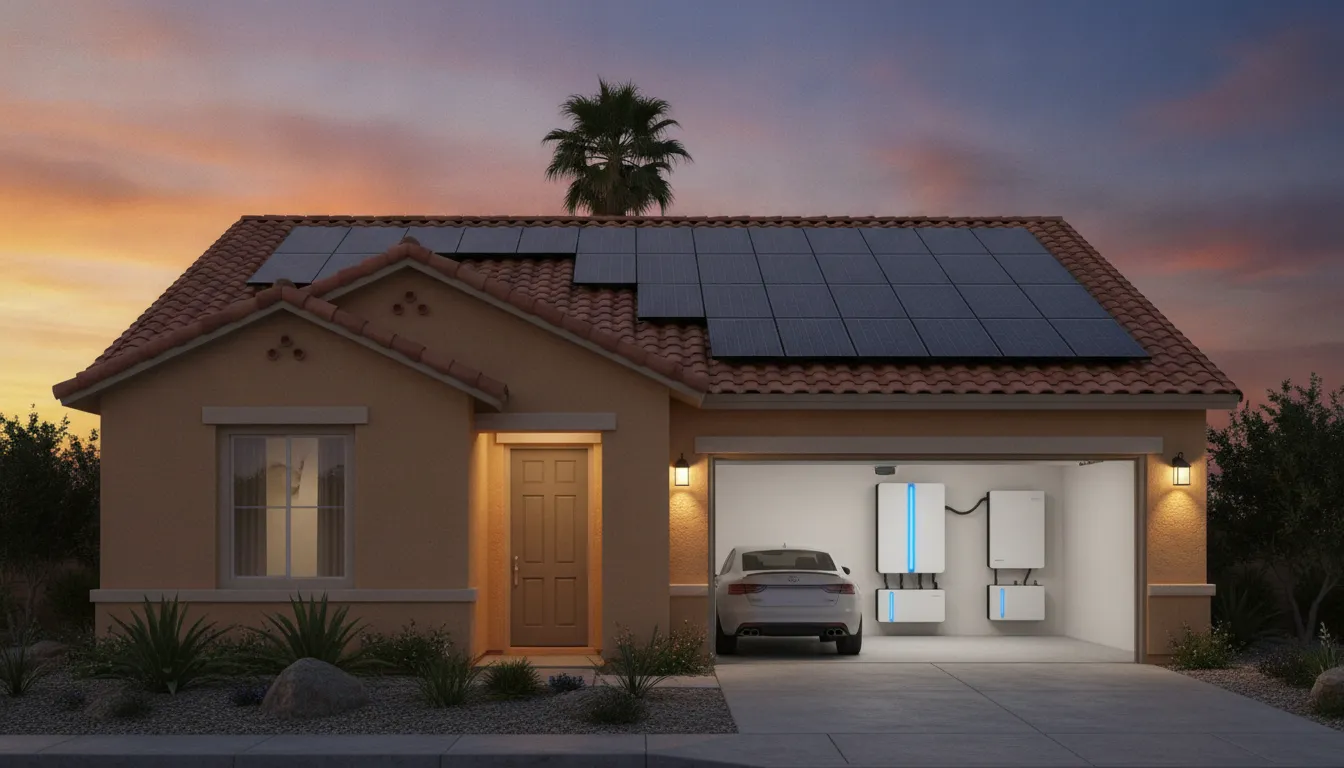
A battery specification sheet may show nameplate capacity, usable capacity, continuous power, and peak power. Nameplate capacity is the total energy stored under defined conditions. Usable capacity is the portion available to the homeowner under the manufacturer's operating limits and system settings. Continuous and peak power describe how quickly that energy can be delivered.
Reserve settings are equally important. A battery used for evening rate optimization could reach its selected minimum before an outage begins. Keeping a larger backup reserve improves outage readiness but leaves less stored energy available for daily rate shifting. The appropriate setting depends on outage risk, utility plan, season, and homeowner priorities.
| Design Factor | What It Tells You | Why It Matters |
|---|---|---|
| Usable capacity | Energy available from the battery in kWh | Helps estimate how long selected loads can run |
| Continuous power | Power the system can steadily deliver in kW | Limits the loads that can operate together |
| Peak or surge power | Short-duration power available for startup | Helps motors and compressors start successfully |
| Backup reserve | Stored energy held for a possible outage | Balances outage readiness with daily savings goals |
| Solar recharge potential | Energy the array may provide after household use | Influences recovery during an extended outage |
Use a Sizing Formula as a Starting Point
A simplified energy calculation is: selected daily load in kWh multiplied by desired backup days, then adjusted for usable capacity, reserve, and expected system losses. This is a planning estimate, not a final equipment design. Actual performance depends on operating conditions, equipment compatibility, solar availability, and changing household demand.
Discuss a tailored battery storage and backup design with AMECO.
Modular systems can provide flexibility because capacity and power may increase when compatible units are added. However, adding batteries later is not always identical to installing them together. Equipment generations, available electrical capacity, permitting requirements, and manufacturer rules can affect expansion, so future plans should be discussed during the initial design.
Can Your Solar Array Recharge the Battery?
A solar array can recharge a battery only when its available production exceeds the home's active demand and the system can direct that surplus into storage. Recharge time changes with array size, weather, season, shading, battery state of charge, and equipment limits. Storage and solar should therefore be sized as one coordinated system.
Plan for the Lowest-Production Periods
California has strong solar resources, but production still changes through the year. Shorter winter days, clouds, smoke, shading, panel orientation, and soiling can reduce output. A battery bank that recharges easily on a clear summer day may recover more slowly during a winter storm or a period of heavy smoke.
During a grid outage, solar energy may need to serve current household loads before replenishing storage. If daytime demand consumes nearly all available production, little remains for the battery. Load management becomes especially valuable during an extended outage because reducing daytime consumption can improve the chance of restoring charge for overnight essentials.
Balance Array Size, Storage, and Controls
More storage is not automatically more resilience. A large battery bank paired with an undersized or shaded array may take too long to recharge. Likewise, a large array needs compatible inverters, controls, and storage charging capability to deliver useful backup performance. AMECO's integrated approach can coordinate residential solar design, storage, and roofing conditions as part of one project review.
Roof condition also matters because panels and storage are long-term home investments. If a roof needs attention, coordinating the work can reduce avoidable disruption. Homeowners considering both projects can review AMECO roofing services and learn about the benefits of planning solar and roofing together.
How California Rate Plans Shape Battery Size
Battery sizing for bill management begins with the homeowner's utility tariff and hourly consumption pattern. Under a time-of-use plan, a battery may charge from solar during lower-value periods and discharge when grid electricity is more expensive. The useful capacity for this goal depends on how much energy the home typically uses during the targeted hours.
Export compensation, seasonal rates, weekday schedules, and special rate programs vary by utility and can change. A design should use the homeowner's current plan and recent interval data rather than a statewide assumption. Incentive eligibility and program rules also require verification for the specific property and applicant.
Balance Daily Cycling With Outage Reserve
A homeowner focused on rate optimization may want the battery to discharge deeply each evening. A homeowner focused on outage protection may prefer to retain a larger reserve. A hybrid strategy can adjust the reserve by season or weather risk, subject to system capabilities. There is no universal setting that maximizes both savings and backup duration at all times.
System economics also depend on solar production, consumption, equipment, financing, utility rules, and available incentives. For a project-specific starting point, use the solar project cost calculator, then confirm assumptions through a detailed assessment.
Calculate your project and explore a solar-plus-storage estimate.
Account for Future Electrical Loads
Today's utility bills may not represent tomorrow's demand. An electric vehicle, heat pump, induction range, pool equipment, home addition, or new air-conditioning system can change both total kWh and peak kW. Tell the designer about planned upgrades so the electrical infrastructure, solar array, and storage strategy can be evaluated together.
EV charging is often a flexible load because it can be scheduled outside an outage or shifted to favorable hours. Homeowners planning electrification can explore home EV charging options and discuss how charging will interact with solar and storage.
What Does a Solar Battery Sizing Example Look Like?
A practical solar battery sizing example starts with a homeowner's selected circuits, not a generic battery count. Add the expected daily energy for those loads, confirm their simultaneous and startup power, select the desired backup duration and reserve, then test whether the solar array can replenish storage under realistic seasonal conditions.
Example: Essential Loads Through the Night
Consider a homeowner who wants to support refrigeration, several LED lights, internet equipment, device charging, and a few outlets during an outage. The homeowner estimates each load's runtime, totals expected overnight kWh, and checks the maximum power if several items operate together. The designer then validates surge needs, usable battery capacity, reserve settings, and electrical panel compatibility.
If the homeowner later adds central air conditioning to the backup goal, both the energy requirement and power requirement may rise sharply. Rather than assuming another battery solves every constraint, the designer should evaluate startup demand, compatible equipment, circuit controls, and solar recharge potential. Strategic load shedding may provide a better result than unrestricted operation.
Example: Evening Rate Optimization Plus Backup
Another homeowner may want to cover a recurring block of evening consumption while retaining energy for outages. Interval utility data shows how many kWh the home typically uses during that period and which appliances drive peaks. The design can then compare battery configurations and reserve settings without promising a fixed savings amount.
A professional assessment should also review installation location, temperature exposure, clearances, local codes, interconnection requirements, and equipment compatibility. AMECO Solar & Roofing can coordinate a custom evaluation through its California battery backup service. Homeowners interested in a broader combined project can also review integrated solar and roofing solutions.
Questions to Bring to a Design Consultation
Bring recent utility bills, interval usage data if available, and a list of the circuits you want backed up. Note planned electrical upgrades, frequent outage conditions, and whether bill management or resilience is the higher priority. Ask the designer to explain usable capacity, continuous and surge power, expected seasonal recharge behavior, reserve settings, equipment compatibility, and the assumptions used in any performance estimate.
Also ask what happens when household demand exceeds available battery power, how essential circuits will be selected, and whether the proposed system can be expanded. A clear operating plan is part of good sizing. It helps everyone in the household understand which loads to limit during an outage and how to preserve stored energy when solar production is lower than expected.
Frequently Asked Questions
How many batteries does a California home need?
The number depends on the home's selected backup loads, required power output, desired runtime, solar recharge potential, utility plan, and equipment specifications. One battery may support a limited group of essentials, while broader or longer-duration goals may require additional compatible storage. A load-based assessment is more reliable than a generic battery count.
What is the difference between battery kW and kWh?
Battery kW measures how much power the system can deliver at one time, while kWh measures how much energy it can store and provide over time. Both matter: kW affects which appliances can run together, and usable kWh affects how long those appliances can operate.
Can solar panels recharge a home battery during an outage?
A properly configured solar-plus-storage system may recharge during an outage when solar production exceeds active household demand. The amount and speed of recharging depend on weather, season, shading, array output, battery state of charge, and equipment limits. Managing daytime loads can leave more solar energy available for storage.
Should battery sizing include future home upgrades?
Yes. Planned electric vehicles, heat pumps, air conditioning, pool equipment, additions, or other electrification projects can change total energy use and peak demand. Sharing those plans during design helps determine whether the solar array, storage, controls, and electrical infrastructure should accommodate future loads.


.svg)
