


Solar Panel Financing California: Loans, Leases, PACE Guide
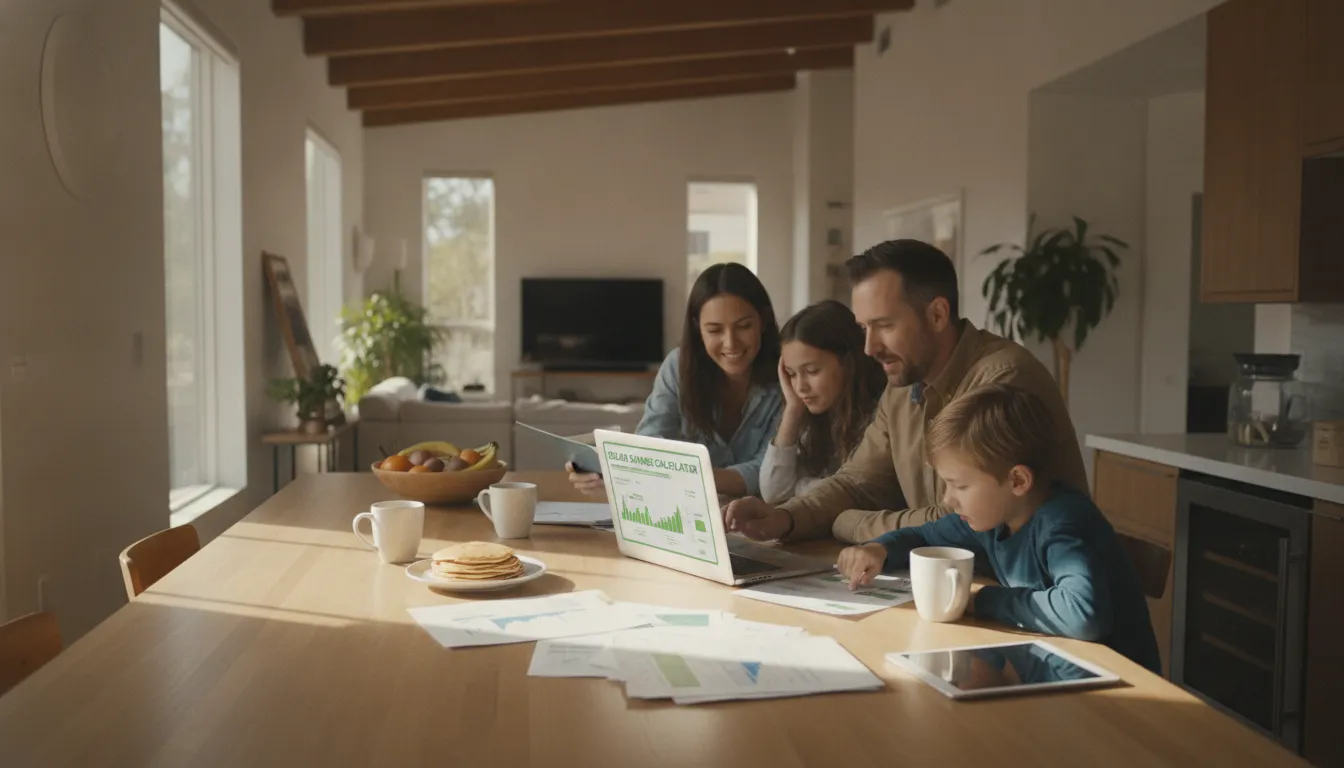
Most California homeowners face high power bills but lack the cash to buy solar panels upfront. Several flexible financing paths make it possible to start saving without a large payment today.
Get An Estimate today to see which solar financing option fits your home and budget.
Finding the right solar panel financing California homeowners can qualify for depends on credit scores, roof conditions, and energy goals. According to a homeowner guide from Energy.gov, you can pay for your system through solar loans, leases, or Power Purchase Agreements. With a solar loan, you own the system and can claim the federal tax credit. Under a lease or PPA, a third party owns the panels, and you pay a flat monthly fee or pay for the power they produce. Since final terms and rebate eligibility vary by location and utility, comparing these paths is essential before signing any contract.
This guide breaks down each solar panel financing option available to California homeowners covering loans, PACE assessments, federal tax credits, leases, and PPAs. You can determine which path aligns with your financial goals and housing plans.
AMECO Solar, California's integrated solar and roofing company since 1974, provides the insights below to help you navigate these choices with confidence.
Solar Panel Financing California: Solar Loans for Homeowners
If you want to own your solar system, a solar loan is a common path. The U.S. Department of Energy states that solar loans let you own your system and qualify for federal tax credits.
Solar loans let California homeowners purchase their solar energy system through monthly payments over 5 to 20 years. Because you own the system, you qualify for the 30% federal tax credit. Secured loans use your home as collateral for lower rates, while unsecured loans have no collateral requirement but carry higher interest rates, typically 8% to 12%.
Key advantages of solar loans include eligibility for solar tax credits and incentives, no third-party ownership fees, and the ability to transfer or sell your home with the system included. AMECO Solar backs every system it installs with a 40-year equipment warranty, which adds lasting value to a loan-financed purchase.
- Secured loans use your home as collateral, offer lower interest rates, and feature terms up to 20 years. Default risks include losing your collateral.
- Unsecured loans require no collateral, have higher rates (8% to 12% in California), and offer shorter terms. Approval depends primarily on credit score.
- In-house vs. outside lenders: Some solar companies offer convenience with in-house financing. Comparing these offers against third-party lenders like Mosaic, Dividend, and Sunlight Financial often yields better rates.
Your final loan terms depend on your credit score, location, and project size. AMECO's team can help you evaluate lender options during your consultation.
What Is PACE Financing and How Does It Work in California?
Homeowners exploring solar panel financing California options often encounter PACE. Property Assessed Clean Energy financing lets you install solar without upfront cash by attaching the cost to your property tax bill instead of a traditional bank loan.
PACE financing allows California homeowners to fund solar installations through an assessment on their property tax bill with no money down and no credit score minimum. Eligibility is based on home equity rather than personal credit. However, PACE places a tax lien on your property that takes priority over your mortgage, which can complicate selling or refinancing your home.
How PACE assessments work
Through the Property Assessed Clean Energy (PACE) financing program, a private company funded by local government provides the capital for your project. You repay the amount once or twice per year as a special charge on your property tax bill. To qualify, you must be current on property taxes, have no active bankruptcies, and own sufficient home equity.
Drawbacks and real estate risks
PACE interest rates are often higher than standard solar loans. The program places a tax lien on your property that takes first priority over your mortgage. Most mortgage lenders will not allow a buyer to assume a property with an outstanding PACE lien. If you want to sell, you must pay off the full PACE debt first. Many homeowners explore California zero-down solar programs as alternatives that avoid these property lien risks.
GoGreen Home as a state-backed alternative
California's GoGreen Home Energy Financing program (formerly REEL) offers low-interest loans for energy upgrades without placing a lien on your property. Unlike PACE, GoGreen Home is a state-supported loan program administered through partner credit unions and banks. You can fund solar panels, battery storage, and up to 30% of the loan for other improvements like roofing. Since AMECO handles both solar and roofing, this bundled approach streamlines a complete home energy upgrade under one project. Eligibility requires service from a major utility such as PG&E or Southern California Edison.
How the Federal Solar Tax Credit Affects Your Financing in 2026
When planning your solar panel financing strategy, the federal tax credit represents the single largest financial benefit available. The Inflation Reduction Act locked the Residential Clean Energy Credit at 30% through 2032, letting you deduct nearly a third of your total system cost from your federal income taxes.
The 30% federal solar tax credit applies to solar systems purchased with cash or a loan, because the homeowner must own the system to claim it. Leases and PPAs transfer the credit to the third-party owner. California also exempts added home value from solar installations from property tax reassessment. Battery storage qualifies for both the federal credit and state SGIP rebates.
Ownership rules and tax planning
To claim the 30% credit, you must own the solar system. Cash purchases and solar loans both satisfy this requirement, making them popular choices. Lenders often structure solar loans with lower initial payments for 12 to 18 months, expecting you to apply your tax refund toward the principal when you receive it. If you do not make that lump-sum payment, your rate or monthly payment may adjust upward. Planning for this timing is important when choosing a loan structure. For complete details, see our guide on federal solar tax credits and incentives.
California property tax exclusion
Adding solar panels increases your home's market value, but California law prevents that added value from triggering a property tax reassessment. The solar energy system is excluded from property tax calculations, keeping your annual tax bill stable. This benefit applies only when you own the system.
Battery storage incentives
California's Self-Generation Incentive Program (SGIP) offers cash rebates for energy storage systems. When you pair solar panels with battery backup, you can combine SGIP rebates with the federal 30% tax credit for maximum savings. AMECO is a certified installer for both Tesla Powerwall and Enphase battery systems, which means customers get expert guidance on qualifying for these stacked incentives. Each utility territory has different rebate amounts, so checking with a local installer is essential. See our SGIP rebate guide for current amounts.
Solar Leases and PPAs: Lower Upfront Costs With Key Tradeoffs
For homeowners who want to lower their electric bills without upfront cash, solar leases and Power Purchase Agreements provide no-money-down options. California's high utility rates make these paths attractive despite certain long-term tradeoffs.
Solar leases charge a fixed monthly fee regardless of energy production, while PPAs charge only for the electricity the system generates at a rate below the utility's. Both involve third-party ownership, meaning the homeowner does not qualify for the federal tax credit. Price escalation clauses of 1% to 3% per year and transfer complexities when selling the home are key drawbacks.
How third-party ownership works
In a lease or PPA, a solar company owns and maintains the equipment on your roof. The installer handles design, permitting, and long-term upkeep. This is the structure behind many California zero-down solar programs. Because you do not own the system, you cannot claim the federal tax credit. For a detailed comparison, read our article on solar leasing pros and cons.
- Solar lease: Pay a fixed monthly fee to use the panels. Your payment stays the same regardless of weather or production levels.
- PPA (Power Purchase Agreement): Pay only for the electricity the system produces at a rate below your utility's standard rate. Savings scale with production.
- Escalation clauses: Most agreements include 1% to 3% annual rate increases, meaning your payment rises over time.
- Home sale transfer: The agreement must transfer to the new buyer, which can delay or complicate a sale. Some buyers are unwilling to assume a solar lease.
Leases and PPAs work well for homeowners who prioritize zero upfront cost and want to avoid maintenance responsibility. However, the total lifetime savings are lower than owning the system through a cash purchase or loan.
Which Solar Financing Option Fits Your Home and Budget?
Choosing among the available solar panel financing California programs depends on your specific financial situation, home condition, and long-term plans. No single option is right for every homeowner.
The best solar financing choice depends on three factors: your credit score (loans need good credit, PACE uses home equity). Your roof condition (old roofs should be replaced before solar), and how long you plan to stay (ownership adds home value, leases complicate sales). AMECO's team can evaluate all three factors during a free consultation.
Financing comparison table
| Option | Upfront Cost | Ownership | ITC Eligible | Monthly Payment | Term | Best For |
|---|---|---|---|---|---|---|
| Cash Purchase | High | Yes | Yes | None | None | Maximum long-term savings |
| Secured Loan | None | Yes | Yes | Low, fixed | 10-20 yr | Homeowners with equity seeking low rates |
| Unsecured Loan | None | Yes | Yes | Medium, fixed | 5-15 yr | Ownership without collateral |
| PACE | None | Yes | Yes | Via tax bill | 10-20 yr | Lower credit but sufficient equity |
| Solar Lease | None | No | No | Fixed fee | 15-25 yr | Zero upkeep responsibility |
| PPA | None | No | No | Per kWh | 15-25 yr | Pay less for clean power |
Three factors to evaluate
- Credit score. Solar loans require good credit for the best rates. If your score is lower, PACE financing may work because it uses home equity instead of credit history.
- Roof condition. If your roof is nearing the end of its lifespan, replacing it before solar installation avoids costly panel removal later. AMECO's integrated solar and roofing team handles both under one project.
- Planned home tenure. If you plan to stay 7 years or more, owning through a loan or cash purchase delivers the highest return. For shorter time frames, consider how lease transfer or PACE lien repayment could affect your sale.
AMECO Solar, operating since 1974, has helped over 3,000 California homeowners navigate these decisions. Our team can evaluate your credit profile, roof condition, and energy goals to recommend the right path. Learn more about our AMECO approach and warranties or explore our solar installation services.
Frequently Asked Questions About Solar Panel Financing in California
Can I get the federal tax credit if I lease solar panels in California?
No. You must own your solar system to claim the 30% federal tax credit. If you choose a lease or PPA, the third-party company owns the system and receives the credit. According to the U.S. Department of Energy, solar loans allow you to maintain system ownership so you can claim this credit.
What credit score do I need for solar panel financing in California?
Requirements vary by financing type. Solar loans typically need good credit for the best rates, while PACE programs use home equity instead of credit scores for approval. Final terms depend on your credit score, utility territory, and property location.
How can I bundle solar and roofing into one financing package?
Yes, many lenders offer financing for combined solar and roofing projects. California's GoGreen Home program allows up to 30% of the loan to cover other home improvements. AMECO handles both solar and roofing under one company, making it straightforward to design and finance a complete home energy upgrade.
Will financing solar panels increase my property taxes in California?
No. California law excludes the added home value from solar installations from property tax assessments. Whether you purchase with cash or finance with a loan, your property tax bill will not increase from the solar system itself.
Does California offer any programs for low-income solar financing?
Yes. The GoGreen Home Energy Financing program offers accessible loan options without a property lien. Some utility territories also offer income-qualified incentives through the Self-Generation Incentive Program (SGIP) for battery storage. Eligibility varies by utility and income level.
Ready to Explore Your Solar Financing Options?
Every month you delay going solar in California is another billing cycle spent paying some of the highest electricity rates in the country. The 30% federal tax credit is locked through 2032, but local incentives like SGIP rebates have limited funding that changes annually. Starting your project now secures these benefits while they are available.
Get An Estimate with AMECO Solar today for a free consultation. As California's integrated solar and roofing company since 1974, we will help you compare financing options, evaluate your roof, and design a system that maximizes your savings. Get An Estimate to get started.


.svg)
