


Solar Panel Fire Safety in California Homes: What Homeowners Should Know

Solar panel fire safety in California homes starts with good system design, careful installation, and a clear plan for maintenance and emergencies. Solar equipment does not make a home fireproof, and no single device or credential can promise a particular outcome. Homeowners can, however, learn what the design should address and what information to keep available after installation.
Request a solar and roofing consultation
This guide covers roof layout, clearances, shutoff equipment, code-aware installation, upkeep, and questions to ask before approving a proposal. The right details depend on the home, equipment, local requirements, and the authority reviewing the project. For an overview of AMECO's coordinated solar and roofing approach, see how its home solar projects are approached.
What does solar panel fire safety involve?
A rooftop photovoltaic (PV) system includes more than the panels. It may include mounting hardware, wiring, inverters, protective devices, and, if selected, battery storage. Each part must be designed to work with the others and with the home's electrical service. Fire safety therefore is not simply a question of buying a panel with a particular label.
Good planning considers the roof's condition and shape, where electrical equipment will sit, how wiring will be routed and protected, and how emergency responders can identify the system. The design also needs to follow applicable electrical, building, and fire requirements. Those rules can depend on project details and local review, so a homeowner should ask the installer to explain the requirements that apply to the specific property rather than assume one checklist covers every California home.
The U.S. Department of Energy's Guide to Fire Safety with Solar Systems offers safety guidance for PV system owners and first responders. DOE also discusses resilience considerations for rooftop solar in wildfire conditions in its solar photovoltaic hardening guidance. These resources are useful context, but they do not replace a property's plans, inspection, or local authority requirements.
It helps to think in layers instead of searching for a single “fire-safe” feature. A well-planned roof layout, sound electrical work, required protection and labeling, a proper inspection, and a useful owner handoff each address different parts of the project. A homeowner can ask about each layer, then keep the answers and approved documents together. That approach makes the discussion specific to the system rather than turning a broad safety label into a promise.
How should the roof and panel layout be planned?
The roof is both the mounting surface and part of the home's building envelope. Before a system is installed, the design process should take account of roof condition, material, slope, framing, and the location of vents, skylights, ridges, and other features. Panels should not be placed in a way that blocks required access or creates conflicts with roof features and equipment.
Ask to review a site-specific layout, not just a rendering of a generic panel array. The plan can help you understand which roof areas will be used and how the design accommodates access and code requirements. If the roof may need work, discuss that before installation. A roof repair or replacement coordinated with solar can help avoid removing and reinstalling equipment later, but the sequence and scope depend on the roof and project. AMECO offers both solar and roofing services; homeowners can review its roofing solutions and solar solutions when considering a coordinated project.
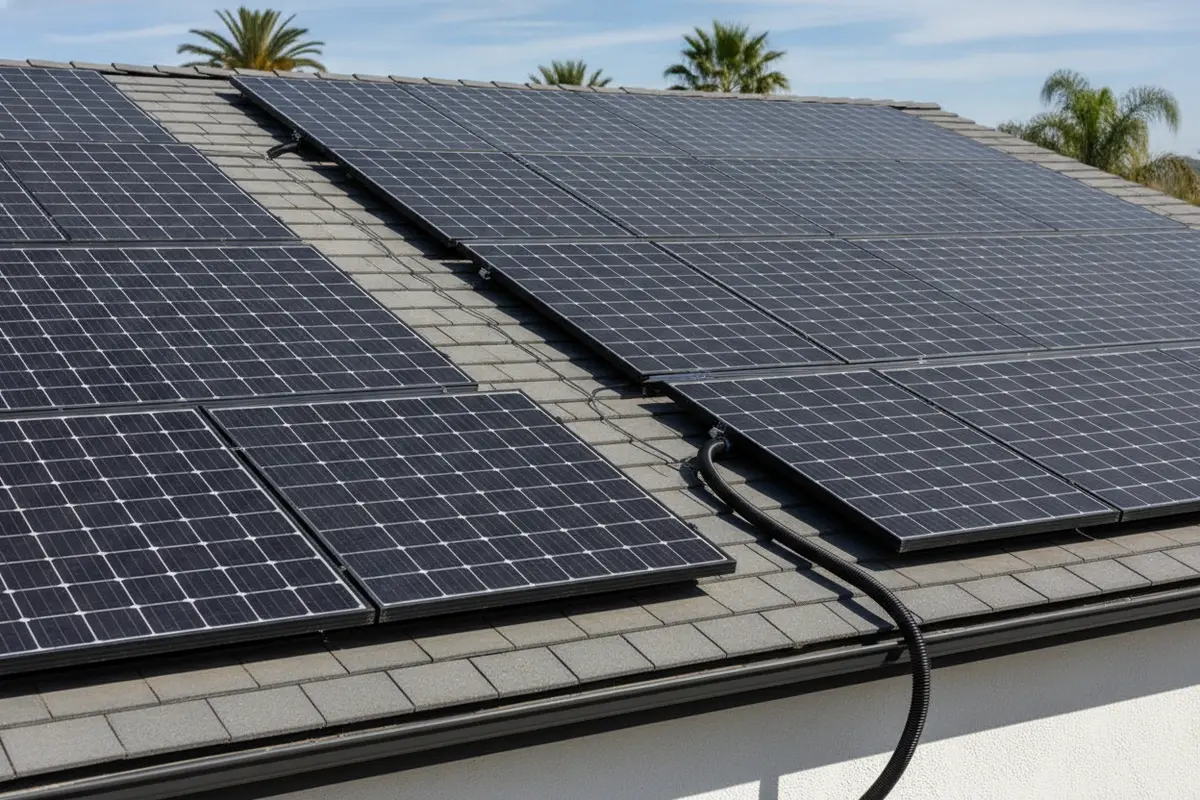
Clearances and access paths are not decorative details. They may relate to applicable fire-code provisions, safe service access, roof geometry, and the local plan review. The amount and placement of open space should be confirmed for the property's approved design; do not rely on a universal distance found in an online discussion. Keep in mind that a roof layout can change after a site survey or plan review.
A practical review begins with the drawing and the actual roof. Check that the plan identifies the array, roof edges, ridges, access points, vents, skylights, chimneys, and any equipment near the home. If a feature is missing or appears in the wrong place, ask for the plan to be corrected before it becomes the basis for construction. For example, a vent shown under a proposed panel row may need a design adjustment; the homeowner should not assume the installation crew will decide how to resolve it on the roof.
Roof condition deserves its own conversation. Ask whether the installer or roofing professional observed damaged materials, signs of prior repair, or areas that may need attention before mounting. If roof work is part of the plan, clarify the order of work, which party handles each scope, and how the final solar layout will reflect the roof that is actually installed. Keeping this sequence clear can help reduce avoidable changes after materials arrive.
- Ask which roof areas are included and what access or clearance areas remain open.
- Confirm that vents, skylights, chimneys, and other roof features are shown accurately.
- Discuss the roof's present condition and any work recommended before panels are mounted.
- Request clarification if a proposed layout changes between the initial design and final plans.
- Ask who will provide the approved final drawing and where you should keep it after the project.
These questions support a more useful design conversation. They do not replace the installer's engineering review or the local authority's approval. For examples of completed projects, see AMECO's California solar installation projects.
What should homeowners know about shutoff equipment?
Solar panels produce electricity when illuminated. That fact matters during maintenance and emergency response: switching off the home's main service does not necessarily mean every part of a PV array is de-energized. The system's design should include the required disconnecting and safety equipment, and the homeowner should know where the relevant controls are and how to communicate that solar is present.
Ask the installer to show you the disconnect locations and explain what each control does. The system may have more than one shutoff point, and equipment and labeling vary. Do not open enclosures, handle exposed wiring, or attempt to isolate components yourself. Follow the instructions provided for your specific system and leave electrical work to qualified professionals.
Request a simple handoff that identifies the main electrical equipment, provides the system diagram or documentation, and tells you whom to call for service. Keep this information somewhere accessible, not only in an email account. The DOE's fire-safety guide provides additional information about communicating PV system details during an emergency. Homeowners adding storage should also ask how the battery is included in the shutdown and emergency information; AMECO's home battery backup overview can help you understand the separate system-planning topic.
During the handoff, ask the installer to walk through the labels and explain which equipment they identify. You do not need to memorize technical terminology, but you should be able to find the information sheet or diagram and tell a responder that a PV system is present. Have the installer note any system-specific limits on what a homeowner may operate. A control that looks like a simple switch is not an invitation to experiment during an emergency.
For a household with more than one adult, consider reviewing the handoff together. Show family members where the system documents are stored and how to describe the equipment to emergency personnel. If you rent part of the home or expect guests to stay for an extended period, make sure the people responsible for the property know that solar is installed. The goal is not to ask household members to diagnose or shut down the system; it is to ensure they can share accurate information and avoid unsafe contact.
How can installation and code review support safety?
Code-aware installation means that the project is planned and completed to the requirements that apply to its equipment, location, and permit. The specific review can involve electrical and building requirements and, where applicable, fire access provisions. California jurisdictions can adopt or administer requirements through their own processes, so the permit set and the authority having jurisdiction matter for the individual home.
Ask who is responsible for permitting, what inspections are expected, and what documents you will receive at completion. A reliable handoff should make it possible to identify installed equipment and understand how the system was configured. A product listing or certification may address a particular component or test; it is not, by itself, proof that every design choice or installation detail is appropriate for every property.
Homeowners can use this checklist when reviewing a proposal:
- Does the plan show the actual roof, array location, and electrical equipment locations?
- Who handles permit applications, plan updates, inspections, and correction notices?
- How are wiring routes and connections protected and documented?
- What labels, diagrams, manuals, and emergency information will be provided?
- Who should be called if an inspection requires a change or if equipment needs service?
- How will approved changes be recorded so the final documents match the installed system?
It can also help to distinguish the stages in the process. A proposal describes the intended scope; a permit submission presents plans for the applicable review; construction follows the approved project documents and any authorized revisions; and inspection checks the work under the relevant process. Homeowners do not have to interpret technical code language on their own. They can ask the project team to explain what has been submitted, what approvals or inspections remain, and whether a change requires updated documentation.
Compare answers in writing, especially when comparing multiple proposals. One contractor may include steps or documentation that another proposal leaves unclear. AMECO has operated in California since 1974 and coordinates solar and roofing services; its company background describes its California roots and integrated focus. The relevant project scope and approvals still need to be confirmed for each home.
For a homeowner comparing bids, a short written scope can prevent assumptions. Note who prepares and submits permit documents, who communicates review comments, and who schedules inspections. Ask whether the contractor will provide final system diagrams and equipment instructions, and whether the array layout could change during review. A clear answer is more useful than a broad claim about credentials because it tells you what will happen on this property and what records you will have afterward.
What routine maintenance is appropriate?
Most homeowners should not climb onto a roof or touch electrical components to inspect a solar system. Instead, keep the system's documents and service contact information available, monitor the system using its provided monitoring method if available, and report an unusual alert or visible damage to the installer or a qualified service provider. Follow the manufacturer's instructions for the equipment you have.
After high winds, a nearby fire, roof work, or other event that may have affected the array, look from a safe location for obvious changes such as displaced equipment, damaged conduit, or debris. Do not approach downed wires or damaged electrical equipment. If there is smoke, sparking, or an active fire, move away and call emergency services. Do not try to extinguish an electrical fire or operate equipment in an unsafe area.
Routine care is not a reason to spray, open, or modify the system. If a roof inspection or repair is needed, tell the roofing professional that solar equipment is installed and coordinate any required system work. For basic PV terminology, AMECO's guide explains what a PV system is. For broader care topics, consult the system documentation and a qualified provider rather than treating a generic maintenance schedule as a substitute.
A simple record can make service calls more productive. Keep the installation date, equipment list, final layout, inspection or permit records, manuals, and service contact in one place. Add a note when a professional checks the system or performs roof work. If you receive a monitoring alert, write down its date and wording and take a screenshot if the system offers that option. Share the information with the service provider rather than trying to clear an alert by opening equipment or changing wiring.
Homeowners can also decide in advance who will arrange professional review after a significant event. For example, if a roofer needs to work near the array, tell them about the solar system before work begins and ask how any required electrical or mounting work will be coordinated. If the monitoring app goes offline, distinguish a communications issue from a physical warning by following the maker's instructions and asking a qualified provider when uncertain. Remote observations are not a substitute for an on-site inspection when one is needed.
Discuss a solar and roofing plan for your home
What changes when a home has battery storage?
A battery adds equipment and another part of the electrical system to consider. Its location, installation requirements, operating instructions, and emergency information should be covered in the project plan. Ask which equipment is included, where it will be placed, what clearances or environmental conditions apply, and how its shutdown instructions relate to the solar array and home electrical service.
Do not assume that a battery will power every circuit during an outage or that it changes how every solar system behaves when grid power is lost. Backup capability depends on system design and selected equipment. Ask for a clear explanation of the circuits supported, operating modes, and limitations. AMECO's guide to solar during a blackout provides additional background, and its battery backup FAQ addresses the subject from a system-planning perspective.
Before approving storage, ask the installer to identify the battery and related components on the plans and explain their location relative to the home and other equipment. Request the applicable operating and emergency information for the chosen system. Ask how the battery affects the shutdown sequence and who should assess it if it has been exposed to fire, impact, water, or other damage. Do not approach a damaged unit or attempt to restart it; follow the manufacturer's instructions and emergency responders' directions.
It is also useful to clarify what the battery does not do. Backup operation depends on the designed system and selected circuits, and it should not be treated as a substitute for emergency services or a guarantee that power will be available in every condition. A proposal should state what equipment is included and what backup behavior to expect. This helps homeowners understand both the practical function and the safety information for the complete system.
Which questions help compare solar proposals?
Fire-safety questions are most useful when they invite a specific explanation, drawing, or written answer. Avoid relying on a slogan such as “fire-safe” without asking what it means for the actual design. A proposal should make it possible to understand the equipment, installation scope, permitting, and owner handoff.
| Topic | What to ask | What to look for in the answer |
|---|---|---|
| Roof layout | Where will panels and equipment go, and what access areas remain? | A site-specific layout that reflects roof features and applicable review requirements. |
| Roof condition | Does the roof need work before installation? | A clear explanation of observed conditions, proposed work, and how solar and roofing scopes coordinate. |
| Electrical safety | Where are shutoffs and disconnects, and what does each one control? | Equipment-specific explanation and locations shown in project documentation. |
| Permits and inspection | Who manages permits and what inspections are expected? | Defined responsibilities and a plan for addressing review comments. |
| System handoff | What information will I receive after installation? | Applicable diagrams, equipment instructions, labels, and service guidance. |
| Battery storage | If included, where is the battery and how does it operate in an emergency? | Equipment-specific siting and operating information, including system limitations. |
To use the table, compare the same topics across each proposal rather than letting different sales materials set different standards. Mark an item as “confirmed,” “needs clarification,” or “not included,” then follow up on gaps before signing or approving a final design. If a contractor gives a verbal answer about a material detail, ask for it to be reflected in the scope or project documents. This is especially useful for roof repairs, access space, equipment locations, and who will deliver the final system records.
Ask for any unclear point to be explained before you sign or approve a final design. You can also read AMECO's overview of its design and installation approach and its residential solar information as you prepare to discuss a project. A comparison is most useful when each company is answering the same questions about the same home.
What should you do if there is a fire or visible damage?
Put personal safety first. If a fire is active, there is smoke or sparking, or electrical equipment appears damaged, move to a safe location and call emergency services. Tell responders that the property has a solar PV system and, if applicable, battery storage. Do not touch the array, wiring, damaged equipment, or downed lines, and do not go onto the roof.
After the immediate hazard has passed, wait for emergency responders or qualified professionals to say the area is safe. Contact the installer or an appropriate service provider to assess the system before it is operated again. Keep records of the event and any repair recommendations. The system's manuals and diagram can help a professional understand what was installed, but do not use them to perform electrical work yourself.
Preparedness can be simple: store the system information in a known location, make sure household members know the system is present, and include solar and battery details when communicating with emergency responders. DOE's fire safety resource for solar systems is a useful reference for owners reviewing emergency considerations.
Consider making a brief household note that says the home has rooftop PV and identifies where the system documents can be found. Include the installer or service contact details and whether battery storage is present. Keep the note with other emergency information, but do not post private system details where they create a security concern. If you move, pass the manuals and system records to the new owner or property manager so the information remains with the home.
During a wildfire warning or nearby fire, follow local emergency instructions first. Do not go onto the roof to cover panels, move equipment, clear debris, or operate a control. DOE's wildfire resilience guidance discusses planning considerations for PV systems; the specific actions for a household should come from emergency authorities and the system's qualified professionals, not from improvised rooftop work.
Ask about planning a coordinated solar and roofing project
Frequently asked questions about solar panel fire safety
Can solar panels be shut off during an emergency?
PV systems include disconnecting and safety equipment, but the exact controls and what they isolate depend on the system. Ask your installer to show you the installed controls and explain them. Do not assume that turning off the home's main service de-energizes every panel or wire, and do not handle electrical equipment during an emergency.
Do panels need a specific amount of open roof space?
Clearance and access requirements depend on the applicable rules, roof, system layout, and local review. There is no single measurement that should be assumed to apply to every home. Have the installer show the project's planned access areas and explain how they meet the requirements for that property.
Does a product certification guarantee a fire-safe installation?
No single label guarantees the outcome of every installation or eliminates risk. Product testing or listing addresses defined criteria; the full project also depends on system design, compatible components, installation, inspection, and maintenance. Ask what each certification applies to and request the project-specific permit and equipment information.
Should I inspect or clean panels myself after a fire?
No. Stay away from damaged panels, wiring, and electrical equipment, and do not climb onto the roof. Let emergency responders determine when the area is safe, then ask a qualified professional to inspect the system before it is used again.
What records should I keep after installation?
Keep the final layout or system diagram, equipment manuals, permit and inspection documents, shutdown instructions, and the service contact in an accessible place. These records help you explain what is installed and give a qualified professional a starting point if the system needs service. Store digital copies as well as any paper documents you receive.
How can you plan a safer solar project?
Start with a site-specific design and ask for clear answers about roof condition, array layout, access, electrical equipment, shutoffs, permitting, and the final handoff. If you are considering a battery or roof work as part of the project, include those choices in the same conversation so their requirements are considered together. Requirements and equipment vary, so use the approved plans and system documentation as the reference for your home.
To discuss a California solar and roofing project, request a consultation with AMECO Solar & Roofing. Bring your questions and any available roof, utility, or prior system information so the project team can understand the property and explain the next steps.


