


Solar Panel Maintenance Service: What Your Array Needs
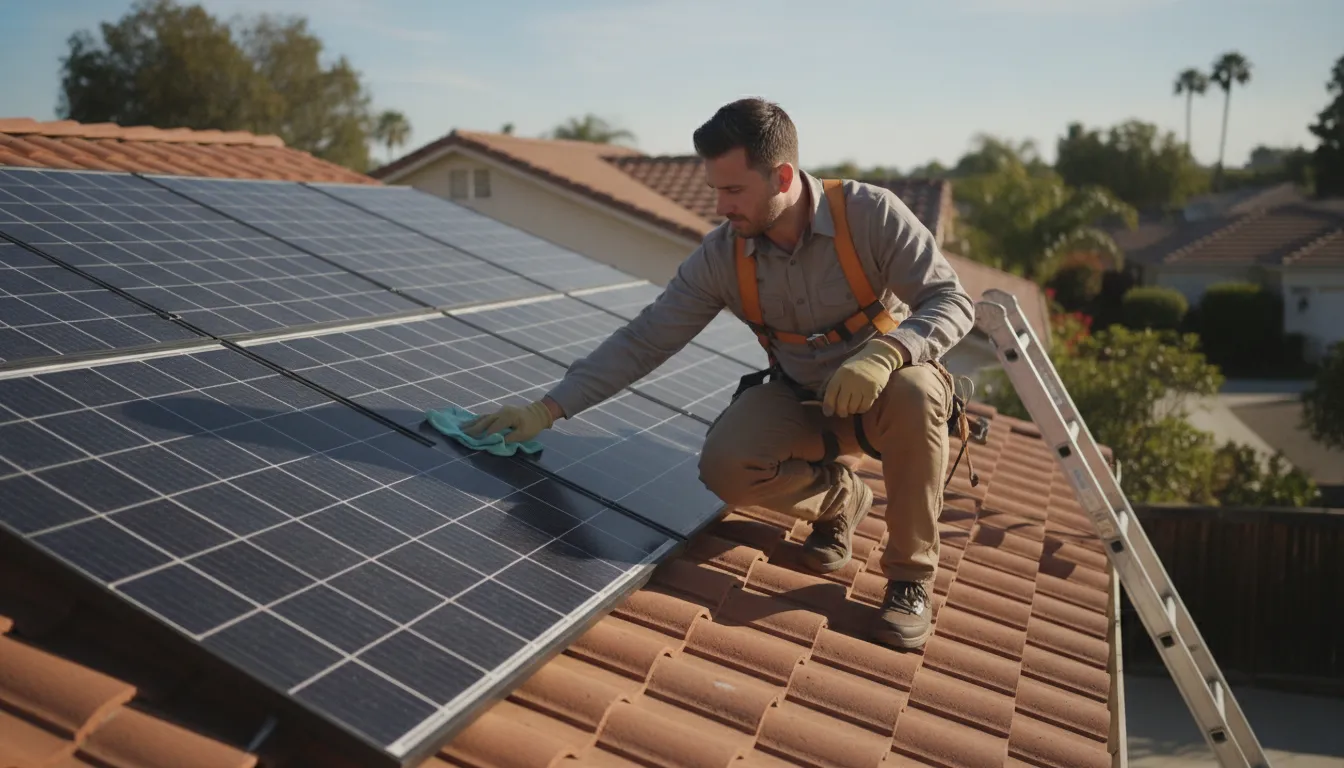
A solar array can run quietly for years, but quiet operation is not the same as a system that is performing at its best. California dust, pollen, roof debris, inverter alerts, and small changes around mounting points can affect production or create problems that are easier to address early.
A solar panel maintenance service can combine performance monitoring, equipment checks, safe cleaning guidance, and an inspection of the panels, racking, and roof interface. Regular precipitation often keeps panels clean, while a production-monitoring app can help identify when the system is not generating as expected. The U.S. Department of Energy also recommends following operation and maintenance best practices for safe, efficient performance.
Get An Estimate to talk with a California solar and roofing team about a maintenance plan matched to your array and roof.
Because a roof-mounted system has few moving parts, maintenance is usually preventive rather than constant. Understanding what that prevention protects, from energy output to roof integrity, makes it easier to see which checks belong in a routine. Routine care also clarifies when professional support is the safer choice.
Why Your Solar Array Needs Regular Maintenance
A roof-mounted solar array is designed to operate quietly for years, but "low maintenance" does not mean "no attention." The U.S. Department of Energy explains that these systems have no moving parts, which keeps routine maintenance requirements minimal. Even so, inspections and preventive care help identify issues that are not visible from the ground. Panels, wiring, mounting hardware, and roof surfaces all work together as one system.
Regular maintenance supports performance as well as safety. The Department of Energy recommends following operation and maintenance best practices to help photovoltaic and energy storage systems perform safely and efficiently, including preventive and pre-storm maintenance. That guidance is especially relevant in California, where dust, pollen, heat, wind, and seasonal weather can affect an array and its surrounding roof. A professional review can confirm that the equipment is operating as intended and that small concerns are addressed before they become more disruptive or expensive. If you add battery backup, a coordinated maintenance plan keeps storage and panels performing together.
Minimal maintenance still protects long-term performance
Solar panels can continue producing energy without moving components, but the system still depends on electrical connections, inverters, racking, and roof attachments. A maintenance visit may include checking for visible damage, examining mounting points, reviewing inverter or monitoring information, and looking for conditions that could affect production. The goal is not to create unnecessary service work. It is to keep the system within its intended operating conditions and give the homeowner a reliable record of its condition.
This matters when a system's production changes gradually. An issue may not stop the array entirely, yet a fault, damaged connection, shading change, or roof-related problem can reduce performance over time. Reviewing system data alongside an on-site inspection gives a clearer picture than relying on a single day's output or waiting for a complete failure.
Maintenance can support warranty protection
Major solar components have long expected service lives. According to the Department of Energy, panels, inverters, and racking systems commonly carry warranties lasting about 25 years. Warranty terms vary by manufacturer and product, so homeowners should review their specific documents. Keeping maintenance records and addressing problems through qualified professionals can help document responsible care. It also makes it easier to determine whether a covered repair may apply. AMECO's California solar and roofing specialists can keep that documentation organized.
For California homeowners, a solar panel maintenance service can also provide coordinated attention to the roof beneath the array. This is valuable when roof penetrations, flashing, or tile areas need review. Professional upkeep is a practical way to protect both energy performance and the larger home investment. It does not treat routine maintenance as a reason to replace equipment that is working properly. Learn more about photovoltaic operation and maintenance best practices from the Department of Energy.
What Are the Signs Your Solar Panels Need Professional Maintenance?
Solar panels are designed to operate with relatively little routine attention, but changes in system performance or condition deserve a closer look. A professional inspection can help distinguish normal seasonal variation from an issue affecting production, electrical equipment, or the roof-mounted array.
Your energy production drops unexpectedly
Start with the monitoring app provided with your system. The U.S. Department of Energy explains that homeowners should have access to detailed, real-time production data and should contact their installer if the system is not producing power as expected. Compare current output with your system's usual pattern while accounting for weather, shade, and seasonal sunlight. A significant or persistent drop is a reason to request a solar panel maintenance service rather than assuming the panels simply need cleaning.
Low production can have several causes, including soiling, an inverter issue, a damaged connection, or a problem affecting part of the array. A qualified technician can test the system and identify the source before you make changes that could affect equipment or warranties. Learn more about solar production monitoring from the Department of Energy.
Debris is collecting on the panels
Visible dust, pollen, leaves, bird droppings, or other grime can reduce the sunlight reaching the panel surface. This is especially worth noting after extended dry weather, nearby construction, agricultural activity, or a storm. A light layer may be handled by normal precipitation, but heavy or persistent buildup can justify professional cleaning. Particularly when the array is difficult or unsafe to access from the roof.
The inverter shows a warning
Warning lights, error codes, or status alerts on the inverter or monitoring platform should not be ignored. Turn to the system documentation for the meaning of the alert, but avoid opening electrical equipment or attempting a repair yourself. An installer or qualified solar technician can review the diagnostic information and determine whether the issue involves the inverter, wiring, communications, or another system component.
You see physical wear or damage
During a ground-level visual check, look for cracked glass, damaged frames, loose-looking hardware, exposed wiring, lifted components, or signs that mounts and flashing may have shifted. Do not walk on panels or climb onto the roof to investigate. For California homes with tile roofing, panel and mounting concerns can also overlap with roof integrity. Prompt professional attention can help protect both the solar equipment and the roof beneath it.
What a Professional Solar Panel Maintenance Service Includes
A professional solar panel maintenance service should look beyond the glass surface. The goal is to confirm that the array is producing as expected, that its supporting hardware remains secure, and that the roof continues to protect the home. A thorough visit typically combines visual inspection, electrical testing, equipment diagnostics, cleaning, and roof-integrity review.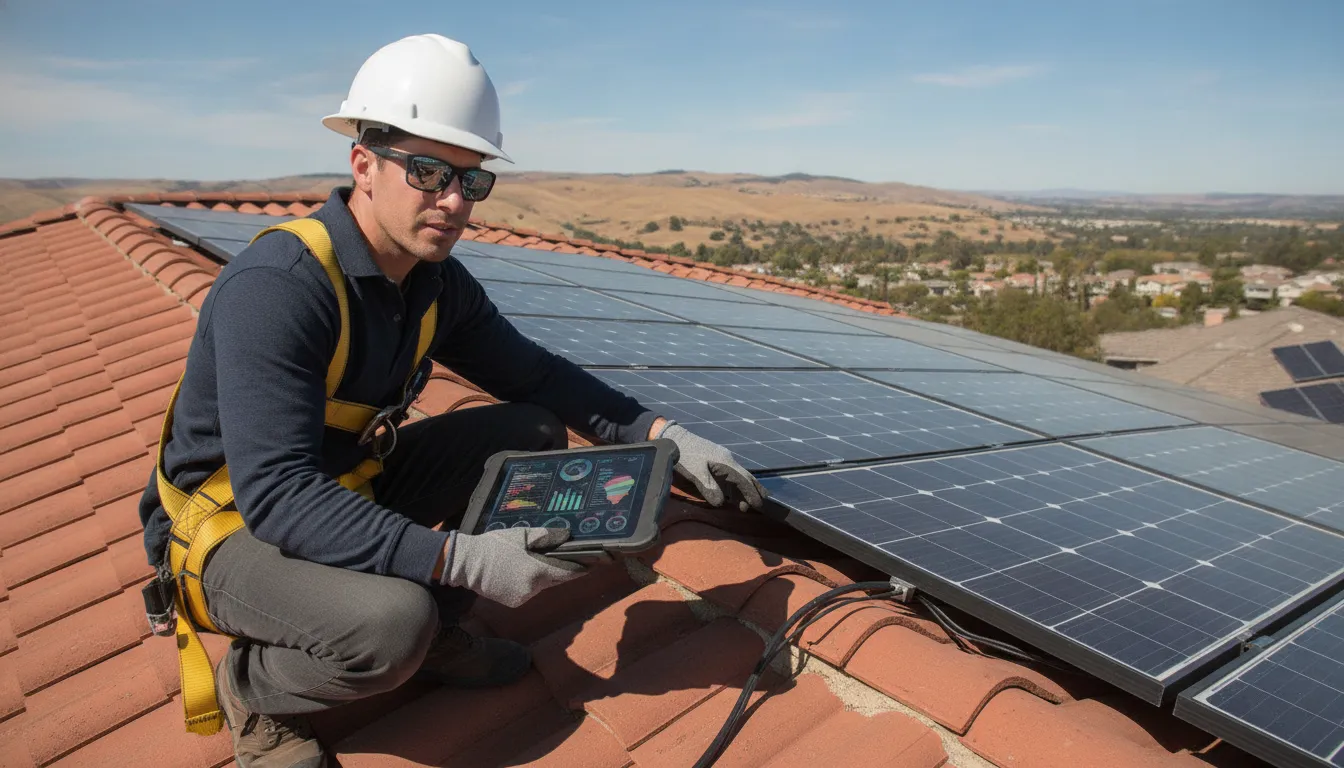
- Visual inspection of panels, racking, clamps, rails, and mounting hardware.
- Electrical and inverter performance testing with diagnostic review.
- Safe cleaning of dust, pollen, ash, and bird debris from the panel surface.
- Roof-penetration, flashing, and waterproofing review around the array.
- A written record of findings, tests, and recommended next steps.
Visual inspection of panels, racking, and mounts
The technician first examines the panels for cracks, chips, discoloration, loose wiring, and other visible damage. They also inspect the racking, clamps, rails, and mounts for movement, corrosion, or signs that weather has affected the assembly. Small changes in hardware can become more serious when an array is exposed to wind. Heat, and seasonal weather, so the inspection should document anything that needs monitoring or repair.
Electrical and inverter performance testing
Production data provides an important starting point, but an onsite service can investigate why output has changed. Electrical performance testing may check connections, voltage, current, grounding, and other system conditions, according to the equipment and the technician's safety procedures. The technician can also review inverter diagnostics and error history. Because the inverter converts the array's direct-current electricity into the alternating current used by the home. Its alerts can help identify an equipment or system issue before it becomes a prolonged production loss.
The U.S. Department of Energy explains that homeowners should have access to real-time production data and contact the installer when a system is not producing as expected. A maintenance visit can pair that monitoring history with physical and electrical checks. See the professional solar panel maintenance service options available for your system and property.
Cleaning dust, pollen, and grime
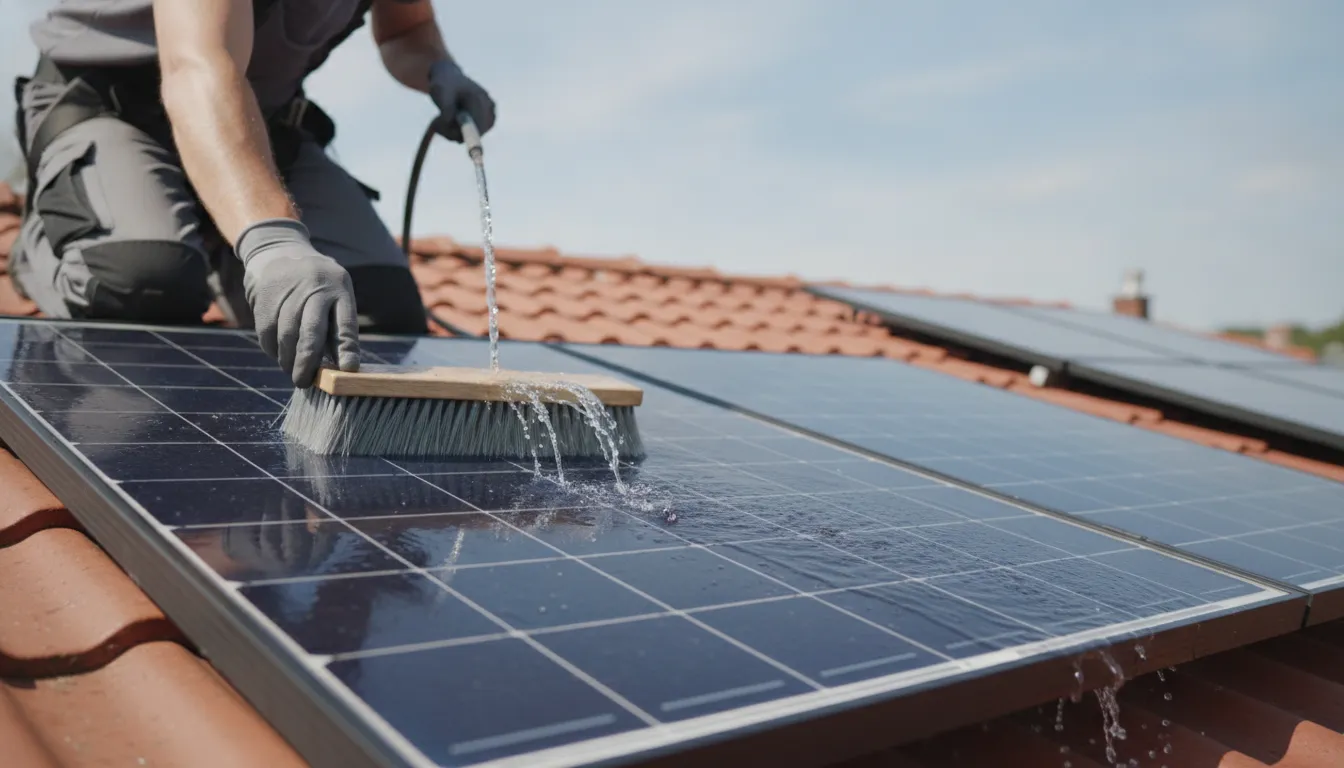
Panels are often cleaned by regular precipitation, but California's dry conditions, airborne dust, agricultural pollen, and bird debris can leave a coating on the surface. Industry sources cited in maintenance research report that accumulated dust, pollen, and grime can reduce efficiency by up to 25 percent in some conditions. That figure is not a guarantee for every array, since the effect depends on local weather, tilt, shade, and the type of soiling. Professional cleaning removes buildup safely and can help restore output that was being lost to a dirty surface.
Get An Estimate to schedule professional inspection and maintenance service for your solar array.
Roof penetrations and waterproofing
A solar service should also include a review of the areas where the array interacts with the roof. The technician looks for signs of water intrusion, failed sealant, damaged flashing, or other concerns around roof penetrations and mounting points. This is especially important when panels are installed over tile or another roof material that requires specialized access and handling. Coordinating solar and roofing expertise helps protect both the equipment and the building envelope, rather than treating them as separate systems.
How Often Should You Schedule Solar Panel Maintenance?
There is no single maintenance calendar that fits every California solar array. A system in a dry, dusty part of the Central Valley may need attention sooner than one near the coast that receives more regular rainfall. Roof pitch, tree cover, pollen, nearby construction, wildfire ash, and the ease of safely reaching the array can all change the right cadence.
For many California properties, panel cleaning may fall roughly every six months to a year, but that is a planning range, not a universal rule. Rain often removes ordinary surface dust, while extended dry weather can allow pollen, grime, or ash to accumulate. After a dusty season, nearby wildfire, or prolonged period without meaningful rain, a visual check can help determine whether the panels need more attention.
Use the property and weather to set a cleaning interval
Watch for conditions that can reduce the amount of sunlight reaching the panel surface. Overhanging trees, bird activity, agricultural dust, road dust, and seasonal pollen may justify more frequent inspection or cleaning. By contrast, a relatively clear array with regular rainfall may not need scheduled washing as often. The goal is not to clean on an arbitrary date. It is to keep the system reasonably clear while avoiding unnecessary roof access or work that could damage equipment.
Homeowners can review the array from the ground when conditions are safe, but roof access deserves caution. Do not walk on panels, disturb wiring, or use abrasive tools. If the roof is steep, fragile, difficult to access, or affected by ash and debris, a qualified provider can recommend a safe approach.
Schedule service when inspection and testing are due
Cleaning is only one part of professional maintenance. A service visit may be appropriate when production is lower than expected. An inverter displays an alert, the monitoring app shows unusual behavior, or the array has visible damage. It can also make sense after severe weather, construction nearby, or a roofing project. The appropriate service frequency depends on the system's age and equipment, roof condition, exposure, and prior maintenance history.
Rather than choosing a generic annual plan without reviewing the property, ask a professional solar panel maintenance service to assess the array. The team can explain what to check, how often, and why. A provider familiar with both solar equipment and the roof can help coordinate maintenance without treating panel cleaning as a standalone task.
DIY vs. Professional Maintenance: What to Leave to the Experts
Some solar maintenance is appropriate for a homeowner, especially when it can be completed from the ground without touching the equipment. A quick look at the array, a review of the monitoring app, and an occasional gentle rinse may help you notice changes early. The boundary is safety: do not climb onto the roof, move panels or tiles, open electrical equipment, or troubleshoot energized components yourself.
The U.S. Department of Energy says solar panels are typically cleaned by regular precipitation. During a prolonged dry spell, a directed stream of water from a hose may be sufficient if the panels appear particularly dirty. That guidance does not make roof access or electrical work a do-it-yourself project. A professional solar panel maintenance service can inspect the system without turning a simple cleaning task into a fall, roof, equipment, or warranty problem.
| Task | What a homeowner can do | When to call a professional |
|---|---|---|
| Basic visual check | From the ground, look for obvious shading, heavy debris, cracked glass, or visible changes. Do not touch damaged equipment. | Arrange an inspection for cracks, loose components, water intrusion, wiring damage, or anything that cannot be safely assessed from ground level. |
| Hose rinse | During a dry spell, use a directed stream of water from a safe location when the panels are only lightly soiled. Never climb onto the roof. | Use a professional cleaner when roof access is required, deposits do not rinse away, or the array is installed over delicate tile. |
| Monitoring app review | Review real-time production data and note a meaningful change from the system's normal pattern. | Contact the installer or a qualified technician when production is not as expected. The technician can test the system rather than relying on app data alone. |
| Inverter diagnostics | Check the app or display for an alert and record the message, without opening the inverter. | Leave diagnostic testing, fault investigation, and corrective work to a qualified solar professional. |
| Electrical testing | Do not test wiring, disconnects, or other electrical components yourself. | A qualified technician should perform electrical testing and de-energize equipment using the appropriate safety procedures. |
| Roof access and tile handling | Keep inspections at ground level. Do not step on, lift, or remove roof tiles around the array. | Use a provider experienced with both roofing and solar when access, tile removal, flashing, or roof-penetration work is necessary. |
| Warranty-required inspections | Keep installation records, monitoring alerts, and service documentation together. | Review manufacturer and installer terms before work begins, then use the required qualified service provider and retain inspection records. |
For California homes, professional involvement is especially important when panels sit above tile or when a production change may involve the inverter, wiring, roof, or array structure. The right division of responsibility is simple: homeowners monitor and report, while trained technicians diagnose, test, and access the system safely.
Tile Roofs and Panel Integrity: Why Experience Matters
Solar maintenance on a tile roof requires more than checking the panels from the ground. The array, mounting hardware, flashing, and roofing materials function as one system. When a technician needs to access the equipment, even a small mistake can crack a tile, disturb a seal, or create a path for water. That is why homeowners should consider both solar expertise and roofing experience when choosing a professional solar panel maintenance service.
Tile requires a careful approach
Clay and concrete tiles are durable, but they can be damaged by concentrated weight, improper foot placement, or careless movement around the array. A qualified technician should understand how to access the roof safely, protect surrounding tiles, and identify damage that may not be visible from the ground. Maintenance should not solve one problem while creating another.
This matters especially when a service visit involves removing or working around panels. A technician who understands only the electrical side may overlook a cracked tile beneath the array. A roofing-only contractor may not be equipped to evaluate production, wiring, connectors, or inverter behavior. Coordinating both disciplines helps keep the inspection focused on the complete installation.
Watertight penetrations protect the home
Solar mounting points create roof penetrations that must remain properly flashed and sealed over time. Weather, thermal movement, roof age, and previous repairs can all affect these areas. During professional maintenance, the team should look for signs of disturbed flashing, failed sealant, exposed components, or moisture intrusion, then distinguish a roofing repair from a solar-equipment issue.
Roofing work can also affect the array. If tiles need replacement or a roof section needs repair, panels may need to be handled carefully so the work does not damage the modules or mounting system. Planning the sequence with both trades in mind can reduce unnecessary handling and help preserve the roof warranty and equipment protections that apply to the property.
Integrated expertise simplifies long-term care
AMECO Solar & Roofing provides integrated solar and roofing services for California homeowners. That combination gives the homeowner one team that can evaluate panel performance while considering the roof beneath it. AMECO's professional inspections are designed to help equipment operate efficiently and keep roof penetrations watertight over time.
For homes with tile roofing, choosing a provider that can coordinate both needs is a practical way to protect panel performance and roof integrity together. Learn more about AMECO's roofing services for tile-roof integrity and how they fit with solar maintenance planning.
How Do You Choose the Right Solar Panel Maintenance Service?
The right provider should do more than rinse the panels. Solar maintenance can involve roof access, electrical testing, inverter diagnostics, equipment records, and decisions that affect manufacturer warranties. When comparing companies in California, look for a team that can evaluate the complete system and explain its findings clearly.
Verify licensing, insurance, and relevant experience
Ask whether the company uses appropriately licensed and insured professionals for the work being proposed. Confirm that the team has experience with residential solar systems similar to yours, including your panel, inverter, monitoring, and mounting brands. A provider familiar with the equipment can interpret alerts and performance data more accurately than a general cleaning service.
It is also reasonable to ask who will perform the inspection, what testing is included, and whether you will receive a written report. Clear answers before the appointment make it easier to compare service scope rather than choosing on price alone.
Look for solar and roofing knowledge
Your array is part of a larger building system. The provider should know how to inspect flashing, attachments, roof penetrations, drainage paths, and visible roof wear without creating new damage. Tile roofs deserve particular attention because tiles can crack or shift when accessed incorrectly. Specialized handling helps protect both the roofing material and the solar equipment.
An integrated solar and roofing contractor can coordinate these concerns under one company. That is especially useful when an inspection identifies a roof issue beneath or near the array. Instead of treating the panels and roof as unrelated projects, the team can explain the order of work and the implications for both systems. AMECO Solar has provided integrated solar and roofing services in California since 1974, including maintenance support for its installations. Learn more about a professional solar panel maintenance service.
Choose documentation and warranty-conscious work
Before work begins, ask the provider to review available equipment and workmanship warranty terms. The service should follow manufacturer guidance and avoid unnecessary adjustments that could complicate a future claim. Request documentation showing the inspection date, system condition, tests performed, observed issues, photos when useful, and recommended next steps.
Keep those records with your installation documents. They create a useful maintenance history and give another technician a clearer starting point if an inverter alert, production change, roof concern, or warranty question arises later.
Assess the provider's broader capabilities
A strong maintenance partner should be able to identify when an issue falls outside routine service and connect it to the right solution. That solution may involve roof repair, monitoring support, electrical troubleshooting, or equipment replacement. Ask how findings are handled and whether the company can manage related solar and roofing needs. The goal is not to buy every service at once. It is to work with a provider that can give you an accurate, coordinated path when the system needs more than cleaning.
Get An Estimate to have a professional review your array and recommend a maintenance schedule that protects both performance and your roof.
Frequently Asked Questions
Do solar panels need regular maintenance?
Solar panels have no moving parts, so they usually need less maintenance than many home systems. However, periodic visual checks, production monitoring, cleaning when conditions warrant it, and inspection of the roof and electrical equipment can help identify issues before they affect performance.
How often should I have my solar panels cleaned?
There is no universal cleaning schedule for every California home. Local dust, pollen, wildfire residue, nearby trees, roof pitch, and rainfall all affect how quickly debris accumulates. Monitor production and arrange cleaning when buildup is visible or output changes unexpectedly. A professional can recommend an interval based on your property.
What is included in a professional solar panel maintenance service?
A professional service may include a visual inspection for panel, racking, wiring, and roof damage; production and electrical performance testing; inverter diagnostics; and removal of debris. On a tile roof, the technician should also use safe access methods and check that maintenance has not compromised the roof or mounting area.
Can I perform solar panel maintenance myself?
Homeowners can monitor system production, look for visible debris from the ground, and follow the equipment manufacturer's guidance for simple care. Avoid climbing onto the roof, handling electrical components, or using abrasive tools. Call a qualified professional when the array is difficult to access, production drops, damage is visible, or the inverter reports a fault.
Keep Your Solar Investment Performing at Its Best
Routine care protects the energy your system produces and the roof beneath it. The right maintenance approach depends on your property, your roof, and how your array is exposed to the elements. A professional assessment starts with a clear look at your specific system.
AMECO Solar and Roofing has served California homeowners since 1974 as an integrated solar and roofing contractor. That combination matters on maintenance day, because the same team that understands your panels and inverter also protects the roof those panels mount to. Get An Estimate to discuss a maintenance plan tailored to your home and your solar array.


.svg)
