


Solar Panel Removal for Roof Replacement: A Guide
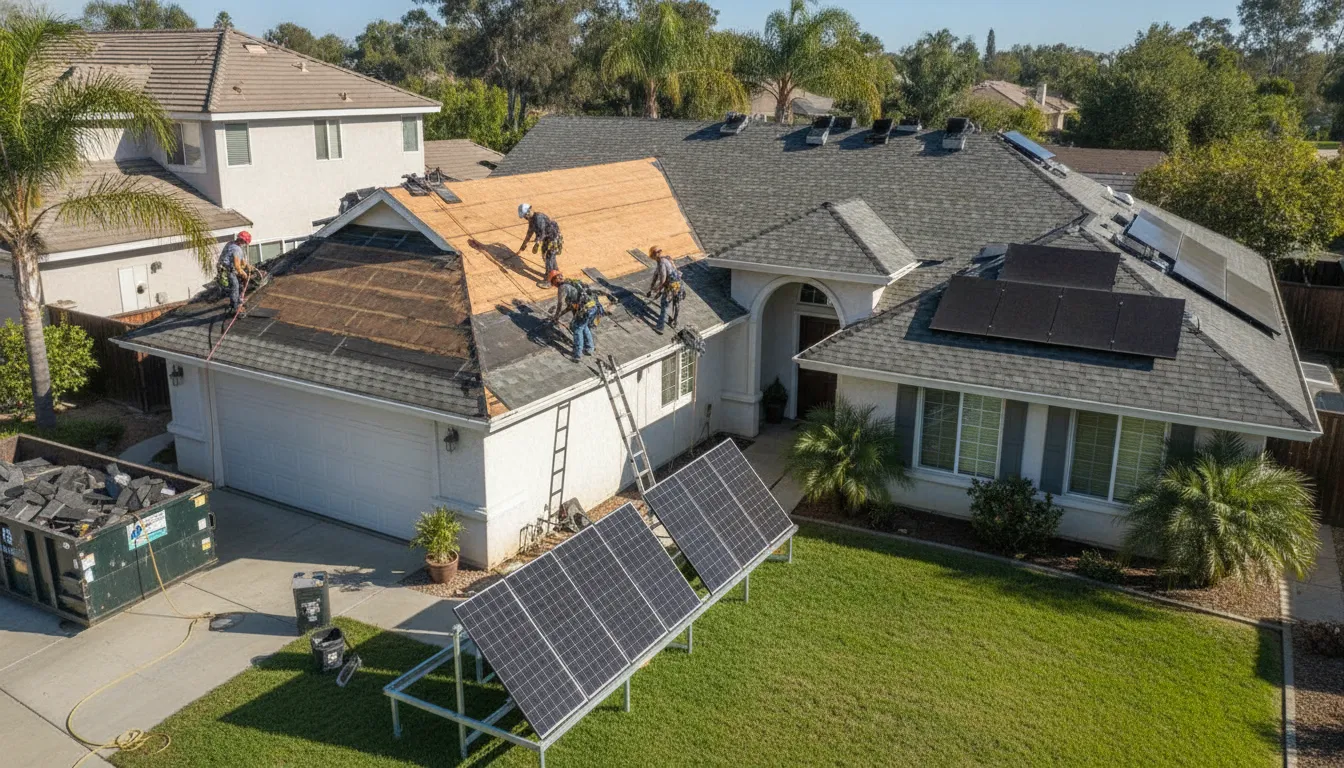
Solar panel removal for roof replacement is a coordinated project, not just a matter of lifting modules off the roof. The array must be shut down safely, its wiring and layout documented, the equipment protected during roofing work, and the system reinstalled and tested afterward. Planning those handoffs before work begins can protect the roof, the solar equipment, and the homeowner's expectations about cost and downtime.
Need a roof assessment for a home with solar? Explore AMECO's roofing solutions and ask about coordinating both sides of the project.
When do solar panels need to be removed for roof work?
Panels usually need to come off when roofers must access the roofing material, flashing, or roof deck beneath the array. A full roof replacement is the clearest example. Removal may also be needed for substantial leak repairs, damaged decking, structural work, or replacement of a large roof section under the panels.
Not every roofing project requires the entire array to be removed. If the work is limited to a section away from the system, a contractor may determine that some or all panels can remain in place. That decision should come after the roof and solar layout have been inspected. Working around an array without enough clearance can limit access and make it harder to complete roofing details correctly.
If the roof is nearing the end of its useful life and solar has not been installed yet, it often makes sense to address the roof first. AMECO's guide to determining whether a roof is ready for solar explains the conditions worth checking before a new installation.
How solar panel removal and reinstallation works
A strong plan treats removal, roofing, and reinstallation as one connected sequence. The details vary by home, roof type, equipment, and local requirements, but homeowners can generally expect the following stages.
1. Inspect the roof and solar system
Before anyone disconnects equipment, the project team should confirm the roofing scope and inspect the existing solar system. This review can identify damaged modules, aging components, roof leaks, electrical concerns, and access constraints that may affect the work.
The team should also document the current array. Photos, equipment details, panel locations, wiring paths, and monitoring status provide a record that supports an orderly reinstall. Homeowners should ask who is responsible for this documentation and how pre-existing issues will be reported.
2. Define responsibilities and sequencing
The solar crew and roofing crew need a shared schedule and a clear division of responsibility. The plan should state who shuts down the system, who removes and stores the equipment, when the roof will be ready for solar work, and who tests the system after reinstallation.
This is where many avoidable delays begin. If the roofer finishes but the solar crew is not scheduled, the system stays offline longer. If the solar crew arrives before roofing has passed its internal quality checks, another visit may be needed. One written project sequence helps everyone work from the same expectations.
3. Safely shut down and remove the array
A qualified solar professional should follow the system manufacturer's shutdown procedures and applicable electrical safety practices. Modules, conductors, racking parts, and related components should be detached carefully and labeled so the array can be reconstructed as planned.
Removal is also an opportunity to evaluate whether mounting hardware or other components should be replaced rather than reused. That determination depends on equipment condition, compatibility, roof scope, and manufacturer guidance. It should be discussed before the quote is finalized, not discovered as an unexplained charge midway through the job.
4. Protect and store the equipment
Solar modules and electrical components need a secure storage plan while the roof is open. Panels should be protected from impact, moisture, theft, and foot traffic. Ask whether equipment will stay on-site or be transported, where it will be stored, and who is responsible if damage occurs.
Good labeling matters here. A neatly documented array is easier to reinstall and troubleshoot than a pile of unidentified parts. Photos and an equipment inventory also give the homeowner a useful record of what was removed.
5. Complete the roof replacement
With the array out of the way, the roofing crew can remove old material, inspect the exposed deck, complete necessary repairs, and install the new roof system. Any hidden damage found after tear-off should be communicated promptly because it may change the scope and affect the date for solar reinstallation.
Roofing details beneath and around the array deserve careful attention. The new installation needs to support proper attachment and weatherproofing when solar is returned to the roof. Homeowners comparing options can learn more about AMECO's approach to a combined solar and roofing project.
6. Reinstall, recommission, and monitor
Once the roof is ready, the solar crew reinstalls the approved mounting system and array, reconnects the electrical components, and checks the system before returning it to service. The exact inspection, permitting, or utility steps depend on the project's scope and local jurisdiction.
Recommissioning should be more than flipping a switch. Ask the contractor to confirm that the system is operating, that monitoring is connected, and that any issues identified during the process are documented. Homeowners should continue checking production after the project and report unexpected alerts or performance changes.
Planning a roof and solar project together? See how AMECO coordinates the process from assessment through installation and support.
What affects the cost of solar panel removal for roof replacement?
There is no universal removal and reinstallation price. A useful quote should reflect the home's actual array, roof, access, equipment condition, and project requirements. The following factors commonly influence the total:
- System size and configuration: More modules, multiple roof planes, complex wiring, and added equipment can increase the labor involved.
- Roof height, pitch, and access: Steep or difficult-to-reach areas may require more time, equipment, or safety planning.
- Roof material and replacement scope: Tile, shingle, and flat roof systems have different removal, attachment, and weatherproofing considerations.
- Condition and compatibility of components: Damaged, aging, or incompatible mounting and electrical parts may need to be replaced.
- Storage and transportation: Secure off-site storage or additional equipment handling may add cost.
- Permits and inspections: Requirements vary by jurisdiction and by the work being performed.
- Coordination: Separate mobilizations, schedule gaps, and unclear handoffs can add labor or extend the period without solar production.
Ask for an itemized written proposal that separates roofing work from solar removal and reinstallation. It should identify included labor, storage, replacement parts, permits or inspections if applicable, recommissioning, and the process for approving changes. A low initial quote is less useful if basic responsibilities are omitted.
How long will the solar system be offline?
The system will stop producing energy before removal and remain offline through roofing, reinstallation, and any required approvals. The length of that period depends on the scope of roof work, equipment condition, weather, local requirements, and how closely the crews are coordinated.
Homeowners should plan for more than the hands-on removal and reinstall time. The gap between crews is often just as important. Before signing, request a project sequence with expected milestones and ask what happens if hidden roof damage, weather, or inspection timing changes the plan.
While the array is offline, the home will draw more electricity from the utility than it does when solar is producing. If the property has battery storage, ask how the project affects backup operation and whether the battery needs separate shutdown or testing. The answer depends on the system design.
Should you hire separate solar and roofing contractors?
Homeowners can use separate contractors, but doing so creates an extra coordination job. Each company must understand where its responsibility begins and ends, and both schedules must align. Written agreements should address roof access, equipment handling, weatherproofing, damage, change orders, and final testing.
An integrated solar and roofing contractor can reduce the number of handoffs because one company can plan both scopes together. That does not remove the need for a detailed proposal or careful review, but it can make accountability and scheduling easier to understand.
AMECO Solar & Roofing has served California since 1974 and coordinates solar and roofing under one company. Its teams can assess how roof condition, solar equipment, and project sequencing fit together. Homeowners considering additional energy upgrades can also review AMECO's solar solutions.
Questions to ask before hiring contractors
A contractor's answers should be specific to the property and equipment, not generic assurances. Bring these questions to the first consultation:
- Who will inspect the existing roof and solar system before work begins?
- Who is responsible for shutting down, removing, storing, reinstalling, and recommissioning the array?
- Will the solar equipment be photographed, labeled, and inventoried before removal?
- Where will modules and other components be stored, and how will they be protected?
- Which mounting or electrical parts are expected to be reused, and what could require replacement?
- How will roof penetrations and attachment points be planned and weatherproofed?
- What licenses, insurance, and relevant manufacturer qualifications does each contractor hold?
- Could this work affect existing roof, solar, equipment, or workmanship warranties?
- Which permits, inspections, or utility steps may apply, and who handles them?
- What is the expected sequence, and how will delays or hidden roof damage be managed?
- How will system operation and monitoring be verified after reinstallation?
- What is included in the quote, and how are change orders approved?
Also review the original solar agreement, equipment warranties, roofing warranty, and homeowner's insurance requirements before authorizing work. Do not assume that any contractor can remove the system without affecting those terms. Ask the relevant providers for written clarification when needed.
Warning signs in a removal and reinstallation quote
Price matters, but omissions can be more revealing than the total. Pause and ask for clarification if a proposal does not identify who performs the electrical work, provides no storage plan, excludes final system testing, or promises that no components will need replacement before anyone has inspected them.
Other concerns include vague statements about permits, pressure to begin without checking warranties, and no process for documenting existing damage. A trustworthy contractor should be willing to explain assumptions, responsibilities, and possible changes in writing.
Plan the roof and solar work as one project
Successful solar panel removal for roof replacement depends on the details between the major steps. Safe shutdown, accurate documentation, protected storage, clear crew handoffs, careful reinstallation, and verified system operation all matter. The right plan gives the roofers room to build a sound roof while protecting the solar investment above it.
For California homeowners, AMECO's integrated solar and roofing team can evaluate the property and build a project-specific plan. Final cost, timing, equipment needs, and applicable approvals depend on the home, roof, array, and local requirements.
Ready to understand your options? Calculate your project and request a project-specific estimate from AMECO Solar & Roofing.


.svg)
