


What Energy Do Solar Panels on a House Make? A Guide
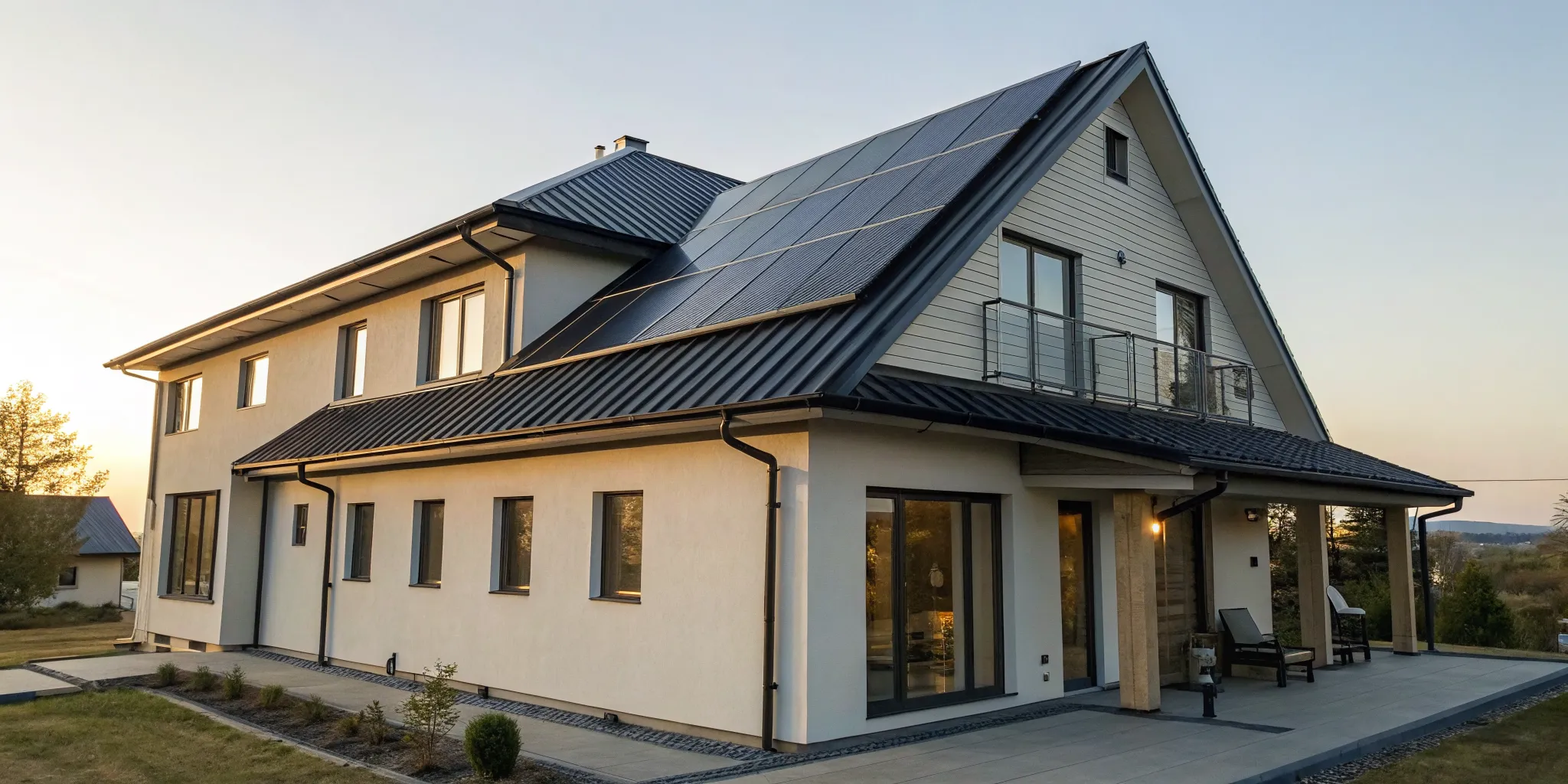
When you start researching solar, it’s easy to get overwhelmed by conflicting information. You hear that panels are too expensive, don't work on cloudy days, or require constant maintenance. It's hard to know what to believe. Even a straightforward query like, "a solar panel on the roof of a house is what type of energy?" can lead you down a rabbit hole of technical jargon. Let's clear the air. The truth is, modern solar technology is more efficient, affordable, and reliable than ever. We'll debunk the common myths and give you the straight facts you need to make a confident decision for your residential property.
Key Takeaways
- Solar is a smart financial investment: Beyond the environmental benefits, installing solar panels can significantly lower your monthly electricity bills, increase your home's resale value, and become more affordable with incentives like the 30% federal tax credit.
- A successful system is tailored to your home: The performance of your solar panels depends on unique factors like your roof's condition, its angle, and sun exposure. A professional installer is essential to assess these variables and design a system that maximizes your energy output.
- You can have power when the grid is down: Standard solar systems shut down during an outage for safety, but pairing your panels with a battery backup system allows you to store excess energy and maintain power for your home, giving you true energy independence.
What Kind of Energy Do Solar Panels Produce?
When you’re considering adding solar panels to your roof, one of the first questions that comes to mind is probably, "How does it all actually work?" It might seem like a complex piece of technology, but the basic idea is beautifully simple: your panels catch sunlight and turn it into electricity you can use right in your home. This process not only helps you save money on your utility bills but also gives you more control over your energy supply. Let's walk through how your system transforms a sunny California day into power for your lights, appliances, and everything in between.
From Sunlight to Your Outlets
At the heart of every solar panel are photovoltaic (PV) cells. You can think of these as tiny, hardworking power plants. When sunlight hits the PV cells, it excites the electrons within them and gets them moving, which creates an electrical current. This is the magic of the photovoltaic effect. The energy produced by your solar solutions is then collected and sent on its way to power your home. This clean, straightforward process allows you to generate your own electricity, reducing your dependence on the main power grid and lowering your carbon footprint one sunny day at a time.
DC vs. AC: What's the Difference?
Your solar panels produce what’s called direct current (DC) electricity, where the energy flows in a single, constant direction. However, your home’s appliances and the general power grid run on alternating current (AC), where the energy flow reverses direction many times per second. To make the DC power from your panels useful, a device called an inverter is installed as part of your system. The inverter’s job is to convert that DC electricity into AC electricity, making it compatible with your home. Our approach to installation ensures this conversion is seamless, safe, and highly efficient.
Do Solar Panels Work on Cloudy Days?
It’s a common myth that solar panels are useless on overcast days, but that’s simply not true. While they are most productive in direct sunlight, solar panels can still generate a significant amount of electricity on cloudy days. UV rays from the sun still penetrate the cloud cover, and your panels are designed to capture this ambient light. Production might be lower than on a bright, clear day, but your system doesn't just shut down. For total peace of mind, you can pair your panels with a battery backup to store excess energy for when you need it most, rain or shine.
How Solar Panels Turn Sunlight into Power
It might seem like magic, but the way solar panels generate electricity is a straightforward and fascinating process. It all starts with the sun hitting your roof and ends with you powering your coffee maker. Let's walk through how your home can create its own clean energy.
What Is the Photovoltaic Effect?
The science behind solar panels is called the photovoltaic effect, which is just a technical way of saying "turning light into electricity." Your solar panels are made up of many smaller units called photovoltaic (or PV) cells. Think of each cell as a tiny power generator. These cells are typically made from silicon, a material that gets excited when sunlight hits it, causing electrons to move and create an electric current.
One single cell doesn't produce much power on its own. That's why they are linked together to form a solar panel. Multiple panels are then arranged together in what's called an array. This array is the complete set of solar solutions you see on a rooftop, all working together to capture as much sunlight as possible and generate a meaningful amount of electricity for your home.
How Power Moves Through Your Home
Once your solar panels absorb sunlight, they start producing electricity. This electricity is in the form of a direct current, or DC. While DC power is great for charging things like your phone or laptop, the outlets and appliances in your home run on a different type of electricity called alternating current, or AC.
So, how does the DC power from your panels become the AC power your home needs? The energy flows from the panels on your roof through wiring to a crucial piece of equipment called an inverter. We take great care when we design a system to ensure this flow is efficient and safe. The inverter's job is to convert the electricity, and from there, it travels to your home's electrical panel to power everything from your lights to your television.
What Your Solar Inverter Does
The solar inverter is the unsung hero of your home's energy system. It acts as a translator, converting the DC electricity generated by your panels into the usable AC electricity your home requires. Without an inverter, the power produced on your roof would be incompatible with your appliances.
Modern inverters are incredibly smart and efficient. They manage the energy flow, optimize power production from your panels, and provide data so you can see how much electricity your system is generating. The inverter is also a key component if you decide to add a battery backup to your system, as it helps direct excess solar energy to the battery for storage. It’s the brain of the operation, making sure you get clean, reliable power whenever you need it.
What Are the Main Types of Solar Panels?
When you start looking into solar, you’ll quickly realize that not all panels are the same. The three main types you’ll encounter are monocrystalline, polycrystalline, and thin-film. Each has its own set of pros and cons when it comes to efficiency, cost, and appearance. Understanding the differences is the first step toward choosing the right solar solution for your home, budget, and energy goals.
Think of it like choosing a car. You might prioritize fuel efficiency, upfront cost, or a specific design. The same logic applies here. Let’s walk through what makes each type of panel unique so you can feel confident in your decision.
Monocrystalline Panels
If you’re looking for top-tier performance, monocrystalline panels are the gold standard. Made from a single, highly pure silicon crystal, these panels are the most efficient on the market, typically converting 15% to 20% of sunlight into energy. Their uniform black color gives them a sleek, modern look on any roof.
Because of their high efficiency, you need fewer panels to generate the power you need, making them a perfect fit for homes with limited roof space. While they are the most expensive option upfront, their long lifespan, often backed by a 25-year warranty, makes them a solid long-term investment in your home’s energy future. The efficiency and costs are justified by their superior performance and durability.
Polycrystalline Panels
Polycrystalline panels are a fantastic, budget-friendly option that offers a great balance of performance and price. You can spot them by their blue, marbled appearance, which comes from the way they’re made: by melting multiple silicon fragments together. This manufacturing process is simpler and less wasteful, which helps keep costs down.
While they are slightly less efficient than their monocrystalline cousins, with rates around 13% to 16%, they still provide excellent power output for most residential needs. If you have ample roof space, the difference in efficiency may not be a major factor. For many homeowners, the upfront savings make a comparison of monocrystalline vs polycrystalline panels a worthwhile exercise, as polycrystalline panels present a reliable and cost-effective path to going solar.
Thin-Film Panels
Thin-film panels are a different breed of solar technology. Instead of rigid silicon wafers, they are made by placing a super-thin layer of photovoltaic material on a solid surface. This makes them incredibly lightweight, flexible, and versatile. While their efficiency is lower, usually between 10% and 12%, they have some unique advantages.
Their lightweight nature means they can be installed on roofs that can’t support the weight of traditional panels. They also handle high temperatures better than crystalline panels, which can be a real benefit during hot California summers. While they require more space to produce the same amount of power, the advantages and disadvantages of solar cells show that thin-film technology is a great choice for specific applications, like RVs, boats, or unique architectural projects.
What Affects Solar Panel Efficiency?
When you think about solar panel efficiency, you might picture a number on a spec sheet. While the quality of the panel itself is important, your system’s real-world performance depends on a handful of key factors specific to your home. Getting the most energy from your solar panels is about creating the perfect setup, from the angle of your roof to the quality of the installation.
Think of it as a partnership between the technology and your property. Your home provides the foundation, and the panels do the work. To maximize your energy production and savings, it’s essential to consider how your roof’s orientation, local weather, and the installation process all play a role. A professional solar installer will conduct a thorough site assessment to account for these variables, designing a system that’s perfectly tailored to your home’s unique characteristics. This ensures you get the best possible return on your investment for years to come.
Your Roof's Angle and Direction
To generate the most power, your solar panels need to capture as much direct sunlight as possible throughout the day. This is why the direction your roof faces and its angle, or pitch, are so important. In the Northern Hemisphere, the ideal setup is a south-facing roof, as it receives the most consistent sun exposure from morning to evening. A roof slope between 15 and 40 degrees is also considered optimal for maximizing energy collection.
But don’t worry if your roof doesn’t fit this perfect description. Many homes with east- or west-facing roofs are still excellent candidates for solar. A skilled installer can customize a design that works for your property’s specific layout. Our approach always involves a personalized consultation to ensure your system is designed for peak performance, no matter which way your home faces.
Shade, Weather, and Climate
It’s a common myth that solar panels stop working on cloudy days or in the shade. While it’s true that direct, bright sunlight produces the most energy, modern solar panels are highly efficient and can still generate a significant amount of electricity in overcast weather. They convert both direct and indirect sunlight into power, so you’ll still be producing energy even when the sun isn’t shining brightly.
Of course, heavy shading from trees or nearby buildings can reduce your system’s output. During a site evaluation, a solar expert will map out your roof’s sun exposure throughout the day and identify any potential obstructions. This allows them to place panels in the sunniest spots to ensure your system is as productive as possible for your residential needs.
Panel Type and Installation Quality
The type of solar panel you choose certainly impacts efficiency, but the quality of the installation is just as critical. Even the best panels on the market won’t perform well if they’re installed incorrectly. That’s why it’s so important to work with a qualified and experienced professional. A proper installation ensures your panels are securely mounted, correctly wired, and positioned for optimal sun exposure.
Many homeowners also wonder if their roof can handle the extra weight. The good news is that most modern roofs are more than strong enough. Solar panels add only about two to four pounds per square foot, which is well within the structural limits of a typical roof. As a company with decades of experience in both solar and roofing, we can assess your roof’s condition and provide any necessary roofing solutions to guarantee a safe and seamless installation.
What Are the Benefits of Going Solar?
Switching to solar energy is more than just an environmental choice; it's a practical upgrade for your home and your lifestyle. For many California homeowners, going solar means taking control of rising energy costs, securing a reliable power source, and making a smart long-term investment. The advantages are clear, tangible, and can make a real difference in your day-to-day life. From financial savings to energy independence, let’s walk through the biggest benefits you can expect when you make the switch to clean, renewable power.
Lower Your Electricity Bills
One of the most immediate and rewarding benefits of installing solar panels is the significant reduction in your monthly electricity bills. By generating your own power from the sun, you rely less on your utility company, protecting yourself from unpredictable rate hikes. Over time, these savings add up substantially, and the money you save can often outweigh the initial cost of the system. Think of it as a long-term investment in your financial future. Curious about what you could save? You can use an estimate calculator to get a personalized idea of your potential savings based on your home and energy usage.
Gain Energy Independence with Battery Backup
Power outages and rolling blackouts can be a major source of stress. A solar panel system paired with a battery backup solution gives you true energy independence. During the day, your panels power your home and charge your battery. When the sun goes down or the grid goes out, your battery seamlessly takes over, keeping your lights on and your essential appliances running. This means you can utilize your solar energy even when the sun isn't shining, giving you peace of mind and control over your home's power supply, no matter what’s happening with the local grid.
Increase Your Home's Value
Solar panels are a valuable upgrade that can make your home more attractive to potential buyers. Homes equipped with solar energy systems often sell for more than comparable homes without them. Modern buyers are looking for properties that are energy-efficient and have lower long-term running costs. By investing in solar, you’re not just improving your home for yourself; you’re adding a premium feature that can lead to an increase in property value. It’s an investment that pays you back now with lower bills and can pay off again if you ever decide to sell your home.
Find Tax Credits and Rebates
The cost of going solar is more affordable than you might think, thanks to various government incentives. The federal solar Investment Tax Credit (ITC) is a major benefit, allowing homeowners to deduct 30% of the total installation cost directly from their federal taxes. In addition to the ITC, many states and local utilities offer their own rebates and incentives to encourage homeowners to switch to clean energy. These programs can significantly reduce your upfront costs, making the transition to solar an even smarter financial decision for both residential and commercial customers.
Reduce Your Environmental Impact
Choosing solar is a powerful way to reduce your household's carbon footprint and contribute to a healthier planet. Solar panels produce clean, renewable energy without burning fossil fuels or releasing harmful pollutants into the atmosphere. An average home with solar can cut its carbon pollution by three tons or more each year. By powering your home with the sun, you become part of the solution to climate change. It’s a choice you can feel good about, demonstrating a commitment to sustainability that aligns with a forward-thinking approach to energy.
What to Consider Before Installing Solar Panels
Deciding to go solar is a big step, and it’s smart to do your homework before you commit. Thinking through a few key factors will help ensure your solar installation is a success from day one. Your home's unique characteristics, from the state of your roof to your budget, all play a role in creating the perfect solar setup. Taking the time to understand these elements will help you feel confident in your investment and set you up for decades of clean energy and lower electricity bills. Let's walk through the main things you'll want to consider before you make the switch.
Your Roof's Condition
Your roof is the foundation for your solar panel system, so its condition is the first thing to check. Ideally, you want a roof that’s in good shape and has plenty of years left in it. Solar panels can last for 25 years or more, and it’s much easier and more cost-effective to make any necessary roof repairs before the panels are installed. The best roofs for solar generally face south and have a slope between 15 and 40 degrees, which maximizes sun exposure. Don't worry if your roof isn't perfect, though. A professional installer can assess your specific situation and find the best placement. Since we handle both roofing solutions and solar, we can make sure your home is fully prepared for installation.
Installation Costs vs. ROI
The initial cost of solar panels is a big consideration, but it's important to see it as an investment rather than just an expense. The real goal is the long-term return you'll get from generating your own power. Over time, the money you save on your electricity bills can outweigh the upfront cost of the system. The total price will depend on the size of your system, the type of panels you choose, and your home's energy needs. To get a clearer picture of what your investment and savings could look like, you can use an estimate calculator to explore different scenarios. This helps you understand the financial benefits and see how solar can pay for itself.
Financing Options and Incentives
You don't have to pay for a new solar system all at once. There are many financing options and incentives available that make going solar more affordable than ever. The most significant is the federal Residential Clean Energy Credit, which allows you to deduct 30% of the total installation cost from your federal taxes. Many states and local utility companies also offer their own rebates and credits, further reducing the net cost. Exploring these programs is a key part of the process. A good solar provider will help you understand all the available solar solutions and incentives you qualify for, making the financial side of things much clearer.
Long-Term Maintenance Needs
One of the best things about solar panels is how little maintenance they require. Many people worry they’ll have to constantly clean or service them, but that’s rarely the case. For the most part, rain does a good job of washing away any dust or debris that accumulates. A professional cleaning once or twice a year is usually all that’s needed to keep your panels operating at peak efficiency. Modern solar systems are built to be durable and withstand the elements for decades. As part of our approach, we make sure you understand the simple upkeep involved, so you can enjoy your system without any added stress.
Common Myths About Solar Panels
When you start looking into solar energy, you’ll likely come across a lot of opinions and information. It can be tough to sort fact from fiction. Let's clear up some of the most common myths about going solar so you can make a confident decision for your home.
Myth: "Solar panels are too expensive."
I get it, the initial cost of solar panels can seem daunting. But the idea that they’re unaffordable for the average homeowner is outdated. Thanks to federal incentives like the 30% Residential Clean Energy Credit, the price is more accessible than ever. Think of it as a long-term investment. Over time, the money you save on your monthly electricity bills can outweigh the initial cost, putting money back in your pocket. The best way to see if the numbers work for you is to get a personalized estimate. You can use an online calculator to get a ballpark idea of your potential costs and savings.
Myth: "Solar panels don't work in my climate."
Many people believe solar panels only work in perpetually sunny, hot places. The good news is that this isn't true. Solar panels generate electricity from light, not heat, and they can still produce a significant amount of power on cloudy days. Modern panels are incredibly efficient and can capture diffuse sunlight that passes through clouds. Here in California, we get plenty of sunshine, but even on our overcast coastal days or during the winter, your panels will keep working for you. They are designed to be effective in a wide range of weather conditions, so you don't need perfect blue skies to reap the benefits.
Myth: "My roof isn't suitable for solar."
It’s smart to think about your roof’s condition before installing anything on it. However, most modern roofs are more than capable of handling the weight of solar panels. Panels typically add only about two to four pounds per square foot, while your roof is built to support much more. Of course, not every roof is a perfect candidate. That’s why any reputable solar installer will start with a thorough evaluation of your roof’s structure and condition. If any repairs are needed, it’s best to handle them before installation. A company that also specializes in roofing solutions can ensure your home is fully prepared for the switch to solar.
Myth: "Solar panels will power my home during an outage."
This is one of the most common and important misconceptions. A standard grid-tied solar system will automatically shut down during a power outage. This is a critical safety measure to prevent your panels from sending electricity back to the grid, which could endanger utility workers making repairs. If you want to keep your lights on during a blackout, you’ll need to pair your solar panels with a battery backup system. A solar battery stores the excess energy your panels produce, creating your own personal energy reserve that you can tap into whenever the grid goes down.
Is Solar Energy Right for Your Home?
Deciding to go solar is a big step, and you want to be sure it’s the right move for your specific situation. The good news is that for many California homeowners, the answer is a resounding yes. The ideal home for solar panels has a roof that gets plenty of direct sunlight throughout the day. Generally, this means a south-facing roof with a slope between 15 and 40 degrees, and one that isn’t heavily shaded by tall trees or nearby buildings.
The condition of your roof is also a major factor. Since solar panels are a long-term investment, you want to make sure the foundation they sit on is solid. If your roof is older or needs repairs, it’s best to address that before installation. This is where having a company with expertise in both solar and roofing solutions becomes incredibly valuable. A combined expert can assess your entire home energy system, from the shingles up, to ensure you have a setup that’s safe, efficient, and built to last. A professional consultation can help you understand your home’s unique potential and what to expect from an installation.
Estimate Your Potential Savings
One of the most exciting parts of considering solar is figuring out how much you could save on your electricity bills. Your potential savings depend on a few key things: how much electricity your family typically uses, the size of your solar panel system, the amount of sunlight your home receives, and your local utility’s rates. While it might sound complicated, getting a preliminary idea is easier than you think. The cost to install solar has become more affordable over the years, making the return on investment even more attractive. A great first step is to use an online estimate calculator to get a personalized projection based on your address and energy use.
How to Find a Qualified Solar Installer
Choosing the right installer is just as important as choosing the right panels. You want a team that is experienced, trustworthy, and knowledgeable. A key indicator of a quality installer is certification from the North American Board of Certified Energy Practitioners (NABCEP), which is the gold standard in the solar industry. Beyond certifications, look for a company with a long history of successful installations and happy residential customers in your area. With over 50 years of combined experience in both solar and roofing, our team at AMECO has a deep understanding of how to design a system that works perfectly for your home. Our personalized approach ensures you get a solution tailored to your energy goals and budget.
Related Articles
- Understanding Solar Panel Components And How They Work | AMECO Solar
- Solar Panels: The Ultimate Guide to How Solar Panels Work
- Energy Saving Solar Panels: A Homeowner's Guide
Frequently Asked Questions
How long does it take for solar panels to pay for themselves? The time it takes to recoup your initial investment, often called the payback period, varies for every home. It depends on your total system cost, how much electricity you use, and the rates your local utility company charges. For many California homeowners, the combination of lower monthly bills and financial incentives means the system pays for itself in a fraction of its 25-plus-year lifespan. A personalized consultation can give you a much clearer projection for your specific situation.
Will installing solar panels damage my roof? This is a common and valid concern. When installed by a certified and experienced professional, solar panels will not damage your roof. The installation process involves securely mounting the panels and sealing any penetrations to make them completely watertight. Working with a company that has deep expertise in both solar and roofing provides an extra layer of assurance, as they understand exactly how to protect the integrity of your roof while installing your new energy system.
What happens if I don't use all the electricity my panels produce? During sunny days, your system might generate more power than your home is using at that moment. This excess energy doesn't go to waste. Typically, it's sent back to the utility grid, and you may earn credits on your bill for the power you contribute. Alternatively, if you have a battery backup system, that extra power is used to charge your battery. This allows you to store your own solar energy to use at night or during a power outage.
Do I really need to clean my solar panels? Solar panels are surprisingly low-maintenance. For most homeowners, normal rainfall is enough to wash away the dust and debris that can accumulate on the panels. If you live in an area with very little rain or a lot of dust, an occasional cleaning might help keep your system running at peak performance, but it's not something you'll need to worry about constantly.
What's the first step if I'm interested in going solar? The best way to start is by getting a professional assessment of your home. An expert can evaluate your roof's condition and sun exposure, look at your past energy bills, and talk with you about your goals. This initial consultation will give you a clear understanding of what size system you need, what your potential savings could be, and which incentives you qualify for, all without any pressure or commitment.


.svg)
