


Solar Panels for Heat Pump: California Guide
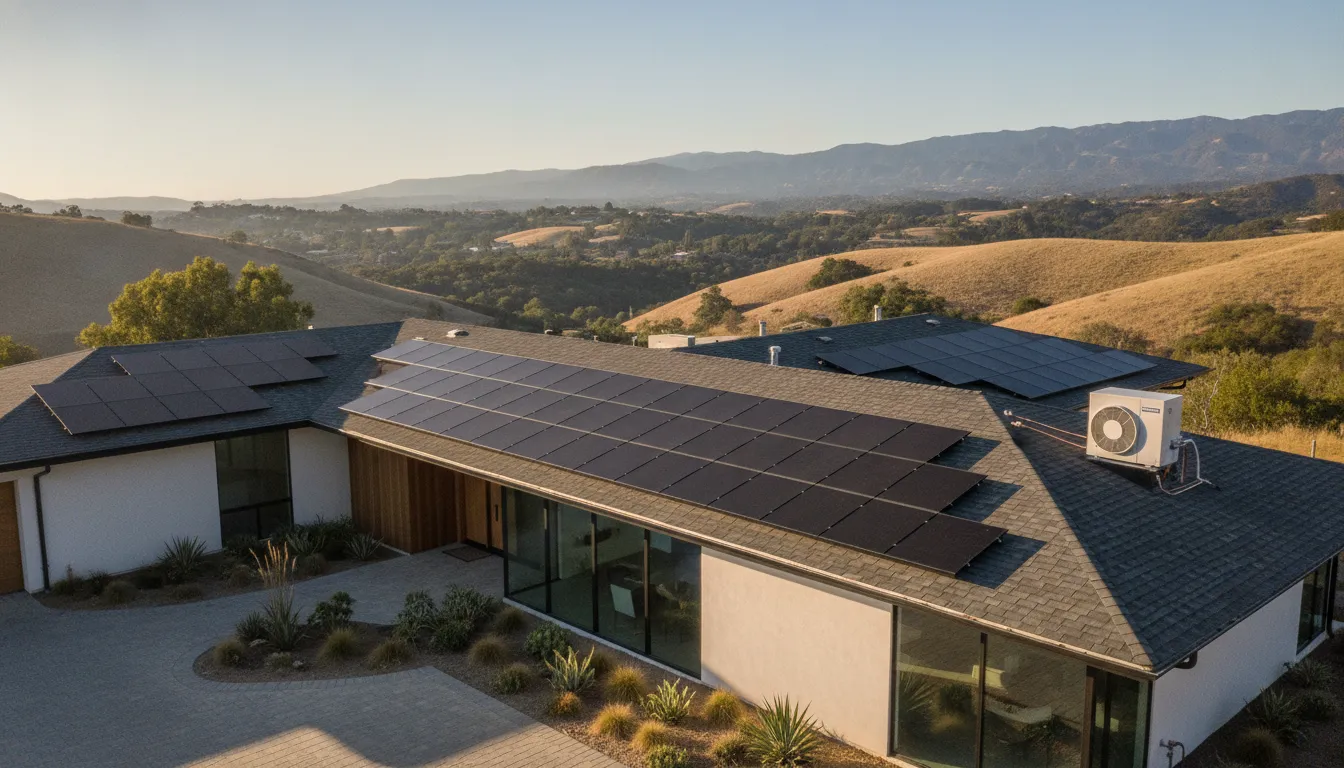
Solar panels for heat pump use can help a California homeowner manage the electricity added by all-electric heating and cooling. The right design starts with the home's actual consumption, the heat pump's expected load, local weather, roof conditions, and the utility rate plan. It should also account for when the system will use electricity, not only how much it may use over a year.
Request a customized solar and heat pump estimate from AMECO Solar & Roofing.
A heat pump moves heat rather than creating it by burning fuel. It can provide both heating and cooling, but converting from gas heating adds a significant new electrical load. Solar can produce energy to offset part or most of that load, depending on the property's design and goals. It does not mean the heat pump runs only when sunlight is available. Most grid-connected homes use a combination of direct solar production, utility electricity, and, when installed, stored battery energy.
California planning requires special attention to seasonal consumption and time-of-use rates. A coastal home with mild winters has a different profile from a Central Valley home that experiences hot summers and cold nights. A customized analysis is more useful than a universal panel count or savings claim.
Solar Panels For Heat Pump: Can solar panels power a heat pump?
Yes. A properly designed solar array can produce electricity to offset a heat pump's annual energy use. The panels often generate most during daytime hours, while the heat pump may run at other times. Grid service or a battery balances the difference between solar production and household demand.
Annual offset and direct daytime use
When the sun is shining and household demand is below solar production, the heat pump can use electricity produced by the panels. When demand exceeds production, the home draws the difference from the grid or a battery. At night, solar panels are not producing, so the heat pump relies on another source. This is why system design should compare production and consumption across different hours and seasons.
For many homeowners, the practical goal is an annual energy offset rather than operating the heat pump directly from solar every minute. An annual offset compares the array's projected yearly production with the home's projected yearly electricity use. It is a helpful starting point, but it does not fully explain utility costs because California rate plans assign different values to electricity at different times.
The load added by electrification
The change in electricity use depends on what the heat pump replaces. Switching from a gas furnace adds winter electricity consumption that is not visible in past electric bills. Replacing electric resistance heating may reduce heating electricity use. Replacing an older air conditioner can also change summer consumption. Equipment efficiency, thermostat settings, insulation, duct condition, home size, and local climate all affect the result.
Start by reviewing at least 12 months of utility bills and interval data when available. This establishes the existing base load and reveals summer and winter peaks. AMECO's guide to household electricity consumption can help explain the measurements before a project-specific analysis.
How do you size solar for a heat pump?
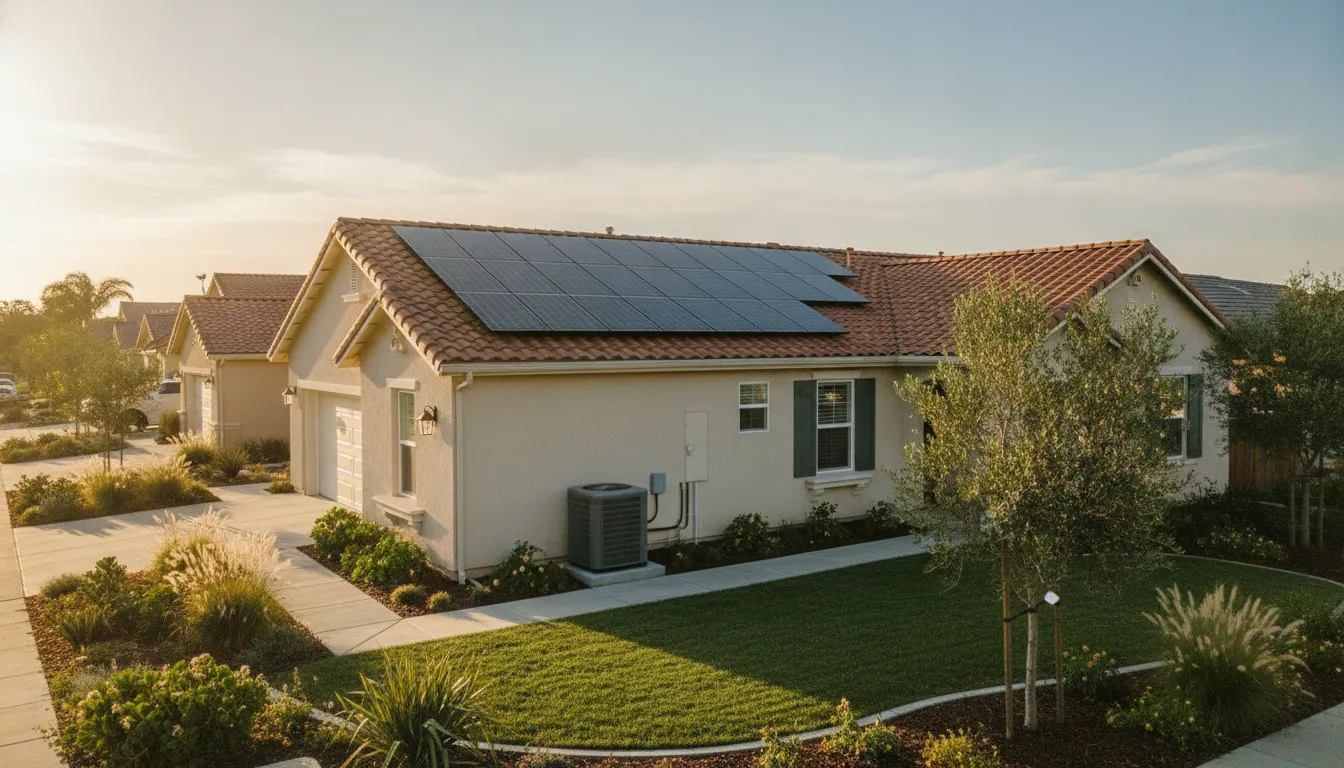
Size solar for a heat pump by adding the equipment's estimated annual electricity use to the home's current annual use. Then modeling production for the specific roof and location. Refine the design using seasonal demand, time-of-use rates, shade, roof orientation, future loads, and the homeowner's energy goals.
Build a reliable consumption baseline
A useful baseline separates current consumption from planned changes. Gather one full year of bills, note major changes in occupancy or equipment, and identify gas appliances that may become electric. If the heat pump is already installed, interval data can show its effect. If it is not installed, use the HVAC contractor's load calculation and equipment performance information rather than a generic national average.
Heating demand is not the same in every part of California. Los Angeles and Orange County homes may have modest winter heating requirements, while inland and northern communities can experience much greater seasonal swings. Cooling demand can also be substantial during Central Valley summers. A good model uses the home's climate zone and operating habits instead of assuming that every heat pump has the same annual consumption.
Convert the projected load into a solar design
Once the projected annual load is known, a solar designer models how much electricity an array can produce on that particular roof. Panel rating is only one input. Roof direction, tilt, shade, local solar resource, inverter design, and available roof area all influence output. Two homes with the same annual consumption can require different array layouts.
The planning process generally follows these steps:
- Collect 12 months of electric bills and available interval data.
- Estimate the heat pump's heating and cooling consumption using equipment and home-specific information.
- Add other planned loads, such as an EV charger, electric water heater, or induction range.
- Model expected solar production for the roof, shade conditions, and California location.
- Compare production and consumption by season and time of day.
- Evaluate utility rate rules, export credits, and battery options.
- Confirm the roof, electrical panel, and service can support the proposed design.
Homeowners can review the broader process in this guide to estimating solar panel needs. The final panel count should come from a site-specific design, not a fixed rule based only on square footage.
Plan the roof and electrical work together
Solar panels are a long-term roof installation. Before designing the array, inspect the roof's age, condition, material, drainage, and usable area. If roofing work is likely soon, coordinating it with solar can reduce the risk of removing and reinstalling panels later. AMECO Solar & Roofing can coordinate these scopes as one integrated project.
The electrical review matters too. The designer should consider the main service panel, available breaker space, heat pump circuit, inverter output, battery equipment, and other planned electric loads. A well-coordinated project helps avoid discovering late in the process that the electrical plan or roof layout needs to change.
For a site-specific layout and load analysis, explore AMECO's residential solar installation services and request a customized estimate.
Why does seasonal electricity use change the design?
Seasonal use changes solar design because heat pumps and panels do not follow the same production pattern. Heating can raise winter demand when days are shorter, while cooling can drive summer peaks. Reviewing a full year helps the designer account for both conditions instead of sizing from one month's bill.
Winter heating and shorter solar days
A heat pump may run most during early mornings, evenings, and cold periods. Those hours often occur when solar output is low or unavailable. Winter also brings fewer daylight hours and different sun angles, so an array usually produces less than it does in summer. Even if annual solar production matches annual consumption, the household may still import electricity during winter heating hours.
This does not make the pairing impractical. It means the design should show how energy flows across the year and how the utility treats imports and exports. A homeowner can then decide whether the preferred goal is annual offset, greater self-consumption, lower peak-period purchases, outage support, or a balanced combination.
Summer cooling and inland heat
California heat waves can create long cooling cycles. Solar production often overlaps with daytime cooling, which can make direct solar use valuable. However, many homes continue cooling into late afternoon and evening as solar production falls. Time-of-use rates can make that timing important even when the array produces substantial energy earlier in the day.
Efficiency improvements can reduce the load before the array is sized. Air sealing, insulation, duct repair, thoughtful thermostat settings, shade, and properly sized HVAC equipment may all influence consumption. These measures should be evaluated based on the home's needs, costs, and comfort priorities.
Future consumption and reasonable design margins
A solar plan should consider foreseeable changes without automatically oversizing the project. An EV, electric water heater, pool equipment, home addition, or changing household occupancy can alter the load. Discussing likely upgrades helps the designer evaluate whether the initial layout, electrical equipment, and inverter strategy should allow for future expansion.
Forecasts always involve uncertainty. Weather changes from year to year, and household behavior can shift. A customized estimate should explain its assumptions and present reasonable scenarios rather than promising a specific bill or guaranteed savings.
How do California rate plans affect solar and heat pumps?
California rate plans affect the value of solar and heat pump energy based on when electricity is produced, imported, or exported. Time-of-use pricing often makes late afternoon and evening electricity more expensive. A useful design therefore evaluates hourly consumption, export compensation, load shifting, and possible battery storage.
Time-of-use timing
Many California households pay different rates depending on the hour. A heat pump that runs during a high-price evening period may draw utility electricity after solar production has declined. In contrast, daytime operation may overlap with solar output. Utility schedules and rate details vary, so confirm the current plan and applicable rules before finalizing the project.
Some homeowners use controlled pre-cooling or pre-heating while solar production is strong, then reduce demand during peak-rate hours. The practical result depends on comfort preferences, the home's ability to retain temperature, weather, and equipment controls. Load shifting is a planning option, not a reason to sacrifice safe indoor temperatures.
Self-consumption and exports
Self-consumption means using solar electricity at the property when it is generated. Exports occur when the system produces more than the home is using and sends the excess to the grid. Under California's current net billing environment, the value of exported energy can differ from the retail price of imported electricity. This makes hourly modeling more important than a simple annual total.
The following comparison shows common operating patterns:
| Operating pattern | Primary source | Planning focus |
|---|---|---|
| Midday heat pump use | Direct solar plus grid as needed | Match daytime load with production |
| Evening heating or cooling | Grid or stored energy | Review peak rates and battery dispatch |
| Overnight heating | Grid or stored energy | Estimate duration and total consumption |
| Grid outage | Battery-backed circuits, if designed | Confirm power, capacity, and critical loads |
Use AMECO's solar quote calculator as an initial planning tool, then request a customized estimate that reflects the property's roof, energy use, rate plan, and equipment.
Can a battery keep a heat pump running?
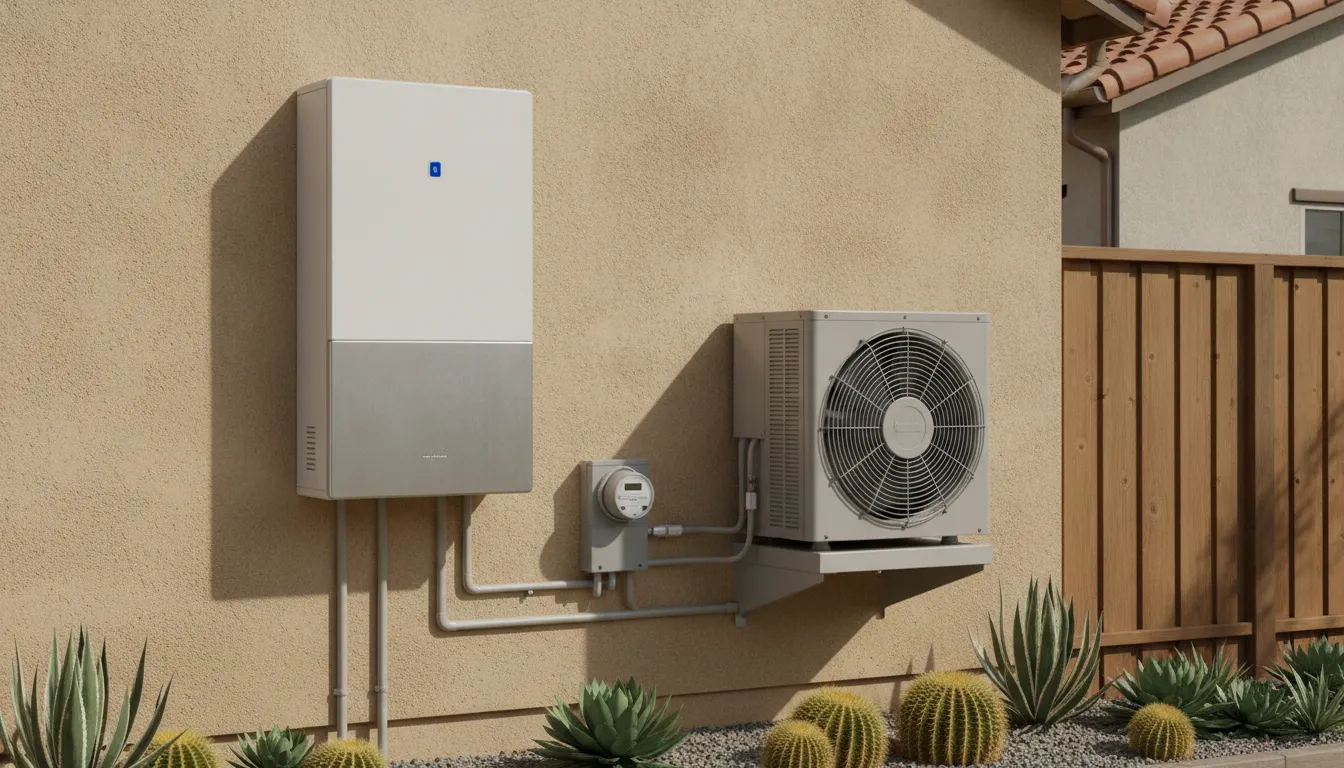
A battery can run some heat pumps during a blackout if the storage system is designed for the equipment's starting power, running power, and desired backup duration. The design must also account for other critical loads and the solar array's ability to recharge the battery during an extended outage.
Power and energy are separate limits
Battery planning requires two different checks. Power, measured in kilowatts, describes how much electricity the battery can deliver at one moment. Energy, measured in kilowatt-hours, describes how long it can sustain loads. A battery may store enough energy for several hours but still be unable to start a large compressor if its power output is too low.
Variable-speed heat pumps may have different startup behavior from older single-stage equipment, but model-specific data is essential. The battery designer should review the heat pump's electrical specifications and any required control equipment. The plan must also identify whether the heat pump is on the backed-up circuits.
Critical-load priorities during a blackout
Running a heat pump during a blackout competes with refrigeration, lighting, medical equipment, communications, well pumps, and other priorities. Whole-home backup and partial-home backup are different design goals. Homeowners should decide what must operate, what can be turned off, and how long the desired loads should run without the grid.
A battery does not create energy. During an extended outage, stored energy can be depleted faster during extreme heating or cooling demand. Solar may recharge it the next day, but recharge performance depends on weather, array production, household use, and system controls. Resilience planning should use realistic scenarios rather than assuming uninterrupted operation under every condition.
Learn more about AMECO's battery backup options and ask for an evaluation based on the exact heat pump and critical-load plan.
What should a coordinated project plan include?
A coordinated solar and heat pump plan should include current and projected consumption, HVAC specifications. Roof and shade conditions, electrical capacity, utility rates, battery goals, critical loads, and future electrification. It should document assumptions and provide a customized estimate rather than relying on universal pricing or savings claims.
Information to gather before design
Good information improves the estimate and reduces surprises. Gather utility bills, interval data, the current rate-plan name, the heat pump proposal, equipment specifications, and any available roof records. Note planned upgrades and explain how the household uses heating and cooling. If comfort settings or occupancy will change after installation, include that too.
It is also helpful to define priorities. One homeowner may care most about reducing purchases during peak-rate periods. Another may prioritize backup cooling during a summer blackout. A third may want the roof and solar completed before installing a heat pump later. These goals can lead to different designs even for similar homes.
Questions to ask during the estimate
- What consumption assumptions were used for the proposed heat pump?
- How does projected solar production change by season?
- How does the design respond to the current utility rate plan?
- Which roof areas are used, and how were shade and roof condition evaluated?
- If a battery is included, can it start the heat pump and for how long under the modeled load?
- Which circuits remain powered during a blackout?
- What future loads or expansion options are included?
- Which project costs, incentives, and eligibility assumptions require confirmation?
A clear proposal should distinguish estimates from guarantees. Solar production, heat pump consumption, utility bills, incentives, and backup duration depend on conditions that can change. The most useful design explains those variables so the homeowner can make an informed decision.
A practical California planning example
Consider a homeowner replacing gas heating and an older air conditioner with a heat pump. The home's past electric bills show the existing appliance and cooling load, but they do not show the electricity that the new system will use for winter heating. The project team estimates that new load using the HVAC design, local climate, home envelope, and expected thermostat schedule.
Next, the solar designer adds the projected heat pump consumption to the existing baseline and any planned EV or appliance loads. The designer models production for the roof, checks the rate plan, and compares daytime generation with afternoon and overnight demand. If the homeowner wants backup heating or cooling, the battery analysis checks both instantaneous power and expected duration.
The final design might prioritize direct daytime use, shift some energy into evening hours, or reserve battery capacity for a blackout. The correct balance depends on the homeowner's priorities and site conditions. It should not be based on a universal panel count, a standard battery size, or a promised percentage of savings.
Frequently asked questions
Can a heat pump run entirely on solar panels?
A solar array can produce enough annual energy to offset a heat pump's use. But the heat pump will often run when panels are producing little or no electricity. Grid service or a properly designed battery supplies the difference. Off-grid operation requires a separate, detailed analysis of production, storage, power, and seasonal demand.
How many solar panels are needed for a heat pump?
There is no universal number. The answer depends on heat pump consumption, existing household use, panel output, roof orientation, shade, climate, and project goals. A designer should estimate the equipment's annual load and model production for the specific property before recommending an array size.
Does a heat pump work with solar during winter?
Yes. Solar continues producing during winter, but shorter days and weather can reduce output while heating demand rises. The home may use grid electricity or stored energy when the heat pump runs outside solar production hours. Full-year modeling helps show this seasonal mismatch and informs the design.
Is a battery required for solar panels and a heat pump?
No. A grid-connected solar system can offset heat pump electricity without a battery. Storage may improve self-consumption, shift energy to higher-rate hours, and support selected circuits during a blackout. Whether it is appropriate depends on the homeowner's rate plan, resilience goals, equipment, budget, and site design.
Get a customized solar and heat pump estimate
Pairing solar with a heat pump can support a broader home electrification plan, but the details matter. Seasonal demand, utility timing, roof readiness, battery resilience, and future loads should be reviewed together. AMECO Solar & Roofing has served California since 1974 and coordinates solar and roofing through one team.
Schedule a solar and heat pump consultation to receive a customized estimate based on your home, energy use, roof, rate plan, and goals.


.svg)
