


A Buyer's Guide to Solar Panels for Home for Sale
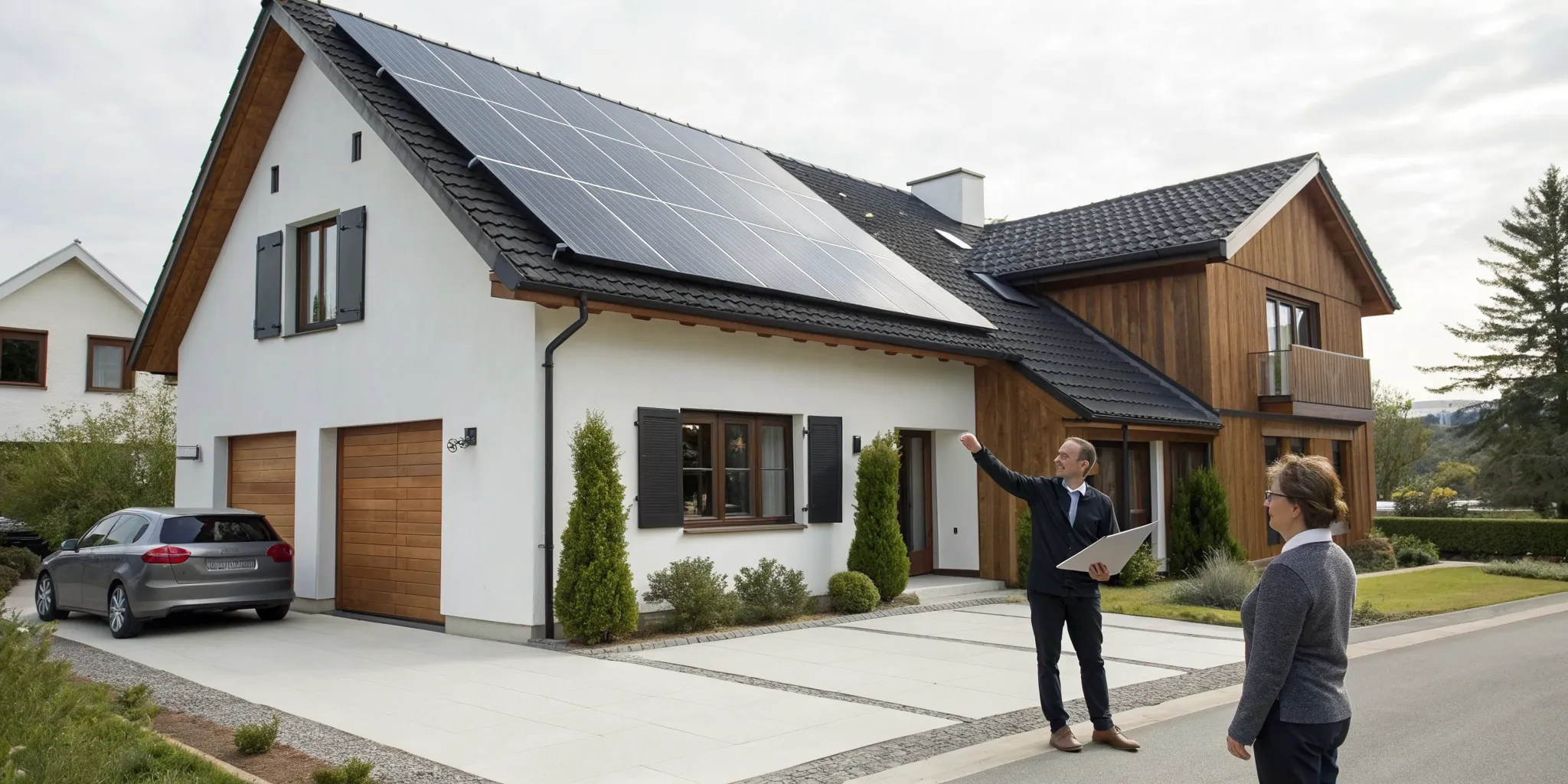
Your roof is your home’s first line of defense, and a solar panel system is a 25-year commitment that sits right on top of it. That’s why the health of your roof is one of the most critical factors in a successful solar installation. Working with a company that doesn’t specialize in roofing can put your home at risk. When you start looking at solar panels for home for sale, it’s essential to consider who will be installing them. As experts in both solar and roofing since 1974, we ensure your entire system is secure, from the shingles to the panels, protecting your most important investment.
Key Takeaways
- Start with your home's unique energy profile: Before looking at panels, understand your own needs. Review your past utility bills to see how much electricity you use, evaluate your roof's condition and sun exposure, and establish a clear budget.
- See solar as a long-term investment, not just an upfront cost: The initial price is only part of the story. Federal tax credits and local incentives significantly lower your final cost, while decades of savings on your electricity bill provide a powerful return on your investment.
- Prioritize quality installation and equipment for lasting results: The performance of your system depends on expert installation and reliable hardware. Partner with an experienced installer, choose panels with strong warranties, and consider a battery backup for true energy independence.
What Are My Solar Panel Options?
When you start looking into solar, you'll quickly see there isn't just one type of panel. The three main players on the market are monocrystalline, polycrystalline, and thin-film panels. Each has its own set of pros and cons related to efficiency, cost, and appearance. Understanding these differences is the first step in finding the perfect fit for your home's energy needs and your budget. Let's break down what makes each type unique so you can feel confident in your choice of solar solutions.
Monocrystalline Panels
Think of monocrystalline panels as the premium option in the solar world. They're made from a single, pure silicon crystal, which gives them their signature sleek, black look. This uniform structure makes them highly efficient at converting sunlight into electricity. Because they generate more power per square foot, they're a fantastic choice if you have limited roof space or simply want to get the most energy production possible. While they do come with a higher price tag, their superior performance and long lifespan often make them a worthwhile investment for homeowners focused on maximizing their energy output.
Polycrystalline Panels
Polycrystalline panels are a popular and more budget-friendly alternative. Instead of a single crystal, they're made by melting multiple silicon fragments together, which gives them a distinctive blue, speckled appearance. This manufacturing process is less expensive, and those savings are passed on to you. The trade-off is slightly lower efficiency compared to their monocrystalline cousins. However, if you have ample roof space and are looking for a reliable, cost-effective way to go solar, polycrystalline panels offer a great balance of performance and price. They get the job done without the premium cost.
Thin-Film Panels
Thin-film panels are a different technology altogether. They are made by placing a super-thin layer of photovoltaic material onto a solid surface, like glass. This makes them incredibly lightweight, flexible, and the most affordable option available. So, what's the catch? Their efficiency is significantly lower than crystalline panels, meaning you need a much larger area to produce the same amount of power. For this reason, you won't see them on many residential rooftops. They are better suited for large-scale commercial projects or unique applications where flexibility is more important than space efficiency.
How to Choose the Right Solar System
Picking the right solar system feels like a huge decision, but it doesn't have to be overwhelming. When you break it down into a few key steps, you can confidently find a solution that fits your home, energy goals, and budget. Think of it as creating a personalized energy plan. It starts with understanding what you use, evaluating your space, and then exploring the options that make the most sense for you. By looking at your needs first, you ensure the system you choose will serve you well for years to come.
Assess Your Energy Needs
Before you can figure out how many solar panels you need, you have to know how much electricity you use. The best way to do this is to grab your past utility bills. Look for your monthly and annual kilowatt-hour (kWh) usage. This number is the foundation for designing your solar system because it tells us exactly how much power your home consumes. Having this information ready will make your conversation with a solar consultant much more productive. You can also use an online estimate calculator to get a preliminary idea of what size system would offset your current energy use.
Evaluate Your Roof's Potential
Your roof is the most common spot for solar panels, so its condition and characteristics are really important. An ideal roof for solar is south-facing and gets plenty of direct sunlight without much shade from trees or nearby buildings. The age and structural integrity of your roof also matter; you want a solid foundation that will last as long as your panels. Since we specialize in both roofing solutions and solar, we always conduct a thorough assessment to make sure your roof is ready for an installation. This ensures your entire system, from the shingles up, is secure and efficient.
Set Your Budget and Timeline
The cost of a solar system depends on a few things: its size, the type and efficiency of the panels, and how complex the installation is. While it’s a significant investment, it’s one that pays for itself over time. Think about what you're comfortable spending and what financing options might work for you. Federal tax credits and local incentives can also make a big difference in the final price. Our personalized approach involves sitting down with you to design a system that meets your financial goals and provides a clear timeline for the project, so you know exactly what to expect.
Explore Alternative Installations
What if your roof isn't the perfect candidate for solar? Don't worry, you still have great options. If you have enough space on your property, a ground-mounted system can be an excellent alternative. These systems can be positioned at the perfect angle to capture maximum sunlight throughout the day. Another key consideration is whether to include a battery backup. For many California homeowners, having a battery is a game-changer. It stores the extra energy your panels produce so you can use it at night or, more importantly, keep your lights on during a power outage.
What's the Real Cost of Solar Panels?
Let's talk numbers. The price of a solar system is one of the first things people ask about, and for good reason. It’s a significant home upgrade, but thinking of it only as an expense misses the bigger picture. The real cost isn't just the number on the initial quote; it's the total investment balanced against decades of energy savings and valuable incentives. Understanding what goes into the price tag, from the hardware to the installation, helps you see how going solar is a powerful financial move for your home. We'll break down the costs and show you how to calculate the long-term value.
Breaking Down the Price Tag
The upfront cost of a solar system can feel like a big number, so let's put it in perspective. For an average 1,500-square-foot house, a typical solar system costs around $27,500 before any incentives. However, after applying the 30% federal tax credit, that price drops to about $19,250. Of course, this is just a starting point. The final price depends on your home’s size, how much electricity you use, and the specific equipment you choose. The best way to get a clear picture for your home is to use an estimate calculator to get a personalized projection based on your actual energy needs and roof space.
Factoring in Installation and Equipment
When you get a quote for a solar system, you're not just paying for the panels. A professional solar installation is a complete project that includes planning, permits, and inspections to ensure everything is safe and up to code. The total cost covers all the essential equipment, like inverters that convert solar energy into usable electricity, mounting hardware to secure the panels, and all the necessary wiring. It also includes the labor of our experienced team who handles the entire process. This comprehensive approach ensures your system is designed for optimal performance and longevity, giving you peace of mind from day one. You can learn more about our approach to see how we manage every detail.
Calculating Your Return on Investment
This is where going solar gets really exciting. While there's an initial investment, the return comes in multiple forms. First, government incentives like the federal tax credit significantly reduce your net cost right away. Then, the real savings begin. Every month, you'll see a lower electricity bill, and over the 25-plus-year lifespan of your system, those savings add up to a substantial amount. Your return on investment is the combination of these monthly savings and the initial incentives. Think of it as pre-paying for decades of electricity at a fixed, lower rate. Investing in solar solutions not only lowers your carbon footprint but also provides predictable energy costs for years to come.
How to Pay for Solar: Financing and Incentives
The price of a solar system can feel like a big hurdle, but it’s more manageable than you might think. A combination of government incentives, flexible financing, and utility programs can dramatically lower your initial investment. Think of it less as a one-time expense and more as a long-term investment in your home's future. Let's walk through the key options that make going solar in California an attainable goal.
Federal Tax Credits and California Programs
The biggest financial perk is the federal solar tax credit, which lets you deduct 30% of your installation cost from your federal taxes. This credit applies to the total system cost, including equipment, labor, and even a battery backup. On top of this, California has local rebates and programs that can lower your costs even more. We’ll help you identify every incentive you qualify for.
Solar Loans, Leases, and Power Purchase Agreements (PPAs)
If paying cash isn't your plan, you have options. A solar loan lets you borrow funds to purchase your system and pay it back over time, while still getting all the tax credits. Alternatively, with a solar lease or Power Purchase Agreement (PPA), a third party owns the system on your roof. You just pay a fixed monthly rate for the power, often less than your utility’s rate. Our team can explain the pros and cons as part of our approach.
Net Metering and Utility Rebates
Net metering is another way your system pays you back. When your panels produce more electricity than you use, the excess power goes to the grid, and your utility company gives you credits on your bill. These credits offset the cost of electricity you use at night or on cloudy days. It’s a simple system that ensures you get value from all the energy your panels produce. We can also help you find programs that lower the cost of your solar solutions.
Property Tax Exemptions
A solar panel system increases your home's value, but in California, it won't increase your property taxes. The state offers a property tax exemption for new solar energy systems. This means you can enjoy the added equity your system brings without worrying about an annual tax increase. It’s a powerful financial benefit that makes switching to solar even easier for homeowners across the state.
Key Factors to Consider Before You Buy
Okay, you’ve figured out your budget and explored the financing options. Now comes the exciting part: choosing the actual hardware for your home. Picking the right solar panels and installer is just as important as finding the right payment plan. The quality of your equipment and the expertise of the installation team will determine how much you save and how reliable your system is for years to come. Let’s walk through the four key areas you’ll want to focus on to make a confident decision.
Panel Efficiency and Warranties
When you start comparing panels, you’ll see the term “efficiency” pop up a lot. This is simply a measure of how well a panel converts sunlight into usable electricity. Most high-quality panels have efficiency ratings between 18% and 20%. It’s also good to know that all panels experience a slight, gradual decline in power output over their lifespan, typically losing about 10% to 20% over 25 years. This is completely normal, and it’s why a strong manufacturer’s warranty is so important. A good warranty guarantees your panels will perform at a certain level for decades, protecting your investment and ensuring you get the solar solutions you paid for.
Brand Reputation and Certifications
The solar industry has grown a lot, and with it, the number of brands on the market. Sticking with reputable, well-established manufacturers is always a smart move. Brands with a long history and positive reviews are more likely to produce reliable products and honor their warranties if you ever need them. You should also look for panels with industry-standard certifications, which confirm they’ve passed rigorous tests for safety, durability, and performance. A trustworthy solar partner will guide you through the options and explain why they stand by the brands they offer, which is a core part of our approach to every project.
Quality of Installation
You can buy the best solar panels in the world, but they won’t perform well if they’re installed incorrectly. The quality of the installation is critical to your system’s performance, safety, and longevity. A professional installation team ensures that every panel is securely mounted, correctly wired, and positioned for optimal sun exposure. Because solar installation is tied directly to your roof, working with a company that has deep expertise in both is a major advantage. This ensures your roof’s integrity is protected throughout the process, giving you peace of mind about your home’s most important assets. Great roofing solutions and solar installations go hand-in-hand.
Battery Storage and Backup Power
Living in California, we’re all familiar with power outages and fluctuating energy costs. This is where battery storage comes in. Adding a solar battery to your system allows you to store the excess energy your panels generate during the day instead of sending it all back to the grid. You can then use that stored power at night, during peak hours when electricity is most expensive, or during a blackout. A battery backup system gives you true energy independence and a reliable source of power when you need it most, making your home a self-sufficient sanctuary.
Finding the Best Solar Panels for Your California Home
With so many solar panel brands on the market, it’s easy to feel overwhelmed. How do you know which ones are truly the best for your home? The key is to focus on what really matters: efficiency, durability, and the manufacturer's long-term reliability. A solar panel system is a significant investment in your home’s future, so choosing high-quality components is essential for getting the best return.
At AMECO, we’ve spent decades vetting the industry's top manufacturers to ensure our customers get systems that perform exceptionally well for years to come. We look beyond the marketing claims to assess the real-world performance and longevity of the panels we install. Think of us as your expert guide, helping you select the right technology to meet your energy goals and fit your budget. Let’s walk through what you need to know about panel types and warranties to make a confident choice.
Our Premium Panel Selection
We believe that a great solar system starts with great panels. That’s why we only work with manufacturers known for their superior quality, high efficiency, and strong warranties. Our selection process focuses on finding panels that deliver maximum power output and can withstand the elements for decades. By choosing premium solar solutions, you can generate more electricity from your available roof space, leading to greater savings on your energy bills. We’ve done the research so you can feel confident that your system is built with reliable, top-tier components designed for long-term performance.
What to Know About Top Manufacturers
When you start looking at panels, you’ll likely see two main types: monocrystalline and polycrystalline. Monocrystalline panels are made from a single crystal structure, which makes them highly efficient and gives them their sleek, black appearance. They perform very well in low-light conditions, making them a great choice for maximizing energy production. Polycrystalline panels are made from multiple silicon fragments, which makes them less expensive to produce but also slightly less efficient. Our approach involves helping you decide which type is the best fit for your home’s specific needs, roof orientation, and budget.
How to Compare Warranties
A solar panel warranty is your protection for the life of the system, so it’s important to understand what it covers. Most top-tier panels come with a 25-year warranty that includes two parts: a product warranty and a performance warranty. The product warranty covers defects in materials or workmanship, while the performance warranty guarantees the panel will produce a certain percentage of its original output after 25 years. With an extremely low failure rate, solar panels are a very reliable technology. Pairing them with a battery backup system further secures your energy independence for decades.
Don't Let These Solar Myths Stop You
Making a big decision for your home can feel overwhelming, especially when there's so much conflicting information out there. When it comes to solar energy, a few persistent myths can cause homeowners to pause. Let's clear the air and look at the facts so you can feel confident about your choice to switch to solar. We'll walk through some of the most common concerns and separate the fiction from the reality.
Myth #1: "Solar is too expensive."
This is probably the most common hesitation I hear, and it’s completely understandable to be mindful of your budget. The great news is that the cost of solar has dropped dramatically over the past decade, making it a much more accessible investment for the average homeowner. When you factor in federal tax credits, local rebates, and the long-term savings on your utility bills, the numbers start to look very friendly. Instead of thinking of it as a huge expense, consider it an investment in your home’s value and your energy independence. You can even use an estimate calculator to get a personalized idea of the cost and potential savings for your specific home.
Myth #2: "The installation will damage my roof."
The thought of someone drilling holes into your roof is enough to make anyone nervous. But a professional installation is designed specifically to protect the integrity of your roof. Reputable installers use specialized mounting and flashing systems to ensure every connection is completely waterproof and secure. At AMECO, we take this a step further. Since we have over 50 years of combined expertise in both solar and roofing, we understand exactly how to work with your roof without compromising its structure or lifespan. Our integrated roofing solutions mean you can trust that your home is in the hands of experts who care about the whole system, not just the panels.
Myth #3: "Solar doesn't work when it's cloudy."
It’s true that solar panels are most productive in bright, direct sunlight, but they don’t just shut down when a cloud passes by. Panels can still generate a significant amount of electricity on overcast days by capturing diffused sunlight. Think of it like getting a sunburn on a cloudy day; UV rays are still getting through. Here in California, we get more than enough sunshine to make solar a fantastic investment. For any dips in production, or for power at night, pairing your system with a battery backup ensures you have a consistent, reliable supply of clean energy no matter what the weather is doing.
Myth #4: "The maintenance costs are too high."
Solar panels are surprisingly low-maintenance. They have no moving parts and are built to withstand the elements for decades. In fact, most panels come with a 25-year warranty and have an incredibly low failure rate. For the most part, your main task will be to keep them clean. An occasional rinse to clear off dust or pollen is usually all it takes to keep them working efficiently, and regular rainfall often handles that for you. Our approach focuses on using high-quality equipment and professional installation, which minimizes the chance of issues down the road. You can expect your solar system to be a quiet, hardworking addition to your home without demanding much attention or money.
Frequently Asked Questions
What's the real difference between the sleek black panels and the speckled blue ones? You're noticing the two most popular types of solar panels. The sleek, black ones are called monocrystalline panels. They are more efficient, meaning they produce more power in a smaller amount of space, which makes them perfect for homes with limited roof area. The speckled, blue panels are polycrystalline. They are a bit less efficient but also more budget-friendly, offering a great balance of performance and cost if you have plenty of roof space to work with.
How do I know if my roof is even a good candidate for solar panels? An ideal roof for solar is one that's in good condition, has plenty of direct sun exposure (preferably south-facing), and isn't heavily shaded by trees or other buildings. However, you don't have to figure this out alone. A professional assessment is the best way to know for sure. Since we are experts in both roofing and solar, we can evaluate your roof's structural integrity and its solar potential at the same time, ensuring you have a solid foundation for your system.
Will solar panels actually save me money, considering the initial cost? Yes, they are designed to be a long-term investment that pays for itself. While there is an upfront cost, government incentives like the 30% federal tax credit can significantly reduce that initial price. From there, you start saving money every month on your electricity bill. Over the 25-plus-year lifespan of your system, those monthly savings add up to a substantial return on your investment.
If the power goes out in my neighborhood, will my house stay on? A standard solar panel system that is connected to the grid is designed to shut down during a power outage for safety reasons. However, if you want to keep your lights on during a blackout, you can add a battery backup to your system. The battery stores the extra solar energy your panels produce, creating your own personal power reserve that you can use anytime, day or night, or during an outage.
Are solar panels a lot of work to maintain? Not at all. Solar panels are incredibly durable and have no moving parts, so they require very little upkeep. They are built to withstand the elements for decades. In most cases, seasonal rain is enough to wash away any dust or pollen that accumulates. An occasional rinse with a hose might be helpful if you live in a particularly dusty area, but for the most part, you can expect your system to work quietly and efficiently without much effort from you.


.svg)
