


Solar System Leases: A California Homeowner Guide
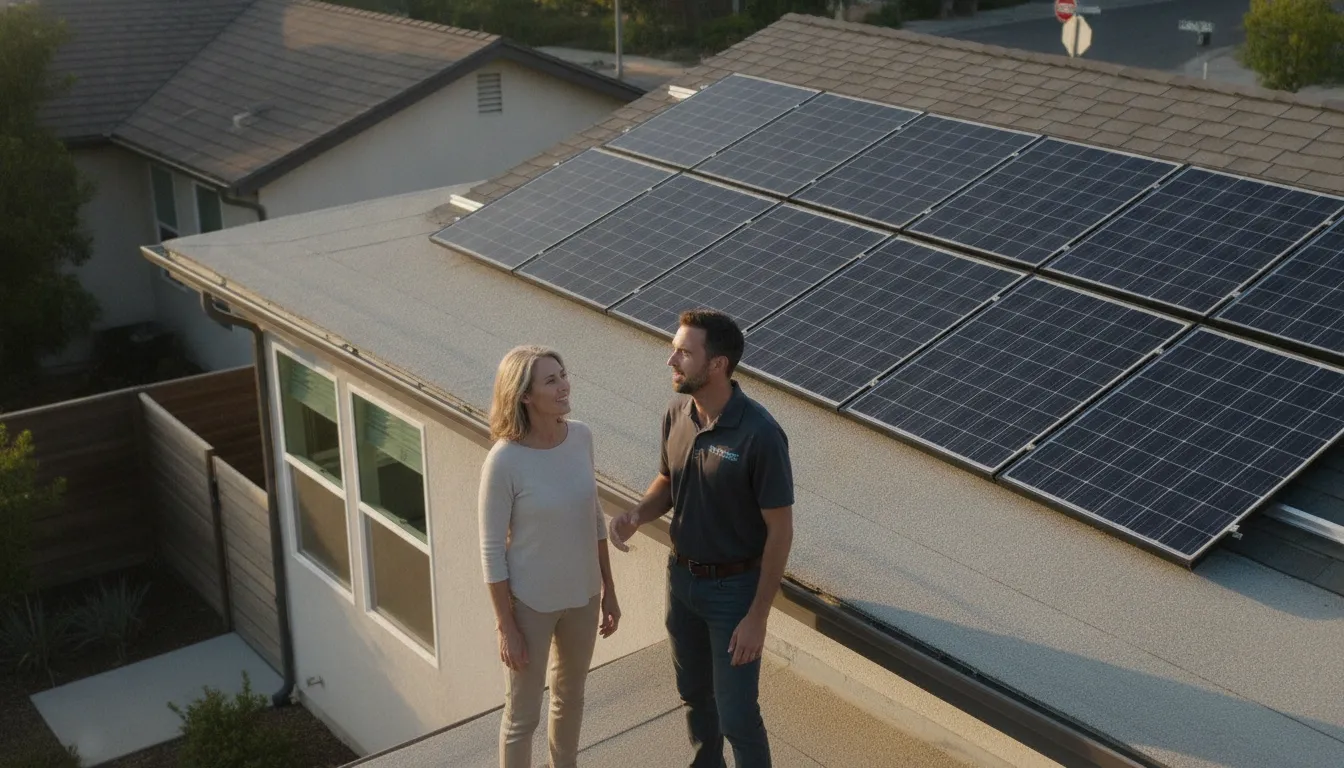
Choosing how to pay for solar affects more than the first monthly bill. It can shape who owns the equipment, who handles repairs, what happens when the roof needs work, and how a future home sale is managed.
Solar system leases let a third party own the panels while the homeowner pays to use the system, often with maintenance included. Ownership through cash or a loan can provide more control and may preserve access to applicable incentives, while a lease may reduce upfront cost. The right fit depends on the property, utility territory, contract terms, equipment, and eligibility.
Before comparing payment amounts, clarify what the agreement actually transfers to you and what remains the provider's responsibility. The first step is to examine how the lease structure works in California.
What are solar system leases, and how do they work in California?
Short answer: Solar system leases let a third party own the equipment while the homeowner pays for its use under a long-term agreement.
Solar system leases are agreements in which a third-party company owns the solar equipment installed on a homeowner's property. Instead of purchasing the panels, the homeowner pays the leasing company for use of the system through a scheduled monthly payment. This arrangement separates equipment ownership from the benefits and responsibilities of having solar at the home.
Lease agreements commonly run for 20 to 25 years, so the contract can extend across a substantial portion of a system's operating life. Some leases may require little or no upfront payment for installation, but that does not mean the system is free. The homeowner should evaluate the full payment schedule, contract length, transfer rules, and end-of-term options before signing. The exact terms depend on the provider, system design, property, and agreement.
How does the monthly payment work?
A lease payment is generally based on the use of the equipment rather than a purchase price. The contract should state the starting payment, due date, payment adjustments, and any charges that could apply during the term. Many solar leases include an escalator, a clause that increases the monthly payment by a fixed percentage each year. Even a modest annual adjustment can change the payment profile over a long contract. So homeowners should compare the complete schedule rather than focusing only on the first-year amount. Reviewing different financing options for your solar system can help put the lease structure in context.
Who owns and maintains the equipment?
Under a lease, the leasing company retains ownership of the panels and related equipment. The U.S. Department of Energy explains that the leasing company is generally responsible for maintenance and system performance. The contract controls what is actually covered and how service requests are handled. Confirm who monitors production, responds to equipment problems, covers repairs, and coordinates access to the property. Coverage for maintenance does not eliminate the need to understand exclusions, response procedures, and responsibilities related to the roof or other homeowner-owned property.
California conditions also matter. Utility territory, interconnection rules, the property's electrical needs, and current policy can affect how a proposed system is designed and evaluated. A lease may also look different from a Power Purchase Agreement, where payment is commonly tied to the electricity the system produces rather than a fixed equipment rental. Learn more about understanding solar Power Purchase Agreements before treating the two structures as interchangeable.
For a fair comparison, read the agreement's payment, maintenance, production, insurance, roof-work, transfer, buyout, and end-of-term provisions together. The lowest initial payment is not necessarily the best fit for every California homeowner.
How do solar system leases compare with owning the system?
Short answer: A lease keeps equipment ownership with a third party, while cash purchases and solar loans give the homeowner ownership and more direct control.
The central difference is who owns the equipment and therefore who carries more of the long-term responsibility. With a lease, a third-party company owns the system while you pay for its use. With a cash purchase or solar loan, you own the system. A power purchase agreement, or PPA, generally charges for the electricity the system produces rather than a fixed rental payment. The U.S. Department of Energy outlines these as distinct financing structures, but the details vary by provider and contract.
Use this table as a starting point, then review the actual agreement for payment terms, maintenance obligations, incentive eligibility, and sale requirements. For a broader look at financing options for your solar system, compare the assumptions behind each proposal rather than focusing on one monthly figure.
| Consideration | Lease | Cash purchase | Solar loan | PPA |
|---|---|---|---|---|
| Ownership | Third-party provider owns the equipment. | Homeowner owns the equipment immediately. | Homeowner owns the equipment while repaying the loan. | Third-party provider generally owns the equipment. |
| Upfront payment | Often structured to limit upfront installation costs, subject to contract terms. | Requires the homeowner to pay the agreed project cost upfront. | Usually spreads repayment over time, with approval and terms varying by lender. | Payment is typically tied to electricity produced, with contract terms varying. |
| Maintenance | Leasing company commonly handles maintenance and repairs. | Homeowner coordinates maintenance, subject to applicable equipment coverage. | Homeowner coordinates maintenance, subject to applicable equipment coverage. | Provider responsibilities depend on the PPA agreement. |
| Incentive access | Homeowner generally does not claim incentives tied to ownership. | Owner may qualify for applicable incentives under current rules. | Owner may qualify for applicable incentives under current rules. | Provider generally claims ownership-related incentives, subject to eligibility. |
| Control | Equipment and contract terms limit some decisions. | Homeowner has the greatest control over the owned system. | Homeowner controls the system, subject to loan obligations. | Production, rate, and equipment terms are governed by the agreement. |
| Home sale | Lease transfer, buyout, or other requirements may add complexity. | Owned equipment can simplify the financing aspect of a sale. | Loan payoff or transfer details must be addressed before closing. | Agreement transfer or payoff requirements may apply. |
Ownership can provide access to applicable federal or state incentives, but eligibility depends on current rules and your circumstances. Leases can shift maintenance responsibility away from the homeowner, yet a long agreement may include an escalator that raises payments by a fixed percentage each year. A PPA deserves its own review of production assumptions and rate terms; see understanding solar Power Purchase Agreements before comparing proposals.
Finally, consider the property itself. Roof condition, utility territory, interconnection rules, equipment selection, and your expected time in the home can change which option is practical. The right comparison is not simply lease versus purchase. It is the total responsibility, control, and flexibility each contract creates for your household.
Who handles maintenance, roof work, and equipment decisions?
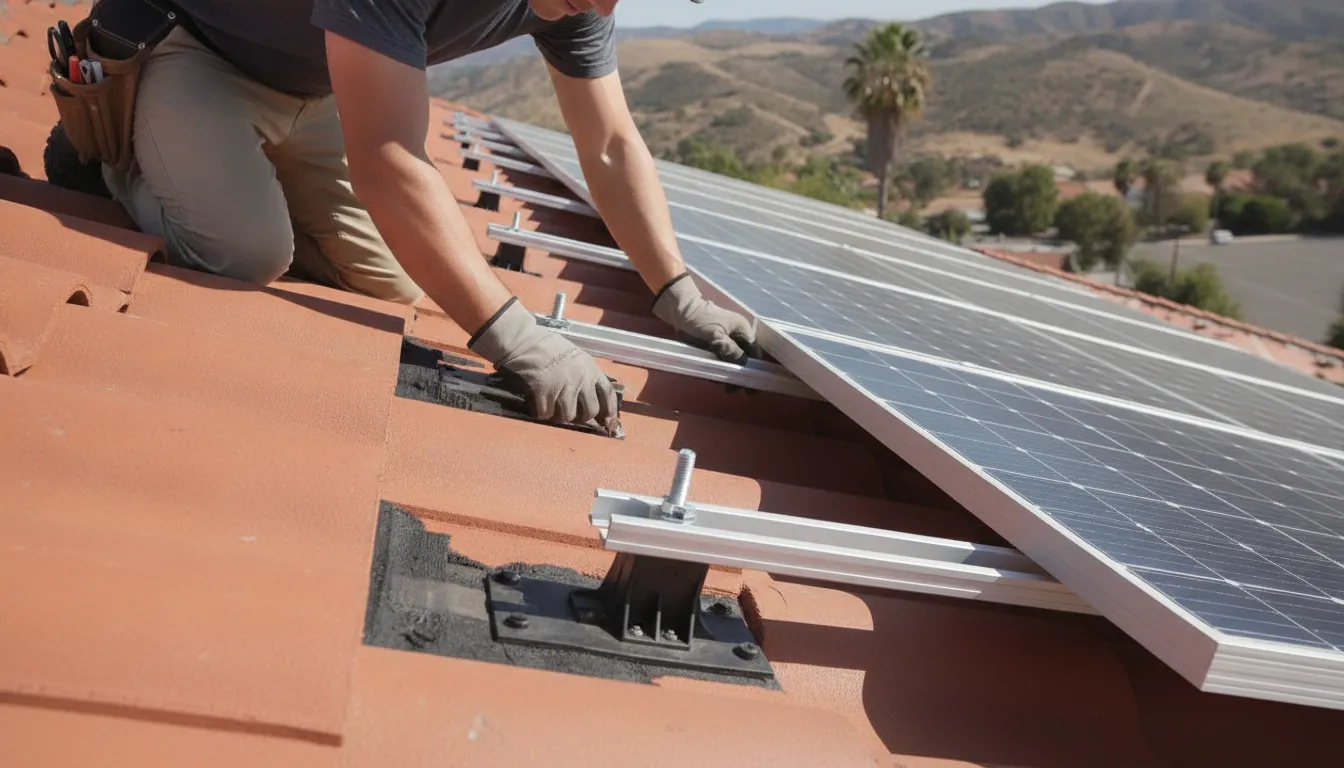
Short answer: The lease provider generally handles equipment maintenance, while the contract determines roof-work costs, service procedures, and who controls replacement decisions.
Responsibility depends first on who owns the equipment. With a solar lease, a third-party leasing company owns the panels and is generally responsible for system maintenance and performance. The contract should explain how service requests are submitted, what repairs are covered, and whether the homeowner has access to production monitoring. Some lease agreements may not provide real-time monitoring, so confirm how you will identify an outage or performance issue. The U.S. Department of Energy's financing guide provides a useful overview of lease and ownership responsibilities.
If you own the system through a cash purchase or solar loan, you have more direct control over equipment choices, monitoring access, and future upgrades. You also take on more responsibility for coordinating service, even when manufacturer or installer warranties may apply. Review exactly who responds to inverter faults, damaged panels, wiring problems, or monitoring alerts. Avoid assuming that a warranty covers labor, roof work, or every component in the system.
How does the roof affect a leased solar system?
Roof condition should be evaluated before signing any agreement, not after panels are installed. A structurally sound roof must support the added equipment, and its remaining service life matters when comparing a long-term contract with a planned roof replacement. If the roof needs work later, ask who pays to remove and reinstall the array. How long the process may take, and whether roof damage caused during the work is addressed. The U.S. Treasury's consumer guide to solar leases specifically recommends reviewing removal and reinstallation provisions.
This coordination is especially important for California homes with tile or aging roofing materials. AMECO combines solar and roofing services, so homeowners can discuss roof health and solar design in the same project conversation. Explore AMECO's roofing solutions to understand how roof work can be considered alongside an energy project, rather than treated as an unrelated repair.
Who chooses batteries and replacement equipment?
Equipment decisions may be limited by the lease contract. Ask whether the leasing company selects the panels, inverter, and monitoring platform, and whether you can add a battery later. Battery compatibility, available space, utility requirements, and the home's backup goals all affect the design. California utility territory and interconnection rules can also influence which configuration makes sense. Compare the contract's process for replacing failed equipment or upgrading the system with the level of control you would have as the owner. If outage resilience is a priority, review AMECO's battery backup options as part of the broader property plan.
What should California homeowners check before signing a solar lease?
Short answer: Before signing, verify payment changes, production assumptions, maintenance, roof work, batteries, utility approval, transfer rules, buyout terms, and end-of-term obligations.
Read the entire agreement, not only the projected monthly payment. Solar leases commonly run for 20 to 25 years, and the leasing company generally owns the equipment while you pay for its use. That makes the details important if your energy needs, roof, utility rules, or plans for the property change. Use this checklist to identify questions that should be answered in writing.
- How does the payment change? Look for an escalator, which raises the payment by a fixed percentage at set intervals. Ask for the starting payment, every scheduled increase, the total payment schedule, and whether any fees apply for late payment, early termination, or contract changes. Do not compare offers using the first monthly figure alone. Review an explanation of solar lease escalators alongside the actual contract.
- What production assumptions support the proposal? Ask how the installer estimated annual production, including roof orientation, tilt, shading, system size, and equipment. Confirm whether the agreement guarantees energy production, what happens if output falls short, and how performance is measured. A lease payment and a production-based promise are different terms, so request the remedy, exclusions, and reporting method for each.
- Who handles maintenance, repairs, insurance, and monitoring? The U.S. Department of Energy explains that the leasing company generally remains responsible for system maintenance and performance, but your contract controls the scope. Ask who pays for failed equipment, labor, roof penetrations, storm damage, and property damage. Confirm whether the lessor carries equipment insurance, whether your homeowner policy must be updated, and whether you receive real-time production monitoring or only periodic reports.
- What happens if the roof needs work? Ask who decides whether panels must be removed and reinstalled, who coordinates the work, how long it may take, and who pays every related cost. Clarify whether roof repairs, replacement, flashing, and damage caused during removal are included or excluded. The U.S. Treasury's consumer guide specifically recommends checking these provisions before signing. Also verify that the roof is structurally ready for the equipment before installation.
- Are batteries included, optional, or separately contracted? If backup power matters, identify the battery model, ownership, usable capacity, warranty responsibility, monitoring access, replacement terms, and what loads the system can support during an outage. Ask whether adding storage later requires a new agreement. Battery performance and value depend on the home, equipment, utility territory, and current interconnection policies, so avoid relying on a generic savings illustration.
- How will utility approval and interconnection be handled? Confirm who submits applications, secures permission to operate, responds to utility requests, and pays unexpected interconnection or upgrade charges. Ask which utility rate assumptions were used and how changes to export-credit rules affect the proposal. Approval requirements and project economics can differ across California utility territories.
- What are the transfer, buyout, and end-of-term options? Ask whether a buyer must qualify for the lease, what documents and fees apply to a transfer, and whether you may purchase the system before the term ends. Some leases include a buyout option, but its timing and price are contract-specific. At the end, determine whether you can renew, buy, remove, or require the lessor to remove the equipment, and who restores the roof. A lease may need to be transferred during a home sale, which can add complexity.
How do solar system leases affect a home sale or future plans?
Short answer: A lease can add transfer, buyer-qualification, payoff, and roof-work questions to a future sale, so review those terms before signing.
A solar lease can become part of the home-sale process because the equipment is typically owned by a third-party leasing company rather than by the homeowner. When you sell, the buyer may need to assume the remaining agreement, subject to the leasing company's requirements. The U.S. Department of the Treasury cautions that transferring a solar lease to a new homeowner can add complexity to a sale. Review the Treasury's consumer guide and your own contract before listing the property.
Start by asking the leasing company for its transfer procedure and the documents a prospective buyer must provide. Buyer qualification may involve an application, credit review, income documentation, or other criteria defined by the contract. A buyer who does not qualify may require a different path, such as a negotiated payoff or buyout, if that option is available. Neither transfer nor early payoff should be assumed. Request the current terms in writing, including any fees, timing requirements, purchase price calculation, and whether the agreement changes when ownership of the property changes.
Refinancing can raise similar questions. A lender, title company, or underwriter may need to understand the lease, payment obligation, and any recorded documents associated with the solar system. Ask for a complete copy of the agreement, amendments, payment history, equipment information, production or monitoring records, and contact details for the lease servicer. Keeping these materials organized can reduce avoidable delays during underwriting and escrow, although the lender and leasing company make their own determinations.
Roof work deserves separate attention. If the roof needs repair or replacement before or after a sale, the panels may need to be removed and reinstalled. The Treasury specifically recommends checking the lease for roof-repair provisions and possible removal and reinstallation costs. Confirm who selects the roofing contractor, who coordinates the solar work, how long the process may take, and whether the lease company must approve the work. An integrated contractor such as AMECO can help coordinate solar and roofing considerations, but the lease owner still controls obligations established in the agreement.
Before choosing a lease, compare its long-term obligations with the total cost of a solar system and your expected time in the property. If a move, refinance, roof project, or change in household plans is likely. Make those scenarios part of the contract review rather than treating the lease as a simple monthly payment.
Which solar financing path fits your property and goals?
Short answer: The best financing path depends on ownership preference, cash flow, roof condition, utility territory, expected time in the home, and backup-power goals.
The right financing structure depends less on a universal ranking and more on how you expect to use the property. Start by deciding whether long-term ownership matters to you. A cash purchase gives you ownership without a loan payment, while a solar loan lets you own the system while paying over time. Owners may be eligible for applicable federal or state incentives, subject to current rules and individual eligibility. A lease keeps equipment ownership with a third party. A Power Purchase Agreement (PPA) generally charges for the electricity the system produces rather than renting the equipment itself.
Review AMECO's financing options for your solar system and compare the full structure, not just the first monthly figure. Ask how payments can change, who handles maintenance, what happens if equipment needs service, and whether the agreement includes a purchase or buyout path. For a deeper explanation of the electricity-based model, see understanding solar Power Purchase Agreements.
Match the structure to your cash flow and time horizon
If minimizing upfront cash is your primary concern, a lease or PPA may appear attractive, but read the complete contract. Check for an annual escalator, which can increase payments by a fixed percentage, and understand the agreement's duration. If you plan to remain in the home for many years, ownership may offer more control over the system and its long-term financial treatment. If you may move sooner, examine transfer requirements, buyer qualification, early termination provisions, and any payoff or buyout calculation before signing.
Ownership also means taking a more active role in decisions about monitoring, repairs, insurance, and future equipment. A lease may shift much of the equipment maintenance responsibility to the leasing company, but the contract controls the actual obligations. Compare the total cost of a solar system using property-specific assumptions rather than relying on a generic estimate.
Account for the roof, utility territory, and resilience goals
Roof condition should be resolved before panels are installed. A roof that may need substantial work can change the timing and total scope of a project, especially if removal and reinstallation responsibilities differ by financing model. AMECO's integrated solar and roofing approach helps coordinate those decisions from design through installation.
Finally, evaluate your utility territory, interconnection requirements, roof orientation, shade, and interest in outage protection. Battery storage can affect both equipment selection and the financing comparison, so review battery backup options alongside your solar plan. Use the solar cost calculator for an initial framework, then discuss your property's details and current eligibility with AMECO through Get An Estimate.
Frequently Asked Questions
Is leasing a solar system a good idea?
It can be a reasonable choice when minimizing upfront costs and delegating equipment maintenance matter more than owning the system. A lease usually places equipment ownership and maintenance with a third party, while your payment structure, contract term, and long-term control depend on the agreement. Compare the lease with cash purchase, a solar loan, and a PPA against your expected time in the home, tax eligibility, utility territory, roof condition, and backup-power goals.
What is the downside of a solar lease?
The main tradeoffs are that you do not own the equipment, may not receive ownership-related tax benefits directly, and could face added complexity when selling the home. Many agreements also include an escalator that raises the payment by a fixed percentage each year. Review the actual contract for payment changes, maintenance responsibilities, buyout terms, early termination provisions, and roof-removal costs. The U.S. Department of Energy compares these financing structures.
What is the average cost of a solar lease?
There is no reliable universal average for a California homeowner. The payment can vary with system size, equipment, roof and electrical work, utility rates, contract terms, and eligibility factors. Ask for the total payment schedule, any escalator, expected utility charges, and end-of-term obligations rather than evaluating only the initial monthly amount. Comparing multiple written proposals can reveal meaningful differences in structure.
Can I sell my home with a solar lease?
Usually, the lease must be addressed during the sale through an approved transfer, payoff, or other contract option. Buyer qualification requirements and the process can affect timing and negotiations, so request the transfer rules and current payoff or buyout information before listing. A U.S. Treasury consumer guide notes that transferring a solar lease can be complex. Also confirm how roof replacement or refinancing would be handled.
Ready to review your solar options?
Choosing between a lease, ownership, or another financing path depends on your property, roof condition, utility territory, goals, and eligibility. A project-specific review can help you compare payment structure, responsibilities, equipment considerations, and future plans before committing. To review your California property and financing options with AMECO Solar & Roofing, request a project estimate.


.svg)
