


Turnkey Solar Solutions for California Homes

Solar is not just a panel installation. For a California homeowner, the project can involve roof condition, electrical capacity, utility requirements, permitting, equipment choices, and plans for future energy use.
Get An Estimate for Your Turnkey Solar Project
Turnkey solar solutions bring those moving parts under one coordinated process, typically covering consultation, site assessment, custom design, permitting, installation, activation, utility interconnection, and ongoing support. Depending on the property and goals, the same planning conversation may also include roofing, battery storage, and EV charging.
The value of this approach is accountability: instead of coordinating separate specialists and guessing how one scope affects another, you can evaluate the project as a connected system. The right starting point is a clear definition of what turnkey service includes and where your provider's responsibility begins and ends.
What Are Turnkey Solar Solutions? A Clear Definition
Turnkey solar solutions are an end-to-end way to plan and complete a solar project. Instead of asking the homeowner to manage separate stages and vendors, one provider coordinates the work from the initial consultation through system design, permitting, installation, activation, and utility interconnection. The goal is not simply to install panels. It is to give the homeowner one accountable point of contact for the decisions and handoffs that make a project function as a whole.
That scope can include an initial remote estimate, custom engineering, site measurements, equipment planning, permit applications, installation, inspections, commissioning, and the steps required to connect the system with the local utility. The exact scope depends on the property, roof, electrical service, energy goals, utility territory, and any additional work the project requires. A reputable provider should explain those boundaries before work begins, rather than treating every home as the same.
How is turnkey different from hiring several contractors?
With a fragmented approach, a homeowner may need to coordinate a roofer, solar installer, electrician, permit contact, and utility paperwork independently. Each company may have its own schedule, contract, assumptions, and preferred method of communication. If the roof needs attention before an array is installed, the homeowner also becomes responsible for deciding who works first and confirming that the completed roof is ready for the mounting system.
A turnkey provider brings those project conversations together. The team can identify dependencies earlier, clarify who owns each step, and keep design decisions connected to the property's physical conditions. This does not remove the homeowner's need to make informed choices. It changes the coordination burden and makes accountability clearer when questions arise. In practice, the value is a coordinated process, not a promise that every project will follow one fixed timeline or produce the same result.
What does integrated solar and roofing mean?
For a homeowner considering both services, an integrated contractor can evaluate the solar plan and roofing scope together. That helps the project address roof readiness, mounting considerations, and sequencing before installation. AMECO Solar & Roofing brings California roots and has provided solar and roofing solutions since 1974. Homeowners can review AMECO's approach to solar projects and learn more about AMECO's California roots when comparing providers.
Turnkey does not mean that every homeowner needs every available service. It means the provider can assess the complete picture and explain which scopes are relevant.
Get An Estimate for a Coordinated Solar Plan
What Happens During a Turnkey Solar Assessment?
A useful assessment turns a broad interest in solar into a property-specific plan. It is more than estimating how many panels might fit on a roof. The team reviews how the home uses electricity, what the roof and electrical system can support, and which future goals matter to the homeowner. For a turnkey project, this early review also helps coordinate design, roofing, storage, and other electrical work before installation decisions are finalized.
- Discuss goals and energy use. The assessment starts with the household's priorities. Some homeowners are focused on managing electricity costs, while others care more about outage resilience, energy independence, or preparing for an electric vehicle. Recent utility bills, available usage data, occupancy patterns, and planned changes to the home can help shape the system design. The objective is not to promise a specific result, but to understand the loads the system may need to serve.
- Review the roof and structure. The evaluator considers the roof's age, material, condition, layout, and available installation areas. Structural questions also matter because the mounting approach must be appropriate for the property. If the roof may need work in the near future. Coordinating that scope before or alongside solar can help avoid placing a new array on a roof that is not ready for it. AMECO's solar solutions and system design can be evaluated alongside roofing needs when the property calls for both.
- Analyze shade and site conditions. Trees, neighboring structures, roof angles, and other obstructions can affect where equipment is placed and how the design is modeled. The review should account for conditions at the actual home rather than relying only on a broad satellite estimate. This is especially important when roof planes face different directions or have uneven exposure.
- Check electrical service and future loads. The team examines the existing electrical service, panel capacity, equipment location, and practical routing for wiring. If battery storage or EV charging is part of the homeowner's plan, those needs should be discussed at this stage. Planning them together may influence system sizing, service considerations, and the layout of the equipment.
- Take on-site measurements. A remote estimate and custom design provide an initial direction, but on-site measurements confirm the details. The visit may document roof dimensions, mounting areas, obstructions, equipment clearances, electrical components, and access conditions. Those observations support a more accurate design and help identify questions that need resolution before permitting and installation.
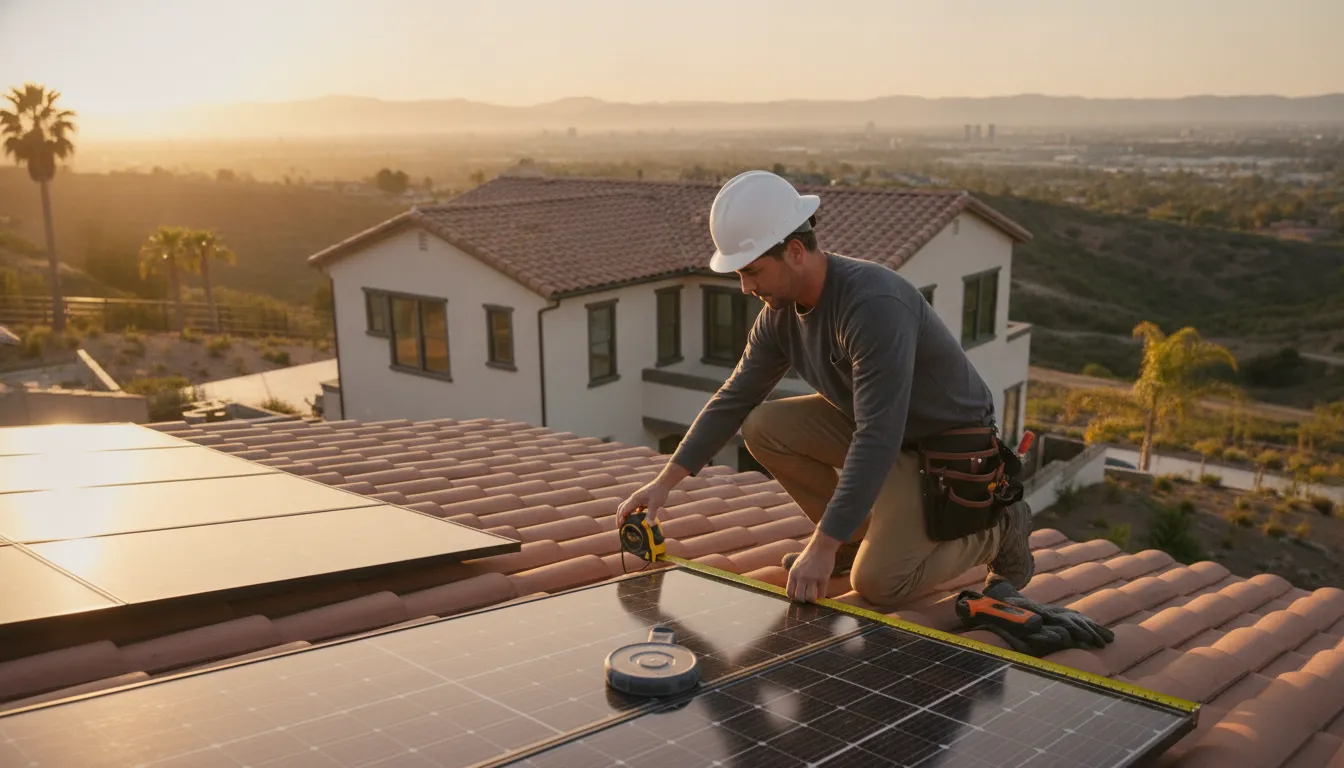
After these steps, the homeowner should have a clearer view of the project's scope, relevant tradeoffs, and open decisions. Ask what the assessment found, which assumptions shaped the design, and how the proposed equipment will work with the home's roof and electrical service. That transparency is central to comparing turnkey solar solutions on more than an equipment list.
How Do Turnkey Solar Solutions Move From Design to Interconnection?
Once the project goals and property conditions are understood, the next stage turns a concept into a system that can be permitted, inspected, and connected to the grid. A custom design should reflect the home rather than rely on a standard package. Roof orientation and condition, shade, structural considerations, electrical service, expected energy use, and the requirements of the local utility can all influence the final plan.
Custom design starts with the property
AMECO's process includes an initial remote estimate, custom design, and on-site measurements. Those steps help clarify where equipment can be placed, how the array can work with the roof, and whether related electrical or roofing questions need attention before installation. Equipment selection is also property-dependent. Panels, inverters, mounting hardware, and optional storage should be evaluated in relation to the roof layout, service equipment, energy goals, and future loads, rather than presented as universally appropriate choices.
Design is also the point to identify coordination issues early. For example, a roof that may need work in the near future could affect array placement or project sequencing. A homeowner considering battery storage or an electric vehicle should raise those goals before the design is finalized, because future electrical demand can influence planning.
If you want to understand how these decisions apply to your property, Get An Estimate and discuss the project scope with a qualified solar and roofing team.
Permitting and utility review follow the design
After the system design is prepared, the project moves into permitting and utility interconnection. The permitting package documents the proposed installation for the relevant authority having jurisdiction. The utility application addresses how the system will connect to the local grid and what requirements must be satisfied before operation. A turnkey provider coordinates these administrative steps, but the exact process can vary by jurisdiction, utility territory, system configuration, and property conditions.
California has established a state framework intended to streamline residential solar permitting. The California Energy Commission explains the Residential Solar Permit Reporting Program under SB 379: California's residential solar permitting program. The governing statutory language is available in California Government Code Section 65850.5. These rules do not mean every project has the same requirements or approval experience. So homeowners should avoid treating a general permitting framework as a guarantee of eligibility or timing.
Inspection and activation complete the handoff
Installation is followed by required inspection and the remaining utility steps. The system should not be treated as fully operational simply because the equipment is mounted. Inspection confirms that the installed work corresponds with the approved plans, while interconnection approval establishes the conditions for operating with the grid. Activation and commissioning then provide the transition into normal use, monitoring, and ongoing support.
The value of an end-to-end process is accountability across these handoffs. Instead of asking the homeowner to coordinate designers, installers, permitting contacts, and utility paperwork independently, one provider can keep the project information connected from design through activation. The homeowner still makes important decisions, but the responsibilities and next steps are easier to see.
Why Coordinate Solar and Roofing in One Project?
Solar panels are attached to the roof, so the roof's condition should be part of the solar decision from the beginning. If shingles, tiles, flashing, or other roofing components are nearing the end of their service life, installing an array first may create avoidable planning challenges later. A coordinated review helps determine whether the roof is ready, needs targeted work, or should be replaced before the array is installed.
This is not simply a matter of putting two line items on the same proposal. The project team should consider roof layout, structural capacity, mounting locations, penetrations, flashing, drainage, and the sequence of trades. A structural assessment helps confirm that the roof and mounting system are appropriate for the planned array. Shade, roof planes, electrical service, and future equipment can also influence where the system belongs.
When roofing work is needed, completing it before solar installation can avoid removing and reinstalling panels later. The U.S. Department of Energy notes that combining roof replacement with solar can help avoid redundant labor and structural issues. The right sequence still depends on the property's condition and the scope of work, so the recommendation should follow an inspection rather than a universal rule.
What should the team verify before mounting panels?
- Whether the roof covering, underlayment, flashing, and drainage details are suitable for the expected project life.
- Whether the structure can accommodate the array and mounting hardware, subject to the applicable design and inspection requirements.
- Where attachment points and penetrations can be placed while maintaining a durable waterproofing strategy.
- Whether roof repairs, replacement, solar, storage, or future electrical work should be sequenced together.
| Situation | Focus | Approach |
|---|---|---|
| Roof ready. | Structure and waterproofing. | Coordinate solar on the existing roof. |
| Roof work soon. | Roof scope and array placement. | Complete roofing before solar. |
| Separate providers. | Responsibilities and records. | Confirm readiness and handoffs. |
Working with one integrated provider can simplify communication between roofing and solar teams. This is especially useful when attachment details or sequencing require decisions across both scopes. AMECO's integrated roofing solutions can be considered alongside solar planning. Separate providers may still be appropriate when a trusted roofer is already engaged. The teams should agree on roof readiness, mounting locations, waterproofing responsibilities, and inspection requirements before work begins.
Should You Add Battery Storage or EV Charging?
Solar planning should account for how your household uses electricity today and how that pattern may change. Battery storage and EV charging are not automatic additions to every system. They are design decisions that depend on your outage goals, daily load profile, electrical service, available panel capacity, and anticipated future loads.
Start with your energy priorities
If keeping selected appliances operating during a utility outage is a priority, ask which circuits matter most and how long they may need support. A battery can store excess solar energy for use at night or during some outage scenarios. That capability may improve household resilience when the system and backup configuration are designed for that purpose. The amount of usable energy, the circuits included, and the system's operating behavior all need to be evaluated for the property rather than assumed.
Review your recent electricity use and identify large or time-sensitive loads. Air conditioning, electric water heating, pool equipment, refrigeration, and home offices can affect the design conversation. Your installer should also discuss whether the existing electrical panel has enough capacity for the planned solar equipment, battery equipment, and any future electrical upgrades.
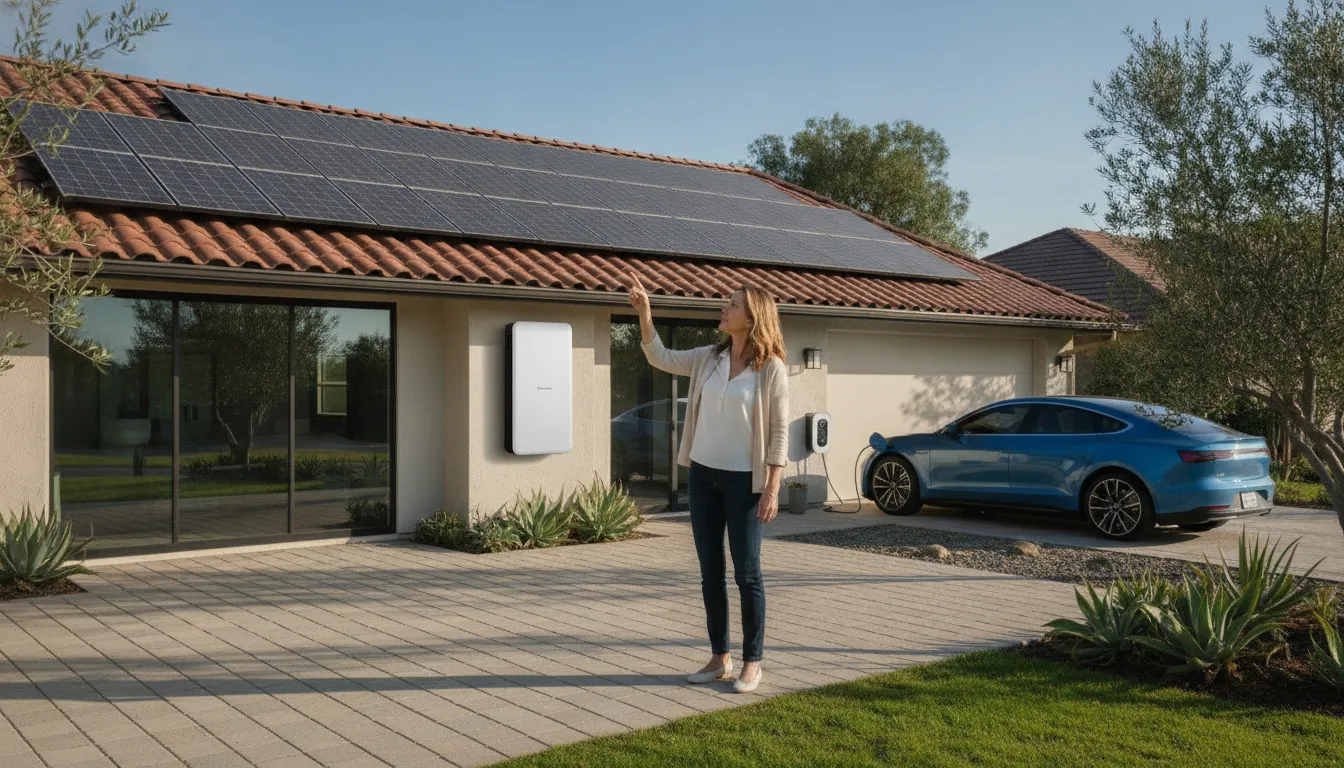
Plan EV charging before the final design
An electric vehicle can add a substantial new load to a home's electrical schedule. Even if you do not own an EV yet, mention a possible purchase during the consultation. The team can then review charging location, service capacity, panel space, wiring routes, and how charging may fit alongside other household demand. A solar system should not be sized around an assumed driving pattern or promised financial outcome. Instead, the design should reflect the vehicle, charging habits, utility requirements, and equipment compatibility you actually expect.
Compatibility matters across the complete system. Solar modules, inverters, batteries, backup controls, EV chargers, and the electrical panel must work together within their technical limits. Future-proofing may involve reserving capacity, selecting compatible equipment, or planning a later installation, but the right choice depends on the home's current infrastructure and project goals.
For a closer look at how batteries may fit into an outage-readiness plan, review battery backup options. Then Calculate Your Project with your current electrical use, outage priorities, and possible EV plans in mind before moving to the final questions.
What Should Homeowners Expect After Installation?
Installation is not the point where a turnkey solar project becomes someone else's problem. The final phase should give you a clear handoff, usable system information, and a practical way to understand how the equipment is performing. Requirements can vary by project and utility territory. Your provider should explain which steps remain, who is responsible for them, and what confirmation indicates that the system is ready for normal operation.
A strong handoff also connects the physical work to the digital side of the system. Monitoring can help you review solar production and household consumption, while also making unusual activity easier to identify. The goal is not to watch a dashboard constantly. It is to understand the normal pattern for your home and know what information to provide if a question develops.
What should be included in the handoff?
Before considering the project complete, ask for documentation that matches the equipment and work installed at your property. The exact contents will depend on the system, but a useful handoff commonly addresses:
- Inspection and utility-interconnection status, including any remaining homeowner action.
- System equipment, operating instructions, and access to the monitoring platform.
- Basic guidance for reading production and consumption data.
- Records related to permits, final approvals, and the installed design, when available.
- Instructions for reporting a concern and identifying the appropriate support contact.
- Answers to maintenance questions, such as what homeowners should observe, clean, or leave to a qualified professional.
Monitoring data is useful evidence, but it should be interpreted in context. Seasonal sunlight, weather, household demand, shading, utility settings, and equipment configuration can all affect what you see. A single lower-production day does not automatically indicate a system fault. Conversely, a persistent or unexplained change deserves attention and a documented review.
Accountability is easiest to evaluate when responsibilities are specific. Ask who coordinates post-installation questions, how the provider distinguishes an equipment issue from a utility or home-electrical issue, and which records should be retained. A provider's approach to solar projects should make those handoffs understandable rather than leaving you to coordinate separate parties. You can also review AMECO's California roots and integrated service model when comparing providers.
For homeowners considering turnkey solar solutions, the best outcome is not simply panels on the roof. It is a documented transition into ownership, with clear information, realistic expectations, and a defined path for questions after activation.
Get An Estimate Before You Choose a Solar Provider
Frequently Asked Questions
What does a turnkey solar project include?
It typically covers the connected stages of a project, including consultation, site assessment, custom design, permitting, utility interconnection, installation, activation, monitoring, and ongoing support. Confirm exactly which responsibilities are included, who coordinates inspections, and what documentation you will receive at handoff.
Does my roof need to be replaced before solar panels are installed?
Not always. The assessment should consider the roof's condition, structure, age, and expected service life. If roofing work is likely to be needed soon, coordinating it with solar can help avoid removing and reinstalling an array later. A qualified provider should explain whether repair, replacement, or no roofing work is appropriate for your property.
Will a turnkey provider handle permits and utility interconnection?
That is normally a core part of the turnkey scope, but homeowners should verify it in the proposal. The provider may prepare permit documents, coordinate inspections, submit the utility interconnection application, and manage required corrections. California law requires cities and counties to create a streamlined, expedited residential solar permitting process under SB 379, but local requirements and utility procedures still affect the project. Learn more from the California Energy Commission.
Should I plan for a battery or EV charger at the same time?
Discuss both during the initial design, even if you do not install them immediately. A battery may store excess solar energy for nighttime use or some outage scenarios. An EV charger can add future electrical demand, so reviewing service capacity, charging needs, and load growth early may help create a more adaptable design.
Ready to Plan Your Turnkey Solar Project?
A coordinated review can help you consider solar, roofing, battery storage, and EV charging together, based on your home and future energy needs.


.svg)
