


Why Solar and Roofing Should Be Done Together: How to Find the Right Contractors in California
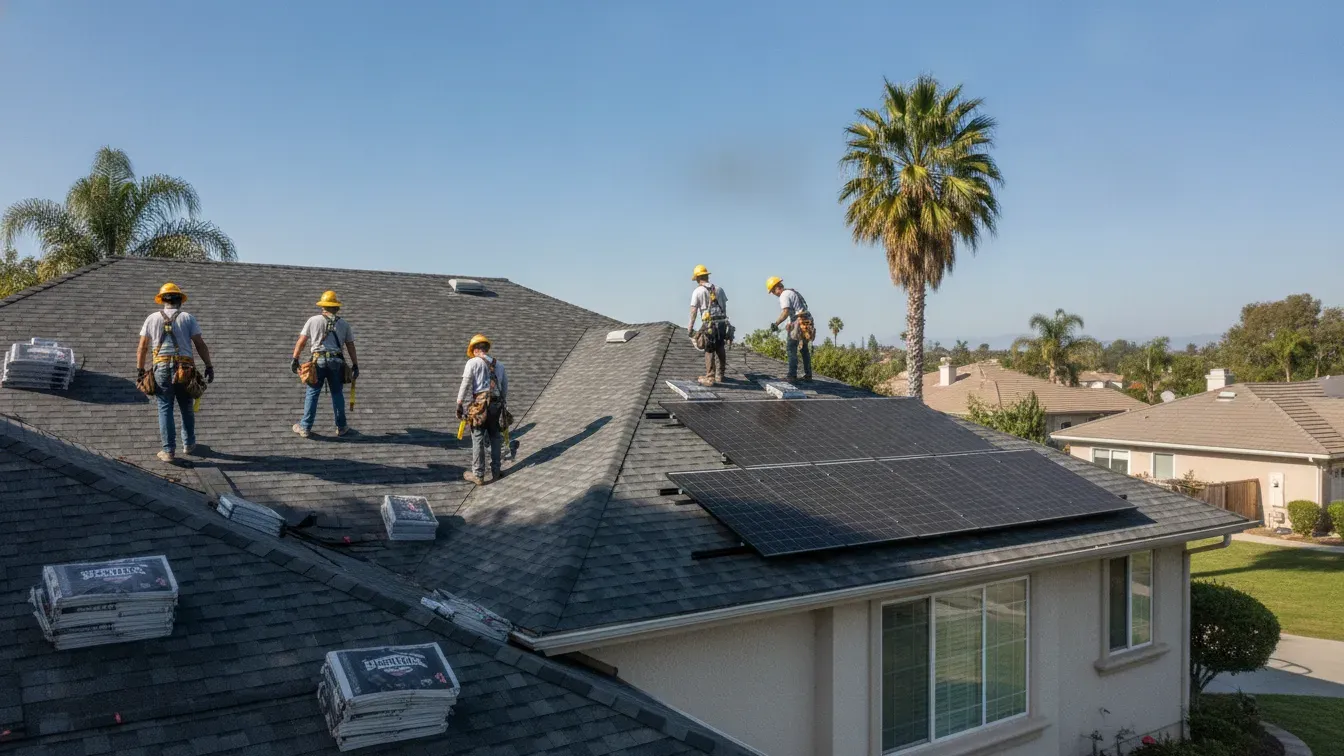
The Costly Mistake Many California Homeowners Make
Ask most homeowners who installed solar on an aging roof and you will hear the same story. A few years in, the shingles wear out, the roof leaks, and the entire array has to be taken down, repaired or replaced, and reinstalled. Removing and reinstalling a solar system can cost thousands of dollars on top of the roofing bill, and it can stretch the project timeline by weeks.
The better path is to plan solar and roofing together. When a roof replacement and a solar installation are coordinated as one project, homeowners avoid the removal-and-reinstall cycle, protect their warranty, and often save on permits and labor. For California homeowners already facing high energy costs and rooftop solar decisions, that coordination is one of the smartest moves you can make.
Below, we explain why roofing and solar should be planned together, what sets a true integrated contractor apart, and how to pick the right team for the job, whether it is a simple roof-and-solar project or part of a larger home renovation.
Why Roofing and Solar Should Be Planned Together
A solar array is designed to last 25 years or more, and so is a quality roof. If the two systems are not on the same schedule, the math works against you. Here is what changes when you plan them together.
Structural Load and Roof Condition
Solar panels add weight to the roof, and they are mounted with fasteners that penetrate the surface. That only works reliably on a roof that is structurally sound and has enough life left to support a 25-year renewable energy investment. Installing solar on a roof that is near the end of its life means the panels are the first thing removed when the roof fails.
Waterproofing and Leak Protection
Every solar mount point is a potential entry point for water. A combined roof-and-solar installation lets one team coordinate waterproofing, flashing, and panel mounting so the roof system and the solar system work as one sealed unit. When separate contractors work at different times, gaps can appear in that waterproofing responsibility.
Warranty Alignment
A new roof and a new solar system each carry guarantees. Done together under one accountable contractor, the work is easier to warranty as a single system. Done years apart, a homeowner can be caught between a roofer and a solar installer pointing at each other when a leak appears.
Permit and Labor Savings
Coordinating the work means one construction phase instead of two. Because crews and equipment are on site together, homeowners can reduce mobilization costs and overlapping permit work. Some municipalities also make it simpler to bundle the approvals for a roof-and-solar project into one effort rather than revisiting the process years later.
Timing Around NEM 3.0 and the Federal Tax Credit
California's net energy metering rules and the federal solar investment tax credit give homeowners financial reasons to move with purpose. Planning your roof and solar on one timeline means you are not waiting years to lock in the economics, and you are not caught redoing solar work after your roof fails and the incentives have changed.
What Makes AMECO Different
AMECO Solar & Roofing has served California homeowners since 1974, and it has built its business around a simple advantage: it handles both solar design and installation and professional roofing under one company. For nearly fifty years, that means there is no hand-off between a separate roofer and a separate solar contractor, no finger-pointing about who owns the flashing, and no scheduling gaps that leave a home exposed to the weather.
Because a single accountable team manages the roof and the array together, homeowners get one consultation, one design, and one installation plan. The team assesses the roof, prepares it for solar, and installs a system sized for the way the family actually uses energy. That end-to-end coordination is why homeowners choose AMECO over juggling multiple contractors, whether they are starting with a roof replacement or planning a full solar project from scratch. To learn more about AMECO's roofing capabilities, visit the roofing solutions page, or explore how the company designs and installs solar on the solar solutions page.
The Role of the General Contractor When Solar Is Part of a Larger Project
Not every solar-and-roof project happens in isolation. Many California homeowners pair the work with a broader home improvement, such as a room addition, an accessory dwelling unit (ADU), a kitchen remodel, or a backyard renovation. When the scope grows beyond the roof and the array, the project often needs a general contractor to coordinate the larger build while the solar and roofing specialists handle their systems.
For homeowners undertaking a larger renovation, say, a room addition or kitchen remodel, coordinating with a licensed general contractor like LevelWorks, which specializes in home remodeling across Los Angeles, can help ensure the broader project timeline does not conflict with solar permitting and installation schedules. The idea is not to add layers, but to make sure the roof-and-solar work fits cleanly into the overall construction calendar instead of colliding with it.
Whether your project is roof-and-solar only or part of a bigger renovation, the same principle applies: the sooner the solar and roofing team is involved in the planning, the smoother the whole build goes.
What the AMECO Process Looks Like
A coordinated roof-and-solar project with AMECO follows a clear, homeowner-friendly path.
- Consultation. The team starts with a conversation about your home, your energy use, and your goals, so the design reflects real needs rather than a one-size-fits-all proposal.
- Roof assessment. Before any solar work begins, an expert inspects the roof to confirm it is ready to support a system for the long term, or to plan a replacement as part of the same project.
- System design. The in-house design team builds a custom layout matched to the roof structure and your electricity use.
- Permitting. AMECO handles the local permitting and utility paperwork so the project moves forward without the homeowner chasing approvals.
- Installation. Professional crews install the roof and solar system as one coordinated effort, protecting every waterproofing detail.
- Battery backup option. For homeowners who want backup power during outages, AMECO can pair the system with battery storage. See the battery backup page for details.
You can read more about the full approach on the AMECO approach page.
California-Specific Considerations
California brings its own set of rules and realities to a roof-and-solar project, and an experienced local contractor keeps them all straight.
Utility Interconnection
Depending on where you live, the project has to coordinate with your utility, whether that is PG&E, Southern California Edison, San Diego Gas & Electric, or a local utility like LADWP. Interconnection approval is part of the permitting flow a good contractor manages.
Building Codes and Title 24
California's energy code sets requirements for new roofs and building envelope improvements. Doing the roof and solar together means the work is designed to be code-compliant as one project rather than retrofitted years apart.
Local Permits
Roofing and solar each require permits in most California jurisdictions. An integrated contractor bundles that paperwork, so the homeowner does not juggle multiple inspectors or schedules.
Fire Setbacks
California building codes require specific clearances between rooftop solar and the roof edge and ridge for firefighter access. A team that installs solar regularly knows these rules and lays out the array accordingly, protecting both safety and system size.
Get a Free Estimate From AMECO
If you are planning a roof replacement, weighing solar, or doing both at once, the smartest first step is a careful assessment of your home. A coordinated plan protects your roof, your solar investment, and your wallet, and it starts with clear numbers. California homeowners can use the AMECO solar cost calculator to get a project estimate and start planning the work on one timeline.
Doing solar and roofing together is one of the highest-value home upgrades a California homeowner can make. With a single contractor who owns both systems, that value is protected from the day the work begins.


.svg)
