


The Real Solar System Cost: A Complete Guide
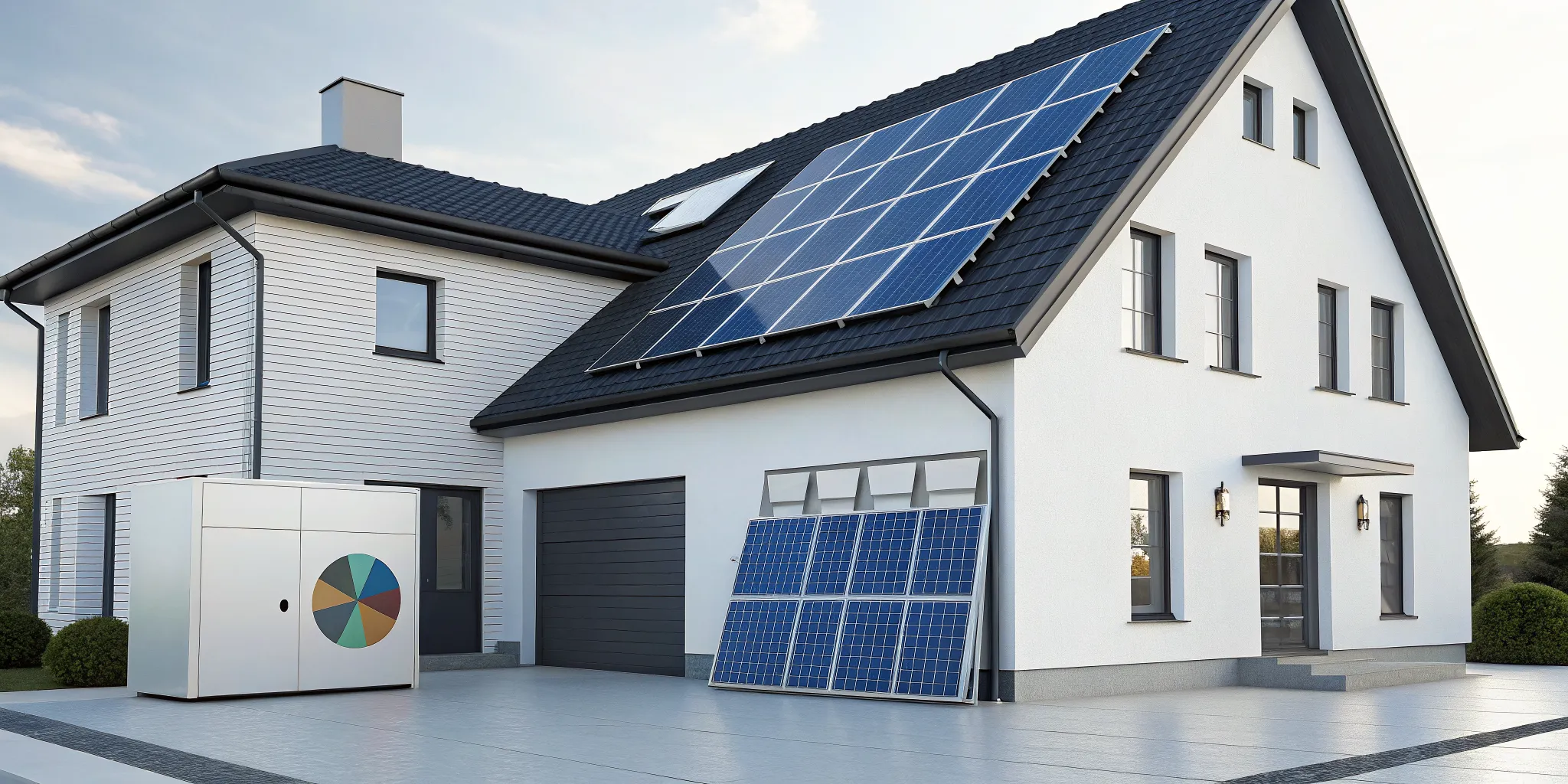
Let's stop thinking about solar panels as just another home expense. See them for what they truly are: a long-term financial investment. Instead of renting power from a utility with constantly rising rates, you’re buying an asset that pays you back for decades. While the initial solar system cost is a key consideration, the real story is in the return. From the moment it’s turned on, your system starts generating savings that can add up to tens of thousands of dollars. This guide will show you the complete financial payoff, from slashing your monthly bills to increasing your home’s value.
Key Takeaways
- Your solar cost is highly customized: The final price depends on your specific energy usage, equipment choices, and roof design, but remember that incentives like the 30% federal tax credit will dramatically reduce that initial number.
- Solar is a powerful financial asset: Beyond just saving money on monthly bills, a solar system increases your home's value and protects your budget from rising utility rates, delivering a strong return for decades.
- Compare quotes to find the best fit: To ensure you get a fair price and quality installation, collect at least three quotes and carefully review the proposed equipment, warranties, and installer experience, not just the bottom-line cost.
How Much Does a Home Solar System Really Cost?
When you start thinking about solar, one of the first questions that comes to mind is, "How much is this actually going to cost?" It’s a fair question, but the answer isn't a simple sticker price. The final cost of a home solar system depends on a few key things: the size of the system you need, the equipment you choose, and even the specifics of your roof. Think of it less like buying a product off the shelf and more like a custom home improvement project tailored just for you.
While the total price can range from around $17,500 to over $30,000 before any incentives, that big number doesn't tell the whole story. It's easy to get sticker shock, but that initial figure doesn't account for the tax credits, rebates, and long-term energy savings that make solar such a smart financial move. To really understand the investment, it helps to break it down. We'll look at the industry-standard "cost per watt," see how the size of your system influences the price, and compare California's costs to the national average. This way, you can get a much clearer picture of what to expect and feel confident when you start looking at quotes.
How to Calculate Solar Cost Per Watt
When you receive a solar proposal, you'll see the price listed as a "cost per watt." This is the standard way to measure and compare the value of different solar installations. It helps you make an apples-to-apples comparison between quotes. Nationally, the average cost of solar panels typically falls between $2.50 and $3.50 per watt before any tax credits or rebates are applied. So, for a 7,000-watt system, you could expect the initial price to be somewhere between $17,500 and $24,500. This figure gives you a baseline to understand what you're paying for each unit of power-generating potential.
Understanding Quoted vs. Cash Prices
When you start comparing solar quotes, you might notice something a little confusing: the price can change depending on whether you pay with cash or a loan. It’s common to see a quoted cost per watt around $2.50, but the reality is that the actual cash price for a system is often closer to $3.50 per watt. So, what causes this difference? The short answer is financing fees. When you take out a solar loan, the lending company often charges a dealer fee, which gets rolled into your total loan amount. This makes the overall price of the system higher, even if the monthly payment seems low.
Think of it this way: the lower interest rate on a solar loan is often subsidized by this upfront fee. To make sure you’re getting a clear picture, always ask for two numbers from any installer: the total cash price and the total financed price. This simple step reveals the true cost of financing and helps you make a fully informed decision. A trustworthy installer will be transparent about these costs and help you understand exactly what you're paying for. At AMECO, our approach is built on providing that clarity, ensuring you can confidently choose the path that best fits your financial goals without any surprises.
How System Size Determines Your Final Price
The size of your solar system, measured in kilowatts (kW), is the biggest factor in your total cost. Most homes require a system between 7 kW and 10 kW to cover their energy needs. Naturally, a larger system that produces more power will have a higher price tag because it requires more panels and equipment. Interestingly, larger systems often have a lower cost per watt due to economies of scale. A typical 7 kW system in California often costs between $12,250 and $17,010 after the federal solar tax credit. You can get a rough idea of your potential costs by using an estimate calculator to see what size system your home might need.
Estimating Costs by Square Footage
Another helpful way to frame your potential investment is by looking at the cost per square foot of your home. While not as precise as cost per watt, it gives you a ballpark figure based on your home's size. After applying the 30% federal tax credit, the average cost for a solar system can range from $6 to $12 per square foot. For instance, a 1,500-square-foot home might see costs around $8 to $9 per square foot. Keep in mind this is just a starting point. Your actual price will depend on your specific energy consumption, your roof's condition, and the equipment you select. A personalized consultation is the best way to get an accurate quote tailored to your unique situation.
How Do California Solar Costs Compare Nationally?
Living in the Golden State has its perks, and a competitive solar market is one of them. The average cost for a home solar installation in California is around $22,600 before incentives. After you factor in the 30% federal tax credit, that average drops to about $15,820. This is often slightly lower than the national average, thanks to a mature market and high demand. Of course, this is just an average. The final price depends on your specific home and energy goals. That's why our approach always starts with a personalized consultation to design a system that fits your needs and budget perfectly.
Breaking Down the Total Cost of a Solar System
When you look at a solar quote, the final number is a blend of two main categories: hardware costs and soft costs. Hardware is exactly what it sounds like—the physical equipment like panels and inverters that will be installed on your home. Soft costs, on the other hand, cover everything else, from the labor of the installation crew to the permits required by your local city. Understanding this division is key because it shows you that you're not just buying equipment; you're investing in a professionally designed and installed power plant for your home. While the shiny new panels get all the attention, the soft costs often make up the largest portion of your total investment, covering the expertise and labor needed to get the job done right.
Hardware Costs: Panels, Inverters, and More
The hardware is the tangible part of your solar energy system. This includes the solar panels themselves, the inverter that converts solar energy into usable electricity for your home, and the mounting hardware that secures the panels to your roof. While it might seem like the panels are the most expensive part, they typically only account for a fraction of the total system price. The specific equipment you choose will influence this cost; for example, high-efficiency panels or a system that includes battery backup for power outage protection will have a different price point than a more standard setup. Our job is to help you select the right solar solutions that balance performance and budget to meet your energy goals.
Soft Costs: Labor, Permits, and Overhead
Soft costs are all the essential services and operational expenses that turn a pile of equipment into a functioning solar system. This category is surprisingly large, covering everything from the custom engineering of your system and local permit fees to the wages for the certified electricians and installers. It also includes the company's operational overhead, like insurance, vehicle maintenance, and customer support. These costs are why a high-quality, professional installation is so important. You're paying for the peace of mind that comes with experienced technicians who understand the nuances of your roof and electrical system, ensuring your investment is safe, efficient, and built to last. Since we also specialize in roofing solutions, we can ensure your roof is in perfect condition for the installation.
What Factors Influence Your Final Solar Cost?
When you start looking into solar, you’ll quickly realize there’s no single sticker price. That’s because a solar system isn’t an off-the-shelf product; it’s a custom installation designed specifically for your home. The final cost depends on a few key variables that are unique to you, your house, and your energy goals. Think of it less like buying a new appliance and more like a home renovation project. The price you see on a proposal is the result of a careful calculation that considers everything from your family's electricity habits to the angle of your roof.
Understanding these factors will help you make sense of any quotes you receive and feel confident in your investment. It’s all about creating a system that meets your specific needs without overspending on capacity you won’t use. From the amount of power you use every day to the quality of the equipment and the condition of your roof, each element plays a part in shaping your system's design and its final price tag. We'll break down exactly what goes into that final number so you can see where your money is going and why it's a worthwhile investment for your home. Let’s walk through the main components that influence what you’ll pay for a home solar system.
Matching System Size to Your Energy Use
The biggest factor in determining your solar cost is how much electricity your household uses. A family that runs the air conditioning all summer and charges two electric vehicles will need a much larger system than a smaller household with more modest energy habits. We figure this out by looking at your past utility bills to see your average monthly or yearly consumption.
This data tells us how many solar panels you’ll need to generate enough power to offset your usage. The more energy you need, the more panels are required, which directly impacts the total cost. You can get a rough idea of your needs by plugging your average monthly bill into a solar calculator to see what size system might work for you.
The "20% Rule" for Sizing Your System
A good rule of thumb to consider is the "20% rule," which suggests sizing your solar system to produce about 20% more energy than your household currently uses. This isn't about overspending; it's about future-proofing your investment. That extra power acts as a buffer for those less sunny days and ensures you’re prepared for future life changes. Maybe you’ll buy an electric vehicle in a few years, add a hot tub, or switch to an electric heat pump. By planning for a slight increase in energy needs now, you avoid the more complex and costly process of adding more panels to your system down the road.
Estimating Your System's Annual Energy Production
The number of panels on your roof is only part of the equation. How much energy your system actually generates over a year depends on several specific factors. Your home’s unique characteristics, like your roof setup—including its angle and orientation toward the sun—play a huge role. Local weather patterns and the number of peak sunlight hours your area receives are also critical. Finally, the efficiency rating of the panels and inverters you choose will influence the final output. This is why a professional assessment is so important; we can accurately model your expected production to ensure the system is designed to meet your goals.
How Energy-Efficient Appliances Can Reduce System Size
One of the best ways to manage your solar costs is to reduce your overall energy consumption before you even install a system. Upgrading to energy-efficient appliances can make a significant difference in your daily electricity usage, which means you may not need as large or as expensive of a solar system. For example, modern heat pumps are three to four times more efficient than standard electric heaters for heating and water. By making strategic swaps to more efficient models for your refrigerator, washer, or HVAC system, you lower your home's energy baseline, allowing you to meet your needs with fewer panels and a smaller initial investment.
Does Equipment Quality Affect the Price?
Not all solar equipment is created equal. The brand and type of solar panels, inverters, and mounting hardware you choose will significantly affect both the upfront cost and the long-term performance of your system. For example, high-efficiency monocrystalline panels cost more than older polycrystalline models, but they generate more power in less space and tend to last longer.
The inverter, which converts the solar energy into usable electricity for your home, is another critical component. More advanced inverters can offer better efficiency and monitoring capabilities. Investing in high-quality solar solutions from reputable manufacturers often means better warranties, greater reliability, and more energy production over the life of your system, giving you a better return on your investment.
How Panel Efficiency Has Improved Over Time
The solar panels available today are far more powerful than the ones from a decade or two ago. Thanks to constant innovation, the evolution of solar panel efficiency has been remarkable. While older panels might have converted around 14% of sunlight into electricity, modern panels now regularly reach efficiencies of 20% to 22%. This leap in technology means you can generate significantly more power from the same amount of roof space. For homeowners with limited or complex roofs, this is a game-changer. Higher efficiency allows for a smaller, more discreet system that still produces all the energy you need, making it a more practical and aesthetic choice for a wider range of homes.
Factoring in Long-Term Performance Degradation
Just like any hardworking equipment, solar panels experience a slight, gradual decrease in performance over their long lifespan. This is known as degradation, and it’s a completely normal and predictable process. Most high-quality panels have a degradation rate of about 0.5% per year, which means that after 25 years, they will still be operating at around 85-90% of their original capacity. Reputable manufacturers provide a performance warranty guaranteeing this output. An experienced installer accounts for this from the very beginning, designing a system that will continue to meet your energy needs for decades, even with this minor, expected decline in production.
How Your Roof's Condition Impacts Installation Costs
Your roof is the foundation of your solar system, so its condition and design are major cost factors. An ideal roof for solar is one that’s relatively new, in good shape, and has plenty of south-facing space without obstructions. If your roof is older or needs repairs, it’s best to handle that before installing panels. We offer integrated roofing services to ensure your home is fully prepared.
The complexity of your roof also matters. A simple, single-plane roof is straightforward to work on. However, roofs with steep pitches, multiple small sections, skylights, or significant shading from trees or other buildings require more complex mounting and design work. This increases the labor involved and can add to the overall installation cost.
When to Replace Your Roof Before Going Solar
Solar panels are designed to last for 25 years or more, so it makes sense to ensure your roof can last just as long. If your roof is already showing its age, replacing it before the solar installation is one of the smartest financial decisions you can make. Think about it: removing a full solar array to fix or replace the roof underneath it in a few years is a costly and complicated process. A good rule of thumb is to consider a replacement if your roof has less than 10 to 15 years of life left. By syncing the lifespan of your roof with your new solar system, you create a solid foundation for decades of clean energy and avoid unnecessary future expenses.
So, how do you know if your roof is ready for replacement? Look for tell-tale signs like missing, cracked, or curling shingles, or an excessive amount of shingle granules collecting in your gutters. Inside your home, check the attic for any signs of water damage or daylight peeking through the roof boards. A sagging roofline is another major red flag. While you can spot some issues yourself, the best way to get a clear picture of your roof's health is with a professional inspection. This ensures you have a solid, reliable base for your solar investment and can move forward with confidence.
Why Your Location Matters for Solar Costs
Where you live plays a surprisingly large part in your solar costs and savings. In California, we’re lucky to have plenty of sunshine, but the exact amount of sun your home gets (known as solar irradiance) can vary. This, along with local weather patterns, influences how much energy your system can produce.
Your specific utility company and its policies on things like net metering also affect the financial equation. Working with a local installer who understands the regional nuances is key. With our personalized approach, we design systems that are optimized for your specific location, ensuring you get the most out of your solar investment by taking all these local factors into account.
How Can You Lower Costs with Solar Incentives?
One of the best parts about going solar in California is the number of programs designed to make it more affordable. Think of these incentives as a thank you from the government and utility companies for producing clean energy. Taking advantage of these tax credits, rebates, and local programs can significantly reduce the upfront cost of your solar system and shorten its payback period.
How the Federal Solar Tax Credit Works
The biggest financial incentive available to homeowners is the federal Solar Investment Tax Credit (ITC). This program allows you to claim a credit equal to 30% of your total solar system cost on your federal income taxes. It’s important to remember this is a tax credit, not a cash rebate, so it directly reduces the amount of tax you owe. For example, if your system costs $25,000, the ITC could save you $7,500 on your taxes. This is a dollar-for-dollar reduction that makes a huge difference in the overall cost of your solar project.
Important Update: The Tax Credit Deadline
If you're thinking about solar, there's a key deadline you need to have on your radar. The federal Solar Investment Tax Credit is a huge benefit, but the 30% credit is set to expire after December 31, 2025. To qualify, your system can't just be ordered—it needs to be fully installed and operational by that date. This means that the clock is ticking to take advantage of this significant financial incentive. Acting now ensures you have enough time to plan, design, and complete your installation without rushing at the last minute. Locking in this credit is one of the most effective ways to lower the upfront cost of your system and shorten the time it takes to see a return on your investment.
California's state-specific rebates
On top of the federal credit, California offers its own set of programs to encourage the switch to renewable energy. One of the most popular is the Self-Generation Incentive Program (SGIP). This program provides a cash rebate for installing a home battery backup system along with your solar panels. Adding a battery backup lets you store the excess energy your panels produce during the day, giving you energy independence and protecting you from blackouts. These state-level rebates help make advanced solar solutions more accessible for homeowners across California.
What Is Net Metering and How Does It Save You Money?
Net metering is a billing program that allows you to get credit for the extra electricity your solar panels generate and send back to the grid. While California’s program has changed recently, the core benefit remains: you can offset your electricity costs by contributing clean energy to your community. When your panels produce more power than your home is using, that surplus energy earns you credits on your utility bill. This is especially valuable when paired with a battery, allowing you to strategically use your stored solar power when electricity rates are highest.
How to Find Local Utility Incentives
Beyond federal and state programs, your specific utility provider might offer its own incentives. Companies like Pacific Gas & Electric (PG&E) and Southern California Edison (SCE) often have programs or rebates for energy-efficient upgrades, including solar and battery storage. A knowledgeable solar consultant can help you identify every available incentive in your area. At AMECO, our approach includes a thorough review of all federal, state, and local programs to make sure you get the best possible price for your system. We handle the research so you can focus on the savings.
Is Solar a Good Long-Term Investment?
Thinking about solar panels as just another home expense is a common mistake. It’s better to see them as a long-term investment, one that pays you back for years to come. While the initial cost is a key part of the equation, the real story is in the decades of financial benefits that follow. For California homeowners, this isn't just about being green; it's a smart financial strategy that builds equity and provides stability in an unpredictable energy market.
Going solar gives you control over one of your biggest monthly expenses and adds a valuable, modern asset to your property. Instead of renting your power from a utility company with ever-increasing rates, you own your power source. This shift from renter to owner is fundamental to the financial payoff. Over the next 25 years or more, a solar system doesn't just sit on your roof; it actively works to save you money and secure your financial future. It’s an investment in your home, your budget, and your energy independence. Let's look at exactly how that investment pays off over time, breaking down the numbers and benefits you can expect.
How Much Can You Save on Monthly Energy Bills?
The most immediate and satisfying return you’ll see from solar is the drop in your monthly electricity bill. Instead of paying the utility company for all your power, you’ll be generating your own clean energy right from your rooftop. Over the 25-year lifespan of your system, these monthly savings add up to a significant amount. Some homeowners can save between $37,000 and $154,000, depending on their system size and energy usage. Imagine what you could do with that extra money. You can even calculate your potential savings to get a clearer picture of what this looks like for your specific home.
Will Solar Panels Increase Your Home's Value?
Just like a kitchen remodel or a new bathroom, solar panels are an upgrade that adds real value to your property. The U.S. Department of Energy confirms that homes with solar energy systems are attractive to buyers. Potential homeowners see solar panels as a built-in benefit that will save them money from day one, making your home more competitive on the market. So, not only do you save money while you live in your home, but you can also expect to increase your home’s value when it’s time to sell. It’s an investment that pays off both now and in the future.
How Solar Protects You from Rising Utility Rates
We’ve all seen it: utility rates in California seem to go up every year, making it hard to predict your monthly expenses. Solar energy offers a way out of that cycle. By producing your own power, you lock in your energy costs for decades. Solar energy can cost as little as 6 to 8 cents per kilowatt-hour, which is often much lower than what utility companies charge. This creates a stable, predictable energy budget, shielding your finances from future rate hikes. With our approach, we help you design a system that gives you control over your energy costs.
Calculating Your Potential Savings Over 25 Years
When you combine the monthly bill reductions and the protection against rising rates, the long-term financial picture becomes incredibly clear. It’s not just about saving a hundred dollars here and there. Over 25 years, the total value of avoided utility costs can be substantial, with some estimates showing an average of over $52,000. This demonstrates a strong return on your initial investment. By switching to solar, you are essentially prepaying for decades of electricity at a fixed, low rate, securing a major financial advantage for your family’s future.
How Long Is the Solar Payback Period?
One of the first questions homeowners ask is, "How long will it take for my solar panels to pay for themselves?" This is what we call the payback period. Think of it as the break-even point, where the money you’ve saved on electricity bills equals your initial investment in the solar system. For most California homeowners, this period is surprisingly short, often falling between five and eight years. After that, every kilowatt of energy your system produces is pure savings, putting money back into your pocket for the rest of the system's 25-plus-year lifespan.
Understanding your payback period helps you see your solar solutions not just as a home improvement project, but as a smart financial investment. It’s the moment your system stops costing you money and starts making you money. This metric is crucial because it cuts through the noise and gives you a tangible timeline for your return on investment. Instead of just hoping for lower bills, you can see exactly when your system transitions from an expense to an asset. While the exact timeline varies from home to home, calculating it gives you a clear picture of the long-term value you're creating. It transforms the abstract idea of "energy savings" into a concrete timeline you can plan around, making it easier to see how solar fits into your financial goals.
How to Calculate Your Solar ROI
Figuring out your payback period is simpler than you might think. The basic formula is your total system cost divided by your annual energy savings. Your total cost is the final price you pay after all incentives, like the federal solar tax credit, have been applied. Your annual savings are what you would have paid your utility company for that year. For example, if your system costs $15,000 after incentives and you save $2,500 on electricity bills each year, your payback period is six years ($15,000 / $2,500). You can use an estimate calculator to get a personalized projection for your home.
Factors That Influence Your Payback Timeline
Several key factors can shorten or lengthen your payback period. The biggest influences are your total system cost, how much electricity your panels produce, and your local utility rates. Higher electricity prices actually work in your favor, leading to greater savings and a faster return on investment. The amount of direct sunlight your roof receives and the efficiency of your equipment also play a significant role. Adding a battery backup can also impact your financials, especially if your utility has time-of-use rates, by allowing you to store cheap solar energy for use during expensive peak hours.
Are There Hidden Solar System Costs to Plan For?
Your solar quote covers the big-ticket items like panels and inverters, but it’s smart to budget for a few other potential expenses. Thinking about these costs upfront helps you get a complete picture of your investment and ensures there are no surprises down the road. From local permits to long-term upkeep, here’s a look at what else you should factor into your financial planning.
Factoring in Permits and Inspection Fees
Before any work begins, your solar project needs to be approved by your local city or county. This involves securing permits and scheduling inspections to make sure everything is up to code. While it might seem like a small step, these administrative costs can add up. In fact, things like permits, inspections, and general company overhead often make up a larger portion of the total price than the installation labor itself. A professional installer like AMECO handles this entire process for you, wrapping the fees into your total project cost for a seamless experience.
Will You Need to Upgrade Your Electrical Panel?
For a solar system to work safely and effectively, your home’s electrical panel needs to be up to the task. Most modern homes have a 200-amp panel, which is usually sufficient. However, if you live in an older home, your panel might not have the capacity to handle the extra power your solar panels will generate. During your initial consultation, your solar expert will assess your electrical system. If an upgrade is needed, it will be an additional cost, but it’s a crucial one for ensuring your system runs efficiently for years to come.
The Cost of Adding a battery backup system
While solar panels generate power during the day, a battery backup system lets you store that excess energy to use at night or during a power outage. This is how you achieve true energy independence. Adding a battery is a separate cost from the panels themselves. The average price for a home solar battery is around $15,600, but powerful incentives can significantly lower that number. After the federal tax credit and available California battery rebates, that cost can drop to under $9,000, making it a much more accessible option for homeowners.
What Are the Costs for Maintenance and Monitoring?
The great news is that solar panels are incredibly durable and require very little upkeep. They are built to withstand the elements and come with 25-year warranties for peace of mind. With an extremely low failure rate, your main maintenance task will be an occasional hosing down to clear off any dust or debris that might accumulate. Most solar companies also offer monitoring services, often through an app, so you can track your system’s performance and make sure everything is working as it should be. This low-maintenance reality makes solar a simple and reliable long-term investment.
How Can You Pay for Your Solar System?
Once you have a clear idea of the costs, the next step is figuring out the best way to pay for your new solar system. The good news is you have options. Whether you want to maximize your long-term savings or need a solution with little to no upfront cost, there’s a financial path that can work for your budget. Thinking through these choices will help you find the perfect fit for your financial goals and get you on the road to energy independence.
Should You Pay for Solar with Cash?
If you have the funds available, paying for your solar system with cash is the most direct route to the highest savings. When you buy the system outright, you own it from day one and avoid paying any interest on loans. This means every dollar you save on your energy bill goes straight back into your pocket. Over the lifetime of your system, this can add up to tens of thousands of dollars in extra savings. It’s a significant upfront investment, but it delivers the best possible return and allows you to fully capitalize on the financial benefits of residential solar.
How Do Solar Loans Work?
Don’t have the cash on hand for an upfront purchase? A solar loan is an excellent alternative that still lets you own your system. Many lenders specialize in solar financing and offer attractive terms, sometimes with no money down. With a loan, you can start saving on your electricity bills immediately, and your monthly loan payment is often comparable to, or even less than, what you were paying your utility company. Plus, since you own the system, you are still eligible for the federal solar tax credit and other local incentives. Our team can walk you through our approach to finding the right financing for you.
Understanding "Dealer Fees" in Solar Loans
When you start exploring solar loans, you might come across the term "dealer fee," and it’s important to understand what this means for your bottom line. A dealer fee, sometimes called a program fee, is a charge that lenders add to the loan, often in exchange for offering a lower interest rate. While a low rate looks great on paper, the fee—which can range from 1% to 30%—is rolled into your total loan amount. This means you end up financing a much larger sum than the actual cost of your solar equipment, which can diminish the financial benefits of your investment.
To avoid any surprises, always ask potential lenders to clarify if there are any dealer fees associated with their loan options. A transparent financing partner will be upfront about these costs. When comparing quotes, be sure to look at the total financed amount and the monthly payment, not just the interest rate. Understanding these solar dealer fees is a crucial step in making a fully informed financial decision and ensuring you get the best possible value from your solar system.
Should You Lease or Buy Your Solar System?
Deciding whether to lease or buy comes down to your long-term goals. Buying your system, either with cash or a loan, gives you full ownership. This means you get all the tax credits, and your home’s value increases. A solar lease or a Power Purchase Agreement (PPA) works differently. With these options, a third-party company installs panels on your roof and you pay them a fixed monthly rate for the energy produced. While this usually requires little to no upfront cost, you won’t own the system or receive the same financial incentives. Buying typically offers far greater savings over the long run.
How to Get an Accurate Solar Quote for Your Home
Getting a solar quote is the first real step toward energy independence, and it’s important to get it right. A quote is much more than just a price; it’s a comprehensive plan tailored to your home’s unique energy needs, roof structure, and financial goals. While an online estimate calculator can give you a great starting point, a detailed, professional proposal is where the real planning begins. This document will outline everything from the specific equipment recommended for your home to the projected energy savings you can expect over the next 25 years.
The key is to gather all the information you need to make a confident decision. This means understanding not just the upfront cost, but also the quality of the components, the experience of the installer, and the long-term value of your investment. A transparent and thorough consultation process should leave you feeling informed and empowered, not pressured or confused by technical jargon. Think of it as finding a long-term partner for your home’s energy future. A great solar company will take the time to explain every detail and answer all your questions. Knowing what to look for in a proposal and which questions to ask will help you compare your options clearly and choose the best path forward for your family.
Why You Should Always Get Multiple Quotes
When making a significant investment in your home, you wouldn’t settle for the first option you see, and solar is no different. Getting at least three quotes from different installers is a crucial step. This allows you to compare not just the bottom-line price, but also the quality of the proposed equipment, the terms of the warranties, and the installer’s reputation.
Comparing offers helps you understand the typical price range for a system of your size in your area. It also helps you spot any red flags, like a quote that seems too good to be true or one that uses subpar materials. By reviewing a few different proposals, you’ll get a much clearer picture of what constitutes good value, ensuring you get high-quality components and expert installation at a fair price.
How to Read and Compare Solar Proposals
A solar proposal can seem dense, but it contains all the details you need. Look past the total price at first and focus on the core components. A good proposal will clearly state the system size in kilowatts (kW), the specific brand and model of the solar panels and inverters, and the estimated annual energy production in kilowatt-hours (kWh).
It should also provide a complete breakdown of costs. The total price includes much more than just the panels; it covers installation labor, permits, engineering, and other essential services. Finally, the proposal should clearly show how federal tax credits and any local incentives are applied to find your net cost. Look for transparency and a clear explanation of your projected savings over time.
Red Flags to Watch For in a Solar Quote
While most solar companies are reputable, it's smart to know what to look out for. The biggest red flag is high-pressure sales tactics. If a salesperson is pushing you to sign a contract on the spot with a "limited-time offer," take a step back. A major home investment deserves careful consideration. Another warning sign is a vague proposal. Your quote should be a detailed document, not a one-page summary with a single price. It needs to specify the exact brand and model of the panels and inverters, the total system size, and a clear breakdown of all costs. If the details are fuzzy, it’s difficult to compare solar proposals and know what you’re actually paying for.
What to Ask Your Solar Consultant Before Signing
Your conversation with a solar consultant is your opportunity to get clarity on every aspect of the project. Don’t hesitate to ask detailed questions. A reputable professional will be happy to walk you through everything.
Here are a few key questions to have ready:
- What specific panels and inverters are you recommending, and why are they the best choice for my home?
- What warranties are included for the equipment, my roof, and the installation workmanship?
- Can you walk me through the timeline, from signing the contract to the system being turned on?
- Who will be my point of contact throughout the installation process?
- Do you handle all the permitting and utility interconnection paperwork?
Feeling prepared for this conversation helps ensure you’re choosing the right partner for your residential solar project.
Planning for Solar in a New Home Build
If you’re in the process of building a new home, you have a golden opportunity to plan for solar from the ground up. Integrating solar into your initial design is far more efficient and cost-effective than retrofitting a system later on. By thinking about your energy needs from day one, you can work with your architect and builder to create a home that’s not just beautiful, but also optimized for clean energy production. This proactive approach ensures your roof is perfectly prepared for panels, which can maximize your system’s performance and save you money on both the installation and your future energy bills.
Making your new home "solar-ready" involves a few simple but crucial design choices. It’s about more than just wiring; it’s about the physical structure of your roof and its orientation to the sun. Collaborating with a company that understands both roofing and solar is key to getting this right. Since we specialize in both roofing solutions and solar installations, we can help ensure your new build is perfectly designed to harness the sun’s power from the moment you move in, setting you up for decades of energy savings.
Designing a "Solar-Ready" Roof
Creating a "solar-ready" roof is one of the smartest moves you can make during a new home build. The goal is to design a large, uninterrupted roof plane that gets maximum sun exposure. Ideally, this section should face south, but east- or west-facing roofs can also work well. The key is to keep this prime solar real estate clear of any obstructions. Talk to your builder about placing vents, chimneys, and skylights on the north-facing side of the roof or as close to the ridge as possible. This simple planning step keeps the sunniest areas open for your panels, allowing them to generate as much power as possible.
Why Is My Electric Bill Still High After Installing Solar?
It can be incredibly frustrating to invest in a solar system only to find your electric bill is still higher than you expected. You made the switch to save money and gain energy independence, so seeing a hefty utility charge can feel confusing and discouraging. While solar panels dramatically reduce or even eliminate electricity costs for many homeowners, there are several reasons why you might still be paying your utility company. The issue often comes down to one of three things: the size of your system, a change in your energy habits, or a drop in your panels' production.
The good news is that these issues can usually be identified and addressed. Before you worry that your investment isn't paying off, it’s helpful to do a little detective work. By looking at your system’s design, your household’s recent energy use, and the condition of your panels, you can often pinpoint the source of the problem. Understanding what’s happening is the first step toward getting your energy bills back down where they belong. Let’s walk through the most common reasons why your bill might still be high and what you can do about it.
Is Your System Sized Correctly?
One of the most common reasons for a surprisingly high electric bill is that your solar system may be too small for your energy needs. A properly designed system should be sized to match your household's historical electricity consumption. During your initial consultation, a solar expert should analyze at least a year's worth of your utility bills to determine exactly how much power you use. This ensures the system they propose can generate enough electricity to offset your typical usage. If a system is undersized, it won't produce enough power, and you'll have to pull the remaining energy you need from the grid, resulting in a monthly bill.
Has Your Energy Consumption Increased?
Sometimes, the issue isn't with the solar system but with a change in your lifestyle. Your system was sized based on your past energy usage, so if your consumption has gone up since the installation, your panels may no longer be able to keep up. Think about any changes you’ve made recently. Did you buy an electric vehicle? Install a hot tub or a pool pump? Have you been running the air conditioning more than usual? Even smaller shifts, like having family stay for an extended period, can increase your electricity demand. If your habits have changed, your system may need to be expanded to meet your new energy needs.
Are Your Panels Getting Enough Sun?
For your solar panels to work at peak efficiency, they need clear, direct access to sunlight. If something is blocking the sun, your energy production will drop, and you'll end up pulling more power from the grid. The most common culprit is shade. Perhaps trees on your property have grown taller and are now casting shadows on your roof during the day. In other cases, a neighbor’s new home addition could be blocking the sun. Even a thick layer of dust, pollen, or debris can reduce your system's output. A quick inspection of your roof can help you spot any new obstructions that might be getting in the way of your savings.
Is Solar a Smart Investment for Your California Home?
After looking at all the numbers and factors, let's get to the bottom line: Is going solar really a smart move for your California home? For most homeowners here, the answer is a clear yes. With some of the highest electricity rates in the country, taking control of your energy production can lead to significant long-term savings. We're not just talking about a few dollars off your monthly bill. Over the 25-plus year lifespan of a solar system, you can save tens of thousands of dollars by generating your own clean power instead of buying it from a utility company.
Think of solar panels as a major home upgrade, much like a brand-new kitchen. They are an asset that will likely increase your home’s value, making them a solid investment in your property. Plus, powerful financial incentives help reduce the initial cost. The federal solar tax credit alone can cut the price of your system by 30%. When you combine that with state and local programs, the investment becomes even more attractive.
Beyond the financial perks, investing in solar gives you a level of energy independence that's hard to put a price on. You're less vulnerable to grid outages and unpredictable rate hikes. A well-designed system, especially when paired with a battery backup, ensures your lights stay on when your neighbors' don't. The key is working with an experienced team that understands your specific needs. Our customized approach ensures your system is designed to maximize these benefits for your unique home and lifestyle.
Related Articles
- How Much Does Solar Cost in California
- Solar Panel Installation Cost Calculator: A 2026 Guide
- Solar Panel Home Installation Cost: What to Expect
- Solar Panel Payback Period: What You Need to Know
- Blog | Solar Panel News | Solar Panel Company | AMECO Solar
Frequently Asked Questions
What's the real bottom-line cost after all the incentives? While the initial price tag for a solar system can seem high, the final cost you actually pay is much lower. After you apply the 30% federal tax credit and any available state or local rebates, the net cost is significantly reduced. For example, an average system priced at $22,600 could end up costing you closer to $15,820. The exact amount depends on your specific system and the incentives you qualify for, but you should always focus on this final, post-incentive number when planning your budget.
How quickly can I expect my solar system to pay for itself? Most homeowners in California see their solar system pay for itself in about five to eight years. We call this the payback period, and it’s the point where your total savings on electricity bills equal your initial investment. After you hit that break-even point, all the energy your system produces for the next 20-plus years is pure savings. The exact timeline depends on your system's cost, your energy usage, and your local utility rates.
What if my roof is old or has a weird shape? This is a very common concern, and it's definitely something we address upfront. If your roof is nearing the end of its life, it's best to replace it before installing solar panels. We can even handle both projects together to make it seamless. As for complex roofs with multiple angles, skylights, or shade, a good design can work around those challenges. It might require a more creative panel layout or specialized equipment, but it rarely makes solar impossible.
Is it better to buy my system with a loan or lease it? For most homeowners, buying the system offers the greatest long-term financial benefit. When you buy, either with cash or a loan, you own the system outright. This means you get to claim the valuable tax credits and incentives, and the system adds to your home's value. A lease might offer a lower upfront cost, but you won't own the equipment or receive the same financial returns. Buying is an investment in your property, while leasing is more like renting your power from a third-party company.
Do I really need a battery backup with my solar panels? While not strictly required, adding a battery is a smart move for most California homeowners. A battery stores the excess solar energy you produce during the day so you can use it at night or during a power outage. This gives you true energy independence and protects you from blackouts. It also helps you get the most value out of your solar energy under California's current net metering rules, allowing you to avoid drawing expensive power from the grid during peak evening hours.


.svg)
