


Best Battery Powered Generator for Home Use: Solar Backup
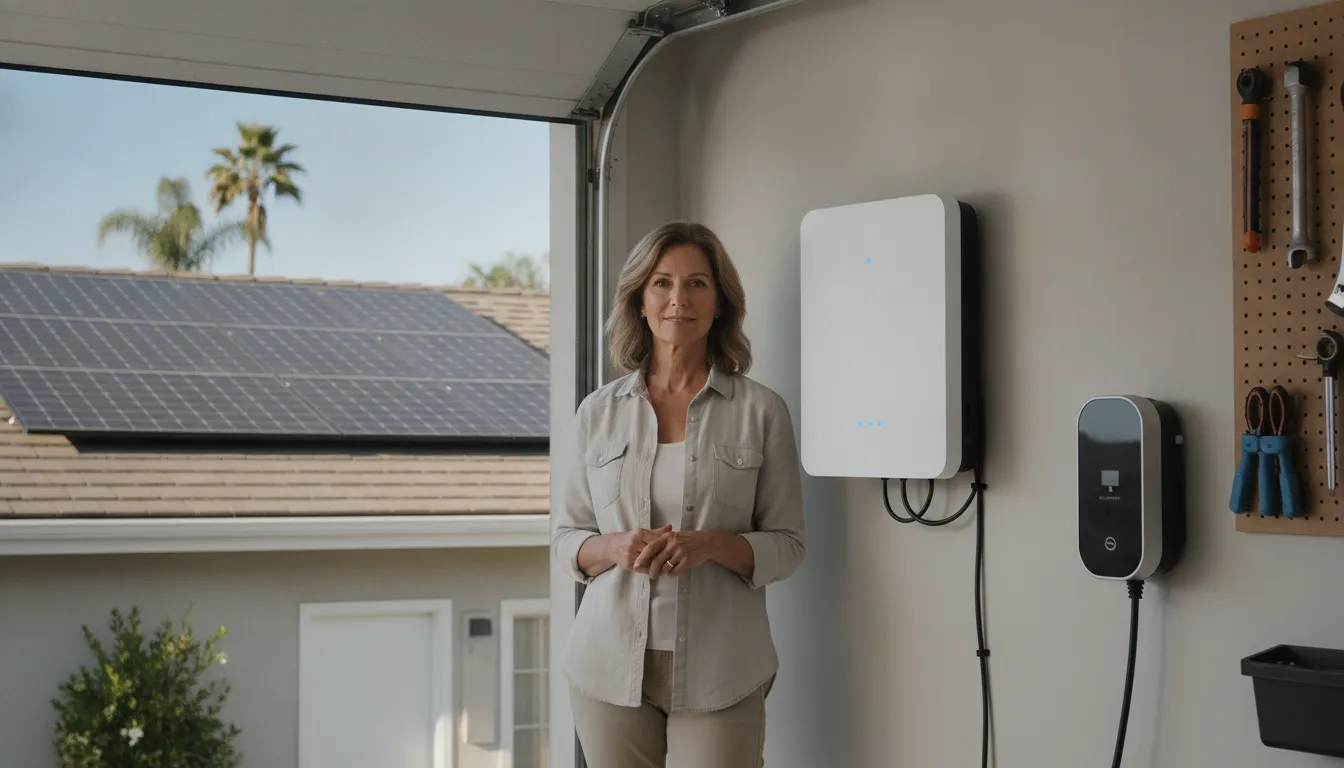
When a California outage lasts longer than expected, the best backup is not simply the unit with the largest advertised capacity. It must safely support the loads you need, recharge in realistic conditions, and fit the way your home's electrical system is designed.
Get An Estimate for a backup power plan
The best battery powered generator for home backup depends on your essential loads and outage plan. A portable power station fits temporary, limited needs, such as lights, communications equipment, or selected small appliances. An integrated solar-plus-storage system is better suited to dependable, recurring backup with panel-connected circuits, automatic transfer, and solar recharging. Start with capacity, power output, recharge options, and the portion of your home you expect to operate.
This guide compares those two categories without treating one product type as right for every household. It also explains sizing, transfer equipment, recharge planning, and California-specific questions to resolve before buying. The goal is a safer decision based on the job your backup system must perform.
What Is the Best Battery Powered Generator for Home Backup?
The best battery powered generator for home backup is the option that matches your essential loads, required runtime, and connection method. For many shoppers, the phrase refers to a portable power station with a rechargeable battery, inverter, outlets, and sometimes solar input. It can provide temporary electricity without gasoline or combustion exhaust.
A portable unit can be useful for charging phones, powering lights, running a refrigerator for limited periods, or keeping networking equipment available. Its portability is the central benefit. You can move it where needed, but you must manage the connected devices, remaining charge, and recharge timing.
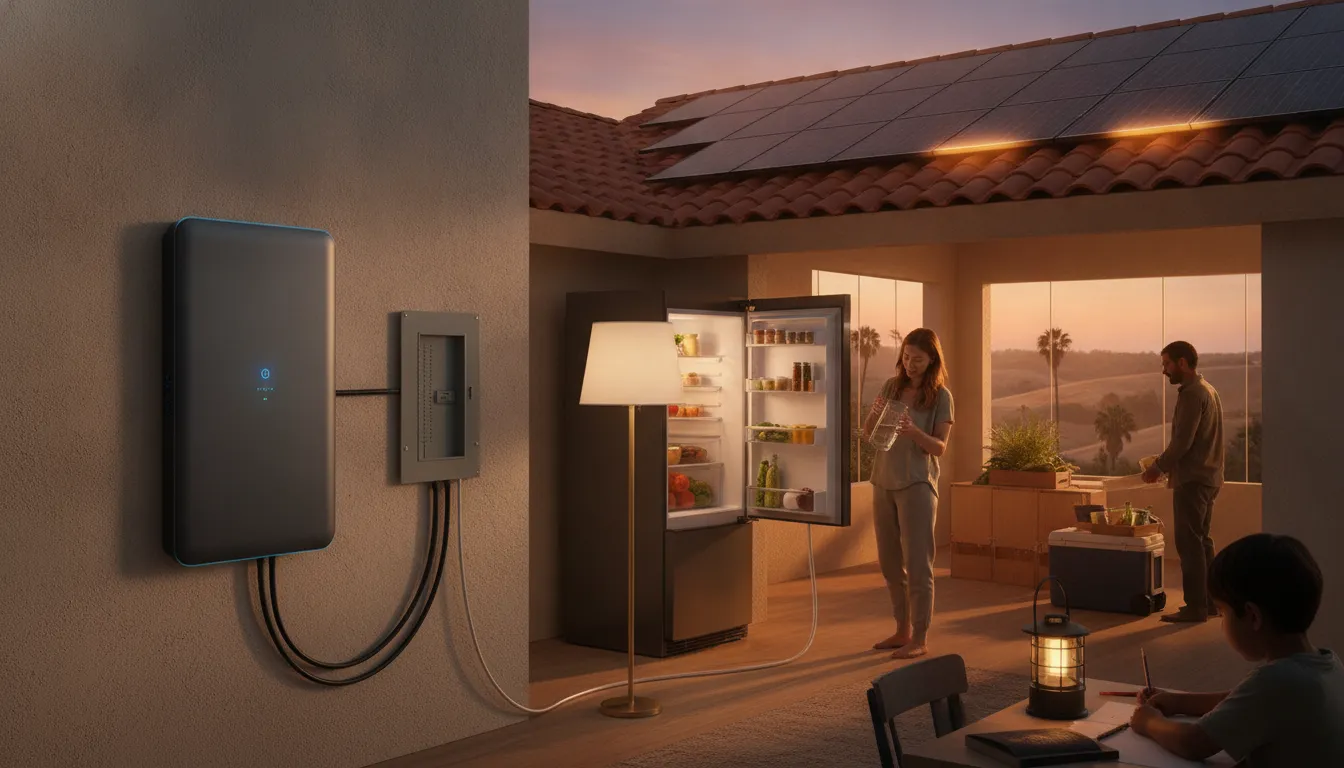
Portable power station or integrated battery system?
An integrated solar-plus-storage system belongs to a different category. A battery, inverter, controls, and transfer equipment are planned with the home's electrical panel and selected circuits. The system can store solar energy for use at night or during an outage, subject to its design and operating limits.
Choose a portable power station when mobility, limited device-level backup, and manual control are your priorities. Consider integrated solar-plus-storage when you want a permanent system for recurring outages, automatic operation, panel-connected backup, or solar-supported recharge. The latter requires project-specific design and professional installation rather than a simple equipment purchase.
Fuel generators are another comparison point, but they introduce combustion and carbon monoxide concerns. Battery equipment does not create combustion exhaust during normal operation. It still needs appropriate placement, wiring, charging practices, and protection from damage. No backup category eliminates the need to follow manufacturer instructions and local electrical requirements.
How Should You Size the Best Battery Powered Generator for Home?
Size the best battery powered generator for home use by separating two questions: how much power must it deliver at one moment. And how much energy must it store over the outage. Watts describe instantaneous demand. Watt-hours describe stored energy over time. A unit needs enough of both to perform as expected.
Starting demand is important. Refrigerators, pumps, compressors, and other motor-driven appliances may briefly draw more power when they start than they use while running. Check the appliance label or manual for running and surge requirements. When the information is unclear, ask a qualified professional to measure or evaluate the load rather than sizing from a guess.
Build an essential-load inventory
Write down the devices and circuits that matter during an outage. Include their running demand, possible startup demand, and the number of hours each should operate. This inventory helps you compare a portable unit's usable capacity and output with the demands of a panel-connected system.
- List safety and communication needs first, including medical equipment, phones, internet equipment, and selected lighting.
- Add food preservation loads such as a refrigerator, then note how often its compressor cycles.
- Separate continuous loads from occasional loads such as a coffee maker or microwave.
- Identify high-demand equipment, including air conditioning, electric water heating, ranges, dryers, pumps, and vehicle charging.
- Estimate the desired runtime and compare total watt-hours with the battery's usable capacity, not only its headline rating.
- Check continuous output and surge capability before deciding that a unit can start every listed appliance.
Think in circuits, not just appliances
A permanent backup plan may use an essential-load panel so selected circuits remain powered while larger loads stay disconnected. That approach makes the plan more predictable, but it requires electrical design. A solar-plus-storage system must coordinate the battery, inverter, grid controls, transfer equipment, and home panel.
AMECO's solar installation solutions can be evaluated alongside your home's energy use and outage priorities. The U.S. Department of Energy's solar photovoltaic system design guidance also emphasizes that system design depends on site and equipment conditions. The practical conclusion is simple: choose based on your load profile, not the most impressive product label.
What Transfer and Safety Features Matter During an Outage?
The most important safety question is how backup power reaches the circuits you intend to use while remaining isolated from utility lines. A permanent system uses transfer equipment and grid controls to separate the home from the grid before backup power supplies the planned loads. The exact equipment depends on the home's panel, inverter, battery, and local requirements.
Transfer equipment prevents unsafe backfeed
A portable power station is normally used by connecting approved devices directly to its outlets. It is not automatically a panel-connected backup system. Never connect a portable unit to household wiring through an improvised cord, a wall outlet, or an unapproved transfer method. Backfeeding can put utility workers and occupants at risk.
For a permanent solar-plus-storage installation, a qualified professional can evaluate the panel, backup circuits, disconnects, inverter controls, and required permits. AMECO's battery backup options provide a starting point for comparing an integrated approach with temporary portable power. Equipment selection should follow the electrical design, not the other way around.
Battery safety is different from fuel-generator safety
Battery systems do not burn fuel during operation, but they still require careful installation and use. Follow the manufacturer's instructions for location, charging, moisture protection, storage, inspection, and shutdown. Do not modify wiring or connect equipment that the unit was not designed to support.
Fuel generators create an additional hazard. The CDC generator safety guidance warns that portable generators can produce carbon monoxide, an odorless and colorless poison gas. Operate fuel generators outdoors and away from doors, windows, and vents. Never use one in a home, garage, or other enclosed or partially enclosed space.
- Use equipment that is compatible with the intended loads and connection method.
- Keep batteries, cables, and transfer equipment protected from moisture and physical damage.
- Have permanent panel connections and grid-isolation functions evaluated by a qualified professional.
- Keep a written list of essential circuits and the devices connected to portable equipment.
- Review charging, storage, and shutdown steps before an outage occurs.
Plan safe, properly sized backup with AMECO
How Can You Recharge a Battery Generator During a Long Outage?
A battery backup plan is only as resilient as its recharge strategy. A portable unit may cover a short interruption, but a multiday outage changes the question from how much energy is stored to how often energy can be restored. Estimate the outage duration you want to cover, then identify which charging methods will remain available.
Compare available charging paths
Wall charging is usually the simplest preparation method. Start with a full state of charge before a forecasted outage, while remembering that a wall outlet may not be available after the grid fails. Vehicle charging can offer another path, but speed and compatibility vary by the vehicle, cable, and power station. Confirm those details in the product documentation.
Some portable units accept solar input. That can extend limited capacity during daylight, but results depend on panel configuration, weather, shading, orientation, and the unit's accepted input. Solar input should be treated as part of a documented operating plan, not a promise that a small battery can run a home indefinitely.
Match recharge planning to the outage
For a brief interruption, a fully charged portable battery and conservative essential loads may be sufficient. For recurring California outages or Public Safety Power Shutoff events, consider whether you need overnight storage, daytime solar recharge, or automatic energy management. A connected solar-plus-storage system evaluates generation, storage, loads, and controls as one design.
Read the Department of Energy's homeowner's guide to going solar for general planning context, then evaluate your property and equipment requirements. AMECO's roofing solutions can also matter when a solar-plus-storage project includes roof condition questions. Recharge planning should account for the roof, electrical infrastructure, household demand, and the time you need to remain independent.
Portable Battery Unit or Integrated Solar-Plus-Storage?
| Consideration. | Portable battery unit. | Integrated solar-plus-storage. |
|---|---|---|
| Best fit. | Temporary power for selected devices. | Planned backup for essential home circuits. |
| Connection. | Direct connection to approved outlets. | Home electrical system with transfer equipment. |
| Recharge. | Wall, vehicle, or compatible solar input. | Connected solar plus coordinated energy management. |
| Homeowner role. | Move, connect, monitor, and recharge. | Use a professionally designed permanent system. |
Portable equipment is generally the better fit when you need movable, limited backup for a few priority devices. It can be practical for renters, short interruptions, or households that do not need panel-connected power. Its limits are manual operation, finite usable capacity, and output that may not support large appliances.
Integrated solar-plus-storage is generally the better fit when outage resilience, automatic transfer, quiet operation, and coordinated household backup matter more than portability. The system remains in place and can be planned around essential circuits. It requires an assessment of the property, electrical system, roof condition, solar production, utility connection, and expected loads.
AMECO's solar battery versus generator comparison can help frame the tradeoffs. Avoid choosing from a generic list before confirming what you want the system to do. A smaller portable unit can be the right tool for device-level backup, while a permanent system can be the right tool for a broader outage plan.
What Should California Homeowners Plan Before Buying?
California homeowners should account for utility territory, outage history, rate structure, electrical service, roof condition, and local permitting. A system designed for one property may not be the right fit for another. Final equipment, capacity, installation method, incentives, and timeline depend on the site and current program rules.
Start with the outage you are trying to manage
Decide whether you are preparing for brief interruptions, overnight outages, recurring wildfire-related shutoffs, or a longer loss of grid service. Then decide which loads must remain available. This turns an abstract search for the best generator into a measurable backup objective.
Check the roof and electrical system
If solar recharge is part of the plan, the roof and array layout deserve attention. Roof age, material, condition, shading, orientation, and available space can affect the design. The electrical panel and service capacity also determine how equipment can connect. Combining roofing and solar planning can reduce the risk of designing one system without considering the other.
Confirm permits and project-dependent details
Battery systems should be sized and installed by qualified professionals so inverters, controls, wiring, and other components align with the property and applicable California requirements. Permit steps and equipment requirements can vary by jurisdiction and system design. Ask for a clear explanation of the essential loads, backup duration, recharge assumptions, transfer method, and maintenance expectations.
Do not treat an online product specification as a property-specific recommendation. A consultation can identify whether a portable unit is adequate or whether a solar-plus-storage design better matches the home.
A Practical Battery Backup Decision Checklist
Use this checklist before purchasing equipment or requesting a system proposal:
- Write down the devices and circuits that must operate during an outage.
- Record running watts, possible startup watts, and desired runtime for each priority load.
- Separate device-level backup from panel-connected whole-home or essential-circuit backup.
- Compare usable watt-hours, continuous output, surge capability, and recharge inputs.
- Decide how the battery will recharge if the grid remains offline overnight or for several days.
- Confirm that the proposed transfer method prevents unsafe backfeed and follows applicable requirements.
- Review roof condition, solar production assumptions, panel capacity, and utility considerations.
- Ask which figures are equipment specifications and which depend on a site assessment.
Calculate Your Project with a California backup assessment
Frequently Asked Questions
Can a battery-powered generator run a house?
It depends on the unit's usable capacity, continuous output, surge capability, connection method, and the home's loads. A portable unit may support selected devices for a limited time. An integrated system can be designed around essential circuits or broader household backup, but it must be evaluated and installed for the specific property.
What size portable generator do I need to run my entire house?
There is no universal size. Add the running and startup demand of the loads you expect to use, then compare those totals with the unit's continuous output and usable capacity. Large loads such as air conditioning, electric water heating, ranges, dryers, pumps, and vehicle charging can change the result quickly. A qualified professional can help evaluate panel-connected backup.
Are battery-powered generators safer than gas generators?
Battery-powered equipment does not create combustion exhaust during normal operation, so it avoids the carbon monoxide hazard associated with fuel combustion. It still requires safe placement, compatible loads, correct charging, and appropriate electrical installation. Fuel generators must be operated outdoors and away from openings, following CDC guidance.
How long do battery-powered generators last during an outage?
Runtime depends on usable capacity and the loads connected to the unit. A refrigerator, heater, pump, or other motor-driven device may use more energy than small electronics and lights. Runtime can also change with temperature, battery age, inverter efficiency, and recharge conditions. Use an essential-load inventory instead of relying on a single advertised runtime.
What is the difference between a portable power station and a solar generator?
The terms are often used for overlapping products. A portable power station usually describes a rechargeable battery, inverter, and outlets in a movable enclosure. Solar generator may describe that same type of product when it accepts solar input, or it may be used informally for an integrated solar-plus-storage system. Check the connection method, usable capacity, output, recharge inputs, and transfer equipment before comparing names.
Get started with a backup power plan
The right backup choice depends on the loads you need, the outage duration you are planning for, and how much hands-on operation you want. Portable battery units can solve limited, temporary needs. Integrated solar-plus-storage can provide a more coordinated approach for recurring outages and panel-connected essential circuits.
AMECO Solar & Roofing has provided solar and roofing services in California since 1974. Schedule Now for a project-specific backup assessment and discuss the capacity, recharge, roof, and electrical considerations that apply to your home.


.svg)
