


Solar on Tile Roof: What California Homeowners Need to Know
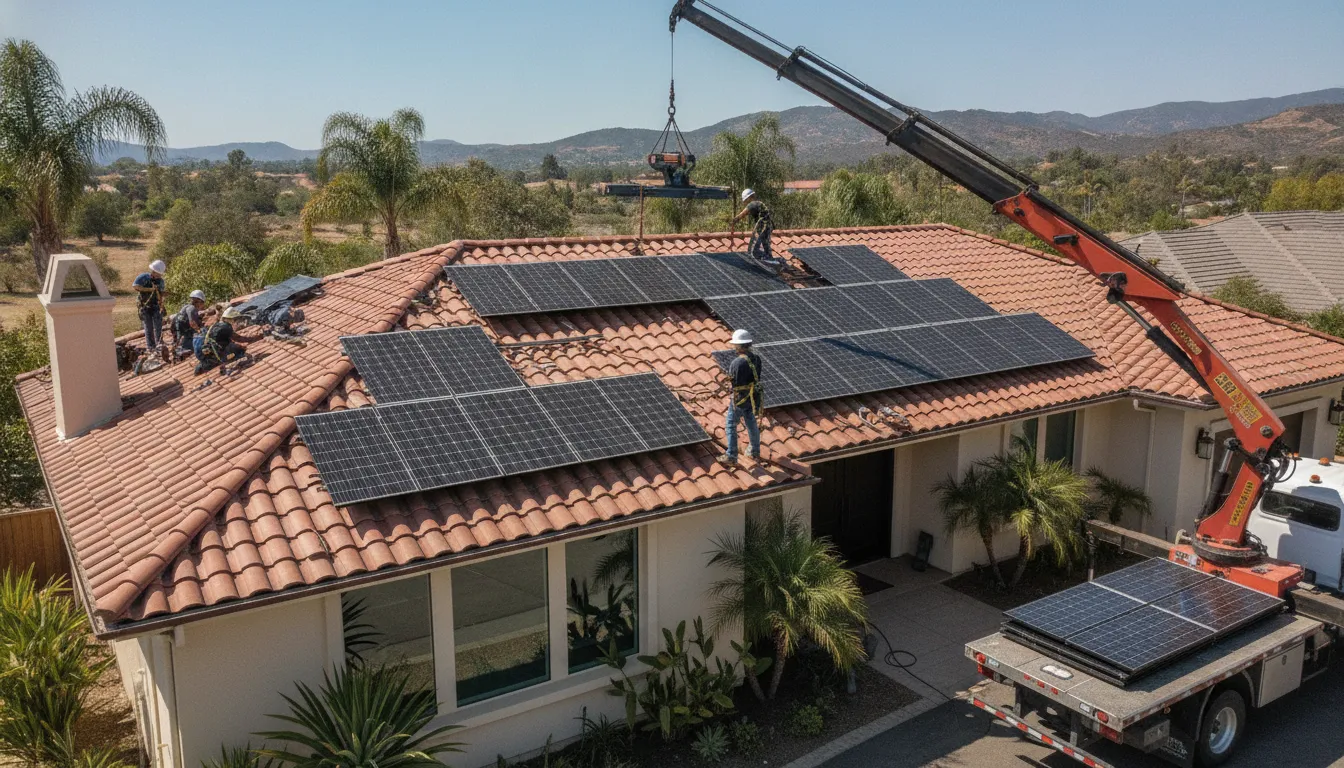
Tile roofs are a familiar part of California home design. But adding solar to clay or concrete tile calls for more than attaching panels to an existing roof surface. The installation must account for fragile tiles, structural load, specialized mounting hardware, and the roof's weatherproofing.
Yes, solar on tile roof projects is possible, but the work requires tile-specific mounting methods, careful flashing, and a contractor who understands both roofing and solar installation.
That combination matters because the right approach protects the roof while creating a sound foundation for your solar system. A qualified installer should be prepared to inspect the roof, plan around its tile profile, and address repairs or reinforcement before work begins. Understanding why tile roofs require a different installation approach is the first step toward evaluating your options and choosing the right solar panel installation partner.
Get a free estimate for your tile roof solar project and learn how AMECO can design a system that protects your roof while maximizing energy production. A site-specific assessment is the best way to understand your options.
What Makes Tile Roof Solar Installation Different From Other Roof Types?
Solar on tile roof installation differs from composition shingle roofs because clay and concrete tiles are fragile, shaped differently, and require specialized mounting hardware that preserves the roof's weather barrier while transferring panel weight to the structure beneath.
Solar installation on a composition shingle roof and solar installation on a tile roof are not interchangeable jobs. Clay, concrete, Spanish, and S-mission tiles are shaped, layered, and supported differently, so the installation plan must account for both the roof covering and the system's mounting points. Tile roofs are also more vulnerable to damage from concentrated pressure. As a result, solar on tile roof projects require specialized mounting hardware and careful handling to protect the roof's integrity.
Tile can crack under concentrated pressure
Clay and concrete tiles can crack under point loads, including pressure from foot traffic, equipment, or a worker's weight in the wrong location. A cracked tile may not cause an immediate interior leak, but it can weaken the roof's weather barrier and create a repair issue after the solar crew leaves. Tile roofs are fragile enough that even routine movement across the roof requires more planning than it would on many composition shingle systems.
Experienced installers prepare the work area before carrying equipment onto the roof. They plan access and staging points, distribute weight where possible, and use proper tile-lifting techniques rather than treating the tile surface like a walkable deck. When walking on a tile roof is necessary, the installer should step on the headlap. The stronger overlapping area where one tile is supported by the tile beneath it, instead of placing weight on the exposed center or lower edge. The exact approach depends on the tile profile, roof condition, and access plan, but the goal is consistent: avoid unnecessary point loads and handle each tile deliberately.
Mounting hardware must work with the roof profile
Solar racking cannot simply be fastened through a tile wherever a convenient attachment point appears. The mounting method must accommodate the tile profile, preserve drainage, and create a durable connection to the roof structure beneath it. Specialized systems may bridge over tiles, while other approaches involve carefully removing tiles and replacing them around properly installed flashing and mounts. In either case, the hardware and installation details need to prevent pressure from being transferred directly to a fragile tile.
These details are why it helps to evaluate the compatibility of roofing materials with solar before choosing an installation approach. AMECO Solar & Roofing brings solar and roofing expertise together, so the project can be evaluated as one roof-and-energy system rather than as separate scopes of work. That integrated perspective helps identify vulnerable tiles, access constraints, and mounting requirements before installation begins.
Compression Mounts vs. Tile Replacement: How Solar Panels Are Secured
Solar on tile roof projects typically use one of two approaches. The right choice depends on the tile profile, roof condition, mounting layout, underlayment, and the installer's ability to protect the roof envelope. A site assessment should come before selecting hardware, since a method that works well on one clay or concrete tile roof may not suit another.
| Consideration | Compression mounts or tile hooks | Tile replacement or comp-out |
|---|---|---|
| How it works | Hooks or compression hardware sit on top of, or between, selected tiles and bridge over the tile surface. The rail and panel load is transferred through the mounting assembly rather than requiring every tile to be removed. | Selected tiles are removed and replaced with composite shingle sections or another engineered roofing piece. Integrated flashing is installed at the attachment point, creating a planned transition around the mount. |
| Cost considerations | May reduce tile handling and replacement work, which can make it an efficient option when the existing tiles and roof layers are in suitable condition. Final cost still varies with access, roof geometry, equipment, and attachment count. | Usually involves more materials and roofing labor at each attachment. The additional preparation can increase project cost, but it may be appropriate when a cleaner, more integrated detail is important. |
| Labor intensity | Often requires careful tile lifting, alignment, and load distribution. Installers must work around the existing profile without placing damaging point loads on fragile clay or concrete tiles. | Requires coordinated removal, flashing installation, replacement material, and sealing. A U.S. Department of Energy study found that flashings and PV installation took around 2.4 worker-hours per kW on average for the roofing-integrated systems it evaluated: review the study methodology. |
| Waterproofing | Water management depends on correct placement and compatible flashing around the hook. The tile must remain properly seated so the roof can continue directing water away from penetrations. | Specialized flashing kits and replacement tiles can integrate with the roof profile and help maintain the waterproofing barrier. Every transition still needs to be installed according to the roof and hardware specifications. |
| Aesthetics and durability | Preserves more of the visible tile field, though hardware may affect the profile around the array. Long-term performance depends on secure attachments, sound roof materials, and periodic inspection. | Can create a more deliberate, low-profile attachment detail because the selected tiles are replaced rather than cut around a mount. Durability depends on the replacement material, flashing, fasteners, and workmanship. |
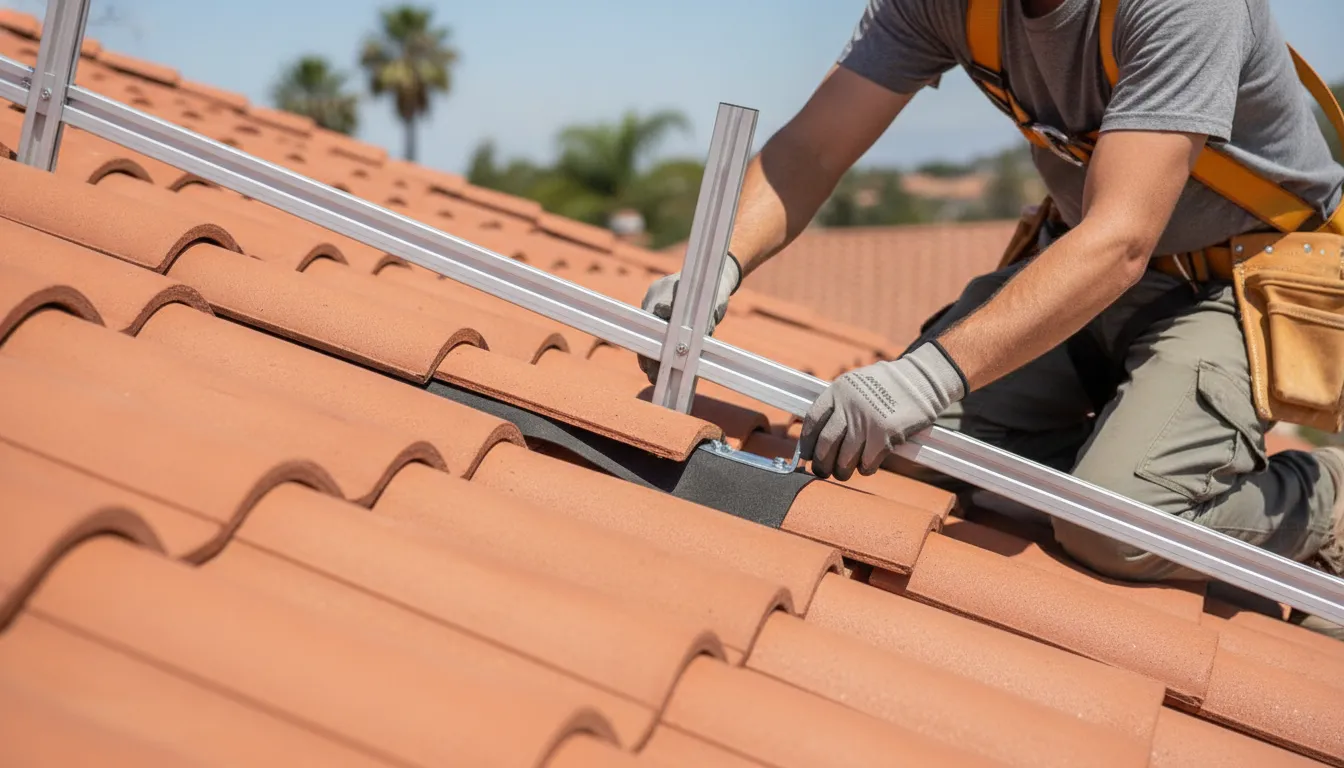
Before choosing between these methods, review preparing your roof for solar energy. A roofing and solar assessment can identify broken tiles, aging underlayment, structural concerns, and access limitations early. Helping your installer recommend a mounting detail that protects both the array and the roof.
How Do Installers Keep Tile Roofs Watertight After Solar Installation?
Installers keep tile roofs watertight by using integrated flashing kits at every penetration point, inspecting and replacing the underlayment where needed, and coordinating roofing and solar work in the correct sequence to preserve the roof's layered weather barrier.
A solar installation changes the roof envelope wherever mounting hardware passes through or sits above the tile surface. The goal is not simply to secure the racking. It is to preserve the layered system that keeps wind-driven rain away from the roof deck, framing, insulation, and interior of the home.
Flashing is the leak-prevention detail
Every roof penetration needs a deliberate path for water to shed around it. On a tile roof, that typically means using flashing kits designed to integrate with the profile of the existing clay or concrete tile. Along with carefully fitted replacement tiles where needed. Specialized flashing is essential because a generic sealant patch may deteriorate, shift, or leave water trapped beneath the tile. The mounting penetration is only as reliable as the flashing and drainage details around it.
Installation also requires controlled staging and roof preparation before panels or rails are carried into place. That preparation can include identifying the rafter locations, protecting walk paths, lifting tiles without point-loading them, and setting aside tiles that need to be replaced. A DOE-hosted time-and-motion study found that flashing and PV installation averaged about 2.4 worker-hours per kilowatt in the systems studied. Illustrating why this portion of the work deserves more than a quick seal-and-go approach. Review the study details for additional context.
Underlayment is part of the weatherproofing system
Tiles are the visible outer layer, but the underlayment beneath them provides an important secondary water-shedding surface. Building-code expectations changed during the mid-1980s, and the age and jurisdiction of a roof can affect what underlayment is present and what repairs require today. Before installing solar, a contractor should inspect the accessible roof assembly and determine whether the underlayment is intact, appropriately installed, and suitable for the planned mounting work. If the roof has deteriorated under the tiles, adding panels without addressing that condition can make future leak repairs more disruptive.
Choose roofing expertise, not solar experience alone
Leak prevention depends on coordinating roofing and electrical work in the right sequence. A contractor who understands both disciplines can evaluate the roof before attachment points are finalized, use the correct flashing and tile-handling methods. And identify weatherproofing concerns that may be missed by an installer focused only on the array. AMECO's professional roofing services support that integrated evaluation. For a broader planning checklist, see our guide to roofing considerations for solar panel installations.
With solar on a tile roof, waterproofing is not an afterthought. It is part of the design, preparation, mounting, and final inspection process.
Why an Integrated Solar and Roofing Contractor Matters for Tile Roofs
An integrated solar and roofing contractor simplifies tile roof projects by managing roof condition, mounting design, waterproofing, and electrical work as one coordinated scope, eliminating coordination gaps between separate crews.
Choosing a contractor who understands both roofing and solar can simplify a tile roof project before installation begins. When separate companies handle the work, the homeowner often becomes the project manager. The roofing crew may need to repair or replace tiles before the solar crew arrives, while the solar installer may identify roof conditions that change the original plan. Scheduling conflicts, unclear handoffs, and questions about who is responsible for a damaged tile or leak can quickly turn a straightforward project into a coordination problem.
With an integrated contractor, roof condition, mounting design, waterproofing, and electrical installation can be evaluated as one project. AMECO Solar & Roofing has operated continuously since 1974, combining solar and roofing services under one California-based company. That experience matters on tile roofs, where careful tile handling and tile-specific flashing are as important as panel layout and electrical design. AMECO provides tile roof repair and replacement services, along with solar panel installation, so roofing work does not have to be managed through a disconnected contractor relationship.
One team means clearer responsibility
If a tile cracks during installation or a leak appears after the work is complete. Separate contractors may disagree about whether the cause was the roof, the mounting hardware, or the solar installation. An integrated team can inspect the complete assembly and address the issue within a single scope of work. This does not eliminate the need for careful documentation or a property-specific assessment. But it gives the homeowner a clearer path for questions about workmanship, repairs, and warranty coverage.
California requirements are part of the design
Local requirements can affect how a tile roof solar system is designed and approved. Some California cities require architectural review for solar projects, with guidelines intended to evaluate architectural appropriateness and neighborhood compatibility. Santa Barbara's solar design guidelines illustrate how architectural review may apply to certain projects. A contractor familiar with California permitting and local expectations can identify these considerations early instead of treating them as a late-stage surprise.
AMECO holds California contractor license #483280 and is an Owens Corning preferred contractor. Its broader roofing and solar capabilities are supported by a 40-year equipment warranty and more than 3,780 installations. For a tile roof, the strongest choice is not simply the company that can place panels on a roof. It is the team that can assess the roof, plan the attachment method, coordinate any repair or replacement, and remain accountable for the finished system.
Frequently Asked Questions
Can you put solar panels on a tile roof?
Yes. Solar can be installed on clay or concrete tile roofs when the contractor uses a tile-appropriate mounting system and plans each attachment around the roof structure. The right approach depends on the tile profile, roof condition, rafter layout, and local permitting requirements.
Does solar panel installation damage tile roofs?
It should not when the work is performed with proper tile-handling techniques. Tile is vulnerable to cracking from point loads, so experienced crews protect walking paths. Remove tiles carefully when needed, and use specialized flashing or replacement tiles around roof attachments. A pre-installation inspection also helps identify brittle or damaged areas before work begins.
Is solar more expensive to install on a tile roof?
It can be, because tile roofs may require additional preparation, careful handling, specialized hardware, and more labor than simpler roof surfaces. Your project cost depends on the roof design, access, tile condition, array layout, electrical work, equipment, and any repairs or replacement recommended after inspection. A site-specific estimate is more useful than a universal price.
Should I replace my tile roof before installing solar?
Not necessarily. If the roof is structurally sound and has substantial service life remaining, solar may be installed without a full replacement. If tiles, underlayment, or flashing are already near the end of their useful life. Completing roof work first can reduce the chance of removing and reinstalling the array later. Have the roof and solar plan evaluated together before deciding.
Ready to explore solar for your tile roof?
A project-specific review can help you understand how your roof, energy needs, and installation requirements fit together before you move forward. AMECO's integrated solar and roofing experience supports a coordinated approach for California homeowners. When you are ready, get an estimate for your tile roof solar project and take the next step toward a plan tailored to your home.


.svg)
