


Solar Panels on Tile Roof Problems: California Guide
Solar Panels on Tile Roof Problems: California Guide
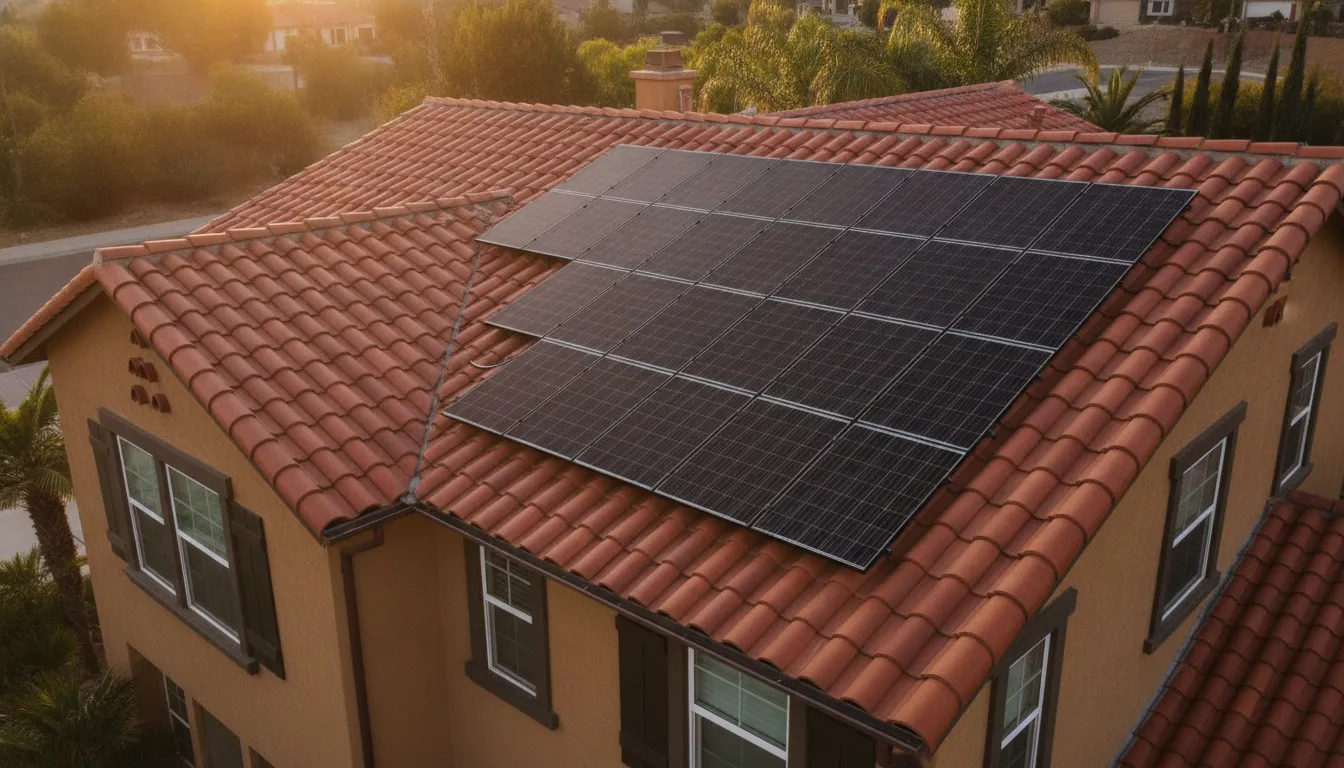
Tile roofs can support a solar project, but the roof interface needs careful planning. Clay and concrete tiles can crack during access or removal. Poorly detailed attachments can create leak paths. Roof condition, structural connections, waterproofing, and local California requirements all need to work together.
Schedule a Tile-Roof Solar Review
Use this short checklist when comparing a tile-roof solar proposal:
- Confirm the tile profile and current roof condition.
- Review the structural attachment and flashing plan.
- Ask how the crew will protect, document, and replace tiles.
This guide explains the common failure points, ways to reduce avoidable risk, and questions California homeowners can ask before approving a tile-roof solar design.
What Are the Most Common Solar Panels on Tile Roof Problems?
Most solar panels on tile roof problems occur at the roof interface. Cracked tiles, leaks around attachments, aging underlayment, poor tile matching, and limited future service access can affect a project. A roof-specific assessment helps identify these risks before panels cover the work area.
Solar modules are not usually the part that creates the most concern on a tile roof. The vulnerable points are the places where people access the roof, where tiles are moved, and where racking connects through the roof covering to the structure below. A roof may look sound from the driveway while still having brittle tiles, prior repairs, loose pieces, or aging underlayment.
Cracked or broken tiles
Tile damage can happen during staging, foot traffic, removal, storage, or reinstallation. Clay is often more brittle than concrete, but older or weathered concrete tiles can also break under concentrated pressure. A roof-specific work plan should identify safe access routes and account for the shape and condition of each tile. Existing cracks should be recorded before work begins so later concerns can be evaluated fairly.
Leaks around attachments
Any roof attachment can create a path for water if flashing is incomplete or sealant is treated as the primary defense. Water can travel below the roof surface before it appears inside the home. Proper overlap, compatible materials, secure structural fasteners, and an inspection before the array conceals the work area matter more than a bead of surface caulk.
Roof age and future repairs
Solar equipment is intended for long-term use, so a roof nearing major repair deserves an honest review before the array is designed. Installing panels over a roof that soon needs substantial work can add the cost and disruption of removal and reinstallation. Targeted repairs may be reasonable for one home, while another may be better served by roofing work first.
Appearance and service access
Mismatched replacement tiles, exposed conduit, uneven panel spacing, or hardware that does not suit the roof can affect curb appeal. The design should also consider how a technician will reach the array, roof penetrations, and electrical equipment later. These details support a durable project and are not merely cosmetic preferences.
For broader design context, review the U.S. Department of Energy's solar PV system design guidance. On a tile roof, those design considerations include the building interface and the roof's ability to remain weather-resistant.
How Can You Prevent Solar Panels on Tile Roof Problems During Installation?
Prevention starts with a roof-specific plan. The installer should identify the tile profile, control roof access, connect racking to the structure, protect surrounding tiles, and inspect flashing and drainage before the array is complete. Documentation before and after the work helps catch issues early.
The installer should know whether the roof uses Spanish barrel, mission, S-shaped, flat, or another profile. Tile shape affects where a crew can safely work, how water drains, which flashing details are practical, and whether a replacement piece will sit correctly. A generic method copied from another roof may not fit the actual tile or framing.
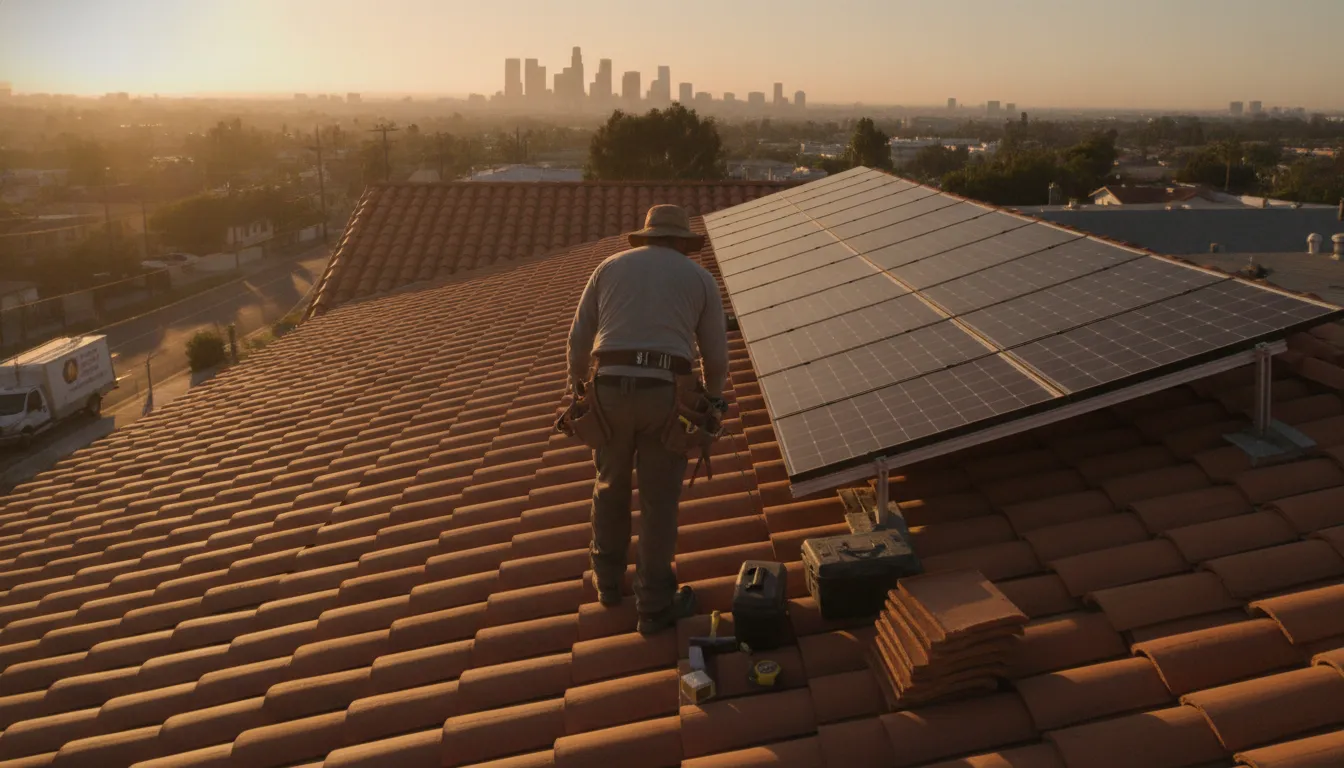
The National Renewable Energy Laboratory discusses professional tile removal, mounting, and reinstallation as part of preserving roof integrity. The same principle applies to preparation and cleanup. The goal is not simply to move enough tiles to reach an attachment. The goal is to leave the worked area secure, aligned, and able to shed water.
Use controlled access and careful tile handling
Tiles are not designed to carry concentrated foot traffic everywhere. Crews should use appropriate access methods, distribute movement, keep tools from striking the tile field, and avoid placing heavy equipment where it can cause stress. Removed tiles should be set down safely and inspected before they return to the roof.
Document the roof before and after the work
Photos taken before installation can record existing cracks, loose pieces, prior patches, and areas of weathering. During the work, photographs can show attachment locations and flashing. A final review should look for chips, displaced tiles, gaps, and debris. This record gives the homeowner a clearer basis for discussing any later concern.
- Identify the roof: Confirm the tile material and profile before selecting the mounting detail.
- Plan access: Protect the surrounding tile field and control where people and equipment move.
- Connect to structure: Attach racking to an appropriate structural member rather than relying on the tile.
- Prepare replacements: Source compatible tiles before removing pieces that may be difficult to match.
- Inspect the finish: Check flashing, tile alignment, and drainage paths before the array is completed.
These measures cannot make an aging tile roof risk-free. They can reduce avoidable breakage and make problems easier to find while the crew can still correct them.
How Do Installers Prevent Leaks Around Tile Roof Mounts?
Leak prevention depends on both the structural connection and the waterproofing detail. Racking should transfer loads into the roof structure. Flashing should work with the tile profile and drainage pattern. Sealant can be supplemental, but it should not replace proper overlap, mechanical fastening, and inspection.
A mounting foot should transfer panel and wind forces into an appropriate rafter, truss, or other engineered structural member. The tile is a weather-shedding surface, not the component that should carry the array. The proposal should explain where the attachment lands and how the load reaches the framing.
Flashing then needs to work with the roof's drainage pattern. In a typical arrangement, the flashing base extends beneath tiles on the upslope side and directs water over the tiles below. A compatible cover or counter-flashing protects the upper edge and fastener area. Sealant may provide supplemental protection, but surface caulk should not replace overlap and mechanical detailing.
Why tile profile changes the waterproofing detail
A flat concrete tile and a Spanish barrel tile do not create the same channels for water. A flashing detail that fits one profile may sit unevenly or interrupt drainage on another. The installer should explain how the proposed hardware and flashing fit the actual roof, including what happens where tiles meet the mount.
What should be checked before the work is closed up?
Homeowners can ask for photographs of the attachment and flashing areas before panels conceal them. The final review should confirm secure structural attachments, continuous overlap, intact surrounding tiles, clear drainage paths, and appropriate use of sealant. It should also identify who is responsible for the roof penetrations if a concern develops after installation.
- Structural path: Confirm every attachment is designed for the roof structure, not supported by the tile.
- Water path: Verify that flashing extends under upslope tiles and sheds water over downslope tiles.
- Tile fit: Check that surrounding tiles are intact and seated correctly.
- Project record: Keep a record of removed, replaced, or repaired tiles.
- Future responsibility: Ask how post-installation roof concerns will be handled.
AMECO provides both solar and professional roofing services in California. Homeowners can use the project discussion to clarify how those scopes will be coordinated. The final recommendation still needs to reflect the specific roof and site.
Calculate Your Project with a Tile-Roof Solar Review
Which Mounting Method Is Best for Solar Panels on Tile Roofs?
No mounting method is best for every tile roof. The choice depends on tile profile, roof condition, framing, wind and seismic requirements, appearance goals, and future access. Ask the installer to show how the attachment reaches the structure and how water will move around it.
Mounting decisions should be based on the actual roof rather than a sales shortcut. The installer should explain the proposed attachment, how much tile removal it requires, how replacement pieces will fit, and how the design handles future solar or roofing service.
| Method | How it works | Tradeoffs |
|---|---|---|
| Compression mounting | Flashing slides beneath overlapping tiles above the attachment and sheds water over tiles below. | May limit tile removal, but it depends on precise flashing and a sound structural connection. |
| Tile replacement | The mounting-location tile is removed and replaced with a fitted or modified tile. | Can create a clean appearance, but removal may cause breakage and matching aged tile can be difficult. |
| Tile hooks | A hook passes beneath a tile and connects to a batten or rafter in limited applications. | Not suitable for every roof, load condition, or jurisdiction without project-specific engineering. |
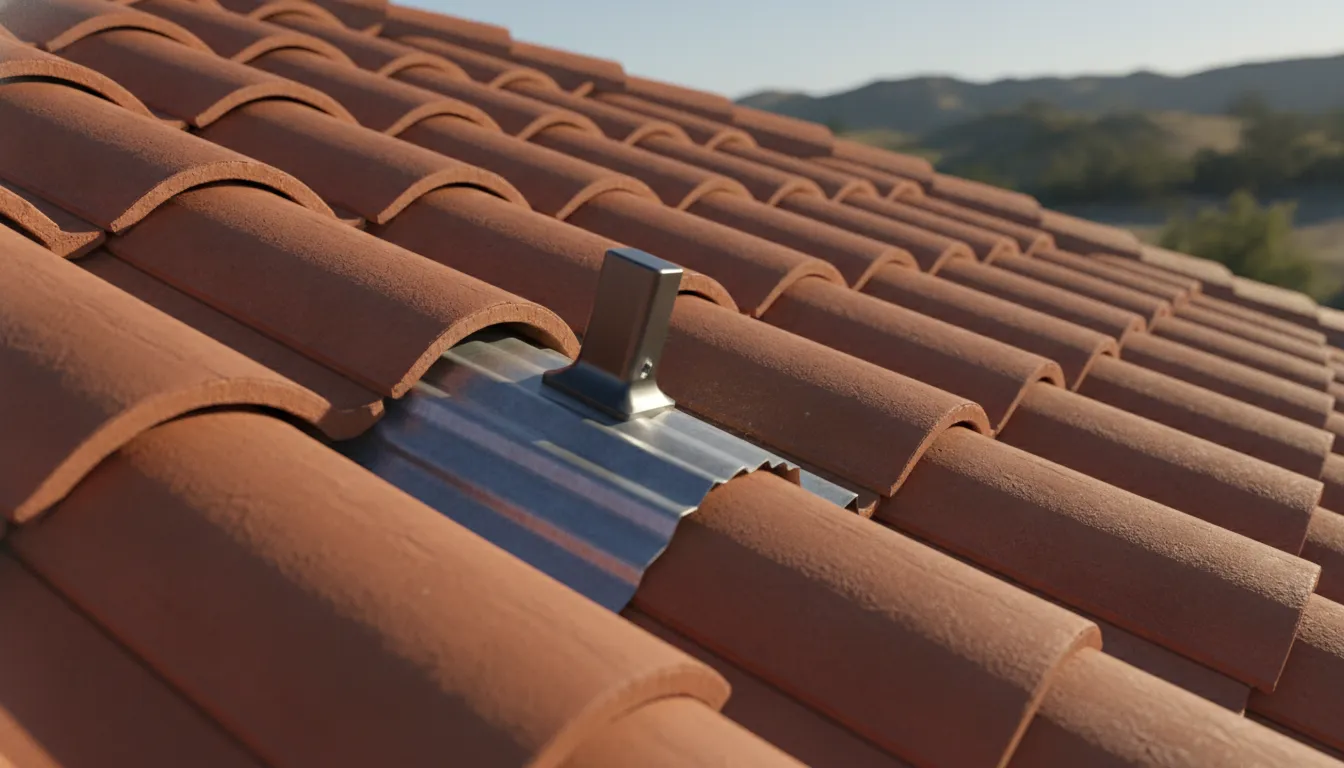
Compression mounting can reduce the amount of tile removal when the roof and flashing detail allow it. Tile replacement may be preferable where a particular profile, layout, or appearance makes a fitted replacement more practical. Hooks can sound attractive because they avoid some visible changes, but their structural connection and code suitability must be demonstrated for the property.
For another homeowner-focused overview, see AMECO's guide to solar on tile roofs in California. That guide introduces the project, while this article focuses on failure points and prevention.
Should You Repair or Replace a Tile Roof Before Solar?
Not every old tile roof needs replacement before solar. The decision should account for active leaks, broken or displaced tiles, underlayment, water damage, framing, and remaining service life. Targeted repairs may be enough when the roof is sound. Major work may be more practical before panels are installed.
The roof assessment should happen before the panel layout is finalized. Look for active leaks, cracked or displaced tiles, underlayment concerns, water damage, uncertain framing, and the roof's remaining service life. A roof that needs only targeted repairs may not require replacement, while a roof near the end of its service life can create future removal and reinstallation costs.
Tile material and profile matter. Clay, concrete, Spanish barrel, mission, S-shaped, and flat profiles do not respond identically to handling or flashing. Color and weathering can also make replacement pieces difficult to match. Ask how the installer will identify the roof, protect the existing field, source compatible tiles, and document the condition before work begins.
Future roof work should be part of today's conversation. The project record should show attachment locations and explain who coordinates panel removal if a later roofing repair requires access. A coordinated solar and roofing discussion can reduce handoff confusion, but it does not remove the need for a property-specific inspection.
AMECO's professional roofing services page is a useful starting point for homeowners comparing an integrated roof and solar approach. Recommendations should remain specific to the condition of the home rather than based on a universal roof-age rule.
What California Checks Matter for Tile-Roof Solar?
California tile-roof solar projects should account for the home, roof, electrical system, local authority, and applicable requirements. Ask whether the design includes structural and electrical review, required permits, inspection steps, roof-access planning, and a process for addressing corrections. Requirements vary by jurisdiction and site conditions.
California projects need a design and permit process that accounts for the home, roof, electrical system, local authority, and applicable code requirements. Structural review should consider added equipment, attachment locations, roof framing, wind forces, and seismic forces. The exact requirements vary by jurisdiction and site conditions.
Ask whether the project includes a structural load review, an electrical plan, a panel layout, and the permits required by the authority having jurisdiction. Also ask how the design preserves required roof access and how the installer will handle any correction requested during inspection. A generic plan copied from another roof is not a substitute for site-specific design.
Battery storage may also be part of the discussion for homeowners who want backup power or who are evaluating how solar energy is used during the day and evening. It is a separate design decision that depends on energy use, utility territory, equipment, budget, and eligibility. Do not assume every home needs the same battery or that an incentive applies universally.
Get An Estimate and Review Your Tile-Roof Solar Options
What Questions Should You Ask a Tile-Roof Solar Installer?
Compare proposals by asking how each installer will assess the tile profile and protect the roof. Ask how the team will connect racking to the structure, detail flashing, handle permits, document the work, and support future service. Specific answers reveal more than a panel count or a broad promise that the roof will be fine.
Good questions help you compare proposals on more than panel count or headline price. Ask for clear explanations in plain language, and request project-specific answers instead of broad assurances.
- Roof assessment: How will you identify the tile profile and assess the roof before designing the array?
- Structural connection: Where will the attachments connect to the roof structure?
- Mounting choice: Which method are you proposing, and why does it fit this roof?
- Waterproofing: How will the flashing direct water around each attachment?
- Tile protection: How will you protect, document, and replace tiles during the work?
- Replacement supply: Can you source a compatible replacement if an existing tile is discontinued?
- Roof timing: Does the roof need repairs or replacement before the panels are installed?
- Permitting: What permits, structural checks, and local inspection steps apply?
- Responsibility: Who is responsible for the roof penetrations if a leak concern appears later?
- Future access: How will the design allow access for future solar or roofing service?
For California homeowners, the strongest proposal is not necessarily the one with the lowest initial number. It is the one that makes the roof interface, structural path, waterproofing plan, permitting scope, and future responsibilities understandable.
Frequently Asked Questions About Solar Panels on Tile Roof Problems
Can solar panels damage a tile roof?
They can if tiles are handled poorly, attachments are placed incorrectly, or flashing does not integrate with the roof's drainage pattern. A roof-specific inspection, careful access, structural attachments, compatible flashing, and a final review reduce avoidable risk. Existing roof age and condition also matter.
Do solar panels have to be mounted on top of tile?
No. Racking should connect to the roof structure, while tile and flashing continue to shed water around the attachment. Depending on the roof, an installer may discuss compression mounting, tile replacement, or another engineered approach. The right choice is specific to the tile profile and site.
Is compression mounting better than tile replacement?
Neither method is best for every roof. Compression mounting may reduce tile removal when the roof and flashing detail support it. Tile replacement may provide a clean fitted result or work better for a particular profile. Compare the structural connection, waterproofing, tile condition, appearance, and future access before choosing.
Should an old tile roof be replaced before solar?
Not automatically. An assessment should consider leaks, underlayment, broken tiles, framing, and remaining service life. Targeted repairs may be reasonable when the roof is otherwise sound. Replacement may make more sense when major work is already due. Solar installed first may need later reinstallation.


.svg)
