


Solar Roof Types in California: Home Guide.
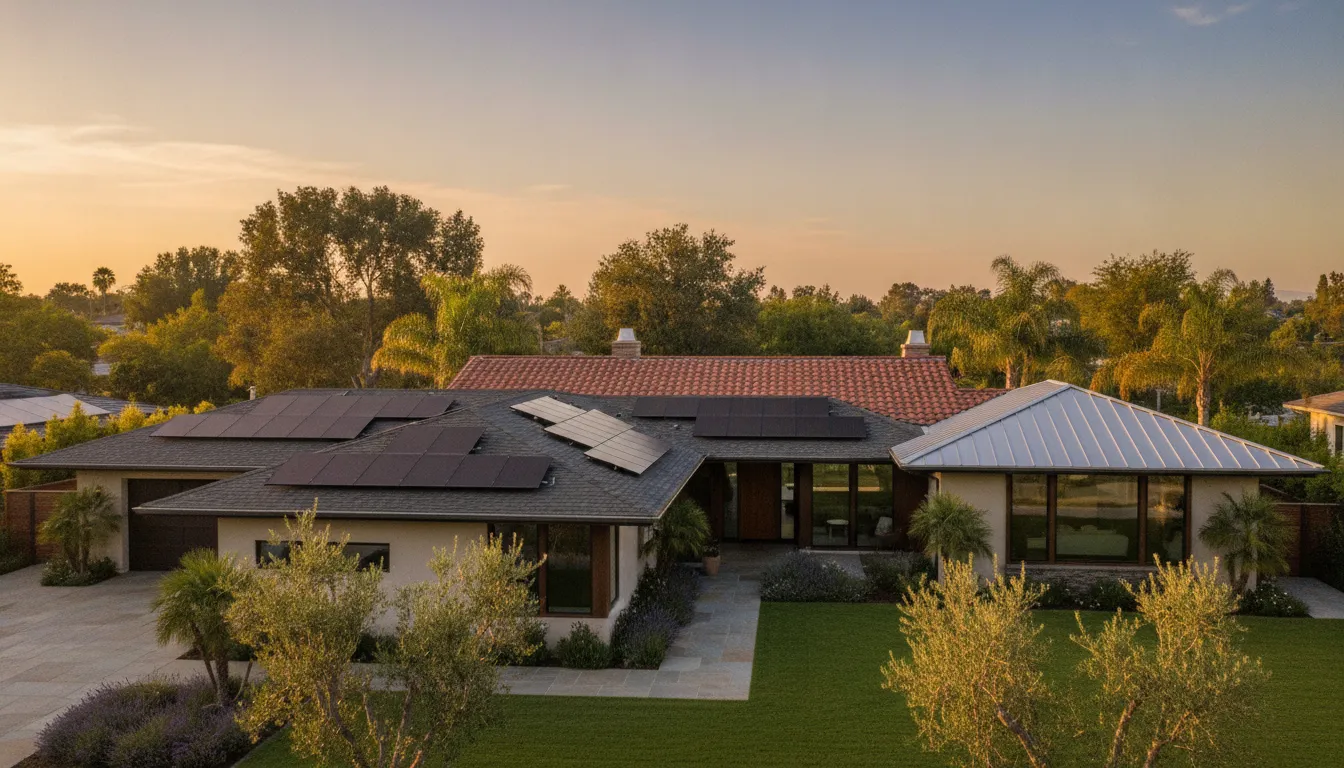
Choosing among solar roof types in California is less about naming one universally superior roof and more about coordinating several property decisions. The roof must be evaluated alongside usable sunlight, electrical service, energy goals, storage plans, utility territory, and the timing of any roofing work.
The right solar-roofing direction depends on the home's current roof condition, structure, layout, electrical needs, and the homeowner's priorities. Conventional photovoltaic panels can work with several roof assemblies when the mounting and weatherproofing plan fits the property. Solar shingles and coordinated roofing projects may suit different goals, but the recommendation should come from a property-specific review.
This article has a narrower purpose than a generic roof-material ranking. Existing AMECO guides cover broad comparisons of roof materials and solar readiness. This guide focuses on California planning questions that connect those topics, including utility territory. Storage goals, roofing and solar sequence, and the evidence a homeowner should expect in a proposal. Start with AMECO's guide to checking whether a roof is ready for solar energy when you need the broader condition review.
What Makes Solar Roof Types in California a Different Planning Question?
California homeowners often evaluate solar while also considering heat, shade, changing energy use, outage concerns, and the remaining life of the roof. A roof that is technically compatible with panels may still be a poor fit if its condition. Electrical service, or future remodeling plans are not included in the design.
The roof is part of the system boundary
The roof is not just a surface beneath the equipment. Its planes, slope, obstructions, penetrations, drainage, and structural members influence where equipment can go and how the array can be serviced later. The design conversation should also account for vents, skylights, shade patterns, and the roof areas that may be reserved for future work.
This does not mean every homeowner needs a new roof before solar. It means the installer should document the roof's condition and explain how that condition affects the proposed array. A sound existing roof may support a conventional panel plan. A roof with active issues may need a different sequence. The answer comes from inspection and design evidence, not from material labels alone.
California utility context belongs in the brief
A California project may fall within the service territory of SCE, PG&E, SDG&E, LADWP, or another provider. The utility name should be recorded in the proposal because it helps identify which assumptions need current verification. The homeowner should understand whether the design discussion accounts for interconnection steps, export assumptions, storage goals, and property-specific eligibility.
Utility context does not replace a roof inspection. It adds another planning layer. A proposal that explains both layers gives the homeowner a clearer basis for comparing options than a proposal that discusses module placement without describing the electrical or service assumptions.
Energy goals define the useful comparison
Some homeowners primarily want to offset daytime energy use. Others are planning around evening consumption, critical loads, future electric appliances, or greater resilience during outages. These goals can affect equipment placement, electrical review, battery planning, and the amount of usable roof area that matters.
For that reason, the useful question is not simply, "Which roof type is best?" Instead. Ask which roof and solar plan can support this home's goals without creating avoidable roofing or electrical work later.
How Should You Compare Solar Roof Types in California by Project Goal?
Project priorities create a more useful comparison than a simple list of asphalt, metal, tile, flat, or integrated roof products. The same roof assembly can be a reasonable candidate for one homeowner and a poor fit for another because the timing. Appearance, service access, or energy objective is different.
| Primary goal | Planning question | Evidence to request |
|---|---|---|
| Use the existing roof | Can the roof and structure support the proposed array? | Condition review, attachment plan, flashing approach, and service access |
| Coordinate roof work | Should roofing happen before solar? | Remaining service life, repair scope, array location, and work sequence |
| Plan for resilience | How should solar work with storage? | Electrical service, critical loads, equipment location, and utility assumptions |
| Prioritize appearance | Would an integrated surface change the design preference? | Product fit and roof scope. Maintenance plan and property-specific limitations. |
When preserving the existing roof is the priority
The proposal should explain where attachments will be made, how water will be managed, and how a technician will reach the equipment in the future. For tile or concrete roofs, the relevant issue is not a generic ranking. It is whether the installer has a roof-specific handling, attachment, flashing, and replacement plan.
For a detailed explanation of that specialized topic, see AMECO's guide to installing solar panels on tile roofs. This article treats the topic as one input to a larger California decision framework rather than repeating the installation guide.
When roof work is part of the project
If a homeowner is already considering repair or replacement, the roof scope and solar layout should be reviewed together. The key questions are which work happens first, whether the array location changes after roofing, and how the completed roof will be protected during solar installation.
Solar shingles and other integrated products may also be considered when appearance and roof replacement are central to the project. They are not merely conventional panels with a different finish, so product-specific installation, electrical design, maintenance, and roof scope need to be reviewed together. AMECO's comparison of solar shingles and solar panels is the better resource for that product-level discussion.
When resilience or future energy use is the priority
Storage planning can change which roof area, electrical equipment location, and service pathways matter most. A homeowner considering battery backup should identify critical loads and future electrical needs before the final design is selected. That discussion belongs alongside, not after, the roof and solar review. AMECO's battery backup information provides additional context for the storage portion of the conversation.
Does Utility Territory Change Solar Roof Planning in California?
Utility territory does not determine the roof material that a home can use, but it can change the assumptions that surround the solar and storage project. A good proposal identifies the serving utility and separates confirmed property facts from items that depend on current utility rules or eligibility.
Ask which assumptions are current
Homeowners should ask whether the proposal identifies the utility service, expected energy use, system location, storage objective, and any export or interconnection assumptions. They should also ask which parts of the proposal require confirmation during the utility process. Rules and program details can change, so a responsible contractor should avoid presenting an eligibility outcome as universal before the property and current requirements are reviewed.
Connect the utility discussion to the roof plan
The roof still determines usable array area, orientation, shade exposure, attachment locations, and access. Utility context helps determine how that usable area may support the energy objective. For example, a homeowner who expects more evening consumption may evaluate the roof and battery plan differently from someone focused only on daytime production.
The same principle applies to future electrification. If the homeowner expects to add an electric vehicle, heat pump, or other major load, that expectation should be discussed before the electrical design is finalized. The proposal does not need to promise a particular outcome. It should show that the future load was considered.
Do not treat a calculator as a final design
An online estimate can help a homeowner organize an initial conversation, but it cannot replace roof, electrical, equipment, utility, and energy-use review. AMECO's solar panels cost calculator is a starting point rather than a guaranteed project figure. Final recommendations depend on the property, equipment, roof, utility territory, and applicable eligibility requirements.
What Should a California Solar and Roofing Proposal Explain?
A useful proposal should let the homeowner understand how the recommendation was reached. It should not require the homeowner to infer the roof strategy from a module count or an equipment list.
Roof and site evidence
The proposal should identify the roof planes considered, major obstructions, shade assumptions, roof condition findings, and any limitations that affect the layout. Imagery review can support early planning, but on-site verification is important when roof condition, structure, flashing, or access may change the recommendation.
Mounting and weatherproofing logic
Homeowners should be able to see how the proposed attachment method fits the roof assembly, how penetrations will be protected, and how water will continue to drain. Broad claims that a roof is "solar ready" are less useful than a clear explanation of the proposed hardware, flashing, access, and service approach.
Material-specific details still matter, but they should answer a property question. Is the tile profile intact? Are replacement pieces available? Does the metal roof use a seam profile compatible with the proposed clamps? Does a flat roof require a particular approach to wind, drainage, or load distribution? These questions are more actionable than selecting a material from a national ranking.
Electrical and structural review
The design should identify the electrical service assumptions, equipment locations, battery objectives if applicable, and any structural questions that need resolution. A roof and solar contractor should explain what was reviewed and what remains subject to field verification.
AMECO's planning process may include imagery review, utility-bill analysis, modeling, on-site roof-condition verification, electrical checks, and structural assessment. Its approach to solar and roofing design illustrates why these questions are best considered together.
How Do You Sequence Roofing, Solar, and Battery Work?
Sequencing is one of the most important decisions in a combined roofing and solar project. The goal is to avoid installing equipment before a known roof issue is addressed or placing equipment where later work will make service unnecessarily difficult.
- Document the property. Review roof condition, structure, sunlight, obstructions, electrical service, energy use, and storage goals.
- Define the roof scope. Separate routine maintenance, localized repair, replacement, and solar-ready preparation. Do not assume the same scope applies to every roof.
- Coordinate the layout. Place the proposed array, electrical equipment, and battery in relation to the completed roof and future service paths.
- Confirm utility assumptions. Identify the serving utility and the project facts or eligibility items that require current confirmation.
- Complete work in a documented order. The contractor should explain when roofing, mounting, electrical work, inspection, and system activation occur.
This sequence is especially useful when a homeowner is comparing separate roofing and solar bids. The comparison should include who owns the interface between the two scopes, how weatherproofing is protected, and who handles corrections if the scopes do not align. AMECO's integrated model is designed to coordinate solar installation and roofing under one company, while the final scope remains property-specific.
How Can Homeowners Evaluate the Final Recommendation?
Before approving a solar-roofing plan, homeowners can use a short review to test whether the recommendation is specific enough.
- Does the proposal name the serving utility and state which assumptions need confirmation?
- Does it explain the roof condition and remaining service-life question without presenting a universal answer?
- Does the mounting and weatherproofing approach fit the actual roof assembly?
- Does it account for shade, obstructions, access, electrical service, and future energy use?
- Does it explain whether roofing, solar, and battery work are coordinated or separately owned?
- Does it identify what is confirmed now and what depends on field inspection or current eligibility?
These questions help homeowners compare the quality of the planning process rather than comparing equipment names alone. They also create a useful record of the decisions that matter if the project changes during site verification.
California homeowners who want a broader material comparison can review AMECO's guide to the best roof type for solar panels. That resource covers the general roof-material question. This guide's distinct focus is the California decision process that connects roof condition, utility territory, storage goals, and project sequence.
Frequently Asked Questions
Why is there no single best solar roof type for every California home?
Roof condition, structure, shade, electrical service, utility territory, energy use, storage goals, and appearance preferences differ from one property to another. A roof material that works well in one project may require a different design or sequence in another. A property-specific review is more reliable than a universal ranking.
What should I ask about my utility territory?
Ask the contractor to identify the serving utility, explain which design assumptions depend on current utility rules, and distinguish confirmed property facts from items that require later verification. If storage or future electrification matters, ask how those goals affect the electrical and roof plan.
Should roofing and solar be evaluated together?
They should be coordinated whenever roof condition, repair scope, replacement timing, mounting, or future service could affect the array. The homeowner should know who owns the interface between the roofing and solar scopes and what sequence protects the finished roof.
Can a solar roof plan include battery backup?
It can, when the property, electrical service, equipment location, energy goals, and utility assumptions support that design. The homeowner should identify critical loads and future energy needs early so storage is considered during planning rather than added as an afterthought.
Get started with a California solar-roofing plan
Solar roof types in California should be compared against the actual property and the homeowner's priorities. AMECO Solar & Roofing can help review roof condition, mounting compatibility, structural considerations, electrical needs, utility context, and the sequence for roofing, solar, and battery work. Get an estimate to begin a property-specific evaluation.


.svg)
