


Best Batteries for Solar Power Storage Guide
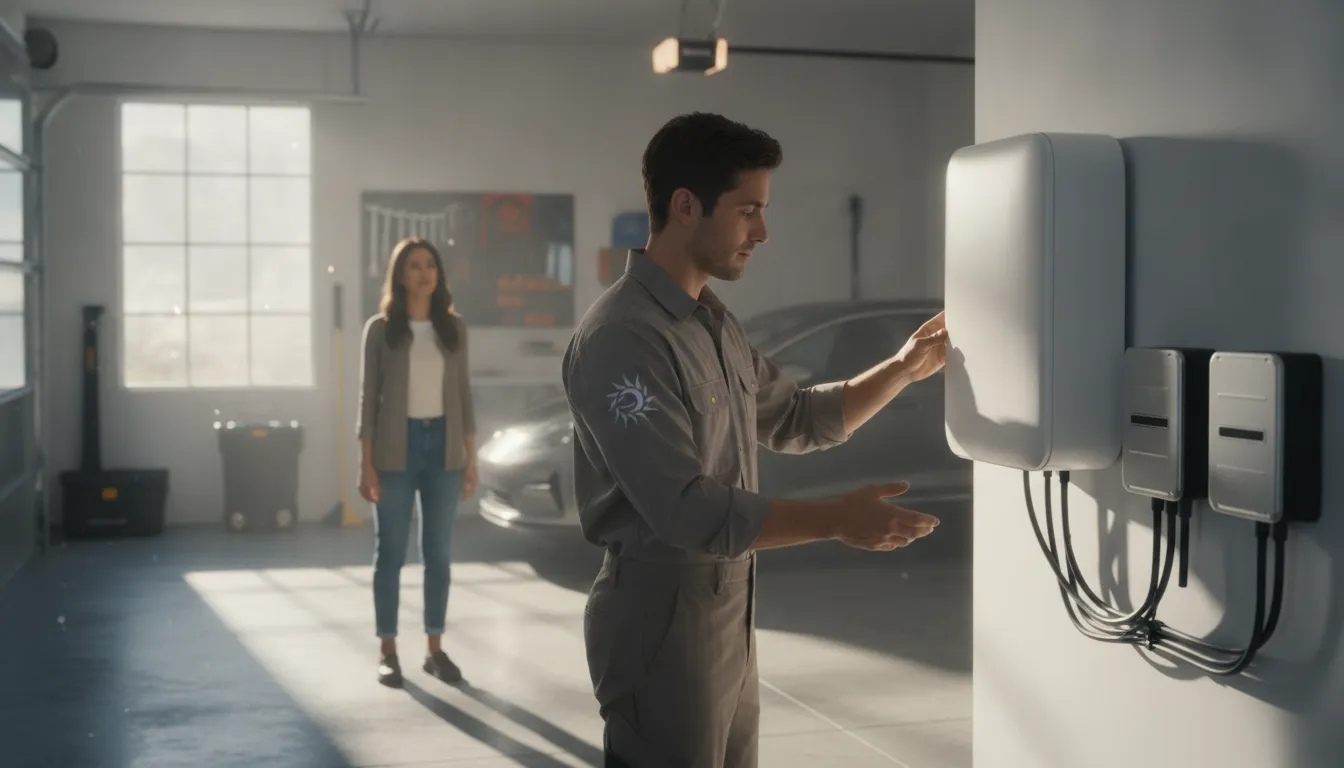
A solar array can produce abundant electricity in the afternoon. Yet your home may still draw power from the grid after sunset or lose essential circuits during an outage. A battery changes how that energy is used, storing surplus production for later and giving you more control over when your home relies on utility power.
The best batteries for solar power storage depend on your home's energy use, backup priorities, roof and solar-system compatibility, utility rate structure, and budget. A properly designed system can support critical loads during a grid outage when configured to operate safely while disconnected, while also improving self-consumption when solar production exceeds daytime demand. Battery chemistry, usable capacity, power output, lifespan, and installation requirements all matter more than choosing a familiar brand alone.
For California homeowners, the decision often starts with a practical question: how much protection and flexibility do you need when the grid is unavailable or electricity is most expensive? The answer becomes clearer when you look at outage exposure, daily energy patterns, and the battery technologies available for residential use.
Why California Homeowners Need Batteries for Solar Power Storage
Solar panels produce the most electricity during the day, but many California households use more power in the evening, when the sun is no longer available. A battery helps close that timing gap by storing surplus solar energy and making it available later. That can make a solar investment more useful in daily life, particularly for homeowners comparing solar panel battery storage options for a home in a high-cost utility territory.
Protection when the grid is unavailable
California homeowners also face a grid that can be disrupted by wildfire conditions, severe weather, equipment failures, and public-safety power shutoffs. A properly designed battery system can keep selected circuits operating when the utility connection is interrupted. During an outage, the system disconnects from the grid and supplies power to the loads it was designed to support. This distinction matters: a battery does not automatically keep every appliance running, and backup performance depends on system configuration, battery capacity, and the loads selected.
Many homeowners prioritize essential circuits such as refrigeration, lighting, internet equipment, medical devices, and a heating or cooling system. Others may want broader coverage. Energy storage can sustain critical loads during a grid outage when it is configured to operate while disconnected from the grid, a resilience benefit described in the research behind modern solar-plus-storage planning. Battery chemistry and system design both influence how that backup strategy performs.
More control over utility costs
Electricity rates and rate structures vary by utility and can change over time. Customers served by PG&E, SDG&E, or Southern California Edison may use time-of-use plans that make the timing of consumption important. Instead of sending all daytime production to the grid and purchasing electricity later, a battery can hold some excess energy for evening use. It can also reduce reliance on the grid during periods when electricity is more expensive, although the value of that strategy depends on the home's rate plan, usage pattern, system design, and applicable program rules.
This is why projected savings should be evaluated for the individual property rather than treated as a universal promise. A meaningful assessment considers the home's annual consumption, solar production, utility territory, rate schedule, and desired backup level. EnergySage identifies energy independence, outage backup, and potentially lower electricity bills as key reasons homeowners consider solar batteries, while noting that the right choice depends on the household's needs. Review the storage benefits and battery options before comparing equipment.
Using more of the solar energy you produce
Without storage, excess daytime generation may be exported to the grid under the terms of the home's utility program. A battery gives homeowners another option: use more of that energy on-site after sunset. This can improve self-consumption and support a greater sense of energy independence, especially when paired with efficient appliances and thoughtful load management.
The best system is not simply the largest battery available. It should match the home's solar installation, electrical equipment, daily habits, and backup priorities. An integrated evaluation can also account for roof condition and future electrical needs, helping homeowners choose storage that supports both resilience and long-term solar performance.
What Are the Best Batteries for Solar Power Storage Technologies?
The best batteries for solar power storage depend on how you use electricity, how much backup you need, and how your battery will work with your solar equipment. At a basic level, a solar battery stores excess energy produced during the day so your home can use it when the sun is not shining. The main technologies available for homes include lithium-ion, lithium iron phosphate (LFP), lead-acid, and flow batteries.
Lithium-ion: the mainstream residential choice
Lithium-ion batteries are the most popular choice for residential solar storage systems. They use electrochemical cells to store energy and release it when your home needs power. Their relatively compact design, strong energy density, and ability to support repeated daily cycling make them a practical fit where space is limited or where homeowners want to store daytime solar production for evening use.
Lithium-ion is a broad category rather than one single battery chemistry. Different products can vary in usable capacity, power rating, depth of discharge, efficiency, controls, and compatibility with the existing solar system. That is why comparing the battery label alone is not enough. Aurora Solar identifies lithium-ion, lead-acid, and flow batteries as common storage types, with lithium-ion leading residential use. Learn more about how to choose a solar battery based on the full system design.
Lithium iron phosphate offers a widely used chemistry
Lithium iron phosphate, usually called LFP or LiFePO4, is a lithium-ion chemistry used in many newer home energy storage systems. Its chemistry has a comparatively stable thermal profile and is associated with a long cycle life, which can be important for a battery expected to charge and discharge regularly. LFP systems can also be attractive for homeowners who place a high level of value on long-term daily use and a conservative approach to battery safety.
LFP is not automatically the right answer for every home. The complete product still matters, including its enclosure, thermal management, controls, installation location, warranty terms, and integration with the inverter. Enphase's overview of solar battery chemistries explains how chemistry affects the way a storage system performs and should be evaluated alongside the home's energy needs: compare common solar battery chemistries.
Where lead-acid and flow batteries fit
Lead-acid batteries are an established storage technology. They may still appear in certain specialty, off-grid, or budget-sensitive designs, but they are less common in modern residential solar installations than lithium-based systems. Their suitability depends on the available space, operating pattern, maintenance expectations, and the design requirements of the property.
Flow batteries store energy in liquid electrolytes held in external tanks. Their architecture can make them relevant for some larger or specialized applications, particularly when the design priorities differ from a typical home battery. However, their equipment footprint and system complexity may make them less practical for an average California residence.
For most homeowners, lithium-ion, often using LFP chemistry, is the starting point because it balances residential scale, daily cycling, and system integration. The final choice should also account for capacity, power rating, chemistry, lifespan, and compatibility with the existing solar system, rather than relying on a single technology ranking.
How Does Battery Chemistry Affect Performance and Safety?
Battery chemistry influences how a storage system handles heat, how much energy it can deliver, and how well it holds up through repeated charging and discharging. For residential solar, lithium-ion batteries are the most common choice, with lithium iron phosphate (LFP) and nickel-based lithium chemistries representing two important design approaches. The right fit depends on your home's energy demands, available installation space, backup goals, and the equipment used in the rest of the system.
LFP emphasizes thermal stability and cycle life
Lithium iron phosphate, commonly called LFP or LiFePO4, is widely used in home energy storage because of its stable thermal profile. That stability can provide an added safety margin during normal operation and under demanding charge and discharge conditions, although every battery still requires an appropriate installation, ventilation strategy, controls, and safety equipment. LFP is also associated with a long cycle life, making it a practical option for homeowners who expect to use their battery regularly for solar self-consumption, time-of-use energy management, or backup.
Enphase identifies LFP as the dominant lithium battery chemistry and highlights its safety and performance characteristics. The chemistry is one reason many current residential systems favor LFP when long-term, repeated cycling is more important than achieving the smallest possible equipment footprint. However, chemistry alone does not determine the quality or safety of a complete system. The battery management system, inverter, installation design, permitting, and operating environment also matter. Enphase explains the major solar battery chemistries and their tradeoffs in more detail.
Nickel-based lithium batteries prioritize energy density
Nickel-based lithium chemistries can offer higher energy density, which means they may store more energy in a comparatively compact enclosure. That characteristic can be useful where wall space or equipment footprint is limited. The tradeoff is that chemistry-specific thermal behavior and system controls deserve careful attention. A higher energy density does not automatically make one battery better for every home, because usable capacity, power output, installation requirements, and backup configuration still determine how the system performs in practice.
Depth of discharge affects usable capacity and longevity
Depth of discharge, or DoD, describes the portion of a battery's rated capacity that can be used during a cycle. A battery with 10 kilowatt-hours of nominal capacity does not necessarily provide 10 kilowatt-hours for everyday loads, because the system may reserve some energy to protect the cells and maintain operating limits. Usable capacity should therefore be compared alongside the battery's power rating, round-trip efficiency, and control settings, not viewed as a standalone number.
Lithium batteries commonly provide roughly 10 or more years of service and thousands of cycles, but actual lifespan varies with chemistry, temperature, cycling frequency, discharge depth, maintenance, and system design. Manufacturer specifications and warranty terms should be reviewed for the specific model rather than treated as universal promises. A qualified design can balance daily cycling with outage reserve so the battery supports your priorities without being unnecessarily oversized or aggressively operated.
Sizing Your Solar Battery: Capacity, Power, and Energy Use
A properly sized battery is not simply the largest unit that fits beside your home. It should match how much energy your household uses, which appliances you want to run, and how long you want backup to last. The core evaluation includes usable capacity, power rating, chemistry, expected lifespan, and compatibility with the existing solar system, as Aurora Solar explains in its guide to choosing a solar battery.
Capacity measures stored energy
Battery capacity is measured in kilowatt-hours (kWh). It describes how much energy the battery can store and, more practically, how much energy is available for your home after accounting for the system's usable capacity and operating limits. A home that uses more energy overnight or during an outage generally needs more usable kWh than a home backing up only a few essential circuits.
Start with actual household data rather than a generic battery-size recommendation. Review utility bills, interval-use data when available, and the appliances that operate during the hours when solar production is low. Then separate normal daily consumption from outage priorities. Refrigeration, lighting, internet equipment, medical devices, a gas furnace blower, or selected outlets may form a critical-load plan. A whole-home design may also include larger loads such as air conditioning, a heat pump, an electric water heater, or an EV charger, but those choices can materially change the required storage capacity.
Power determines what can run at once
Power rating is measured in kilowatts (kW). Unlike capacity, which describes the amount of energy stored over time, power describes how much electricity the battery can deliver at a given moment. This distinction matters when appliances start or operate simultaneously. A battery may have enough kWh to cover a household's overnight needs but still lack the kW output to start a large motor or support several high-demand appliances together.
Designers therefore examine both continuous power and surge requirements. They may place selected circuits on a backed-up loads panel, use load controls, or configure the system around the home's inverter and electrical service. The objective is dependable operation, not just a favorable capacity number on a product sheet.
Plan for efficiency before adding storage
Reducing the home's energy demand can improve the value and performance of a battery system. Weatherizing the home and improving heating and cooling efficiency reduces the amount of electricity the solar system needs to produce for the property. That planning principle can affect battery sizing too: better insulation, efficient equipment, and sensible load management may reduce the storage needed to cover priority loads.
Finally, define the outage goal. A system intended to bridge evening consumption has a different design from one intended to support critical circuits through an extended outage, especially when cloudy weather limits solar recharge. The best batteries for solar power storage are the ones whose usable kWh, kW output, operating chemistry, controls, and solar compatibility align with those priorities. A site-specific assessment can compare daily use, solar production, backed-up loads, and desired resilience before equipment is selected.
Leading Battery Options for California Homes
There is no single best battery for every California home. The right choice depends on your existing solar equipment, available space, critical loads, utility rate structure, and whether you want limited outage protection or broader whole-home backup. Capacity figures below are approximate product-class references, not promises of usable energy. Actual performance varies with installation design, temperature, battery settings, household demand, and the amount of energy reserved for backup.
For a useful starting point, EnergySage frequently places Tesla Powerwall 3 at or near the top of its home battery rankings. Enphase is a widely used option for homeowners who want close integration with Enphase solar equipment. These independent reviews can help narrow the field, but a site-specific design review should determine the final recommendation.
| Battery option | Approximate capacity | Chemistry or platform | What it is known for |
|---|---|---|---|
| Tesla Powerwall 3 | About 13 to 14 kWh per unit | Lithium-ion, LFP-based platform | Integrated design, strong backup capabilities, and frequent top placement in home battery comparisons |
| Enphase IQ Battery | About 5 kWh per modular unit | Lithium-ion, LFP chemistry | Modular expansion and straightforward integration with Enphase microinverter systems |
| LG home battery systems | Roughly 10 kWh class, depending on model | Lithium-ion | A familiar residential storage platform with model-specific capacity and compatibility considerations |
| FranklinWH aPower | About 13 to 14 kWh per unit | Lithium iron phosphate, or LFP | High-capacity residential storage and an energy management approach designed for backup control |
How to use this comparison
Capacity, measured in kilowatt-hours, describes how much energy a battery can store. Power rating, measured in kilowatts, describes how much electricity it can deliver at one time. A battery with substantial capacity may still need careful load planning if your home has large starting loads, such as an air conditioner or well pump. Usable capacity, depth of discharge, round-trip efficiency, and reserve settings also affect what your household experiences during an outage.
Chemistry matters as well. Lithium-ion is the dominant residential storage category, and LFP chemistry is increasingly common because of its performance and thermal characteristics. Enphase explains the differences among common battery chemistries in its homeowner guide: types of solar batteries and chemistry. EnergySage provides a broader product comparison, including its assessment of the Tesla Powerwall 3: best home batteries.
Before choosing equipment, confirm inverter compatibility, electrical-panel requirements, warranty terms, expansion limits, and the loads you want backed up. A qualified installer can model those details against your solar production and household usage instead of selecting a battery by brand name or advertised capacity alone.
How Batteries Integrate With Solar and Backup for Your Home
A battery becomes most useful when it is designed as part of the home's complete energy system, rather than treated as a separate appliance. During the day, solar panels can serve the home first, while excess generation charges the battery. The stored energy can then be used after sunset, during periods of high utility rates, or when the grid loses power. This arrangement helps a homeowner use more of the energy their system produces instead of sending all excess generation to the grid. EnergySage explains that batteries can support energy independence and outage protection, although the actual result depends on system design, household usage, and utility rules.
Whole-home and essential-load backup
There are two common approaches to backup planning. Whole-home backup is designed to support most or all of the home's electrical loads, including larger equipment such as heating and cooling systems when the battery system has enough power capacity. This approach can provide a more seamless experience, but it may require additional battery capacity, electrical work, or load management.
Essential-load, sometimes called critical-load, backup focuses on selected circuits. These may include refrigeration, lighting, internet equipment, medical devices, garage doors, or a well pump. The circuits are grouped in a backed-up panel or managed through the system's controls. Limiting the backup scope can make it easier to keep priority devices operating for a longer period, particularly when an outage lasts beyond the first evening. The battery must be configured to operate safely while disconnected from the grid, because a standard grid-connected solar system normally shuts down during an outage.
What happens during an outage?
When the system detects a grid interruption, its backup equipment isolates the home from utility lines. This prevents power from flowing back onto the grid while utility crews work. The battery can then supply the selected loads, and the solar array may recharge the battery when sunlight is available, subject to the system's equipment, operating limits, and weather. Backup performance is not unlimited. How long it lasts depends on battery capacity, the appliances running, solar production, and whether the system is configured for whole-home or essential-load coverage.
How software coordinates solar and storage
Energy management software continuously monitors solar production, household demand, battery state of charge, and grid conditions. It can prioritize solar energy for immediate home use, direct surplus energy into the battery, and discharge stored energy when the home needs it. Depending on the utility rate structure and the homeowner's priorities, the controls may also reserve capacity for outage protection or shift some usage away from expensive peak periods. Smart energy management can optimize battery operation around electricity pricing and household needs, as described by EnergySage.
Integration also involves choosing how the battery connects electrically. AC-coupled systems can work alongside an existing solar installation, while DC-coupled systems connect more directly with the solar array and may share inverter equipment. The right configuration depends on the existing system, equipment compatibility, expansion plans, and the desired backup strategy.
Roof and electrical decisions should be coordinated from the beginning. AMECO can manage the solar installation, roofing considerations, and battery backup through one integrated process. That coordination helps account for roof condition, attachment methods, waterproofing, structural integrity, wiring, and equipment placement together, rather than leaving separate contractors to resolve conflicts after installation begins.
Factors That Determine the Right Battery Fit for Your Home
The right battery is not simply the one with the largest capacity or the most familiar brand name. It should match how your household uses electricity, how your utility prices power, what you want to spend, and which appliances must keep running during an outage. A careful evaluation also considers capacity, power rating, chemistry, lifespan, and compatibility with your existing solar system, rather than treating any figure as universal.
Start with your household's energy use
Review when your home consumes electricity, not only how much it uses over an entire day. A household that runs air conditioning, pool equipment, heat-pump appliances, or an electric vehicle in the evening may need a different storage plan than a home with modest nighttime demand. Your recent utility bills, interval energy data, and a list of major loads can help identify the amount of energy you want to shift or reserve.
Battery capacity is measured in kilowatt-hours, or kWh, and describes how much energy the battery can store. Power rating, measured in kilowatts, indicates how much electricity it can discharge at one time. Those are different considerations. A battery may hold enough energy for several hours but still require load management if multiple high-demand appliances start together. Usable capacity, depth of discharge, and round-trip efficiency also affect the energy available to your home.
Compare the battery with your utility rate structure
Time-of-use rates can make storage valuable for a different reason than outage protection. If electricity costs more during certain evening or peak-demand periods, a battery can store solar energy generated earlier and discharge it when grid power is more expensive. This strategy can help reduce reliance on the utility during peak hours, but the potential value depends on your utility territory, rate plan, solar production, energy habits, and battery settings. A system designed for one rate structure may not be the best choice after a rate-plan change.
Net metering arrangements and export compensation also matter. If sending excess solar energy to the grid provides less value than using it at home, storage may support greater self-consumption. Your installer should evaluate current utility rules and model the system around your actual property instead of promising a universal savings result.
Define your budget and backup priorities
Budget affects more than the battery brand. It may influence usable capacity, inverter configuration, electrical work, monitoring, and whether you install enough storage for selected circuits or a broader set of home loads. Final project figures depend on the property, existing equipment, installation requirements, utility, and eligibility for any available incentives. Ask for a project-specific comparison rather than relying on a general online price.
Then decide what an outage plan should accomplish. Do you need to keep a refrigerator, lights, internet equipment, medical devices, and a garage door operating for a limited period, or do you want to support larger loads for longer? Energy storage can sustain critical loads during an outage when the system is configured to operate safely while disconnected from the grid. That does not mean every appliance will run indefinitely. Backup duration depends on stored energy, active loads, solar conditions, and operating settings.
For more background before comparing equipment, review our guide to choosing a solar battery.
When you are ready to apply these factors to your home, an AMECO consultant can help you size a battery around your energy use, utility plan, budget, and backup goals.
Frequently Asked Questions
How long do home solar batteries last?
Battery life depends on chemistry, cycling frequency, operating conditions, and the manufacturer warranty. Many lithium-ion batteries are commonly estimated to last about 10 to 15 years, although usable capacity gradually decreases as the battery cycles (EnergySage). Review both the warranty terms and expected capacity retention when comparing options.
How much do solar batteries cost?
There is no single price that applies to every home. The total depends on storage capacity, power output, battery model, electrical work, backup configuration, and site conditions. A property-specific assessment should also account for your energy use, roof and electrical setup, utility territory, and any incentive eligibility. Compare the complete installed system rather than the battery unit alone.
Do solar batteries work for off-grid homes?
Yes. A solar-plus-storage system can be designed for off-grid operation, but it must be sized and configured to supply the home's expected loads when solar production is low. That planning may require additional storage, backup generation, energy-efficiency improvements, or careful load management. Off-grid design is different from adding a battery for occasional outage backup.
What are the main types of solar batteries?
Common residential options include lithium-ion, lead-acid, and flow batteries. Lithium-ion is the most popular choice for residential storage. Lithium iron phosphate, or LFP, is a widely used lithium chemistry with a safety and performance profile suited to many home applications (Aurora Solar; Enphase). The right type depends on capacity, power rating, lifespan, compatibility, and your backup goals.
Get started with a battery consultation
The right battery depends on your home's energy use, backup priorities, solar system, and utility needs. No single storage product fits every property, so the most useful next step is a site-specific review of your energy patterns, roof, and existing solar equipment.
An AMECO Solar consultant can help you compare practical battery options, estimate the capacity and backup coverage that makes sense for your household, and explain how storage fits into your broader solar and home plan. That conversation is grounded in your property and your goals rather than a generic recommendation.
To discuss your project and get a tailored estimate, Get An Estimate and talk with the team at AMECO Solar.


.svg)
