


Best Solar System Projects in California: Design Guide
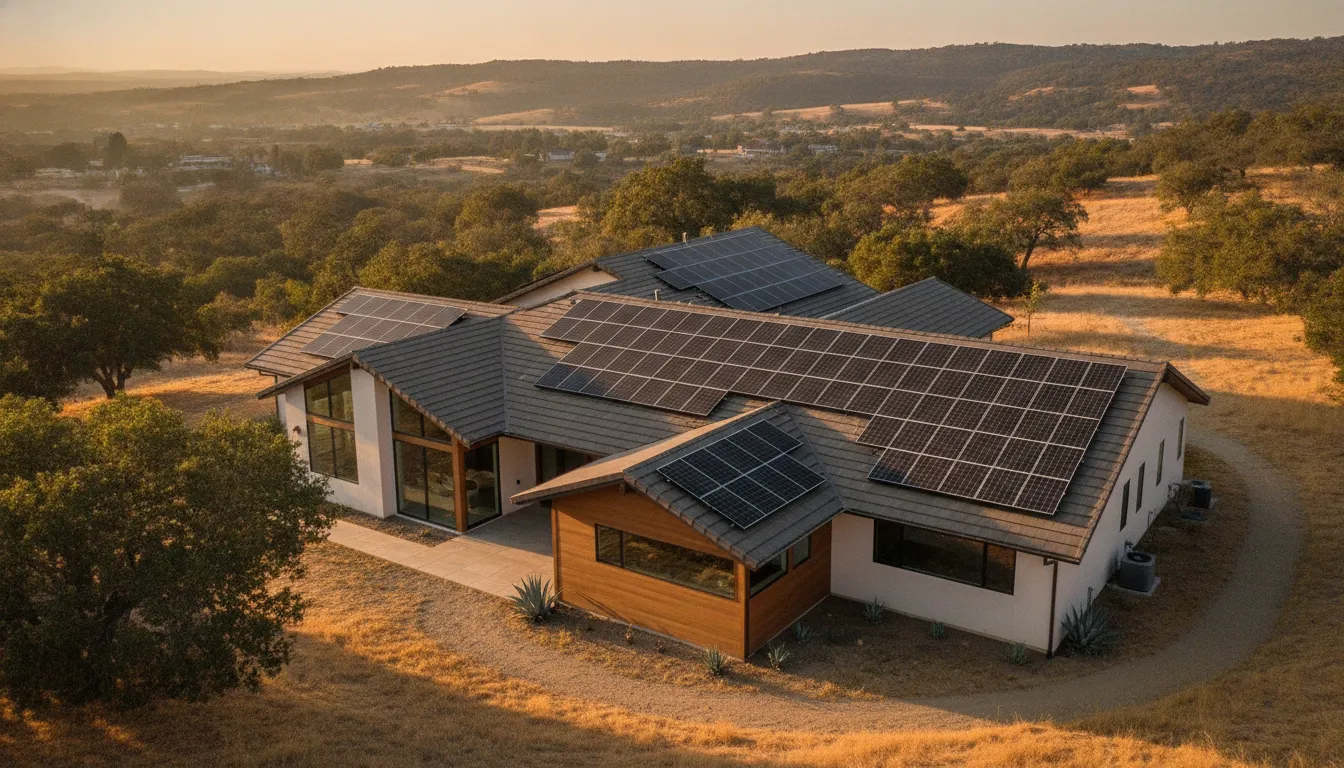
In California, a solar installation succeeds when the system fits the property, the household's energy needs, and the approvals required by the local jurisdiction. The panels matter, but so do the roof beneath them, the electrical design, storage goals, and the people responsible for moving the project from assessment to commissioning.
Get An Estimate for a property-specific California solar plan.
The best solar system projects in California begin with property-specific design, account for current and future electricity use, and coordinate roof review, equipment selection, permitting, utility requirements, and installation support. No single system size or equipment combination works for every California property.
That coordinated approach is especially important when a project involves an aging tile, shingle, or flat roof. It also matters when a battery is planned for backup or time-of-use planning, or when a commercial building needs different engineering. Start by looking at the practical standards that distinguish a well-planned system from a collection of components.
What Defines the Best Solar System Projects in California?
A successful solar project is more than a collection of panels on a roof. It is a system designed around the property, the household or business, and the conditions that shape energy use in that California location. The strongest projects balance four priorities: a good fit for the site, useful resilience, code-compliant execution, and coordinated delivery from design through handoff.
Fit starts with evidence rather than assumptions. A property-specific design considers energy usage, the roof, the utility territory, budget, and expected future consumption. A home in Los Angeles may have different load patterns and roof constraints from a home in Sacramento or the Central Valley. Commercial properties also require a different level of capacity planning and engineering than typical residential installations. Final system figures depend on the property, roof, energy use, equipment, utility territory, and eligibility.
Resilience should be defined before equipment is selected. Some California property owners primarily want to offset daytime consumption or manage time-of-use periods. Others need backup capability for selected circuits or the whole home. Those goals are related, but they are not interchangeable. Battery capacity, controls, and the electrical design should reflect the outcome the owner actually needs.
Compliance is part of project quality, not paperwork added at the end. The design and installation must account for structural considerations, local permitting, inspection, and utility interconnection. Requirements and review processes can vary by jurisdiction, so a responsible installer explains what applies to the specific project instead of presenting one universal timeline or approval path.
Coordination connects all of these pieces. A well-managed project may involve roof assessment, utility-bill analysis, 3D design, site measurements, structural review, equipment selection, permit acquisition, inspection coordination, utility interconnection, system testing, commissioning, and customer training. When solar, roofing, electrical, and permitting responsibilities are divided without clear ownership, delays and avoidable handoff problems become more likely. Ask who owns each step and how issues are communicated.
For a closer look at how these stages fit together, review AMECO's solar approach. If your property has different roof planes, future load changes, or backup goals, a project-specific assessment can clarify the next step.
How Should a California Solar System Be Sized and Designed?
A useful design starts with the property and the people using it, not with a preset panel count. The installer should review electricity consumption, the roof and site, the utility territory, and the household's plans before recommending system capacity. AMECO describes custom design as a process based on energy usage, budget, and forecasted consumption. This gives the project a practical starting point: determine what the property needs, then evaluate how solar can meet those needs.
Start with the load, roof, and site
Utility bills help reveal current demand, seasonal patterns, and changes that may affect the design. A homeowner who plans to add an electric vehicle, heat pump, pool equipment, or a home addition may need a different system than a household whose electricity use is unlikely to change. Future electricity use should be discussed early rather than treated as an afterthought.
Site conditions matter just as much. Roof orientation, pitch, usable area, shading, setbacks, and the condition of the electrical equipment can influence where panels fit and how the system is configured. A remote roof assessment can support early planning, but on-site measurements and structural review help confirm the design before installation. A coordinated process may also include:
- Review utility bills and expected future loads.
- Assess roof planes, shading, access, and mounting conditions.
- Check electrical and structural requirements.
- Use a 3D design to visualize panel placement and site constraints.
- Select equipment that fits the property's layout and project goals.
Why scale changes from one project to another
Residential and commercial projects are not simply larger or smaller versions of the same job. AMECO's reference range describes typical residential systems at roughly 4 kW to 15 kW, while commercial projects can reach 500 kW or more and require custom engineering. Those figures are examples of different project scales, not universal recommendations. A commercial design may need to account for operating schedules, multiple roof areas, larger electrical loads, site circulation, and resilience priorities. Homeowners may place more emphasis on household consumption, roof aesthetics, and future electrification.
Three-dimensional modeling can connect these inputs before construction by showing how panel placement responds to the actual roof and site. It also gives the customer a clearer basis for discussing tradeoffs. The right capacity is ultimately property-specific, since final project figures depend on the property, roof, energy use, equipment, utility territory, and eligibility. Readers comparing solar system design factors should look for that level of analysis rather than a generic system promise. For an initial project-specific starting point, AMECO's solar cost calculator can help frame the conversation, while a formal design requires a review of the site and expected use.
What California's roof-area benchmarks can tell you
California's 2025 Energy Code provides a useful design benchmark for qualifying homes with limited Solar Access Roof Area, although it is not a universal system recommendation. The California Energy Commission explains that the Solar Access Roof Area calculation uses 18 watts per square foot for steep-slope roofs and 14 watts per square foot for low-slope roofs. Under one exception, an individual roof area with less than 80 contiguous square feet does not require photovoltaic panels. The applicable code path, local enforcement, roof layout, and project design still determine what a specific property needs. See the California Energy Commission solar photovoltaic and battery storage code guidance for the source requirements.
Which Equipment Choices Matter Most for Performance?
There is no single panel, inverter, or battery configuration that is best for every California property. Equipment should follow the project's priorities, including available roof area, shade conditions, electrical design, monitoring needs, outage resilience, and utility rate structure. AMECO identifies REC panels, SolarEdge power optimizers, and Enphase microinverters with monitoring capabilities among the available equipment options. The right combination depends on the design rather than on a universal product ranking. Custom solar system design can connect those choices to actual energy use and property conditions.
Panel selection is only one part of the decision. The installer should explain how the proposed modules fit the roof layout and how the system will be wired and monitored. Inverter architecture also matters. A central or string inverter may suit some layouts, while module-level power electronics, such as optimizers or microinverters, may be considered when the design calls for more granular control or monitoring. These are design tradeoffs, not guarantees of a particular production outcome. Ask which option fits the roof, electrical plan, service equipment, and future maintenance approach.
| Goal | Design focus | Question |
|---|---|---|
| Use roof area | Layout, shading, and inverter fit | How does the equipment fit this roof? |
| Understand operation | Monitoring, alerts, and customer access | What can I see after commissioning? |
| Prepare for outages or rate changes | Battery capacity, backed-up loads, and controls | Is the goal backup, selected circuits, or time-of-use optimization? |
Battery storage deserves its own goal-setting conversation. Enphase systems and Tesla Powerwall are listed as options for configurations that can support whole-home backup or time-of-use optimization. Those objectives are related but not identical. Backup planning focuses on which loads should operate during an outage and for how long under expected conditions. Time-of-use planning focuses on when energy is stored and used. The final battery design depends on the home's loads, electrical service, utility territory, and customer priorities. Review California solar battery options before comparing proposals, and ask whether the design can accommodate future load changes.
Get An Estimate to compare system sizing, roof readiness, and storage options for your property.
Monitoring and handoff are practical parts of equipment value. A complete project should include commissioning, system testing, and customer training, so the homeowner understands normal operation and knows where to find system information. Compare the equipment list with the electrical drawings, backup scope, monitoring access, warranty terms, and support process. For project-specific inputs, use the solar cost calculator, then confirm the assumptions with a property-specific assessment.
Is the Roof Ready for Solar Installation?
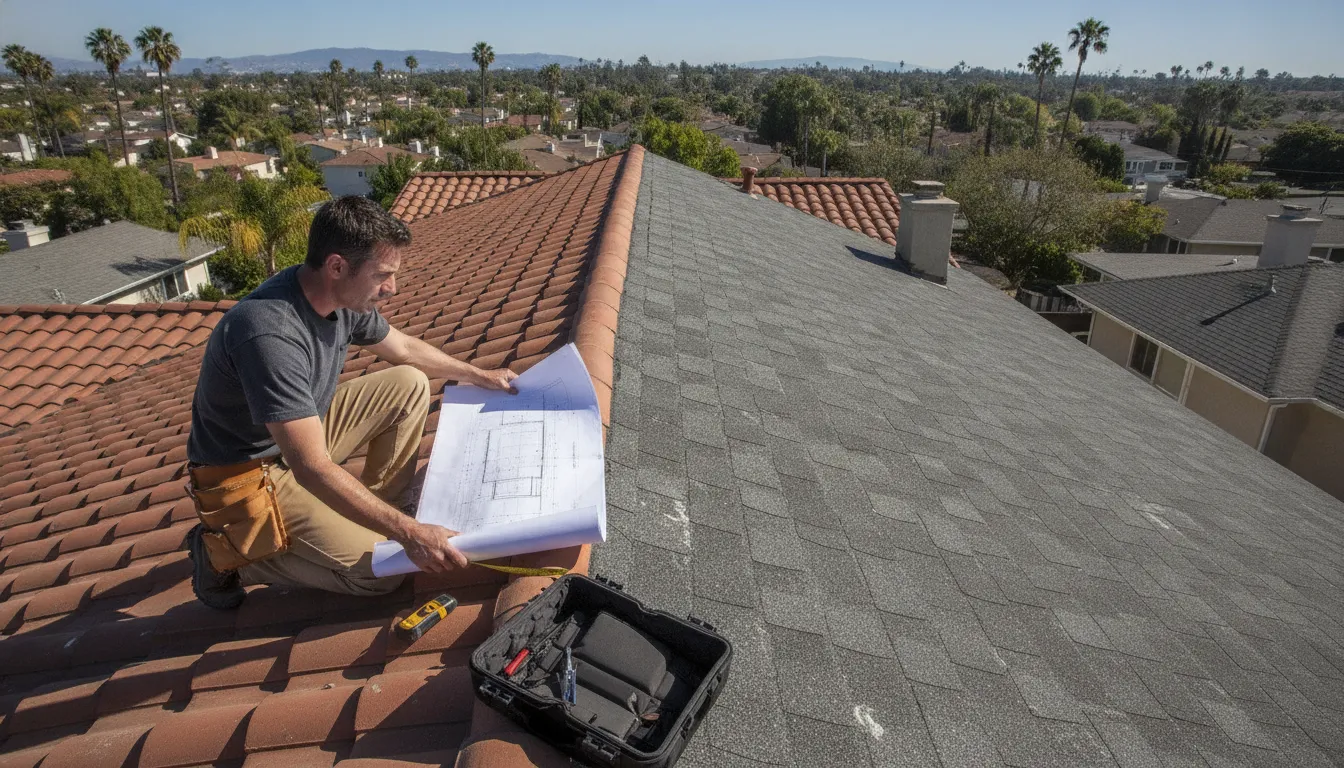
A solar array is only as dependable as the roof and mounting system supporting it. Before equipment is selected, the roof should be evaluated for age, condition, drainage, material, attachment points, and any repairs it may need. A remote roof assessment can provide an early view of the property, but on-site measurements and structural review help confirm whether the planned array is appropriate. This roof-first approach can prevent a homeowner from installing panels over a roof that is nearing replacement.
Roof material changes the installation plan
Solar mounting is not identical on every California home. Composite shingle roofs may require carefully located roof attachments and compatible flashing. Tile roofs call for a method that protects the tile and maintains a watertight connection around the mounting hardware. Flat roofs may use a different layout and attachment strategy, with attention to drainage, roof membrane protection, and equipment placement. The right approach depends on the roof assembly, slope, framing, and array design.
For homeowners planning solar on an older roof, the key question is not simply whether panels can be installed today. It is whether the roof is likely to remain serviceable for the expected life of the system. Re-roofing first may be the more practical choice when the roof has visible damage, recurring leaks, brittle materials, or limited remaining service life. In other cases, targeted repairs or solar-ready preparation may be sufficient. A qualified assessment should explain the tradeoffs rather than assume one solution fits every property.
Structural review and weatherproofing protect the project
California permitting guidance includes structural criteria for residential rooftop solar installations. That review helps evaluate how the roof framing and attachment plan will handle the array, including site-specific conditions. Reinforced mounting points may be appropriate when the existing structure or planned layout requires additional support. The design should also account for access, conduit routing, setbacks, and the relationship between roof work and electrical installation.
Flashing and weatherproofing are equally important. Each roof penetration needs a compatible, carefully installed method for directing water away from the attachment. On tile, shingle, and flat roofs, the details differ, but the objective is the same: secure the array without creating a new path for moisture. AMECO's solar-ready roofing services address roof preparation, reinforced mounting points, flashing, and weatherproofing as part of an integrated project review.
A roof assessment should therefore happen before the final system design, not after installation has been scheduled. That sequence allows the solar layout, roof work, structural needs, and long-term maintenance plan to be coordinated from the start.
What Permits and Utility Steps Does a California Project Need?
Solar installation is not complete when the equipment is mounted. A compliant California project also needs the right permit application, plan review, inspection, and utility approval. The exact sequence depends on the city or county, the electrical design, the utility territory, and whether battery storage is included. Reviewing these requirements early helps prevent a design that cannot be approved as submitted.
Permit application and plan review
The permitting authority typically reviews plans for the proposed solar energy system, including its electrical configuration and rooftop or structural details. California's solar permitting guidebook organizes the approval process around permit application and plan review, site inspection, and local utility approval for solar photovoltaic systems. The same guidebook includes structural criteria for residential rooftop solar installations, which is why roof condition and mounting details should be addressed before the permit package is finalized.
Some jurisdictions may accept standardized plans for qualifying designs. California law describes SolarAPP+ as a web-based portal developed by the National Renewable Energy Laboratory that can automate plan review, produce code-compliant approvals, and issue permits for eligible residential solar and paired residential storage systems. That does not mean every project qualifies. Local adoption, system characteristics, site conditions, and the authority having jurisdiction still matter.
Inspection and utility interconnection
After installation, the local authority generally needs to inspect the work. The inspection confirms that the installed system matches the approved plans and applicable code requirements. Passing inspection is an important project milestone, but it is separate from permission to operate on the utility grid.
Utility coordination handles the interconnection side of the project. California law defines a residential solar energy system in part by its single residential interconnection with the electric utility transmission or distribution network. The utility may review the application, confirm the interconnection requirements, and provide approval or permission to operate after the required steps are complete. Requirements can differ among territories such as PG&E, SCE, and SDG&E, so a process that worked in one California community should not be treated as universal.
How storage changes the permitting discussion
A battery adds more than a product choice to the project. It affects the electrical design, equipment locations, safety details, and utility coordination. California defines a residential energy storage system as technology behind the residential utility meter that can store and later discharge electricity for the host customer or export. The California Energy Commission also published a behind-the-meter energy storage permitting guidebook in January 2026, providing current guidance for this category of work. Plans should identify whether the battery is intended for outage backup, time-of-use optimization, or both.
Permitting and interconnection timelines vary by project and jurisdiction. Ask who owns each submission, who schedules inspection, and who confirms utility approval. For a coordinated process, see AMECO's California solar permitting guide.
How Can Homeowners Choose the Right Solar Installer?
The installer you choose affects more than the day panels are attached to the roof. A well-run project connects design, roofing, electrical work, permitting, utility coordination, commissioning, and customer handoff. That coordination helps prevent gaps between subcontractors or departments, especially when a roof condition changes the mounting plan or a utility requirement affects system design.
Start by confirming that the company and the people performing the work hold the licensing required for the project and location. California requirements and local procedures can change, so a responsible installer should be willing to identify the applicable contractor licensing and permitting requirements rather than treating every city or utility territory as identical. Ask who will prepare the plans, submit permits, respond to corrections, coordinate inspections, and manage interconnection with the utility.
Look for a clearly defined scope of work
A proposal should make the project boundaries easy to understand. It should explain whether the installer will assess the roof and electrical service, complete structural review, provide site measurements, select equipment, handle permits, and test the system before handoff. If roofing work is needed, ask whether the same coordinated team can complete it or how responsibility transfers between companies. AMECO describes a process that includes roof assessment, utility-bill analysis, 3D design, equipment selection, permitting, utility coordination, commissioning, and customer training. Learn about AMECO's project approach to compare that level of scope with other proposals.
Also ask how the system will be commissioned and monitored after installation. Monitoring should give homeowners a practical way to see system operation and identify an issue, but it is not a substitute for human support. Clarify who reviews alerts, what training is included, how workmanship concerns are handled, and which warranties apply to equipment, installation, and roofing work. These are separate responsibilities, and the written agreement should identify the party responsible for each one.
Finally, request a realistic explanation of timing without treating an estimate as a guarantee. Permitting, inspections, utility review, equipment availability, and local jurisdiction requirements can affect the schedule. Before choosing a contractor, compare answers to these questions and ask for project-specific assumptions.
What Can California Learn From Large Solar Projects?
Large solar projects show how much success depends on more than the panels themselves. California's Project Nexus is a pilot in the Central Valley. It places solar panels over canals to test whether one piece of infrastructure can support both renewable generation and water conservation. The project is designed to measure electricity production, evaporation reduction, water quality, maintenance costs, and vegetation growth. Its results will be more useful because the project defines several outcomes instead of judging performance by energy production alone. Read the California government's Project Nexus announcement.
Measure the outcome that matters
A California Energy Commission project proposal citing a 2021 UC Merced study estimates that solar canals deployed across the state's 4,000 miles of canals could generate up to 13 gigawatts of clean electricity, conserve 63 billion gallons of water annually, and preserve up to 50,000 acres of land. These are modeled statewide potential figures, not the measured result of one residential or commercial installation. For a homeowner, the relevant questions may instead include usable production, backup during outages, daytime versus evening consumption, or visibility into system performance. The scale changes, but the principle is the same: define the desired result before selecting equipment or judging a design. Review the California Energy Commission solar canal initiative proposal for the source and assumptions behind those estimates.
Coordinate every stakeholder
Project Nexus brings together the California Department of Water Resources, Turlock Irrigation District, SolarAquaGrid, and the University of California, Merced. That partnership reflects the complexity of building solar around existing infrastructure. Residential and commercial projects have fewer stakeholders, but they still require coordination among design, roofing, electrical, permitting, utility, and customer-handoff teams. Clear ownership helps prevent gaps between installation, inspection, interconnection, commissioning, and training.
Local conditions should shape the design. A canal environment, a Central Valley commercial property, and a home in Los Angeles or Sacramento create different structural, electrical, shading, access, and operating requirements. Project Nexus is not a template for a residential installation, and homeowners should not assume that a large infrastructure concept can be replicated on a roof. Instead, use its broader lesson: the best solar system projects in California are planned around measurable goals, site conditions, and coordinated execution.
Get An Estimate for a project-specific California solar and roofing review.
Frequently Asked Questions
How do I know whether my roof is ready for solar?
A roof should be reviewed for age, condition, structure, mounting, flashing, and weatherproofing before panels are installed. A remote roof assessment can guide early planning, but on-site measurements and structural review may still be needed. If the roof needs work, coordinating roofing and solar decisions first can help avoid removing and reinstalling equipment later. See AMECO's solar-ready roofing options for more detail.
Should I add a battery for backup or lower electricity costs?
Start with the outcome you want. A backup-focused system is designed to keep selected loads, or potentially the whole home, operating during an outage. A time-of-use strategy is intended to shift when stored energy is used based on the utility rate structure. Those goals can require different storage capacity and controls, so the battery should be sized as part of the overall design rather than selected separately.
Who handles permits and utility interconnection?
Clarify this responsibility before signing. A well-coordinated project may include permit acquisition, inspection coordination, utility interconnection, system testing, and customer handoff. California guidance describes a process that includes permit application and plan review, site inspection, and local utility approval for solar PV systems: California's solar permitting guidebook. Exact requirements vary by jurisdiction and utility territory.
What should I ask a solar installer before choosing one?
Ask who will assess the roof and electrical system, size the design, select compatible equipment, manage permits, coordinate the utility, monitor the system, and provide support after commissioning. Request a clear scope for workmanship and warranties, and ask how customer training is handled. Comparing these responsibilities can reveal whether an installer is prepared to manage the complete project instead of only the panel installation.
Get Started With Your California Solar Project
A property-specific review can help bring your energy goals, roof condition, equipment choices, storage needs, and permitting requirements into one practical plan. To request a solar and roofing estimate for your California project, Get An Estimate from AMECO Solar & Roofing. Share details about your property and priorities so the next conversation can focus on the decisions that matter for your project.


.svg)
