


Cool Roof Shingles California: The Science Behind AC Savings

Ready to lower your cooling costs? Schedule a free virtual consultation with AMECO Solar & Roofing to explore cool roof shingle options for your California home.
Cool Roof Shingles California: The Science Behind Cool Roof Shingles: How Do They Keep Homes Cool?
Cool roof shingles use highly reflective granules to bounce sunlight away from the roof surface instead of absorbing it as heat. Two scientific principles drive this performance: solar reflectance, which measures how much sunlight the surface reflects. And thermal emittance, which measures how quickly the roof releases any heat it does absorb. Together, these properties keep the roof surface significantly cooler than standard asphalt shingles.
Roofing technology has advanced well beyond simple asphalt and gravel. Modern cool roof shingles embed specially coated ceramic granules into the asphalt base. These granules are engineered to reflect specific wavelengths of visible and infrared light. The result is a roof that looks like a traditional residential shingle but performs like a high-efficiency cooling surface. According to the Environmental Protection Agency, cool roofs reduce the amount of heat transferred into a building, which directly reduces the demand for air conditioning during hot months.
Owens Corning, a leading manufacturer whose shingles AMECO installs, produces a Cool Roof Collection specifically engineered for hot climates like California. These shingles carry the Cool Roof Rating Council (CRRC) certification, which verifies their reflectance and emittance through independent laboratory testing.
For California homeowners weighing a roof replacement, understanding how these technologies work is the first step toward making a confident purchase. Let us walk through the core physics and the practical savings that follow.
What Makes a Roof "Cool"? Solar Reflectance and Thermal Emittance Explained
A roof earns the "cool" designation through two measurable properties: solar reflectance (also called albedo) and thermal emittance. Solar reflectance measures the percentage of sunlight the roof bounces back into the sky. Thermal emittance measures how effectively the roof releases the heat it does absorb. California's Title 24 energy code requires minimum levels of both properties for roofing materials in most climate zones.
Solar reflectance, also known as albedo, is the fraction of incoming sunlight a surface reflects. A perfect mirror has an albedo of 1.0, reflecting 100 percent of light. Standard dark asphalt shingles typically score between 0.05 and 0.15, meaning they reflect only 5 to 15 percent of sunlight and absorb the remaining 85 to 95 percent. Cool-colored asphalt shingles raise that score to 0.20 to 0.30, reflecting roughly twice as much solar energy as their dark counterparts while maintaining a traditional appearance.
| Roof Type | Solar Reflectance | Sunlight Absorbed | Surface Temperature Impact |
|---|---|---|---|
| Standard dark asphalt shingles | 0.05 - 0.15 | 85-95% | 150+F peak temp |
| Cool-colored asphalt shingles | 0.20 - 0.30 | 70-80% | Up to 50F cooler than dark asphalt |
| White painted metal roof | 0.60 - 0.70 | 30-40% | Significantly cooler |
| White PVC/TPO single-ply roof | 0.70 - 0.85 | 15-30% | Coolest residential option |
Thermal emittance is the second critical factor. A material with high thermal emittance releases absorbed heat quickly through infrared radiation. Even a roof that reflects most sunlight will still absorb some heat. High emittance ensures that trapped heat radiates back outward rather than conducting downward into the attic. The Lawrence Berkeley National Laboratory notes that roofs need both high reflectance and high emittance for optimal performance in hot, sunny climates.
Cool roof shingles from Owens Corning achieve both metrics through proprietary granule coatings that reflect near-infrared light while maintaining darker color options. This allows homeowners to choose charcoal, brown, or forest green shingles that still meet Title 24 performance standards.
California Title 24 Cool Roof Requirements Explained
California's Title 24 Building Energy Efficiency Standards (Part 6) requires roofing materials to meet minimum solar reflectance and thermal emittance values in climate zones where cooling loads are highest. Zones 4 and 8 through 15, which include Los Angeles, Sacramento, and most of the Central Valley. Require cool roof products on new construction and reroofing projects covering more than 50 percent of the roof area.
The state divides its territory into 16 climate zones, each with unique energy requirements based on local weather patterns. Homes in climate zones 2, 4. And 8 through 15 must use roofing products with a minimum aged solar reflectance of 0.20 and a minimum thermal emittance of 0.75. Or achieve a Solar Reflectance Index (SRI) of at least 16. These thresholds ensure that new and replacement roofs actively reduce cooling demand rather than adding to the urban heat burden.
Local jurisdictions often layer additional requirements on top of state law. Los Angeles County's Green Building Standards Code mandates cool roof compliance for all new residential construction and major reroofs. The city of Sacramento similarly enforces cool roof provisions through its local energy code. Homeowners should verify both state and local requirements before selecting roofing materials.
The Cool California Roof Product Comparison tool allows homeowners to search rated products by manufacturer, color, and performance range. The Cool Roof Rating Council maintains a searchable database of certified products. Owens Corning's Duration and Berkshire series shingles appear on this list, confirming they meet the state's performance benchmarks while offering the aesthetic variety homeowners expect.
For homeowners who plan to install roofing for solar panels, pairing a Title 24 compliant cool roof with a photovoltaic array delivers compounded energy benefits. The roof reduces cooling load while the solar panels offset the remaining electricity consumption. AMECO designs both systems to work together from the start.
How Cool Roof Shingles Reduce AC Costs in the Central Valley and Los Angeles
Cool roof shingles reduce air conditioning costs by lowering the amount of heat that enters the home through the roof. The EPA estimates this can lower peak indoor temperatures by 2.2 to 5.9 degrees Fahrenheit in unconditioned spaces. For homes with air conditioning, every degree of reduced heat gain translates directly into lower compressor run time and reduced monthly energy bills.
In the Central Valley, where summer temperatures routinely exceed 100 degrees Fahrenheit, a dark roof surface can reach 150 degrees or more. That superheated surface radiates heat downward through the roof deck and into the attic, turning the attic into a thermal battery that continues releasing heat well after sunset. Air conditioners in these homes must overcome both daytime solar gain and stored attic heat before the indoor temperature drops.
The EPA's cool roof research documents measurable energy savings of 7 to 15 percent on cooling costs for properly installed cool roofs in warm climates. Homes with poor attic insulation see the largest percentage gains because the cool roof effect partially compensates for the insulation deficit.
Los Angeles homeowners face a slightly different challenge: the urban heat island effect. Dense concentrations of dark roofs, roads, and parking lots absorb solar energy during the day and release it slowly at night, keeping the city warmer around the clock. The Lawrence Berkeley National Laboratory confirms that widespread adoption of cool roofs can lower ambient air temperatures in dense urban areas by up to 2 degrees Fahrenheit. Reducing citywide cooling demand and improving grid reliability during heat waves.
Measurable benefits at the household level
Homeowners who replace a failing dark roof with cool-rated asphalt shingles typically see these changes during their first summer in the home:
- Lower peak attic temperatures. Less heat radiating through the roof deck means the attic stays closer to outdoor ambient temperature, reducing the thermal load on the HVAC system.
- Reduced AC cycling. The cooling system reaches setpoint faster and stays off longer between cycles, which extends equipment life.
- Improved second-floor comfort. Rooms directly under the attic benefit most from the reduced heat transfer.
- Lower monthly electric bills. Pacific Gas and Electric, Southern California Edison, and Sacramento Municipal Utility District customers report reduced summer cooling costs after cool roof installation.
Pairing Cool Roofs with Solar Panels for Maximum Energy Savings
A cool roof and solar panel system work synergistically. The cool roof reduces the home's overall cooling demand, so the solar array needs to offset less total energy consumption. Additionally, solar panels operate more efficiently when the ambient temperature around them is lower, which a cool roof helps maintain.
Many homeowners assume that solar panels and cool roofs are alternative energy-saving strategies. In reality, they complement each other. Solar photovoltaic panels lose efficiency as their surface temperature rises. Standard silicon panels have a temperature coefficient of roughly 0.4 to 0.5 percent power loss per degree Celsius above 25 degrees C (77 degrees F). On a dark roof that can reach 65 degrees C (150 degrees F). The air immediately surrounding the solar panels is significantly hotter than it would be above a reflective cool roof. This temperature difference directly reduces the panels' electrical output during the peak solar hours when production matters most.
By installing cool roof shingle color options that work with your home's architecture, you create a cooler microclimate for your solar array. The combined system delivers more kilowatt-hours per installed panel and a shorter payback period.
Thermal emittance and solar efficiency
Thermal emittance plays an important role in the solar pairing scenario. A roof surface with high thermal emittance releases absorbed heat quickly, preventing hot air from pooling around the solar racking system. This active cooling effect keeps the solar panels closer to their rated operating temperature throughout the day.
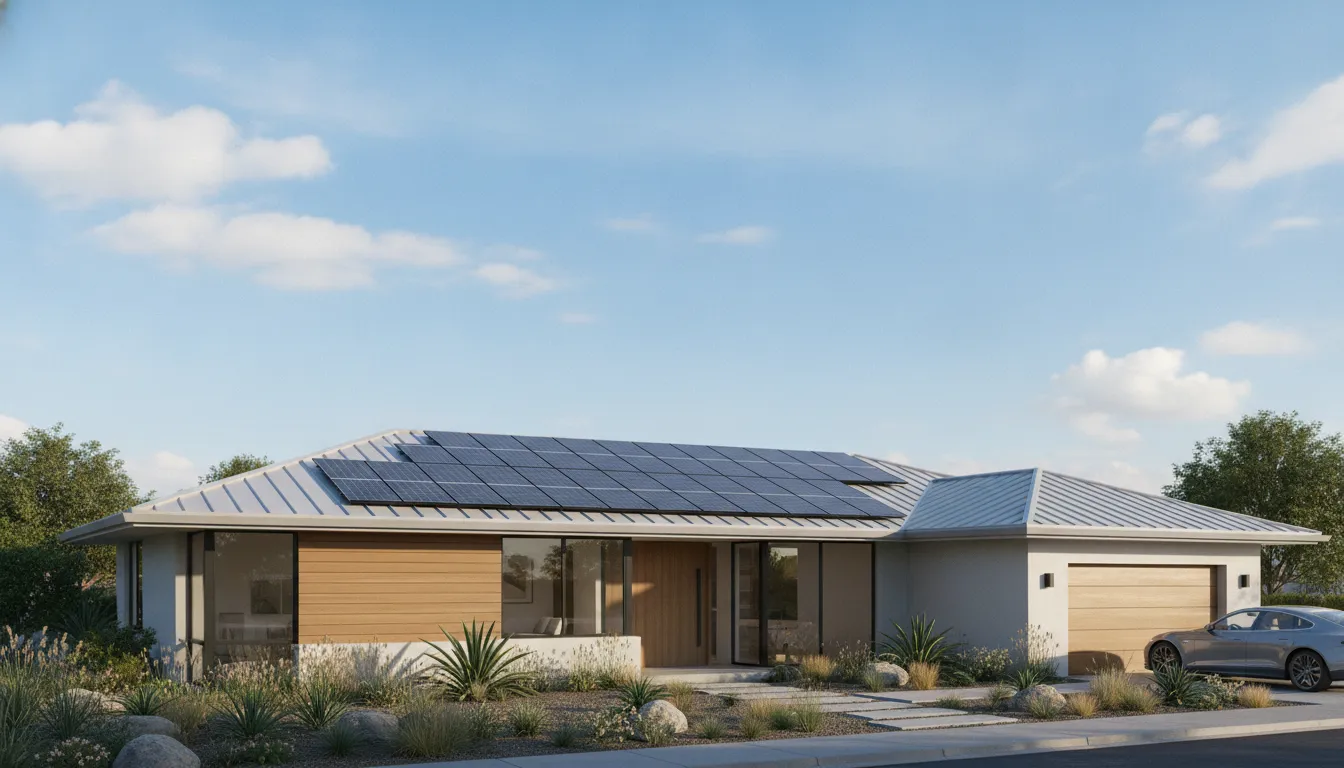
AMECO's integrated approach means one team handles both the roof replacement and the solar installation. This coordination ensures that the roofing and solar systems are designed together from the start. Roof penetrations are flashed correctly for the solar racking, and the roof warranty remains intact because a single contractor oversees both scopes. Homeowners interested in battery backup solutions can add storage at the same time, creating a comprehensive home energy system that generates, stores, and conserves power efficiently.
The REC Gold Tier recognition AMECO earned in 2026 reflects the company's expertise in designing and installing high-performance solar systems that pair with energy-efficient roofing.
Owens Corning Cool Roof Shingles: What Makes Them Effective
Owens Corning cool roof shingles use advanced reflective granule technology embedded in the asphalt surface. These granules are coated with ceramic particles that reflect near-infrared light while absorbing visible light in the desired color range. This allows the shingles to appear in standard roof colors while meeting Title 24 performance requirements.
Owens Corning's Cool Roof Collection spans the Duration and Berkshire product lines. Duration shingles feature a layer of impact-resistant material beneath the reflective granules, providing protection against hail and debris. Berkshire shingles offer a premium look with deeper shadow bands that simulate the appearance of natural slate or wood shakes. Both product lines meet the CRRC-required minimum reflectance of 0.25 for initial solar reflectance under California's Title 24 standards.
The proprietary granule technology works by layering ceramic pigments onto mineral substrates. These pigments are selected to reflect specific wavelengths of infrared light while maintaining color saturation in the visible spectrum. This selective reflection is the engineering breakthrough that makes darker cool roof colors possible. A dark gray Owens Corning Duration shingle can reflect significantly more solar energy than a standard dark gray shingle of the same color. Even though both appear nearly identical from the street.
Key features of Owens Corning cool roof shingles
- StainGuard protection. Algae-resistant technology prevents the dark streaks that form on roofs in humid microclimates.
- SureNail adhesion strip. Enhanced sealant provides wind resistance up to 130 mph, important for California regions with seasonal Santa Ana winds.
- Limited lifetime warranty. Transferable coverage adds resale value for homeowners who sell within the warranty period.
- Cool Roof Collection badge. Products carrying this label have been independently tested and certified for solar reflectance and thermal emittance.
As an Owens Corning preferred contractor, AMECO Solar & Roofing meets the manufacturer's highest standards for installation quality and training. This certification means every cool roof project is backed by both the manufacturer warranty and AMECO's workmanship guarantee.
Why Choose AMECO for Your Cool Roof Installation
AMECO Solar & Roofing has served California homeowners since 1974 as a locally owned, fully integrated solar and roofing contractor. The company handles both the roof replacement and any solar or battery installation under one contract, eliminating coordination gaps between separate trades.
Choosing a contractor for a project as significant as a roof replacement requires confidence in both technical capability and local knowledge. AMECO's five decades of continuous operation in California mean the design and installation teams understand the specific climate challenges of each region the company serves. From the dry heat of the Central Valley to the coastal Mediterranean climate of Los Angeles and Orange County.
A truly integrated approach
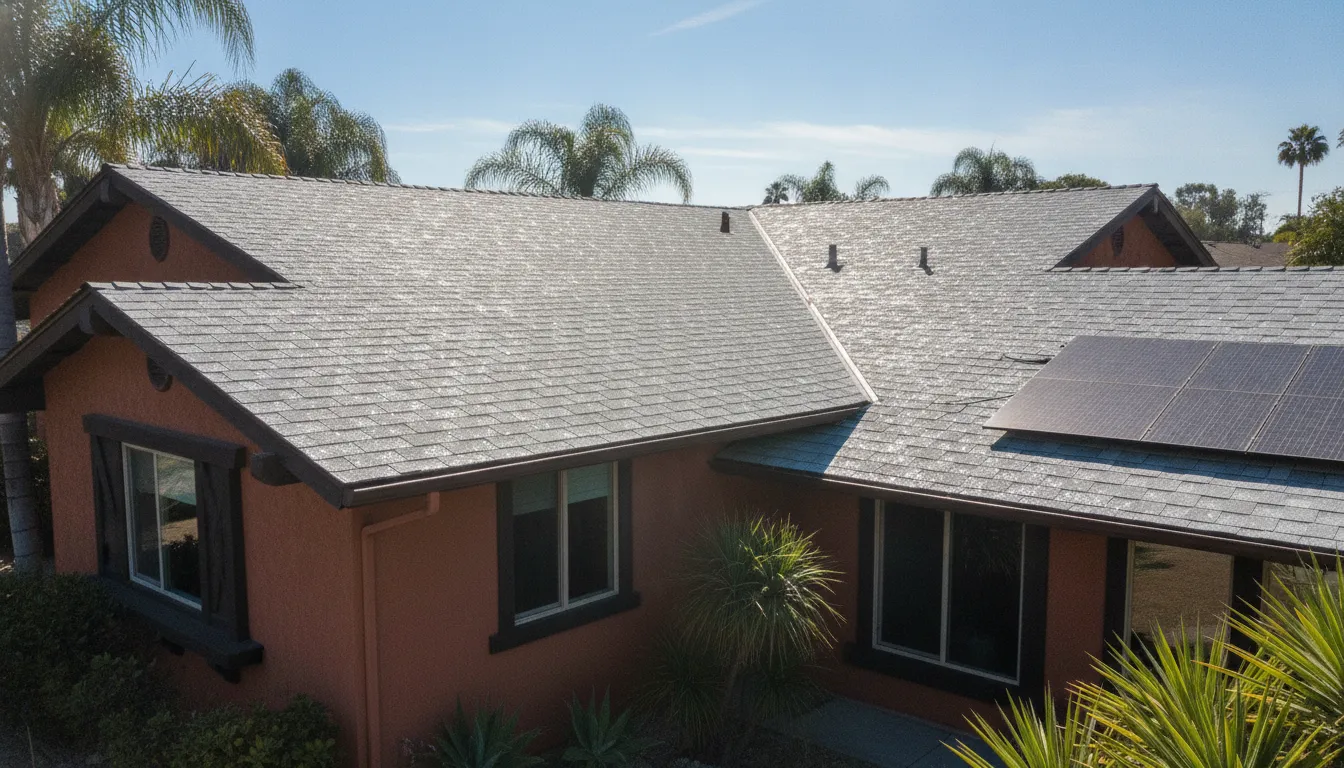
Most roofing companies only replace roofs. Most solar installers only mount panels. AMECO is one of the few California contractors that performs both scopes with in-house crews. This matters because the order of operations matters: the roof must be structurally sound and code-compliant before solar racking attaches to it. When one company manages both phases, the roofing system is designed with the future solar array in mind, and the solar installation does not void the roof warranty.
AMECO's in-house design team develops a custom plan for each property using satellite imagery, utility bill analysis, and local climate data. The company's project managers guide homeowners through material selection, permit coordination, and installation scheduling. After installation, the AMECO support team handles warranty service and ongoing maintenance.
- Free virtual consultation. AMECO reviews your current roof condition, utility bills, and energy goals to recommend the optimal cool roof and solar configuration for your home and climate zone.
- Custom design and material selection. The in-house team selects Owens Corning cool roof shingles matched to your home's architecture and California's Title 24 requirements.
- Professional installation by AMECO crews. Licensed, insured, and factory-trained installers handle every phase with quality checks at each stage.
- Ongoing support and manufacturer-backed warranty. AMECO stands behind every project with local service teams and comprehensive warranty coverage.
Industry recognition and certified quality
AMECO holds multiple certifications that validate its expertise: Owens Corning preferred contractor status, Tesla solar roof certified installer designation, and Enphase silver installer recognition. The company has earned the REC Gold Tier recognition two years in a row for excellence in solar installation. These credentials are independently awarded by the manufacturers and industry bodies that evaluate contractor performance, not by AMECO itself.
All cool roof installations use Owens Corning Solar PROtect underlayment, which adds an extra layer of heat reflection beneath the shingles. This combination of reflective shingles and reflective underlayment creates a multi-layer thermal barrier that exceeds the minimum requirements of Title 24.
Best Practices for Choosing Cool Roof Shingles in California
Selecting the right cool roof shingle for a California home involves evaluating the product's CRRC-rated reflectance and emittance values. Verifying it meets the specific climate zone requirements under Title 24, and choosing an installer who can integrate the roof with planned or existing solar systems.
Homeowners replacing a roof in California have an opportunity to save on cooling costs, meet energy code requirements, and prepare the home for future solar or battery storage. These best practices help ensure the new roof delivers maximum value:
- Check the CRRC rating before buying. Every certified cool roof product has a unique CRRC identifier. Look up the product on the Cool California ratings directory to confirm its aged solar reflectance and thermal emittance values.
- Confirm your climate zone. California's 16 climate zones have different cool roof requirements. Homes in zones 4 and 8 through 15 must use compliant products. Those in zone 16 (high mountain) may qualify for exemptions.
- Choose colors you can live with. Cool technology is available in virtually every shingle color. Darker shades reflect less total sunlight than lighter shades, but they still meet Title 24 thresholds and outperform standard dark shingles by a wide margin.
- Plan for solar at the same time. If you intend to add solar panels within the next five years, designing the roof and solar system together saves money and avoids roof-penetration conflicts later.
- Verify contractor credentials. The installer should hold manufacturer certifications relevant to the product you select. AMECO's Owens Corning preferred contractor status provides independent verification of installation quality.
For a deeper look at how cool roof colors affect home energy performance, read AMECO's guide to cool roof shingle color options. And if you are considering solar alongside your roof replacement, the roofing for solar panels article covers the sequence and design considerations.
Frequently Asked Questions
Are cool roof shingles worth the investment in California?
Yes, for most California homeowners in warmer climate zones. Cool roof shingles reduce cooling costs by 7 to 15 percent according to EPA estimates. Help meet Title 24 requirements that may otherwise force expensive mitigation measures, and create a more comfortable indoor environment during summer months. The incremental cost over standard shingles is typically recouped through lower energy bills within a few cooling seasons.
Do cool roof shingles reduce energy bills year-round?
Cool roof shingles primarily reduce summer cooling costs. In winter, some slight heating penalty exists because less passive solar heat enters the attic. However, in California's milder winter climate, the summer savings far outweigh the minimal winter difference. Building scientists at the Lawrence Berkeley National Laboratory have confirmed that cool roofs deliver net energy savings in climates with more than approximately 1,000 cooling degree days per year, which covers most of California's populated areas.
What is the minimum solar reflectance required by Title 24?
For steep-slope residential roofs, California's Title 24 requires a minimum aged solar reflectance of 0.20 and a minimum thermal emittance of 0.75. Or a Solar Reflectance Index (SRI) of at least 16. These values apply to low-rise residential buildings in climate zones where cool roofs are mandated. Products from the GAF cool roof shingle line and Owens Corning's Cool Roof Collection are designed to meet these benchmarks.
Can you install solar panels on a cool roof?
Yes, and it is the recommended approach. Solar panels perform more efficiently when mounted above a cool roof because the ambient temperature around the panels stays lower. A cool roof with solar panels delivers more total energy savings than either system alone. AMECO specializes in integrated roofing and solar installations that optimize both systems for the specific property.
How long do cool roof shingles last compared to standard shingles?
Cool roof shingles have the same expected lifespan as premium standard shingles from the same manufacturer. The reflective coating is embedded in the granule, not applied as a surface layer, so it does not wear off over time. Owens Corning Duration Series shingles carry a limited lifetime warranty regardless of whether they are cool-rated or standard products.
Reduce Your Cooling Costs with Cool Roof Shingles
California summers are getting hotter, and every degree of heat your roof keeps out is a degree your air conditioner does not have to fight. Cool roof shingles from Owens Corning deliver measurable energy savings, Title 24 compliance, and year-round comfort for homes across the Central Valley, Los Angeles, Sacramento, and Orange County.
Whether you are replacing an aging roof or building new, AMECO Solar & Roofing provides end-to-end design, material selection, and professional installation through a single point of contact. Call (562) 633-4400 or schedule your free virtual consultation today.


.svg)
