


Solar Panels with Battery Storage: How Homeowners Compare Options
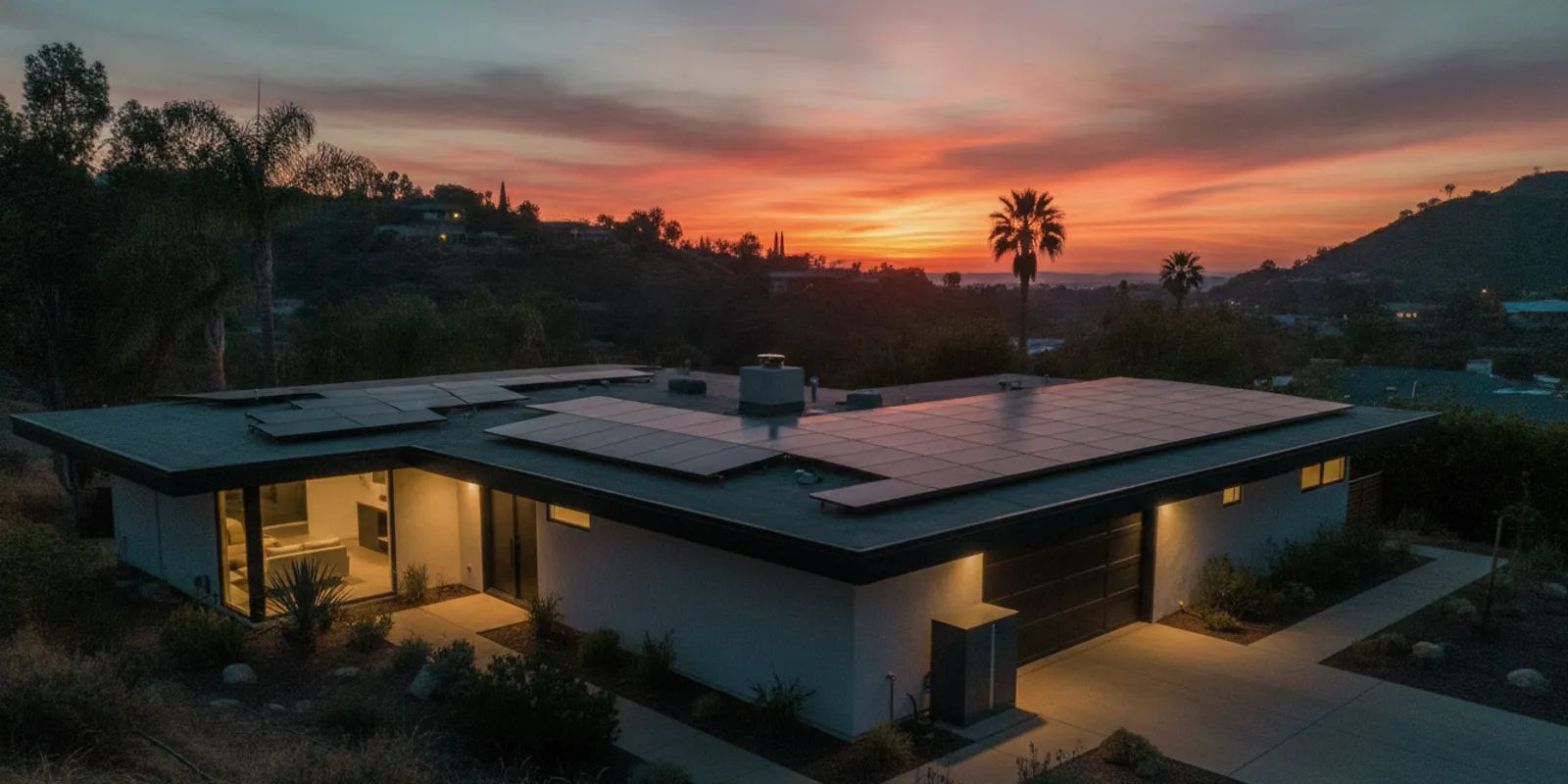
Solar panels with battery storage can help a California household use more of its own solar electricity and keep selected circuits powered during an outage. The right design depends on when your home uses energy, how much backup you want, roof conditions, and your utility plan. This guide explains the main choices so you can compare proposals with useful questions in hand.
How do solar panels with battery storage work?
Solar panels generate electricity when sunlight reaches them. Your home can use that electricity as it is produced. When generation is greater than immediate use, a compatible battery may store some of the surplus for later, such as evening hours. A system's controls coordinate solar production, household loads, the battery, and the grid according to its configuration.
Storage is not simply a larger version of a solar panel. The battery stores energy; its inverter and controls determine how energy moves between the panels, battery, home, and grid. Some systems are designed primarily to shift solar use into later hours. Backup operation requires equipment configured to isolate supported circuits from the grid during an outage. The U.S. Department of Energy explains that storage can release solar energy when it is needed, including when the sun is not shining: Solar Energy and Storage Basics.

For a high-level overview of residential solar options, see AMECO's solar solutions page. A system proposal should state whether the battery is intended for energy shifting, backup, or both; those goals influence equipment and design.
Solar United Neighbors also describes the basic relationship between panels and storage: batteries paired with solar can store electricity for use later, including after sunset. Its overview, Solar and storage: An ideal pair, is a useful general reference. Actual performance still depends on the installed equipment, weather, household demand, and operating settings.
What do you want the battery to do?
Start with the job you expect the battery to perform. Homeowners often combine goals, but one priority may shape capacity and controls more than another.
- Use more solar after sunset: Store some daytime surplus for evening household use. The amount available depends on solar production, household demand, and battery settings.
- Support selected circuits during outages: Keep chosen loads available when the grid is down, if the system is designed for backup. This is different from powering every appliance in the home.
- Manage time-based electricity use: Charge and discharge behavior may be coordinated with a utility rate plan. The value depends on the plan's rules and the home's usage pattern.
- Reduce exposure to short interruptions: A properly configured backup system may keep designated equipment operating when grid service is interrupted. Ask what transfer equipment is included and whether there is any brief transition.
Make a short list of essential loads before comparing equipment. Include items such as refrigeration, communications, lighting, or medical devices where relevant, then discuss their power needs with a qualified designer. Large loads such as electric heating, air conditioning, pool equipment, or vehicle charging can change the design substantially. Do not assume a battery will run every appliance for an entire outage.
It also helps to separate an outage wish list from a daily-use wish list. A refrigerator may be important during an outage but use relatively little energy over a typical hour. An air conditioner may be important on a hot day but require much more power when its compressor starts. Listing both priority and expected operating time gives the designer better information than naming appliances alone.
How should you compare battery size and backup?
Battery capacity describes stored energy, while power describes how much electricity the system can deliver at a given moment. Both matter. A battery with sufficient stored energy may still be unable to start or run several high-demand appliances together if the system's power capability is limited.
Ask the installer to show the assumptions behind its recommendation. Which loads are included? What is their expected use? Is the design intended to provide brief backup for essentials or longer operation with careful load management? How will the system behave if the battery is partly depleted when an outage begins?
| Planning factor | What it tells you | Question to ask |
|---|---|---|
| Energy capacity | How much stored energy may be available for use over time | Which loads and hours are included in the estimate? |
| Power output | How much demand the battery can support at once | Can it start and run the loads I want backed up? |
| Backup configuration | Which circuits can operate when grid power is unavailable | Is backup whole-home or limited to selected circuits? |
| Solar recharge | Whether panels can recharge the battery during an outage | What equipment and operating conditions are required? |
| Controls and settings | How the system prioritizes charging, use, and reserve | Can I set a backup reserve and understand its tradeoffs? |
| Load management | Which appliances may need to be staggered or excluded | What should I turn off or avoid running together? |
These are design questions, not universal performance promises. Weather, season, shading, battery state, household use, and equipment limits can affect how a system operates. Review the proposed configuration for your home rather than relying on a single capacity number.
Why do reserve settings matter?
Many systems allow a portion of stored energy to remain reserved for backup instead of being used for daily energy shifting. A higher reserve may leave more energy available if an outage occurs, while a lower reserve may allow more of the battery to participate in normal household use. There is no universal setting that fits every household. Ask how the reserve is changed, whether it can be adjusted seasonally, and what happens if the battery reaches its reserve.
Which equipment and configuration details matter?
Solar-plus-storage proposals can use different inverter architectures and battery controls. In a DC-coupled design, solar energy may pass through shared conversion equipment before reaching the battery. In an AC-coupled design, solar and battery equipment may each convert electricity on their way to household circuits. The best fit depends on the existing or planned system, equipment compatibility, backup goals, and design constraints.
Ask for a plain-language system diagram and a written explanation of how energy flows in normal operation and during an outage. Confirm the proposal identifies:
- Panel, inverter, and battery models, including compatibility.
- Backup gateway or transfer equipment and the circuits it supports.
- Battery reserve settings and how the homeowner can change them.
- Monitoring tools and what alerts or data they provide.
- Any operating limitations the proposal assumes.
- Whether future expansion is supported and what equipment would need to change.
Monitoring deserves specific attention. A useful monitoring system may show solar production, household consumption, battery charging, battery discharge, and grid activity in one place. Ask how quickly data updates, what alerts indicate a problem, and who is responsible for diagnosing an equipment or communications issue. A clear answer can make normal operation less confusing after installation.
AMECO provides solar installation and battery storage solutions. Learn more about its battery backup options and general project approach. Equipment selection still needs to reflect the home's electrical layout, utility requirements, and chosen backup loads.
How do roof condition and solar design connect?
Solar panels are attached to a roof structure, so roof age and condition belong in the planning conversation. If the roof may need repair or replacement soon, compare the sequence and scope of roofing and solar work before installation. Coordinating both under one project can make responsibilities and scheduling clearer, but the roof and solar design still need separate technical review.
Ask whether the roof has been assessed, how mounting and flashing will be handled, and what process applies if roof work is needed later. Consider the roof's remaining service life, penetrations, drainage, and access for future maintenance. A solar layout should also account for vents, skylights, shade, and roof planes that may not be suitable for panels.
AMECO offers roofing services as well as solar, and its solar and roofing planning guide covers why the two decisions can be connected. Request a clear explanation of which work is included in the proposal and which roof conditions would require a separate decision.
What changes for California utility customers?
Utility rules and rate plans affect how a home's solar electricity is used and valued. A battery may provide more control over when stored energy is used, but the result depends on the applicable tariff, export rules, and household schedule. Do not compare proposals using assumptions from a different utility or an older rate plan.
Bring a recent bill to the design discussion and ask the installer to identify the utility plan and assumptions used. If you are reviewing net billing, AMECO's guide to on-grid solar systems and its explainer on net metering can provide background. Verify current terms with your utility before making a decision.
Look beyond the name of a rate plan. Compare when your household uses electricity with when solar production is usually highest. Evening cooking, cooling, laundry, electric water heating, and vehicle charging may create a different pattern from a home that is occupied mainly during daylight. The battery's controls should be evaluated against that pattern, not against a generic household schedule.
How can you compare proposals fairly?
Compare proposals on the same basis. A lower quoted battery capacity may be paired with fewer backed-up loads, different equipment, or distinct assumptions about daily use. Request a side-by-side explanation rather than judging by headline capacity alone.
- Confirm each proposal addresses the same backup circuits and expected usage.
- Compare equipment models, system architecture, and monitoring capabilities.
- Review how the design accounts for roof condition, shading, and electrical service.
- Ask what happens during an outage and what the homeowner must do.
- Check which utility plan and energy-use assumptions inform the proposal.
- Ask for all project-specific costs and terms in writing; do not assume figures transfer between homes.
- Clarify what maintenance, troubleshooting, and support steps the proposal describes.
- Ask whether the design can be expanded and how expansion could affect the existing equipment.
For another perspective on battery choices, read AMECO's home solar battery guide and its explanation of AC-coupled batteries. These guides can help you prepare questions, but they do not replace a property-specific design.
What should you prepare before requesting an estimate?
A little preparation makes a project conversation more useful. Gather recent electricity bills, note large loads and typical schedules, and identify the circuits you would prioritize during an outage. If you know the roof's age or have records of prior work, bring those as well.
Write down how your household responds to an outage. Would you prefer to preserve energy for refrigeration and communications, or keep more rooms comfortable for shorter interruptions? Do you need a dedicated medical device circuit? Are there appliances you can start manually or leave off? These answers help define a backup plan before equipment is selected.
You can also ask for a written sequence of the project conversation: site and electrical review, system design, utility or permitting steps where applicable, installation, commissioning, and homeowner orientation. The exact sequence depends on the property and project, but knowing what each proposal assumes makes comparisons easier.
How can you make a practical outage plan?
Translate your priorities into an operating plan rather than leaving backup as an abstract feature. For example, a household that prioritizes refrigeration, Wi-Fi, and a few lights might plan to avoid running a clothes dryer and oven during an outage. A household with a medical device may need to identify its dedicated circuit and clarify whether the device's power requirements fit the design. These examples are prompts for discussion, not recommendations for a particular battery size.
Ask how the system signals that it has entered backup mode and where the homeowner can see remaining stored energy. Confirm whether the supported circuits are labeled clearly at the electrical panel. If the system has load controls, find out how they operate and whether they can automatically limit certain equipment. Make sure every adult in the household knows what to check and whom to contact if an alert appears.
Consider a simple sequence for a prolonged outage: check the system status, conserve energy by switching off nonessential loads, monitor battery level, and adjust use as solar production changes. The sequence depends on the equipment and weather. Your installer should explain the system's specific behavior, including any limits on solar charging during an outage, rather than relying on a generic checklist alone.
What should you know about installation and commissioning?
A proposal is easier to evaluate when it explains the path from design to operation. Ask what information is needed for a site assessment, how the electrical service and panel will be reviewed, and which approvals or utility steps apply to the property. Requirements and sequencing can differ, so avoid treating an example schedule as a promise for every home.
Before work begins, confirm the equipment list, proposed placement, circuits intended for backup, and any required changes to the electrical panel. Discuss where the battery will be located and what clearance, ventilation, weather protection, or access conditions apply to the selected model. The manufacturer documentation and local project review determine the actual requirements.
Commissioning is the point when the installed system is tested and its controls are configured. Ask what the homeowner will be shown: how to read monitoring, adjust reserve settings if available, identify an alert, and respond to a grid outage. Request the final system diagram and equipment documentation for your records. A clear handoff helps you understand what normal behavior looks like and which issue requires professional support.
How should you evaluate system expansion?
Some households expect their energy needs to change. You may add an electric vehicle, replace a gas appliance with electric equipment, or change household schedules. Discuss those possibilities before finalizing a battery design, but do not assume that extra equipment can be added later without changes. Expansion can depend on inverter limits, battery compatibility, available electrical capacity, physical space, and the system's controls.
Ask the designer to distinguish between a system that is technically expandable and one that is economically or practically straightforward to expand. Which components would remain useful? Would a future battery need to match the existing model? Would additional circuits need a different backup configuration? Is there space for equipment, and would the electrical panel need modification? Written answers help prevent the word “expandable” from becoming an undefined promise.
It can help to describe future loads by type and timing. An EV charger used overnight creates a different pattern from an electric range used at dinner. A future heat pump may affect both daily consumption and outage priorities. The designer can use these scenarios to identify constraints and explain which decisions are best made now versus revisited later.
What costs and assumptions belong in a proposal?
There is no single battery price that applies to every California home. The total project scope can vary with battery capacity and power, backup circuits, inverter and transfer equipment, electrical work, roof conditions, and the solar design. Ask for an itemized proposal that describes the equipment and work included, as well as any assumptions or exclusions.
When reviewing figures, compare the same scope. One proposal may include backup for a small set of circuits while another includes a broader electrical configuration. One may include an electrical panel upgrade or monitoring equipment while another treats it separately. Ask the installer to identify differences in equipment, labor, permitting or utility work where applicable, and any optional items. Do not treat an estimate from another property as a reliable price for your own.
Also ask how the proposal handles changes discovered during site review. Which conditions could change the design or cost? How would you receive and approve a revised scope? A transparent process is more useful than a low headline figure that leaves important assumptions unclear. AMECO's project estimate form is a starting point for a property-specific conversation.
Frequently asked questions about solar panels with battery storage
Can a battery charge from solar during a grid outage?
It may, if the solar and battery equipment is configured to operate in backup mode and conditions allow. Ask the designer to explain the required equipment, supported circuits, and operating limits for the proposed system.
Does a battery mean the home is independent of the grid?
Not automatically. A grid-connected home may still rely on the utility, and stored energy is limited by system capacity, production, and household use. A designer can explain how the proposed system interacts with the grid and what backup it supports.
Should every homeowner add a battery?
No single answer applies to every home. Backup priorities, utility plan, energy use, roof and electrical conditions, equipment compatibility, and project costs all affect the choice. Compare a solar-only option with a solar-plus-storage option using the same assumptions.
How do I know what battery size I need?
Begin with the loads and duration you want to support, then review both energy capacity and power output with a qualified designer. The right configuration is specific to the home and its goals.
Can I add storage to an existing solar system?
It may be possible, but compatibility, inverter architecture, available space, electrical service, and backup goals all matter. Ask for an evaluation of the existing equipment rather than assuming a new battery can be connected to any solar installation.
What is a useful next step?
Write down your backup priorities, collect a recent utility bill, and ask for a proposal that clearly describes equipment, supported circuits, operating assumptions, roof considerations, monitoring, and future flexibility. A tailored review can show how solar panels with battery storage may fit your home without treating a generic system size or savings estimate as a promise.


