


On Grid Solar System: How Grid-Tied Works in California
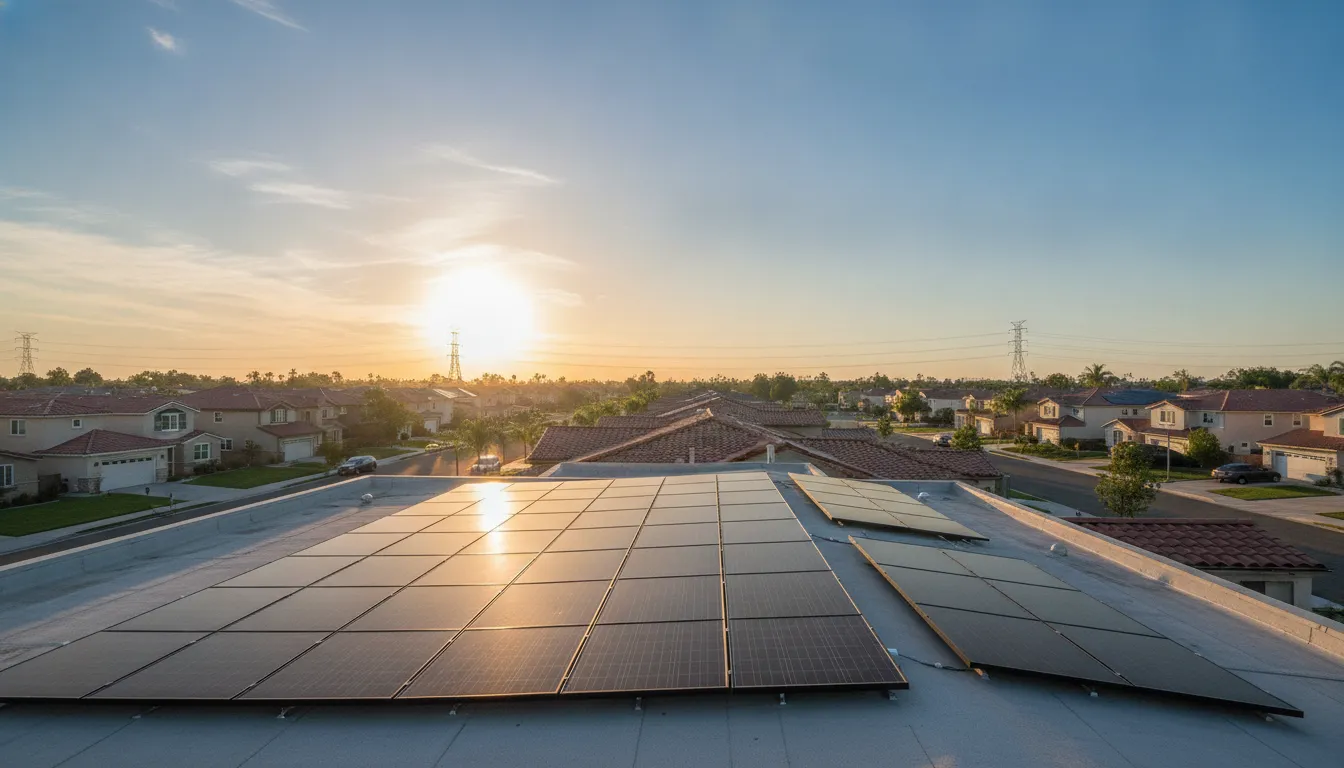
For many California homeowners, solar is not about leaving the utility network behind. It is about producing more of your own electricity while keeping grid power available when your panels are not generating enough. That balance matters as utility rates and concerns about grid reliability shape household energy decisions.
Get Your On-Grid Solar Estimate Today
An on grid solar system connects your home to the local utility grid, supplies solar electricity first. Sends excess production to the grid, and may provide bill credits through the applicable net-billing or net-energy-metering arrangement. You can draw utility power when production falls short. But a standard grid-tied system typically shuts down during an outage unless battery storage and appropriate backup equipment are included.
That balance matters for more than monthly bills. California utilities serve a large share of homes under time-varying rate plans. And many homeowners want solar to soften exposure to those rising rates while keeping the reliability of the existing network. An on-grid design leans on that connection rather than replacing it, which is one reason it is a common starting point in the state.
Understanding that basic exchange makes it easier to evaluate the practical tradeoffs, including interconnection requirements, billing rules, outage protection, and the differences between grid-tied, off-grid, and hybrid designs. First, it helps to define what an on-grid system includes and how its connection to the utility shapes its day-to-day operation.
What Is an On Grid Solar System?
An on grid solar system, also called a grid-tied system, produces electricity for a home while remaining connected to the local utility network. It does not require a home to operate independently from the utility. Instead, the system works alongside utility service, giving homeowners another source of electricity during the day and a way to send unused production back to the grid.
The U.S. Department of Energy explains that grid-connected systems allow a home to use utility power when solar production is insufficient and export excess electricity when production is greater than on-site demand. That two-way relationship is the defining feature of an on grid solar system. It also means the system must be designed and approved for safe interaction with the local utility.
The main components
Most residential grid-tied systems include four core elements:
- Solar panels: Photovoltaic panels convert sunlight into direct-current electricity.
- Inverter: The inverter converts that electricity into alternating-current power that household appliances can use. It also manages the connection between the solar array, the home, and the utility system.
- Utility meter: A compatible meter measures electricity moving between the home and the grid. Depending on the home's production and consumption, electricity may flow in either direction.
- Grid connection: The home's electrical service remains connected to the utility network, allowing the property to draw electricity when solar output does not meet demand.
During a sunny period, the panels may produce more electricity than the home is using. The excess can be exported to the utility grid, subject to the applicable billing arrangement and utility rules. When the panels are not producing enough, the home can pull electricity from the grid. The details of how exported power is credited depend on the homeowner's utility territory and approved program. So projected savings should be evaluated for the specific property rather than assumed universally.
Why interconnection matters
Connecting solar to the utility is not simply a matter of installing panels and turning them on. Interconnection requires specific equipment, safety measures, an application, and compliance with the utility's standards. The U.S. Department of Energy describes interconnection as the process of connecting a distributed energy system to the utility network while meeting technical and regulatory requirements. Requirements can vary by utility and project characteristics, so the installer should coordinate the process and confirm what applies before installation.
Homeowners comparing the cost of an on grid solar system should consider more than panel quantity. Roof condition, electrical service, equipment selection, utility requirements, household energy use, and local eligibility can all affect the final design and project economics.
How a Grid-Tied Solar System Works for Your California Home
An on-grid solar system works with your home's existing connection to the utility network. During daylight hours, the equipment produces electricity for your property first. When production is lower than your demand, you draw the difference from the utility. When production exceeds your immediate needs, the extra electricity can flow back to the grid, subject to your utility's interconnection and billing rules.
1. Solar panels produce electricity
Solar panels convert sunlight into direct current, or DC, electricity. The amount produced changes throughout the day and depends on factors such as roof orientation, shading, weather, system design, and household demand. California homeowners often explore solar as utility rates continue to put pressure on household electricity budgets. However, a system should be designed around the property's actual conditions rather than a universal production estimate.
2. An inverter converts DC power to usable AC power
Most household appliances use alternating current, or AC. An inverter converts the panels' DC electricity into AC power that can be used by the home's electrical system. Depending on the design, the system may use one central inverter or multiple microinverters. The inverter also helps manage the flow of electricity between the panels, the home, and the utility connection.
3. Your home uses solar power first
When the panels are producing electricity, the home typically uses that power before importing electricity from the grid. For example, daytime production may serve appliances, cooling equipment, pool equipment, or other active loads. If the home needs more electricity than the panels are producing, the system automatically supplements solar power with electricity from the utility. You generally do not need to manually switch between these sources.
4. Excess electricity flows to the grid
If the panels produce more electricity than the home is using at that moment, the excess is exported through the home's approved utility connection. A bidirectional meter records electricity moving into and out of the property. The U.S. Department of Energy explains that grid-connected systems can send excess power to the local utility grid when production exceeds on-site use. California billing treatment varies by utility program and customer eligibility, so PG&E, SCE, and SDG&E customers should confirm current requirements before making financial assumptions. See how grid-tied solar systems work for additional installation context.
5. The grid supplies power when solar production is low
At night, the panels are not producing electricity, so the home's meter draws power from the utility network. The same can happen during cloudy periods or whenever household demand exceeds solar output. This ongoing connection is one reason an on-grid system differs from a fully off-grid setup: the utility remains part of the home's energy system.
Before installation, the solar contractor and utility must complete an interconnection process. That process confirms the system meets applicable technical, safety, and equipment requirements for connecting to the network. A professional solar installation should also begin with a roof assessment. AMECO emphasizes that a healthy, durable roof is the foundation for a long-term solar installation. Coordinating roofing and solar work through one company can help address roof conditions before panels are installed, rather than treating the roof as an afterthought.
For California homeowners, the most important question is not simply whether panels can generate electricity. It is how the system, roof, household usage, and utility interconnection fit together as one project.
Net Metering and Billing: Earning Credits for Excess Power
An on-grid solar system can produce more electricity than your home needs at certain times, especially during bright daytime hours when household demand is relatively low. Instead of losing that extra production, the system sends it through the utility connection to the electric grid. Your meter tracks the exchange, including electricity flowing from your home to the grid and power flowing back when your home needs more than the panels are producing.
California's net energy metering, commonly called NEM. Is a billing arrangement that allows solar owners to receive credits on their utility bills for excess electricity exported to the grid. The California Public Utilities Commission explains NEM and net billing, including the rules and program structures that apply to customer-generated electricity.
How credits and electricity use work together
When your panels produce less electricity than your home is using, you draw power from the grid as usual. When production exceeds immediate demand, the surplus is exported and recorded by the meter. Over the course of a billing period, those imports and exports are reflected in the utility's billing calculation. In practical terms, daytime production can offset some of the electricity your household uses at other times, subject to the terms of your utility program.
This arrangement is different from receiving a universal cash payment for every kilowatt-hour your panels generate. The value of exported electricity, the way credits are calculated, and how remaining charges are handled depend on your utility territory and the specific NEM or net-billing program. California homeowners should review the current rules for their provider, such as Southern California Edison, and compare rate plans for solar households. Pacific Gas and Electric, or San Diego Gas & Electric, rather than relying on a general savings estimate.
What determines your actual bill impact?
Your results depend on more than the size of the solar array. Household electricity use, the timing of that use, roof orientation and shading, system production, utility rates, and the applicable export-credit structure all affect the outcome. A home that uses more power during the day may consume more solar electricity directly. While a home with higher evening demand may send more production to the grid before drawing power later.
For that reason, projected credits and savings should be based on your property, energy profile, and utility account. A qualified evaluation can also confirm that the proposed system meets interconnection requirements and is sized appropriately for the home. Net metering can be an important part of the financial picture, but it should be considered alongside equipment choices. Roof condition, rate structure, and whether battery storage would better match your energy use.
Compare Your Solar Design Options
Grid-Tied vs. Off-Grid vs. Hybrid: Choosing the Right System
California homeowners generally choose among three solar configurations: grid-tied, off-grid, and hybrid. The right fit depends less on a simple preference for independence and more on how your home uses electricity. How often outages affect you, and whether you want to invest in battery storage. Your utility territory, roof, energy demand, and project goals also shape the decision.
A grid-tied system, also called an on-grid solar system, remains connected to the local utility network. When the panels produce more electricity than the home needs, the excess can flow to the grid. When production is low, the home can draw electricity from the utility. The California Public Utilities Commission describes this two-way relationship between solar customers and the utility grid under its net-energy-metering framework: the grid supplies power when solar production is insufficient, while excess production is exported.
| System type | Grid connection | Battery backup | Outage behavior | Independence | Typical cost and complexity |
|---|---|---|---|---|---|
| Grid-tied | Connected to the utility grid. | Usually none. | Standard systems shut down during an outage for safety. | Reduced reliance on utility energy, but still grid-dependent. | Usually the simplest configuration, with lower cost and complexity than systems that add batteries. |
| Off-grid | Not connected to the utility grid. | Required to store energy for night, cloudy periods, and changing demand. | Can continue operating if the system and stored energy are properly sized. | Highest independence from the utility. | Higher cost and design complexity because generation and storage must support the entire load. |
| Hybrid | Connected to the utility grid. | Included for backup and energy management. | Selected circuits or the home can remain powered when configured correctly. | Balances grid access with greater resilience and independence. | More equipment, planning, and cost than basic grid-tied solar. |
When grid-tied solar fits
Grid-tied solar is often the practical starting point for a home that has reliable utility access and wants to generate electricity without adding battery storage immediately. It can lower the amount of electricity purchased from the utility during solar production hours, while the grid remains available when the panels are not producing enough. In California, billing treatment for exported electricity depends on the applicable utility program and enrollment terms. So credits and savings should be evaluated for the specific property rather than assumed.
Distributed solar can also provide value beyond one household. Research from the National Renewable Energy Laboratory identifies benefits such as deferred distribution-system investments and enhanced resilience. That does not eliminate the need for a properly designed interconnection, but it helps explain why connected systems are part of a broader energy network: NREL outlines potential distribution-grid benefits of distributed solar.
When off-grid or hybrid makes more sense
Off-grid solar may fit a remote property where utility service is unavailable, impractical, or not worth extending. It requires careful load planning, adequate battery capacity, and a strategy for long stretches of unfavorable weather. Because the system must meet the home's needs without utility support, the design is typically more involved and the investment is often higher.
Hybrid solar is the middle path for homeowners who want grid access but also want backup capability. Batteries can store excess production and help support designated loads during an outage, subject to the system design and available stored energy. If outage protection is a priority, ask an installer to define exactly which circuits will be backed up. How long the batteries may support them, and how the system is intended to operate during extended outages.
What Happens During a Power Outage with an On-Grid System?
When California utilities shut off power during a planned safety event, or when severe weather damages local equipment. A standard grid-tied solar system usually does not keep the home powered. The panels may still receive sunlight, but the system is designed to stop producing electricity for the home and the utility lines until grid service is restored.
Why does an on-grid system shut down?
A standard on-grid solar system is connected to the utility network. During normal operation, its inverter synchronizes with the grid and converts the panels' electricity into usable household power. If the utility connection suddenly loses voltage, the inverter detects the outage and automatically shuts down.
This shutdown is a safety requirement. It prevents the solar system from sending electricity back into lines that utility crews may believe are de-energized. That unintended flow, known as backfeeding, could create a serious hazard for workers repairing the network. Grid-connected systems therefore shut down during an outage unless they are specifically configured with battery storage and the equipment needed to operate independently. Learn more about California's customer-generation and interconnection requirements from the California Public Utilities Commission: net-energy-metering and interconnection guidance.
What can you use during the outage?
Without battery backup, solar panels connected to a conventional grid-tied inverter will not power the refrigerator, lights, HVAC equipment, or other circuits during the outage. Your home may remain without electricity even if the panels are in full sun. Once utility service is restored and the system completes its normal restart sequence, solar production can resume.
This distinction matters in California, where outages can result from planned utility shutoffs, equipment problems, heat, wind, wildfires, or other weather-related conditions. An on-grid system can help manage electricity use and utility bills during normal service. But it should not be treated as an emergency power source unless backup capability is part of the design.
How battery storage changes the setup
A hybrid solar system pairs solar with battery storage and backup controls. When the grid goes down, the system can isolate selected household circuits from the utility network and use stored energy, with solar replenishing the battery when conditions allow. The specific circuits supported, backup duration, and operating behavior depend on the battery capacity, system design, household demand, and the outage itself.
If outage protection is a priority, discuss it before choosing equipment. AMECO can evaluate whether a battery-equipped design fits your home, roof, energy use, and utility requirements. Explore AMECO's solar installation services to compare an on-grid system with a hybrid configuration, and see how solar battery storage works if backup power matters to you.
Is an On-Grid Solar System Right for Your Home?
For many California homeowners, an on-grid solar system is a practical way to produce electricity while remaining connected to the utility network. The right choice, however, depends on more than available sunlight. Your roof condition, household energy use, utility territory, outage priorities, and eligibility for available incentives all deserve attention before installation.
Start with the roof, not the panels
A healthy, durable roof is the foundation for a long-lived solar installation. If the roof needs replacement soon, installing panels first can create avoidable costs and disruption when those panels later need to be removed and reinstalled. A roof evaluation should consider age, material, structural condition, drainage, and any repairs that may affect the installation plan.
This is one reason an integrated solar and roofing approach can be valuable. AMECO Solar & Roofing can evaluate how the roof and solar project fit together instead of treating them as unrelated jobs. That coordination may help a homeowner make a more informed sequence and system-design decision. For broader preparation, see this guide to planning your on grid solar system.
Consider how utility rates affect your goals
California utility rates are an important part of the decision. Homeowners often explore solar as they look for ways to manage electricity bills and reduce exposure to changing utility costs. The potential value of an on-grid system depends on factors such as when your household uses energy. How much electricity the system can produce, the applicable utility rules, and how excess production is credited or valued.
That means a generic savings promise is not a useful basis for choosing equipment. A professional evaluation should use your actual usage history, roof layout, shading, utility territory, and planned changes such as an electric vehicle, heat pump, or home addition. It should also explain what happens when your panels produce less than your home needs, since the utility connection remains part of the system.
Review incentives carefully
Incentives, including the federal solar tax credit, may be part of the financial case for a solar project. Eligibility and the value of any incentive depend on the homeowner's circumstances, project details, tax situation, and rules in effect when the system is installed. Treat online estimates as starting points, not guaranteed outcomes, and confirm current requirements with a qualified tax professional or the relevant government source.
An on-grid system may be a strong fit when your roof is ready. You want to offset utility electricity with your own generation, and you are comfortable remaining connected to the grid. If outage backup is a primary goal. Ask whether a battery or hybrid configuration should be included rather than assuming a standard grid-tied system will keep operating during an outage. AMECO's solar installation services can help connect these considerations to a design suited to your property.
Request Your Free Estimate for an On-Grid Solar System
Frequently Asked Questions
What is an on grid solar system?
An on grid solar system, also called a grid-tied system, connects your home's solar panels to the local utility network. Your home uses solar electricity when it is available, draws utility power when production is insufficient, and sends excess electricity to the grid. This basic arrangement is described in the California Public Utilities Commission's net-energy-metering guidance.
Which is better, off-grid or on-grid solar?
Neither option is universally better. On-grid solar is usually the simpler fit for a home that already has utility service and wants to offset electricity purchases while retaining grid access. Off-grid solar offers greater independence but requires enough generation and storage to serve the home through changing weather and demand. Your goals, property, utility territory, and backup-power needs should guide the comparison.
What are the disadvantages of an on-grid solar system?
An on-grid system depends on the utility connection, so it does not provide complete energy independence. It also requires an interconnection process, including utility-approved equipment and compliance with applicable safety standards. Because billing treatment and export value can vary by utility program, review the current rules for your service territory before choosing a system.
What is the difference between on-grid and hybrid solar?
Both systems can connect solar to the utility grid, but a hybrid system adds battery storage and controls designed to keep selected loads operating during an outage. A standard on-grid system generally does not include battery backup. The Department of Energy notes that conventional grid-tied systems shut down during an outage for safety unless they are configured with appropriate storage and backup equipment.
Does an on-grid solar system work during a power outage?
Typically, no. A standard grid-tied system automatically shuts down during an outage so it does not send electricity onto lines that utility crews may be repairing. Solar panels alone therefore should not be treated as emergency backup. If outage protection is a priority, ask an installer to evaluate a battery-based hybrid design for your home and critical loads.
Ready to Explore an On-Grid Solar System for Your Home?
Every California property is different, and the right solar setup depends on your roof, your energy use, and your utility territory. A grid-tied (on-grid) system is a common starting point for homeowners who want to lower their bills and put the sun to work. While a hybrid option adds battery backup for extra resilience.
AMECO Solar & Roofing has served California homeowners since 1974 and pairs solar design with expert roofing under one roof. Get a custom estimate that reflects your home and goals, or explore the full range of solar installation services we offer.
- Get an estimate for an on-grid solar system designed for your home.
- Review our solar installation services to see how we handle the full project.
Request an estimate today to see whether an on-grid solar system is the right fit for your California home.


.svg)
