


Time of Use Rates Solar California: Strategies for Maximum Savings
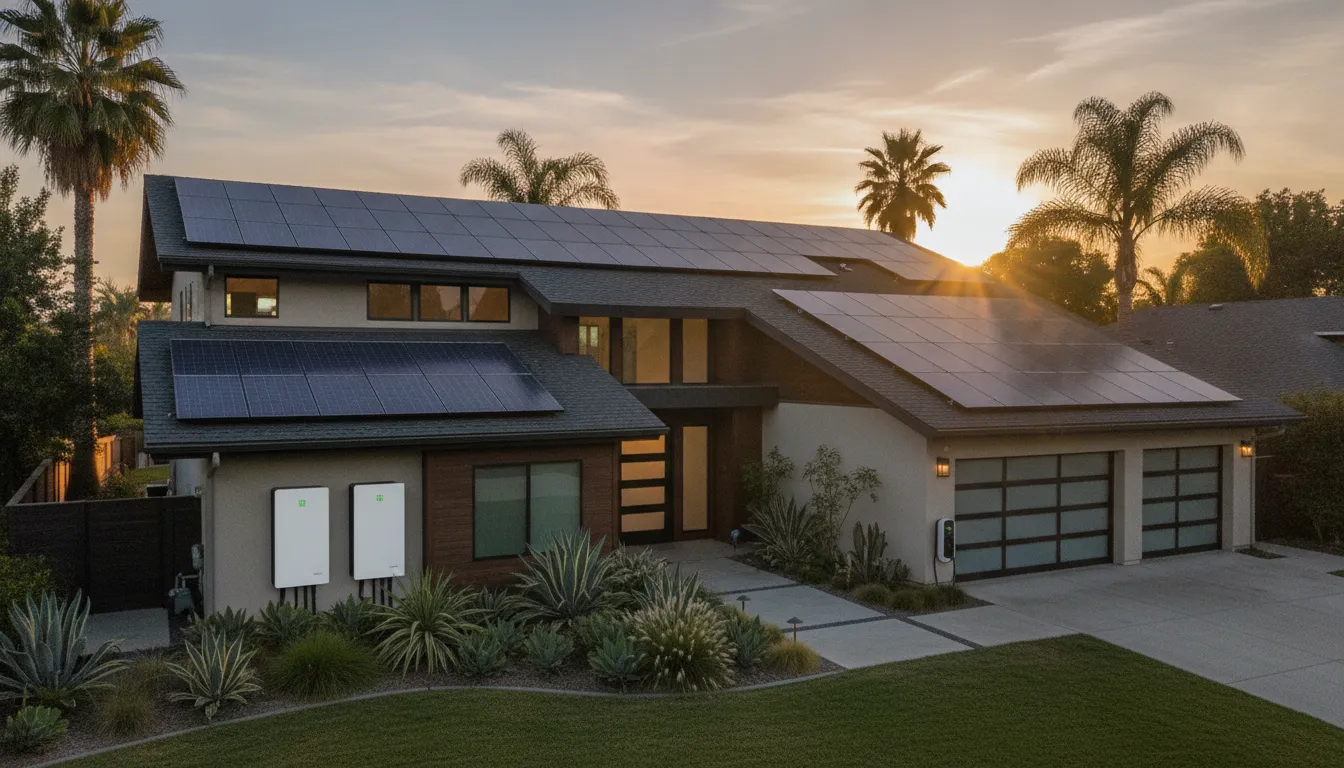
California electricity bills are rising faster than nearly any other state. Understanding time of use rates solar California homeowners rely on is the key to controlling those costs. Under these pricing plans, the price you pay for electricity changes throughout the day. Peak rates hit during the late afternoon and evening when solar panels slow their production. A paired solar and battery system lets you store low-cost daytime energy and use it during those expensive peak hours. Under NEM 3.0 rules that reward self-consumption over grid exports, this strategy delivers the most savings for California families.
Get Your Free Solar Savings Estimate Today
Many homeowners find California's changing rate structures confusing. But learning how these billing plans work puts you in control of your monthly energy costs. This guide explains the major utility rate plans, how NEM 3.0 changes the savings equation, and the strategies that help you keep more money in your pocket.
Time of Use Rates Solar California: What Are TOU Rates?
Time-of-Use (TOU) rates are a billing method where the price of electricity changes based on the time of day. Instead of a flat per-kilowatt-hour rate, your utility adjusts pricing based on real-time grid demand. When demand peaks, prices rise. When demand falls, rates drop. This structure helps California's utilities manage grid stress and supports renewable energy integration, as documented by the California Energy Commission.
Peak Hours vs. Off-Peak Hours
Utilities divide the day into specific blocks. The most expensive block is peak hours, typically 4 PM to 9 PM on weekdays when people return home and run heavy appliances. Off-peak hours fall when demand is lowest, usually late night through mid-afternoon. By setting these windows, utilities encourage customers to shift heavy power use to times when the grid faces less strain.

How Southern California Edison Rates Compare
Southern California Edison shows how dramatic the difference can be. SCE's summer TOU-D-4-9PM plan charges an off-peak rate of around 36 cents per kWh. Rising to 71 cents per kWh during peak weekday hours from 5 PM to 8 PM. Using power during the evening peak window costs nearly double what it costs during the day. Most California residential customers with solar are now placed on mandatory time-of-use rate structures, making rate awareness essential.
Why California Shifted to TOU Pricing
Major electricity providers introduced TOU rate plans in the early 2010s. The shift came as California added massive amounts of solar power to the grid. Solar panels produce the most power at midday, creating an oversupply of clean energy when demand is low. Once the sun sets, solar production drops right as household demand climbs. TOU pricing helps utilities balance this daily mismatch and encourages homeowners to use energy when it is cheapest and cleanest.
California Major TOU Rate Plans: Utility-by-Utility Comparison
Every major power provider in California structures its electricity rates differently. To save the most money, you first need to understand how your specific utility bills your home. You can explore solar solutions for your region to see how a customized system offsets these costs.
| Utility Provider | Major Rate Plans | Peak Pricing Hours | Off-Peak Hours |
|---|---|---|---|
| PG&E | E-TOU-C, E-TOU-D, TOU-B | 4 PM - 9 PM or 5 PM - 8 PM (Weekdays) | 12 AM - 4 PM, 9 PM - 12 AM |
| SCE | TOU-D-4-9PM, TOU-D-5-8PM, TOU-D-PRIME | 4 PM - 9 PM or 5 PM - 8 PM (Weekdays) | 8 AM - 4 PM, 9 PM - 8 AM |
| SDG&E | TOU-DR1, TOU-DR2, DR-SES | 4 PM - 9 PM (Every Day) | 6 AM - 4 PM, 9 PM - 6 AM |
| LADWP | R-1A (TOU Optional), TOU-GS-1 | 1 PM - 5 PM or 5 PM - 8 PM (Weekdays) | 8 PM - 1 PM (Weekdays, All Weekend) |
Rate Plan Details and Differences
PG&E customers on the E-TOU-C plan face a peak window from 4 PM to 9 PM every day. While E-TOU-D shifts the peak to 5 PM to 8 PM on weekdays only. SCE offers similar options including its TOU-D-PRIME plan designed for homes with clean energy technology. Which charges a fixed daily fee of 79 cents in exchange for lower off-peak rates. SDG&E features the DR-SES plan made specifically for solar owners with a steady 4 PM to 9 PM peak. Municipal utilities like LADWP offer optional TOU choices under the R-1A schedule that keeps peak hours earlier in the afternoon. The right plan depends on your household usage patterns and whether you own an electric vehicle.
Why NEM 3.0 Makes TOU Optimization Essential
The rules of solar savings in California changed with the Net Billing Tariff, known as NEM 3.0. Under older rules, homeowners sent excess solar power to the grid for full retail credit. Now export rates are cut by about 75 percent, with solar owners receiving a low avoided-cost rate averaging just eight cents per kilowatt-hour. When grid export value is low, managing how you use your own power becomes the primary way to lower costs. Pairing solar with a battery backup system directly shields your home from high evening rates.
The Solar Production and Peak Demand Mismatch
Solar panels produce the most power in the middle of the day when the sun is high and grid demand is low. However, California time of use rates solar California plans structure peak pricing in the late afternoon and evening, when solar output drops and grid demand spikes. Solar panels alone reduce your total energy use but cannot solve the problem of high rates after sunset. To keep bills low, you must store your solar energy instead of exporting it to the grid for minimal credit.
How Battery Storage Changes the Equation
A home battery changes how your system interacts with the grid. Instead of exporting power during the day for small credits, a battery stores that clean energy. You then use that stored power to run your home during peak evening hours when grid rates are highest. This approach maximizes self-consumption, which is the key to making your solar investment pay off under NEM 3.0. To learn more about proper capacity planning, read our guide on NEM 3.0 solar battery sizing in California.
How Solar Plus Battery Systems Beat Peak Rates
Adding a home battery solves the timing mismatch between when you generate energy and when you need it most. A well-designed system stores your daytime solar production and dispatches it during the most expensive hours.
The Savings Math
During the sunny afternoon, solar panels produce power when grid rates are relatively low. Exporting that power under NEM 3.0 earns very little credit. A home battery lets you store cheap power and discharge it from 4 PM to 9 PM when grid rates peak at 48 cents per kWh or more. Offsetting those peak rates with stored solar energy effectively doubles the value of your power. Homeowners who optimize their battery dispatch for time-of-use rates save 15 to 25 percent more than those relying on solar panels alone.
How Smart Batteries Automate Savings
Modern home battery systems like the Tesla Powerwall and Enphase 5P run on smart software that tracks your local utility rates. These systems can be programmed to discharge only during the most expensive peak hours. Instead of pulling power from the grid during high-demand hours, your home runs entirely on stored solar energy. This automation requires no daily effort.
The Value of Custom System Design
Every home has a unique energy footprint. A system that is too small will not cover your peak evening use, while an oversized system costs more than necessary. Working with an expert to design a custom setup ensures your system handles peak rates while keeping costs balanced. Learn more about battery storage solutions for your specific home energy needs.
Practical Strategies for TOU Savings
Managing when and how you use power is essential under California TOU rules. These strategies help you get the most value from your energy system.
Shift Heavy Energy Use to Off-Peak Hours
Peak hours are typically 4 PM to 9 PM on weekdays. Run heavy appliances like laundry, dishwashers, and pool pumps during off-peak morning or midday hours. This simple shift aligns your consumption with times when grid demand is low and rates are lower.
Program Your Battery for Peak Dispatch
Set your home battery to discharge from 4 PM to 9 PM so you avoid buying expensive grid power during those hours. Programming your battery to dispatch based on utility prices is a straightforward way to maximize savings without changing your daily habits. Check our article on California average electric bills to understand how much other homeowners in your area are paying.
Optimize Your Daily Energy Routine
For California homeowners, combining smart habits with solar power offers the best defense against high utility bills. Follow these steps:
- Adjust appliance schedules. Run your clothes dryer and dishwasher before 4 PM or after 9 PM. Set pool pump timers to midday hours.
- Configure your battery. Program your battery to cover your electricity needs during peak evening hours when rates nearly double.
- Time your EV charging. Charge your electric vehicle late at night when many plans offer very low overnight rates.
- Monitor your usage. Check your utility data in your monitoring app to identify savings opportunities.
- Review your annual statement. Examine your true-up statement to confirm your rate plan remains the best fit.
- Consult an expert. Work with a professional team to review your usage patterns and optimize your system.
How to Choose the Best TOU Plan for Your Home
Selecting the right time-of-use rate plan is a key decision that affects your monthly bills. Each major California utility offers several options, and California allows you to switch your plan once per year at no cost.
Analyze Your Usage Patterns
Study when your household uses the most electricity. If you run large appliances during the day, a plan with lower daytime rates may suit you better. If your heavy use falls in the evening, a plan with shorter peak hours is often preferable. Many utilities offer online portals to review your past bills and identify patterns.
Size Your Solar and Battery System Correctly
A solar system with battery storage gives you the most control over your rate plan. Charge your battery during cheap off-peak hours using your solar panels, then use that stored energy during expensive peak evening hours. Because rates are highest in the evening, your battery should be sized to match your peak energy consumption. Read our NEM 3.0 battery sizing guide for detailed recommendations.
Get Expert Guidance
Utility rate structures can be complex. An experienced solar installer can model your production and usage to find the best plan. At AMECO Solar, we analyze your utility data to build a custom rate plan strategy. Schedule a consultation to learn how we can optimize your home energy setup.
Frequently Asked Questions
How do time of use rates in California affect my electricity bills?
Under these plans, utility providers charge different electricity prices depending on the time of day. Energy used during peak hours, usually between 4 PM and 9 PM, costs much more than energy used during off-peak hours. By installing solar panels with a home battery, you can avoid these expensive peak rates by powering your home with stored solar electricity instead of grid power.
Can I switch my California time-of-use rate plan?
Yes. California homeowners on TOU plans can switch to a different available rate plan. Most major investor-owned utilities, including SCE, PG&E, and SDG&E, allow customers to change their rate plan once every twelve months at no cost. Review your hourly usage patterns on your utility portal to find the best plan for your needs.
Do I need a battery with solar on a California TOU plan?
Solar panels alone help lower your daytime bills, but a battery is now essential to maximize savings under California's Net Billing Tariff (NEM 3.0). Storing your daytime solar generation lets you avoid buying grid electricity when peak rates are highest. Choosing the right solar and battery integration is key to long-term energy savings.
Can I charge an electric car on a time-of-use plan?
Yes. Charging an electric vehicle on a TOU plan can save you money if you schedule charging during off-peak hours. Many California utility companies offer specialized TOU rates for EV owners with very low overnight rates. Charging between midnight and 6 AM costs far less than charging during peak daytime or evening hours.
Which California utility has the best time-of-use plan for solar owners?
The best plan depends on your specific usage patterns. SCE's TOU-D-PRIME offers lower off-peak rates with a fixed daily fee, making it attractive for homes with solar and battery. SDG&E's DR-SES plan is designed specifically for solar customers. Compare plans based on your home's energy profile rather than seeking a single best option.
Ready to Optimize Your Rate Plan Strategy?
Understanding your utility time-of-use rate structure is the first step toward lowering your monthly bills. With the right solar and battery system, you can avoid peak pricing, store clean energy, and take control of your home electricity costs. The California energy landscape is changing, but homeowners who act now can lock in meaningful long-term savings.


.svg)
