


Get a Quote for Solar Panel Installation: How to Prepare for an Accurate Estimate

When you get a quote for solar panel installation, the most useful estimate is based on your home, energy use, roof, and goals rather than a standard package. A little preparation can help an installer understand your property sooner, explain the assumptions behind the proposal, and identify questions that need an on-site review.
Get An Estimate for Your Solar Project
California homeowners do not need to become solar engineers before requesting an estimate. Start by gathering the information you already have, then use the consultation to fill in the gaps. Final figures still depend on the property, selected equipment, utility territory, project scope, and applicable eligibility requirements.
What Should You Prepare to Get a Quote for Solar Panel Installation?
A strong first conversation gives the installer enough context to build a property-specific starting point. Gather these details before submitting a request:
- Property address: The address helps the team review the roof layout, local conditions, utility territory, and project requirements.
- Recent electric bills: A bill or usage history can show how much electricity the home uses and how the utility charges for it. If you have several months of bills, bring them together rather than relying on one unusually high or low month.
- Roof information: Note the roof material, approximate age, areas with visible wear, and any previous repairs. Do not climb onto the roof to inspect it yourself.
- Shade and obstructions: Identify mature trees, nearby buildings, vents, skylights, chimneys, and other features that could affect usable roof area or sunlight.
- Electrical details: If it is safe to do so, take a clear photo of the main electrical panel from the floor. Do not remove the cover or handle wiring.
- Energy plans: Mention an electric vehicle, heat pump, room addition, pool equipment, changed occupancy, or other future load that could affect system sizing.
- Backup goals: Decide whether you are considering solar only, battery storage, or backup for selected essential circuits. The answer changes the design conversation.
This checklist is not a substitute for site review. It simply helps prevent the first estimate from being built on missing assumptions.
How Does Your Electricity Use Shape a Quote for Solar Panel Installation?
Your electricity use is one of the main inputs in a residential solar design. An installer may review your historical kilowatt-hour usage, seasonal patterns, rate plan, and the amount of power you expect to use in the future. A home that is adding an electric vehicle or replacing gas appliances may need a different design from a home with stable energy demand.
Your monthly bill alone may not tell the whole story. The bill can include fixed charges, time-of-use rates, delivery and generation details, and other utility-specific information. Ask whether the proposal uses actual usage data or an assumption, and ask which rate plan was used for the savings analysis.
The U.S. Department of Energy explains that a solar system's production and potential savings depend on factors including electricity consumption, system size, roof direction, sunlight, and utility rates. Its Homeowner's Guide to Solar is a useful neutral resource when you want to understand why a custom estimate is more meaningful than a generic price.
AMECO's solar solutions overview and residential solar information provide additional context on system design, installation, and activation. Use those pages to build questions, not to assume that another home's system size or projected result will apply to yours.
What Roof Details Affect a Solar Panel Installation Estimate?
The roof is both the mounting surface and a major part of the installation scope. An estimate may change based on the roof's material, age, pitch, orientation, condition, available area, and the location of penetrations or obstructions. Tile roofs, for example, require careful planning around tile handling, attachment methods, flashing, and waterproofing.
If your roof may need work before the solar project, ask how that work will be evaluated and whether solar and roofing can be coordinated. Installing panels on a roof that is near the end of its useful life can create avoidable disruption later. AMECO provides both solar and roofing services, so homeowners can review the relationship between roof condition and solar planning in one conversation. See the roofing solutions page and the guide to solar on tile roofs in California for related planning considerations.
Do not treat roof material as an automatic yes or no for solar. A professional review should determine whether the roof can support the proposed work. What mounting approach fits the property, and whether repairs or replacement should be part of the plan.
How Can Shading and Roof Layout Change the Design?
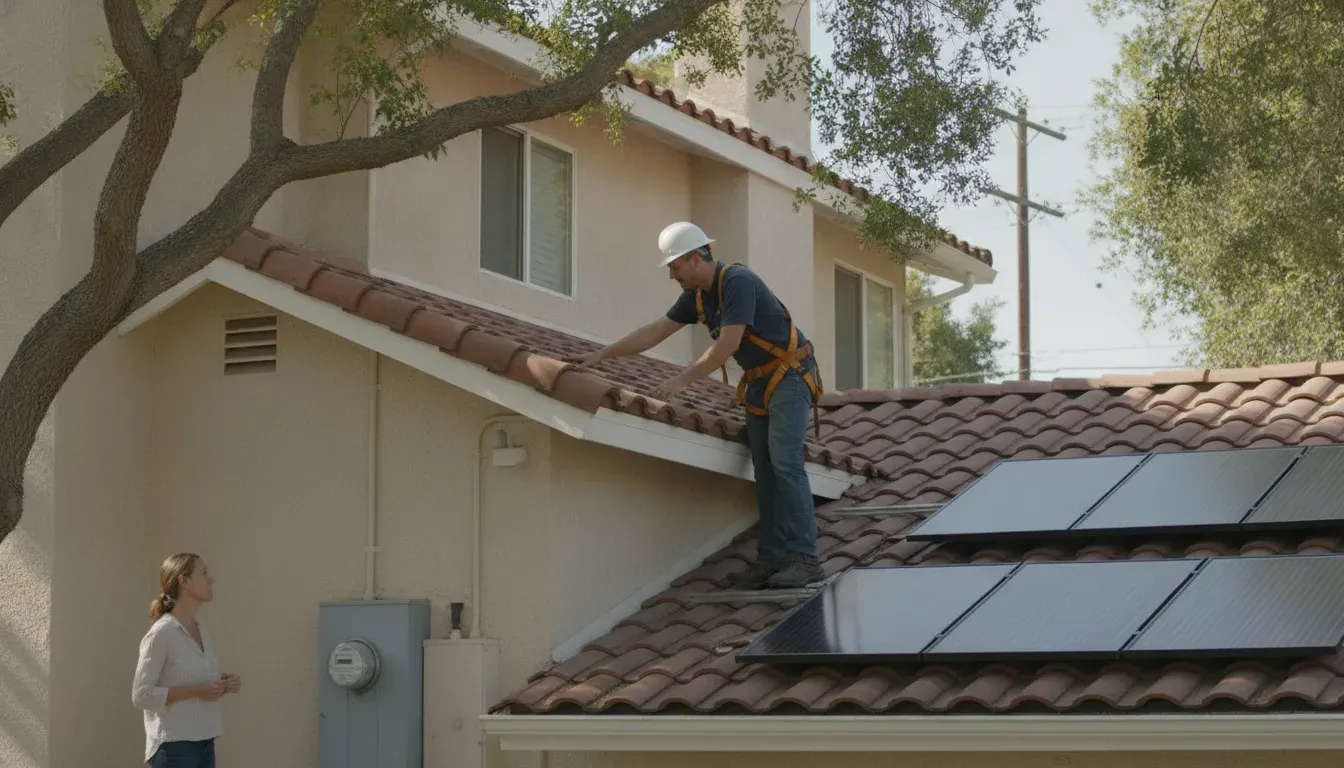
Roof area is not the same as usable solar area. Trees, neighboring structures, dormers, vents, chimneys, roof edges, and different roof planes can reduce the space available for panels or affect expected production. Shade can also change how an installer evaluates equipment and panel placement.
Share what you know about seasonal shade. A tree that looks harmless during one visit may cast a longer shadow in winter. While a tree that is currently small may grow into the solar access area. The goal is not to remove every tree or force panels onto every roof plane. The goal is to understand the tradeoffs and design around the property responsibly.
Request a Property-Specific Solar Estimate
What Electrical and Battery Information Should You Share?
Electrical service affects how solar equipment connects to the home. The installer may need to understand the main panel, available capacity, existing electrical equipment, service configuration, and the intended location of the inverter or other components. A photo can help with an early conversation, but it does not replace a qualified electrical assessment.
Battery goals should be just as specific as solar goals. Tell the installer whether your priority is backup during outages, using more of your solar energy after sunset, managing utility rates, or planning for future energy use. Also mention any critical equipment that needs power. A proposal for limited essential-circuit backup is not the same project as a design intended to support broader household loads.
Battery storage can be evaluated with a new solar system or as part of a future plan, depending on the equipment and property. AMECO's battery backup overview and guide to adding a battery to an existing solar system can help you organize questions about storage, compatibility, and backup priorities.
How Does Your Utility Territory and Incentive Eligibility Affect the Quote?
Your utility territory can affect rate-plan assumptions, interconnection requirements, export treatment, and the information needed for the proposal. Tell the installer which utility serves the property and whether you are considering changes to the rate plan. The same equipment can produce different planning questions in different utility territories.
Incentive eligibility should be treated as a verification step, not as an automatic discount. A quote should identify which programs or tax provisions may be relevant and what remains to be confirmed. Eligibility can depend on the property, equipment, taxpayer, installation details, placed-in-service timing, utility program rules, and current law.
For example, current IRS instructions for Form 3468 discuss the Section 48E clean electricity investment credit and include specific rules and limitations. Those instructions are written for tax filing and do not turn a preliminary sales estimate into tax advice. Review the IRS Section 48E guidance and consult a qualified tax professional about your situation before relying on an incentive in a financial decision.
Ask the installer to separate the project price from any incentive assumption. That makes it easier to understand what the project costs if an eligibility condition changes.
Which Details Should a Solar Quote Show?
When you receive a proposal, look for clear assumptions rather than a single unexplained total. The following details help you compare proposals that are actually describing similar projects:
| Quote detail | Why it matters | Question to ask |
|---|---|---|
| Energy-use basis | Shows how the proposed system relates to actual or expected consumption. | Was the design based on my usage history and rate plan? |
| Roof and shade assumptions | Explains which roof areas and sunlight conditions were included. | What roof conditions still need field verification? |
| Equipment selection | Clarifies the panels, inverter, monitoring, and optional storage being considered. | What alternatives were evaluated and why? |
| Electrical scope | Shows whether panel work, equipment relocation, or other electrical work is included. | Which electrical items could change after inspection? |
| Permitting and interconnection | Separates installation work from approvals and utility coordination. | Which approvals are included in the proposed scope? |
| Warranty and support | Helps you understand who supports the equipment and workmanship after installation. | Who handles service if a system issue occurs? |
A detailed quote is easier to evaluate when it explains what is included, what is optional, and what could change after engineering, permitting, or site verification.
How Should You Compare Solar Installation Quotes?
Comparing solar quotes is not just a matter of choosing the lowest total. First, confirm that each proposal uses similar assumptions for system output, battery coverage, roof work, electrical scope, permitting, monitoring, and utility coordination. A lower figure may reflect a smaller system, fewer backed-up circuits, different equipment, or excluded work.
Review the company as carefully as the equipment. Ask who is responsible for design, installation, roof coordination, permits, inspections, interconnection, monitoring, and support. AMECO's guide to comparing solar installation companies in California offers a broader checklist for evaluating these differences.
If financing is part of the discussion, compare the full terms of each current offer rather than relying on a monthly payment alone. The solar financing guide can help you identify questions about ownership, payments, incentives, and long-term assumptions. The right choice depends on your goals and financial situation.
What Happens After You Request a Quote?
A quote is usually the beginning of a design process, not the final construction document. The exact sequence varies, but a residential solar project may move through these stages:
- Initial information review: The installer reviews your address, energy use, roof context, utility, and goals.
- Preliminary design: The team develops an initial system concept and identifies questions that require confirmation.
- Site and electrical verification: Qualified professionals confirm roof conditions, measurements, electrical details, and equipment locations.
- Proposal refinement: The design and scope are adjusted to reflect verified conditions, selected equipment, and requested options.
- Approvals and installation planning: The project moves through the applicable permits, inspections, utility steps, and scheduling requirements.
AMECO's California solar installation guide explains the broader path from assessment and design through activation. Asking where your project is in that process can help you distinguish an early estimate from a final project scope.
Get An Estimate Based on Your Home and Energy Goals
FAQs: What Should California Homeowners Ask Before Accepting a Solar Quote?
Can I get an accurate quote without an in-person visit?
A remote review can often support an initial estimate, but final figures may require field measurements, roof inspection, electrical verification, engineering, and utility or permitting review. Ask which parts of the proposal are preliminary and which have been confirmed.
Should I repair or replace my roof before installing solar?
That depends on the roof's age, condition, material, and expected remaining service life. A professional should evaluate whether repairs or replacement should happen before panel installation and explain how the scopes interact.
Should I include a battery in the first quote?
If backup power, outage resilience, or evening energy use matters to you, ask for a solar-only option and a solar-plus-storage option when both are appropriate. Comparing the two designs can make the tradeoffs easier to understand.
What information should I bring to the consultation?
Bring a recent electric bill or usage history, your property address, roof information. Any safe photos of the electrical panel, and a list of planned changes such as an EV or heat pump. Also write down your priorities so the proposal reflects what you actually want the system to do.
Are incentives guaranteed when they appear in a quote?
No. Incentive eligibility should be verified against current federal, state, utility, property, equipment, tax, and timing rules. Treat an incentive shown in a preliminary estimate as an item to confirm, not as a guaranteed reduction in your project cost.
Ready to Prepare for Your Solar Installation Quote?
The more clearly you can describe your energy use, roof, shade, electrical service, battery goals, utility, and future plans, the more useful your first conversation can be. Get An Estimate from AMECO Solar & Roofing to start a property-specific discussion about solar, roofing, and storage options in California.


