


Blog
Need to get up to speed on solar or roofing? Ameco has deep reach and insights into the latest and greatest technology and innovations.
6.29.2023
Every residential solar user knows that while a solar array provides a sustainable way to gain grid independence, a simple system is not enough.
The biggest drawback of switching to solar is that the system does not generate power when the sun doesn’t shine. And while a solar array can help you save big on utility bills, its true potential can only be unlocked when you consider storing solar energy.
That’s why residential solar users need to understand the science and economics behind solar energy storage.
How Is Solar Energy Stored?
Solar panels cannot store solar energy. You need an Energy Storage System (ESS) for storing the solar energy that your PV array produces every day.
Fortunately, there are multiple ways of storing solar energy, including mechanical, thermal, and battery storage. The caveat is that not all three are viable solar energy storage choices for homeowners.
So let’s look at the two most common solar energy storage methods suitable for residential solar users:
Solar Battery
The best and most efficient way to store energy generated by solar panels is with the help of a solar battery.
A solar battery saves all excess energy your solar array produces for future use. It then discharges this energy, converting DC to AC output when needed. Since solar panels produce DC power but all standard household appliances work on AC, you need batteries when you switch to solar.
Solar batteries are versatile. There are many types of solar batteries suitable for all budgets, although the storage capacity and efficiency vary depending on their working mechanism.

The best and most efficient way to store energy generated by solar panels is with the help of a solar battery.

Lithium-ion Batteries
These batteries have high energy density and can store a lot of power in a small space. Low maintenance with a long life span, Li-ion batteries are some of the most expensive yet highly efficient of the lot.
Lead Acid Batteries
Lead acid batteries are cheap but effective for bare minimum energy storage. But these batteries tend to have a low depth of discharge and must be charged often to meet your residential energy needs. These batteries last for 5 to 10 years on average.
Nickel Cadmium Batteries
Highly durable with little to no maintenance needed, nickel-cadmium batteries are usually better suited for commercial solar panel installations. But if your household energy consumption is high or you have a huge property that you want to run on solar, they are viable options.
The downside to nickel-cadmium batteries is their environmental impact—they are incredibly toxic to recycle.
Flow Batteries
A relatively new addition to solar storage, flow batteries are highly efficient and boast 100% Depth of Discharge (DOD). You can use all the energy that your battery stores when you need to. These batteries have a lifespan of 30 years and require little to no serious maintenance.
The only downside to flow batteries is that they are even more expensive than Li-ion batteries and may not be ideal for homeowners with limited budgets.
Choose a battery that your solar provider recommends and suits your household needs. Solar panel energy storage should give you the best return on your investment possible.
Remember, if you are an off-the-grid solar user or want to gain total energy resilience, solar batteries are the way to go.

Local Utility Grid
What if you’re a grid-tied user who only uses solar energy to offset their daily electricity consumption? If your local government has net metering regulations or your utility provider offers Time of Use (ToU) rates, you might not need a battery after all.
Storage of solar power is not needed if your system is tied to the grid. This is because your utility provider will be your storage system. Any excess power you produce will return to the grid, and you can draw power for personal use when your home needs it.
You will still depend on the grid, but you can offset your energy usage if your solar array produces enough power.
Benefits of Storing Solar Energy
Combining your array with energy storage for solar panels will allow you to use solar power even when the sun is not shining. Because weather conditions are never consistent, even in the sunniest of states, storage of solar power is non-negotiable for homeowners relying on solar energy.
Storing solar energy has many advantages:
- You can maximize the use of the solar energy that your PV panel produces
- You will have backup power during outages or when your solar panel is not generating enough energy
- You can reduce your utility bills by mitigating your need for drawing power from the supply grid during peak hours
- You can gain energy independence partially, if not entirely. At a time when rate gain is a hard reality every homeowner has to consider, being energy resilient can give you peace of mind.
- You will reduce your overall carbon footprint
Consult your local solar panel company and explore the various options for storing solar energy.

Which Solar Energy Storage Solution Should You Choose?
This depends on your reasons for going solar. Residential solar panel installation comes at a cost, even if you account for federal tax credits and other incentives. Purchasing a battery for storing solar energy will add to your expenses. Fortunately, solar batteries yield great ROI in the long run.
Grid-tied solar panel installation can also help you make significant savings.
The wisest thing you can do is use a solar panel cost calculator. If your overall investment gives you profits, go for solar batteries for storing solar energy. However, if your estimated solar panel needs can be met with net metering or ToU rates, you might not need to invest in a solar energy storage system.
6.15.2023
You've likely heard the chatter that the new NEM 3.0 California policy has ruined residential solar. With credits for exported energy cut so drastically, it’s easy to see why homeowners are concerned. But that’s not the whole story. The truth is, solar remains an incredibly smart investment; the strategy has just become more sophisticated. Under CA NEM 3.0, it’s no longer just about making power. It's about making and storing it. This article cuts through the noise to show you how a solar-plus-battery system is the new gold standard for saving money.
In the last 20 years, the state has seen 2,684 of them. Of these, 142 occurred in 2022 alone, accounting for nearly a quarter of all outages across the US.
This, combined with extreme weather events, rising temperatures, and a strained grid, is forcing California residents to consider the benefits of solar power.
Since the 1990s, policies like Net Energy Metering (NEM)—which allows California residents to earn credits for the solar power they send to the grid—have also helped promote this switch. As a result, solar panel installation has been on the rise in the state.
NEM 3.0 is the latest version of the policy, and it further emphasizes the growing importance of a solar battery storage system.
In this article, we outline everything you need to know about this revised policy, how it impacts commercial solar panel installation, and answer questions like how many batteries do you need for a solar system.
What is California's NEM 3.0 and Why Do You Need Solar Batteries?
The first Net Energy Metering policy was implemented in 1996 to incentivize residents to go solar. It was highly successful, offering a full-retail rate for surplus power.
In 2017, NEM 2.0 was introduced with the concept of “time-of-use” rates. In this system, credits were offered based on the time of day the surplus power was generated and the electricity demand during those periods.
In December 2022, the California Public Utilities Commission introduced the third iteration, NEM 3.0, with one key change: it reduced the value of solar power exported by 75%. This means residents will be paid lower than the retail price for excess solar energy and will have to wait longer to see a return on their investment.

However, it’s still possible to save money with this net billing plan. NEM 3.0 encourages the export of stored energy during specified peak hours. With a battery for solar power and the right solar battery capacity, homeowners can send energy back to the grid during this period to maximize savings and credits.
It is more important than ever for residents to buy solar batteries in California. Next, you need to determine how many batteries are needed to power a house.
Understanding the Net Billing Tariff (NBT)
The new policy, officially called the Net Billing Tariff (NBT), is a big shift from how solar credits worked in the past. The main goal is to encourage homeowners to not just generate solar power, but to store it for later use. This helps stabilize California's power grid, which often struggles to keep up with demand, especially during the evening when the sun goes down. By storing your own solar energy in a battery, you can power your home with clean energy at night instead of pulling from the grid. This approach makes the entire system more resilient and less dependent on traditional power plants during peak hours.
Key Policy Details
The Net Billing Tariff went into effect on April 15, 2023, and it brought one major change: the value of the energy you send back to the grid was significantly reduced. Under the old NEM 2.0 system, you received credits that were almost equal to the full price of electricity. Now, under NEM 3.0, that compensation has been cut by about 75%. This change makes it more important than ever to have a strategy for your solar energy. Instead of just selling your excess power for pennies, the new system incentivizes you to store that power for your own use, which is where solar batteries become a critical part of the equation.
The "Duck Curve": The Reason for the Change
You might hear experts talk about the "duck curve" when discussing NEM 3.0. It’s a graph that shows a dip in energy demand from the grid during the day when solar panels are producing lots of power, followed by a steep spike in demand in the evening when the sun sets. This imbalance puts a strain on the grid. The goal of NEM 3.0 is to fix this by encouraging people to use the solar power they generate themselves. By adding a battery, you can store the excess energy your panels produce during the day and use it at night, effectively "flattening the duck curve" and reducing your reliance on the utility company during those expensive peak hours.
How NEM 3.0 Changes Solar Economics
The financial side of going solar in California has definitely changed with NEM 3.0, but it doesn't mean solar is no longer a good investment. It just means the strategy has shifted. Before, the focus was on generating as much power as possible to sell back to the grid. Now, the smartest approach is to generate and store power for your own consumption. This maximizes your self-sufficiency and protects you from the utility's changing rates. Understanding this new economic model is the first step to making a solar and battery system work for your home and your wallet. Our approach is to help you understand these numbers clearly.
The Old vs. New Credit Value
Let's break down the numbers. Under the previous NEM 2.0 policy, if you sent a kilowatt-hour (kWh) of electricity to the grid, you’d get a credit worth almost the full retail value of that kWh. Under NEM 3.0, the value of that same credit has dropped by about 75%. So, for every dollar's worth of energy you used to get back, you now only get about 25 cents. This makes a huge difference in the payback period for a solar-only system. It also makes it much less attractive to simply export your valuable solar energy back to the grid for such a low return. You can use our solar calculator to get a better idea of your potential savings.
Why Batteries Are Now Essential
With export credits so low, adding a solar battery is no longer just a good idea—it's essential for making your solar investment financially smart under NEM 3.0. Instead of selling your excess daytime solar energy for a low price, a battery lets you store it. Then, in the evening when electricity rates are at their highest, you can power your home with your own stored, free energy instead of buying expensive power from the utility. This simple shift from exporting to self-consumption dramatically shortens your system's payback period and maximizes your savings over the long term, all while giving you energy independence during blackouts.
How Many Solar Batteries Do You Need Under NEM 3.0?
While helping California residents store energy for export during peak hours, a battery for solar panels can also power essential appliances during outages. It also lets homeowners use the local grid’s more affordable night-time rates.
To determine what solar battery capacity is suitable for you and how many batteries you need, it’s crucial to assess individual usage patterns. How much energy does your household use in a day? How much do you want to reserve? And how much will you save for export?
Deciding how many batteries are needed to power a house depends on several factors:

The purpose: Do you need a solar battery storage system to store backup power for outages or to gain from the benefits offered by NEM 3.0 by sending energy back to the grid during peak hours?
What it will power: Some households need solar batteries to backup appliances like fridges, while others may need them to power life-saving medical equipment. This factor plays a significant role in determining the solar battery capacity you need and the number and type of batteries required.
How long you need it for: The average solar battery capacity can power a home through single-day outages. However, power outages in California can last several days, so the batteries required should be considered accordingly.
The weather patterns: Are you looking for a solar battery storage system for air conditioning or to generate electric heat? How does the weather impact your solar energy production? These are some critical questions you must answer.
Once all these factors are considered, you can get into the specifics.

Some solar battery storage systems store up to 22 kWh, while others can only store up to 9 kWh. The Tesla Powerwall is great for adding batteries to existing solar systems, while the LG RESU Prime is more affordable and best leveraged for a brand new residential solar panel installation.
So, how many batteries will you need? Let’s look at an example assuming that the average solar battery size is 10 kWh.
To cover energy usage in bad weather conditions or when your solar panels aren’t producing energy, you would need 2 to 3 batteries. Similarly, you would need up to 3 batteries to keep the household running during peak pricing hours.
One battery will likely suffice to power your home through a one-day power outage. But, to completely cut off your reliance on the local grid, you will need around 8 to 12 batteries, depending on the type and solar battery capacity.
On average, 1 kWh of power can operate a 10-watt appliance for 10 hours. This means a battery bank producing 90 kWh of electricity can power a home for three days.
These figures could be revisited and recalculated once you’ve determined your monthly usage and accounted for all the factors mentioned above.
Furthermore, you can use a solar panel cost calculator to determine how much you could end up saving in the long run.
Calculating Your Payback Period
The payback period is simply the time it takes for your energy savings to cover the initial cost of your solar system. With NEM 3.0, this calculation has changed, and it’s heavily influenced by whether or not you include a battery in your setup. Understanding this difference is crucial for seeing the full financial picture and making the right choice for your home. It’s all about how quickly you can start seeing a true return on your clean energy investment.
With a Solar-Plus-Battery System
Pairing your solar panels with a battery is the key to a faster payback period under NEM 3.0. Instead of sending your excess solar power to the grid for a low credit, you can store it in your battery. Then, you can use that stored energy during the evening when electricity rates are at their highest. As EnergySage notes, "With a battery, your solar system will pay for itself faster than if you just get solar panels alone." This strategy allows you to become more self-sufficient and maximize the value of every kilowatt your panels produce, making a battery backup system an essential part of a modern solar installation.
Without a Battery System
If you choose to install solar panels without a battery, your payback period will likely be longer. Under NEM 3.0, the credits you receive for exporting energy are significantly lower, which extends the time it takes to recoup your investment. While going solar is still a smart financial move for many Californians, the numbers are much more favorable when a battery is involved. According to EnergySage, while standalone solar returns have worsened, combining panels with storage helps homeowners "self-consume, minimizing the need to export low-value energy, thus maintaining reasonable returns of around 10%."
Maximizing Your Savings Under NEM 3.0
Even with the changes from NEM 3.0, you can still take control of your energy bills and make a significant dent in your monthly costs. It just requires a slightly different approach that focuses on smart energy management and taking advantage of available incentives. By being strategic about how and when you use your power, you can make the new system work for you and keep more money in your pocket each month.
Shift Your Energy Usage
The best way to maximize savings is to use the solar energy you produce in real-time. This means running high-energy appliances like your dishwasher, washing machine, or air conditioner during the day when the sun is shining. For the energy you don't use, a battery is your best friend. As we've noted, "NEM 3.0 encourages the export of stored energy during specified peak hours." By storing your excess solar power in a battery, you can sell it back to the grid during these peak times when compensation rates are highest, turning your solar solution into a more profitable investment.
Leverage Federal Tax Credits
Don't forget about the federal government's incentives for going solar. The Residential Clean Energy Credit, often called the federal solar tax credit, is a major financial benefit for homeowners. This credit allows you to deduct a percentage of the total cost of your solar system—including panels, inverters, and battery storage—directly from your federal taxes. This isn't just a simple deduction; it's a dollar-for-dollar reduction of your tax liability, which can significantly lower the overall cost of your system and shorten your payback period.
What NEM 3.0 Means for Different Customers
The impact of NEM 3.0 varies depending on when you installed your solar system or when you plan to. Whether you're a long-time solar owner or just starting your research, here’s what the policy means for you. The rules aren't one-size-fits-all, so it's important to understand where you stand. This knowledge will help you make informed decisions about your current system or any future solar plans you might have.
If You Submitted Your Application Before April 15, 2023
If you were proactive and got your solar interconnection application in before the deadline, you're in a good position. You fall under the previous NEM 2.0 rules, which are more favorable for exporting energy back to the grid. This early action has secured you a significant advantage for years to come.
Understanding Your NEM 2.0 Grandfathered Status
For those who made the cut-off, your system is "grandfathered" into the NEM 2.0 policy. This is great news because, as EnergySage confirms, "Customers who applied before April 15, 2023, are locked into NEM 2.0 for 20 years." This secures your higher credit rates for two decades from the date your system was officially turned on, protecting you from the lower export rates of NEM 3.0.
Adding a Battery to an Existing NEM 2.0 System
Even if you're on NEM 2.0, you might be thinking about adding a battery for blackout protection and greater energy independence. The good news is you can. According to Green Lancer, "If you have an older NEM 2.0 system, you can usually add a battery without losing your NEM 2.0 benefits." This allows you to get the best of both worlds: favorable net metering rates and the security of a battery backup system.
If You Are a New Solar Customer
If you're just beginning your solar journey now, you will fall under the NEM 3.0 framework. This means your system will need to be designed with the new rules in mind, emphasizing self-consumption and smart technology. It's a new landscape, but with the right setup, it's one you can succeed in.
Required Technology for New Systems
Under the new policy, there are some updated technology requirements. As Green Lancer points out, "New solar systems must use 'smart inverters' that can help support the power grid." These advanced inverters are designed to improve grid stability and are a standard part of any new, compliant solar installation. When you work with an experienced installer, they will ensure your system meets all the latest requirements for a seamless connection.
Special Provisions for Low-Income and Community Solar
NEM 3.0 also includes specific provisions aimed at making solar more accessible for everyone. To support equity, "Low-income residents in certain areas can get better payment rates for their extra solar power," according to EnergySage. These adjustments are designed to ensure that the financial benefits of solar energy can be shared across different economic communities in California.
Is Solar Still a Good Investment in California?
This is the big question on everyone's mind. With all the policy changes, is going solar still a smart financial move for California homeowners? For the vast majority of people, the answer is a resounding yes. While the strategy has changed, the fundamental value proposition remains strong. The key is to approach it with a clear understanding of the new rules and how to make them work in your favor, ensuring you get the most out of your investment in clean energy.
The Impact of High Electricity Rates
Let's face it, electricity isn't getting any cheaper in California. Utility rates continue to climb, making the prospect of generating your own power more attractive than ever. Even with the reduced export credits under NEM 3.0, solar can still save you a lot of money. As EnergySage highlights, "This is because electricity rates in California have gone up, and the cost of solar panels has recently gone down." By producing and using your own electricity, you shield yourself from rising utility costs and take control of your energy future.
When Solar Might Not Be the Right Fit
While solar is a great fit for most, there are a few situations where it might not be the best choice right now. It's important to be realistic about your home, your energy use, and your future plans before making a decision. Taking a moment to assess these factors will help you move forward with confidence, knowing you've made the right call for your unique circumstances.
Considering Your Roof's Condition
Your roof is the foundation of your solar system, and it needs to be in good shape. Solar panels are designed to last for 25 years or more, so your roof should be able to last just as long. If your roof is old or needs repairs, it's best to address that before installing panels. Combining a roofing project with a solar installation can be a smart and efficient move. At AMECO, our decades of experience in both roofing solutions and solar allow us to create a seamless plan that ensures your entire system is built to last.
Evaluating Your Energy Consumption and Future Plans
Your potential savings from solar are directly tied to how much electricity you use. If your monthly bill is already very low, the payback period might be too long to make sense. Additionally, you should consider your long-term plans. As Solar Tech Online suggests, "If you plan to move within 5-7 years, you might not get back all the money you spent on solar." However, if you plan to stay in your home and want to lock in predictable energy costs, solar is an excellent long-term investment. A personalized consultation can help you weigh these factors and see what makes sense for your specific situation.
The Broader Impact and Future of NEM 3.0
The conversation around NEM 3.0 isn't over. The policy has sparked widespread debate and legal challenges that continue to shape the future of solar in California. Understanding this larger context can provide insight into what might come next for homeowners and the industry as a whole. Staying informed about these developments is key, as the rules of the game could change again, potentially affecting both current and future solar owners across the state.
Effects on the California Solar Market
The rollout of NEM 3.0 has had a significant impact on the state's solar industry. While the long-term goal is to encourage battery adoption and create a more resilient grid, the immediate effects have been challenging for some. However, the policy is also facing legal scrutiny. In a notable development, CalMatters reported that the "Supreme Court's decision is a win for environmental groups and rooftop solar advocates, as it forces a new review of the payment cuts." This indicates that the rules governing solar compensation are still in flux.
The Ongoing Legal Review
The legal battles surrounding NEM 3.0 are far from settled. The policy is currently undergoing a review process that could lead to significant changes. This "ongoing legal review of NEM 3.0 could lead to changes in how solar energy is compensated in California," as noted by CalMatters. While it's impossible to predict the exact outcome, it's a reminder that the energy landscape is constantly evolving. Working with an established and knowledgeable company like AMECO, which has navigated decades of policy changes since 1974, ensures you have an expert partner who can guide you through whatever comes next.
Let's Calculate Your Exact Solar Needs
There are many benefits to installing a solar battery storage system in California.
By working with the right solar panel company, homeowners can take great strides in dealing with rising electricity rates, making the most of schemes like NEM 3.0, and accounting for uncertainty caused by power outages.
If you’re looking for a more exact answer to how many batteries do you need for a solar system or for more questions like do solar panels work during a power outage, reach out to AMECO Solar and Roofing. As one of the most trusted solar panel companies in California, we have helped customers with all their needs for over 40 years.
Frequently Asked Questions
With all these changes from NEM 3.0, is going solar in California still a good idea? Absolutely. While the way you save money has changed, the savings potential is still very strong, especially with utility rates continuing to rise. The new policy, NEM 3.0, just shifts the strategy. Instead of focusing on selling power back to the grid, the smartest approach is now to generate and store your own energy to use whenever you need it, protecting you from high electricity costs.
Why is a battery so important now? Can't I just get solar panels? You can, but a battery is what makes your investment truly powerful under the new rules. NEM 3.0 drastically lowered the credits you get for sending excess solar energy to the grid. A battery lets you keep that valuable energy for yourself. You can store the free, clean power you generate during the day and use it at night when electricity from the utility is most expensive. It's the key to maximizing your savings and energy independence.
I already have a solar system under NEM 2.0. How does this new policy affect me? If your system was approved before the April 2023 deadline, you're in a great spot. You are grandfathered into the more favorable NEM 2.0 rates for 20 years from your installation date. This new policy doesn't change that. However, you can still add a battery to your existing system for blackout protection without losing your NEM 2.0 status, giving you extra security and peace of mind.
How do I figure out how many batteries my home actually needs? The right number of batteries depends entirely on your goals. First, think about what you want the battery to do. Are you looking for backup power for essential appliances during an outage, or do you want to power your whole home and avoid peak utility rates? Your daily energy consumption and how much independence you want from the grid will determine the ideal size and number of batteries for your specific household.
It sounds like adding a battery increases the cost. Won't that make my payback period much longer? It's a common concern, but the opposite is actually true under NEM 3.0. While a battery does add to the initial investment, it can speed up your payback period. By allowing you to use your own stored solar power instead of buying expensive electricity from the grid at night, the battery helps you save significantly more money each month. This increased savings means you can recoup your total system cost faster than you would with panels alone.
Key Takeaways
- The New Solar Strategy Is Self-Consumption: California's NEM 3.0 policy reduced the value of exported solar energy, making it more important to use the power you generate yourself. A battery is the key to this approach, allowing you to store energy for use when the sun isn't shining.
- Batteries Maximize Your Financial Return: Adding a battery to your solar system is no longer just for backup power; it's crucial for your return on investment. Storing your own free solar energy lets you avoid buying expensive electricity from the grid at night, which shortens your system's payback period.
- Optimize Your Savings with Smart Habits and Credits: You can lower your energy costs by running large appliances when the sun is shining. Combine this with the federal solar tax credit, which applies to both panels and batteries, to significantly reduce the upfront cost of your system.
Related Articles
5.28.2023
Are you planning to go solar? Your roof might get in your way.
For homeowners interested in switching to solar energy, understanding if your roof can handle a solar array is critical. Asphalt shingles may be a crowd favorite (90% of homes have them), but roof tiles and slates can better accommodate solar arrangements.
It’s important to know the difference between a tile and a slate roof before installing solar panels.
Understanding the Difference Between Tile and Slate Roofs
The slate vs tile roof debate has been a long-standing dilemma for homeowners planning roof revamps or replacements.
Slate or tile roof closely resemble each other and are even laid in similar ways. Unless you’re an architect or builder, differentiating between the two based on appearance can be a challenge.
If you have ever used a roofing cost calculator, you’d know that slates are far more expensive and luxurious than tiles. Slate roofs cost between $10 and $30 per square foot of installation, whereas tiles cost only $8 to $25.
Slate
What is a slate roof, and why is it so expensive? Slate is made from naturally occurring metamorphic rocks. Artificial ones have become common in recent years, but both are expensive.
Slate is stacked in layers and held together with nails. It requires specialized roofing experts for installation.
These are a few reasons why, between roof tiles and slates, the latter is more expensive.

Tile
Tiles, usually made from clay or concrete, come in a variety of materials, shapes, colors, and sizes—they are far more versatile than slate.
Generally bigger in size than slate, tiles can also be interlocked with each other, making them easier to install.
Compare and Contrast
Both are heavy roofing materials, and you may need considerable reinforcements when going for either slate or tile roof. But the good news is that whether you choose a slate or tile roof, either option will last long without requiring heavy-duty maintenance.
The average life of such a roof is 50 years and longer under ideal conditions.
Roof tiles and slates each have their pros and cons. As for solar compatibility, slate or tile roof—what is the better choice?
Choosing between types of roofing materials can be tricky.
Choosing Between Slate and Tile Roofing
Consider the following factors before starting the roof installation process. This will help you decide between a slate or tile roof.
Material
Slates are natural insulators, in addition to being waterproof, wind resistant, and inflammable. Even artificial slates have these qualities. Therefore, various types of roof slates can reduce overall energy consumption. These are also far more environmentally-friendly than asphalt shingles.
Once installed, slate provides excellent grip to solar panels—the mounting remains steadfast. Slate roofs with solar panels are the best combination for areas that experience snow.
Tiles share these qualities with slates. There are many different types of roof tiles available in the market, and all are durable and provide good insulation.
So in the slate vs tile roof debate, both fare well in optimizing energy consumption.
These are highly sturdy roofing materials. After your solar panels are installed, they will not need extensive maintenance.

Ease of Installation
Tiles have a significant advantage over slates in terms of installation. Slates are highly susceptible to damage from direct impact. Each one must be carefully removed before mounting the brackets for the solar panels.
Installing solar panels on a tiled roof is similar, but not nearly as complex. While you can install solar panels on tiles, you need a trained roofing expert for slates.
Pitch & Orientation
Slated roofs are often very steep, while tiles can be laid at a low angle of inclination. Given that solar panels perform well at an inclination that matches the latitude of your location, you will get better results with tiled roofs.
Solar systems perform best when laid perpendicular to the sun’s rays. Between roof tiles and slates, tiles let you get as close to the ideal position as possible.
Slate roofs can be quite steep. Unless you redo it completely, you will have to make peace with a marginal loss in the efficiency of your solar system. Between roof tiles and slates, tiles fare better in this respect.
However, as long as you can orient your panels towards the south (for the northern hemisphere) and north (for the southern hemisphere), your solar panels will perform very well.
Cost
Tiles have a definitive cost advantage over slates in the slate vs tile roof debate.
Slated roofs are expensive. If you are considering reroofing or repairing before installing solar panels, you will spend more if you have slates. Labor costs may be higher because slated roofs require highly trained experts. Only solar roofing companies specializing in it can do the work.
Your budget should be one of the biggest deciding factors between roof tiles and slates. Going solar is already cost-intensive, so having a slated roof can blow a bigger hole in your pocket.

Durability
Under ideal conditions, roof tiles and slates are long-lasting.
Slates can even last for 100 years! Though tiles are also durable (30 to 60 years), they don’t compare to the reliability of slates.
But weighing the cost factor, opting for tiles over shingles or slates is best because they provide better value for money.
AMECO’s Quality Roofing Solutions Can Help
AMECO can help you with comprehensive roof installation services. From composite shingle roofing replacement to tile roof replacement, there are a plethora of solutions and services to choose from.
In addition to providing the best-in-class roofing solutions, AMECO has also partnered with Hover to offer customers a 3D home builder. This tool allows homeowners like you to understand which roof materials and colors best work for them. The wrong roof can drive up the cost of going solar and delay your plans. Let AMECO help you get started on the right foot. To know more, visit the website.
5.19.2023
If your roof is consistently exposed to moisture, it may soon be covered in moss. And while a light layer of moss on the roof may give it a charming, rustic look, it is actually a matter of serious concern.
The “moss” that grows on a roof is likely a combination of three organisms: moss, algae, and lichen. Moss is a flowerless organism that grows in clumps on nearly all surfaces, except underwater. Algae is similar, with the distinction that it can grow underwater. Lichen, meanwhile, grows from a combination of fungus and algae.
These three organisms thrive in nature by absorbing water, which helps prevent soil erosion. However, moss growing on roof tiles can cause severe damage to the structure and leave you with high repair costs.
Here’s everything you need to know about moss on the roof.
What Causes Moss To Grow on a Roof?
Moss propagates through spores that spread by wind. This is why it can grow almost anywhere.
The organism grows best in damp and cool areas. When roof shingles are shaded by trees or do not receive sufficient sunlight for any reason, leftover moisture cannot evaporate. This leads to moss growing on roof tiles.
Debris that has been left unchecked could also be a cause. In some cases, moss can grow under roof tiles and shingles, making it difficult to detect until it’s too late.

How Moss Damages Roofs
Moss on roof tiles is dangerous for the same reason it is beneficial in forests: it’s very absorbent.
When moisture collects due to moss growing on roof shingles, the sturdy material will begin to soften. Left unchecked, tiles will eventually rot and become more vulnerable to the elements. They will also become more susceptible to leaks.
Once water begins to trickle into the base of your ceiling, it can cause discoloration and, in some cases, mold. This is alarming because while moss on the roof is mostly harmless to humans, mold can lead to a host of respiratory issues.
Moss on shingles can also lead them to rise and get bent out of shape. This allows more water to seep in, leaving all types of roofing materials at risk and significantly reducing your roof lifespan.
In the worst case, unchecked moss on roof tiles can lead to your roof collapsing.
If you notice large patches of moss, it may be the best time to replace a roof entirely.
How To Get Rid of Moss on Roofs
When detected early, there are some easy ways to get rid of moss growing on your roof:
Manually Scrub or Wash it Off
If only a thin layer of moss is on the roof, it can be washed off with a hose or gently scraped off with a long-handled brush.
However, moss grows back quickly, so you must make sure to remove every bit of it.

Invest in a Moss Cleaning Solution
If the moss growing on roof tiles is too thick to be washed off, you can use a moss cleaning solution. Available at most DIY shops, these detergents are an efficient way to get rid of moss on roof shingles. These fast-acting solutions also ensure that moss doesn’t grow back.
Note that moss detergent can damage plants and lead to discoloration on the roof. Put down a protective sheet before you start spraying.
Some solutions should be washed off quickly, while others should be left to evaporate. Read the manufacturer’s instructions carefully and follow them closely.
Install Moss-Resistant Roofing Materials
Companies that offer roof installation services suggest adding a thin copper or zinc sheet on the roof. Both materials are toxic to moss and can prevent its growth.
Copper is a more effective deterrent, but zinc is a more cost-effective solution.
What You Shouldn’t Do
If moss on the roof is starting to cause serious structural damage, it is best to contact a professional. But if you’re committed to doing it yourself, there are some things you should avoid for the sake of your roof.
- Excessive scrubbing can cause more damage to the structure, so take great care when manually removing moss on roof tiles.
- Using too much water pressure could also damage a roof. It may remove moss on the roof but cause much of the same issues that the organism causes in the first place.
- Avoid using excessive bleach or detergents with harsh chemicals. They may lead to discoloration on your roof and damage to shingles and tiles.
If you carefully remove moss on roof tiles, you may not need the aid of a professional roofer.

Prevention Is Better Than Cure
The best way to avoid the damage caused by moss on the roof is to prevent its growth.
Regularly trim tree branches and remove other structures that block sunlight from your roof. With no lingering moisture, it’s unlikely that moss will grow.
Regular maintenance is another way to avoid moss growing on roof tiles. Keeping your roof and gutter system clean, especially after heavy rainfall, could go a long way in preventing damage.
How AMECO Can Help
If you need professional assistance to deal with moss on shingles, or are interested in learning more about the residential roof installation process, look no further than AMECO.
With our reliable service, years of experience, and additional features like a roofing cost calculator, we’re happy to assist you with all your roofing-related needs.
5.16.2023
You made a smart investment in solar to lower your energy bills. But what if that investment isn't performing at its best? Dust, pollen, and grime can seriously reduce your system's output. In fact, soiled panels cause an average 7% energy loss in the US each year. That's why consistent solar panel upkeep is so crucial. This guide provides simple, actionable steps for effective residential solar cleaning, showing you how to safely maintain your panels and keep them performing at their peak.
Going solar is a long-term commitment, and cleaning solar panels is a non-negotiable element of its maintenance. Accumulation of dust and debris can reduce the efficiency of a solar array by 30% in just a month.
Continued lack of maintenance can eat into your energy savings and defeat the purpose of going solar in the first place.
Clean solar panels are highly productive and will meet your energy needs with greater efficiency. With regular maintenance, you can coax excellent performance from your solar array during its lifetime.
Let’s find out how to clean solar panels.
How Do You Clean Residential Solar Panels?
As a residential solar user, you can try solar cleaning at home with minimal gadget use. Exercise caution and choose one of the following methods:
Safety First: Pre-Cleaning Checklist
Before you even think about grabbing a hose or a brush, let's talk about safety. It might seem like a simple chore, but cleaning your solar panels involves working with an electrical system, often while you're on a ladder or your roof. Taking a few key precautions is non-negotiable to protect yourself and your investment. Think of it as a pre-flight check for your solar maintenance. These simple steps ensure the process goes smoothly and safely, so you can get back to enjoying all that clean energy your panels are generating. It’s all about being smart and prepared before you start.
Turn Off Your System
First things first, always turn off your solar system completely before you start cleaning. Your solar panels are the heart of a power-generating system, and treating them with respect is key. Shutting down the system at the breaker is a critical safety measure that prevents any electrical hazards while you work. According to solar manufacturer Silfab Solar, this is the number one rule for any homeowner's maintenance guide. This simple flip of a switch ensures your safety and protects the delicate electronics that keep your home powered. If you're ever unsure about the proper shutdown procedure for your specific setup, it's always best to consult your installation manual or give your solar provider a call.
Choose the Right Time to Clean
Timing is everything, especially when cleaning solar panels. You'll want to clean them when the sun isn't at its peak. As a general rule, it's best to clean your solar panels early in the morning, in the evening, or on an overcast day. Why? Cleaning hot panels can cause the water to evaporate too quickly, leaving behind a film of residue that can actually attract more dirt. Plus, the sudden temperature change from cool water on a hot glass surface isn't ideal for the panels. For most homes in California, cleaning your panels two to four times a year is plenty to keep them running efficiently, though you might adjust this based on local dust or pollen levels.
Wet Washing Your Panels by Hand
Begin by dusting your solar panels with a soft bristle brush specially designed for this task. Do not use a generic brush that you may otherwise use for household cleaning, as it will damage your panel.
Ensure that you’re cleaning solar panels as gently as possible to avoid scratching the surface. Once you have dusted off all the debris, use a water hose to wash off all remaining grime.

It’s best to use a hose with a nozzle to control the pressure of the water that hits the surface of your solar panels. Keep it low for safety reasons and avoid damage.
Before using the hose on the panels, modulate the temperature of the water. If the surface of the panels is hot, cleaning them with cold water may lead to cracks. Always ensure minimal temperature difference between the two, or none at all, to ensure safety.
You can also use mild soap to scrub off stubborn stains. Be extra careful not to harm your PV in the process.
Cleaning solar panels on roof is a precarious task. Wear safety gear like harnesses to prevent mishaps.
Recommended Cleaning Solutions and Tools
You don’t need a lot of fancy equipment to get the job done right. For most dirt and grime, a simple solution of gentle soap and water is all you need. You can also make your own effective cleaner by mixing one part vinegar with eight parts water in a spray bottle. When it comes to tools, think soft. A soft-bristle brush, a cloth, or a squeegee on a long extension pole will allow you to clean the panels without scratching the glass. If you’re dealing with a bit of snow, use lukewarm water to gently melt it away. Never use hot water on cold panels, as the drastic temperature change can cause the glass to crack.
What to Avoid When Cleaning
Knowing what not to do is just as crucial as knowing the right way to clean. First, stay away from harsh chemicals and abrasive tools like rough brushes or steel wool. These can scratch the panel’s surface and damage the anti-reflective coating, which will reduce their efficiency. High-pressure washers are also off-limits; the powerful spray can get past the seals and damage the internal wiring. Also, remember to avoid thermal shock by never spraying cold water onto hot panels. Most importantly, be extremely careful about getting on your roof. If you don’t have the right safety gear, it’s best to leave the job to experts who can provide a professional cleaning safely and effectively.
The Waterless Dry Cleaning Method
Cleaning solar panels consumes a lot of water. In fact, as much as 10 billion gallons of water is currently wasted on cleaning PV modules.
So dry dusting may be a better option.
You begin by dusting off debris, much like the wet cleaning method. Follow it by using a lint-free and scratch-free cloth to wipe down the surface of your solar array.
You could supplement this with some mild spray cleaner. Choose carefully, and only after considering the chemistry of your solar setup. Dab a bit of cleaning solution onto a squeegee made for solar panels for the best results.
After cleaning, you can use a solar power calculator to compare and understand if cleaning the panels improves their performance.

Automated and Professional Cleaning Options
While these methods are great for cleaning your solar panels at home, they might not be the most effective. In some instances, the best way to clean solar panels could be to get help from a professional solar panel company that will do the job for you.
For example, the Heriot-Watt solution uses waterless vibrations to shake off accumulated dust and debris.
In other instances, professionals may deploy an automatic or semi-automatic robot programmed for thorough cleaning and a spotless result.
Professional cleaning comes with added costs and may not be your first preference.
So how often should you clean solar panels? Experts recommend doing it at least once every six months to a year. The exact frequency of cleaning is entirely dependent on circumstantial factors.
What Affects Your Solar Panel Upkeep Schedule?
Several factors influence solar panel cleaning. In some cases, you simply may not have the choice to do it by yourself.
How Your Local Climate Plays a Role
Your geographic location determines the climate and local weather patterns. These determine how much dust and debris your solar array collects, in turn affecting the ideal frequency and most effective method of cleaning.
For example, if you live in an arid region known for dust storms, your panels will require more frequent cleaning than those in areas that witness constant rainfall. Rainfall can act as a natural cleanser and wash away debris.
However, damp regions can witness moss growth on solar panels, which, of course, affects their performance.
The Impact of Heat on Efficiency
It’s a common myth that the hotter it gets, the more power your solar panels will generate. While they love sunshine, extreme heat can actually make them a little less efficient. Think of it like your smartphone—it works great, but can get sluggish if left out in the sun for too long. Solar panels are tested at a standard temperature of 77°F (25°C), and for every degree above that, their efficiency can dip slightly. Keeping your panels clean helps them stay cooler and perform better, but the most important factor is choosing high-quality panels designed to handle the heat. A professional solar installation ensures your system is optimized for California's sunny climate, giving you the best possible performance year-round.
Managing Snow and Ice
While many of us in California don't see much snow, those in mountainous regions might wonder how it affects their panels. The good news is that solar panels are built tough and can handle the weight of heavy snow. In most cases, you can simply let the snow melt on its own. The dark surface of the panels absorbs heat from the sun, and their angle helps the snow slide right off. If you have a heavy accumulation and can safely reach the panels from the ground, you can use a soft brush to gently sweep the snow away. Never try to scrape off ice or use hot water, as this can damage the panels. Your roof's ability to handle the extra weight is also key, which is why a combined roofing and solar assessment is so valuable.
Dealing with Bird Droppings and Debris
Bird droppings are solar panels’ worst enemy. If you live in a forested area, by a lake, or in other places frequented by birds, be mindful of droppings. They are notoriously difficult to clean. Projectile fecal matter can cause dents on the panels, too.
Preventing Pest-Related Damage
Beyond just bird droppings, pests like squirrels, rodents, and even insects can see the space under your solar panels as a prime nesting spot. While it might seem harmless, this can lead to serious issues. These critters are known to chew through electrical wiring, which can reduce your system's efficiency or, worse, damage critical safety components like rapid shutdown systems. To keep these unwanted tenants out, one of the most effective strategies is installing physical barriers. A common solution is a stainless steel mesh guard that fits around the perimeter of your array, blocking access without damaging your panels or roof. When you're exploring your solar solutions, it's a great idea to ask about pest abatement options to ensure your investment is protected from the start.
Does Your Panel's Placement Matter?
The best method and frequency of cleaning solar panels are also affected by where they are placed. If you have a rooftop setup, you may need to clean it more frequently than panels set on the ground.
Rooftop solar panels are harder to clean and significantly more dangerous. It may be best to leave this task to the professionals.
Beyond Cleaning: Monitoring and Inspecting Your System
Keeping your solar panels clean is a great first step, but true long-term care involves a bit more. Think of your solar energy system like any other major home investment—it benefits from regular check-ups to ensure it’s running at its best. Beyond just cleaning, monitoring your system’s performance and giving it a visual inspection now and then will help you catch small issues before they become costly problems. Luckily, most modern solar systems come with user-friendly monitoring software that makes it easy to keep tabs on your energy production. This proactive approach is the key to maximizing your energy savings and ensuring your system has a long, productive life on your roof.
Regularly Monitor Your Energy Output
One of the easiest and most effective maintenance tasks is to regularly check your system's energy output. Most solar installations come with an app or online dashboard that shows you how much power your panels are generating in real-time. I recommend checking it weekly to get a feel for what’s normal for your home during different seasons and weather conditions. A sudden, significant drop in production that isn’t related to a few cloudy days could signal an issue. It might be something simple, like a new tree branch casting a shadow, or it could point to a technical problem with a panel or inverter. By monitoring your system regularly, you create a baseline that makes it easy to spot when something is off.
Inspecting Panels After Severe Weather
California weather can be unpredictable, from intense rainstorms to high winds. After any severe weather event, it’s a smart idea to do a quick visual inspection of your panels. You can do this safely from the ground with a pair of binoculars. Look for any obvious signs of damage, like cracked glass, loose panels, or dangling wires. Heavy winds can sometimes loosen mounting hardware, and flying debris can cause impact damage. If you notice anything that looks out of place, it’s best to contact a professional. This simple step can prevent water damage to your roof or further electrical issues with your system, protecting both your home and your solar investment.
When to Schedule a Professional Inspection
While your own monitoring and inspections are valuable, they don’t replace a thorough professional check-up. We recommend having a qualified solar technician inspect your system every five to ten years, or anytime you notice a persistent performance issue you can’t explain. A professional will go beyond a simple visual check; they’ll inspect all the electrical connections, test the inverters, and ensure the mounting hardware is secure and weatherproof. This is where having a long-term relationship with a trusted installer pays off. At AMECO, our approach is built on decades of expertise, ensuring we’re here to support our customers for the entire life of their system, not just on installation day.
Protecting Your Investment: Understanding Solar Warranties
When you invest in a solar energy system, you’re not just buying equipment; you’re buying a promise of long-term performance. That promise is captured in your warranties. Understanding these documents is essential because they are your primary protection for your investment. Warranties vary between manufacturers and installers, but they generally cover the physical integrity of your equipment, its ability to produce power over time, and the quality of the installation work. Taking a moment to learn what your warranties cover—and what they don’t—will give you peace of mind and a clear path forward if an issue ever arises. Think of it as the rulebook for keeping your system protected for decades to come.
Types of Solar Panel Warranties
Performance and Product Warranties
Your solar panels typically come with two key warranties from the manufacturer. The first is the product warranty, which covers defects in materials and workmanship. This means if a panel fails because of a manufacturing flaw, it will be repaired or replaced. The second is the performance warranty, which guarantees your panels will maintain a certain level of output over time. For example, a common performance warranty ensures a panel will still produce at least 85% of its original power after 25 years. Both warranties are crucial, as they protect you against premature failure and excessive degradation, ensuring your system generates the power you expect for its entire lifespan.
Battery and Workmanship Warranties
If your system includes a battery backup, it will have its own separate warranty, usually lasting around 10 years and covering a specific number of cycles or energy throughput. Just as important is the workmanship warranty, which is provided by your installer. This warranty covers the installation itself—from the mounting and flashing on your roof to the electrical wiring. This is why choosing an experienced installer is so critical. A company with deep expertise in both solar and roofing solutions, like AMECO, provides a robust workmanship warranty because we stand behind the quality of our work, protecting your roof and ensuring your system is installed correctly from day one.
How Maintenance Affects Your Warranty
Your warranties are a powerful safety net, but they do have conditions. To keep them valid, it’s important to follow the manufacturer’s guidelines. For instance, performing unauthorized repairs or modifications yourself could easily void your warranty. The same goes for hiring an uncertified technician to work on your system. While routine cleaning with gentle methods is perfectly fine and even encouraged, using harsh, abrasive chemicals or a high-pressure washer could cause damage that won’t be covered. The best rule of thumb is to always read your warranty documents and consult your original installer before you or anyone else performs work on your system. This ensures your investment remains protected for the long haul.
Which Residential Solar Cleaning Method Is Best?
Keeping your solar panels squeaky clean is not a matter of debate. However, choosing the correct method to get the best results may require some consideration. Safe and efficient solar cleaning requires expertise, equipment, cleaning solutions, and safety gear.
While you can try to get the job done yourself, it is best to seek help from professional solar cleaning service providers at least once a year. The benefits of solar power are too many to take solar panel cleaning for granted or do a poor job of it.
AMECO provides best-in-class consultations and real-time solutions for all your solar problems. Visit the website to learn more about AMECO’s comprehensive solar services today.
Frequently Asked Questions
How often should I really be cleaning my solar panels? For most homes in California, a good cleaning two to four times a year is a great rule of thumb. However, your local environment is the biggest factor. If you live in a dusty area, near a freeway, or have a lot of pollen in the spring, you might need to clean them more often. The best way to know for sure is to keep an eye on your energy production. If you notice a dip that isn't caused by cloudy weather, it's probably time for a wash.
Can I just use regular soap and a garden hose to wash them? Yes, you can, but with a couple of important notes. A standard garden hose is fine, but make sure to use a nozzle that creates a gentle spray, not a high-pressure jet. For soap, a small amount of a mild, biodegradable soap mixed with water works well. The key is to avoid any harsh chemicals or abrasive cleaners that could scratch the glass or damage the anti-reflective coating. Always rinse the panels thoroughly with plain water to remove any soap residue.
My area gets a lot of rain. Does that mean I don't have to clean my panels? While rain can certainly wash away some of the loose dust, it's not a substitute for a real cleaning. Think of it like your car's windshield; rain helps, but it won't remove stubborn grime like bird droppings or oily residue. In fact, rainwater can sometimes leave behind its own mineral deposits. A periodic, intentional cleaning is still the best way to ensure your panels are performing at their best.
Is it better to clean them myself or hire a professional? This really comes down to safety and comfort. If your panels are on a low-pitched, easily accessible roof and you have the right safety gear, cleaning them yourself can be a straightforward task. However, if you have a steep or high roof, or you simply aren't comfortable with the job, hiring a professional is the smartest and safest choice. They have the proper equipment and insurance to do the job correctly and without risk.
Will cleaning my solar panels myself affect my warranty? Generally, performing routine cleaning with approved methods will not affect your warranty. Manufacturers expect you to keep the panels clean. The problems arise when you use methods that can cause damage. Using a high-pressure washer, abrasive scrubbers, or harsh chemicals could lead to damage that isn't covered. It's always a good idea to review your warranty documents or check with your installer to confirm their specific guidelines.
Key Takeaways
- Clean your panels safely and gently: Always shut down your system before you begin. Use a soft brush with a simple soap and water solution during cooler hours, like early morning, to avoid leaving residue or causing thermal shock.
- Monitor your energy output regularly: Use your system's app to track daily energy production. This helps you create a baseline, making it easy to spot performance drops that might signal it's time for a cleaning or a professional check-up.
- Protect your warranty with proper care: Understand that your warranty requires you to follow specific maintenance rules. Avoid using harsh chemicals, high-pressure washers, or hiring uncertified help, as this can void your coverage and leave you unprotected.
Related Articles
4.26.2023
Pacific Gas and Electric, or PG&E, has increased its rates for the fourth time in the last five years, and consumers in California are already beginning to see a spike in expenses.
The latest PG&E electric rate increase was announced in 2023. In February, it raised rates by 8% for residential customers in its service area. This comes after a series of hikes in 2022 that left Californians struggling to pay the bills.
This change in rates is not sudden. Several factors are thought to be responsible for the PGE price increase, including:

Safety equipment upgrades—the company says it is working to decrease wildfire risks by placing electric lines underground.
To maintain its aging infrastructure.
To pay off the debt accrued during the California energy crisis.
To offset the hefty fine it had to pay in civil penalties for the 2017 wildfires.
The rise of energy and natural gas prices.
The construction of a new gas pipeline.
Until these reasons are dealt with, rates will likely continue to rise with no end in sight.
So how do PG&E electrical rates stand to affect customers? How much is an average PG&E bill for an apartment? Let’s find out.

PGE Price Increase: How High Could Your Bills Be in 2023?
Following the PGE price increase in 2022, Californian consumers were already feeling the blow to their expenses.
According to estimates, residential customers saw an average increase of $14 on their electric bill each month. The average PG&E bill in 2022 went from $152 to $166, working out to a 9.2% increase. For those who had subscribed to the Customer Assistance Rates (CARE) program, the increase was $10.66 a month, on average.
PG&E commercial rates also saw a 10% bump for small businesses and an even more significant bump for industrial facilities. This all eventually added up to an average increase of 12.69% across the utility’s commercial customer base.
Following the PGE rate increase 2023, residential energy bills from November 2022 through March 2023 were projected to be 32% higher than those from the previous year. For customers who aren’t a part of the CARE program, this could mean bills could be as much as $79 higher a month, the company has indicated.
And unfortunately, it doesn’t stop there.
According to the California Public Utilities Commission projections, the average customer would have to pay 18% more for monthly electricity and gas bills in 2023 and may see a 32% increase by 2026 if the PG&E electric rate continues to soar.

PG&E Electric Rate Increase History
As previously mentioned, the PG&E rate increase 2023 was only the latest in a series of hikes in the last few years.
Some reports have found that the PGE rate per kilowatt rose higher between 2009 and 2019 than the rate of inflation—with average residential rates going up 31%.
Then in January 2022, the utility company increased gas rates by 11% and electricity rates by 8%. And just one month later, PG&E submitted a request for another electricity rate hike of 9%.
2023’s rate hike will not be the last. In the coming years, rates are expected to continue to rise by 3% to 4% each year until at least 2026.
Meanwhile, the Los Angeles Department of Water and Power also announced adjustments in LADWP electric rates effective January 1, 2023, causing a snowball effect on the prices of utilities in the area.
What You Can Do About It
Given these sudden and drastic spikes in utility rates, it’s unlikely that the average PG&E bill will stabilize in the coming years. So how are consumers expected to deal with the rising costs?
Here are some tips:
Switch to a lower plan: As the PG&E electric rate continues to rise, customers should consider switching to a more cost-effective plan. It might be worth asking yourself, what is PG&E’s lowest rate per kwh? For a Tier 1 plan, this could be as little as 34 cents during non-peak hours.
Reduce personal consumption: If you haven’t already switched all your bulbs out for LED lights and aren’t keeping the temperatures at home at moderate levels, you risk ending up with a hefty utility bill each month.
Look out for cost-saving programs: PG&E offers several programs to its customers, such as the low-income home energy assistance program and the relief for energy assistance through community help (REACH) program.
While these measures can help offset the PG&E electric rate, the best solution by far to deal with rising costs and energy requirements involves reaching out to your local solar company.

Switch to Solar with AMECO
Solar energy has been rising in popularity across the United States, and for good reason.
Residential solar panel installation and commercial solar panel installation are very high in demand, as they have the potential to reduce individuals’ and businesses’ reliance on the local utility grid. Not only can solar solutions reduce the average PG&E bill, the most efficient solar panels can help you do away with your reliance on the utility company completely.
Another reason to go solar now has a lot to do with the difference between how solar panels work and the answer to how does PG&E generate electricity?
The traditional power grid relies a lot on hydroelectric power, which can be scarce in California, especially during periods of drought. Solar energy relies only on sunshine, which is never in short supply in the state all throughout the year.
Do you want to make the switch but don’t know where to start? Do you want answers to questions like how long does it take to get solar panels installed?
AMECO, with about 50 years of experience, is one of the most trusted solar companies in California. Contact us today for more information on the benefits of solar power at home and how it can help you deal with the continuous PGE price increase.
4.21.2023
Are you thinking of making the switch to solar? You’re not alone.
According to research from 2023, solar energy is expected to soon power one in five homes across the United States. The industry has been booming in the last few years, with a compound annual growth rate of 33%. Residential installations have increased by 84% between 2019 to 2022, and these numbers are expected to continue to rise.
It’s clear that in the last few years, more and more Americans have been reducing their reliance on fossil fuels in favor of more renewable sources of energy. Solar offers precisely that, as well as the advantage of being more cost-effective. Solar installations also increase property values.
But as with any new technology or big infrastructure changes, there will be some pressing questions, such as:
What are the benefits solar power can offer?
When is the best time to install solar panels?
What are the best months for solar production?
Rest assured, we here at AMECO Solar & Roofing have all the answers.
So let’s dive in.
When To Install Solar Panels
Should I get solar now, or wait?
One of the most important decisions to be made before you contact a solar panel company is figuring out when is the best time to install solar panels.
The answer depends on several variables: the amount you’re willing to pay, how long you’re willing to wait, or how complicated the installation process will be.
There is, unfortunately, no exact answer to when to install solar panels. There are some pros and cons associated with every solar season that should help you come to a conclusion.
Let’s take a look.

Spring
Why is spring considered one of the best times to install solar panels? It’s simple: the mild weather means professionals can work on your roof for long hours without being in too warm or cold weather.
This mild weather applies to your personal comfort as well. When carrying out a residential solar panel installation, several electric components in your home may have to be disabled or replaced. This means you will likely go a few hours or even a day without power. Spring weather is the best time for this, as it is easier to survive a few hours without additional heating or cooling.
Another great benefit of solar installations in spring is that it shouldn’t be too hard to book an appointment with a professional, as the demand may not be as high as in other solar seasons.
And if you decide to pick spring as your solar season, your system should be operational by summer. You will have many hours of sunlight to capture as much energy as possible.
The only downside to spring is the increased chance of precipitation. Even slight rainfall could delay the installation process by a few days. This is because it is very dangerous for anyone to work on a roof in such slippery conditions. So the timeline of the project must be planned carefully around the weather patterns in your region.
Summer
Summer is, without a doubt, the best month for solar production.
The sun shines intensely and for longer periods, allowing solar batteries to store a lot of energy for future use.
Unfortunately, almost everyone considers summer the best time to install solar panels. This means scheduling installation with the ideal solar professional may be more challenging, as they will likely be booked out. Given the high demand, the price of installation could also increase significantly, as experts will be more likely to charge a premium for their services.

That said, summer does not provide the best weather to install solar panels in many regions, as the installers will be forced to work for long hours in the blistering heat. This could slow down the process as they will be at an increased risk of dehydration or sunstroke.
Meanwhile, for residential and commercial solar panel installation, it would make sense to have the solar panels up and running by summer. This means planning the installation process for an earlier solar season works better.
Fall
Much like spring, fall provides the best weather to install solar panels for the experts who will be spending time on your roof. It is neither too hot nor too cold, and there is little chance of rain.
As the peak solar season, summer, comes to an end, there is less demand for professional services. This leads to shorter wait times and the best time to install solar panels if you’re on a budget. Solar companies will be more likely to offer good deals, and you should be able to negotiate the right price.
So while the fall season may not be the best months for solar production, it’s a great time to compare prices and experience a smooth installation process. Your new solar panels can be ready to soak up the sun before the winter months hit.
A common misconception is that solar panels don’t generate as much energy in fall as they do in summer, but this isn’t necessarily the case.
Rooftop solar systems use photovoltaic panels, which require more light than heat to work optimally. Fall is generally a solar season with sufficient amounts of sunshine during the day—it’s just the temperature that is different. The mild weather allows parts of a solar system to work more efficiently, too, while the extreme heat of summer actually increases the risk of the parts malfunctioning.

Winter
Winter may not immediately strike you as the best time to initiate any roofing or solar projects, but there are some benefits to installing solar panels in winter.
As with the fall and spring solar seasons, you’re much more likely to negotiate a good deal with a solar company during winter. You will have to wait less time for experts to visit your home and complete the installation process. And since these months are known to be dry, it is less likely that dust, debris, and humidity will interfere with the installation process.
The materials that make up a solar panel system and the construction equipment used still function perfectly despite cold temperatures. In fact, they fare much better in a bit of cold than in extreme heat, leading to fewer malfunctions and delays.
The disadvantages of installing solar panels in winter are quite evident: fewer hours of sunshine and the likelihood of snow and ice gathering on your roof don’t make for the ideal solar season.
So, can you install solar panels in the winter?
Well, as long as the weather isn’t too extreme, there’s no reason why solar experts shouldn’t be able to work in the winter. They won’t have to labor for long hours under the hot sun and may even get the job done faster than in the summer months.
Any expert will tell you that installing a solar system can take a long time—up to six months, depending on the complexity of the task. So it could make sense to get started on the construction during the winter so your panels are up and ready to go by spring and summer.

Why Go Solar At All?
At the end of the day, there is no best time to install solar panels because the benefits of having one can be experienced throughout the year.
A solar panel system has the potential to completely transform the energy requirements of both residential and commercial spaces. Let’s take a look at some of the reasons why residential solar panel installation is in such high demand these days.

Reduced Monthly Bills
When you decide to supplement a home or business’s energy requirements with a solar system, it goes a long way in reducing monthly utility bills. Many consider summer to be the best time to install solar panels because of how much they can augment energy resources to power air conditioning.
Some of the most efficient solar panels could, in fact, generate up to 100% of a household’s energy requirements. But even the smallest solar panels installed on large commercial properties can significantly reduce utility bills.
Decreased Carbon Footprint
The pressing need to minimize our individual carbon footprints has led us to make many sacrifices in our daily lives. If you want to reduce your reliance on fossil fuels, this is the best time to install solar panels.
During a particularly strong solar season, it’s possible to reduce the emissions for a home by about 80% when compared to those using traditional sources of energy. According to research by Columbia, installing solar panels on residential property reduces more carbon dioxide emissions by acre than trees.
Increased Property Value
When is the best time to install solar panels? Right before you sell a home.
Given its impact on carbon emissions and reduced utility costs, a solar system significantly increases the value of any property, whether commercial or residential.
The National Renewable Energy Laboratory (NREL) says that the value of a home can increase by $20 for every $1 that’s saved on energy bills. There’s a reason why houses with installed solar systems sell 20% faster than those without.

Fewer Power Disruptions
While not so common, power outages can be crippling for a household or commercial establishment. And if you live in an area with frequent power cuts, it is the best time to install solar panels.
With a solar power system, you can keep the lights on all year round with no worry, even during major disruptions in the power grid. Through batteries that store energy, every season is solar season.
Bonus Tax Credits
While the initial cost to install a solar panel system may seem quite high, the government has made it easier on the wallet through the Federal Solar Tax Credit.
Launched in 2022, this initiative allows an individual or business to claim 30% of the cost of installing a solar system, thus reducing their taxes. This credit—coupled with the fact that utility bills go down and property values go up—makes installing solar power a financially sound move.
The Bottom Line: Best Time to Install Solar Panels
Now that we know a little more about the best months for solar production, the decision on when to install solar panels should be a lot easier to make.
If you’re looking for a definitive answer to the best time to install solar panels, it depends on what you prioritize.
Best months for solar production: While spring and fall are promising periods, summer is ultimately the best season for collecting energy from the sun.
Best weather to install solar panels: That said, summer isn’t the best time for experts to carry out construction work for long periods in the heat. So, in this case, the best time would be spring or fall when the weather is milder.
Best time to install solar panels on a budget: The ideal time to get a good deal is any solar season that isn’t in demand—during spring, fall, or winter, you should be able to negotiate some great prices.
Shortest installation times: Winter is ideally the best time to install a solar panel if you don’t want to wait too long for the availability of experts. Spring and fall are better if you want fewer disruptions because of the weather.

Conclusion: Sunny Days Ahead With AMECO
Now that you have all the information at your disposal, it’s time to take the next step toward the switch to solar by partnering with AMECO.
AMECO Solar & Roofing is one of the foremost experts in solar panel installation for residential and commercial operations. For close to 50 years, we have offered solar solutions to customers looking to benefit from more sustainable sources of energy, finding the right solar season, or those who are frustrated by blackouts and spikes in energy rates.
So, whether you’re looking to estimate your solar panel needs, for tips on installing solar panels in winter, or a more personalized answer to when to install solar panels in general, you can always count on AMECO.
4.17.2023
Noticing mold growth, a sagging ceiling, or a new leak is stressful. Your first thought is probably, "Can you use home insurance for roof repairs?" The answer is often yes, but getting your claim approved can feel like a battle. It doesn't have to be. We'll show you exactly how to document the damage and present your case for a home insurance covered roof repairing program. With the right steps, you can make the process smoother and get the coverage you deserve for your home.
Unfortunately, roof repairs and replacements can be very expensive propositions. Depending on roofing materials that will be required, the extent of the damage, and the size of your roof, the process could cost anywhere between $300 and $45,000.
When faced with such a massive roofing solutions bill, one begins to wonder: does home insurance cover roof repairs? And if so, how to get insurance to pay for roof replacement?
The answer depends on a few factors, such as the terms of your insurance policy and the cause of damage. Read on to find out whether any of this applies in your case and to find out will insurance pay for a new roof.
Can You Use Home Insurance for Roof Repairs?
The good news is that a homeowners insurance policy will generally cover losses and damages to a residence, including costs associated with roof repairs and replacement.
However, there are some limitations to this coverage. The damage must be caused by a sudden act or a natural event. There are only a few situations where roof repair insurance will completely cover roof repairs.

What kind of roof damage is covered by insurance?
Fire and smoke
Lightning
Riots and vandalism
Damage caused by rain, hailstorms, or excessive snow and ice
Theft
Accidental pipe bursts
There are some cases in which the process of getting a new roof through insurance may be a lot harder or not possible at all. Most of these issues are caused by a lack of care and maintenance, such as:
General wear and tear over a period of time
Cracking or warping of a house’s foundation
Damage caused by pets or through negligence
In a nutshell, roof insurance coverage only applies if the damage caused was not a result of a lack of maintenance on the part of the owner. The resulting impairment must also not just be cosmetic. It should threaten further damage to the structural integrity of the roof and the building itself.
Note that in some areas prone to severe weather conditions, such as earthquakes and floods, a homeowners policy may have to be supplemented with additional coverage, such as a hurricane insurance policy.
If the damage to your roof is due to covered causes and your paperwork is in order, the process of getting a new roof through insurance shouldn’t be too taxing.

Understanding Your Dwelling Coverage
Before you can figure out what’s covered, you need to know what part of your policy applies. Your homeowners insurance is divided into sections, and the part that covers your roof falls under "dwelling coverage." This is the portion of your policy designed to protect the physical structure of your house. Homeowners insurance will typically help pay for a roof replacement if the damage is sudden and accidental, caused by an event your policy specifically covers, often called a "covered peril." Think of it as protection against the unexpected, not a savings account for predictable repairs.
What is a Deductible?
One of the most important terms in your policy is the "deductible." This is the amount of money you have to pay out of your own pocket for a covered loss before your insurance company starts paying. For example, if your deductible is $2,000 and your roof repair costs $15,000, you would pay the first $2,000, and your insurer would cover the remaining $13,000. Knowing your deductible is crucial because it directly impacts your out-of-pocket costs. You should be able to find this number on the declarations page of your insurance policy.
What's Typically Covered by Insurance
So, what kind of damage does insurance actually cover? Generally, your policy is there to help with sudden, accidental events that are out of your control. Most standard homeowners policies will cover roof damage from specific perils like wind, fire, and hail. If a severe storm rips shingles off your roof or a tree branch falls and punctures it during a windy night, that’s exactly the kind of scenario where your insurance is meant to step in. The key is that the damage was caused by a single, identifiable event, not something that happened gradually over time.
It’s important to remember that policies can vary, especially in a state like California with its unique environmental risks like wildfires. After a major weather event, your first step should be to document the damage with photos and then get a professional assessment from a trusted roofing contractor. A professional can determine the extent of the damage and provide the necessary documentation for your claim, confirming that the damage wasn't pre-existing and is severe enough to warrant a repair or replacement that threatens the home's structural integrity.
Common Policy Exclusions to Know
While it’s great that insurance covers many types of damage, it’s just as important to understand what it *doesn’t* cover. Insurance companies are very clear about their exclusions, and most denials happen because the damage falls into one of these excluded categories. An insurance policy is designed to protect you from unforeseen accidents, not to serve as a home maintenance plan. The most common reasons for a denied roof claim are tied to issues that are considered the homeowner's responsibility, such as damage from old age, lack of maintenance, pests, or shoddy installation work.
Damage from Lack of Maintenance or Age
One of the biggest misconceptions is that insurance will pay to replace a roof simply because it's old. Unfortunately, this isn't the case. Every roof has a limited lifespan, and its eventual replacement is considered a predictable cost of homeownership, not an accidental loss. Insurers see general wear and tear—like faded, brittle, or curling shingles from years of sun exposure—as a maintenance issue. As insurance experts point out, the age and overall condition of your roof are critical factors in whether a claim is approved. A well-maintained roof is much more likely to be covered if it sustains damage from a storm.
Pest Damage and Faulty Installation
You might be surprised to learn that damage caused by critters is typically not covered. If squirrels chew through your shingles or birds build nests that lead to water backup, your insurer will likely view this as a preventable maintenance problem. It’s your responsibility to manage pests and protect your home from them. Similarly, if your roof fails because it was installed incorrectly, your homeowners insurance won't cover it. The liability in that case would fall on the original installer. This is why our approach always emphasizes quality and expertise from the start—choosing a reputable, experienced contractor is your best defense against future problems.
How to Get a New Roof Covered by Insurance
Which brings us to the question: how to get insurance to pay for roof replacement?
When pursuing roof repair insurance or filing for roof insurance coverage claims, some general practices can ease the way.
For starters, take very clear and detailed photographs of the damage to your roof. This will be submitted as evidence that it needs to be replaced or repaired.
Because insurance policies generally do not cover issues caused by a lack of maintenance, you should collect all receipts related to repair work to prove that your roof was not damaged due to negligence.
Once all your paperwork—including a copy of your insurance policy, repair receipts, and before and after photos of your roof—is in order, call the insurance company for an inspection. They will then send out an adjuster to inspect the damage and provide their own assessment before deciding if you are eligible for roof repair insurance.
Some insurance companies will also have their own network of pre-approved qualified contractors you can work with. These contractors won’t charge for an estimate, and their work will be covered by a warranty.
Step 1: Get a Professional Inspection First
Before you even think about calling your insurance agent, your first call should be to a trusted, local roofing contractor. An experienced roofer can give you an honest, professional assessment of the damage, determining if it's simple wear and tear or the result of a specific event like a storm. They’ll tell you whether the issue is minor or if it’s significant enough to justify filing a claim, which is crucial because some policies can be affected by claims, even denied ones. This professional inspection provides you with a clear understanding of the situation, a potential repair timeline, and an initial estimate, giving you the solid information you need to decide your next move. This expert opinion is your strongest tool before entering the insurance process.
Avoid "Storm Chasers"
After a major storm, you might notice an influx of roofing companies knocking on doors. Be cautious of these "storm chasers," who often travel from out of town to capitalize on the situation. While their offers might seem tempting, they often lack proper local licensing, perform subpar work, and disappear once they’re paid, leaving you with no one to call if problems arise later. It’s always better to work with a company that has deep roots in your community. A long-standing local business has a reputation to uphold and will be there to stand by their work for years to come, reflecting a more sustainable approach to customer service.
Step 2: Review Your Policy and Document Everything
Once you have a professional assessment, it’s time to do a little homework. Pull out your homeowners insurance policy and read through the section on dwelling coverage. It’s important to check your specific insurance policy to understand what is and isn't covered. Pay close attention to your deductible—the amount you’ll have to pay out of pocket—and any specific exclusions. Most policies cover damage from sudden events like wind and hail but won't cover general wear and tear. While you’re at it, continue documenting everything. Take more photos than you think you need, from different angles and at different times of day, to clearly show the extent of the damage.
Step 3: File Your Claim and Meet the Adjuster
With your roofer's report and detailed documentation in hand, you’re ready to file your claim. Contact your insurance company’s claims department to get the process started, and be sure to have your policy number ready. They will assign you a claim number and schedule a time for an adjuster to visit your home to inspect the damage. Here’s a pro tip that can make a huge difference: ask your roofer to be present during the adjuster’s visit. This is a common and highly recommended practice. Having your advocate there ensures that all the damage is pointed out and properly assessed from a technical standpoint, preventing potential oversights.
Why Your Roofer Should Be Present
Having your roofer meet the insurance adjuster is one of the most effective things you can do for your claim. Your roofer and the adjuster speak the same language. The roofer can point out all the damage, including subtle issues the adjuster might overlook. They can also discuss local building codes that may require additional work to be included in the claim. Remember, the adjuster works for the insurance company, but your roofer works for you. Their presence ensures your interests are represented, helping you get a fair and accurate assessment for your home, which is a priority for all residential customers.
What to Do If Your Claim Is Denied
Don’t panic if your initial claim is denied. It’s not uncommon, and you have the right to appeal the decision. First, ask your insurance company for a detailed written explanation of the denial. This will tell you exactly why they rejected the claim. Often, it’s due to a lack of evidence or a disagreement on the cause of the damage. You can then gather more evidence, such as a more detailed report from your roofer or a second opinion from another contractor. You might need to be persistent, but many homeowners successfully appeal initial denials. If you need a second opinion or an estimate to support your appeal, our estimate calculator can be a helpful starting point.
How Insurance Payouts Work: ACV vs. RCV
Once your insurance company approves your claim, the next step is understanding how they will calculate your payment. This isn't always straightforward, as most policies use one of two methods: Actual Cash Value (ACV) or Replacement Cost Value (RCV). The difference between them determines how much money you’ll receive and how much you might have to pay out-of-pocket. Knowing which policy you have is critical for budgeting for your new roof and ensuring there are no financial surprises down the road. Let's break down what each of these terms means for you.
Actual Cash Value (ACV)
An Actual Cash Value (ACV) policy pays for the depreciated value of your roof. Think of it like trading in an old car; you get what it’s worth today, not what you originally paid for it. The insurance adjuster will calculate the roof's current value by subtracting depreciation due to its age and general wear. According to Bankrate, this means you get less money for the replacement. If your 15-year-old roof is damaged, an ACV policy will only pay for what a 15-year-old roof is worth, leaving you to cover the difference for a brand-new one. This can result in significant out-of-pocket expenses.
Replacement Cost Value (RCV)
A Replacement Cost Value (RCV) policy is generally the better option for homeowners. This type of coverage pays the full cost to replace your roof with a new one of similar quality, without deducting for depreciation. While your monthly insurance premiums might be slightly higher for an RCV policy, the financial protection it offers is substantial. Insurers often issue the payment in two parts: an initial check for the actual cash value, followed by a second check for the remaining amount once you submit receipts proving the repairs are complete. This ensures the money is used as intended—to restore your home.
Dealing with Checks Co-Payable to Your Mortgage Lender
Don’t be surprised if your insurance check arrives with your mortgage lender’s name on it, too. Because your lender has a financial interest in your property, they want to ensure the necessary repairs are made. You will need to contact your lender to have them endorse the check. They will have a specific process for this, which may involve sending them the check and the adjuster’s report. As noted by Liberty Mutual, this is a standard part of the process and shouldn't be too difficult if your paperwork is in order. Working with an experienced contractor who understands this process can make it much smoother, as they can provide the documentation your lender requires to release the funds.
Will Insurance Pay for a New Roof More Than Once?
Roof insurance claims may be rejected. Don’t be discouraged if this happens, as a claim can always be tweaked and resubmitted.
Consider the age of your roof when you ask yourself, how often will insurance pay for a new roof? The older it is, the harder it will be to make the most of roof insurance coverage. Many insurance companies do not offer roof repair insurance for even the best flat roof systems that are older than 25 years old.
If it doesn’t make sense to file a claim—for example, the repair costs are not much higher than your deductible—it’s best to shoulder the expenses. Filing repeated claims only increases your premium when you renew your policy, as your home is deemed riskier to cover.

Filing a Claim? What You Need to Know First
At the end of the day, the answer to the question does home insurance cover roof repairs and replacement? is yes, albeit with certain caveats.
Provided the issues aren’t caused by negligence or the general age of your roof, and there is sufficient proof that the damage is not simply cosmetic, you should have no trouble with the process of getting a new roof through insurance.
So how do you improve your chances of roof insurance coverage? Follow some of these simple steps:
Pay extra attention to the roof installation process. Hire only trusted companies, and don’t skimp out on structural integrity.
Choose quality roofing materials and roof shingles. This will help you in the long run if you need to file a roof insurance coverage claim.
Hire licensed professionals to conduct regular inspections or offer additional roof installation tips.
Pay extra attention to your roof and identify leaks or damage in the early stages. Any negligence will make claims more difficult in the long run.
Making the Right Call: Repair vs. Replace
Deciding whether to patch up your roof or go for a full replacement is a major crossroads for any homeowner. It’s not just about the immediate cost; it’s about the long-term health of your home and your peace of mind. A quick fix might seem tempting for your wallet right now, but it could lead to bigger headaches down the line. On the other hand, a full replacement is a significant investment. The right choice depends on several factors, including the age of your roof, the extent of the damage, and your future plans for the home, like adding a solar energy system.
When a Simple Repair Makes Sense
If your roof is still relatively young (say, under 10 years old) and the damage is contained to a small area, a repair is often the most logical path. Think a few shingles blown off in a windstorm or a minor leak around a vent. Addressing these isolated issues quickly with a professional repair can prevent water from seeping into your home’s structure and causing much more extensive, expensive damage. A targeted fix is efficient and cost-effective, extending the life of your existing roof without the financial strain of a full replacement. It’s about being strategic and stopping a small problem from becoming a catastrophe.
When a Full Replacement is Necessary
Sometimes, a repair is just a band-aid on a much larger problem. If your roof is nearing the end of its expected lifespan (typically 20-25 years for asphalt shingles) or if the damage is widespread, a full replacement is the smarter investment. Signs like large patches of missing shingles, a sagging roof deck, or granules collecting in your gutters all point toward replacement. Furthermore, if the cost of multiple repairs starts to approach the price of a new roof, it’s time to replace it. This is also the perfect opportunity to upgrade to more durable materials that can better support solar panels and protect your home for decades to come.
The Financials: Repair vs. Replacement Costs
Let's talk numbers, because they often play the biggest role in this decision. According to data from Liberty Mutual, a simple roof repair can average around $1,147, while a full replacement is a much larger investment, averaging about $11,500. Of course, these are just national averages. Here in California, costs can vary based on your home’s size, the slope of your roof, and the materials you choose. While the upfront cost of a replacement is higher, it’s important to view it as a long-term investment in your home’s safety and value. A new, solid roof provides a secure foundation for other upgrades, like solar panels, that can save you money over time.
How a New Roof Can Lower Your Insurance Premiums
Here’s a silver lining to the cost of a new roof: it can actually save you money on your homeowners insurance. Insurance companies see an old, worn-out roof as a major liability. It’s more likely to fail during a storm, leading to costly water damage claims. By installing a new, durable roof, you significantly reduce that risk. As a result, many insurers will offer a discount on your premium, which can range from 5% to as much as 35%. When you call your insurance agent to let them know you’ve replaced your roof, you’re not just updating your policy; you’re demonstrating that you’re a proactive, responsible homeowner, which often translates to lower rates.
Proactive Roof Care and Additional Coverage
The best way to handle roof damage is to prevent it from happening in the first place. Think of your roof like any other major component of your home; it requires regular attention to perform its best and last as long as possible. Proactive maintenance not only extends the lifespan of your roof but also strengthens your position if you ever need to file an insurance claim. Insurers are more likely to approve claims for well-maintained properties. Taking small, consistent steps to care for your roof can save you from massive repair bills and the stress of unexpected leaks. This is especially true if your roof also serves as the foundation for a solar panel system, where its integrity is crucial for protecting two of your home's most valuable assets. A holistic approach to home maintenance ensures both your shelter and your power source are secure.
Simple Maintenance to Prevent Damage
You don’t need to be a roofing expert to keep an eye on things. Simple, regular inspections can make a huge difference. A couple of times a year and after any major storm, take a walk around your property and look at your roof from the ground with a pair of binoculars. Check for shingles that are curling, cracked, or missing. Look for dark streaks or signs of moss, which can indicate moisture issues. Clearing away leaves and other debris also prevents water from pooling and causing rot. According to guidance from Bankrate, catching these small problems early and getting them fixed quickly is one of the most effective ways to avoid a premature roof replacement and save money.
Keep Gutters Clean and Trees Trimmed
Two of the most effective maintenance tasks involve what’s around your roof. First, keep your gutters clean. When gutters get clogged with leaves and debris, rainwater can’t drain properly. It backs up and can easily seep under your shingles, leading to rot in the underlying roof deck and even leaks inside your home. Second, keep nearby trees trimmed. Overhanging branches can scrape against your roof, wearing away the protective granules on your shingles. More importantly, they pose a serious threat during a storm, when a falling limb can cause significant structural damage. A little landscaping work can prevent a major roofing disaster.
Exploring Endorsements for Extra Protection
Your standard homeowners insurance policy is a great start, but it might not cover everything. For more complete protection, you can often add "endorsements" or "riders" to your policy. Think of these as specific add-ons that fill potential gaps in your coverage. For example, you might add an endorsement to ensure you get the full replacement cost for a new roof, rather than a depreciated value. Other common endorsements include matching siding and roofing coverage (so a partial repair doesn’t look mismatched) or building code upgrade coverage, which pays for extra costs required to bring your roof up to current codes during a repair.
Get Your Free Roofing Quote from AMECO
Filing for roofing insurance coverage claims may seem like a complicated process, but it doesn’t have to be. Solar company AMECO Solar & Roofing Solutions has a dedicated team of experts willing to answer any questions you may have.
How often should you replace your roof? What is the best time of year to replace your roof? With close to 50 years of expertise in the field, AMECO can show you the way.
Frequently Asked Questions
My insurance claim was denied because my roof is too old. Is there anything I can do? It's true that insurance policies generally don't cover damage resulting from age or normal wear and tear. However, if your older roof was damaged by a specific event like a storm, you may still have a case. Your first step should be to get a detailed written explanation for the denial from your insurer. Then, ask a reputable roofing contractor for a second opinion to assess if the damage was caused by the event rather than just age. This professional report can be used to support an appeal.
What's the difference between Replacement Cost Value (RCV) and Actual Cash Value (ACV)? These terms define how your insurance company pays for your new roof. An RCV policy covers the full cost to replace your roof with new materials of similar quality, without subtracting for age or wear. An ACV policy, on the other hand, only pays what your old roof was worth at the time it was damaged, which means you'll have to cover the difference for a brand new one. RCV coverage is generally better for homeowners, though it may come with a slightly higher premium.
Should I get a roof inspection before I file a claim? Yes, absolutely. Before contacting your insurance company, have a trusted local roofing contractor inspect the damage. They can give you a professional, unbiased opinion on the cause and extent of the damage, and tell you if it's significant enough to warrant a claim. This step arms you with crucial information and an expert assessment before you even start the insurance process.
Will my insurance premiums go up if I file a claim for my roof? Filing a claim can sometimes lead to an increase in your premium upon renewal, as it can change how the insurance company views the risk of insuring your home. This is why it's important to weigh the cost of the repair against your deductible. If the repair cost is only slightly more than your deductible, it might be more cost-effective to pay for it yourself. However, for major damage, using your insurance is exactly what it's for.
Why should my roofer be there when the insurance adjuster inspects my roof? Having your roofer present during the adjuster's visit is one of the best things you can do for your claim. Your roofer can point out all the damage, including subtle issues the adjuster might miss, and discuss technical details and local building codes in a language the adjuster understands. The adjuster works for the insurance company, but your roofer is your advocate, ensuring your interests are fully represented.
Key Takeaways
- Understand your insurance policy first: Your homeowners insurance generally covers sudden damage from events like storms or fire, but it won't pay for a roof that's simply old or poorly maintained. Before filing a claim, review your policy to understand your deductible and whether you have Replacement Cost Value (RCV) or Actual Cash Value (ACV) coverage, as this will directly impact your payout.
- Get a professional roofer's opinion before calling your insurer: Your first step should be to have a trusted local contractor inspect the damage. They can provide an expert assessment, help you decide if filing a claim is worthwhile, and offer crucial support by being present when the insurance adjuster visits to ensure all damage is properly documented.
- Regular maintenance strengthens your claim and prevents damage: Simple actions like cleaning your gutters, trimming nearby trees, and performing regular visual inspections can prevent small issues from becoming major problems. This proactive approach not only extends the life of your roof but also demonstrates responsible ownership, which can make a significant difference if you ever need to file an insurance claim.
Related Articles
3.25.2023
Across the USA, flat roofs are becoming increasingly common — not just in apartment buildings and commercial properties but also in residential constructions. And for a good reason: Flat roofs are more affordable, easier to clean, and more energy efficient.
All roof elements — ventilation, insulation, an ice and water barrier, a felt underlayment, and the shingles — come together to make a roof system.
There are several types of flat roof systems, depending on the installation process and the roofing materials used. Each has its own pros and cons.
So, whether you’re looking at replacing your roof, or carrying out maintenance on an existing roof, let’s look at which flat roof system is best for your needs and the pros and cons of flat roof systems.
Types of Flat Roof Systems
Despite their name, the best flat roof systems aren’t entirely flat.
Usually made of synthetic rubber and asphalt, these roofs have a slight slope to drain water. Some come with waterproof membranes to prevent leakage, while others have thermal insulation capabilities to keep the heat out.
With so many options and materials to choose between, the best flat roof system depends on your needs, your budget, and factors like where you live and the type of construction you want to cover. Let’s look at some of the most popular roofing systems for flat roofs to understand more.

Thermoplastic Membrane Flat Roof System
This system consists of a single-ply layer of material that is made up of two thermoplastic materials and stuck to a polyester scrim for reinforcement. This single-ply is, in turn, fixed to a roof with screws and plates.
A thermoplastic membrane roof is made of two materials — polyvinyl chloride, or PVC, and thermoplastic olefin, or TPO.

Roofs made out of PVC are easy to install and sturdy. They can last up to 20 years in the right conditions. Due to the harmful chemicals PVC releases, however, more modern thermoplastic membrane roofs are generally made with TPO.
A TPO flat roof system lasts just as long as its PVC counterpart — anywhere from 15-20 years. When it’s time to replace the sheeting of a TPO roof, it’s possible to recycle the old material. Additionally, roofs made with TPO are also known for their UV absorption and flame-resistant capabilities.
Pros and Cons of A TPO Roof System
What makes a TPO flat roof system worth it?
It’s cost-effective: Depending on the type of material used, the cost of a TPO roof system could slightly differ. But either way, it’s cheaper than most of its counterparts.
It’s easy to maintain: A TPO flat roof system is naturally resistant to mold growth, tears, and dirt. This means they need to be washed less.
It’s easy to install: TPO sheets are wider than other materials. This makes them easy to install and contributes to their low cost.
It’s energy efficient: Due to its strong UV resistance, TPO roofing can keep a building cool in summer by preventing heat build-up, significantly reducing air-conditioning costs.
Why isn’t TPO considered the best flat roof system?
It’s too new: So, while they seem like a promising option, they haven’t proven how durable they are just yet.
It’s prone to cracking: The top layer of a TPO roof is laminated, which can lead to cracks developing on the surface much faster than usual.
The quality isn’t consistent: There are several brands of TPO, each with its own quality assurances. This makes it hard to tell whether a TPO roof will last as long as it should.
Rubber Membrane Flat Roof System
This type of roof consists of a single-ply membrane made up of rubber. Also known as an ethylene propylene diene terpolymer (EPDM) roof, it comes in either black or white depending on whether installed in warmer or colder climates.
An EPDM flat roof is either glued down or anchored with adhesives or rocks and lasts about 25-30 years. Due to the ease of this roof installation process, it’s one of the best flat roof solutions if you’re looking to keep costs low.

Pros and Cons of an EPDM Flat Roof
Why is an EPDM roof considered the best residential flat roof system?
It’s exceptionally cost-effective: Most experts consider it the go-to option for anyone looking for a roofing system on a budget.
It’s eco-friendly: Besides offering UV protection, the material is ideal for rooftop gardens or even a flat roof solar mounting system.
It’s fire-resistant: In fact, the rubber used can even help slow a fire down.
It’s waterproof: Not only does this prevent leakage, but it also helps immensely when it’s time to install a flat roof drainage system.
So what’s wrong with an EPDM flat roof?
It’s prone to wear and tear: A non-reinforced EPDM flat roof is prone to shrinkage and damage and needs professional maintenance at least twice a year toward the end of its lifespan.
It isn’t very attractive: While very useful, rubber roofs aren’t the most aesthetically pleasing of all flat roofing options. To make it more appealing, you could also consider choosing between several flat roof decking systems.
Metal Flat Roof Systems
Metal flat roof systems are another popular option. Typically made with aluminum tin, copper, or steel, it involves fastening large metal sheets to the surface of a roof. Known to last long and withstand most weather conditions, metal flat roof systems are ideal for dry and warm climates, as they reflect heat and moisture.
Pros and Cons Of Metal Flat Roofs
Why are metal flat roof systems considered one of the best flat roof solutions?
It lasts longer than other materials: Metal is unlikely to crack, split, or warp, so a metal roof can last up to 40-50 years. In fact, more high-end metal roofs are believed to last a whole lifetime.
It’s easy to install: The materials that make up a metal roof system are lightweight and come in panels that can be put in place quickly.
It’s good for the planet: Metal reflects heat instead of absorbing it, allowing people in warmer climates to save on cooling.
It’s weather resistant: It would take a lot of heavy wind and a severe storm to cause any damage to a metal roof, as they’re known to be highly resilient.
What could go wrong with metal flat roof systems?
They’re expensive: High-end metal flat roof systems could cost 5-10 times more than asphalt counterparts.
It’s noisy: While resilient, metal roofs can be quite noisy during stormy weather conditions.
It’s harder to install: Since metal contracts and expands depending on the weather, the panels must be put in place firmly by an expert.
It’s hard to walk on: Metal is slippery to walk on, especially when it is wet. To reduce the amount of water that stays on the surface, you could consider also installing a high-quality flat roof gutter system.

Built-up Roofs
One of the most common roofing systems for flat roofs, built-up roofs have been around for over 100 years and are easy to identify with their tar or gravel finish.
In this system, multiple layers of asphalt are applied between ply sheets over a roof deck and finished off with a top layer of aggregate or gravel. The choice of how many layers depends on your budget, but each one adds to the roof’s lifespan.
Depending on the layers and the specific materials used, a built-up roof system could last anywhere between 15 to 30 years. It’s more commonly seen in warmer climates.
Pros and Cons of Built-up Roofs
Why are built-up roofs considered one of the best flat roof solutions?
It offers more grip: Due to its layer of gravel or aggregate, a built-up roof provides excellent traction, even during wet or snowy conditions.
It’s leak-proof: Since built-up roofs are entirely sealed, it would require immense wear before any drops of water can seep through. Ballasted built-up roofs also have no seams, unlike other flat roofing options.
It offers more protection: The multiple layers that make a built-up roof offer excellent protection from hail storms or falling branches.
It’s UV resistant: Much like the other flat roofing options, it is UV resistant, with the gravel acting as another layer of protection.
It’s easy to repair: Since each layer can be considered by itself, it’s easier to repair potential punctures or wear in a built-up roof
Where do built-up roofs fall flat?
It isn’t wind resistant: When faced with strong winds, the outermost layer of gravel can dislodge and fly off the roof, causing some damage.
It’s heavy: Multiple layers of gravel add significant weight to the top of a building. Before installing, a professional roofing contractor will consider whether the structure can take the weight of a built-up roof.
It’s hard to clean: As you’d imagine, it isn’t easy to brush off snow from a layer of gravel. If you live in a frigid climate, you might need to consider your options for flat roof snow melt systems.
It’s hard to install: A built-up roof system can be challenging to put in place, considering how much labor it requires for multiple layers to be added.

Modified Bitumen Roofing System
Several experts consider Modified Bitumen roofing the best roofing system for flat roofs, similar to built-up roofing in that it’s also made up of several layers.
This system consists of an asphalt-based sheet comprising five layers — insulation, modified base sheet, modified bitumen membrane, an adhesive, and surfacing to provide UV protection.
This flat roofing option has been used in the United States since at least 1975 and is trusted by experts for its ability to withstand extreme weather conditions.
Pros and Cons of Modified Bitumen Roofing
Why do some consider it to be the best flat roof system?
It has a proven track record: This type of roofing system has been around for over 50 years and is trusted by most experts due to its durability and thickness.
It’s waterproof: While modified bitumen roofs do rely on seams, unlike ballasted built-up roofs, these seams are welded together, preventing leakage.
It’s unlikely to break: Due to its high tensile strength, a bitumen roof is unlikely to develop any major cracks.
It can handle the cold: Modified bitumen is highly resistant to cold temperatures. The material remains flexible even when temperatures go below -7 degrees Fahrenheit, making it very unlikely to crack or break.
Why do some consider it not to be the best of all flat roofing solutions?
It doesn’t offer much protection: Compared to a built-up roof, a bitumen roof doesn’t offer as much protection against falling branches or hailstorms.
It doesn’t last as long: Compared to other flat roofing options, a bitumen roof lasts about 5-10 years before it must be replaced or repaired.
It’s not so safe to install: When bitumen is heated, it releases a number of harmful fumes and a foul odor that could last a few days.
It isn’t water resistant. Without a proper flat roof gutter system, a bitumen roof can collect puddles of water, which could damage its surface and reduce its lifespan further.
AMECOs Roofing Solutions
By this point, you should have a better idea of the most popular roofing systems for flat roofs and which suits your needs best.
What’s clear is that there is no best flat roof system that fits all needs and purposes, and each system comes with its own pros and cons. So, whether it’s regular maintenance and repairs that you’re looking for, or a complete flat roof replacement, partnering with a reliable roofing supply company is crucial.
The expert team at AMECO Solar and Roofing provides all kinds of roofing solutions, from finding the right materials or identifying a faulty installation. For answers to more detailed questions such as “What roof system is best for multiple level flat roof?” or considering your options when it comes to the best residential flat roof system or traditional vs. solar roofing, the team is ready and willing to give you the shelter you deserve.
3.17.2023
Owning a home is a long-term commitment, not just a purchase. If you plan on staying put for years to come, you're already thinking about future maintenance. And the biggest piece of that puzzle protecting your investment? Your roof. This brings up a critical question for every homeowner: how often should you get a new roof? While the average roof replacement time varies, knowing the signs of aging is key. Understanding the average lifespan of a residential roof helps you plan ahead and avoid costly surprises down the road.
Annual home maintenance costs can range from 1-4% of the value of your home, with roof replacement making up a bulk of it. Replacing a roof could set you off by $6,700-$80,000, depending on the size of your home, materials used, damage, and the like.
Because it’s such a hefty figure, you must budget for it, so you know how often you can afford it. But how often should you replace your roof? There’s no simple answer to that question.
How Often Should You Get a New Roof?
Ronald Greene, a certified home inspector, explains, “The short answer is from 10 to over 100 years. The long answer is: It depends on the roof covering type, its quality, the quality of installation, and the degree of maintenance by the homeowner.”
As you can discern, roof life expectancy depends on multiple factors, types of roofing materials being an important one.

Shingled asphalt roofing, the most common roofing found in American homes, could last 15-30 years
Slate and clay tile roofs can service your home for 50 years without needing replacement
Depending on the gauge of metal used, metal roofing can go strong for 20-50 years if maintained well
Local weather conditions like daily sun exposure, tropical storms, and snow can heavily affect roof lifespan too. The quality of installation, pitch, insulation, and underlays also come into play.
So, how long does a roof last in reality? There’s still no telling.
The only certainty is that the lifetime of a roof is finite. Even the most well-maintained roof shingles that don’t endure harsh climatic conditions depreciate. So, when to replace roof? Most roofing contractors worth their salt advise replacing a roof once it reaches 80-85% of its life expectancy.

That means you need a new roof every 15-20 years for safety. So, if your roof has a life expectancy of 50 years, replace roof at least twice.
Replacing a roof could become a necessity if you plan on going solar. But first, let’s understand when a traditional roof might need replacement.
Average Lifespan of Asphalt Shingles
Asphalt shingles are the most popular roofing material in the country, primarily because they are affordable and relatively easy to install. However, their lifespan can vary quite a bit. Standard 3-tab shingles, which are made from a single layer, typically last between 15 and 20 years. If you’re looking for a bit more durability, architectural shingles are a great step up. Constructed with multiple, laminated layers, they offer a more dimensional look and can withstand the elements for about 25 to 30 years. For California homeowners, the intense sun exposure is a key factor that can accelerate wear, so regular inspections are always a good idea to catch any issues early.
Lifespan of Other Roofing Materials
If you're planning for the long haul, especially with a project like a solar panel installation in mind, exploring more durable materials is a smart move. Metal roofs, for instance, are known for their resilience and can last anywhere from 40 to 70 years. They are fantastic at reflecting solar heat, which can help with cooling costs. For a classic look that’s incredibly long-lasting, clay and concrete tile roofs are an excellent choice, often lasting 50 to 100 years. And for the ultimate in longevity, slate roofs can last for over a century. While these options have a higher initial cost, their extended lifespan means you won’t have to worry about a replacement for decades, making them a solid foundation for your home’s future energy needs. You can explore all of these roofing solutions to see which best fits your home and budget.
4 Telltale Signs You Need a Roof Replacement
Irrespective of the average life of a roof, it could need replacement at least once in its lifetime.
Stephen Meeks, a building maintenance technician with 38 years of experience, explains, “Hail can damage asphalt shingles and clay tile. Wind values above 60 mph can blow roofing, loosen the edges, and maybe blow some apart.”
So you need to keep an eye out for signs of damage:
A Sagging or Uneven Roofline
Your roof should maintain its alignment and incline at all times. It should not sag or look uneven. If it does, it’s a sign of damage that could result from various factors and needs immediate attention.
What a Sagging Roof Indicates
A sagging roof is a major red flag that your home's structure is in trouble. That dip or curve in your roofline isn't just a cosmetic issue; it signals that the underlying supports are failing. This can happen for a few reasons, like persistent water damage that has rotted the framework, materials simply reaching the end of their life, or even poor initial construction. Essentially, the roof can no longer hold its own weight, let alone anything else. Leaving it alone is a huge risk that could lead to a collapse and much costlier repairs down the line. A compromised roof is also a definite no-go for adding solar panels, so getting a professional opinion on your roofing solutions is the first and most important step.
Cracked, Curling, or Missing Shingles
Visible signs of weather damage on roof shingles can indicate when to replace a roof. From high wind speeds to hail and heavy snow, harsh weather can eat its way into your roof at an unprecedented rate.
Watch out for loose/curled/ missing shingles, loss of granules in patches, chimney issues, and damaged fascia—all these signs indicate weather-induced damage.

Water Stains and Ceiling Leaks
Another surefire indicator of when to replace a roof is leakage. Unfortunately, leakage may not be apparent to the naked eye until wet spots appear in the ceiling or it starts dripping. Sagging and soft/spongy shingles also indicate leakage.
You can check for leaks by inspecting your roof from the inside—if you notice chinks of light streaming in, your roof most likely has leakage.
Moss, Algae, or Dark Streaks
Plants may make for a significant decorative element for the house, but creepers and moss are not suitable for the health of your roof. Unwanted plant growth can weaken your roof and make it susceptible to damage. Because lichens and algae thrive in the roof's moisture, the infestation can spread fast, causing ugly stains that you could mistake for water damage.
In short, damage to the roof could result from one or more underlying factors. So if you’re unsure when to replace a roof, watch out for these signs.
Why This Growth Is a Bad Sign
While a little green might look harmless, moss and algae act like sponges, holding moisture against your roof's surface long after the rain has stopped. This constant dampness is a major problem. It accelerates the deterioration of your roofing materials, especially asphalt shingles, by creating an environment where rot and decay can thrive. Over time, this trapped water can seep underneath the shingles, damaging the underlying wood sheathing and potentially compromising your roof's structural integrity. What starts as a small, dark streak can become a serious threat, turning your roof's primary defense against water into a pathway for it to enter your home.
Granules in Your Gutters
When you clean out your gutters, do you ever notice a collection of tiny, sand-like particles? Those are asphalt granules, and they serve as the protective top layer for your roof shingles, shielding them from harsh UV rays and weather. While it's normal to lose a few granules, especially on a new roof, finding a large accumulation in your gutters is a red flag. It means your shingles are aging and their protective layer is wearing away, leaving them brittle and vulnerable. Think of it as sunscreen washing off. Once that protection is gone, your roof is much more susceptible to damage from the sun and rain, accelerating its decline and signaling that a replacement is on the horizon.
Damaged or Rusted Flashing
Flashing might not be the most well-known part of your roof, but it’s one of the most critical. These thin pieces of metal are installed around any feature that penetrates your roof—like chimneys, vents, and skylights—to create a watertight seal. When you inspect your roof, pay close attention to these areas. If you see flashing that is cracked, rusted, or pulling away, you have a potential leak in the making. Because its sole purpose is to direct water away from the most vulnerable spots on your roof, any compromise in the flashing can lead to significant water damage inside your home. It’s a small component that prevents big problems, so don't overlook its condition.
Warning Signs in the Attic
Sometimes the most obvious signs of roof failure are found inside your home. On a bright, sunny day, take a safe trip up to your attic and turn off the lights. If you can see any slivers of daylight peeking through the roof boards, you have a serious problem. Those beams of light are direct evidence of holes or gaps in your roofing system, meaning water has a clear path into your home. While you're up there, also look for dark water stains on the wood, damp or moldy insulation, or a musty smell. These are all indicators that your roof's defenses have been breached. Unlike a few missing granules, seeing daylight from your attic is an urgent warning that requires immediate professional attention.
Proactive Roof Maintenance and Inspections
Instead of waiting for a leak to appear on your ceiling, you can take a proactive approach to your roof’s health. Think of it like a regular check-up—it’s much easier and more affordable to prevent a problem than to fix one. Regular maintenance and timely inspections can significantly extend the life of your roof, saving you from the stress and high cost of a premature replacement. Catching a small issue like a loose shingle or a clogged gutter early can prevent major water damage down the line. This simple shift in mindset is one of the smartest moves you can make as a homeowner, protecting your investment and giving you peace of mind, especially with California's unpredictable weather patterns.
The Value of an Annual Roof Inspection
An annual roof inspection is your first line of defense against costly repairs. While you can spot obvious issues from the ground, a professional has the training and equipment to safely assess your entire roofing system up close. They can identify subtle signs of wear and tear, potential leak spots, and damage that isn't visible to the untrained eye. It’s especially important to have an expert check your roof after a major storm or if you know your roof is getting on in years. Investing in professional roofing services for an annual inspection helps you create a long-term maintenance plan and addresses small problems before they escalate into expensive emergencies that could compromise your home's structure.
Simple Maintenance to Extend Your Roof's Life
Beyond professional inspections, there are several simple things you can do to help your roof last longer. Regular check-ups and cleaning are key to catching small problems before they become big ones. Start by cleaning your gutters at least twice a year to ensure water can drain properly and doesn't back up under your shingles. It’s also a good idea to trim any tree branches that hang over your roof to prevent falling limbs from causing damage and to stop leaves from piling up and trapping moisture. These small, consistent actions are part of a holistic maintenance strategy. At AMECO, our approach has always been to view your home as a complete system, where the health of your roof is integral to the overall efficiency and safety of your property.
The Best Time of Year for a Roof Replacement
If an inspection reveals that your roof is nearing the end of its life, timing the replacement is the next step. Generally, spring and fall are the best seasons for a roof replacement. The mild, dry weather during these times is ideal for roofing work, allowing the shingles to seal properly without the interference of extreme heat, heavy rain, or high winds. In California, our weather can be more forgiving, but it's still wise to avoid the peak of summer heat, which can soften asphalt shingles, and the rainy winter season, which can lead to delays and potential water intrusion during the project. Planning your replacement for a period of stable weather ensures the installation process is smooth and the final result is as durable as possible.
Repair vs. Replace: Making the Financial Decision
Okay, so you've spotted some damage. Now comes the big question: do you patch it up or go for a full replacement? It’s a tough call, and the financial side of things can feel overwhelming. Deciding between a repair and a replacement isn't just about the immediate cost; it's about making a smart long-term investment in your home's safety and value. Thinking through the numbers and understanding your options will help you make a choice you feel confident about. Let's break down the key financial points to consider.
Using the 30% Rule to Decide
A great starting point for this decision is a guideline known as the "30% rule." It’s a simple but effective way to weigh your options. The rule suggests that if the estimated cost to repair your roof is more than 30% of the total cost of a full replacement, it’s generally more financially sound to replace the entire roof. Think of it this way: spending a large sum on a temporary fix for an aging roof might not be the best use of your money, especially if you'll likely need to replace it in a few years anyway. Getting a professional roofing assessment can give you the clear cost estimates you need to apply this rule to your situation.
Understanding Your Homeowners Insurance Coverage
Your homeowners insurance policy can be a huge help, but it's important to know what it actually covers. Typically, insurance will step in to cover damage from sudden, unexpected events like a major hailstorm or high winds. However, it usually won't pay for issues that come from normal wear and tear or a lack of maintenance over the years. Before your insurance contributes, you'll also have to pay your deductible, which is the out-of-pocket amount you agreed to when you signed your policy. It's crucial to review your policy documents to understand exactly what you're responsible for.
It's also vital to know how your insurance company pays for a claim. Some policies offer Replacement Cost Value (RCV), which covers the full price of a brand-new roof. Others provide Actual Cash Value (ACV), which pays for a new roof minus depreciation for its age. Many insurance providers switch to an ACV payout for roofs that are 15 to 20 years old, which can leave you with a much larger bill. If your roof is getting on in years, checking your policy for this detail is a critical step before making any decisions.
Should You Replace Your Roof Before Installing Solar?
While the primary reason for roof replacement is maintenance, you might wonder if you need one when going from traditional to solar.
There’s a caveat.
If you replace your roof only because you’re going solar while there are still ample usable years left, you incur a loss on your investment. But if you don’t replace your roof before getting solar, you still spend a fortune if any critical problem arises.
The real question is, how much do roofs cost? How long should a roof last with a solar setup?
It is a financially troublesome dilemma, compounded by the cost of going solar.
So the wisest way to arrive at a decision is to inspect your roof and take advice from solar experts. They know all about roofing and can provide suitable roof installation services. Under their guidance, you can find an ideal solution for your roofing concerns.

Partner with AMECO for Your Roof Replacement
Backed by about 50 years of experience in the solar roofing industry, AMECO provides end-to-end roofing solutions from repair to maintenance and replacement. Whether it’s residential roofing installation or commercial roofing installation, AMECO has the best-in-class solutions focused on convenience and efficiency.
AMECO’s dynamic roofing solutions can help you keep the roof over your head at its functional best. If you need a new roof, visit amecosolar.com today and schedule a virtual consultation.
Frequently Asked Questions
How can I tell if my roof needs to be replaced soon? Beyond just the age of your roof, there are several visual clues. Look for shingles that are cracked, curling at the edges, or missing altogether. A sagging roofline is a serious red flag indicating structural issues. Also, check your gutters for an excessive amount of tiny, sand-like particles, which are granules from your shingles that protect them from the sun. Any of these signs suggest it's time for a professional inspection.
Is it better to repair a few damaged spots or replace the whole roof? This really depends on the extent of the damage and the age of your roof. A good guideline is the 30% rule: if the cost of repairs is more than 30% of the cost of a full replacement, it's usually more financially sensible to replace the entire roof. A small, isolated repair on a relatively new roof makes sense, but patching up an old, deteriorating roof is often just a temporary fix for a bigger problem.
Will my homeowners insurance cover the cost of a new roof? Your insurance policy typically covers damage from sudden events like storms or falling trees, but not general wear and tear from age. It's important to review your policy to understand your coverage. Many policies switch to "Actual Cash Value" for older roofs (often 15-20 years), which means they'll pay for a new roof minus depreciation, leaving you to cover a larger portion of the cost.
Do I have to replace my roof before installing solar panels? Not always, but it's a critical consideration. Solar panels are a long-term investment designed to last for 25 years or more. If your roof only has 5-10 years of life left, it's much more cost-effective to replace it before the solar installation. Removing and reinstalling solar panels later to accommodate a roof replacement is a complex and expensive process, so aligning the lifespan of your roof with your solar system is the smartest approach.
What's the best time of year to schedule a roof replacement? For the smoothest installation, spring and fall are generally the ideal seasons. The moderate, dry weather helps the new shingles seal properly and avoids the potential delays caused by winter rain or the extreme heat of summer. Planning your project during these milder months ensures the roofing crew can work efficiently and the materials can set under optimal conditions.
Key Takeaways
- Your roof's material dictates its lifespan: How often you need a new roof depends on what it's made of. Common asphalt shingles last around 15 to 30 years, while more durable materials like metal or tile can protect your home for 50 years or longer. A smart approach is to plan for a replacement when your roof hits about 80% of its expected lifespan.
- Look for clear signs of aging and damage: Your roof will give you clues when it needs attention. Keep an eye out for a sagging roofline, cracked or missing shingles, granules in your gutters, or water stains on your ceiling. Spotting these issues early helps you address them before they become expensive emergencies.
- Assess your roof's health before installing solar panels: If you're planning to go solar, make sure your roof is ready for it. Since solar panels are a long-term commitment, you want a roof with enough life left to avoid having to remove the panels for a replacement later. Combining a needed roof replacement with a solar installation can be a financially savvy move.
Related Articles
3.13.2023
Nothing lasts forever. Not even a perfectly constructed roof.
Some undeniable signs that a roof needs replacing include the following:

Water damage
Mold growth
Sagging
Noticeable leakages in the attic
Rotting in the underlay
Any of the above factors need to be addressed ASAP.
Whether it's residential roofing services or commercial roofing services you’re looking at, it’s essential to know the answer to, when is the best time to replace a roof?
The perfect roofing season can vary—let's dive into how!
Best Time to Replace Roof: Overview of Roofing Seasons
Summer
Offering the best temperature for roof replacement, summer makes the life of a contractor much easier. Consistent warm and dry weather allows all tools and materials to function as intended and ensure that there are no delays in the installation process.
However, this is subject to change depending on the kind of summer you’re experiencing. Long days of extreme heat and humidity could throw a wrench in the works — with roofing contractors less likely to put in long hours of work.
This heat could have an effect on different types of roofing materials, as well. Asphalt shingles, for instance, are more likely to melt in high temperatures, making them less durable in the long run.
Summer is also the best answer to when is the slow season for roofing, and hence more likely to get you a better deal.
So, if you’re looking for a bargain and easy availability of contractors, summer is the best time to replace roof.

Spring
Arguably the best time of year for roof replacement, spring is known best for mild temperatures—and the end of winter is perfect for home improvement projects.
The weather offers the best temperature to install roof shingles, and also ensures contractors can work long hours without being exposed to extreme temperatures.
Long and harsh winters also expose the damage caused by weather conditions to roofs, making spring a great time to get ahead on repairs for the coming winter.
Spring is milder than the summer months, warmer than winter, and less busy than autumn. However, it also comes with one major drawback for roofing experts— rain.
Can a roof be replaced in the rain? Honestly, most contractors will refuse. The slippery surfaces put their crews’ lives at risk, after all. At the same time, installing a roof in the rain exposes your roof deck to moisture, which leads to the buildup of mold and mildew. In the long run this could cause more damage than it sets out to fix.
So if it’s a particularly dry spring, it could be the cheapest time to replace roof. But even the slightest risk of rain could delay work by months, increasing costs.

Autumn
As winter approaches, homeowners start to panic. Suddenly roof damage becomes more apparent, and the thought of having to deal with long months of winter with a leaky roof is a chilling one.
Luckily, autumn also offers the best temperature for roof replacement. It’s not too cold, not too warm, and unlike spring, it doesn’t come with the threat of unpredictable rain.
This brings us to the one drawback. Since it’s generally accepted that autumn is one of the best seasons for any kind of roof work, contractors are in high demand during this period. This could create scheduling issues and extend the duration of your project.
It also increases your chances of being exploited by ‘seasonal contractors’ who take advantage of this demand, offering mediocre services for a premium—all the while using poor quality materials.
To truly make the most of the mild weather autumn offers and to complete your roof construction well before winter, it’s advisable to start planning with a trusted contractor a few months in advance.
Roof Replacement in Winter
Can a roof be replaced in the winter?
In terms of contractor availability, it might not be such a bad idea to push your construction work to the early winter months.
Roof replacement in winter could, in some cases, mean lower prices, easier scheduling, and the chance to get work done before the spring showers come in.
But if you were to ask a roofing expert about when is the slow season for roofing, they’d tell you winter. Like rain, ice and sleet create slippery surfaces that roofing contractors and their crew shouldn’t be working on. Even without actual snowfall, the low temperatures make it hard for contractors to work for extended periods, leading to long delays.
While replacing tiles shouldn’t be a major problem in a dry winter, other projects, working with shingles, for example, are highly discouraged in low temperatures since they are more likely to crack or break in the cold.
So while roof replacement in winter isn’t unheard of and may even be a cost-effective solution, it isn’t always recommended.

The Bottom Line: The Best Time of Year For Roof Replacement
Now that we have the answers to the most commonly asked questions, such as “Can you install a roof in the rain?” or “When is the slow season for roofing?”—the decision on when to carry out roof replacement activities should be a lot easier.
However, if you’re looking for a definitive answer on when is the best time to replace a roof, it depends on what you prioritize:
To get the best price: We recommend either the winter or summer months, provided the weather isn’t too extreme
To prepare for harsh climates: We would recommend the autumn months, since it prepares your roof for both the upcoming winter and spring showers
To get it done quickly: Avoid seasons where weather conditions could lead to long delays. At the same time, avoid autumn with all its scheduling issues. The process of elimination leaves us with early spring.
Hopefully, by now, you should have a clear idea of the best time of year for roof replacement. If you’re looking for more specific information, say on solar panel installation on tile roofs, or for more quality roofing solutions, AMECO has you covered.
2.17.2023
There’s more to finding the most efficient solar panels than knowing you’re getting your money’s worth from the best product on the market. Solar panel efficiency refers to how well a solar panel system can convert sunlight into usable energy—the higher the efficiency rate percentage is, the more energy the panels can convert into electricity.
For example, solar panels that have 20% efficiency can easily convert 20% of sunlight into electric energy. Anything that produces more than 20% efficiency can be considered high efficiency solar panels—and these often come from top solar panel brands, such as LG and Silfab. That being said, it’s still essential to research on your own and understand the factors contributing to a solar panel’s quality before you switch to solar.
Keep reading to learn how you can compare solar panels efficiency.
Finding the Right Solar Panels For Your Specific Need
Investing in solar panels is the right step towards more sustainable energy usage. Top solar panels available in the market will also give you a greater return on investment. Here’s why you should consider investing high efficiency solar cells:
 Shorter Payback Period
High performance solar panels can usually start paying for themselves within 6 to 10 years. Our solar energy experts recommend investing in the most efficient panels on the market because they generate more clean energy. As a result, you get more energy savings and a higher ROI. And in addition to spending less on your electricity bills, you get a faster payback period on the solar panel system.
Smaller Solar Panel ProjectThe solar panels used for home use aren’t always the largest. In fact, the size of the highest-efficiency solar panels compared to regular solar panels is smaller. You can reduce the commercial or residential solar panel installation project scale because the top choices offer greater efficiency and output for roughly the same amount and size of panels as regular solar panel systems.Given this information, how do you know which solar panels are most efficient? Below, we explain the three common types of solar panels that deliver varying solar solutions depending on their benefits and efficiency level.

Monocrystalline Solar Panels
Monocrystalline panels—sometimes called mono panels—offer one of the highest solar efficiency rates on the market. They often have the heftiest price tag, but their long-term benefits definitely outweigh the initial investment.
Mono panels are generally compact—making them the top choice for residential properties and commercial properties with limited roof space. They feature a sleek design that blends seamlessly with rooftops. And they typically have the longest life span among solar panels. In fact, they can last up to 40 years with proper maintenance.
The efficiency rate of mono panels ranges from 15% to 20% on average. However, keep in mind that colder climates might affect their performance.
Polycrystalline Solar Panels
Polycrystalline panels—or poly panels—are one of the most affordable yet efficient types of solar panels. That being said, they don’t provide as much efficiency and power output as mono panels. So, compared to a scenario wherein you use mono panels, you would need more poly panels to support your daily energy needs.
Poly panels can last from 25 to 35 years with proper maintenance. They cost less than mono panels and can easily perform well in cooler climates.
Before scheduling residential or commercial solar panel installation of poly panels, however, consider the fact that they are larger than mono panels and therefore require more roof space. These panels are blue, making them more noticeable on the rooftop, and might clash with the building facade’s aesthetics.
Thin-film Solar Panels
Thin-film panels are rated the least efficient among solar panel ratings for residential solar panel systems. They also rate low on power production. As such, they aren’t the best option for homes with high energy needs. Instead, they are most suitable for sheds, stand-alone garages, and other small-scale installations.
In terms of benefits, however, thin-film panels can perform well regardless of shading or temperature levels. These panels are black so that they can blend seamlessly into the roof. They’re also the most cost-effective option. Their only drawback is that they last only about 20 years on average.

Factors That Affect Solar Panel Efficiency
In addition to asking what are different types of solar panels and how efficient they are, it’s also important to know the structural and environmental factors that could affect solar panel efficiency. This way, you know exactly how to get the most out of your solar panel system. Here’s everything you need to know.
Structural Factors
The overall efficiency of solar panels could be affected by solar cell efficiency. The solar cells in monocrystalline panels come from a singular silicon crystal—it’s more expensive but has greater efficiency. Meanwhile, polycrystalline panels are more cost-effective yet slightly less efficient because they use multiple silicon crystallines.
Solar panel construction also affects efficiency. For example, faulty wiring could result in lower energy conversion and power production. So, choosing a trusted installation and maintenance service provider is essential.
Environmental Factors
Various environmental factors can affect solar panel performance. One example is the accumulation of dirt, dust, debris, pollen, and other minuscule substances that seem harmless but could disrupt the panels’ absorption of solar heat.
Other factors include solar panel orientation and shading—the panels have to be at the right angle to absorb maximum sunlight — existing weather conditions, and the current temperature. Some solar panels, like monocrystalline panels, work best in warmer climates. Meanwhile, others, like polycrystalline panels, are designed to withstand cooler weather.
Find the Most Energy Efficient Solar Solution For Your Needs
AMECO is a trusted solar panel company that helps you transition to solar. We can recommend the most efficient products on the market and install the solar panels, solar inverters, and solar storage batteries that make up your solar panel system.
Contact us for inquiries about what types of solar panels are on the market today!
2.15.2023
Roofing shingles—which can be made of composite materials or fiberglass—are affordable, durable, easy on the eyes, and easy to install. They’re low maintenance and work well in most climates. They also come in various colors, like red, brown, green, blue, and gray. It’s no surprise that they’re the roofing of choice for many homeowners.
So, what is the best residential roofing shingle for your property? It depends on what is most suitable for the house structure and which best matches your exterior facade. Here, we discuss the different types of roofing materials, what are shingles made from, and roofing shingle styles—so you can make an informed decision at the soonest possible time.
Asphalt Roofing Shingles
When choosing residential roofing installation, an asphalt shingles roof is one of the most common options. The material effectively reflects solar heat to keep homes cooler and reduce air conditioning costs. It provides enhanced weather and impact resistance. High-quality options can also fight against algae growth and extend shingle life.
It’s worth mentioning that asphalt shingles are also known as composite shingles. They generally refer to shingles types made with a mix of asphalt, mineral granules, and fiberglass or cellulose mat. This is different from other types of shingles on roof, such as clay tiles and wood shake shingles, which are made from a single material.
So, what are the types of asphalt shingles that you can use for your residential roofing?
Architectural or Dimensional Shingles
Architectural shingles refer to individual tiles that form a layered texture on the roof. The higher the quality of material you choose, the more durable the roofing is. In fact, despite being on the more expensive end of the spectrum, these types of asphalt shingles can last from 15 to 30 years. You just have to look after it well.
These shingles are also known as laminate or dimensional shingles. But despite its many names, one thing remains constant—it’s thickness and durability that provides a rich, multi-dimensional aesthetic for your roof. The shingles can be designed to replicate wood shakes and natural slate roofings, adding more character to the house.

Three-tab Shingles For Roof
3-tab shingles are noticeably thinner than architectural asphalt shingles. They are designed to look like three shingles at a time, creating a uniform pattern and a faster roof installation process. These can be considered one of the most affordable types of shingles for roofing. With proper maintenance, they can last anywhere from 7 to 15 years.
They are also known as strip shingles—owing to their simplicity and the fact that they are made from a single flat layer of asphalt. They are one of the lightest types of roof shingle, making them universally popular.
Luxury Shingles
If you’re exploring different shingle types to find the highest quality laminated shingles on the market, your best option would be luxury shingles. This product features unmatched appearance, functionality, and durability. In addition to having a gorgeous finish, this type of shingle provides maximum weather protection and dimensionality.
Luxury roof shingles are also preferred by homeowners who want to emulate old-world wood shakes and natural slate roofing. They can easily mimic the appearance of cedar, slate, and wood shake.
Other Residential Roofing Types to Consider
Whether you’re looking to replace your current roofing or are exploring your options for a new roofing project, these different types of shingles are more than enough options for you to choose from. Pick from a range of different colors and styles to fit any external facade, architectural decor, and construction style.

However, shingles are not your only option for roof installation services. In addition to shingles made of asphalt and other composite materials, here are other roofing materials for you to consider:
Clay and Concrete Roofing
Clay and concrete are popular options for residential properties with a Spanish Colonial architectural style—and this is common throughout Florida, California, and the Southwestern states. It’s worth noting that the material is relatively heavy, so raise any structural concerns with the contractor before deciding on it.
Wood Shingles and Roofing
Cedar and redwood are sometimes used as shingle materials because of their durability. Before installing wood roofing, ensure the product undergoes flame retardant treatment. Also, ensure that the roofing installation meets your community's local fire rating requirements.
Roofing Slates
Slate is often associated with high-end architectural styles because of its beautiful appearance. But before selecting this roofing type, ensure your house structure can support its weight. Also, remember that this durable material is one of the more expensive roofing materials on the market.
What are roof shingles or materials that suit the rest of the house, you ask? The majority of it boils down to the color and design that best compliments your external facade. You must also consider whether the roof structure can hold the product's weight.
Of course, it’s also important to consider your budget, local building codes, and fire codes. Additionally, you have to check the different types of limited warranties and warranty periods of your roofing material options to get the most out of them.
Given these factors, you can easily narrow down your options. The next step is to contact a trusted roofing contractor who can help you transform your roofing ideas into a durable and visually stunning reality.

Let’s Discuss Quality Roofing Solutions Today
AMECO is more than a solar panel installation company. We provide residential and commercial roofing installation, repair, and maintenance services using quality materials and tools. We understand that every roofing type—from aluminum shingles to roofing tiles—presents unique challenges, and we’re trained to address them all.
Composite shingles are one of our specialties. In fact, we’re Owens Corning’s preferred composite shingle roofing contractor in the area. We install Cool shingles that absorb less heat and keep the roof cooler during the hot summer season—effectively reducing energy consumption.
Get in touch with our roofing experts to learn more!
2.14.2023
Staring at your latest utility bill and wondering, 'why is my ladwp bill so high?' You’re not imagining it. Recent changes to the LADWP electric rates time-of-day plan mean your bill can swing wildly depending on when you use power. The key to lowering your costs is understanding the new system, especially the cheaper LADWP off peak hours. We'll break down the current LADWP price per kwh and give you simple, actionable steps to take control of your electricity spending and stop overpaying for power.
Is your LADWP bill too high? If you’re among the many wondering about the hike in utility bills, our solar panel company breaks down the updated cost of electricity in Los Angeles and surrounding areas—allowing you a better understanding of the situation. We also suggest a range of residential and commercial solar solutions to ease the LADWP electricity rates you pay for.
Why Is My LADWP Bill So High? A Guide to Your Electric Rates
We’ve heard it many times recently—“Why is my LADWP bill so high?” Changes in the cost of electricity in Los Angeles are more apparent to homeowners because the adjustments in power rates affect Standard Residential Rate plans as well as Time-of-Use Residential Rate plans. On a related note, the rate increase affects all four tiers of utility bills for water usage. Let’s dive into each one.
Understanding Recent Rate Increases and Charges
To get a clearer picture of why your bill is climbing, it helps to look at the numbers behind the recent changes. The rate adjustments aren't uniform, and understanding where the increases are happening can explain why you’re feeling the pinch on your monthly statement.
LADWP Price Per kWh vs. the National Average
One of the biggest factors in your high bill is the base price you pay for each kilowatt-hour (kWh) of electricity. In Los Angeles, LADWP rates typically fall between 22 and 37 cents per kWh. When you compare that to the national average of about 17 cents per kWh, it becomes clear that LA residents are paying a significant premium. This stark difference is why generating your own power with residential solar solutions has become such a practical alternative. It’s a direct way to take control of your energy expenses when local rates are so much higher than what people pay elsewhere in the country, a difference that adds up quickly over the year.
Breaking Down Rate Hikes
On top of the already high base rate, LADWP has implemented some steep increases across its pricing tiers. Standard Tier 1 rates jumped by nearly 15.7%, while Tiers 2 and 3 saw an increase of around 12.2%. If you’re on a Time-of-Use (TOU) plan, you’re likely seeing rates that are 11-16% higher than they were the previous year. These aren't just numbers on a report; they represent real money coming out of your pocket each month. These hikes reflect LADWP’s own challenges with managing rising energy and infrastructure costs, which are ultimately passed on to customers. For many homeowners, this upward trend is the final push to seek energy independence and more predictable billing.
Breaking Down the Standard Residential Rate
This is the one-size-fits-all residential rate that generally remains consistent throughout the year. It can spike on hot and humid summer days but is guided by a flat price based on various factors, including the following:
 Location: Zone 1 is for cooler areas, and Zone 2 is for hotter areas Season: The high season is from June to September; the low is from October to May Consumption Tiers: Tier 1 is for basic lighting, heating, and refrigeration units. Tier 2 is for additional appliances. Tier 3 is for combined Tier 1 and 2 units
LADWP electric rates are calculated at a flat price per kilowatt hour. The LADWP cost per kWh varies for Zones 1 and 2 and increases based on individual consumption tiers.
Additionally, LADWP power rates are affected by a Power Access Charge—a fixed monthly charge that depends on a household’s highest tier of energy use in the previous year. The PAC can decrease when a household lowers its energy use for the year.

Minimum Monthly Charge
On top of the rates calculated by usage, it’s important to know about another fixed cost on your bill. The Los Angeles Department of Water and Power (LADWP) has a minimum charge of $10 per month for residential customers. This means that even if you use very little electricity in a given month, your bill will start at this baseline amount. This charge is also separate from other fees known as 'Adjustment Factors,' which can further impact your total monthly bill. Think of it as a fixed service fee that applies to every household, regardless of how much energy you conserve.
The Power Access Charge (PAC) Explained
Another fixed fee that can be a bit confusing is the Power Access Charge, or PAC. This charge isn't based on your current month's usage but is determined by your household's highest electricity use over the past year. A month of high consumption can set a higher PAC for the entire following year, which is why you might see a higher fixed charge even in months when you’re using less power. The good news is that you can influence this charge. By successfully lowering your overall energy consumption, you can reduce your PAC. The charge resets annually on October 1st, giving you a chance to establish a lower baseline for the year ahead by managing your energy habits. This is where investing in energy efficiency or a home battery backup system can make a real difference in your long-term costs.
Using LADWP Off-Peak Hours to Save Money
There is also a change in LADWP electricity rates for Time-of-Use rates, which can fluctuate depending on LADWP peak hours. Unsurprisingly, they cost more during peak hours, when LADWP has to generate more power to accommodate the demand. As such, households can take advantage of lower energy costs during off-peak hours.
LADWP peak periods can be divided into three:
High Peak Period: LADWP peak hours include 1:00 PM to 4:59 PM from Monday to Friday, totaling 20 hours per week Low Peak Period: This includes 10:00 AM to 12:59 PM and 5:00 PM to 7:59 PM from Monday to Friday, for a total of 30 hours per week Base Period: This period refers to 8:00 PM to 9:59 AM from Monday to Friday and all of Saturday and Sunday, for a total of 118 hours per weekElectricity usage during the high peak period results in the highest LADWP electric rates, while the least expensive time for energy consumption is during the base period.
Your household might be suitable for the TOU Residential Rate if your utility bills show consistent Tier 3 usage or if you’re enjoying the benefits of solar power at home and continuously accumulating solar credits for your LADWP solar billing.
Residents on the Standard Residential Rate may switch to TOU Residential Rate during off-peak hours for the central AC system, electric space heaters, spas, swimming pools, and fish ponds. These could help lower your average electric bill in Los Angeles regions.
Time-of-Use (TOU) Plan Service Charge
If you're thinking about switching to a Time-of-Use plan, it’s good to know that the pricing structure is different from the standard rate. With a TOU plan, the price you pay for electricity changes based on the time of day and the season. As you might guess, rates are significantly higher during the summer months when air conditioners are working overtime. There's also a monthly service charge of around $12 for this plan, which is important to factor into your calculations. For many households, however, the ability to control costs by shifting energy use more than makes up for the fixed fee.
Which Appliances to Run During Off-Peak Hours
The key to saving money on a TOU plan is to run your most power-hungry appliances during off-peak hours. Think about the big energy users in your home: your central air conditioning, pool pump, electric vehicle charger, or electric space heaters. According to the Los Angeles Department of Water and Power, you can achieve significant savings by operating these appliances during the "Base Period," which includes evenings, overnight, and all weekend. Making a conscious effort to schedule these tasks outside of the 1:00 PM to 8:00 PM weekday window can make a noticeable difference in your monthly bill.
The Environmental Benefits of Off-Peak Usage
Beyond the savings on your utility bill, shifting your energy consumption to off-peak hours has a positive environmental impact. When demand for electricity is high, utility companies often have to rely on less efficient, fossil-fuel-burning "peaker" plants to keep up. By using electricity during off-peak times, you help reduce the strain on the energy grid. This simple change in habit lessens the need for these supplemental power plants, which in turn reduces overall carbon emissions. It’s a small adjustment that contributes to a more stable and sustainable energy grid for everyone.
Practical Tips for Shifting Your Energy Use
Getting into the habit of off-peak energy use is easier than it sounds. Try to run your dishwasher and washing machine after 8:00 PM or on the weekends. If you have an electric vehicle, schedule it to charge overnight. Many modern appliances even have delay-start features that make this incredibly simple. For ultimate control over your energy costs, pairing solar panels with a battery backup system allows you to store the clean energy you generate during the day and use it during expensive peak hours. This strategy not only cuts your reliance on the grid but also maximizes your savings and energy independence.
Understanding Your Water Rate Tiers
These rate aren’t the only thing that experienced some changes this year.
Water rates are measured by consumption and meter size. For the latter, the more cubic feet of water a meter measures, the higher the water bill will be. The overall pricing structure includes four tiers:
Tier 1: This includes basic indoor use Tier 2: This involves average outdoor use Tier 3: This is for above-average outdoor use Tier 4: This refers to excessive or the most water usageWater rates will remain as is for Tiers 1 and 2. However, the Tier 3 rate increased by $1.244, and Tier 4 increased by $3.602 this year.

Are You Eligible for an LADWP Discount?
LADWP power rates and water rates are available to single-family homes, single-family homes with a guest house, individually metered residential properties, and separately metered residential condominiums and cooperatives. Utility rate discounts are available to residents who qualify for any of these factors:
Electric vehicle discounts Low income Lifeline Solar or wind power generationAs such, investing in residential solar panel installation is not just the more energy-efficient solution—it also helps you save on LADWP electricity rates in the long run. This has become even more beneficial because of the Inflation Reduction Act, which makes solar power even more financially advantageous for American households.
Low-Income and Lifeline Program Savings
If you're on a fixed or limited income, you may be eligible for a discount on your LADWP bill. The Low-Income and Lifeline programs are designed to make essential utilities more affordable for qualifying residents. These rate reductions apply to both power and water services for various property types, including single-family homes and individually metered condos. It’s a practical way to ease the financial pressure of monthly utility costs. To see if your household qualifies for these savings, you can check the specific eligibility requirements and application process on the LADWP website.
Electric Vehicle (EV) Discount Details
Owning an electric vehicle is a fantastic move toward a greener lifestyle, and LADWP offers a special discount to support that choice. This rate reduction helps offset the additional electricity used to charge your vehicle at home, making sustainable transportation more accessible. For homeowners looking to maximize their savings and environmental impact, pairing an EV with a home solar system is a powerful combination. By generating your own clean energy, you can power both your home and your car, significantly reducing your reliance on the grid and protecting yourself from fluctuating utility rates. Adding a battery backup system can further enhance your energy independence by storing solar power for overnight charging.
Tired of High LADWP Bills? Consider This Solution
The average electric bill in Los Angeles ultimately depends on the energy consumption of every household. Regardless of your average power usage, one effective way to reduce your total utility costs is through solar power.
Solar panel installation and solar NEM 3.0 reduce carbon footprint, increase property value, and provide solar tax credits to benefit your LADWP solar billing.
Your home solar panel system can charge during off-peak hours—when you can use electricity at the lowest LADWP electric rates. Meanwhile, if you have a rooftop solar system that is connected to the LADWP energy grid, you can sell excess solar energy through net metering.

How Solar Owners Benefit from Net Energy Metering (NEM)
If you have solar panels, Net Energy Metering (NEM) is one of the best tools for managing your electricity costs. Think of it as a credit program: when your panels produce more energy than you use, you send that excess power back to the LADWP grid. In return, LADWP gives you a credit on your utility bill, which directly lowers what you owe. To make this even more effective, you can pair your panels with a battery backup system. This lets you store your extra solar energy and use it during peak evening hours when grid electricity is most expensive. It’s a smart strategy that reduces your grid reliance and maximizes your savings by essentially letting you sell power back when it's most valuable.
Other Rate Plans and Renewable Energy Programs
Beyond the standard and Time-of-Use plans, LADWP provides a few other options tailored to specific needs and values. These programs offer more flexibility for customers with unique properties or for those who want to deepen their commitment to clean energy. Whether you manage a large estate or simply want to support renewable sources on a broader scale, there might be a plan that fits your situation. Getting familiar with these alternatives can help you make a more informed decision about your energy future and how you interact with the grid, especially as you consider a switch to solar.
Specialized Rates for Large Properties
For very large homes that require their own power transformer, LADWP offers a specialized rate plan. This plan comes in two forms: Rate A, a standard rate, and Rate B, which operates on a Time-of-Use structure with prices that vary by season. This option is designed to accommodate the higher energy demands of substantial properties. If you own a large home, exploring how a custom solar solution integrates with this rate plan could unlock major savings and provide greater energy stability for your entire property. It’s all about finding the right fit for your unique energy needs.
The Renewable Energy Option (REO) Program
If you're passionate about supporting green energy but aren't ready to install your own system, the Renewable Energy Option (REO) Program is a great alternative. This program lets you designate a certain percentage of your electricity usage to come from renewable sources like wind and solar, and you pay a premium for it on your bill. While it’s an excellent way to contribute to a cleaner Los Angeles, generating your own power offers direct financial returns and energy independence. Our approach focuses on empowering homeowners to take control of their energy production and costs right from their own rooftops.
Ready to Take Control with Solar?
AMECO provides trusted residential and commercial solar panel installation services in California. Our experts can walk you through the process and benefits so you can maximize the benefits of solar and minimize your overall LADWP power rates.
Contact us today so we can estimate your solar panel needs!
Frequently Asked Questions
My bill seems high even when I'm using less power. Why is that? This is a common frustration, and it often comes down to fixed charges on your bill. LADWP has a minimum monthly charge of $10, so your bill will never be lower than that, no matter how little electricity you use. Additionally, the Power Access Charge (PAC) is based on your highest energy use from the previous year, not the current month. So, a month of high consumption can keep your fixed costs elevated for a full year, even if your habits have changed since.
Is switching to the Time-of-Use (TOU) plan the best way to lower my bill? It can be, but it really depends on your lifestyle. If you have the flexibility to run large appliances like your dishwasher, laundry, or EV charger late at night or on weekends, you could see significant savings. However, if your household is most active during the afternoon and early evening on weekdays, the TOU plan's high peak rates could actually increase your bill. The plan works best for those who can consciously shift their energy consumption away from those peak hours.
What are the most impactful changes I can make to take advantage of off-peak hours? Focus on your biggest energy users. The most effective strategy is to schedule your air conditioning, electric vehicle charging, and pool pump to run during the "Base Period," which is after 8:00 PM on weekdays and all day on weekends. Simple habits like running the dishwasher or washing machine before you go to bed instead of after dinner can also make a noticeable difference over time without much effort.
How exactly do solar panels help with these high LADWP rates and peak hours? Solar panels tackle high rates in a couple of key ways. First, they generate free, clean electricity during the sunniest part of the day, which often overlaps with LADWP's expensive high-peak and low-peak hours. This drastically reduces the amount of power you need to buy from the grid when it costs the most. When you add a battery, you can store that excess solar power and use it during the evening peak, giving you true independence from the grid's pricing schedule.
Will installing solar panels completely get rid of my LADWP bill? While solar can dramatically reduce your electricity charges, you will likely still receive a small bill from LADWP. This bill covers fixed costs like the minimum service charge and other fees that are part of being connected to the grid. However, by generating your own power and earning credits through Net Energy Metering for any excess you send back, you can often reduce the usage-based portion of your bill to zero or even build up a credit.
Key Takeaways
- Identify your rate plan to understand costs: Your bill is high because LADWP rates are well above the national average. Pinpointing your specific plan, either Standard or Time-of-Use, is the first step to finding savings.
- Use power during off-peak hours for immediate savings: If you have a Time-of-Use plan, running major appliances like your air conditioner, EV charger, or dishwasher after 8:00 PM or on weekends can significantly lower your monthly bill.
- Go solar for ultimate control and savings: Installing solar panels is the best long-term solution to high electricity bills. Pairing them with a battery lets you store your own clean energy, use it during expensive peak hours, and gain independence from the grid.
Related Articles
- LADWP Electric Rates in 2023 | Reduce Your Utility Bill Now | AMECO Solar
- Best Time To Go Solar is Now! LA City Council Endorses DWP Electricity Rate Hike
- LADWP Changes Solar Incentive Program
- Blog | Solar Panel News | Solar Panel Company | AMECO Solar
1.28.2023
Going solar is an exciting decision, but it involves more than just the panels. You're essentially taking on two major projects: the energy system and the roof it lives on. For your investment to perform for the next 25 years, these two need to be perfectly aligned. The wrong solar roofing material can lead to leaks, damage, and lost efficiency. This makes finding the best roofing for solar panels one of the most critical decisions you'll make. Let's explore the options to find the best roof material for solar panels for your home.
Many homeowners go with traditional asphalt shingles as they are among the most common roof materials—they are also affordable and easy to find. However, if you're looking for a residential roofing installation that can accommodate a solar panel system, you should consider the most durable roofing material.
So, what is the longest-lasting material? In general, slate and clay tiles are the most durable roof materials for homes. However, they are more expensive than wood or metal roofing types. There are also alternative roof materials that are more functional and eco-friendly, such as solar shingles and green roofing. They are relatively expensive roofing options because they can be quite difficult to source.
What Makes a Roof "Solar-Ready"?
Before you can harness the sun's power, your roof needs to be up for the job. A "solar-ready" roof is one that can support a solar panel system efficiently and safely for decades to come. It’s about more than just having enough space; it involves assessing your roof's age, material, direction, and structural health. Getting this right from the start prevents costly surprises down the road. Since we’ve specialized in both solar solutions and roofing for decades, we know exactly what to look for. A proper evaluation ensures your investment is built on a solid foundation, literally, allowing you to enjoy clean energy without worrying about the structure underneath.
Roof Age and Condition
The condition of your roof is one of the most critical factors in a solar installation. A brand-new solar panel system has a lifespan of 25 to 30 years, and you want your roof to last just as long. If your roof is aging or showing signs of wear, placing panels on top of it is like building a new house on a crumbling foundation—it just doesn’t make sense. Addressing any roofing issues beforehand is a smart move that saves you significant money and hassle. Combining a roof replacement with a solar installation can often be streamlined, ensuring both systems are designed to work together perfectly from day one.
Why Your Roof's Lifespan Matters
Imagine paying to install a beautiful new solar array, only to realize five years later that your roof needs to be replaced. You would then have to pay for the panels to be removed, stored, and re-installed after the new roof is on. This process can cost thousands of dollars and adds unnecessary complexity to your project. By synchronizing the lifespan of your roof with your solar panels, you create a seamless, long-term energy solution. That’s why we always recommend a thorough roofing assessment before going solar. It’s a simple step that protects your investment for the next 25 years or more.
Signs Your Roof Needs Replacement
If your roof is already 15 to 20 years old, it’s likely nearing the end of its life. A good rule of thumb is if your roof is five to ten years away from needing a replacement, it's best to do it before installing solar panels. Common warning signs include cracked, curling, or missing asphalt shingles, significant granule loss collecting in your gutters, and visible water damage or sagging. If you notice any of these issues, it’s time for a professional inspection. Taking care of your roof first ensures your home is protected and fully prepared for a solar energy system that will last for decades.
Roof Direction and Angle (Pitch)
To generate the most electricity, your solar panels need optimal sun exposure. In California, the ideal setup is a south-facing roof, as it captures direct sunlight throughout the day. However, east- and west-facing roofs are also great candidates, as they catch the strong morning and afternoon sun, respectively. The angle, or pitch, of your roof also plays a role. A slope between 15 and 40 degrees is generally considered best for maximizing energy production. Don't worry if your roof isn't a perfect match; modern racking systems can often adjust the tilt of the panels to optimize their angle to the sun, ensuring you still get excellent performance.
Available Space and Shading
Your roof needs enough clear, unobstructed space to fit the number of panels required to power your home. Obstructions like chimneys, vents, and skylights can limit the available area and complicate the layout. Shading is another major consideration. A large tree casting a shadow over your roof for half the day will significantly reduce your system's output. During a consultation, an expert will analyze your roof for any potential shading from nearby trees, buildings, or other structures. You can even start to visualize your own home with solar to get a preliminary idea of your available space and potential layout before an expert comes to visit.
Structural Integrity and Weight
Solar panels and their mounting equipment add weight to your roof—typically around three to five pounds per square foot. Your roof's structure must be strong enough to handle this additional load without any issues. A professional installer will always conduct a structural assessment to confirm that your rafters and sheathing can safely support the system. This is a non-negotiable safety step in our approach to every project. While California homeowners don't have to worry about heavy snow loads, ensuring the underlying structure is sound provides peace of mind and guarantees the safety and stability of your solar installation for its entire lifespan.
Exploring Common Solar Roofing Materials
Below is a list of commonly used materials to help you decide the best option for your roofing project. These are widely used for homes, but some are also applicable if you're looking for commercial roofing installation options.
Composite & Asphalt Shingles: The Go-To Option
Composite or asphalt shingles are among the most popular roof types for homes, offering a wide range of options for installation and equipment. These roof material options can reduce the overall project cost, even for solar power systems, as their ubiquity can lessen the need for specialized equipment and skills.
Made from fiberglass or cellulose, they typically contain asphalt and other minerals to produce highly durable shingles. Versatile and affordable, composite shingles come in various colors and usually last around 15 to 25 years, depending on maintenance and weather conditions.
As such, most solar installers will recommend replacing asphalt shingles before installing a roof-mounted solar panel system. This is especially important for composite roofs 15 years or older, or already showing signs of wear.
To maximize efficiency, you can choose a contractor that can take care of both solar and roof installation services for your home.

Lifespan and Heat Considerations
When you're planning for solar, it’s best to think of your roof and panels as a long-term team. Solar panels are built to last for 25 years or more, so your roof needs to be just as durable. If your current asphalt shingle roof is already 10-15 years old, you should plan to replace it before the solar installation. This proactive step helps you avoid the significant future cost and hassle of removing and reinstalling your panels just for a roof repair. Heat is another huge factor, especially here in California. Solar panels are most efficient around 77°F, but dark materials like traditional asphalt can soak up the sun and reach temperatures over 150°F, which reduces your panels' energy output. Choosing the right roofing solutions from the start ensures your entire system performs at its best for decades.
Tile Roofs: Clay, Concrete, and Slate
Tile roofing is one of the most common roof material options in the US and can be found across many neighborhoods.
There are different roof types made of tile:
Clay Concrete Metal Slate Synthetic CedarThe specific type of tile used for your solar project determines your overall expenses. For example, installing solar panels on clay tiles will cost more than mounting them onto concrete.
Solar panel installation on a tile roof usually calls for the array to be attached to brackets that keep the panels above the roof. As such, the level at which the panels must be raised will depend on the material.
In the south and other warmer regions, installers have a more thorough understanding of tile roofs and are much more comfortable working with them. If you live in the northern part of the US, where tile roofs are less popular, locating a contractor for your tile roofing project may be more challenging.
For this reason, it's crucial to find an experienced solar and roofing provider that can confidently install a solar panel system onto your tile roof.

Installation Challenges and Durability
While tile roofs are famous for their impressive longevity, that durability brings a unique set of installation challenges to the table. Materials like clay and slate are beautiful, but they can also be brittle. They can easily crack or break under an installer's weight, which means the job requires a delicate and precise approach. To work around this, installers use specialized mounting systems. Brackets are attached directly to your roof's underlying structure, allowing the panels to sit securely above the tiles without putting pressure on them. This method is fantastic for protecting the roof's integrity, but it is more complex and labor-intensive. This is why it's crucial to find a contractor with proven experience on tile roofs. You need a team that understands both roofing solutions and solar installation to ensure your system is secure without compromising the beautiful roof that supports it.
Metal Roofs: A Strong Contender for Solar
Metal roofs with standing seams are among the longest-lasting roof materials and can pair exceptionally well with solar panels. The standing seams make solar panel array attachment easier, reducing installation costs significantly.
Metal roofing materials are also typically made of recycled substances, making them an eco-friendly, sustainable option. They can last well over 30 years, so they’re excellent investments.
Metal roofing with standing seams can accommodate standard and thin-film panels. Because of its composition, metal reflects significant amounts of sunlight not absorbed by solar panels, leading to a cooling effect that can ultimately increase system efficiency.

Efficiency and Installation Benefits
A standing seam metal roof offers some fantastic advantages for going solar. First, the installation is much simpler. Those raised seams act as built-in attachment points for the solar array, meaning fewer penetrations into your roof's surface. This streamlined process not only protects your roof's integrity but can also lower labor costs. Plus, metal roofs actively help your panels work better. The material reflects sunlight that the panels don't absorb, which keeps the roof and the panels cooler. Since solar panels are more efficient at lower temperatures, this can lead to better energy production. Considering these roofs are often made from recycled materials and can last over 30 years, they are a smart, sustainable choice for any residential solar project.
Tar and Gravel: For Flat Roofs
Among the different kinds of roofing materials are tar and gravel, which are made of layers of sheets attached with roofing felt and hot tar, as well as mineral coatings. Most homes and buildings with flat roofs tend to have tar and gravel.
This type of material may require additional brackets to suit various configurations, such as slanted roofs, making them a viable option for solar panel installation. Because of the additional brackets required, tar and gravel may be more expensive.

Roofing Materials to Approach with Caution
While many roofing materials work well with solar panels, a couple of popular options come with some serious caveats. It’s not that you can't install solar on them, but the process is often more complex, expensive, and risky. Knowing the potential hurdles ahead of time can save you from headaches and unexpected costs down the line. Let's look at two materials that require a bit more careful consideration before you commit to a solar installation. This is where having a contractor with deep expertise in both roofing and solar becomes invaluable, as they can properly assess the risks and guide you toward the best solution for your home.
Wood Shake Roofs
Wood shake roofs have a beautiful, rustic charm that many homeowners love. However, when it comes to adding solar panels, that charm comes with complications. The primary concern is their susceptibility to fire, a significant risk you don't want to amplify by adding electrical equipment, especially in California. Beyond that, the wood itself can be brittle and easily damaged during the installation process. Many solar mounting systems can even void the roof's warranty. Because of these challenges, most solar professionals will advise against installing panels on a wood shake roof, often recommending a roof replacement as the safer, more reliable long-term solution.
Slate Roofs
Slate is one of the most durable and long-lasting roofing materials on the market, which sounds like a perfect match for a long-lasting solar panel system. The catch? Slate is also incredibly fragile and brittle. The process of installing solar panels involves drilling into the roof to secure the mounting hardware, and with slate, there's a high risk of cracking the tiles. Each broken tile can be expensive to replace. To work around this, installers must use specialized, and often costly, custom mounting systems. While it's possible to install solar on a slate roof, the added complexity and expense make it a material to approach with caution and a very experienced installation team.
So, What's the Best Roof Material for Solar Panels?
Composite/asphalt shingles and metal roofing with standing seams are the best roofing materials for solar panels. Both are durable and provide the ideal surface for mounting a solar panel array, significantly reducing installation costs.
Tiles and tar and gravel roofing are great options, too—but they may require additional brackets to mount the solar array on tilted roofs, making them more expensive.
In any case, your solar and roofing provider will assess your property and steer you toward the best material for your solar project. They will provide accurate cost estimates so you can budget for your project before installation.
Planning for the Long Term: Costs and Maintenance
Going solar is a fantastic long-term investment, but the key to maximizing your return is thinking beyond the initial installation day. Your solar panels are designed to last for 25 to 30 years, so your roof should be able to match that lifespan. If your roof is already aging, it’s smart to address it before the panels go up. Synchronizing your roof replacement with your solar installation not only saves you a major headache down the road but can also streamline the entire process. Planning ahead ensures you won't be caught off guard by preventable expenses, allowing you to enjoy the benefits of clean energy without worry.
The Cost of Removing and Reinstalling Panels
Imagine this: a few years after your shiny new solar panels are installed, you discover your roof needs to be replaced. Now what? Unfortunately, this means you’ll have to pay to have the entire solar array removed and then reinstalled after the new roof is on. This process isn't cheap—it can cost anywhere from $1,500 to $6,000, and sometimes even more. On top of that, you have to factor in the value of the energy your system isn't producing while it's offline, plus the potential hassle of securing new permits. The best way to avoid this expensive and disruptive scenario is to ensure your roof is in excellent condition before the first solar bracket is ever installed. If there's any doubt, investing in a new roof at the same time as your solar installation is one of the smartest financial decisions you can make.
Post-Installation Roof and Panel Maintenance
Once your solar system is up and running, a little routine maintenance will keep it performing at its best and protect your home. It’s a good idea to give your system a visual inspection once a year. Look for any loose wires, check for cracked shingles near the installation points, and make sure the flashing—the seals around the panel mounts—is intact to prevent any leaks. You’ll also want to keep your panels clean. For most homes in California, a simple rinse with a garden hose once or twice a year is enough to wash off any accumulated dust and debris that could block sunlight. By choosing a contractor with deep expertise in both solar and roofing solutions, you can feel confident that your system was installed correctly from the start, minimizing potential issues and making long-term maintenance much simpler.
How Long Does It Take To Install Solar Panels?
Project timelines will vary depending on the size of your property, the materials to be used, your solar installation company, and the process of acquiring permits in your location. A typical home solar panel installation will usually last around four to six hours.
This excludes other processes, such as initial assessment, system design, permits, and approvals.
For example, securing complete approval to operate a solar system may take around 45 days in California.

Ready to Go Solar? Partner with AMECO
At AMECO Solar and Roofing, you won't have to worry about talking to different contractors and suppliers, incurring thousands of dollars of overhead costs.
We are a one-stop shop for all solar and roofing needs, from initial assessment to system design and installation. Our team of experienced and certified professionals is here to help you every step of the way so that you can reap the long-term benefits of investing in solar energy without difficulty.
You'll be assigned a dedicated project manager from the get-go, so you can have a clear picture of what your solar project will entail, from materials to labor and costing. Regardless of the roofing material you choose, you can be sure that AMECO Solar and Roofing will deliver the best results for your property.
Contact us today to get started!
Frequently Asked Questions
What if my roof isn't facing south? Can I still get solar panels? Absolutely. While a south-facing roof is often considered ideal in California, it's not a requirement for a successful solar installation. Roofs that face east or west are also excellent candidates, as they capture strong sunlight during the morning and afternoon hours. Modern racking systems can also be adjusted to tilt the panels for better sun exposure, ensuring you still get great energy production no matter which way your roof is oriented.
Why is it so important to replace my roof before installing solar panels if it's already 15 years old? Think of your roof and solar panels as a long-term partnership. Your solar system is designed to last for 25 years or more, so you want your roof to have a similar lifespan. If you install panels on an older roof, you'll likely have to replace the roof within 5 to 10 years. This means paying thousands of dollars to have the panels removed and then reinstalled. Replacing an aging roof at the same time as your solar installation prevents this expensive and disruptive future project.
Are metal roofs really better for solar panels than asphalt shingles? Both are excellent choices, but they offer different advantages. Standing seam metal roofs simplify the installation process because the panels can be attached directly to the seams, requiring fewer holes in your roof. Metal also reflects heat, which can help keep your panels cooler and improve their efficiency. Asphalt shingles are a popular and affordable option that works very well with solar, but it's crucial to ensure the roof is new enough to last as long as the panels.
My home has a tile roof. I've heard installing solar on it is difficult. Is that true? Installing solar on tile roofs, especially clay or slate, does require more expertise. The tiles can be brittle and may crack under pressure, so installers must use specialized mounting hardware that attaches to the roof's underlying structure, allowing the panels to sit above the tiles. While this process is more complex and can be more expensive, it is very possible with an experienced team that specializes in both roofing and solar.
What kind of maintenance is required after my solar panels are installed? Post-installation maintenance is fairly minimal. We recommend a simple visual check once a year to look for any loose wiring or signs of wear around the panel mounts. You'll also want to keep the panels clean from dust and debris, which can usually be done with a quick rinse from a garden hose. A clean panel captures more sunlight, ensuring your system produces as much energy as possible.
Key Takeaways
- Synchronize your roof and solar lifespans: Your solar panels will last 25 years or more, so your roof should too. If your roof is already 10 to 15 years old, consider replacing it during your solar installation to avoid the high cost of removing and reinstalling panels later.
- Material matters for installation and efficiency: Composite shingles and standing seam metal roofs are often the best choices for a straightforward and cost-effective solar installation. While tile roofs are durable, they require specialized methods to prevent damage, and materials like wood shake should be avoided due to safety risks.
- A "solar-ready" roof is more than just material: Before installation, a professional must assess your roof's age, structural integrity, direction, and any potential shading. This step ensures your roof can safely support the system and that your panels will generate the maximum amount of energy possible.
Related Articles
1.22.2023
A new roof is a big investment, and you want to be sure it’s done right. A proper roof installation is a detailed project, not just a quick fix. It’s a complex process with several critical steps that ensure your home stays protected for years to come. From the initial inspection and preparing the roof deck to laying the underlayment and the final shingles, every detail counts. This guide breaks down each stage so you can understand what a quality job looks like from start to finish.
Each step must be completed correctly to ensure that the roofing system will provide the necessary protection for your home or building for decades to come.
The process of installing a new roof is not without its challenges. From weather conditions to the complexity of the roof design, many elements can make the process of installing a new roof difficult and time-consuming.
There’s also the question of solar roof vs traditional roof—a crucial consideration because of escalating energy costs. The switch to solar is a relatively new element in the roof installation process that requires the experience of professional installers so you can experience the benefits of solar power at home.
Therefore, in the process of installing a new roof, it is essential to work with experienced professionals who have the knowledge, expertise, and equipment to ensure that the roofing system is installed correctly.
If they’re installed properly, how long do roofs last on houses? It all depends on who installed them, the installers’ level of experience, the quality of the materials used, and the roofing system’s compatibility with the structure and climate conditions of the area.
At AMECO, we understand the challenges at every step of roof installation services, and we have the experience and expertise to handle any project. Our team of professional roofing experts is equipped with the latest tools and techniques to ensure that your roof is installed correctly and to your exact specifications.

If you want to know how to install a new roof or want to replace an old one, here are the steps to get the job done right:
Signs It's Time for a New Roof
Your roof is your home's first line of defense, but it doesn't last forever. Spotting the warning signs of failure early can save you from the stress and expense of interior water damage and emergency repairs. While some issues are obvious, others are more subtle. You might notice curling or cracked shingles, bald spots where granules have worn away, or an unusual amount of shingle granules in your gutters. Inside your home, look for signs of water damage on your ceilings or walls, which can indicate a leak. Paying attention to these clues helps you address problems proactively instead of waiting for a catastrophe. A thorough inspection is the best way to understand your roof's true condition and decide on the next steps.
Common Causes of Roof Damage
Understanding what causes roof damage can help you know what to look for during your own visual inspections. Most issues stem from two main culprits: the environment and the simple passage of time. Weather events are often the most dramatic cause of damage, with high winds and hail posing significant threats. However, the slow, steady effects of sun exposure and age can be just as destructive over the long term. Knowing the specific vulnerabilities of your roofing material to these factors allows you to better anticipate potential problems and plan for maintenance or replacement before minor issues become major headaches. Let's look at these causes more closely.
Weather and Environmental Factors
In California, our weather can be unpredictable, and your roof bears the brunt of it. Strong winds are a primary concern, as they can get underneath shingles, bending them back or ripping them off entirely, particularly at the vulnerable edges and corners of the roof. Another significant threat is hail, which can forcefully knock off the protective granules that cover asphalt shingles. These granules are essential; they shield the shingle from sun damage and help water run off efficiently. Once they're gone, the shingle is exposed and deteriorates much faster. Regular inspections after major storms can help you catch this kind of damage early.
Age and Material Breakdown
Even the most durable roof has a finite lifespan. As roofing materials age, they naturally break down. For example, many common shingle or flat roofs last about 15 to 25 years, while tile or slate can last much longer. As your roof approaches the end of its expected life, you'll likely see more frequent problems. A good rule of thumb is to consider a full replacement if necessary repairs would cost more than 30-40% of a new roof's price. An experienced professional can assess the material's condition and help you determine if you're nearing that point, ensuring you invest wisely in your home's protection with the right roofing solutions.
Deciding Between Repair and Replacement
When you find a problem, the big question is whether to repair or replace it. The answer often depends on the age of your roof and the extent of the damage. If your roof is relatively new and the damage is small and contained—like a few missing shingles from a storm—a repair is usually the most sensible and cost-effective option. However, if the damage is widespread, or if you're dealing with recurring leaks and problems on an older roof, a full replacement is often the smarter long-term investment. Patching an old, failing roof can become a costly, endless cycle, whereas a new installation provides a clean slate and peace of mind for decades.
Planning and Budgeting for Your Roof Replacement
Once you've decided that a new roof is the right move, it's time to shift into planning mode. This is a significant home improvement project, and creating a solid plan and budget is key to a smooth process. You'll need to think about more than just the shingles; costs can include everything from labor and permits to waste disposal. It's also important to consider the timing of your project to avoid weather-related delays and ensure the best possible installation. Taking the time to prepare properly will help you avoid surprises and ensure your investment is sound. A well-planned project not only protects your home but can also add significant value.
Understanding Roof Installation Costs
Figuring out the budget for a new roof can feel overwhelming, but breaking it down makes it manageable. The total cost is influenced by several factors, including the size and complexity of your roof, the materials you choose, and your geographic location. While online calculators can provide a rough idea, the only way to get an accurate number is through a detailed, professional estimate. This ensures all aspects of the job are accounted for, from the tear-off of the old roof to the final cleanup. Understanding the potential costs upfront allows you to plan your finances and approach the project with confidence.
Average Costs and Return on Investment
Nationally, the average cost to replace a roof often falls somewhere between $5,500 and $11,000, but this can vary widely. Keep in mind that costs in California may be different due to local labor rates and material pricing. While it's a significant upfront expense, a new roof is also a valuable investment. On average, homeowners can expect to recoup about 60% of the cost through increased home value when it's time to sell. To get a clearer picture of what your specific project might cost, you can use an estimate calculator as a starting point before getting a detailed quote from a trusted local contractor.
Additional Expenses to Factor In
The price of shingles and labor are the main components of your bill, but other expenses can pop up. For instance, your project may require scaffolding for safe access, which adds to the cost. You'll also need to account for waste disposal, which usually involves renting a large dumpster or skip for the old roofing materials. Sometimes, once the old roof is removed, underlying damage to the roof deck or structural timbers is discovered. Repairing this rotted or damaged wood is a necessary and additional expense that should be factored into your contingency budget to avoid any financial surprises during the installation process.
Choosing the Best Time of Year for Installation
Timing your roof installation correctly can make a big difference in the quality and efficiency of the job. The ideal time for roofing work is during periods of mild, dry weather. Extreme temperatures, both hot and cold, can affect how roofing materials adhere and seal, and rain can cause significant delays and potential water damage to your exposed roof deck. While contractors can work in less-than-ideal conditions, scheduling your project during a favorable season ensures the best possible outcome for your investment and a safer environment for the installation crew. In California, our moderate climate often gives us a wider window for roofing projects than in other parts of the country.
Weather and Temperature Considerations
Most roofing professionals agree that the sweet spot for installation is when temperatures are between 70°F and 80°F. This mild weather allows asphalt shingles to be flexible enough to install without cracking but not so warm that they become soft or scuff easily. More importantly, the adhesive strips on the shingles can properly heat up and seal, creating a watertight barrier. Installing a roof in temperatures below 30°F is generally not recommended, as materials can become brittle and the sealants may not activate correctly. Planning your project for late spring or early fall typically provides the best conditions for a successful and durable installation.
How to Prepare Your Home for the Project
With the budget set and the season chosen, the final step is to prepare your home for the installation crew's arrival. A roof replacement is a noisy and messy construction project, but a little preparation can make it much less disruptive for your family. This involves clearing the area around your home, protecting valuable items both inside and out, and understanding the local rules that govern the work. Taking these simple steps ensures the safety of your property and the crew, and it helps the entire project run more smoothly from start to finish. Your contractor should provide a checklist, but it's always good to know what to expect.
Permits and Local Regulations
Before any work begins, it's crucial to address permits. Most municipalities require a permit for a roof replacement, especially if you are re-covering more than 25% of the roof area or making any structural changes. These regulations ensure the work is done to code, which is vital for your home's safety and for insurance purposes. The good news is that you don't have to handle this bureaucratic step yourself. A reputable and experienced contractor will manage the entire permitting process as part of their service. At AMECO, our approach includes taking care of all necessary paperwork, so you can have peace of mind knowing everything is being handled correctly and legally.
Step 1: Start with a Thorough Roof Inspection
To begin the roofing process step by step installation, you must call for a thorough roof inspection.
So, how long does roof installation take? You’ll only find out after this step is completed.
During the inspection stage, a professional roofing inspector will examine all the parts of a roof on a house to determine its condition, identify any areas that may require repair or replacement, and assess the best course of action for the installation process.
The inspector will look for signs of wear and tear, such as cracked or missing shingles, damaged flashing, and worn or rotted roof decking. They will also assess the structural integrity of the roof and determine if any modifications, such as reinforcing the roof deck, are necessary. A thorough inspection of all the parts of the house roof is critical before any work can begin.
And now, the question everyone asks—how much does roof installation cost? You will get an answer after this step.

At AMECO Solar & Roofing, our process begins with a personalized consultation to assess your roof's condition and discuss the best solutions for your home.
We understand that a roof replacement is a significant investment, and it's natural to feel a bit overwhelmed. That's why our first step is always a personalized consultation. This isn't just a quick glance from the curb; it's a comprehensive evaluation where one of our experts thoroughly examines every part of your roof. We look for signs of wear like cracked shingles, damaged flashing, and the condition of the underlying roof deck. This detailed assessment is a critical first step, as it helps us understand the full scope of the project and recommend the best roofing solutions for your home. It’s a core part of our approach to guarantee you receive a durable, high-quality roof that will protect your family for decades.
Step 2: Get the Roof Deck Ready for Installation
Once the preliminary roof inspection is complete, the next step of the roof installation process can begin. It involves preparing the roof deck. The roof deck is the foundation for the roofing system and must be in perfect condition to ensure that the other roofing materials will be properly secured.
Preparation may involve repairing damaged or worn areas of the roof deck, replacing rotted or worn decking, and making all necessary structural modifications.
The roof deck must be secured and reinforced so that the roofing system can withstand the weight of all the roofing materials and other elements, such as snow and wind.
Tearing Off the Old Roof
The first part of preparing the roof deck is the demolition. This is where a professional crew will tear off the old shingles, underlayment, and flashing, stripping everything down to the foundational wood structure. To protect your home and landscaping, your team will carefully place tarps around the perimeter to catch falling debris. While it can look messy, this step is absolutely essential for a quality installation. It provides a clear view of the roof deck, making it possible to identify and address any hidden damage, like soft spots from rot or water intrusion, before installing new materials. Any remaining nails are then pulled out or hammered down to ensure the surface is perfectly smooth for your new roof.
Step 3: Install the Protective Underlayment
Without the underlayment, roof installation would be incomplete. It is a critical component of the roofing system, serving as a barrier between the roof deck and the roofing material. It protects the roof from water damage, wind, and other exterior elements, and it improves the overall performance of the roofing system. Its proper installation is one of the most important of all roof installation steps.
Roofing underlayment is typically made of synthetic materials, such as felt or rubber, and it is installed using special roofing adhesive. Correct installation ensures the roofing system remains watertight for years to come.
Installing the Drip Edge and Ice Barriers
With the underlayment in place, the next step is to install the drip edge. This is a thin strip of metal placed along the eaves and rake edges of the roof. Its job is simple but crucial: it guides water runoff directly into the gutters, preventing it from seeping back under the shingles and rotting the wooden fascia boards or roof deck. In areas that experience colder weather, an ice barrier is also installed. This is a self-adhering, waterproof membrane applied along the eaves. It provides an extra layer of protection against ice dams—ridges of ice that can form at the edge of a roof and prevent melting snow from draining properly, causing water to back up and leak into your home.
Applying Flashing to Prevent Leaks
Flashing is one of the most critical elements for ensuring a leak-proof roof. It consists of metal pieces installed anywhere the roof surface is interrupted, such as around chimneys, vents, skylights, and in the valleys where two roof planes meet. These areas are the most vulnerable to leaks, and flashing acts as a seal to direct water away from them. Proper installation requires precision and expertise, as even a small gap can lead to significant water damage over time. This is where the skill of an experienced team makes all the difference, ensuring every seam is protected. Our professional roofing solutions always include meticulous flashing work to guarantee the long-term integrity and performance of your new roof.
Step 4: Lay Down Your New Roofing Material
The actual installation of the roofing material is the next step in the roofing installation process. The specific procedure varies depending on the type of roofing material being used, which may include installing shingles, tiles, metal panels, or other roofing materials.
The roofing material is secured to the roof deck using specialized roofing nails or screws—proper sealing is crucial to prevent water damage or leaks in the future.
The installation process also involves flashing, gutters, and other components to ensure that the roofing system is fully functional.

Placing Starter Shingles
Think of starter shingles as the anchor for your entire roofing system. Before the first row of regular shingles goes on, a special row is installed along the eaves of the roof. According to the experts at Family Handyman, this initial layer is designed to "prevent leaks and hold down the first regular row of shingles." This is a critical step because the edges of a roof are especially vulnerable to wind uplift and water infiltration. Properly placing these starter shingles ensures a strong, water-tight seal right where you need it most, preventing costly damage down the line and adding to the overall longevity of your roof. It’s a detail that our professional roofing solutions never overlook.
Capping the Ridge for a Watertight Finish
The final piece of the puzzle in waterproofing your roof is capping the ridge. The ridge is the peak of your roof where two slopes meet, and it requires a special type of shingle to seal it correctly. As one guide on roof installation explains, you need to "cover the very top (ridge) of the roof with special ridge cap shingles." The key is to install them in a way that they overlap, facing away from the prevailing winds. This ensures that wind and rain flow over the caps rather than being forced underneath them. This finishing touch not only gives your roof a clean, polished look but is absolutely essential for preventing leaks at the roof's highest point, protecting your home’s structure for years to come.
Step 5: Don't Skip the Final Inspection
The final step in the roof process is a thorough inspection. A professional roofing inspector will perform this step to check if the roof meets all important building codes and standards.
This ensures the roofing system has been correctly installed and there are no leaks in the waterproof layer of roof or other issues that need to be addressed.
At AMECO, we know all about roofing and understand the importance of a properly installed roof and the challenges that come with it. Our team of experienced roofing professionals is equipped with expert knowledge on how to install a roof. They also possess the skills and tools to handle any roof installation project, no matter how complex.
Sealing All Vents and Fixtures
Once the new roofing material is in place, the job isn't quite finished. A critical final touch is meticulously sealing every penetration on your roof. Think about all the things that stick out: plumbing vents, exhaust fans, chimneys, and skylights. Each one of these is a potential entry point for water. A professional crew will use high-quality sealants and custom-fit flashing—those metal pieces that direct water away from joints—to create a completely waterproof barrier around each fixture. This step is non-negotiable for the longevity of your roof. Proper sealing is what stands between a dry, protected home and the risk of costly leaks, ensuring your new roof can effectively prevent water intrusion for decades to come.
Safety First: What to Expect from a Professional Crew
Having a new roof installed is a significant construction project happening right over your head. While the technical steps are vital, the professionalism and safety practices of the crew are just as important. A reputable company doesn't just build a great roof; they create a safe environment for their team, your family, and your property. From the moment they arrive, you should see signs of a crew that takes safety seriously. This includes having a designated area for materials, a clear plan for managing debris to keep your yard tidy, and open communication about which areas are off-limits. A professional team respects your space and works to minimize disruption to your daily life.
Professional roofing companies adhere to strict safety standards, not just because they're required to, but because it's the right thing to do. This commitment is a key part of our approach at AMECO, where every project is managed with the utmost care. The crew should be equipped with the proper personal protective equipment (PPE), including hard hats, gloves, and appropriate footwear. Observing these practices gives you peace of mind, knowing that the team is trained, protected, and focused on completing your project without incident. A safe job site is an efficient and well-managed job site, which ultimately leads to a higher quality result for your home.
Essential Fall Protection Measures
Working on a roof is inherently dangerous, and fall protection is the most critical safety measure a crew can implement. When you see a professional team at work, you should notice specific equipment designed to prevent falls. This often includes a combination of guardrails set up around the roof's edge, safety nets, or personal fall arrest systems. These systems consist of a full-body harness, a lanyard, and a secure anchor point on the roof. Each worker should be properly tied off when working in areas where a fall is possible. Seeing this equipment in use is a clear indicator that you’ve hired a responsible contractor who prioritizes their team's well-being and follows industry best practices.
Ladder and Ground Safety Protocols
Safety isn't confined to the rooftop; it starts from the ground up. A professional crew will follow proper ladder safety protocols to ensure secure access to the roof. Ladders should be placed on stable, level ground and extended at the correct angle. Workers should always maintain three points of contact (two hands and a foot, or two feet and a hand) while climbing. On the ground, the crew should also manage the work area to protect your home and landscaping. This includes using tarps to catch debris, keeping pathways clear of hazards, and performing a thorough cleanup with tools like magnetic sweepers to pick up stray nails at the end of each day.
Your New Roof: What to Expect After Installation
If you are looking for a professional, reliable, and experienced roofing and solar company to make your roof installation process seamless and hassle-free, look no further than AMECO.
Contact us today to schedule a consultation and learn more about how we can help you get the roof of your dreams. Whether you are installing a new roof, replacing an old one, or even simply wondering how to install shingles, we are here to help you get the job done right!
Tips for Long-Term Roof Maintenance
Your new roof is a major investment, and protecting it is the best way to ensure it lasts for decades. The good news is that long-term maintenance is straightforward. Scheduling an annual inspection with a professional is one of the most effective things you can do. They can identify subtle issues like minor cracks or loose flashing that aren't visible from the ground. You should also make a point to keep your gutters clean, especially in the fall. Clogged gutters can cause water to back up and seep under your shingles, potentially damaging the roof deck. These simple, proactive steps can prevent small issues from becoming expensive, complex repairs.
Of course, the easiest roof to maintain is one that was installed correctly from the start. Having your roof installed by a certified, experienced team is your first line of defense against premature deterioration and other common problems. A quality installation ensures every component, from the underlayment to the shingles, works together to protect your home. When you partner with a company that provides comprehensive roofing solutions, you're setting your home up for long-term success and giving yourself peace of mind for years to come.
Understanding Your Insurance Coverage
Many homeowners assume their insurance policy is a catch-all for any roof problem, but that's rarely the case. It’s important to understand what your policy actually covers. Typically, homeowner's insurance will pay for damage caused by sudden, unforeseen events like a severe storm, hail, or a fallen tree. However, it generally does not cover damage resulting from old age, gradual wear and tear, or a lack of maintenance. This distinction is why keeping up with routine inspections and repairs is so critical—if a claim is filed, the insurance company will want to see that the roof was properly cared for.
If your roof is damaged by a storm or other covered event, you should act quickly. Contact your insurance provider immediately to report the damage and begin the claims process. They will need to know what happened and will likely require a professional assessment to verify the extent of the damage. This is where having a trusted roofing contractor is invaluable. A professional can provide an accurate inspection, document the damage for your claim, and perform the necessary repairs. Following the right steps and working with experts is a key part of our approach to helping homeowners recover smoothly.
Frequently Asked Questions
How can I tell if my roof needs to be replaced or just repaired? The best way to decide is by looking at the age of your roof and the extent of the damage. If your roof is still relatively young and you only have a few missing or damaged shingles in one area, a repair is usually the most practical choice. However, if your roof is older, nearing the end of its expected lifespan, and you're seeing widespread issues like curling shingles, bald spots, or recurring leaks, a full replacement is often the smarter long-term investment.
What is the best time of year to have a new roof installed? The ideal time for a roof installation is during dry, mild weather. Most professionals prefer temperatures between 70°F and 80°F because it allows the adhesive on the shingles to seal properly, creating a watertight barrier. Extreme heat can make shingles too soft, while cold weather can make them brittle and prevent them from sealing correctly. In California, we often have a wider window for roofing, but planning for late spring or early fall usually gives you the best conditions.
How much should I budget for a new roof? Roof replacement costs can vary quite a bit based on the size and complexity of your roof, the materials you select, and local labor rates. While a new roof is a significant investment, it also adds to your home's value. The most accurate way to understand the cost for your specific project is to get a detailed, professional estimate that accounts for all aspects of the job, including materials, labor, permits, and debris removal.
What is a roof deck, and why is it so important? The roof deck is the wooden foundation of your entire roofing system, the layer that sits on top of your home's structural trusses. It's what all the other materials, like the underlayment and shingles, are attached to. A sound, solid roof deck is critical for a successful installation. During a replacement, the old roofing is torn off so the deck can be inspected for any rot or damage, which must be repaired before the new roof is installed.
My roofer mentioned flashing. What is that and why does it matter? Flashing is a thin metal material used to direct water away from the most vulnerable parts of your roof. You'll find it installed around chimneys, vents, skylights, and in the valleys where different roof planes meet. These areas are interruptions in the roof's surface and are prone to leaks if not sealed correctly. Proper flashing installation is one of the most critical details for ensuring your roof remains watertight for years to come.
Key Takeaways
- A quality roof installation is a detailed, multi-step process: A successful project involves more than just shingles; it requires a thorough inspection, careful preparation of the roof deck, and precise installation of protective layers like underlayment and flashing to ensure a watertight seal.
- Proper planning is key to a smooth and predictable project: Before work begins, it's important to create a realistic budget, schedule the installation for a time with mild weather, and prepare your property for the construction crew to minimize disruption.
- Prioritize safety during installation and maintenance after: Always hire a professional crew that uses proper safety equipment, and protect your investment long-term with simple habits like annual inspections and keeping your gutters clean.
Related Articles
1.21.2023
Thinking about going solar to keep the lights on during a blackout? It's a smart move, but there's a catch many homeowners don't realize. Most standard solar systems are designed to shut down when the grid goes down for safety. The key to true energy independence and blackout protection is choosing the right solar panel inverter. The right inverter for your solar panels, especially when paired with a battery, creates a personal power grid for your home. This guide explains how different solar panel inverters work and what to look for.
If you’ve made the decision to switch to solar, the payoff is well worth it. The benefits of solar power are not restricted to simply reducing your carbon footprint—it can also reduce utility bills, increase the value of your home, and, in some cases, get you through power outages.
The main elements you need to build a solar-powered system include solar panels, solar inverters, a rack to keep the panels in place, and, if you want, solar storage batteries.
While solar panels are now quite ubiquitous, and their purpose is well understood, the function of the solar power inverter is not so straightforward.
With this handy guide, you can understand its purpose and get your solar inverter system up and running in no time.
What Is a Solar Panel Inverter?
Solar panels capture energy from the sun. They transform it into electricity that powers homes and businesses.
For an effective and efficient system, inverters should be of high quality and purchased from a reliable source. But before we get to choose the best possible inverter, we first need to answer the question: what does a solar inverter do?
How Does a Solar Inverter Actually Work?
In simple terms, an inverter in a solar system converts electricity from a direct current (DC) into an alternating current (AC), which powers most electrical appliances.
How do inverters work with solar panels? The panels collect energy from the sun through various semiconducting materials. The inverter then takes this energy and runs it through a transformer, which generates an AC current.
This is far from being the only purpose of an inverter. They can also help you maximize the power output of a solar system and track how much energy is being generated.
Be warned: not every device is capable of all these functions. This brings us to the next important distinction: the types of solar panel inverters.

From DC to AC Electricity
Think of the solar inverter as the brain of your solar energy system. Your solar panels do the amazing work of capturing sunlight and turning it into direct current (DC) electricity. However, your home's appliances, from the coffee maker to the TV, run on a different type of power called alternating current (AC). The inverter’s main job is to perform this crucial conversion, taking the DC power from the panels and transforming it into the AC power your home can use. Without this step, the energy your panels produce would be incompatible with your household electronics, making the inverter an absolutely essential component.
Key Features of Modern Inverters
Beyond their primary role as power converters, today's solar inverters are packed with smart technology designed to make your entire system work harder and smarter. These advanced features help you get the most out of every ray of sunshine, providing detailed insights and optimizing performance in ways that older models simply couldn't. Let's look at a few key features that make modern inverters so effective.
High-Efficiency Ratings
When you're comparing inverters, one of the most important specs to look for is the efficiency rating. This number tells you how much of the DC electricity from your solar panels is successfully converted into usable AC electricity. Top-tier inverters boast efficiency ratings of up to 98%, meaning very little energy is lost during the conversion process. A higher efficiency rating directly translates to more power for your home and greater savings on your utility bills. It ensures that the investment you've made in your solar solutions is maximized, capturing as much clean energy as possible.
Multiple Power Point Trackers (MPPTs)
Many modern inverters come with a feature called Multiple Power Point Tracking (MPPT). This technology is especially useful for homes with complex rooflines or occasional shading. An inverter with multiple MPPTs can manage different groups of solar panels independently. For instance, if you have panels on an east-facing roof that get morning sun and others on a west-facing roof for afternoon sun, the MPPTs optimize the output for each group separately. This ensures that a bit of shade on one panel or the different orientation of a string of panels doesn't reduce the performance of the entire system, giving you better overall energy production throughout the day.
App-Based System Monitoring
One of the most user-friendly features of modern inverters is the ability to monitor your system's performance right from your smartphone or computer. Most high-quality inverters come with integrated, app-based monitoring that gives you a real-time look at how much energy your panels are producing. You can track daily, weekly, and monthly generation to see your savings add up and ensure everything is running smoothly. This level of transparency puts you in complete control, offering valuable insights into your home's energy production and consumption. It’s a key part of the modern solar experience, empowering you to manage your energy with confidence.
Which Type of Solar Inverter Do You Need?
There are two main types of inverters for solar systems. Each has its pros and cons, as well as different functions and requirements.
How many inverters do you need for solar panels? Which one of these inverter systems works best for your needs? Let’s take a look.
Central String Inverters: The Go-To Option
Central inverters are usually located at ground level, near the main electrical panel. As its name suggests, it collects energy from each individual solar panel and sends it to one central location.
These inverters work well when solar panels are directly under the sun. They are also the more affordable type of solar inverter. However, they can store a dangerous amount of voltage.
Microinverters: Powering Each Panel Individually
Micro-inverters are relatively new variations. They are individually connected to each panel in the system and immediately convert DC power into AC. As a result, these inverters store a slightly lower voltage than central inverters, making them marginally safer.
They are also the best inverter for solar energy for solar panels that receive different amounts of sunlight throughout the day. Because micro inverters are connected to individual solar panels, if one is covered by shade for a few hours, the others can compensate for the loss.
Because it is a relatively new technology, not all solar technicians know how to install solar panels with micro inverters. This means you could end up paying more for this expertise. Additionally, because micro inverters are placed directly under the solar panels on the roof, they tend to heat up, thus reducing their life span.

Hybrid Inverters: Ready for Battery Storage
Beyond the two main types, inverter technology has evolved to meet specific needs, especially for homeowners interested in energy storage. A hybrid inverter, sometimes called a "battery-ready" inverter, is a fantastic all-in-one solution. It combines the functions of a standard solar inverter and a battery inverter into a single unit. This makes it incredibly simple to add a battery backup system to your solar setup, either during the initial installation or down the road. If you know you want the security of a home battery to get through power outages but aren't ready to commit just yet, choosing a hybrid inverter from the start is a smart, future-proof move.
AC Coupled Inverters: Retrofitting for Battery Storage
What if you already have a solar panel system but now you want to add a battery? That’s where AC coupled inverters come in. These are designed specifically to add battery storage to an existing solar installation. Your current solar inverter continues to handle the DC-to-AC conversion from your panels, while the new AC coupled inverter manages the flow of power to and from your battery. It essentially converts the AC power from your solar system back to DC to charge the battery, then converts it back to AC when your home needs to draw power from it. It’s the perfect way to upgrade your system for more energy independence.
Off-Grid Inverters: For Complete Energy Independence
For those who want to be completely disconnected from the public utility grid, an off-grid inverter is essential. These inverters are built for standalone solar solutions and cannot function without a battery bank. They draw all their power from the solar panels and the stored energy in the batteries to power your home. This setup is ideal for remote properties where connecting to the grid is impossible or prohibitively expensive. It offers the ultimate form of energy independence, ensuring you have power even when the grid is down because you aren't connected to it in the first place. It’s a specialized solution for a truly self-sufficient lifestyle.
How Long Should Your Solar Inverter Last?
Because inverters do a lot of heavy lifting, they can be quite expensive to purchase, install, and replace. It’s vital to pick inverters made with high-quality materials and sold by trusted experts.
How long an inverter lasts depends on the type you choose to install in your home. Standard central inverters could last around 10 to 15 years—the variation centers on their overall quality and the wear and weathering they will be regularly subject to. When compared to the average solar panel’s lifespan, which is around 20 years, you will likely have to replace this kind of inverter much earlier.
Micro-inverters generally have a better outlook in this regard. They’re said to last anywhere between 20 to 25 years, which is perfect considering the lifespan of the average solar panel. However, because micro-inverters are a relatively new technology, there’s limited data about exactly how long they last.
Understanding Inverter Warranties
Given that your inverter is one of the hardest-working parts of your solar system, its warranty is a key indicator of quality and a safeguard for your investment. Think of it as the manufacturer's promise that their product will perform as expected. The length of this promise often varies by inverter type. Central string inverters typically come with a 10 to 15-year warranty, which aligns with their general lifespan. This means you may need to plan for a replacement during the 25-plus years your solar panels are on the roof. In contrast, microinverters usually offer warranties of 20 to 25 years, designed to match the lifespan of the panels they support, offering a more set-it-and-forget-it solution.
A strong warranty is your peace of mind, but it's also important to understand what it covers. Most warranties protect against defects in materials and workmanship, but they don't always cover the labor costs for replacement or shipping. This is why choosing the right installation partner is just as crucial as choosing the right hardware. A reputable installer not only helps you select equipment with solid warranties but also provides the support you need if a claim ever becomes necessary. Partnering with an experienced team ensures your system is built for the long haul, from the quality of the components to the service you receive over the years. This comprehensive approach to solar installation is what turns a good system into a great one.
What to Budget for a New Solar Inverter
Solar inverter pricing depends on the number of panels you need and the kind of inverter you decide is best for you.
To calculate how many solar panels you need, you must first determine the theoretical amount of energy your home uses. You can use previous energy bills to come up with a ballpark figure in kWh. You should also determine the number of peak sun hours in your location.
Factors like the quality of materials could also impact the amount of energy output of each panel.
Still confused? Learn how to precisely calculate your solar panel needs here. Once you have an idea of your household or business requirements, you can take the next step.
Find out exactly how much a solar panel kit with battery and inverter could end up costing you with this calculator by AMECO, the leading solar and roofing company in California.

Key Considerations When Choosing an Inverter
Choosing the right inverter is just as important as picking your solar panels. This device is the brain of your solar energy system, and its performance directly impacts your system's efficiency, safety, and even its ability to keep your lights on during a power outage. Making the right choice can feel like a big decision, but it really comes down to a few key factors: how the system is installed, how it's sized for your home's needs, and the technology it uses to interact with the grid. Thinking through these points will help you and your solar installer select the perfect inverter for your home.
At AMECO, we guide homeowners through these choices every day, ensuring their system is tailored to their specific goals. Whether your priority is maximum safety, budget-friendliness, or complete energy independence, there's an inverter solution that fits. Understanding these considerations ahead of time empowers you to have a more productive conversation about your solar project and feel confident in the final design. Let's walk through what you need to know to make an informed decision for your home's energy future.
Safety and Installation
Where and how your inverter is installed plays a significant role in your system's safety and maintenance. The two main types, microinverters and string inverters, have very different installation profiles. Microinverters are installed on the roof directly beneath each solar panel, while string inverters are typically mounted on a wall near your main electrical panel, often in a garage or on an exterior wall. This placement affects everything from the type of wiring used to how easily a technician can access the unit for service, making it a crucial point of discussion with your solar provider.
Microinverter Safety Advantages
One of the biggest draws of microinverters is their approach to handling electricity. Because they are connected to each individual panel, they immediately convert the low-voltage DC power into standard AC power right on your roof. This process means you don't have high-voltage DC electricity running through conduits down the side of your house. As a result, these systems operate at a much lower voltage than those with central inverters, which many homeowners find reassuring. This design makes them a marginally safer option and simplifies the wiring process during installation.
Installation Requirements for String Inverters
A central string inverter, as its name suggests, gathers the DC electricity from a "string" of solar panels and converts it to AC power in one central location. These units are typically installed at ground level, which makes them very easy to access for any required maintenance or monitoring. However, this setup requires the high-voltage DC power from the panels to run from the roof to the inverter's location. While perfectly safe when installed correctly by certified professionals, it's a key difference in system architecture compared to a microinverter setup.
Sizing Your System with the "20% Rule"
When planning your solar system, it’s wise to think about both your current and future energy needs. A helpful guideline is the "20% rule," which suggests designing a system that can produce about 20% more energy than your household typically consumes. This extra capacity acts as a buffer, accounting for factors like the gradual decrease in panel efficiency over time, cloudy days, or an increase in your family's energy usage—like if you buy an electric vehicle. Sizing your inverter correctly to handle this peak output is critical for ensuring your system performs optimally for decades.
The Role of Inverters in Grid Stability
Modern inverters do more than just convert electricity; they are sophisticated devices that play an active role in supporting the entire electrical grid. This is especially important in places like California, where the grid can be strained by high demand. "Smart" inverters can communicate with the utility grid, helping to balance energy supply and demand by making real-time adjustments. This capability not only makes your home's power supply more reliable but also contributes to a more resilient and efficient energy system for your entire community, reducing the likelihood of widespread blackouts.
How Smart Inverters Support the Grid
Think of a smart inverter as a good neighbor to the electrical grid. These advanced devices can sense disturbances, like fluctuations in voltage or frequency, and react instantly. According to the Department of Energy, they can "ride through" minor issues to prevent your system from disconnecting unnecessarily or shut down during major problems to protect your equipment. This intelligent response helps stabilize the grid, allowing for more renewable energy sources to be integrated smoothly without compromising reliability for everyone connected to it.
Grid-Forming Capabilities for Power Outages
For homeowners concerned about power outages, some of the most advanced inverters offer a game-changing feature: grid-forming capabilities. When paired with a battery backup system, these inverters can create their own independent, stable mini-grid for your home if the main utility grid goes down. Instead of just shutting off during a blackout, the inverter can use the stored battery power to "black start" your home's electrical system. This allows you to keep your essential appliances running, providing true energy independence when you need it most.
Finding the Best Inverter for Your Solar Panels
Now that you know the exact purpose of an inverter, as well as its types and costs, it will hopefully be easier for you to make an informed decision on what will work best for you.
If you’re looking for more technical expertise regarding solar panels or have more questions regarding your switch to solar, AMECO experts are ready and available to help you out.
Contact AMECO to answer related questions such as, “Do solar panels work during a power outage?” or “How long does solar panel installation take?”
Don’t hesitate to reach out for help. It could save you a lot of money, as well as contribute to saving the world.
Frequently Asked Questions
Which is better for my home: a string inverter or microinverters? The best choice really depends on your specific roof and priorities. Microinverters are fantastic if your roof has multiple angles or gets partial shade during the day, as they optimize each panel individually. A central string inverter is a very reliable and often more budget-friendly option that works perfectly for homes with a simple roof layout that gets consistent, direct sunlight. We can help you figure out which makes the most sense during a consultation.
My main goal is to have power during a blackout. What kind of inverter setup do I need? This is a common goal, and it's important to know that a standard solar system alone won't keep your lights on when the grid goes down. For true blackout protection, you need a specific setup: a solar battery paired with a "grid-forming" inverter. This type of inverter can create a personal, stable power grid for your home, using energy from your battery to keep essential appliances running seamlessly.
Can I add a battery to my solar system later on? Absolutely. If you think you might want battery backup in the future, the most straightforward approach is to install a hybrid inverter from the start. These are designed to easily integrate with a battery whenever you're ready. If you already have a solar system with a standard inverter, you can still add storage by using an AC coupled inverter, which is designed specifically to retrofit a battery into an existing setup.
What happens if my inverter stops working? Your inverter is a hardworking piece of equipment, and its warranty is your safety net. Most quality inverters come with a manufacturer's warranty that covers defects for 10 to 25 years, depending on the model. If it fails within that period, the part is covered. Choosing a trusted installation partner is key here, as they will help you navigate the warranty process and get your system back up and running.
Is it worth paying more for a premium inverter? Investing in a premium inverter often pays off in the long run. These models typically offer higher efficiency ratings, which means more of the sun's energy is converted into usable electricity for your home. They also tend to come with longer, more comprehensive warranties (up to 25 years) and more sophisticated app-based monitoring. This gives you better performance and greater peace of mind over the entire life of your solar system.
Key Takeaways
- Your inverter is the brain of your solar system: It performs the essential job of converting the direct current (DC) energy captured by your panels into the alternating current (AC) power that your home's appliances actually use.
- Choose the right inverter type for your goals: Central inverters are a great, budget-friendly option for simple, sunny roofs. Microinverters are ideal for maximizing output on complex or partially shaded roofs, and hybrid inverters are the best choice if you plan to add a battery for blackout protection.
- Prioritize long-term performance and reliability: Look for inverters with high-efficiency ratings (up to 98%) to get the most power from your panels. Also, check the warranty, as a longer term (20-25 years for microinverters) is a strong indicator of quality and protects your investment.
Related Articles
12.30.2022
As per recent NEM 3.0 news, California's Net Billing Tariff (NBT), also known as NEM 3.0, has finally been approved after the California Public Utilities Commission (CPUC) voted on December 15, 2022.
Let's look at the implications of the California solar NEM 3.0 and what it means for solar customers.
What Is Net Metering?
Net metering allows solar customers to sell excess energy generated from their solar power system back to the grid. This feeds into any shortfall in energy production so customers can enjoy uninterrupted access to power.
Net metering policies are typically structured in a one-to-one ratio. This means the cost of electricity produced is equal to the expenses associated with withdrawing electricity from the grid.
Solar installations designed to produce the same amount of electricity used in a household can essentially eliminate utility bills and substitute them with lower monthly payments. During a solar power system's lifespan, it is expected to save homeowners tens or hundreds of thousands of dollars in energy costs.
A robust net metering program is a common denominator across the United States' most robust solar and renewable energy markets. In this vein, California's policy shift to NEM 3.0 has been a much-discussed topic, as the decrease in financial incentives from NEM 2.0 could put a damper on solar adoption rates.
However, some are optimistic that California's shift to NEM 3.0 could serve as an example of how new regulations can encourage competition and promote greater energy efficiency among homeowners.

Net Metering in California: A Background
California has long been touted as one of the nation's leading solar markets, thanks to its robust solar incentives, high electricity rates, net metering policies, and an abundance of Californian sunshine.
As many home and business owners in the state opted to install solar panels over the last decade, investor-owned utilities moved closer to reaching their respective net metering caps, particularly between 2016 and 2017. Consequently, this prompted the CPUC to create NEM 2.0, further promoting renewable energy use through its advanced net metering technology.
California's original net metering policy was tweaked with NEM 2.0, which reduced the solar rebate rate by a slight margin (two cents per kilowatt-hour), allowing for non-by passable charges to fund public benefit programs. Despite this minor change, NEM 2.0 was still considered advantageous, putting the rooftop solar industry on a strong growth trajectory.
What is NEM 3.0 California?
California's solar NEM 3.0 is the third iteration of the state's net metering program. Given the years of back-and-forth that went into the making, NEM 3.0 has prompted many solar homeowners to revisit their solar-saving strategies.
Under net metering 3.0, the credits that customers receive for any extra solar energy sent to the grid will reduce by up to 55%-80%, reducing their financial compensation significantly. In addition, the mandatory switch to a time-of-use rate for solar customers incurs a monthly charge of $14-$16.

How Will NEM 3.0 Affect Solar Savings?
Solar NEM 3.0 California's updated guidelines impact solar savings in various ways:
Greater savings for low-income Californians
Low-income Californians, in particular, can now capitalize on more savings due to export rates for solar. Lower-income residential customers can receive a 50% discount on their $16 fixed monthly charges, referred to as "electrification rates." These customers include those living in single-family homes in disadvantaged communities and tribal lands.
Lower net metering credits
NEM 3.0 has shifted the energy landscape by decreasing compensation for surplus electricity sent to the electric grid. To incentivize solar production, many states provide credits at retail rates for exported solar production. Also known as one-to-one net metering, this model ensures that customers are credited at a similar rate for solar exports that they would normally pay to harness power from the grid.
California's solar NEM 3.0 shifts the existing structure of net metering to net billing, effectively driving credits much lower. NEM 3.0 works on an "avoided cost" system, so the amount that your utility pays for whatever electricity you send to them will not be contingent on your standard electricity rates like with conventional net metering credits.
More complex computations
Net metering credits will be calculated separately based on various factors, such as the hour of the day, the day of the week, and the month the energy is exported. This new computation model has made calculations more complex, with 576 possible export rates in total.
On average, the avoided energy costs are around 25% of retail electricity rates during these same hours. As a result, net metering credits will decrease by approximately 75% by the time Solar NEM 3.0 California is adopted.
Longer solar payback periods
Under NEM 2.0, most California homeowners had a solar payback period of five to six years. With the emergence of solar NEM 3.0 California, that number is estimated to be around nine or ten years – which means that late solar adopters will miss out on up to 60% in cost savings over their system's lifetime.
The renewed importance of solar batteries
With solar NEM 3.0, customers can maximize the savings of coupling their solar system with a battery. With the new policy change, investing in both is more cost-effective than only installing solar panels.

NEM 3.0 California Timeline
When will NEM 3.0 go into effect? NEM 2.0 is slated to sunset 120 days after the final voting – on April 13, 2023, to be exact. Here's an overview of the net energy metering 3.0 timeline:
 December 15, 2022: CPUC approved solar NEM 3.0 California April 13, 2023: Customers must have a signed contract, a complete interconnection application, a basic electrical drawing of the system, and an attestation if they’re oversizing their system by this date to be grandfathered into NEM 2.0 for 20 years. April 13, 2026: To take advantage of their NEM 2.0 status, customers must have completed their application before April 13th, 2023, and ensure that their new system is installed and connected to the grid by this date.
Switch to Solar Now
Californians considering going solar should switch to solar power sooner rather than later (and definitely by April 13, 2023) to lock in their NEM 2.0 rates for 20 years.
With the right solar panel installation company, you can have your system up and running in no time. At AMECO Solar & Roofing, our experts will take care of not just your solar panel needs but your roofing services also. Get in touch with us today and get started on your solar journey!
12.20.2022
More homeowners are embracing solar energy, but with that excitement comes a lot of questions—especially about hidden costs. This often leads to the big one: do solar panels increase home insurance premiums? It's a valid concern. You want to save on your energy bills, not trade those savings for a surprise insurance hike. You might also wonder, are solar panels covered by home insurance at all? Let's clear the air. We’ll give you the straightforward answers you need to move forward with confidence.
As more American households turn to solar power for its renewable and cost-saving benefits, homeowners need to understand if their home insurance will cover damages or losses related to their solar panels.
Solar panel insurance coverage is a concern among new solar adopters. It’s, therefore, essential to ask the right questions when shopping for insurance. Your solar panel systems are a significant investment, and it’s wise to ensure they are adequately protected against loss and damage.
The good news is that most home insurance policies do provide some coverage for solar panels. However, what exactly is covered will depend on individual policy details. Keep reading to learn more about residential solar panel insurance.
Are Solar Panels Covered by Home Insurance?
When it comes to solar panel insurance, most home insurance policies already have your system covered, so there's no immediate need for a separate residential solar panel insurance policy. Solar panel systems and rooftop panels are deemed a permanent feature of the property, much like other additions such as security systems or patios.
Nearly all types of rooftop solar systems that are securely attached to your property should be covered under the terms of your solar panel insurance policy, including monocrystalline panel systems, polycrystalline panel systems, hybrid panel systems with heat exchangers, and solar tiles.

These will typically be covered for damages from theft, vandalism, falling trees, fire, and ground subsidence. However, some solar panel insurance policies may not protect against specific threats (e.g., wind, flooding) that may cause damage to your system, so be sure to double-check your home insurance and solar panel insurance policies for exclusions.
It's important to review your insurance policy as you'll only receive coverage if a covered peril damages your panels. Covered perils are the types of damage that your insurance will cover replacement or repair for, such as hail or fire.
That said, most standard home insurance policies don't cover damage caused by normal wear and tear or natural disasters like earthquakes or floods. If you live in an area prone to these disasters, you may want to contact your insurance provider directly and ask about additional coverage, such as a separate residential solar panel insurance policy or add-on rider to your existing policy.
In addition, systems like ground-mounted panels, solar panel carports, freestanding solar panels, or systems large enough to require separate coverage may not be covered under a standard home insurance policy. So it’s important to discuss these details with your provider in advance.
Owned vs. Leased Panels: Who Is Responsible?
One of the first questions to ask when considering insurance is who actually owns the solar panels. The answer determines who is responsible for insuring them. If you purchase your system outright, as you would when working with a trusted installer like AMECO, you own the panels and are responsible for adding them to your insurance policy. This gives you complete control over your investment and its protection. On the other hand, if you lease your panels or have a Power Purchase Agreement (PPA), the leasing company typically retains ownership and is responsible for insuring the equipment. It's always a good idea to review your lease agreement carefully to understand the specifics of coverage and liability in case of damage.
How Your Policy Covers Different System Types
The way your home insurance policy covers your solar panels often depends on where they are installed. Insurance providers typically categorize solar installations into two main types: those attached to your home's roof and those installed elsewhere on your property. Rooftop systems are generally considered part of the house itself, while ground-mounted systems are treated as separate structures. This distinction is important because it determines which part of your homeowner's policy will apply. Understanding this difference will help you confirm you have the right amount of coverage for your specific solar solution before you ever need to file a claim.
Dwelling Coverage for Rooftop Panels
For most homeowners, solar panels are installed directly on the roof. In this case, the panels are considered a permanent part of your home's structure. As a result, they are typically covered under your policy's dwelling coverage (often listed as Coverage A). This is the part of your policy that protects the physical structure of your house from damage. Because adding solar panels increases your home's value, it's crucial to notify your insurance provider about the installation. They will help you adjust your dwelling coverage limit to ensure your home and your new solar system are fully protected, giving you peace of mind for your residential solar investment.
Other Structures Coverage for Ground-Mounted Systems
What if your solar panels aren't on your roof? Ground-mounted systems, solar carports, or panels on a detached shed are treated differently by insurance companies. These installations are typically protected under your policy's "other structures coverage" (often listed as Coverage B). This coverage is designed for structures on your property that are not attached to the main house, like a fence or a detached garage. It's important to check the limits on your other structures coverage, as it's often a percentage of your total dwelling coverage. If the value of your ground-mounted system exceeds this limit, you may need to purchase additional coverage to ensure your investment is properly protected.
Will Solar Panels Increase Your Home's Value?
When you invest in large-scale home improvements, such as solar panels, the value of your property is sure to increase. Solar panels are an energy-efficient and eco-friendly option for your home. They also make a very attractive selling point for prospective buyers. Solar panel installation may cost anywhere between $15,000 to $35,000 in the US, making solar systems a significant investment that can improve the value of your home.
The US solar market is growing rapidly, and the average cost of residential solar installations has dropped by more than 60% in the last decade alone. This means that in addition to increasing the value of your property, you can also benefit from reduced installation costs.

Will Solar Panels Increase Your Home Insurance Cost?
Yes, installing solar panels can increase the cost of your home insurance due to its implied value. Your home insurance policy considers not only the value of the physical structure but also the belongings inside it and the modifications you make to your property.
Home insurance premiums are typically determined based on the home's value. This ensures it is adequately protected if an incident that falls in the purview of your policy occurs. As a result, most solar homeowners might need to increase their insurance policies to match the increase in their home's value.
If you plan on getting a solar power system installed in your current dwelling, you should also make sure your insurer knows about it. It is always important to inform your insurance provider of any modifications you make to your house, such as installing solar panels, so you are adequately insured.
Going solar not only increases your home's market value but also magnifies its rebuild cost. This refers to the cost required to rebuild your home from scratch in the event of total destruction.
It is an essential consideration for insurance providers since anything that affects the structure of a property needs to be accounted for. A slight rise in premiums may occur as a result.
Why Your Premium Might Change
The Need for Additional Coverage or a New Policy
When you add a significant asset like a solar energy system to your home, you're increasing its overall value. To properly protect that new value, your insurance coverage needs to be adjusted. This adjustment is what can lead to a small increase in your premium. It's not a penalty; it's simply ensuring your entire property, including your new solar panels, is covered for its full replacement cost. Think of it as updating your policy to match your home's new, improved state.
While a premium increase might sound daunting, it's usually quite modest. Many homeowners see an increase of just a few dollars a month, though it can be a couple of hundred dollars per year depending on your system's value. The most important step is to call your insurance agent before installation. Letting them know you're adding solar panels ensures they are included in your policy from day one. Without this conversation, you risk having a major part of your home unprotected.
How Much Does It Cost to Insure Solar Panels?
As mentioned, most solar panel systems are covered by standard home insurance policies. As opposed to commercial solar panel insurance, which is determined on a standalone basis, residential solar panel insurance is added to a home insurance policy, if needed, in the form of a solar panel insurance rider or an increase in your policy premium.
In most cases, determining the cost of residential solar panel insurance is a straightforward calculation based on the system’s value or how much it would take to replace it. This total amount typically includes all other valuables in your home, making up a property's total insurable value.

In the case of complete destruction or loss, your total insurable value denotes the sum of all replacement costs for any covered property and content within. In simpler terms, if you experience a catastrophic event such as a flood or fire that destroys your home, this value is the sum the insurance provider would need to pay for rebuilding your home and providing similar living conditions for you and your family.
Establishing the insurance rate for your solar panel system is largely based on the
estimated risk to your home. Usually, homeowners' property premiums are assessed by these four criteria:
 Construction: The scale and type of materials used for your home. Occupancy: The risks associated with the type of people and activities at home. Location: The level of natural disasters and the associated risks. Protection: Smoke alarms, central station fire alarms, moisture detectors, and similar features count as home protection.
Each of these aspects affects the insurance rate for your home, including your solar power system.
Understanding the Average Premium Increase
Okay, so your premium might go up, but by how much? While every policy is unique, the change is often more modest than you might think. According to some reports, the average increase can be less than $10 a month, though it can vary depending on your provider and system value. This adjustment happens because adding a solar solution increases your home's overall value and, consequently, its rebuild cost. Your insurance provider updates your coverage to make sure your entire property—including your valuable new panels—is fully protected if the unexpected happens. It’s a small price for the peace of mind that comes with safeguarding your home's new energy source.
What Home Insurance Typically Excludes
While your home insurance policy is your primary safety net, it’s important to understand its limits. Insurance isn’t designed to cover every possible scenario, and policies have specific exclusions you need to be aware of. Knowing what isn't covered helps you identify any gaps you might need to fill with separate coverage or rely on warranties for. For California homeowners, this is especially critical, as common regional risks like earthquakes are often excluded from standard policies. Reading the fine print of your policy is the best way to get a clear picture of your protection before you need it.
Common Policy Exclusions
Most standard home insurance policies will not cover damage from normal wear and tear. Over time, components may degrade, and that maintenance is considered the homeowner's responsibility. More importantly, many policies specifically exclude damage from natural disasters like earthquakes or floods. Some may even have exclusions for wind or hail damage, depending on your location. It's crucial to review your policy documents carefully to see which perils are covered and which are not. If you find your solar system isn't protected from a specific threat common in your area, you'll want to talk to your agent about supplemental coverage.
The Role of Manufacturer and Installer Warranties
Your insurance policy isn't your only form of protection. Your solar panels come with a manufacturer's warranty, which covers defects in the equipment itself. Additionally, your solar installer provides a workmanship warranty, which covers issues related to the installation quality. These warranties are your first line of defense. For example, if a panel fails due to a manufacturing flaw, the manufacturer's warranty would apply. A reputable installer with decades of experience will also provide a robust warranty, giving you peace of mind that your solar solution is built to last and backed by a commitment to quality.
Other Financial Risks to Consider
Beyond your insurance premium, adding a solar panel system can introduce a few other financial considerations you’ll want to plan for. These aren't meant to be deterrents, but being aware of them ahead of time can save you from surprises down the road. Thinking about these factors is part of making a well-rounded financial decision. When you add a significant asset to your home, it naturally has a ripple effect on other aspects of your finances, from your insurance coverage levels to your property's assessed value. A little foresight ensures your transition to solar is as smooth and predictable as possible.
The Danger of Being Underinsured
One of the biggest risks is failing to update your insurance provider about your new solar system. If you don't report the addition, you could find yourself "underinsured." This means that in the event of a major disaster that destroys your home, your policy might only cover the cost to rebuild the house as it was *before* the solar installation. You would be left without enough funds to replace your valuable solar system. It’s a simple step to inform your insurer, but forgetting to do so can leave you with a significant financial gap when you can least afford it.
Potential Impact on Property Taxes
When you install a solar panel system, the work requires permits from your local city or county. This process officially notifies your municipality of the upgrade to your property. Because solar panels increase your home's value, this can sometimes trigger a reassessment of your property taxes. While no one loves higher taxes, it's important to view this in context: it's a direct result of making a valuable, long-term investment in your home. Think of it as a confirmation that you've added significant worth to your property, which is a positive outcome in the long run.
Actionable Steps for Insuring Your Solar Panels
Feeling prepared to handle the insurance side of going solar is all about taking a few simple, proactive steps. By communicating clearly with your insurance provider and your installer, you can ensure you have the right coverage in place from day one. This process can be broken down into three key phases: before, during, and after installation. Following this roadmap will help you secure your investment properly and give you the confidence that your system is protected against the unexpected. It’s all about asking the right questions and making sure your policy reflects your home's new reality.
Before Installation: Do Your Homework
The most important step you can take is to contact your insurance agent *before* you sign an installation contract. Let them know you're planning to install solar panels and ask how it will affect your policy. Key questions to ask include: Will this increase my premium? What specific perils (like fire, hail, or wind) will the panels be covered for? Does my policy cover damage that could occur during the installation process? Getting these answers in writing will help you understand your coverage and budget for any potential premium increases, ensuring there are no surprises later on.
During Installation: Understanding Installer Liability
While your system is being installed, the primary responsibility for any mishaps falls on your installation company. A professional and experienced installer will carry their own liability insurance to cover any accidental damage to your property during the installation process. This is one of the many reasons why choosing a well-established company is so important. For example, a company with a long track record and a transparent approach to projects will have these protections in place, ensuring that you are not held liable for their work. Always confirm your installer is licensed and insured before they begin.
After Installation: Update Your Policy
Once your solar panel system is fully installed and operational, it's time to make it official with your insurance company. Contact your agent and provide them with the final details of the project, including its total value. Your agent will then formally update your policy to increase your dwelling coverage to match the new replacement cost of your home. This ensures you are no longer underinsured. Make sure you also account for any other new components, like a battery backup system, so your entire investment is protected. Request a copy of the updated policy for your records.
How to Choose the Right Solar and Roofing Provider
Going solar is a huge step; you'll want to trust only the best providers for your roofing and solar panel needs. At AMECO Solar and Roofing, you can rest assured that your home is in expert hands. With our comprehensive services, homeowners can be sure their investment will be protected for years to come.
Our team has been in the solar industry for almost five decades now, providing high-quality solar and roofing services to help homeowners make informed decisions about their home energy needs. From solar panel installation to solar batteries and system maintenance, AMECO has you covered!
Frequently Asked Questions
Will getting solar panels automatically make my home insurance more expensive? Not necessarily, but it's a possibility. Adding solar panels increases your home's value, so your insurance provider will likely need to increase your coverage to protect that added value. This adjustment can lead to a small increase in your premium, often just a few dollars a month. The best approach is to call your insurance agent before installation to understand how your specific policy might change.
What's the difference between how rooftop and ground-mounted solar panels are insured? Insurance companies treat them differently based on where they are installed. Rooftop panels are usually considered a permanent part of your house and are covered under your policy's "dwelling coverage." Ground-mounted systems, on the other hand, are typically seen as separate structures, like a shed or fence, and are covered under your "other structures coverage." It's important to check the limits on this coverage to make sure it's enough for your system.
If I lease my solar panels, am I still responsible for insuring them? Generally, no. If you lease your panels or have a Power Purchase Agreement (PPA), the company that owns the system is typically responsible for insuring the equipment. However, you should always review your lease agreement carefully to understand the specific terms and confirm who is liable for any potential damage. If you purchase your system, you own it and are responsible for its insurance.
What happens if my solar panels are damaged during installation? Your installer should be responsible for any damage that occurs during the installation process. A reputable, professional installation company will carry its own liability insurance to cover accidents that might happen while they are working on your property. This is why it's so important to choose a licensed and insured installer with a long track record.
Does my home insurance cover every type of damage to my solar panels? No, standard home insurance policies have exclusions. They typically don't cover damage from normal wear and tear, and many policies exclude damage from natural disasters like earthquakes or floods. Your panels also come with manufacturer and workmanship warranties, which cover equipment defects and installation errors. It's crucial to read your policy and understand what is and isn't covered so you can address any gaps.
Key Takeaways
- Your home insurance probably already covers solar panels: Most standard policies treat rooftop solar panels as a permanent part of your home's structure, covering them under your dwelling coverage. Just be sure to confirm how your specific policy handles different system types, like ground-mounted arrays.
- Update your policy to protect your investment: You must inform your insurance provider after installing solar panels. This allows them to adjust your coverage to reflect your home's increased value, ensuring you have enough protection to cover a full replacement if needed.
- Expect a small and reasonable premium adjustment: Since solar panels add significant value to your property, a modest increase in your insurance premium is normal. This small cost ensures your valuable new energy system is properly insured against unexpected events.
Related Articles
- Does Home Insurance Cover Solar Panels?
- Solar Panel Home Installation Cost: What to Expect
- Solar Panel News & Resources
12.15.2022
I love the festive glow of Christmas lights as much as anyone. But all that sparkle comes at a cost. American households use a staggering 3.5B kWh of power on holiday lights each year, which can lead to a shocking January energy bill. What if you could power your entire festive display with clean energy from the sun? A solar panel system makes it possible to keep your home merry and bright, guilt-free. You get all the holiday cheer without the high utility costs, letting you focus on what truly matters: celebrating with friends and family.
Research shows that 90% of American households celebrate Christmas, adding up to almost $645 million in energy costs for December alone. This translates to an additional $12 in energy costs during the month per household using Christmas lights. And for Californians, that added cost can go up to $20 per household.
On top of energy costs, powering holiday lights also releases up to 2 million tons of carbon dioxide into the atmosphere. And in light of today's climate crisis, that's a huge concern. Fortunately, there are many ways we can make our holiday celebrations more energy-efficient and eco-friendly.
How Solar Power Makes Your Home More Energy-Efficient
Solar power is one of the best options out there, allowing us to light up our homes without draining precious natural resources or exacerbating climate change. By installing a solar panel system in your home or business, you can harness the sun's energy and use it to power your lights, heating, and other appliances.
In addition, making the switch to more eco-friendly solutions can have a drastic impact on your energy consumption and carbon footprint. This includes sustainable options such as LED holiday lights, solar-powered appliances, and a solar panel battery system instead of gas generators.
In this article, we're going to explore the basics of solar power systems, solar panel installation, solar panel cost, and more.

From Sunlight to Electricity: How a Solar Panel Works
A solar panel or photovoltaic cell is a device that converts light from the sun into electricity. It does this through a process called the photovoltaic effect, in which sunlight knocks electrons free from atoms and creates an electric current.
Solar panel systems typically consist of solar panels, an inverter to convert the current into usable electricity, and mounting hardware that holds everything together. Once installed, they can provide power for your home or business throughout the year.
There are three different types of panels:
Monocrystalline panels: These panels are made from single pieces of silicon crystals, meaning that each panel has a sleek, minimalist look. They're also very efficient and can provide more electricity than other types of solar panels. Polycrystalline panels: Panels made from polycrystalline silicon are less expensive to manufacture than monocrystalline panels. These are therefore a good choice for solar panels for home use. Thin-film panels: These solar panels are made from thin, flexible layers of silicon and other materials. They can be installed on rooftops or other surfaces where space is limited. While they're not as efficient as monocrystalline or polycrystalline panels, they're easier to transport and install, making them an ideal choice for many solar panel projects.
Advanced Solar Panel Technologies
Beyond the standard panel types, solar technology is constantly evolving to become more efficient and resilient. These advancements mean you can generate more power, even in less-than-perfect conditions. Newer designs focus on maximizing every bit of sunlight and improving durability, giving you a better return on your investment. From panels that capture light on both sides to cells that perform better in the shade, the latest tech makes solar a more powerful and practical choice for a wider range of homes. Let's look at a few of these exciting developments.
Bifacial and Concentrator Panels
One of the most interesting innovations is the bifacial solar panel. Unlike traditional panels that only capture sunlight from the top, bifacial cells can generate electricity from both sides. This design allows them to capture direct sunlight from above and reflected light from the ground or rooftop below. This dual-sided approach can significantly increase their total energy output, especially when installed on reflective surfaces or raised structures. While often used in large-scale commercial installations, they represent a leap forward in maximizing power generation from a single panel, pushing the boundaries of solar efficiency.
Half-Cut Cells and Smart Panels
Shade from a tree or neighboring building can be a real concern for homeowners, but new technology helps address this. Half-cut solar cells are designed to improve a panel's performance, especially when partially shaded. By essentially splitting the cells in two, the panel can continue producing power more effectively even if one part is covered. Some modern systems also feature "smart panels" with built-in electronics that optimize the power output of each individual panel. This ensures your entire system works at its peak, giving you the most electricity possible throughout the day.
How a Solar Panel is Constructed
Ever wonder what a solar panel is actually made of? It’s more than just a sheet of dark glass. The construction of a solar panel is a precise process designed to protect the delicate solar cells inside while ensuring they can capture sunlight effectively for decades. From the individual cells to the protective layers, every component is chosen for durability and performance. Understanding how they're built can give you confidence in their ability to withstand the elements and power your home reliably for years to come.
From Cells to a Full Panel
At the heart of every solar panel are the solar cells, which create electricity from sunlight through the "photovoltaic effect." Most panels today use cells made from highly purified crystalline silicon. These individual cells are quite fragile, so they are carefully arranged and soldered together. This assembly is then laminated between a durable glass top sheet and a protective backsheet, and the entire unit is secured within a rigid frame. This robust construction protects the cells from rain, wind, and hail, ensuring they can continue producing clean energy for your home for 25 years or more.
Understanding Panel Efficiency and Power
When you start comparing solar panels, you'll run into terms like "watts" and "efficiency." These aren't just technical jargon; they are key indicators of a panel's performance and how much electricity it can produce for your home. A higher wattage and efficiency rating generally mean a more powerful panel, which can be a major advantage if you have limited roof space. Getting a handle on these metrics will help you understand what you're buying and ensure you choose a system that meets your family's energy needs.
Measuring Power in Watts
A solar panel's power output is measured in watts (W). You can think of wattage as a snapshot of the panel's potential to produce electricity under ideal, standardized test conditions. For example, a 400-watt panel can produce 400 watts of power in one hour of direct peak sunlight. When you add up the wattage of all the panels in your system, you get the total potential power output. An experienced solar consultant can help you determine the right system size in kilowatts (kW) to cover your home's energy usage.
Typical Efficiency Rates
A panel's efficiency rating tells you how effectively it converts sunlight into usable electricity. Most commercial solar panels available today have efficiency rates of around 20%, while some premium models can exceed 24%. A higher efficiency rating means the panel can generate more power from a smaller surface area. This is especially important for homes with limited or complex roof space, as it allows you to get the power you need without covering your entire roof. Choosing high-efficiency panels is a key part of a quality solar solution.
The Components of a Complete Solar System
Solar panels may be the star of the show, but they don't work alone. A complete solar power system is an interconnected network of components, each with a specific job. Together, these parts form an "array" or system that safely converts sunlight into electricity, sends it to your appliances, and connects to the utility grid. A professional installer will design a cohesive system where every piece works together seamlessly, ensuring your home gets reliable, clean power. This is where a company's holistic approach to design and installation truly shines.
Inverters: The Brains of the Operation
If solar panels are the heart of the system, the inverter is the brain. Solar panels produce direct current (DC) electricity, but your home and its appliances run on alternating current (AC) electricity. The inverter's critical job is to convert that DC power into usable AC power. Without it, the energy generated by your panels would be incompatible with your home's electrical system. This hardworking device makes it possible to power everything from your lights and refrigerator to your holiday decorations with clean energy from the sun.
Monitoring Systems and Grid Connection
Modern solar systems come with monitoring software that lets you see exactly how much power your panels are producing in real-time. Often accessible through a simple app on your phone, this feature allows you to track your energy generation and consumption, giving you a clear picture of your savings. Your system is also connected to the local utility grid, allowing you to draw power when your panels aren't producing (like at night) and, in many cases, send excess power you generate back to the grid for credit on your bill.
The Role of Solar Batteries
For true energy independence, nothing beats adding a solar battery to your system. A solar battery backup stores the excess energy your panels generate during the day instead of sending it all back to the grid. You can then use this stored, free energy at night or during a power outage. For California homeowners who face rolling blackouts or public safety power shutoffs, a battery provides peace of mind and keeps the lights on when the grid goes down. It’s the final step in taking full control of your home's energy future.
What Are the Real Benefits of Going Solar?
In case you need more convincing, here are just some of the benefits that come with using solar power:
Lower electricity costs: Solar power is more affordable than electricity from the grid. In addition, solar panel tax credits and other incentives can also help reduce the upfront costs of installing a solar panel system. Improved home value: Solar power systems can be an attractive selling point if you're looking to list your home in the near future. According to one study, homes with solar panels sold much faster and for more money than their non-solar counterparts. Better quality of communal life: Moving towards low-carbon solutions enables access to more affordable options for food, housing, and mobility across communities. Low-carbon living encompasses sustainable solutions such as community solar, urban gardening, and replacing carbon-intensive practices like driving and cooking with more carbon-efficient ones. More robust brand image: Studies reveal that over 70% of consumers prefer brands that use sustainable and environmentally-friendly practices. Therefore, switching to solar power can give your brand a competitive edge.Long-Term Performance and Lifespan
When you’re considering a significant home upgrade like solar, it’s smart to think about the long-term picture. You want to know that your investment will pay off for years to come. The great news is that modern solar panels are incredibly durable and designed for longevity. They are a true asset to your home, built to withstand the elements and consistently produce clean energy for decades. Thinking about their performance over time involves understanding their expected lifespan, how their efficiency changes, and the warranties that protect your investment.
Panel Lifespan and Degradation Rate
One of the first questions homeowners ask is, "How long will my solar panels last?" You can typically expect your panels to have a "useful life" of about 25 to 30 years, with some high-quality models lasting up to 40. After this period, they don't just stop working; they simply produce slightly less electricity. This gradual decline in output is called the degradation rate. On average, a solar panel loses about 0.75% of its efficiency each year. This means that even after 25 years, your panels should still be operating at over 80% of their original capacity, providing substantial energy savings for your home.
Factors That Affect Degradation
Several factors can influence how quickly a panel degrades, with climate being a major one. Panels in hotter climates, like many parts of California, tend to degrade a bit faster than those in cooler regions. The type of panel also matters. For instance, crystalline silicon panels, a popular choice for residential installations, have a very slow and predictable degradation rate. At AMECO, our customized approach involves selecting the best panel technology for your specific location and home, ensuring your system is optimized for long-term performance and durability, even in the California sun.
Understanding Solar Warranties
Your solar panel warranties are your best guide to a system's expected longevity and performance. Most panels come with two key warranties: an equipment warranty and a performance warranty. The equipment warranty covers defects in the materials or manufacturing, while the performance warranty guarantees the panel will produce a certain percentage of its rated power over time. Top-tier manufacturers often offer 25-year warranties, and some, like Maxeon, even provide coverage for 40 years. Working with an experienced installer ensures you get high-quality solar solutions backed by strong warranties, giving you complete peace of mind.
Breaking Down the Cost of Solar Panels
So, how much is a solar panel? The pricing of solar panels depends on their model, dimensions, and solar panel efficiency. Generally speaking, commercial solar panel installations tend to be pricier than solar panel systems for houses because they require more equipment, installers, and larger setups.
The average cost of a commercial installation generally starts from $200,000 and varies depending on size. Smaller to mid-sized businesses may have more budget-friendly systems costing around $50,000 or more.
On average, residential solar installations will cost around $15,000. However, solar panel costs can vary depending on where you live, the size of your house, and the type of system you choose. Smaller units may cost as low as $10,000, while larger ones may cost upwards of $40,000.
When it comes to solar panel maintenance, there's very little maintenance required, especially if the panels are tilted since these do not collect much dust.
That being said, hiring a professional solar panel cleaning service provider to maintain your system once or twice a year should be sufficient. Cleaning costs around $15 to $35 a panel, or around $450 and up for most houses.
Cost Per Panel vs. Full System Cost
When you start looking into solar, you might see prices listed "per panel," but that figure doesn't really capture the full picture. It’s much more useful to consider the full system cost, which covers not just the panels but also the inverter, mounting hardware, wiring, and professional installation. For a typical residential solar installation in California, the average cost is around $15,000. Of course, this can vary. A smaller system might be closer to $10,000, while a larger home with higher energy needs could see costs upwards of $40,000. Your final price depends on your home's size, your family's electricity usage, and the equipment you select. To get a personalized idea of the investment for your home, you can use an estimate calculator to run the numbers.
Incentives and Tax Credits
That total system cost might seem high at first, but here’s the good news: it’s rarely the price you actually pay. Thanks to various financial incentives, solar power is often more affordable in the long run than continuing to buy electricity from your utility company. These programs are specifically designed to make the switch to clean energy more accessible for homeowners like you. Tax credits, rebates, and other local programs can dramatically reduce the upfront cost of installing a solar panel system. It's helpful to think of these incentives as a significant discount on your investment in solar solutions, making the financial benefits clear from the very beginning.
The Federal Solar Tax Credit
The most impactful of these incentives is the Federal Solar Tax Credit. It’s important to know this isn't just a deduction—it's a dollar-for-dollar credit that directly reduces the federal income tax you owe. This credit allows you to subtract 30% of your total system cost from your tax bill. For example, on a $15,000 system, that’s a $4,500 credit, which brings your net cost down to just $10,500. The credit applies to the entire project cost, including the panels, labor, and even an associated battery backup system. It’s a powerful tool that makes going solar a much more manageable and affordable investment for many California families.
Your Step-by-Step Guide to Going Solar
Going solar is a significant decision. The first step to making it an easy one is doing your due diligence in locating a reliable and seasoned solar panel company. A competent company will thoroughly review your property, give you a fair estimation of solar panel installation costs, and assess any tax credits or incentives you may qualify for.
Once you've chosen the best solar panels for your needs, an installer will handle all the permits, paperwork, and installation arrangement. After that, they'll mount your system to your roof before connecting it to the electrical grid.
To enjoy a complete, sustainable energy solution for your residential or commercial property, seek out a solar panel installation company that not only installs panels but also provides roofing and maintenance services. This way, you can be sure of receiving an optimal renewable energy setup.

AMECO Solar & Roofing has been the premier supplier of solar panels in California for nearly 50 years. Our full suite of services includes consultation, design, installation, roofing maintenance, and more — providing you with an end-to-end solution for all your needs. Whether it's customer service or craftsmanship quality, our clients rest easy knowing that with AMECO Solar & Roofing, they get nothing but excellence.
AMECO also offers a Holiday exclusive deal to power your solar savings. Upgrade now and enjoy high-quality solar or roofing installations at a fraction of the cost, valid only until December 31, 2022. With $1,000 off on projects over $20K, or $500 off on projects below $20K, this season's offer will ensure you save big while bringing lasting energy efficiency into your home or business.
To learn more about how we can assist you with going solar, don't hesitate to visit our website or use our Estimate Calculator for a hassle-free start on your renewable energy journey.
Sizing Your System Correctly
Figuring out the right number of solar panels for your home isn't a guessing game; it's all about your specific energy usage. A professional consultation will analyze your electricity bills to design a system that meets your needs. For most residential homes, the cost for a complete solar installation typically falls between $15,000 and $25,000. However, it's important to remember that this is before you factor in valuable incentives like the 30% federal solar tax credit, which can significantly reduce the upfront investment. To get a clearer picture of what a system might cost for your home, you can use an estimate calculator to explore your potential savings and system size.
Installation and Placement Options
Solar panels are typically installed together in groups called "arrays" or systems. A complete system is more than just the panels you see on the roof. It also includes a crucial component called an inverter, which converts the direct current (DC) electricity the panels generate into the alternating current (AC) electricity your home's appliances use. Depending on your goals, your system might also include other hardware, like a battery backup to store excess energy for use during blackouts or devices that help the panels track the sun's movement throughout the day for maximum efficiency. The right combination of components ensures you get the most out of your investment in clean energy.
Creative Applications: Solar Canopies and Vertical Arrays
When you think of solar, you probably picture panels on a rooftop, but the placement options are more creative than you might think. Solar canopies are a fantastic example. These are panels installed on top of structures like carports or pergolas, serving a dual purpose. They generate clean electricity while also providing valuable shade for your car or patio. This is an especially great solution if you have an electric vehicle (EV), as the canopy can directly power your EV charger. This kind of innovative thinking allows homeowners to integrate solar power seamlessly into their properties, even if a traditional roof installation isn't the perfect fit.
Practical Installation Details
Once you decide to move forward, a professional installer takes the lead, managing the entire process for you. A quality company will handle all the necessary permits, local paperwork, and the complete installation arrangement, making the transition smooth and stress-free. The installation team will securely mount the system to your roof and then connect it to the electrical grid. This is where working with an experienced company like AMECO, which has combined roofing and solar expertise for decades, really pays off. Our integrated approach ensures that both your roof and your new solar system are in perfect harmony, protecting your home and your investment.
Maintaining Your System and Protecting the Environment
One of the best things about modern solar panels is how tough and self-sufficient they are. They are built to withstand the elements and require very little day-to-day upkeep from you. However, a little bit of care can go a long way in helping them last longer and perform at their peak. Simple maintenance ensures your system continues to generate the maximum amount of clean energy for years to come. Think of it as simple preventative care for one of your home's hardest-working assets. Taking these small steps helps protect your investment and maximizes your contribution to a cleaner environment.
The Importance of Regular Cleaning
While solar panels are low-maintenance, they aren't "no-maintenance." Over time, a layer of dust, dirt, pollen, and bird droppings can accumulate on the surface. In particularly dusty areas, this buildup can reduce a panel's power output by a surprising amount—sometimes up to 30%. To keep your system running at peak efficiency, it's a good idea to have your panels cleaned periodically. While a good rainstorm can help, professional cleaning is often a worthwhile investment to ensure you're getting every bit of electricity you can from the sun, which translates directly into greater savings on your energy bill.
Safety and End-of-Life Recycling
As more people embrace solar power, it's important to consider the entire lifecycle of the panels. The solar industry is actively working on sustainable solutions for panel disposal, and the good news is that solar panels are highly recyclable. Most parts of a modern solar panel, including up to 95% of materials like glass and metals, can be recovered and reused. By choosing a reputable installer, you're not only generating clean energy now but also supporting an industry that is committed to responsible end-of-life management, ensuring that today's green solution doesn't become tomorrow's environmental problem.
Frequently Asked Questions
How long will my solar panels actually last? You can expect your solar panels to have a useful life of 25 to 30 years, and some high-quality models can last even longer. They don't suddenly stop working after this time; their electricity production just gradually declines. Even after 25 years, your panels should still operate at over 80% of their original capacity, continuing to provide significant energy savings for your home.
What's the difference between a panel's wattage and its efficiency? A panel's wattage is a measure of its power output under ideal lab conditions, telling you its maximum potential to produce electricity. Efficiency, on the other hand, tells you how well the panel converts sunlight into electricity. A higher efficiency rating means the panel can generate more power from a smaller surface area, which is especially useful for homes with limited roof space.
Do I need a battery with my solar panels? A battery isn't required, but it's a powerful addition for achieving true energy independence. A solar battery stores the excess energy your panels produce during the day. You can then use that stored power at night or, more importantly, during a power outage. For California homeowners facing blackouts, a battery provides peace of mind and keeps your essential appliances running when the grid goes down.
Will I have to do a lot of maintenance on my solar panels? Solar panels are surprisingly low-maintenance. They are built to be durable and withstand the elements. While rain can wash away some debris, a layer of dust, pollen, or bird droppings can build up over time and reduce efficiency. We recommend having your panels professionally cleaned once or twice a year to ensure they are performing at their best and maximizing your energy savings.
How much does a solar system really cost after all the incentives? The initial cost for a residential solar system is typically between $15,000 and $25,000, but that's not the price you'll actually pay. The most significant incentive is the Federal Solar Tax Credit, which allows you to subtract 30% of the total system cost directly from your federal income tax. For a $20,000 system, that's a $6,000 credit, bringing your net cost down to $14,000.
Key Takeaways
- Understand the complete system: A solar installation is more than just panels; it includes a critical inverter to convert power for your home and monitoring software to track energy production. For total energy control, a battery can store excess power for use during outages or at night.
- Solar is a durable, long-term asset: Modern solar panels are designed to produce clean energy for 25 to 30 years and require very little maintenance. Strong performance warranties guarantee their output for decades, ensuring a reliable return on your investment.
- Financial incentives significantly lower the cost: The final price you pay for a solar system is often much lower than the initial quote, thanks to programs like the 30% Federal Solar Tax Credit. This credit directly reduces your tax liability, making the switch to solar an affordable and practical choice.
Related Articles
11.30.2022
The US solar market size has grown exponentially over the past decade. Valued at around $14.21 billion in 2022, the country's solar market is expected to continue growing through 2030. Per the latest research, the solar energy market growth rate is slated to expand at a compound annual growth rate (CAGR) of 15.4% from 2022 until 2030. California tops the country with a solar energy market share of 30%.
With the historic passage of the Inflation Reduction Act (IRA) into law in August 2022, going solar is expected to become even more financially advantageous for American homeowners. The IRA is the largest federal policy aimed at combating climate change and decarbonizing multiple sectors of the economy.
The IRA came into being to combat inflation. It aimed to lower the cost of healthcare services, prescription drugs, and solar energy. And the law prioritizes promoting renewable energy as both an environmentally-friendly and cost-effective option.
According to the White House, the IRA was created to grant families and businesses economic incentives, health benefits, and energy savings. Under the IRA, the government expects massive solar market growth until 2030. This includes:
Mass adoption of solar technologies by installing 950 million solar power systems in homes, businesses, and community facilities across the country; The rapid growth of the solar panel market, evidenced by an estimated 7.5 million families nationwide electing to install a solar roof or power system; A considerable reduction in premature deaths and asthma attacks by 2030 by reducing fossil fuel pollution; Saving Americans $300 to $1,000 annually on tax credits for using solar power systems and electric vehicles; Granting consumers who patronize solar energy-efficient appliances $14,000 worth of rebates; Cutting greenhouse gas emissions by 1 billion metric tons come 2030.
What the IRA Means For the Solar Customer
Now that we have a better idea of what the IRA hopes to achieve within the solar market (and the economy at large), let's take a closer look at how American homeowners can benefit from the legislation — and why the best time to go solar is now.
1. An Increased Solar Investment Tax Credit (ITC)
The reinstatement and extension of the federal solar tax are among the most significant benefits of the IRA. The ITC was also raised from 26% to an impressive 30% and extended for 10 years, making the forecasts about the solar market's growth more realistic.
Taxpayers who switch to solar power will receive almost one-third of their system price back when filing taxes after its installment. This makes transitioning into sustainable energy sources more cost-effective than ever.
Homeowners opting to install solar systems between 2022 and 2032 will be rewarded with a 30% deduction from their federal income taxes. Any additional tax credits accumulated before the installation may also be carried over into the following year.
Those who choose to invest in energy storage technologies will also enjoy a 30% tax credit on backup battery purchases, easing solar homeowners' financial burdens during their transition to solar.
2. Generous Tax Credits for Electric Vehicles, Chargers, and Plug-in Hybrid Electric Vehicles
In line with the federal government's commitment to bolster the solar market and speed up solar technology adoption, the IRA will also grant qualified taxpayers generous tax credits to purchase electric vehicles (EVs), plug-in hybrid electric vehicles (PHEVs), and EV charging stations.
The tax credits range from a minimum of $4,000 (used EVs and PHEVs) to $7,500 (new EVs and PHEVs). This is excellent news for drivers who want to contribute to the global fight against climate change and offset their fossil-fuel usage with renewably generated electricity.
The government aims to have 50% of all new car sales include electric models by 2030, and the generous tax credits will help speed up this adoption process. In addition, homeowners with electric vehicles can also be reimbursed for up to 30% of the costs of purchasing and installing an EV charger. Research shows that EV owners usually charge their cars at home 80% of the time, yet fail to mention the economical aspect behind it.
3. Rebates for Solar Home Improvements
Homeowners that need to invest in home improvements before they can entirely switch to solar will be glad to know that a rebate of up $4,000 is in place with the Energy Efficient Home Improvement Credit.
The rebates will run up to $2,500 for electrical wiring and $4,000 for breaker boxes to help mitigate the costs of turning your home into a solar-friendly environment. Also covered under this credit are water heaters, heat pumps, ventilation upgrades, and smart appliances that are eligible for energy-efficiency credits.

The Best Course of Action: Go Solar Now
Homeowners looking to switch to solar would do well to act now before the solar market gets too crowded and prices rise. Given the incentives that the IRA has put in place and the solar market pathways initiative, more and more people will switch to solar, inevitably causing prices to rise in the solar panels market. And if you wait too long, you may end up paying more for the same equipment!
So if you're looking to switch to solar energy, don't hesitate to contact AMECO Solar & Roofing. Our solar experts will be glad to take you through the process and help you switch to solar quickly and cost-effectively.
We offer end-to-end solutions that cover not only your solar but also your roofing needs, all with the help of a dedicated project manager that walks you through everything you'll need.
From initial inspections to solar panel installation, you can rest assured that your solar system will be properly installed. You will also get full access to all available government incentives.
To learn more about going solar, feel free to browse through our blog, where we cover a wide range of helpful topics, such as how a solar panel works, estimating your solar panel needs, and more. You can also check out our Instant Quote Calculator to get started on your solar journey today!
11.28.2022
Thinking about getting a solar power system? It's a smart move. But before you get too far, let's pause for a crucial first step: calculating your household's energy use. This is your baseline for everything that comes next. Understanding your consumption is the key to how to calculate solar panel output accurately. This simple process will show you exactly how many solar panels you need for your home or business. Getting this right from the start means you won't over or under-buy, saving you money and headaches down the road.
Systems that are too large typically generate excess energy that won’t be of much value to you – except perhaps in the form of solar credits that may offset energy costs. A system that’s too small, however, will translate to large energy costs, meaning your solar panels have not been optimized to your specific needs.
Making an accurate estimation will help you maximize your solar investment by investing in just the right amount of panels you need for your solar panel installation. The average energy usage of a 2500 square foot home in the US is approximately 11,000 kWh per year. This figure will vary depending on the actual size of your home, your typical energy consumption, and your location.
Generally, you need the following information to determine how many solar panels you will need:
Your current energy usage in kilowatt-hours (kWh) Future electrical appliance additions The climate in your location The amount of sunlight your home or business is exposed to Your solar panel size in wattage.Calculating solar panel output and determining the average size of solar panels needed for your property is best left to a professional solar provider. However, you must also understand the principles behind solar power, solar panel output calculation, and how a solar panel works in general.

How Do Solar Panels Generate Power?
Solar panels comprise varying configurations of small photovoltaic cells typically made of semi-conductive materials like silicon, cadmium, tellurium, glass, and metal. These cells convert sunlight into electricity by creating an electric field when sunlight hits the panels. The electricity then travels through a conductive wire to an inverter, where it is transformed from DC to AC.
The AC electricity is then transported to the property’s breaker box or electric panel, which in turn distributes it throughout the home or business, as needed. Surplus electricity generated by the panels flows through a meter and goes into the utility electrical grid, serving as solar credits.
With the passing of California’s Net Energy Metering (NEM) 3.0 legislation, homeowners will likely need to add a battery to their solar systems to avoid selling energy to the electrical grid. Even with federal solar tax credits at 30% until 2032, NEM 3.0’s implications on Californians’ energy bill savings still give homeowners in the area more reason to go solar sooner to get grandfathered into NEM 2.0.
Understanding Solar Panel Ratings
When you start exploring solar panels, you'll notice each one has a power rating listed in watts. This number represents the panel's power output under ideal, standardized test conditions—think of it as its maximum potential in a lab. In the real world, most modern panels convert about 20% of the sunlight they receive into usable electricity. While this is a great rule of thumb, your home isn't a laboratory. Factors like your roof's angle, local climate, and daily sun exposure all influence how much power your system will actually generate. This is why a professional consultation is so important; we analyze your home's unique characteristics to ensure the panels you choose will perform optimally right where you live, giving you a realistic and reliable power forecast.
Average Solar Panel Efficiency
Solar panel efficiency measures the percentage of sunlight a panel can turn into electrical energy. A higher efficiency rating means the panel can produce more power from a smaller surface area, which is a significant advantage if you have limited roof space. For a general idea of your home's potential, you can use a free online tool like the PVWatts Calculator, which uses decades of weather data to create an estimate. However, a calculator can't see the shade from a nearby tree or know the exact pitch of your roof. It provides a good starting point, but a personalized assessment gives you a precise calculation based on your home's actual conditions, helping you create the most effective solar solution for your specific energy goals.
How to Calculate Your Solar Panel Output
To calculate the amount of solar power you need, you must first determine your property’s average energy requirements. You can do this by referring to previous utility bills. Analyzing 12 months' worth of utility bills is generally a good rule of thumb, as these will give you a rough estimate of your energy requirements. You should also consider future electric appliance additions, such as new HVAC, Electric Vehicle, and the like.
Then, calculate the required monthly solar panel output by dividing your total energy consumption by 12. This number is an estimate of how much energy you’ll need your solar panels to generate every month.
You’ll also have to take your location into account when determining how many panels you’ll need and whether you’ll need a backup solar battery system. For instance, residents in states with longer winters will likely need more solar panels to generate the same amount of power as those in sunnier and warmer areas.
Knowing how many peak hours of sunlight your location receives is also crucial, as this will factor in while calculating solar panel output. Californians, for example, enjoy 5.2 average daily peak sun hours compared to those in Alaska, who only receive roughly 2.5 hours of peak sun.

A Simple Formula for a Quick Estimate
If you’re a numbers person and want a quick, back-of-the-napkin figure, there’s a simple way to get a rough idea of your needs. The first step is to determine your property’s average energy requirements. The easiest way to do this is by grabbing your utility bills from the past year. Looking at a full 12 months of statements gives you a solid baseline for your annual energy consumption in kilowatt-hours (kWh). Once you have that annual number, you can start to break it down. This initial calculation won't be perfect, but it’s a fantastic starting point for understanding the scale of the system you might need before you consult with a professional.
Once you know your annual kWh usage, divide it by 12 to get your average monthly consumption, and then by 30 for a daily average. The next piece of the puzzle is to factor in the average “peak sun hours” for your specific location in California, which is the number of hours your home receives direct, intense sunlight. Then, you’ll divide your required energy output by the wattage of the solar panels you’re considering. This gives you a rough estimate of how many panels your home requires. Remember, this is just an estimate—it doesn’t account for factors like roof angle or panel efficiency, but it helps put your energy usage into perspective.
Using Online Calculation Tools
While a manual calculation is a good exercise, the best way to figure out your solar panel needs is to use online tools designed for this exact purpose. These calculators are a game-changer because they can process complex variables that a simple formula can't. They often factor in your roof’s orientation and angle, local weather patterns, and potential shading from trees or nearby buildings, all of which significantly impact energy production. Using one of these tools will give you a much more accurate picture of how much energy a solar system could generate on your specific property. It’s the logical next step to refine your initial estimate and move closer to a realistic plan for your home.
The PVWatts Calculator
One of the most highly recommended tools out there is the PVWatts Calculator. It’s a free and incredibly robust tool developed by the National Renewable Energy Laboratory (NREL), so you know the data is reliable. It’s designed to help anyone estimate the electricity production and potential costs of a grid-connected solar energy system. You can input your address and basic system parameters, and it will generate detailed estimates of your potential solar output, often broken down month-by-month. It’s a powerful resource that gives you a clear, data-backed look at what solar could do for your home, no matter where you are in the world.
Other Helpful Tools
Beyond PVWatts, other tools can help you gather even more information. For instance, SolarGIS is a great resource for understanding the solar potential of your specific area, providing detailed data on solar radiation, or how much sun your location actually gets. Many other free solar panel output calculators are also available online that can help you cross-reference your findings. Using a couple of different tools helps you build a more complete picture of your home's potential, making you a more informed homeowner when you’re ready to discuss your project with an expert. This preparation ensures you can ask the right questions and feel confident in your decisions.
AMECO's Solar Estimate Calculator
After you’ve explored general tools, your best bet is to use a calculator designed specifically for California homeowners. Our own AMECO Solar Estimate Calculator is built to do just that. Since we’ve been serving Californians since 1974, we’ve tailored our tool to reflect local energy costs, climate conditions, and the specific incentives available to you. By inputting your address and average monthly electric bill, you can get a personalized estimate that not only suggests a system size but also shows you potential long-term savings. It’s a simple, straightforward way to get a custom recommendation based on decades of local solar and roofing expertise.
How Many Solar Panels Do I Actually Need?
To calculate solar panel size as well as the total number of panels required, you’ll need to first find the theoretical solar power output by dividing daily kWh (based on previous energy bills) by your location’s irradiance value (peak sun hours). Average house sizes vary from state to state, but overall, the average house size in the US is around 2,500 square feet. This roughly translates to an annual energy usage of 11,000 kWh per year, or 30 kWh daily. This is equivalent to 30,000 watt-hours.
Let’s use average values for the US in the sample solar panel output calculation:
Theoretical solar power output = 30,000 watt-hours / 5.2 peak sun hours
Theoretical solar power output = 5,769 watts
Based on this computation, the average solar panel output for a standard US home is 5,769 watts. Once you’ve acquired the theoretical solar production needed for your property, you’ll need to adjust the theoretical solar kWh by a loss factor of 1.4 and divide the value by the individual solar panel’s watts rating.
The average size of a solar panel is around 400 watts, so to acquire the number of solar panels needed, divide the above value (theoretical solar power output) by solar panel size in watts:
5,769 watts / 400 watts = 14.42
Rounded down = 14 solar panels
Taking into account the standard percentage of losses for all photovoltaic systems (23%), we can get the value of adjusted solar output by multiplying the solar panel’s average output by the average loss factor of 1.4:
Adjusted solar output = 5,769 watts x 1.4 loss factor
Adjusted solar output = 8,076 watts (or 8.076 kW)
Using the watt value for standard solar panel size and the adjusted solar output value, we can finally compute the actual number of solar panels needed:
Actual number of solar panels needed = 8,076 watts / 400 watts
Actual number of solar panels needed = 20 solar panels
In terms of dimension, the standard size of a solar panel is around 5 feet by 3 feet for residential systems and 6.5 feet by 3 feet for commercial systems. Depending on the brand, the panels may range between 40 to 50 pounds each. While the values may vary from brand to brand, solar panels remain standard in size and weight.

A Quick Rule of Thumb for Annual Production
While every home is different, a good starting point for estimation is to look at national averages. The average American home is about 2,500 square feet and uses around 11,000 kilowatt-hours (kWh) of electricity per year. This breaks down to roughly 30 kWh per day. Think of this number as a general benchmark. Your own usage could be higher or lower depending on your family's size, habits, and the efficiency of your appliances. The best way to get a precise number is to pull out your last 12 months of utility bills. This gives you a full picture of your energy consumption, capturing those hot summer months when the A/C is running on high and the cooler winter days.
Considering Your Project Goals and Budget
Before you get too deep into the numbers, take a moment to think about what you want to achieve with solar. Are you hoping to completely eliminate your electricity bill, or just reduce it significantly? Are you concerned about power outages and want the security of a battery backup system? Your personal goals will directly influence the size and cost of your system. Luckily for us in California, we get an average of 5.2 peak sun hours daily, which means our panels work very efficiently. This can help you achieve your goals more easily than in less sunny states. A professional consultation can help you align your vision with a practical budget, ensuring your system is designed to meet your specific objectives from day one.
Planning for Future Energy Needs
A solar system is a long-term investment, so it’s smart to think about what your life might look like five or ten years from now. Are you planning to buy an electric vehicle? Thinking about adding a pool or a hot tub? Maybe you're considering upgrading to an all-electric HVAC system. These additions will increase your electricity consumption, and it’s much more cost-effective to account for them in your initial system design rather than trying to add more panels later. By planning for these future energy needs now, you can ensure your solar solution is ready for whatever comes next, future-proofing your investment and your energy independence for years to come.
What Impacts Solar Panel Efficiency?
The quality of the materials used in the panel construction: High-quality materials such as monocrystalline silicon or gallium arsenide are more efficient than lower-quality options like polycrystalline silicon. The age of the panel: Solar panels will lose efficiency over time as they accumulate dirt, dust, and other debris that prevents sunlight from reaching the solar cells. So it's essential to keep them clean and well-maintained for optimal performance. The location of your property: If your home or office is located in a place with a hot and humid environment, the solar panels may lose efficiency as the heat can damage the materials used to build them. On the other hand, solar panels installed in locations with colder climates will generally have higher output efficiency since the cold temperature improves panel performance.To get an estimate of the number of panels you’ll need, as well as the size and type of panels required to power your property, book a solar consultation with AMECO or use our free Estimate Calculator.
Panel Orientation: Tilt and Azimuth
Beyond the type of panel you choose, its physical position on your roof plays a huge role in how much power it can generate. Two key factors here are tilt and azimuth. Think of tilt as the angle of your panels relative to the ground, and azimuth as the direction they face (like south or west). For those of us in California, south-facing panels are often the ideal, but that’s not always possible or even best for every home. The goal is to find that sweet spot that maximizes sun exposure throughout the day. A professional consultation is the best way to determine the optimal orientation for your specific roof, ensuring your system captures as much energy as possible from sunrise to sunset.
The Effect of Shading
It might seem obvious, but it’s worth repeating: solar panels need sunlight to work. What’s less obvious is how much even a little bit of shade can impact your system’s output. A shadow from a nearby tree, a chimney, or even a neighboring building that falls across just one part of a panel can significantly reduce its energy production. During a proper site assessment, a solar expert will carefully map out any potential shading issues throughout the day and year. This helps in designing a panel layout that avoids these obstructions, ensuring your investment performs at its peak. Sometimes, a simple solution like trimming a tree branch can make a world of difference for your system's efficiency.
Beyond the Panels: Other System Calculations
Figuring out how many panels you need is a great start, but a truly efficient and reliable solar power system involves more than just the panels themselves. It’s a complete ecosystem where every component is sized and selected to work in harmony. This is where the deep expertise of a seasoned solar provider becomes invaluable. Calculations for your total energy consumption, potential battery storage, and even the wiring that connects everything are just as critical as the panels on your roof. Getting these details right ensures your system is not only safe and efficient but also perfectly tailored to your home’s unique energy needs and your goals for energy independence. It’s about creating a comprehensive, long-term solar solution, not just a collection of parts.
Solar Load Calculation
Before you can determine your system’s size, you need a clear picture of your "solar load." This is simply the total amount of electricity your household consumes. As we touched on earlier, reviewing your past utility bills is the first step, but it doesn't stop there. Are you planning to buy an electric vehicle in the next few years? Thinking about swapping out a gas furnace for an electric heat pump? These future additions will increase your energy use, and a well-designed system should account for them. A thorough solar consultation will involve a deep dive into both your current and anticipated energy needs to ensure your system can handle your load today and tomorrow.
Battery Bank Sizing
For many California homeowners, adding a battery is no longer an afterthought—it’s a core part of the system. A solar battery stores the excess energy your panels produce during the day so you can use it at night or during a power outage. But how big should your battery be? Sizing your battery backup system depends on your solar load and what you want to power when the grid is down. Do you just need to keep the lights on and the fridge running, or do you want to power your entire home? Answering these questions helps determine the right battery capacity to give you the energy independence and peace of mind you’re looking for.
Electrical Cable Sizing
This is one of those technical details that you might not think about, but it’s absolutely critical for both the safety and efficiency of your solar installation. The electrical cables are what carry the power from your panels to your inverter and then into your home. If the cables are too small for the amount of current flowing through them, they can overheat, creating a safety hazard and causing energy loss. Proper cable sizing is a fundamental part of the system design process that a qualified professional will handle, ensuring every component of your system for your home operates safely and at maximum efficiency for decades to come.
Frequently Asked Questions
Why can't I just buy the most powerful solar panels available? While it might seem like a good idea to get the most powerful panels, it's more important to get the right system for your specific energy needs. A system that's too large for your home will generate excess power that may not provide much financial benefit, meaning you've overspent on your initial investment. The goal is to create a system that is perfectly matched to your household's consumption, ensuring you get the best possible return.
How do I figure out my home's energy usage? The most straightforward way to determine your energy consumption is to look at your past electricity bills. Gather your statements from the last 12 months to get a complete picture of your annual usage in kilowatt-hours (kWh). This will show you how your energy needs change with the seasons and provide a solid baseline for calculating the size of the solar system you'll need.
What if I plan on buying an electric car or a hot tub in the future? This is a great question and something you should absolutely consider. A solar system is a long-term investment, so it's wise to plan for future increases in your electricity use. During a professional consultation, we can discuss your future plans, like purchasing an electric vehicle or adding a pool, and design a system that can accommodate that increased demand from the start. It's much more efficient to build a slightly larger system now than to add more panels later.
Do I really need a battery with my solar panels in California? While not strictly required, adding a battery backup system is a very smart move for California homeowners. A battery stores the extra solar energy your panels generate during the day, allowing you to use it at night or during a power outage. This gives you greater energy independence and can help you save more money under current net metering rules. It provides peace of mind knowing you'll have power even when the grid is down.
Is using an online calculator enough to plan my solar system? Online calculators, like our AMECO Solar Estimate Calculator, are excellent tools for getting a preliminary idea of your solar needs and potential savings. However, they can't replace a professional site assessment. A calculator won't see the shade from a neighbor's tree or know the exact angle of your roof. A personalized consultation ensures every factor is considered, resulting in a precise, custom-designed system that will perform optimally for your specific home.
Key Takeaways
- Start with your energy bills: Before you do anything else, gather at least 12 months of your utility bills. This gives you a clear, year-round picture of your household's actual energy consumption, which is the foundation for calculating the right-sized solar system.
- Use online tools for a better estimate: While a simple formula provides a rough idea, using online resources like the PVWatts Calculator or AMECO's own Solar Estimate Calculator will give you a more accurate projection. These tools factor in local sun hours, weather data, and other variables for a more personalized result.
- Plan for your future needs: A solar system is a long-term investment, so think beyond your current energy use. Consider future additions like an electric vehicle or a new HVAC system, and discuss these plans during your consultation to ensure your system can support your lifestyle for years to come.
Related Articles
11.23.2022
Thanksgiving is a time to reflect on all the things we are grateful for, and one of the things at the top of our list is to be thankful for solar energy. The newly enacted Inflation Reduction Act has made solar more affordable than ever, and with the myriad of benefits that go along with switching to solar, it’s time to go solar on Thanksgiving.
What Are The Benefits of Solar Power?
So, what are the benefits of solar power? Here are 10 reasons to be thankful for solar energy this Thanksgiving:

Solar energy protects the environment.
Solar energy is sustainable power that does not release harmful emissions into the environment. This makes it an excellent choice to cut carbon emissions and ensures a cleaner environment with solar energy for future generations to enjoy.

Solar is now more affordable.
With the recent tax credits and incentives offered by the government, solar power is more affordable than ever. Thanks to these programs, you can save money with solar by using energy-efficient appliances or having a solar panel system installed which adds to the cost benefits of solar energy.

It promotes home energy independence.
Thanks to solar energy, homeowners can take control of their energy use and reduce their dependence on fossil fuels. This allows solar-powered homes to become more self-sufficient and less vulnerable to rising energy prices or supply disruptions.

Solar is versatile.
Solar energy can be used for various applications, including powering your home, charging electric vehicles, and providing energy for businesses. Whether you want to go fully solar-powered with a solar PV system installation or just supplement what you're already using with solar energy, there are plenty of options to choose from.

Solar creates jobs.
The solar industry has been one of the fastest-growing sectors in recent years. Creating thousands of jobs across the United States is one of the social benefits of solar energy. Whether it's hiring installers or designers to work on solar installations or providing solar related services, the solar industry is helping boost the economy.

Solar energy is resilient.
One of the biggest advantages of solar energy is that it can be relied on even in tough weather conditions or when storms knock out electric service across the grid. Because solar panels don't need direct sunlight to operate, they can generate power even in inclement weather, attesting that solar energy is resilient.

Solar technology is constantly improving.
Another reason to be thankful for solar energy this Thanksgiving is the constant stream of innovations in this space. Thanks to technological advancements in solar and wind energy, the industry is constantly developing new and innovative solutions for making solar power more efficient and affordable. Whether it's new technologies like solar thermal storage or advanced solar tracking systems, expect to see some exciting developments in the coming years that will make solar a viable option for renewable power.

Solar energy is a good investment.
Solar panels may require an upfront investment, but the financial benefits of solar energy make it well worth it in the end. With lower electricity bills and no fuel costs, it is a smart idea to save money with solar and invest in clean, renewable energy for the future.

Solar energy is safe and healthy.
In addition to the cost benefits of solar energy, it is also a safe energy source. Based on studies about the health benefits of solar energy, light and electricity generated via solar power can reduce toxic indoor air pollution.

The future is solar.
Last but not least on our list of reasons for solar Thanksgiving is the fact that solar power is the future. Thanks to solar energy and its many advantages and continued growth, solar is poised to become a major source of energy in the coming years. And the many economic, environmental, and health benefits of solar energy are something we can all be thankful for.

How Do Solar Panels Work?
A solar panel creates electricity by using photons from the sun to knock electrons off of atoms, which then creates a flow of electric current. Solar panels are made up of many smaller units, known as photovoltaic cells that convert sunlight into electricity. Linked together, many photovoltaic cells make up a solar panel.
When sunlight hits a solar panel, it generates energy that flows into an inverter and is converted into usable electricity for your home. The electricity is then sent to all the outlets in your home through a series of wires so that when you need to plug in your devices, there is an electric current available.
A grid-tied solar energy system reimburses you for the excess electricity your panels produce. This means your system uses as much as it needs when the sun is shining, but any excess electricity is automatically sent back to the grid and credited to your account.

Why Go Solar?
If you're contemplating whether a solar system installation is worth it, here are some of the key benefits of solar energy in line with the IRA's passage into law:
- By 2030, the reduction in pollution due to fossil fuels is expected to reduce premature deaths by up to 3,900 and asthma attacks by up to 10,000 annually.
- Families that utilize electric vehicles and clean energy tax credits laid out by the IRA can save upwards of $1,000 per year.
- More families will be able to install rooftop solar systems, saving more than $300 yearly on tax credits
- Consumers who purchase solar energy-efficient appliances will enjoy up to $14,000 worth of direct consumer rebates from the government
- Greenhouse gas emissions will reduce significantly by 2030. Solar is expected to cut carbon emissions by as much as 1 billion metric tons.
- An estimated 950 million solar systems will be installed in homes, businesses, and communities, greatly increasing the sources of clean energy across the country.
Have a Solar Powered Thanksgiving
If you're interested in going solar, there is no better time than now. With tax credits and incentives at historic highs, investing in solar energy is an excellent way to reduce your carbon footprint, save money on your utility bills, and protect our planet for future generations.
So whether you're hosting Thanksgiving dinner or bringing a dish to a friend's house — why not make this year's holiday season a solar one? With reliable energy from the sun powering your festivities, you can enjoy guilt-free feasting and celebrations all season long!
If you need any help designing your solar system or preparing your roof for solar, AMECO Solar & Roofing is here to help. We offer top-quality solar panels and solar panel services, as well as roof repair and replacement, to home and business owners across the country. Also, when going solar or replacing your roof before November 30, you’ll get your first 3-month loan payments covered by AMECO or $750 off the top when purchasing with cash. So why wait? Get ready to go solar on Thanksgiving!

10.31.2022
It’s not easy going green, and green home improvements can burn a hole in your pocket.
Many homeowners believe green home ideas are not economically viable. Yet others feel energy efficient home ideas are time and effort-intensive.
But green ideas for home, if implemented, can help you save as much as $200 in monthly maintenance costs. Green renovations can also increase the resale value of your home in the long run.
So, make that transition with energy efficient home improvements.
Green Home Improvements: Where to Start?
Building a sustainable home that saves you money involves assessing your energy consumption. Implementing energy efficient home ideas is the most critical factor in going green. Let’s consider what you need to do to get a green home remodeling project going.

Invest in Renewable Energy and Go Solar
You might argue that going solar isn’t the most low-cost solution among other eco- friendly ideas for home. It isn’t.
Solar installations don’t come cheap. A typical 6 kW solar PV system installation that powers a 1500 square-foot home will set you off by $16,500 on average. But that’s a one-time investment.

When thinking of a green home, solar panels are among the top energy saving home improvements worth considering. Getting a solar system installation will reduce your overall energy dependence on the utility grid and, consequently, your reliance on non-renewable energy.
Are solar panels good for the environment? Absolutely yes, and they help improve your carbon footprint. Moreover, when paired with solar battery storage, solar panels during power outage will ensure your solar system generates electricity even when the grid is out.
You not only save on your electricity bills, but if you sign up for your local NEM program, you can earn energy credits. Don’t forget about the US Federal government’s revamped solar tax credit program. Brought into effect to incentivize solar adoption, the program can help you earn back a part of your initial investment.
But the benefits don’t end there.

Going solar is a win-win situation!
So, what are the benefits of solar power? It makes you energy independent, besides bringing about energy efficiency. And the production cost is nil. So you are not heavily reliant on electric utility companies for your energy needs.
If you’re considering energy saving home improvements, turn to solar and wind energy.

Upgrade to Energy-efficient Home Appliances
Solar panel installation is an excellent strategy for green home renovation. But it’s not enough to make your house completely energy efficient. Upgrading your daily-use home appliances can supplement your energy savings.
Home appliances may not even be on your radar when thinking of green renovations. But according to The U.S. Energy Information Administration (EIA), home appliances like heaters, geysers, ACs, etc., contribute to half the energy consumption in US households.
So consider investing in the following appliances for energy efficient home improvements.

Energy Star-rated Appliances
The US Environmental Protection Agency runs the Energy Star Program in collaboration with the US Department of Energy. The program outlines rules to determine whether residential appliances are energy efficient.
For example, a refrigerator that is Energy Star-rated is 15% more energy efficient than standard models.
Purchasing Energy Star-stamped appliances lead to lesser energy consumption and guaranteed savings.
Tankless Water Heaters
As the name suggests, tankless water heaters do not store water in tanks. Instead, you get heated water only when you need it. Because there’s no storage tank, there’s no associated standby heat and energy loss. Tankless water heaters are, therefore, an eco-friendly alternative to conventional models.
Low-flow Taps and Bathroom Fittings
Energy efficiency comes from not consuming more than you need. Low-flow taps are a case in point. By controlling the amount of water that flows through your taps and faucets, these fixtures help you reduce water consumption.
Your heaters and geysers will also consume less energy when they have a controlled flow of water to heat.
Unlike solar panel in home, low-flow fixtures aren’t even that expensive, so it’s among the easier green home improvement ideas you can implement.


Revamp Your Home Insulation
Good insulation can save up to 70% of your energy costs. Revamping your roof and windows alone can make your home green and more energy efficient than it is currently.
Roof Insulation
Roofs need regular maintenance, irrespective of your sustainability goals. So the next time you plan an inspection, upgrade to eco-friendly insulators. Using sheep’s wool, denim, or thermacorks to insulate your roof may seem counterintuitive, but they work.
And a well-insulated roof prevents leaks and standby heat losses, ultimately saving you money.
However, if you’re not particularly keen on using either of these materials, consider icynene. Icynene is a castor-oil-based foam you can spray to insulate your roofs, ceilings, and walls. Apart from insulating your home, icynene will significantly cut down on noise too. But, you will need to consider an additional ventilation system because icynene can turn your home into a heat chamber in the summer.
Although the initial costs of using icynene are high, its pros outweigh the cons. Consult with your local vendor to know whether icynene is a cost-effective investment for your home.
Glazed Windows
Double or triple glazing your windows are an integral part of green home renovations.
The process helps in keeping your house cool during summers and warm during winters.
Since your dependence on home appliances decreases, so does the usage, and therefore the associated costs.
Double or triple glazing uses uPVC as the insulation between the different layers of the glass panes. This low-cost insulator is recyclable and can be used on doors and windows. It is low maintenance and durable too.

Make Your Home Green
Making the switch to a sustainable lifestyle may seem like a big deal in terms of investment, time, and effort. But the rewards you reap will be way higher.
If you have a budget, implementing eco-friendly ideas for home can be a personal project you undertake. Sure, it will take you time and lots of planning, but it will be worth it in the long run.
At a time when responsible living has become more of a necessity than a choice, you may have to consider such upgrades down the line.
So why not do it now?
And, if you are looking for a solar panel service provider or green home solar power solutions, reach out to AMECO Solar & Roofing.
10.24.2022
Thinking about adding a battery to your residential solar and wind energy setup? It’s a smart move. A home energy storage system (ESS) is your ticket to reducing dependency on the utility company and providing crucial backup during emergencies. It makes your switch to solar more efficient and helps you save. One of the most talked-about options is the LG ESS Home 8. We’ll explore this powerful lg home 8 energy storage system, including the typical lg ess home 8 price and how it compares to the LG ESS Home 10.
Both LG and Enphase offer home energy storage systems as a part of their catalog of solar solutions.
But who wins the LG ESS vs. Encharge battle? Let’s find out:
Meet the LG ESS Home 8
LG launched its all-in-one Home 8 energy storage solution in September this year.
The model combines a single 7.5kW inverter with a lithium-ion phosphate (LFP) battery that can store 15.8kWh of energy. But here’s the impressive part: you can use your LG chem battery storage to store power from your PV module and your utility grid.
With a round trip efficiency of 90%, the ESS gives you 14.4kWh of usable energy. It not only provides 24/7 protection against outages, but the Home 8’s off-grid tech also offers on-demand energy whenever you need it.
It charges itself at peak daytime hours when electricity usage is at its lowest. Even if your PV module is not working, you’ll still have enough LG battery backup to power you
It charges itself at peak daytime hours when electricity usage is at its lowest. Even if your PV module is not working, you’ll still have enough LG battery backup to power your home.

You can remain energy-independent, even during a natural calamity.
It also seamlessly integrates with the brand’s other smart home appliances. You can even connect it to your HVAC system and other electronics.
The Home 8 model is highly durable and resistant to earthquakes (seismic zone 4 vibrations, per IEEE 693).
LG does not disappoint when it promises to give you total control over your home energy consumption.
Choose LG ESS Home 8 if: you are looking for an integrated solar solution that merges seamlessly with your smart home.
Meet the Enphase Encharge 10
Enphase Encharge batteries have been around since 2020. Like the LG ESS Home 8, it is also an all-in-one energy storage system for residential use.
Together with the Enphase IQ series microinverters, it can form a microgrid of its own. So, Enphase solar batteries can work even when the grid fails, powering your home for days. Even better, the setup has multiple microinverters, so a partial failure of any component hardly affects its overall efficiency.
Come rain, storm, or sunshine - Enphase Encharge can power your home uninterrupted for days.
You can use the Encharge 10 model with new and retrofitted solar solutions. It allows you to upgrade your PV module without changing the battery backup.
Choose Enphase Encharge 10 if: you want a tried and tested reliable home energy storage solution that delivers on its promise.

LG ESS Home 8 vs. Enphase 10: Head-to-Head

Which Battery Is Right for Your Home?
From a technical point of view, choosing a winner in this home battery comparison is difficult. Both LG and Enphase offer state-of-the-art energy storage systems to complement your solar system installation.
However, the devil lies in the details, including:

Which Battery Performs Better?
Both the LG ESS Home 8 and Enphase Encharge 10 run on lithium iron phosphate batteries. These batteries have long life cycles and are ideal for prolonged use.
The Enphase batteries are compatible with any grid-tied solar system, old or new. On the other hand, you can use the Home 8 with your solar PV module or connect it to four different AC units. So it's highly versatile.
But, Encharge’s AC-coupled home energy monitoring system has an exemplary round trip efficiency of 96%. It beats LG by a 6% margin. You lose less energy in the Encharge 10 model than you do in LG. So, even though LG has a higher usable energy capacity at 14.4 kWh, you get better output from Enphase 10.
The Encharge battery is capable of full-home power storage, just like LG.

Power, Capacity, and Efficiency
When you're looking at a battery's performance, three things really matter: power, capacity, and efficiency. Power (measured in kW) tells you how many appliances you can run at once, while capacity (in kWh) tells you for how long. The LG ESS Home 8 is a true workhorse, offering a strong 7.5 kW of continuous power and a hefty 14.4 kWh of usable capacity from a single unit. For many homes, this is plenty to keep essential circuits running during an outage. If your energy needs are higher, you can connect up to four units for a massive 57.6 kWh of storage, ensuring you have a robust battery backup system.
The Enphase Encharge 10, on the other hand, really stands out with its efficiency. While its capacity is a solid 10.1 kWh, its 96% round-trip efficiency is one of the best available. This means for every unit of energy you store, you get almost all of it back, compared to the LG model's 90%. Over the battery's lifetime, that 6% difference can translate into real energy savings. The Enphase system is also modular, which means you can start with one battery and easily add more later if your energy needs change, giving you flexibility for the future.
Physical Design and Noise Level
A home battery is a long-term investment, so how it looks and sounds is important. For us here in California, the LG ESS Home 8 has a major advantage: it’s built to be earthquake-resistant, meeting the IEEE 693 standard for seismic zone 4 vibrations. That offers some serious peace of mind. It’s also incredibly quiet, running at less than 47 decibels, which is softer than a modern refrigerator. This makes it a great choice if your only installation spot is near a bedroom or main living area, as it won't be a distraction.
The Enphase Encharge 10 is also designed for quiet, seamless operation. It uses a passive cooling system without any fans or moving parts, which not only keeps the noise down but also means there are fewer components that could potentially fail. Both battery systems have a NEMA 3R rating, certifying them for outdoor installation where they can withstand the elements. A professional installer can help you find the perfect spot for your unit, considering your home's layout and your personal preferences, which is a core part of our approach to every installation.
How Easy Is It to Monitor Your Energy?
You can use the Enlighten platform to monitor the performance of your Encharge battery. Its Enpower Smart Switch automatically detects power outages to seamlessly switch between on-grid, off-grid, solar, or backup modes.
LG comes with a ThinQ app which lets you monitor your ESS’s performance. You can schedule its usage on the app to maximize your home energy system’s operational efficiency.
A sleek digital LED display shows you the State of Charge (SOC) so you know how much energy is available in your solar panel installation setup at any time.
Smart Energy Management and App Control
Beyond just storing power, a modern battery’s real strength lies in its intelligence. The LG ESS Home 8 gives you incredible control through the ThinQ app, which acts as a central command for your home's energy. You can monitor usage in real-time and select different operating modes, like the "Time of Use" mode. This is especially useful for us here in California, as it intelligently uses battery power during expensive peak utility hours to lower your bills. The system’s integrated Power Management System (PMS) takes this a step further by monitoring weather forecasts and electricity rates, automatically optimizing when to charge from your solar panels or discharge to power your home. It’s a hands-off approach that ensures you’re always using energy in the most economical way possible.
The Enphase Encharge system offers similarly powerful control through its well-regarded Enlighten mobile app. Its user-friendly dashboard gives you a detailed look at how much power your panels are producing, what your home is consuming, and what your battery is doing at any moment. You can choose from several profiles, including a "Savings Mode" that prioritizes using stored energy during peak rates or a "Full Backup" mode that keeps the battery at 100% for outage protection. This level of detailed monitoring is ideal for homeowners who want to be more hands-on with their battery backup strategy and fine-tune its performance to meet their specific needs, whether that’s maximizing savings or ensuring total peace of mind during a blackout.
Can You Expand Your System Later?
Wondering how to control home energy costs? Ensure your home energy storage system is scalable. The more energy you store, the less you consume from your utility provider, and the more you save.
Thankfully, both the Home 8 and Encharge 10 are scalable. You can stack 4 units of each model together to increase your ESS’s overall energy storage capacity.
LG ESS Home 8 Scalability Details
The LG ESS Home 8 is designed to grow with your energy needs. You can connect up to four Home 8 units together, a feature that offers a major advantage for homeowners who want the option to expand their system later. When you link four units, you get a massive 57.6 kWh of total usable energy storage and 30 kW of power output. This level of capacity is more than enough to power a typical home through extended outages and significantly reduce your reliance on the grid. This scalability makes the Home 8 a flexible choice, whether you're installing a brand-new solar system or adding a battery backup to an existing one. It ensures your investment can adapt as your family or energy consumption grows.
What's the Installation Process Like?
At 341 lbs, Encharge 10 is lighter than the 364-pound Home 8, but the LG model appears more sleek. Both models are wall mountable and require two people for installation. The units are quite heavy, so exercise precautions to avoid injury.
Thanks to modular assembly, both models are fairly easy to install.

AC-Coupled for Retrofit-Friendly Installation
One of the biggest questions for homeowners with existing solar panels is whether they can add a battery without a complete system overhaul. With both the LG ESS Home 8 and Enphase Encharge, the answer is a definite yes. Both are “AC-coupled” systems, which is a technical way of saying they are designed to integrate seamlessly with almost any existing solar panel setup. This makes them incredibly retrofit-friendly. You don't have to replace your current panels or inverters to add powerful energy storage. This flexibility is a major plus, simplifying the installation and making it more affordable for homeowners to upgrade their systems and gain protection from blackouts.
Let's Talk Price: What's the Investment?
Affordability does play a key role in determining how good or bad solar installations are.
However, Enphase Encharge 10 and the Home 8 are priced similarly.
LG ESS Home 8 Cost Breakdown
When you’re looking at a home battery, the sticker price is only part of the equation. The hardware for a single LG ESS Home 8 unit typically falls between $8,000 and $10,000 before you factor in installation. Your final cost will depend on a few key things: local labor rates, the complexity of your home’s electrical setup, and whether you’re installing a single battery or stacking multiple units for more storage. Because every home is different, the best way to understand your total investment is to get a personalized quote. A professional consultation will account for your specific energy needs and home layout, giving you a clear picture of the final price for your battery backup system.
Federal Tax Credits and Incentives
Now for the good news: you likely won’t have to pay that full price out-of-pocket. The LG ESS Home 8 qualifies for the federal solar tax credit, which can significantly reduce your total cost. Because the battery’s storage capacity is greater than 3 kWh, you can claim this credit when you install it with a new or existing solar panel system. This incentive is designed to make sustainable energy more accessible for homeowners. On top of the federal credit, many state and local utility programs in California offer their own rebates. Working with an experienced installer like AMECO ensures you can identify and apply for all the savings available to you, making your move to energy independence even more affordable.
What Kind of Warranty Can You Expect?
These solar storage batteries have a limited warranty of 10 years or up to 4,000 cycles. Manufacturers guarantee a working capacity of at least 70% by the end of the warranty period, which is an industry-standard.
However, note that in the case of the LG Home 8, the warranty only holds if you use the ESS with the ThinQ app.
LG's Energy Throughput Guarantee
LG also provides an energy throughput guarantee, which is a promise about the total amount of work the battery will do over its lifetime. For the Home 8, LG guarantees it will handle at least 59.8 megawatt-hours (MWh) of energy cycling through it during the 10-year warranty. Think of it as an odometer guarantee for your battery—it gives you confidence in its long-term durability and performance. This is in addition to the standard warranty that ensures the battery holds at least 70% of its original capacity after a decade. Just remember, to keep this warranty active, you have to register your battery system and keep it connected to the internet through the ThinQ app for monitoring and updates.
So, Which Battery Should You Choose?
In the home battery storage comparison, LG ESS Home 8 emerges as the winner for larger homes that need to store a lot of energy. You get a fully integrated smart home setup that right-sizes your overall energy consumption, reducing utility bills.
The Enphase Encharge 10 is well-suited for smaller households with limited consumption that face frequent power outages.
Frequently Asked Questions
What's the main difference between the LG and Enphase batteries? Think of it this way: the LG ESS Home 8 is a powerhouse designed for high capacity right out of the box, offering 14.4 kWh of usable energy in a single unit. It's great for larger homes or those with high energy demands. The Enphase Encharge 10, while having a slightly lower capacity at 10.1 kWh, shines with its exceptional 96% efficiency. This means less energy is lost when you store and use power, which can add up to real savings over time.
Can I add a battery to my existing solar panels? Yes, absolutely. Both the LG ESS Home 8 and the Enphase Encharge 10 are "AC-coupled" systems. This just means they are designed to work with almost any existing grid-tied solar panel setup, regardless of the brand. This makes adding a battery a much simpler and more affordable upgrade, since you won't need to replace your current solar equipment.
Which battery is better for surviving a power outage? Both systems provide excellent backup power, but they have different strengths. The LG ESS Home 8 offers more usable energy in one unit (14.4 kWh), which can power more appliances or run your essentials for a longer period during an outage. The Enphase system is built with multiple microinverters, creating a very resilient setup where a single point of failure won't take down your whole system. Both can keep your home running when the grid goes down.
How much should I expect to pay for one of these batteries? The hardware for a single battery unit, for either LG or Enphase, generally costs between $8,000 and $10,000. However, the final price depends on installation costs, your home's specific electrical needs, and any necessary permits. The good news is that you can often claim the federal solar tax credit when installing a battery with your solar system, which can significantly lower your total investment.
Do I need to do anything to maintain the battery? These batteries are designed to be very low-maintenance. The most important thing is to ensure they remain connected to the internet. This allows the system to receive automatic software updates and lets the manufacturer monitor its health. For the LG ESS Home 8, using the ThinQ app is actually a requirement to keep your warranty valid, as it ensures the system is operating correctly.
Key Takeaways
- Prioritize your home's specific needs: Select the LG ESS Home 8 if you need high storage capacity and seamless smart home integration for a larger household. Opt for the Enphase Encharge 10 if your main goal is top-tier efficiency and you want a proven, reliable system.
- Plan for the future with flexible options: Both batteries are AC-coupled, so they can easily be added to an existing solar panel setup without a complete overhaul. They are also scalable, which means you can start with one unit and add more storage later as your energy needs change.
- Understand the full financial picture: The final cost of a battery system is more than just the hardware price; it includes installation and can be lowered by financial incentives. Getting a professional consultation will clarify your total investment and help you find all available savings, like the federal solar tax credit.
Related Articles
10.11.2022
It’s not easy going solar.
While solar installations are a viable alternative, they may also be an intermittent source of electricity. What do you do to harness the benefits of solar power when the sun goes down, or it’s a particularly cloudy day? Then there’s the ever-changing Time of Use (TOU) rates that residential solar users under net metering tariffs need to consider.
These shortcomings of PV modules may dissuade you from going solar.
So, why do you need battery for solar panel? Read on to find out.
What Are Solar Batteries?
Solar storage batteries, as the phrase implies, are storage units that reserve the excess power produced by a PV module for use at a later date or time. The stored power can be utilized when your solar panel cannot produce enough electricity to meet your household needs.
If you’re under your local net metering tariff, batteries for solar can prevent excess power from flowing back to the grid. For on-the-grid residential solar users, solar batteries allow for significant savings on utility bills.
To add to that, they can be handy during emergencies. What if there’s a sudden power outage? You can depend on your solar storage device to power you through a blackout.

Research reveals that households only utilize 35% of their PV module capacity at any given time. The remaining 65% can be stored for later use.
And if you’re wondering how long do solar batteries last, most batteries for solar systems last anywhere between 5-15 years.
A solar battery can help you make significant efficiency gains from your solar PV system installation and thus help reduce your overall carbon footprint.
So whether you’re an existing solar user or planning to go solar, consider investing in a solar battery.
Types of Solar Batteries
How well your solar battery will perform depends on several factors, the main one being its type. There are a few different types of batteries for solar panels available in the market, including:

Lithium-Ion Batteries
More commonly known as Li-ion batteries, these are the newest yet the most common type of battery that solar manufacturers offer.
There’s a good reason for that too.
Li-ion batteries are low maintenance and have an average Depth of Discharge (DoD) of around 95%. This means you can use more of the stored energy before it needs charging. Because of high DoD, most Li-ion batteries have a lifespan of 10 years!
However, most solar panels last for 25 years. Therefore, you will need to invest in two or more Li-ion batteries throughout the life of your panels to keep your solar solutions working efficiently.
These batteries work using a chemical reaction prompted by a lithium-salt electrolyte solution, much like the ones used in today's cell phones. In addition, Li-ion batteries are the “cleanest” of all solar batteries. Minimal raw materials go into their making, and most manufacturers make conscious efforts to reduce their environmental impact.
The advantages of Li-ion batteries far outweigh the disadvantages. In many ways, they are the best batteries for solar power storage currently available in the market.
The only con is its price. So, consider your budget before initiating the process of installing solar panels with Li-ion batteries.

Lead Acid Batteries
While they are the most affordable solar batteries on the block, lead acid batteries also have poor DoD at only 50%. Unlike Li-ion batteries, they are not energy-dense either. So these batteries cannot store a lot of power.
Although lead-acid batteries are quite reliable, they only have a lifespan of about 3-5 years. Even if your lead acid battery lasts five years, you’ll still end up buying five or more to support the lifespan of your current solar system installation. And when you add up the cost of solar batteries, the affordability factor of lead acid batteries doesn’t make sense.
Flow Batteries
Currently an emerging technology, flow batteries use the electrolyte flow between two chambers to store power.
Though bulky and expensive, flow batteries can store more solar power than their counterparts. Since the technology is still very new, you can expect upgrades and improvements to suit residential needs.
Nickel-Cadmium Batteries
This is another type of solar battery primarily used in commercial and industrial applications. Nickel-Cadmium batteries are durable and work flawlessly even at very high temperatures. They’re fairly low maintenance too.
But the biggest concern about using nickel-cadmium batteries is their toxicity.
How Does a Solar Battery Work?
So, how do solar panels work with batteries? Solar batteries are connected to the solar panels via DC (direct current) or AC (alternating current) coupling.
How Do Batteries Store Energy?
DC Coupling
In a DC-coupled setup, the direct current produced by the PV module is stored unchanged in the solar battery. It gets converted to AC only when the current enters the inverter that powers your household.
Because the current is converted from DC to AC only once, DC-coupled solar batteries are highly efficient. But they require complex installation that can only be done by trained professionals.
On the whole, DC-coupling a solar battery is efficient, although expensive.

AC Coupling
If your solar battery is AC-coupled, the current produced by the PV module will first enter an inverter to be converted into usable alternating current. Any excess current will flow back to the inverter to be converted into direct current for storage.
So, the cycle is longer, with multiple instances of current conversions.
Therefore, in AC-coupled solar batteries, there’s always some loss. But AC-coupled batteries can store some power from your grid alongside the PV module. So these losses do not significantly impact how much electricity you have to power your house.
Choosing A Battery for Your Solar Panel
How to choose battery for solar panel depends on several factors:
Purpose of Use
Before choosing a solar battery: ask yourself why you need one.
Li-ion batteries are a great choice if you would like to store enough energy to power your home during the night or bad weather. They’re compact with the highest DoD, are low maintenance, and are long-lasting.
Because most solar manufacturers produce li-ion batteries, it’s easy to get these installed by professionals.

Budget
Another major consideration of what battery to use with solar panel should be the investment required to go solar.
Lead acid batteries are the most affordable and can be a good option if you’ve just invested heavily in your solar panel installation. They do the job, and you can always upgrade later.
Storage Space and Maintenance
Solar setups are space sensitive, and batteries are no exception. They also require regular maintenance to be at their optimal best.
If saving space is your priority, Li-ion batteries are a better option than others. Flow batteries are a good choice if you do not have space constraints and need a battery that can store a lot of solar power.
Lead acid batteries, although durable, take up a lot of space. However, they are easy to maintain. For those who want hassle-free solar usage at low costs, go the lead acid way.
The best type of battery for solar modules will depend on your immediate needs. Make a decision that caters to your unique requirements instead of going by the book.
Reach out to AMECO, a solar panel company for more information.
9.19.2022
Making the switch to solar is a big decision, but it's one that more and more people are making daily. With the Inflation Reduction Act (IRA) passed into law recently, going solar has become even more financially advantageous.
In a nutshell, the IRA's goal is to combat inflation by lowering the cost of prescription drugs, healthcare services, and solar energy. Most notably, it puts a premium on promoting renewable energy as a cost-effective and environmentally friendly option.
The IRA was created to provide American families and businesses with substantial energy savings, economic incentives, and health benefits. According to the White House, the IRA is projected to:
- Prevent up to 10,000 asthma attacks and up to 3,900 premature deaths yearly by 2030 due to reduction in fossil fuel pollution
- Save families that use the IRA's electric vehicle and clean energy tax credits more than $1,000 annually
- Allow around 7.5 million families to install rooftop solar power systems and save at least $300 per year on tax credits
- Issue $14,000 worth of direct consumer rebates to families that buy heat pumps and solar energy-efficient appliances
- Cut 1 billion metric tons of greenhouse gas emissions by 2030 and bolster the solar industry
- Encourage mass adoption of solar technologies and install 950 million solar systems in homes, businesses, and communities

Wondering if going solar is right for you?
Read on for everything you need to know about solar panel installation and the IRA's impact on solar tax credits.
How the IRA Makes It Easier to Switch to Solar
The IRA aims to reduce inflation by cutting taxes on solar products and solar energy systems and offering a tax credit to those who install panels. This means that not only is investing in solar now more affordable, but it can also save you money in the long run through lower energy bills.

For Homes and Businesses
One of the most significant impacts the IRA has on solar is regarding tax credits. The IRA reinstates and extends federal solar tax credits, including the residential Investment Tax Credit (ITC).
As such, homeowners who choose to go solar between 2022 to 2032 will be eligible for a 30% deduction from their federal income taxes. Excess tax credits accumulated prior to a solar systems installation may also be carried over to the following year.
For Nonprofits
Even nonprofit organizations, such as churches, charities, and schools, will now be able to benefit from solar tax credits. Because they are tax-exempt, the IRA has implemented a "direct pay" option for nonprofits that have solar installations, allowing them to receive cash in place of tax deductions.
For Communities
Tax credits and rebates offered through the IRA are not just limited to individuals and nonprofits. The IRA also includes a tax credit for those who build or invest in community solar projects.
These solar system installation projects may be leased or bought in part by individuals or groups, allowing participants to earn credit off their energy bills. The credit they get will be based on the amount of electricity their share of the community solar project generates.

Why Go Solar?
So the big question is, "Why go solar?" Aside from the financial benefits of tax credits and solar net metering, there are many reasons why investing in solar is a smart choice. Here's a quick guide on the basics of solar and why it's good for your home, business, and the environment.
How Do Solar Panels Work?
A solar panel functions by utilizing photons, or particles of light, to create a flow of electricity. They comprise numerous smaller units called photovoltaic cells, which convert sunlight into electricity. Thus, many cells working together form one solar panel.
There are different types of panels:
Monocrystalline
Compared to other types of panels, this type costs the most but is also more efficient in converting solar into electricity. Monocrystalline panels are easily recognized by their uniform appearance, as they're made from a single, continuous crystal structure.
Polycrystalline
The cells in polycrystalline panels are generally less expensive than monocrystalline solar panel cells because they're produced from silicon fragments as opposed to a single, unadulterated silicon crystal. The result is a less complicated and cheaper cell manufacturing process for companies and customers.
Thin-film
The cost of a thin-film solar panel varies depending on the type of panel. Unlike monocrystalline and polycrystalline varieties made from a single type of material, thin-film panels are made from multiple materials. The most common type of thin-film panels are cadmium telluride (CdTe), but they can also be made of amorphous silicon (a-Si) or copper indium gallium selenide (CIGS).

How Much Does It Cost to Go Solar?
The cost varies based on the solar panel’s type, size, and efficiency. In general, commercial solar installations tend to cost more due to larger system sizes and higher equipment costs. However, with tax credits and other incentives factored in, the cost of going solar can be reduced significantly.
The average cost for a commercial installation is around $200,000, but smaller and mid-sized businesses may have significantly smaller and inexpensive systems costing upwards of $50,000.
For residential solar installations, the average cost is around $15,000. However, the cost can be as high as $40,000 or as low as $10,000, depending on system size and location.

How to Go Solar
The first step to going solar is researching and finding a reputable and experienced solar energy company. Solar installers will need to assess your property, estimate the installation cost, and determine what incentives and tax credits you qualify for.
After finding the best solar company for your needs, the installer will take care of obtaining permits and scheduling installation. The solar panels will then be mounted on your roof or property, and the solar system will be connected to the grid.
While most solar companies only take care of solar installations, it's best to find one that also offers roofing and solar maintenance services. This ensures a comprehensive renewable energy solution for your home or business.

At AMECO Solar & Roofing, we offer an end-to-end solution that includes permits, installation, roofing services, solar maintenance, and everything in between. As the leading provider of solar panels in California for 48 years, clients know that when they work with AMECO, they work with the best.
With the help of a dedicated project manager that walks them through everything from initial inspections to design and installation, clients can rest easy knowing their solar system is in expert hands. Visit our website to learn more about how we can help you go solar. You can also check out our Estimate Calculator to get started on your solar journey.
9.12.2022
Power outages are becoming a frustratingly common part of life. With grids shutting down during severe weather, you might be looking for a reliable backup. So, do solar panels work when the power goes out? It’s a logical question, but the answer surprises most homeowners. Your standard solar system is actually designed to shut down during a grid failure for safety reasons. But don't worry, you're not powerless. The key is understanding how to properly equip your power outage solar panels. This guide explains exactly what you need to keep your lights on, no matter what.
If you have a residential solar panel system, you might wonder if it can still provide power during a grid outage. The answer is yes, but there are a few things you need to consider.
First of all, if the power outage is caused by severe weather conditions, your solar system may not be able to generate enough electricity to meet all of your needs. This is because sunlight may be obscured by clouds or debris.
Secondly, even if your solar system is generating enough electricity, the power may not be able to reach your home if the grid is down. In this case, you will need to have a backup generator or battery system in place.
Will My Solar Panels Work During a Power Outage?
It’s a common question we hear, and the answer often surprises people: on its own, a standard grid-tied solar panel system will not work during a power outage. This isn't a flaw in the system; it's a critical safety feature. Your system is designed to automatically shut down when it detects that the utility grid is down. This process, known as "anti-islanding," prevents the electricity your panels generate from flowing back into the grid, which could endanger utility workers making repairs. So, even on the sunniest day, if the grid goes dark, a standard solar installation will too.
So, how do you keep the lights on when your neighbors are in the dark? The key is adding a solar battery to your system. A battery backup acts like a personal energy reserve for your home. Throughout the day, your solar panels will power your home and use any excess energy to charge the battery. When the grid goes down, your system automatically disconnects from it and starts drawing power from your battery instead. This creates a seamless transition, allowing you to run your essential appliances and maintain a sense of normalcy during an outage. It’s the component that provides true energy independence.
Think of it this way: your solar panels are the power generators, but the battery is what gives you access to that power 24/7, regardless of what the utility grid is doing. Having a solar-plus-storage system means you’re not just reducing your electricity bills—you’re building a resilient, self-sufficient home. At AMECO, we help homeowners design customized systems that match their specific energy goals, whether that’s maximum savings or complete peace of mind during blackouts. By pairing the right solar panels with the right battery, you can ensure your home remains a bright spot, even when the rest of the neighborhood is dark.
Will My Home Solar System Work in an Outage?
Solar panels are a great way to save on energy bills, but what many don't know is that you're still connected to the electric grid. So, when your solar power system can't produce enough power, you'll have to supplement it with electricity from the utility company.
You use power from the utility company at night, and when your home solar panel system can't generate enough energy. You also send power to the grid during the daytime when your panels harness excess solar energy and produce more than you need.
A residential solar system is designed to shut off when the power goes out in order to not send electricity back into downed power lines. So, if you have a grid-tied solar power system, it will go dark when the power goes out.
But there's a workaround: solar panel system batteries. A solar system with battery backup can keep your lights on during a power outage. A backup battery for your solar system will store the excess electricity your panels produce during the daytime so you can use it at night or during a power outage.

Why Standard Solar Systems Shut Down During an Outage
It’s a logical assumption: the sun is shining, your panels are on the roof, so you should have power during a blackout, right? Surprisingly, that’s not the case for most standard solar installations. The vast majority of solar systems are grid-tied, meaning they are still connected to the main utility grid. This connection is essential for how they operate day-to-day. When the grid goes down, your solar system is designed to automatically shut down with it. This isn't a flaw in your system; it's a critical and required safety feature. Understanding why this happens is the first step to creating a truly resilient energy setup for your home.
Safety Regulations and Anti-Islanding
The primary reason your solar system shuts off during a blackout is for the safety of utility workers. When the grid fails, crews are sent out to repair the power lines. If your solar system continued to send electricity back into the grid, it would create a dangerous "island" of power on lines that workers assume are dead. This process, known as anti-islanding, is a mandatory safety protocol. Your system’s inverter detects the absence of power from the grid and immediately stops the flow of electricity from your panels, ensuring that line workers can do their jobs safely without the risk of electrocution from your home's solar array.
The Inverter's Reliance on the Grid
Your solar inverter, the device that converts the DC electricity from your panels into the AC electricity your home uses, plays a central role in this shutdown process. It’s not just a one-way street for power; the inverter also relies on the grid for cues. It needs to see a stable electrical signal from the utility to function correctly and synchronize the power it produces. When the grid goes down, that signal vanishes. Without this reference point, the inverter doesn't know how to manage the electricity it's generating, so it shuts down as a protective measure for both the system and your home.
Grid Signal Dependency
Even on the sunniest day, when your panels are producing an abundance of energy, they will shut down if the grid fails. The inverter is programmed to require a constant, stable signal from the utility to operate. Think of the grid as a conductor leading an orchestra; without the conductor's steady beat, the musicians (your inverter) stop playing to avoid creating a chaotic mess. This grid signal dependency is the technical trigger that tells your system it's time to power down, regardless of how much sunlight is available at that moment.
Protecting Appliances from Power Fluctuations
The automatic shutdown also serves to protect your home's appliances. The power generated by solar panels can fluctuate based on environmental factors, like a cloud passing overhead. The utility grid is massive and stable, easily absorbing these small fluctuations. Without the grid to act as a buffer, these voltage and frequency variations could be sent directly to your home. This unstable power could damage sensitive electronics like computers, televisions, and even your refrigerator. The inverter's shutdown prevents this by ensuring that only stable, grid-quality power ever reaches your appliances.
How Grid-Tied Systems Use Net Metering
Most homeowners choose grid-tied systems to take advantage of a financial incentive called net metering. When your panels produce more electricity than your home is using, that excess power is sent back to the utility grid. In return, the utility company credits your account for the energy you provided. This is how many people see their electricity bills drop to near zero. This symbiotic relationship is fantastic for saving money, but it also means your home's power system is fundamentally intertwined with the grid. Because your system is designed to both pull from and send power to the grid, it must be able to disconnect completely when the grid isn't operational.
How to Keep Your Home Powered During an Outage
So, if a standard solar system won't work during a blackout, how do you achieve true energy independence? The solution is to add energy storage to your system. By pairing your solar panels with a battery backup, you can store the excess solar energy your panels generate during the day instead of sending it all back to the grid. When a power outage occurs, your system can safely disconnect from the utility grid and create its own, self-sufficient "mini-grid." The stored energy in the battery then powers your home, keeping your lights on, your food cold, and your essential devices running.
A solar-plus-storage system gives you the best of both worlds: the cost savings of solar and the peace of mind that comes with having a reliable backup power source. At AMECO, our approach involves designing a customized system that meets your specific energy needs. Whether you want to back up just a few essential circuits or your entire home, we can help you select the right battery solution. This ensures that the next time the grid goes down, your home remains a comfortable and powered sanctuary, running on clean energy you produced yourself.
How Does the System Work?
The most common approach to keeping the electricity on after the lights go out is to install an off-grid solar system or incorporate energy storage measures, such as batteries.
Off-Grid Solar System
An off-grid solar system is not connected to the utility grid. Without being connected to the power grid, your solar panels must generate enough electricity during sunny days to tide you over at night and on cloudy days. Also, if your solar system isn't producing enough electricity and the power you've stored has run out, you won't be able to draw electricity from the grid.
Because these systems must be built and maintained separately, they're often more costly than grid-tied solar systems. The number of batteries needed to store power will depend on the size of the solar panel system, the amount of electricity you use, and the number of days of autonomy you want.
Generally, off-grid solar is rarely a smart financial decision for most residences and enterprises. It is, however, a good option for homes and establishments located in remote areas where grid-tied electricity isn’t available.
Solar Panel System with Battery
In most cases, having a solar panel and battery system is a better option than going entirely off the grid. The backup will allow you to use solar power at night and during a power outage.
The batteries store the excess electricity your panels produce during the daytime so you can use it when needed. The number of batteries you'll need will depend on how much electricity you use, the size of your solar system, and how long you want to go without being connected to the grid.
But because you don't need as many batteries as you would in an off-grid system, it is likely to be more economical than an off-grid one. However, it's worth noting that purchasing solar batteries can drive up your solar system’s cost by a lot.
Many solar installers will recommend that you choose only a few critical items you want to be powered. These typically include emergency lights, medical equipment, refrigerators, or personal electronics/chargers.

Understanding Battery Capacity and Performance
Think of a solar battery as a rechargeable power bank for your home. It stores the extra electricity your solar panels generate during sunny days, saving it for when you need it most—like at night or during a grid outage. The amount of power a battery can hold is its capacity, measured in kilowatt-hours (kWh). A typical home battery stores around 10 to 15 kWh, which is usually enough to run essential appliances for one to two days. However, the right size for you isn't one-size-fits-all. It depends on your family's energy consumption, the size of your solar array, and how many days of backup power you want for peace of mind. A professional consultation can help determine the perfect battery backup solution for your specific needs.
Practical Tips for Managing Power with a Battery
When the power goes out, having a battery doesn't mean you can use electricity as you normally would. The key is to be strategic to make your stored energy last. Before installation, an experienced installer will help you identify the "critical loads" you'll want to power during an outage. These are typically essentials like a few lights, your refrigerator, medical equipment, and outlets for charging phones and laptops. To conserve energy, try to run larger appliances when the sun is out and your panels are actively generating power. It's also wise to avoid energy-hungry systems like air conditioning or heating unless it's absolutely necessary. Finally, get into the habit of unplugging "phantom loads"—devices that draw power even when turned off—or connecting them to a power strip that you can easily switch off. These small adjustments ensure you have power when it matters most.
Solar Panel System with Gas Generators
Another backup power option is combining solar panels with a gas generator. This way, you can utilize renewable solar energy when the sun is shining. And when it's not, you can supplement your power needs with fossil fuel.
Of course, this isn't the most environmentally friendly solution. But it might be a good option if you need a lot of power and the number of batteries for solar panel system is cost-prohibitive.
Solar Battery System and Gas Generator
As mentioned, the main advantage of a solar battery system is that it can provide power even during less than ideal weather conditions. But if you need a lot of power for your home or business, too many batteries can be expensive. So, another option for backup power is to supplement solar batteries with a gas generator.
Of course, the total cost will depend on the size of your solar system, the energy requirement, and the number of days you want to be able to go without being connected to the grid. But in general, this solution is likely more expensive than a grid-tied solar system or a solar system with batteries.
Alternative Backup Power Solutions
Beyond a standard battery or generator, a few other technologies can help you maintain power. These solutions often involve specific components within your solar system that are designed to function during a grid failure. Understanding these options can help you have a more detailed conversation with your solar installer about what’s possible for your home.
Specialized Inverters for Opportunity Power
Even when the sun is shining brightly, a standard grid-tied solar system shuts down during a power outage. This is a critical safety feature called "anti-islanding," which prevents your system from sending electricity back to downed power lines and endangering utility workers. However, some specialized inverters are designed to create a mini-grid for your home during an outage, allowing you to use the power your panels are generating in real-time. This "opportunity power" is only available when the sun is out, but it can be a useful feature if you don't have a full battery backup system.
Microinverter Systems
Another component that adds flexibility is a microinverter. Instead of one large "string" inverter for all your panels, microinverters are small devices attached to each individual panel. They convert DC electricity to AC electricity right at the source. This setup optimizes the performance of each panel, so if one is shaded, it doesn't reduce the output of the entire system. When paired with the right components and a battery, a microinverter system can be configured to provide power for essential appliances during a grid outage, giving you more control over your energy independence.
Portable Solar Generators
If you’re looking for a less permanent or more budget-friendly option, a portable solar generator is a practical choice. These are essentially large, portable batteries that can be charged with a few solar panels or a wall outlet. While they won't power your entire home, they are perfect for keeping essential devices running in an emergency, like your refrigerator, phone chargers, or medical equipment. They offer a versatile and straightforward way to ensure you have some power on hand without modifying your home's main solar installation.
A Note on Solar Panel Reliability
Investing in a solar system is a significant decision, and it’s natural to wonder about the durability of the equipment on your roof. The good news is that modern solar panels are incredibly reliable and built to last for decades. They have no moving parts and are designed to withstand harsh weather, from intense California sun to heavy rain and wind. This durability is a key reason why solar has become such a popular and dependable energy source for homeowners.
The data backs this up. Studies have shown that solar panels have an extremely low failure rate, with some research indicating that only about 5 out of every 10,000 panels failed annually in a 15-year period. This translates to a failure rate of just 0.05%. When you partner with an experienced installer, you can be confident that you're getting high-quality equipment. With over 50 years of combined expertise, our approach at AMECO involves selecting and installing robust solar solutions designed for long-term performance, giving you peace of mind for years to come.
How Much Does a Solar Panel System Cost?
So, how much is a solar panel system worth? The cost of a solar panel system can vary quite a bit depending on the size of the solar panel system, the type of equipment used, and the specific installation circumstance. For example, a small solar system for a house might cost as little as $3,500. But a more comprehensive one that can power an entire business complex could easily run into hundreds of thousands or even millions of dollars.
On average, however, installing a solar system in the US costs around $12,000. The final cost of your solar system will depend on factors, including the size and components of the panel system, the type of equipment you choose, the difficulty of installation, and any applicable tax credits or rebates.
If you're looking at adding battery backup for your solar system, expect to pay an additional $5000-$8000 for the batteries themselves. And if you're thinking of supplementing your solar system with a gas generator, you'll also need to factor in the cost of the generator as well.

Financial Incentives for Battery Storage
The idea of adding a battery to your solar system might seem like a big financial step, but there are some great incentives that make it much more manageable. These programs are designed to encourage homeowners to adopt cleaner energy and build a more resilient power grid. Think of them as a helping hand to make your energy independence a reality. Beyond the major federal credits, it's also a good idea to look into local rebates or state-level programs, as these can further reduce your overall costs. Taking the time to research these incentives can make a significant difference in your budget and shorten the time it takes for your investment to pay for itself.
Federal Tax Credits
One of the most impactful financial perks is the federal Investment Tax Credit (ITC). This is a big one. It allows you to claim a tax credit for 30% of the total cost of your solar energy system. The best part? This credit also applies to battery storage when it's installed with your solar panels. So, if you're adding a battery to your new or existing system, 30% of that cost gets rolled into your credit. This isn't just a small discount; it's a significant reduction that directly lowers the amount of tax you owe, making the initial investment in energy security much more accessible for homeowners.
Typical Battery Installation Costs
So, what's the bottom line? While costs can vary, a home battery backup system typically costs between $5,000 and $8,000. This price depends on the battery's capacity, brand, and the complexity of the installation. When you bundle this with the average cost of a solar panel system, which is around $12,000, you can see how the 30% federal tax credit becomes incredibly valuable. Of course, the final price tag will depend on your home's specific energy needs and the equipment you choose. Getting a personalized quote is the best way to understand your exact costs, but you can start by playing with an estimate calculator to get a ballpark idea.
Go Solar with AMECO
AMECO Solar & Roofing is a leading provider of solar energy systems for residential and commercial customers. We have a wide range of solar panel system sizes and options to choose from, so you can find the perfect one for your needs. Get a quote through our Solar Panel System Calculator.
Frequently Asked Questions
Why do my solar panels shut off during a blackout if the sun is still out? It seems counterintuitive, but this is a required safety feature. Your solar system is connected to the main utility grid, and it’s designed to automatically shut down when the grid fails. This prevents your panels from sending electricity into downed power lines, which protects utility workers who are making repairs from accidental electrocution.
Do I need a battery to keep my lights on during an outage? For most homeowners, yes, a battery is the component that provides power during a blackout. It works by storing the excess solar energy your panels produce during the day. When the grid goes down, your system automatically disconnects from it and begins drawing power from your battery, creating a seamless transition for your home.
How long will a solar battery power my home? This depends on the battery's capacity and your electricity usage. A typical home battery can run essential appliances like your refrigerator, a few lights, and device chargers for one to two days. The key is to be strategic and power only your critical needs, which helps you conserve the stored energy and make it last longer.
Is adding a battery to my solar system affordable? While a battery adds to the initial cost, financial incentives can make it much more accessible. The federal Investment Tax Credit, for instance, allows you to claim a 30% credit on the cost of your battery when it's installed with a solar system. This significantly reduces the overall price of achieving energy independence.
What's the difference between a solar battery system and going completely off-grid? A solar battery system provides backup power during outages while keeping you connected to the utility grid for everyday use and savings. Going completely off-grid means you are fully disconnected from the utility company. An off-grid setup requires a much larger and more expensive system to generate and store 100% of your power, which is why it's not a practical choice for most homes.
Key Takeaways
- Your Solar Panels Won't Work in an Outage (On Their Own): Standard solar systems are designed to shut down during a blackout for a crucial safety reason, which is to protect utility workers who are repairing the lines.
- Add a Battery for Uninterrupted Power: To keep your lights on during a blackout, you need to pair your solar panels with a battery. The battery stores your excess solar energy, creating a personal power supply that your home can use when the grid is down.
- Make Your Backup Plan Affordable: You can design a system to run just your essentials, which makes it a more manageable investment, and financial incentives like the 30% federal tax credit can significantly lower the cost of adding a battery.
Related Articles
9.5.2022
Solar power is proving to be an affordable and fast-growing clean energy source. There are more than 3 million solar energy installations across the United States, with one million built in the last two years.
Congress implemented a solar panel tax credit in 2005, which led to a 32% annual increase in US residential properties with solar installations. In 2014, solar was used to generate power for 633,000 homes. There are now around 2.7 million solar panel systems in homes throughout the country, and the numbers continue to grow.
How Does a Solar Power System Work?
In the simplest terms: photovoltaic panels (PVs) absorb sunlight as direct current (DC) electricity. An inverter then converts it to AC electricity which is then distributed into the home’s electrical system, powering appliances, light fixtures, and other furnishings.
Integrating a solar system into a residential or commercial building leads to energy surpluses and many other benefits.
What Are the Benefits of Solar Power?
If you’re updated on the news about solar energy, you likely already know about the steadily rising interest in such systems for home electricity. Homeowners greatly appreciate the lower carbon footprint and electricity bills that result from solar power. And despite the cost of installation and maintenance, these systems bring significant returns on investment through higher property value and solar tax credits.
These are the most compelling reasons to consider solar power for your home:

Solar Power Is a Sustainable Energy Source
Arguably one of the most significant benefits of going solar is its sustainability. Going solar reduces greenhouse gas emissions, effectively contributing to a cleaner and greener environment.
These systems harness energy directly from the sun. This infinite resource can help the population break away from dependence on coal, natural gases, and fossil fuels that heavily contribute to pollution and climate change.
On a related note, solar and other sources of clean, renewable energy also improve public health by reducing the effects of air and water pollution on humans.

Solar Panel Shingles Boost Property Value
Is the cost of solar power for home use worth the initial investment? Many aspiring homeowners are willing to pay a premium for a solar-powered home. The transition can be likened to renovating your bathroom, updating your light fixtures, or adding a kitchen island—an upgrade that will considerably boost your property’s value.
Upgrading to solar can raise your property value by 4.1%. This is roughly $9,274 more for houses in the country’s median price range.
But why do shingles increase home value?
- They provide an alternative source of electricity, thus lowering utility bills.
- They are a reliable and sustainable source of energy.
- They reduce the use of non-renewable fossil fuels and minimize greenhouse gas emissions, resulting in an eco-friendly household.
- The solar market is growing, and solar panel installation is regarded positively and is in high demand.
Additionally, maintenance is not a significant concern for solar-powered households. A panel generally only requires annual inspection and simple cleaning services to remain in good condition for decades.
Has Significant Financial Returns
Going solar isn’t just an environmentally friendly option that modernizes your property. It lowers utility bills and leads to significant returns.
These are the most significant factors that determine your cost savings:
- Household energy consumption
- Local electricity and utility rates
- Amount of direct sunlight on your property
- Size of the system
- The angle of the roof
The cost of solar installation is continuously dropping. It is undoubtedly an excellent investment for any household.

Solar Lead to Tax Credits and Rebates
Solar power can also help you earn money by selling excess power to the grid. And if you consider the tax credits and rebates you can get from going solar, you will find the switch well worth it.
You can get a 30% federal income tax credit for the total cost of installation and equipment. The average price for a panel system is around $25,000, which means you can save $7,500. With state and local rebates, you can further reduce your initial expenses.
Before switching to solar energy, you must understand the social and economic factors in your community that will affect your savings and earnings from solar. You can use these resources to calculate costs and savings or consult an expert to determine how much you can benefit financially if you install a panel system in your home.
Is the Cost of Installing Solar Systems Worth It?
It’s worth noting that the cost of installation has decreased over the years as it has become more common and technology continues to advance. However, the sticker price can still be very high.
You can only get the maximum benefit from these systems if you live in an area with ample sun exposure throughout the year. So before you decide to switch to solar, make sure you understand all the socio-economic factors involved.
Solar is an ideal option for homeowners seeking to go green. But its benefits go beyond the environment. Homeowners can earn money by selling excess power to the grid through solar credit.
Before going through a solar panel installation, there are many things to consider, like the energy cost and the potential decrease in utility bills. It would help if you also thought about the future and how many years it will take for the system to begin paying for itself. This could be within five years if you live somewhere sunny or up to 20 years elsewhere.
The benefits of going solar are undeniable. It’s only a matter of installing the most efficient and productive system for your home.

How Do You Choose the Best Solar Installation?
Now that you know how your household can benefit from solar, it’s time to make the leap and transition to this sustainable energy source. You can start learning about the best solar panel for your property and partner with a solar expert near you.
Schedule a consultation with AMECO Solar & Roofing to start your solar project today!
8.31.2022
The US's demand for solar panel installation has reached a record high in the past few years. According to the Solar Energy Industries Association (SEIA), solar systems currently account for 46% of all electricity-generating capacity added to the grid in 2021. Furthermore, approximately 4% of the country's electricity came from solar power in the past year.
These figures are expected to continue rising in the coming years, with solar power installations forecasted to increase threefold in the next ten years. And with solar power becoming increasingly more affordable and accessible, more and more homeowners and businesses are considering installing solar systems.
In California, solar panel installation is becoming increasingly common, with around 1.5 million households and businesses powered by solar, according to SEIA reports. This is partly due to the state's commendable solar incentives, which make going solar more affordable. The federal solar tax credit is 26% of the system's cost.

Additionally, California has some of the best sunshine in the country, making it an ideal location for solar panel installation. The cost of solar panel installation in California has fallen by 53% over the last ten years, making it more affordable than ever. Given that California has a higher traditional energy bill than other states going solar can result in significant savings for homeowners and businesses.
The average cost for solar panel installation in the US is around $12,000, but this can vary depending on the size and type of system installed. Installation costs also differ from state to state, with California generally being on the higher end due to its high living costs.
Average Timeframe for Solar Panel Installation
So, how long does it take to install solar panels? Depending on the solar installation company you choose, installing solar panel systems, especially a home solar panel installation, is typically quick and takes about 4 to 6 hours. This time frame can vary depending on the size of your system and the number of panels installed. In the case of commercial solar panel installation or installation in more extensive areas, the process may take up to a few days or even longer.
The approval process takes the longest in the entire time frame of transitioning to solar power. In California, it takes around 45 days to secure complete approval to operate after submitting a signed contract. The good news is that some solar energy companies offer end-to-end services that cover everything from consultation to securing permits, designing the system, and installing the solar system.

The timeline for going solar will differ depending on where you live, the solar panel installation company you choose, the type of solar panels you install, and whether or not you're also installing a new service panel or battery backup. However, it's also worth noting that in most cases, delays are caused by permit processing procedures and waiting for the utility company to complete your solar billing application.
Below are the steps involved in a typical installation process:
Scheduling a Site Assessment and Contract Signing (1 week)
Before a solar panel installation company can begin working on your site, they will need to assess it first to determine if it is safe and ready for installing solar panels. A professional site examiner will visit your property to inspect the roof and other aspects. During a site assessment, your examiner will pay close attention to the following three areas:
- The condition of the roof and its dimensions
- Paperwork associated with the top (e.g., warranty information)
- Roof vents' locations and roof shading
- Your current service panel
A site inspection aims to ensure your roof and electrical panel can support the weight of the solar panels and the amount of energy you wish to generate. Your provider should also ensure that your solar panels are getting maximum exposure to sunshine and that they can install the number of proposed solar panels.
During your assessment, your examiner will collect any HOA (Homeowners Association) paperwork and note any required repairs or improvements to accommodate your solar system. If everything is in place, you can sign a contract within a few days to a week after your assessment.
Designing and Engineering Your Solar System (2 to 4 weeks)
After your site assessment, a team of engineers will design a solar system that meets your energy needs and local code requirements. Once the design is complete, the engineering team will submit permit applications to your local building department. The design and engineering process usually takes around two weeks for simple residential solar systems and up to four weeks for a more complex commercial solar panel installation.
Solar Permit Application (4 weeks and up)
The entire permit application process usually takes around four weeks. As mentioned, this part usually takes the longest because it is subject to the approval of your local building department.
And since you'll have to apply for solar billing, you must first secure a permit from your city's Building and Safety Department.
In most cities, you'll need various permits to install solar on your property. Most of the time, you'll need a Solar PV Permit and an Electrical Permit. While it typically takes around four weeks, it may sometimes take as long as four months or more.
Solar Panel Installation (1-5 days)
After your solar system is designed and all the permits are in place, your solar panel installation company will schedule a time to install your panels. The process usually takes one day for most residential systems. Larger commercial installations can take up to five days.
The solar panel installation process is relatively quick and easy, with some solar panel installations for home projects taking just a few hours to complete. You won't usually need to monitor the installation, except if access is required to install equipment in certain areas, such as your garage.
Inspection and City Approval (1 week and above)
After installing your solar panels, a building inspector must check the work to ensure it meets all safety requirements. Once the inspection is complete and everything is approved, you'll receive a certificate of occupancy from your city. This entire process, from start to finish, usually takes around one week, but it can vary depending on the local city inspector's schedule.
Solar Billing Activation (1 week to 1 month)
Once your solar system is installed and approved, you'll need to activate your solar billing. The utility company will notify you of their approval to grant you Permission-to-Operate after receiving the solar billing application with the signed-off job card from the city inspector. Depending on your energy company, this step might take anywhere between a week to a month.

Go Solar With Ameco Today
We understand that going solar entails a significant investment, and we want to ensure you get the most out of your solar panels. At Ameco, we offer all-in-one solar roofing solutions to ensure your solar panel installation goes smoothly and efficiently. We assign a dedicated project manager to every customer.
If you're interested in learning more about solar panel installation or if you have any questions, contact us today. You can also Get an Estimate or use our 3D Home Visualizer App to see what your home would look like with solar panels.
8.29.2022
Solar and wind energy are producing more electricity than nuclear energy for the first time ever in the United States. We saw a glimpse of this during spring this year.
On March 29, the U.S. Energy Information Administration reported that wind turbines were producing more electricity than coal and nuclear energy sources. This made wind power the second-largest source of electricity. The precise amount varies on a monthly basis, but wind and solar are proving that they can hold their own against nuclear electricity and other energy sources, including natural gas and coal.
But what exactly is the status of these systems in the U.S.? Why are more consumers contacting solar energy companies about the best solar panel system for residential use? Let’s dive into it below.

Wind and Solar Energy: How Are They Faring in the US?
Between January and April 2022, renewable energy sources accounted for more than 25% of thermal and electrical generation in the US. April saw an all-time high—renewable sources like wind and solar generated 29.3% of electricity overall.
Another remarkable moment in the growth of the renewable energy industry is how wind and solar energy sources produced significantly more electricity than nuclear power plants did in April 2022. Renewable sources generated 17.96% more electricity than nuclear for the first time ever.
The U.S. Energy Information Administration’s August 2022 report also reveals more details that are telling of the future of renewable energy:
- Solar energy expanded by 28.93% in the first quarter of 2022.
- Wind energy increased by 24.25% from January to April 2022.
- Solar and wind energy grew by 25.46% in the same period and accounted for 16.67% of the nation’s electrical generation.
Hydropower, another renewable energy source, increased by 9.99% as well. In total, renewable energy sources increased by 18.49% and contributed 25.52% of the country’s overall electricity generation in the first four months of the year.

Here is how renewable energy sources compare to coal and nuclear power in the same period:
- Renewable energy outpaced coal power by 26.13%.
- Renewable energy outpaced nuclear power by 37.80%.
Coal electricity generation dropped by 3.94% compared to the same period in 2021. Nuclear energy decreased by 1.80%.
Should You Make the Switch to Solar?
An excellent reason to install a solar energy system at home is because of the solar tax credit. As per the Inflation Reduction Act of 2022, property owners can get a 30% tax credit for solar panel installations from 2022 to 2032. The tax credit will be 25% in 2033 and 22% in 2034.
Before installation, you should learn the pros and cons of such a system and how it truly works.
What Is Solar Energy?
Solar energy is a clean, renewable, and sustainable resource that can be converted into electrical energy for residential, commercial, and industrial purposes.
Solar installations harness this energy and convert it into electrical and thermal energy through photovoltaic (PV) systems, solar heating and cooling (SHC) technologies, and concentrating solar power (CSP).
PV systems harness energy from the sun and convert it into electricity that can power electronics in houses and commercial establishments. Meanwhile, SHC technologies use solar-generated heat for space and water heating for SHC systems, and CSP systems use the heat to run electricity-generating turbines in power plants.

How Does Solar Energy Work?
PV panels are the most common solar technology; they convert sunlight into electrical energy. Meanwhile, energy harnessed from mirrors that concentrate solar can generate electricity or thermal energy.
Keep in mind that the amount of solar radiation a system can harness varies depending on location and how much sunlight it gets. So the amount of electrical and thermal energy that these systems can generate varies across cities and the world.

What Are the Advantages of Solar Energy?
Recent solar news is focused on the 30% tax credit for solar installations from 2022 to 2032. But the federal income tax credit isn’t the only benefit of switching to solar. You can also qualify for state and local rebates.
Here are more benefits of installing this renewable system:
- Solar power is a clean and renewable energy source that helps reduce greenhouse gas emissions. It doesn’t cause air and water pollution, either.
- Solar technologies can boost property value by an average of 4.1%. They are a future-proof energy source and don’t require much maintenance.
- A home solar power system provides significant financial returns as it lowers utility bills. Total cost savings depend on individual energy consumption, the size of the roof, the number of panels, and the amount of direct sunlight harnessed daily.
Established solar energy companies can help you determine the more specific ways you can benefit from this system.
Do You Actually Save Money from Solar Energy?
Before pulling the trigger on a solar panel system, it’s important to remember that an entire house might not be able to run exclusively on it. These systems can’t generate electricity at night or during long stretches of cloudy days.
For this reason, solar-powered homes may still need to rely on energy from the grid every once in a while. Installation and maintenance costs aren’t always budget-friendly, either. That being said, you can take advantage of the solar tax credit, and you won’t be spending as much as you did on utility bills before switching to solar.
Your system might be able to start showing your energy savings within five years if you live in a relatively sunny location. Otherwise, you may have to wait a decade or two before getting a full ROI.
But no matter how long it takes, you will surely save money by switching to solar power.
Looking for a Home Solar Power System?
Recent data shows that solar and wind energy is gaining popularity. They are increasingly common in homes, commercial establishments, and industrial facilities. And this seems like a trend that will keep going.
In search of a top-notch solar panel company to help you identify the best configuration for your property? AMECO Solar & Roofing provides solar solutions in SoCal and Long Beach. Get in touch with us today!
8.22.2022
The federal government introduced the Investment Tax Credit in 2006 to encourage homeowners across the United States to switch to a clean, sustainable energy source. Since then, the solar industry has grown by 10,000%. The last 10 years alone have seen at least 50% annual average growth. The industry has created thousands of jobs, contributed billions to the economy, and continues to push the country toward an eco-friendly future.
In addition to its environmental benefits, many homeowners are enticed by the tax credit for solar panels. Recent updates on solar tax credit have made it even more attractive. Keep reading to get updates on recent solar news.
Updates on the Federal Solar Tax Credit in 2022
If there’s one major solar tax credit 2022 update you need to know, it’s this: the federal government is extending the solar Investment Tax Credit to 2032, further encouraging homeowners to install a rooftop solar panel system on their properties.
The Inflation Reduction Act of 2022 states there will be a 30% tax credit for all solar equipment installed from 2022 to 2032. The tax credit will go down to 26% in 2033 and 22% in 2034. The tax credit applies to homeowners and individual adopters of solar power technology.
The 30% credit applies to standalone and co-located energy storage. The credit can also be rolled over to the following year.
Moreover, the investment tax credit can be as high as 50% with the right adders. The solar tax credit also has a direct pay provision, allowing developers to file it as a tax overpayment to get a cash payment.

How Does the Federal Solar Tax Credit Work?
Federal tax credits refer to a dollar-for-dollar income tax reduction called Investment Tax Credit (ITC). For example, you can reduce your federal income taxes by $1,000 if you can legitimately claim a $1,000 federal tax credit for solar panels.
You can get this specific tax credit by purchasing a solar photovoltaic system and installing solar panels on your residential property. You may qualify for the federal solar tax credit in 2022 if you installed the solar panels within the tax year.
Who Is Eligible to Claim Solar Panel Tax Credit in 2022?
Homeowner eligibility to claim a federal tax credit for solar panels in 2022 and the succeeding years depend on the following criteria:
Installed a solar PV system between January 1, 2017, and December 31, 2034.
The solar PV system is installed in the primary house in the United States.
The system earned interest in an off-site community solar project, given that the electricity generated by the solar panels does not exceed household consumption. It should also be credited against electricity consumption.
The solar PV system was purchased through cash or financing. Leasing a system or purchasing electricity from a solar company will not be eligible for the solar tax credit.
The solar PV system must be new or have been used for the first time within the tax year. The solar tax credit can only be claimed upon the original installation of the equipment.
Note that the tax credit is set to expire in 2035 unless Congress chooses to renew it. So, take the opportunity to transition to solar today.

Where and How Can You Claim Solar Tax Credits?
After installing your solar power system—and as long as it meets the remove criteria—you can claim your solar tax credit.
The process is quite simple: fill out IRS Form 5695 alongside your federal tax return (Form 1040 or Form 1040NR).
You may seek professional tax advice to ensure you’re eligible for the solar tax credit.
Are You Ready to Go Solar?
Around 3 million U.S. homeowners have installed a solar panel system and are now saving on monthly utility bills and helping the fight against climate change.
Here are some steps you need to take before you make the transition:
Look for reliable, insured solar companies to install solar panels on your roof. You can ask for recommendations from other homeowners who have gone solar.
Check whether your roof can support solar panels. Your solar installer can do this, or you can consult a roofing expert or structural engineer.
Calculate the solar energy potential of your home. Check rooftop angles and how much daylight it gets.
Calculate your monthly, seasonal, and annual electricity needs. You can maximize your solar panel system by first conducting a home energy audit.
Check your financing options. Remember that purchasing your own system is the only way to benefit from solar tax credits and other incentives.
Ensure your solar panel installer has all the information and documents needed to get permits and schedule the required inspections.
Explore community solar programs and other clean energy sources if your property is currently not suitable for a solar panel system.

AMECO Solar & Roofing is a trusted solar panel company in So Cal and Long Beach. We are ready to provide answers to all your concerns, from general questions about solar energy to specific inquiries about California solar tax credit in 2022. Get in touch with us today!
6.22.2022
When you think of solar power, panels are probably the first thing that comes to mind. But they're just the most visible part of the team! A truly efficient system relies on how all the parts work together. Think of it like a car: the panels are the engine, but you also need a transmission (the inverter) and a chassis (the racking) to get anywhere. Every single solar system component is essential. Understanding the components of a solar energy system helps you make a smarter investment and ensures you get reliable power for years to come.
Many individuals find the solar installation process to be very intimidating. However, if you have enough knowledge about the essential parts of a solar panel, you’ll be more self-confident going into the installation process. Additionally, we will discuss one of the solar panel companies known for providing quick and stress-free installation processes and first-rate customer service.
Now, let’s get into the components.
Solar Panels: Capturing the Sun's Energy
The part of a solar power setup that most people are familiar with is the solar panel. Photovoltaic or solar panels are highly visible and essential components of any solar energy system.
Each solar system typically consists of numerous solar panels, collectively referred to as a solar array, and each solar panel uses several sun cells.
Although they can also be positioned on the ground, solar panels are typically mounted on the roofs of buildings and automobiles. In a sense, they serve as solar's "face." You can likely determine who uses solar energy to power their home by looking for a solar panel system on their roofs.
In order to capture as much sunlight as possible during the day, they can be adjusted at various angles.
Solar panel functions because sunshine, or solar irradiation, encourages electrons to pass through solar cells built into the solar panels, which causes the solar panels to produce direct current (DC) energy. Contrary to popular belief, sunlight, not heat, creates electricity.
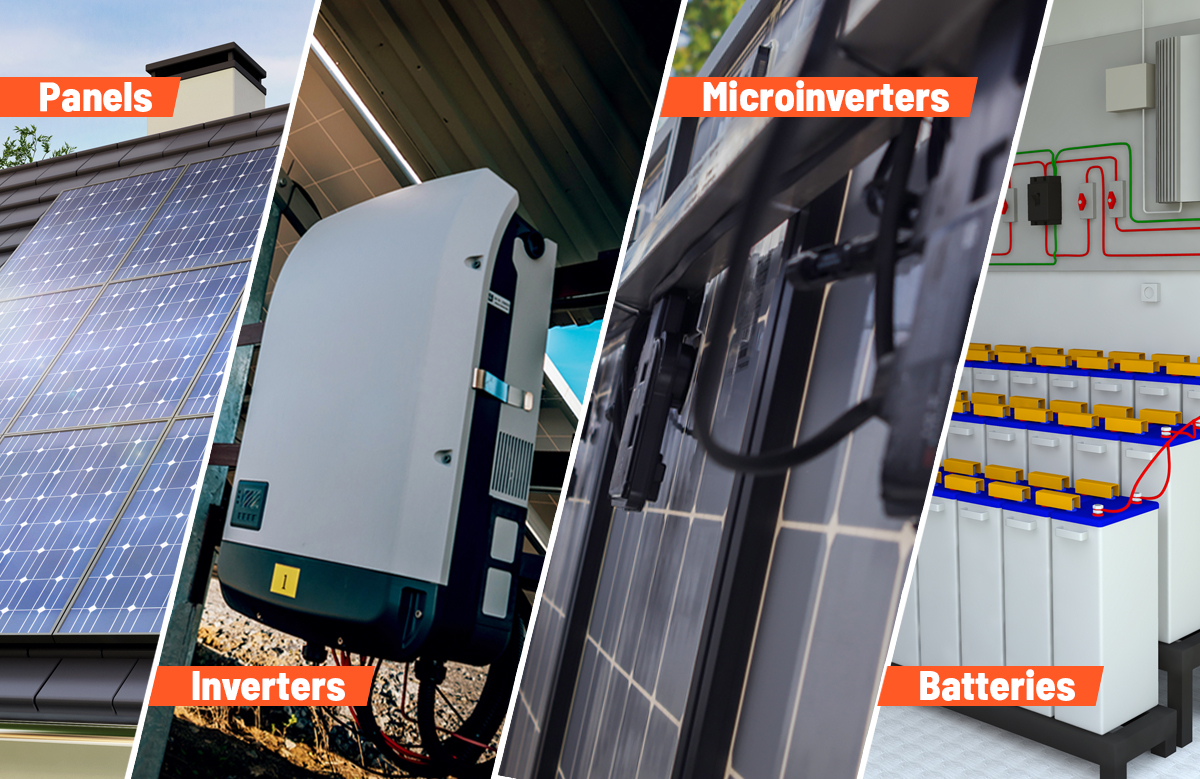
Types of Solar Panels
When you start exploring solar, you’ll quickly see that not all panels are the same. For most homes, the choice comes down to two main types: monocrystalline and polycrystalline. They look different, perform differently, and come at different price points. Think of it like choosing the right tool for the job—the best one for you depends on your home’s specific needs, your budget, and even your personal style. Understanding what sets them apart will help you feel confident when discussing which option is the perfect fit for your roof.
Monocrystalline Panels
Monocrystalline panels are the sleek, high-performance option you often see on modern homes. Made from a single, pure silicon crystal, their uniform black color gives them a premium look. This single-crystal structure allows electricity to flow efficiently, giving them an impressive efficiency rate between 15% and 24%. Because they generate more power in a smaller amount of space, they are an ideal choice if you have limited roof area or simply want to maximize your energy production. For many California homeowners, this efficiency makes monocrystalline panels the go-to for a powerful and aesthetically pleasing residential solar system.
Polycrystalline Panels
If you're looking for a reliable and more budget-friendly option, polycrystalline panels are an excellent choice. These panels are created by melting and blending multiple silicon fragments, which results in their characteristic blue, speckled appearance. This manufacturing process is more cost-effective, making the panels more affordable. While they are slightly less efficient than monocrystalline panels, they still provide fantastic performance and durability. If you have plenty of sunny, unobstructed roof space, polycrystalline panels can deliver significant energy savings and a great return on your investment.
How to Compare Solar Panels
Picking the right solar panels goes deeper than just their type or initial cost. To make a smart long-term investment, you need to look at a few key performance metrics. It’s all about finding the right balance of efficiency, durability, and value for your specific situation. This is where a professional consultation becomes invaluable. An expert can help you compare the technical specifications and show you how different panels will perform on your unique home, which is a core part of our approach to creating customized solar solutions.
Panel Efficiency
Think of panel efficiency as the measure of how well a panel converts sunlight into usable electricity. A panel with higher efficiency will produce more power from the same physical footprint. This is a critical factor if your roof space is limited or has shaded areas you need to work around. Higher efficiency means you can achieve your energy goals with fewer panels, which not only impacts the final look of your system but also ensures you’re getting the most power possible from your available space. It’s about making every square foot of your roof work harder for you.
Cost, Warranty, and Lifespan
While the upfront cost is important, a solar panel system is a 25-year-plus investment, so its warranty and lifespan are just as crucial. Quality panels come with a performance warranty guaranteeing they will still produce a high percentage of their original power after 25 years. You’ll also want to look at the degradation rate—how much a panel’s output naturally declines over time. Investing in a panel with a strong warranty and a low degradation rate from a reputable manufacturer ensures your system will be a dependable source of clean energy for decades to come. You can even get a preliminary idea of costs with an estimate calculator.
Factors Affecting Panel Performance
Even the most efficient solar panels in the world won’t perform at their best if they aren’t installed with care and expertise. The amount of energy your system generates is heavily influenced by its design, placement, and local environmental factors. Everything from the direction your roof faces to our sunny California climate plays a part. This is why a custom-designed solar solution, tailored to your home’s specific characteristics, is the key to unlocking maximum energy production and savings.
Direction and Angle
For those of us in the Northern Hemisphere, solar panels capture the most sunlight when they face south. This orientation aligns them perfectly with the sun's path across the sky. The tilt of the panels is also optimized based on your home’s latitude to ensure they receive direct sunlight for as long as possible throughout the day. A professional installer will perform a detailed site analysis to find the perfect spot and angle. Of course, this all relies on having a solid foundation, which is why assessing your roof's condition is a critical first step in any solar project and where professional roofing solutions can be vital.
Temperature and Cloudy Days
It’s a common misconception that solar panels stop working on cloudy days. While it’s true that direct sunlight is best, panels still produce electricity from diffused light, typically generating about 10-25% of their normal output. On the flip side, extreme heat can slightly reduce a panel's efficiency. However, high-quality panels are built and tested to withstand hot climates and continue performing reliably even during a heatwave. This durability ensures your system keeps generating clean energy for your home, rain or shine.
Inverters: Turning Sunshine into Usable Power
One of the solar energy advantages can be provided by using inverters. They serve the function of converting the DC electricity generated by the solar panels into 240V AC electricity, which powers every appliance in your house. The inverter is a robust piece of machinery that operates continuously for the duration of your system, making it the component most prone to develop problems. This indicates that they typically only have a 10-year warranty.
Practically speaking, an inverter enables you to use other main electrical items that can be plugged into the electrical outlets of your solar panels, including computers, vacuum cleaners, lamps, and so on.
String inverters and microinverters are the two primary categories of inverters. The energy from a string of panels (for residential systems, this is often the whole system) is converted into AC electricity by a string inverter and used in your house or other properties. The best solar panel has microinverters mounted on the rear, enabling the energy produced by the panels to exist separately from one another.
In a string inverter system, the performance of the other panels is likewise impacted when partial shadowing occurs on one panel. This is when microinverters come to help by raising the cost of the system while letting the panels work independently and allowing you to gain the benefits of solar energy fully.
Common Inverter Technologies
Just like there are different types of solar panels, there are a few kinds of inverters to choose from. Each one works a little differently, and the best fit for your home depends on factors like your roof's layout, shading, and whether you plan to add a battery. Understanding the basics will help you have a more informed conversation about your specific solar solutions. Let's look at the most common options you'll encounter.
Microinverters
Microinverters are compact devices installed on the back of every single solar panel. Their job is to convert the DC electricity from each panel into the AC electricity your home uses, right at the source. The biggest advantage here is independence. If a tree branch casts a shadow over one panel or a bit of debris lands on it, only that one panel's production dips. The rest of your panels keep working at full capacity, which can really help the overall efficiency of your system. They also tend to come with longer warranties, often 20 years or more, giving you extra peace of mind.
String Inverters with PV Optimizers
String inverters are a classic and widely used technology. They work by connecting a group of solar panels together in a series, or a "string," and converting their combined DC power into AC power with one central inverter. The traditional downside is that the entire string's performance is limited by its lowest-performing panel—think of it like a single burnt-out bulb on a string of holiday lights. However, this issue is easily solved by adding PV optimizers to each panel. These small devices maximize the energy output of each panel individually before sending the power to the string inverter, giving you the best of both worlds.
Hybrid Inverters for Battery Storage
If you're thinking about energy independence and want protection from blackouts, a hybrid inverter is the way to go. These are specifically designed to integrate with a home battery. A hybrid inverter intelligently manages the flow of energy between your solar panels, your home, the grid, and your battery backup system. It allows you to store the excess solar energy you generate during the day and use it at night or during a power outage. Even if you don't plan on getting a battery right away, choosing a hybrid inverter from the start makes it much simpler to add one later on.
Comparing Inverter Warranties
When you're investing in a solar system, you want to know your equipment is built to last. That's why looking at the warranty is so important. As the hardest-working component in your system, the inverter's warranty can tell you a lot about its expected lifespan and reliability. Microinverters often lead the pack with warranties of 20 years or more. Standard string inverters typically come with shorter warranties, usually in the 5 to 15-year range. This difference is a key factor to consider when deciding which components are right for your home and your long-term energy goals.
Solar Meters: Tracking Your Energy Production
A solar power meter, commonly referred to as power system metering is an additional optional component. Using a solar power meter, you can track how much solar power your panels are supplying to your home. A power meter lets you understand and follow your system's performance. You can analyze, modify, or repair your system to ensure optimal effectiveness.
Racking: The Foundation of Your Solar System
The racking/mounting is the third key part of a home solar power system. This is how your panels are firmly fastened to your roof. You won't have to worry about your selection of mounting or racking if you hire a reputable company for your solar panel installation, as they only use high quality equipment.
Common Racking Options
While it might seem like a background detail, the racking you choose is critical for your system's performance and longevity. The right setup depends entirely on your property—things like roof condition, available space, and sun exposure all play a part. Let's walk through the most common choices so you can get a feel for what might work best for your home.
Roof Mounts
Roof mounts are exactly what they sound like: systems that securely attach your solar panels to your roof. This is the most popular option for residential customers because it makes great use of existing, otherwise unused space. Instead of taking up room in your yard, the panels sit neatly on your roof, capturing sunlight throughout the day. Of course, this approach requires a roof that's in good shape and can support the system. That's why working with an installer who also has deep roofing expertise is a huge plus—they can assess your roof's health and ensure the installation is done right, protecting both your home and your solar investment.
Ground Mounts
If you have a larger property with plenty of open space, a ground-mounted system could be a fantastic choice. These systems are installed on the ground, giving you more control over their placement. Unlike a roof, which has a fixed orientation, ground mounts can be positioned at the absolute perfect angle and direction to maximize sun exposure all year long. This often leads to higher energy production. They are also easier to access for cleaning and maintenance, and they can be installed to sit above things like foliage or snow that might otherwise block the sun.
Pole Mounts
Pole mounts are a specific type of ground mount where panels are elevated on a tall pole. This is especially useful for getting the array above any potential obstructions, like trees or other buildings, that might cast shadows and reduce your energy output. One of the coolest features available for pole mounts is a tracking system. These trackers allow the panels to follow the sun's path across the sky from morning to night, which can significantly increase their daily energy production. It’s a great way to get the most out of every single ray of sunshine for your solar solution.
The Grid: Your Connection to Consistent Power
The extra energy your solar panels produce can be sent back into the grid if it is greater than your home needs. On the other hand, energy will be extracted from the grid if you use power during periods when your solar panels aren't generating it or if you use more energy than they generate. This is where the electric meters come in. The meter tracks the amount of electricity coming into and leaving your house, enabling homeowners with solar panels to reduce their monthly energy costs. Thanks to this, grids are important for achieving an all in one solar power system.
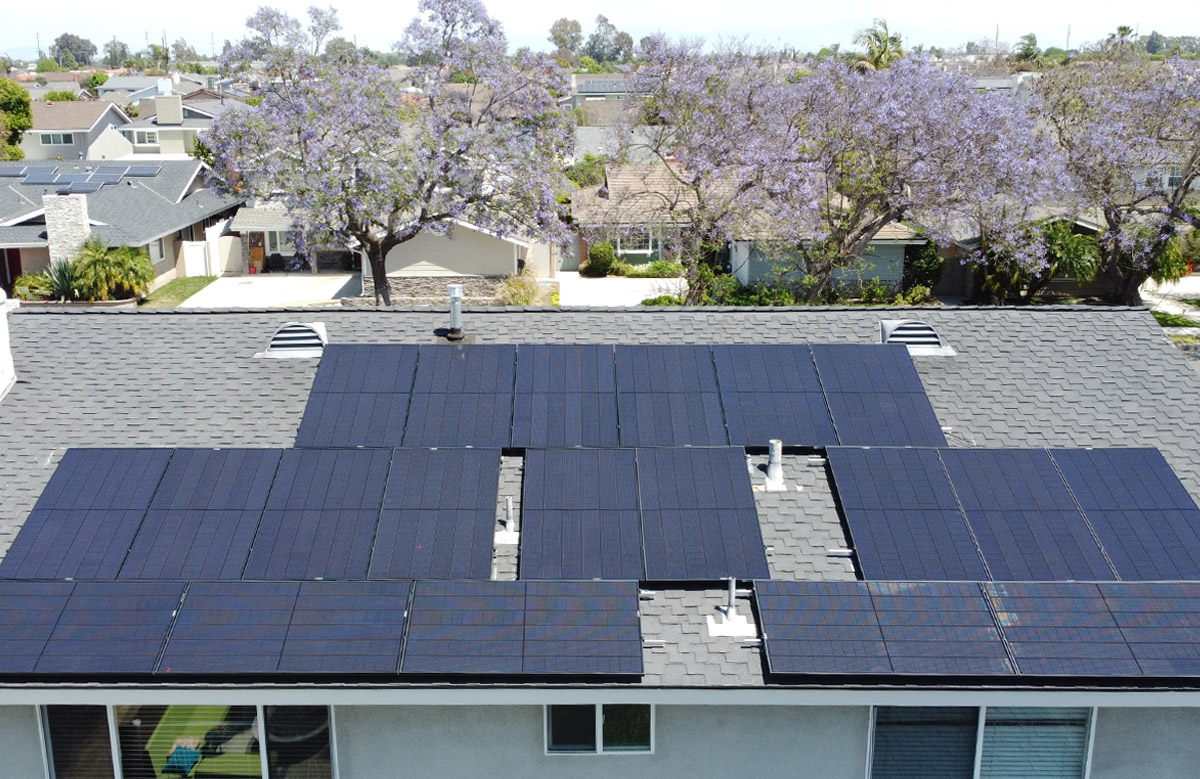
Understanding Net Metering
So, what happens to all that extra energy your panels produce on a sunny California afternoon? It doesn’t just disappear. Thanks to a billing system called net metering, your utility company gives you credit for the surplus electricity you send back to the grid. Think of the grid as a giant, shared battery. You make deposits during the day when your panels are at their peak, and you can make withdrawals at night or on cloudy days when you need power. This mechanism is one of the most significant financial perks of going solar, as it allows you to get value from every bit of energy your system generates.
Essentially, net metering helps you offset the cost of the electricity you pull from the grid when your panels aren't producing. Your utility meter tracks both the energy you consume and the energy you contribute. At the end of the billing cycle, you’re only charged for the "net" amount of electricity you used. For many homeowners, this process dramatically reduces or even eliminates their monthly electric bills. It’s a smart way to ensure you’re maximizing the financial return on your solar investment and taking a major step toward energy independence.
Solar Batteries: Storing Energy for When You Need It
Batteries are one of the most convenient solar energy solutions, as they store daytime energy, which may be used at night when the system is not producing electricity. Battery technology is gradually becoming a more practical solution for people who largely utilize their energy at night.
Types of Solar Batteries
While batteries are essential for homes that are completely off the power grid, they are also becoming a popular choice for grid-connected homes. A battery stores the extra electricity your panels produce during the day, giving you the freedom to use that clean energy at night or during a power outage. For many California homeowners, having a reliable battery backup provides crucial peace of mind, especially with the reality of rolling blackouts and grid instability. It’s a key step toward true energy independence, ensuring your lights stay on and your essential appliances keep running no matter what. When you start exploring your options, you’ll generally find two main types of solar batteries to consider for your home.
Lead-Acid Batteries
Lead-acid batteries are the more traditional option and have been around for a long time. Their main appeal is a lower upfront cost, which can be attractive when you're looking at the initial investment. The most common type, flooded lead-acid (FLA) batteries, are also known as "wet cell" batteries because they require regular maintenance to function properly. This means you'll need to check on them and refill them with distilled water about once a month. If this maintenance is overlooked, the batteries can fail quickly. They are a hands-on solution that can work for some homeowners, but it's important to be aware of the required upkeep before choosing this path.
Lithium Batteries
Lithium batteries represent the newer, high-performance standard in solar energy storage. Although they cost more initially, they also last significantly longer, which tends to even out the cost over their lifespan. The key benefits are their superior performance and convenience. Lithium batteries charge and discharge efficiently, are lighter, and require no maintenance at all. This "set it and forget it" quality is why they are the preferred choice for most modern residential solar systems. They offer a hassle-free way to keep your home powered, secure your energy independence, and ensure you have power when you need it most.
Putting It All Together: Other Key Components
While panels, inverters, and batteries get most of the attention, a few other parts are essential for making your solar power system work safely and effectively. These components act as the connective tissue, ensuring the energy generated on your roof makes it to your appliances without a hitch. Think of them as the behind-the-scenes crew that makes the whole show run smoothly. Without proper wiring and a capable electrical panel, all that captured sunlight wouldn't have a clear path to power your home.
Wiring and Cabling
If solar panels are the heart of your system, the wiring and cabling are the veins and arteries. These specialized cables are responsible for carrying the direct current (DC) electricity from your solar panels to the inverter. From there, another set of wires transports the newly converted alternating current (AC) electricity to your home's electrical panel. Because this wiring is exposed to the elements, it must be high-quality and weather-resistant to prevent energy loss and ensure safety for decades. A professional installation process guarantees that all connections are secure, protected, and compliant with local electrical codes, which is a critical step for a reliable solar solution.
Your Home's Electrical Panel
Your home’s electrical panel, or breaker box, is the central distribution hub for all the electricity in your house. It takes the AC power generated by your solar system and directs it to the various circuits that power your lights, outlets, and appliances. Before installing solar, it’s important to determine if your current panel can handle the additional power. Some older panels may need to be upgraded to safely manage the two-way flow of electricity to and from the grid. As part of a thorough site assessment, an experienced solar installer will evaluate your electrical panel to ensure it’s ready for solar, making the transition to clean energy seamless for residential customers.
Why Choose AMECO Solar & Roofing?
First and foremost, AMECO Solar & Roofing, a leading solar panel company based in California, partners with top-tier manufacturers. We want the best for our customers; that's why we use goods that will function for decades, requiring no upkeep from our consumers.
Additionally, AMECO makes things simple for its clients by acting as a one-stop shop that handles many services simultaneously, saving you a great deal of time and effort.
So, if you’re planning to go solar, contact AMECO now for a reliable and high-quality solar power system.
Frequently Asked Questions
Besides the panels, what's the most important part of a solar system? The inverter is the unsung hero of your solar system. While panels capture the sunlight, the inverter does the critical job of converting that raw energy (DC electricity) into the type of power your home can actually use (AC electricity). Think of it as the system's brain. Because it works constantly to manage your energy flow, its quality and warranty are crucial for the long-term performance and reliability of your entire investment.
Do I really need a battery backup for my solar panels? While a battery isn't required to save money with a grid-tied solar system, it is essential for true energy independence. A battery stores the excess solar power you generate during the day so you can use it at night. More importantly for California homeowners, a battery backup system keeps your lights and essential appliances running during a power outage or blackout, giving you security and peace of mind.
What happens if a panel is shaded? Does my whole system stop working? No, your entire system won't shut down. Modern systems use technologies like microinverters or power optimizers that allow each panel to perform independently. This means if a tree branch casts a shadow over one panel, only that single panel's output is reduced. The rest of your array will continue producing power at its full potential, maximizing your overall energy generation.
How do I know if my roof is suitable for solar panels? A suitable roof is one that is in good structural condition and has enough unshaded space facing the sun. Factors like the age of your roof, its material, and its orientation are all important. The best way to know for sure is to have a professional assessment. An experienced installer can evaluate your roof's health and determine the ideal placement for panels, ensuring a secure and effective foundation for your system.
What's the real difference between monocrystalline and polycrystalline panels? The main difference comes down to efficiency and appearance. Monocrystalline panels, which look sleek and black, are made from a single silicon crystal and are more efficient, meaning they produce more power in a smaller space. Polycrystalline panels have a blue, speckled look and are slightly less efficient but more budget-friendly. The right choice really depends on your roof size, energy needs, and budget.
Key Takeaways
- A solar system is more than just panels: Key components like inverters convert sunlight into usable power for your home, while racking provides the essential foundation, making every part crucial for a reliable system.
- Customize your components for maximum efficiency: The best panels and inverters for your home depend on your roof's layout, sun exposure, and energy goals, so a personalized setup is key to getting the most out of your investment.
- Add a battery for energy security: Solar batteries store the excess power your panels generate during the day, giving you a reliable backup source to keep your lights on during power outages and reduce your reliance on the grid.
Related Articles
- Understanding Solar Panel Components And How They Work | AMECO Solar
- Guide Of Solar Power System | Ameco Solar US
- Blog | Solar Panel News | Solar Panel Company | AMECO Solar
6.13.2022
One of the most effective incentives for promoting homeowners and business owners to go solar is the solar investment tax credit (ITC), sometimes known as the federal solar tax credit. It enables you to deduct 26% of the overall cost of your solar project from the federal taxes you must pay, helping to mitigate the upfront cost of solar.
Most of us know that the federal government has been supporting solar growth for the past decade, so what's so special about the ITC?
What Is a Tax Credit?
A tax credit is a decrease in the income tax you would have otherwise owed, dollar for dollar. For instance, getting a $1,000 federal tax credit lowers your outstanding $1,000 in federal income taxes. The federal tax credit is occasionally referred to as an Investment Tax Credit or ITC, although it differs from the ITC provided to companies that operate solar systems.
What Is The Federal Solar Tax Credit?
The federal residential solar energy credit is a tax deduction that can be used to reduce a portion of the price of a solar photovoltaic (PV) system on federal income taxes. (Although they are outside the purview of this advice, other types of solar energy are also eligible for comparable credits.)
The system must be installed and produce power for a US-based residence during the tax year. The IRS has equated "put in service" with "finished installation" even though it lacks a clear-cut definition.

What Is The Solar Tax Credit for 2022? How Does The Solar Tax Credit Work?
Congress extended the ITC in December 2020; it now offers a 26 % tax credit for systems installed in 2020–2022 and a 22 % tax credit for solar panels and other systems in 2023. (Systems, before December 31, 2019, qualified for a 30 % tax credit.) If Congress doesn't extend the tax credit, it will end in 2024.
However, the ITC has experienced some sizable modifications recently, and greater ones are on the way. And if you're considering going solar, you must comprehend how these changes will affect your decision because the California solar tax credit is anticipated to decline over time.
How Many Times Can You Claim Solar Tax Credit?
Using Tax Form 5695, you can submit the Solar Investment Tax Credit just once for the tax year in which your system is installed. The credit is then divided by the amount of your federal tax due, so if you receive $1,000 in credits, your tax liability will be reduced by $1,000.
What Changes Will the Solar ITC Make in 2022?
There are incentives to support the launch of new sectors and promote broad adoption, and the solar ITC has done just that for the solar industry. According to the Solar Energy Industries Association (SEIA), the federal solar tax credit is known for helping the sector grow by more than 10,000% since 2006, with an average annual growth rate of 50%.
Some argue that the sector needs subsidies like the ITC less and less as solar use increases. A home solar system is becoming more and more affordable for households around the nation as a result of ongoing cost reductions over time. These price reductions have made switching to solar energy more accessible, enabling those with limited financial resources to save money on their power bills and lessen their environmental impact.
At the end of 2019, the ITC for residential and commercial solar installations was lowered from 30 to 26% in response to falling solar costs. The 26% rate was expanded for all solar systems (residential and commercial) to the end of 2022 when it was initially intended to decrease even lower by the end of 2020. Your solar system must be in your property by December 31, 2022, to be eligible for the 26% incentive.
It's vital to remember that for all solar projects starting construction 2023, the ITC will once more decrease to 22%. The ITC permanently lowers to 10% for commercial solar projects after 2023. The ITC always reduces to 0% for residential consumers.

Why Now Is The Best Time To Go Solar?
If you've been considering installing a new solar energy system in your house, you might be tempted to put off your purchase to benefit from even more discounted rates later. The solar panel of the future may be less expensive than today's, but the loss of significant solar incentives like the solar ITC may completely negate those savings.
If you act soon enough, you may save 26% on the overall installation cost by the end of 2022. But if you hold off too long, you run the risk of having to pay full price for a system that the government is now prepared to subsidize. So, it’s time to contact solar panel companies, and have your solar panel system installed now.
Finding The Best Solar Panel Company
Now that we understand how solar tax credit works, it's time to talk about a solar panel installation company that offers long-lasting, low-maintenance, and reliable services. AMECO Solar & Roofing can be the best choice to assist you in going solar.
AMECO Solar & Roofing has come a long way from its beginnings in 1974. Offering trustworthy, cost-effective solar solutions to secure a future powered by clean energy and enhance the environment for everyone has been the fundamental goal of our solar panel company throughout the years.
AMECO Solar & Roofing only partners with the best solar panel manufacturers in the industry. Each potential partner must meet our high quality, convenience, and aesthetics standards.
AMECO specializes in all types of residential and commercial roofing.
It's time to take advantage of the solar panel tax credit! Contact us to see if you qualify to save 26% of your installation cost. AMECO is here for all your solar and roofing needs.
5.29.2022
California's net energy metering (NEM) 3.0 was postponed indefinitely in February. Now, the California Public Utilities Commission (CPUC) is reviewing the matter and seeking input on a structure acceptable to the country's largest solar businesses, which accounts for half of all US solar rooftops and its residents.
But what is net energy metering, and how does it work?
What is Net Metering?
Net metering is a billing technique that helps owners of solar energy systems add electricity to the grid. It is, by far, the most cost-effective technique for using a solar panel. It ensures that each additional kilowatt-hour (kWh) produced by your solar panel system is utilized to balance a kWh you need from the grid when the sun isn't out.

How does net metering work?
For example, a PV system on a residential customer's roof may create more power than they consume during daytime hours. If the home is net-metered, the electricity meter will run backward to offer a credit against the power used at night or when the home's electricity consumption exceeds the system's output. Only 20-40% of a solar energy system's production ever makes it into the grid.
Solar net metering provides many benefits, such as owners getting credit for the energy they contribute to the utility company when their energy demands are surpassed during the day. Consequently, the utility company purchases the power generated by your solar panels at the same price as it is sold to the consumer.
The utility providers first claimed that another customer gains no economic advantage from their neighbor's decision to go solar, probably because they do not earn from the transaction.
The Latest News
On May 9, the CPUC stated that it is "reopening the record" on its net energy metering 3.0 case to obtain information on some aspects of the decision. The reopening of the records pushes the CPUC's intended decision on net metering 3.0 back to July at the earliest.
The CPUC has been considering modifications to the net metering program for over a year, backed by utility interests. The CPUC's first proposal, which included a hefty tax on rooftop solar and an immediate gutting of the subsidies solar customers receive, would have rendered solar expensive for most consumers, particularly those in working and middle-class communities where solar is increasing at an extraordinary rate. It would also harm the solar markets for commercial, government, and agriculture. Following widespread public outcry and Governor Newsom's vocal opposition, the controversial intended decision was held indefinitely.
According to ROTH Capital Partners, the CPUC is currently commenting on the glide path method, and non-bypassable charges. The CPUC is seeking feedback on an alternate glide path that would provide customers with a fixed export adder. Over time, the export adder would decrease.
The deadline for opening remarks to answer the group's inquiries is June 10, and the deadline for reply to comments is June 24.

In response to the CPUC'S decision, the California Solar & Storage Association's executive director, Bernadette Del Chiaro, said they're happy that the CPUC realized how far out of sync the initially proposed judgment was with California's clean energy goals and equality ideals. Californians favor rooftop solar and will not accept a decision that taxes the sun or slows their state's progress toward clean energy by making solar costly.
She added that, at the same time, they know that special utility interests have a lot of clout and a vested interest in preventing rooftop solar from gaining traction. They'll keep working to ensure that no one is duped again by the utility profiteering that raises power prices for everyone and threatens the net metering California system's resiliency.
California's shift to a greener, solar-powered DG (Distributed Generation) future has relied heavily on net metering. Net metering will disappear unless clean, efficient, non-toxic, and affordable battery technology is produced quickly. Solar panel owners will suffer when traditional fossil fuel and nuclear reactors are built to satisfy our future power needs.
So, it is safe to say that we can celebrate the delay of the proposal and go solar as soon as possible!
And for that, it is important to choose the top solar panel company that offers high-quality services.
Why Choose AMECO Solar & Roofing?
AMECO Solar & Roofing is one of the solar panel companies hoping that clean energy supporters and the solar power industry will succeed in their battle with the utilities.
Since 1974, completing a successful solar panel installation has been our specialization. Thanks to our team of trained and qualified experts, you can get a long-lasting and reliable solar system for your home or business.
We understand how significant it is to build a reliable connection with our customers. This is why we treat each customer as an individual and assure them that we will be there to help them even after the project is completed.
As a top solar panel company in California, Ameco Solar & Roofing works with top-tier manufacturers whose products will last for decades so that our customers won't need much maintenance.
So, if you’re looking for the best solar panel installation, contact us at (818) 751-0797.
5.26.2022
As solar panels are becoming more common in the homes of California, many homeowners feel like they should use the newly created smart solar technology that integrates all the electrical devices in the house. That’s exactly what Span Smart Panel is for.
What is Span Smart Panel
According to Span, their product helps homeowners control the energy flow inside their houses. It can be used for solar panel batteries, solar panels, and EV charging. The panel will help you use your energy more efficiently and intelligently.
The panel is a white rectangular box. All of the electronics inside your house get wired to the Span Smart Electric Panel, and then you can control each of them individually using their mobile app. Each Span Electrical Panel can be attached to 32 separate circuits, allowing the Smart Panel to monitor and operate the entire home. As it is weather-resistant, you can place it outdoors.
Read this Span Panel review to learn more about the features of the panel and the advantages it offers.
Battery Optimization
Span Panel is a pretty effective product itself. However, paired with a home battery system, it can be more useful and tell you how much energy is left in your battery. Furthermore, it can efficiently handle electricity during a power outage. If the outage lasts more than a day, the smart panel will help you determine whether the battery can power your home till the sun rises the next day. If you feel like any unnecessary circuits are taking away the energy from your battery, you can use Span’s remote control to turn them off.
Technical Aspects of Span Electric Panel
As you will be using an electrical panel, learning further about some technical specifications is important. It accepts 1-in residential breakers and has a 100A-200A breaker.
You can connect Span Panels to WiFi, Bluetooth, and LTE/4G Internet, which means you can control the power flow inside your house even if you’re somewhere else.
The model supports a current-carrying capacity of 90 amps for each circuit. That means that the power input makes about 2,000 amps per circuit.
Span Panel’s Mobile App
Besides controlling the house’s electrical system, Span Panel’s mobile app also analyzes the connected devices. If the appliances happen to malfunction, the analysis will help you understand the issue better and come up with a solution. To have better control over your battery, the app has three defined levels of priority, where you can place any circuit within those levels:
In addition, it can also be integrated into a solar panel for EV (electric vehicle) to track how much power your vehicles receive. You can also monitor how much energy you’re sending to the grid if your solar panel system is grid-tied.
It’s Also Aesthetically Pleasing!
Span is modern-looking and equipped with a glass door, so it will look great no matter where you install it. It can also be customized according to your preferences, so it looks nice with the interior design of your house. It is weather-resistant and can withstand sun, rain, and snow. So, if you feel like putting it outside, you can do that too without worrying about it getting spoiled.
Read about the latest updates on smart span panels. Find out how it works, its benefits, and why to choose it.
Start Using Span Smart Panel with AMECO Solar and Roofing
First, you need to find the right solar company that can assist you in integrating Span Smart Panel into your home. We specialize in residential and commercial solar panel installation in Southern California and provide our customers with long-lasting and reliable solutions. The services our company offers are efficient and trustworthy.
We also understand how important it is to provide great customer service. We approach every one of our customers with special care and understand their needs and expectations.
We recognize the value of building a trustworthy relationship with our clients. We not only make sure the solar panel installation goes smoothly, but we also want our customers to know that we’re always there if they need help after the project is completed.
As a solar panel company that has been in the industry for forty-eight years, we have gained decades worth of knowledge that helps us during our operations. However, we never stop learning and looking for new ways to improve our services. Span Smart panel is one of the innovations we offer that helps us stay up to date.
We ensure that the solar items we choose are long-lasting so that you don’t have to spend money on maintenance. We have agreements with manufacturers whose goods promise to serve for decades. That is why we are considered a first-rate solar panel company in Southern California.
So don’t hesitate to contact our solar panel installation company for further information about Span panels and other services we provide. We will be more than happy to assist you in your journey of going solar.
5.25.2022
Your roof is your primary physical layer of protection for your most precious belongings. Underneath it, your family is safe, and your hard-earned furniture and memories are safe from destructive forces of the elements. Add in solar capacity, and your home’s value shoots up. The importance of the right contractor for this job is undeniable, so to help you choose the right provider, here are a few important points, because the last thing you want is to pay someone to do a lousy job, it’s a vital investment, and you deserve the best service.
Solar roofing can be pricey, but rather pay more now and ensure that you are set for a good number of years. Companies who skip steps or don’t use the right tools, always lead to the client paying more in the long-run. Watch out for companies who overpromise and under-deliver. If there’s no record from previous clients to back up their services, rather search for another service provider.
Publicly available references are the best evidence of a successful business. Check websites and do your research before employing a contractor.
What should I be on the lookout for when looking for a roofing contractor near your area?
When you hit the search on “solar roofing companies near me”, there are a few guidelines to bear in mind. Searching in the right places and knowing what you want in specific detail is how you will get in contact with the finest local roofing service provider. The more research you do, the better your chances of success.
Determining whether you need a replacement or just patching up is important to consider. Getting quotes from a few different professional local solar roofing companies can help you to figure out exactly what you need, bearing in mind that most roofs last about 20 years before the structure needs to be completely replaced. Even with your research, a professional will be able to see fine details in your roof that you might not be aware of. To make sure you are on the right track, rather call a solar roofing contractor with a good reputation.
What will they look at?
The contractor will have a close look at the whole structure, from the top side of the wall, up to where the roof starts, all the supports, the entire roof cavity, as well as the outside. Leaks are a sign of damage so don’t ignore it if you spot it! Dents are cause for concern about leaking, as is swelling. Some solar roofing companies near you can do a lousy job and leave you with more problems than what you started with – be cautious. Others will understand the value of a solid roof before attempting other installations.
I’d like to contact a solar roofing contractor close to where I live – are they trustworthy?
Luckily, there are lots of roofing companies around, so you should be able to find a good one. It’s always a good idea to support a local contractor, but sometimes it could end in poor service. To avoid mistakes, get in touch with a few different companies for quotes and advice. This way, you can figure out who knows what they’re talking about and who is simply improvising to gain business.
Be on the alert if your closest solar contracting agency doesn’t have online references and recommendations to avoid disappointment. You could also have a look at their registration to make sure everything is above board. In hazardous seasons, with heavy weather, it’s crucial to find the best in the business.
What type of roof is for me?
It all depends on your taste and the environmental conditions that prevail in your area. Metal roofing can give your house a long-lasting, stylish, modern look, while shingles can be more rustic and classic.
Metal is often more expensive than shingles. Either option is strong and trustworthy, both with positives and negatives to consider before making the final decision. It all depends on what you need and what look you are going for. This is why you need a professional’s touch and advice.
How long will my roof last before I need to replace it?
This is always a tough one to answer, because every roof has a different structure and layout. However, generally, asphalt shingles can have a lifespan of about 25 years while metal roofs can go up to 65 years, or even more! It all depends on local weather conditions, the baseline structure and maintenance of the condition over the years. Occasionally Googling for a "roofing contractor near me" phrase can help you find the best roofing deals currently offered on the market, it can also save you a lot of money and extend the longevity of your roof. No one likes being surprised with a huge invoice that you can’t avoid, so stay a step ahead, and plan.
If my roof is leaking, do I need to replace it?
Leaking can be a serious sign that you need a replacement. The longer you leave the problem, the worse it gets. If you leave the leaks for too long, it can lead to extensive damage and even collapse, which makes it very dangerous to ignore. If you weren’t informed how old your roof is by the previous owner, calling local roofing contractors to get an estimate might give you some peace of mind. It can also help you plan and budget for expenses.
Depending on the degree of damage, there’s a good chance that you’ll need to replace your roof due to leaking. In some cases, you might just need a little patching up to stop further damage.
Roof replacement can be completed within only a day, depending on the size. It sounds like a big ordeal, but it’s not as bad as it seems when working with a professional company.
The shingles on my roof are changing color. Why is that?
The discoloration of shingles is usually caused by a lack of upkeep and maintenance. It can also occur in humid or wet conditions which causes mold, fungus and algae growths. Research how to keep it clean and well-maintained. If you struggle, don’t hesitate to phone a contractor. It might just save you plenty in the long run.
If you're thinking to yourself how do I find a roofing contractor near me then look no further...
There are too many factors to get a precise estimate online. Most roofing contractors give free quotes. Do your research and make a few calls but you can start your first call with us - we promise to give you a fair estimate based on your specific needs.
5.25.2022
Roofing is a big deal – after all, most of what you own and value will be housed underneath it, and therefore the value of a good roof cannot be underestimated. Much of what will make a roofing job successful, lies with picking the right company – but how do you know who will be the right person for the job? Given the cost of such an investment, you mustn’t waste your time with shady roofing companies – let’s talk about how that works.
The cost of services is often the main influencing factor in the decision-making process. Although the budget does play a role, you are likely to get services to the value of what you pay for, which is why a cheap job is often not a good idea. Look at references – if the company offers great prices, but no former clients to back up their claims, stay away.
Look at all your choices and check, check, and check again for references and happy clients. Even if the cost is slightly higher, you will never regret employing a reliable roofing company near your area. Better workmanship means fewer problems in the long run, which is ideal.
What should I look out for when looking for roofing companies near me?
To get the most bang for your buck, you need to ask the right questions to ensure that you employ the best out of the local roofing companies near you.
You need to determine whether your roof needs to be replaced, or whether some repair work will be adequate to cover your needs. Most roofs need to be replaced after about 25 years, as this is the approximate timeline for vital materials to start wearing out. By googling for the best roofing contractor near me phrase you'll be able to find a list of possible roofing contractors for you to pick from.
What should I be looking out for?
Anything from shingles that are either missing or no longer holding, to suspicious roof leaks, additional water damage, inexplicable dents or swelling and even bald spots are all cause for concern. If you have recently had work done on your roof and you are noticing these issues, the company responsible for the work should be held accountable.
I’d like to find trusted roofing companies near me – how do I know they are legit?
Supporting the local economy is a great idea, but if it comes at the risk of shoddy workmanship, don’t hesitate to call in help from further afield. Particularly in high-risk seasons (storms, wind etc) or after regional damage, such as in the extreme case of a tornado, many unreputable local roofing companies tend to try and sell their services, often at a lower rate, to undercut the reputable roofing companies near your area.
While there is nothing wrong with supporting your closest roofing company, you need to be 100% sure that they can deliver the services they claim to offer. It also helps to check their company registration, if the work turns out to be faulty. Make sure you get as much background as possible about online references and warranties.
What roofing company should you go for when looking for a reliable roofing solution?
This is a layered question, as many factors will influence the answer. Different roofing companies offer different roof types, it all depends what are your specific roofing needs - for example, new roofs are often made out of either asphalt shingles or metal. Each type of material comes with its own set of reasons why it may or may not be suitable for certain applications. Metal roofs tend to be the material of choice for a more sleek and modern look, but don’t make the decision based on looks alone.
There is no one answer to this question. The most common options for new roofs include asphalt shingles and metal. Both types have pros and cons. If you’re looking for the most affordable option, shingles may be a good choice. If you’re looking for something modern and unique, a metal roof may be better.
My roof leaks – at what point does repair become replacing?
The type of leak will provide an answer to this question – and it is not a question that can be answered by a layman. Telltale signs on older roofs, such as a worn-out area or missing shingles can give a lot of evidence about the roof’s overall condition, but depending on the extent of the damage, the chances of the roof needing to be replaced are quite high.
If the damage is limited to certain areas, you may be able to get away with only repair work. Consult your roofing company for advice about the best way forward.
What lifespan can I expect from my roof?
As a guideline, asphalt shingles can last between 20 to 30 years, depending on the maintenance that is performed during this time. If your roof is already this age, hitting the search button for “best roofing companies in my area” might not be a bad idea. Even if the roof is still in good condition, you will not regret getting a free assessment. Being ahead of the game with your roofing situation can save you a lot of heartache and damages in years to come.
The lifespan of a metal roof can be anywhere between 30 to 70 years. While it is a very durable option, the local climate, and maintenance over time all play a role in its longevity. This option might cost more but is worthwhile in the end.
Replacing a roof doesn’t take as long as you might think. Depending on the size of the building and the size of the roofing team, an average house can be re-roofed in a day or two. Larger buildings like office blocks or very large houses will take longer.
The shingles on my roof are a strange color – why?
Shingles can be susceptible to many influencing factors, from growths like fungus, algae or mold, which are very likely in a humid climate, to discoloration on account of weather conditions. If these problems are not addressed, the discoloration will continue and can be destructive. Get a pro in if you cannot manage to control it on your own!
What does a new roof cost?
A huge variety of variables influence this question, from the size of the roof to the materials used. Your best bet is to get a free quote that considers all these factors.
5.18.2022
If you are a homeowner in Southern California Edison territory, you probably know how high the electricity cost can get there. Not only are rates increasing more often, but it seems like they’re being raised higher each time.
Let’s take a further look to understand this situation and try to find alternative solutions.
WHY DOES THE SCE RATE INCREASE HAPPEN
The main reasons for rate increases are the growth of natural gas prices because of the economic changes and the fact that the utilities have to cover the costs of paying employees and services and buy new materials and equipment to avoid staying behind. As SCE has claimed in their latest notice, the rate increase is made for daily operations and affording equipment and electricity grid. Additionally, It also will cover the anticipated costs for the next two years (2021-2024).
WHAT WILL HAPPEN IN THE FUTURE
SCE has already applied for a rate increase in 2021 and the next three years. According to that application, the rate increase was equal to $14 in 2021, will be $4 in 2022, and $6 in 2023. Compared to the previous year, the rate of increased growth will be 14%. To understand how big this number is, it is important to know that the increase was only 18% over the last ten years. It will be difficult to manage such abrupt rate increases.
WHAT SOLUTIONS CAN YOU FIND FOR THIS SITUATION
If you live within the SCE territory, you might consider it a more efficient source of energy. So what can you do to pay less money for electricity? The answer is evident – you can consider going solar. You can produce power from the sun, which is low maintenance and a reliable source of energy. To do so, you will need to use a solar panel system. Their usage significantly reduces the number of bills you pay for electricity, helping you save thousands of dollars annually.
THE BENEFITS OF USING SOLAR PANELS
First and foremost, you will pay significantly less money for electricity. Besides the fact that it will help you pay fewer energy bills, solar energy is much better for the environment. Today, most of our energy is still created by burning fossil fuels, accelerating the emission of greenhouse gasses, which, in part, are responsible for causing air pollution. So, if you’re thinking of having a more environmentally friendly life, then going solar can be a great start.
It will be even better if you start using solar panels for EV. You can charge your electric vehicle using the sun’s energy and save even more. Considering the SCE rate increase, this could be the perfect time for going solar.
If you are trying to figure out which solar panel is more appropriate for your house and the reason for different solar panel types, then you have come to the right place. However, there are two systems, in particular, we’re going to discuss here; commercial and water heating solar panels.
COMMERCIAL SOLAR PANELS
A commercial solar panel system consists of multiple photovoltaic (PV) solar panels, which allows the system to generate even more energy. It is perfect for larger buildings to meet their power needs. Commercial solar panel is also low maintenance and has zero greenhouse gas or carbon emissions. They generate enough energy during the day so they can be used at night too. And the best part is, they last for about 15-20 years. So, if you are looking for a system appropriate for a larger building, then commercial solar panel installation is exactly for you. You can contact AMECO Solar and Roofing for the best commercial solar panel.
PANELS MADE FOR HEATING POOL WATER
Many homeowners in Southern California choose to heat their pools with gas or an electric heater. As a result, they spend twice as much money as they would if they went for a solar panel pool heater. Since it uses energy from the sun, you won’t have to spend money on expensive gas or worry about the SCE increase rate.
Moreover, you will get the chance to enjoy swimming in your pool for four to six more months.
The solar panel hot water heater works through its circulation pump, which pours the water into the solar collector and then runs into the riser tubes where the water gets heated by the sun. This is an automatic process that continues until the water reaches the appropriate temperature.
SOLAR HOT WATER
With a hot water solar panel, you can have warm water in your house AND your pool. No need to worry about running out of hot water ever again. And you can use water for house chores, cleaning, and meal preparation as much as you want. With solar panel company AMECO Solar and Roofing, it is possible to enjoy long-lasting warm showers without worrying about spending too much money, because of SCE increased rate.
WHAT IS THE DIFFERENCE BETWEEN SOLAR PANEL BATTERIES AND CHARGERS?
As a homeowner who wants to switch to solar, it is important to understand the difference between solar panel batteries and chargers; regardless of how similar these two items sound, there’s actually a slight difference.
The solar panel battery has one important function: to store power. It accumulates and keeps the excess energy generated during the day that you can use later. Especially after the increased energy rate, having stored power will be beneficial.
One of the worries that homeowners with even the best solar panel have is how it will generate energy during relatively colder days and power outages. That is why we have solar panel batteries.
On the other hand, a solar panel charger can be used to charge the various electrical devices in your house, such as a cell phone, laptop, fans, etc.
WHY AMECO SOLAR PROVIDES THE BEST SOLAR PRODUCTS AND SERVICES
Founded in 1974, we have decades worth of knowledge as a solar company. In addition to being proficient with the services our company offers, we understand the value of providing excellent customer service. As a commercial and residential solar panel company, the solutions we provide for homeowners in Southern California are reliable, trustworthy, and long-lasting.
Throughout forty-eight years of experience, we have been open to innovations in solar panel installation and learned how to adapt to them.
As one of the most prominent solar panel installation companies, our approach is unique for every customer, as we prioritize their needs and visions. As a family-owned company, we understand the importance of establishing a trustworthy relationship with our customers. Not only do we ensure that the solar panel installation is a smooth process, but we want our customers to know we’re always available if they need assistance even after the project is complete.
When choosing solar products, we want to be sure that they will be long-lasting, so you won’t have to spend money on constant repairs. As the best solar panel company in Southern California, we have partnerships with manufacturers whose products guarantee decades of energy production.
We specialize in commercial and residential solar panel installation in Southern California, so don’t hesitate to contact us for further information.
We take care of every step of your solar journey by designing the solar panel, installing it with our team of specialists, arranging an inspection, and taking care of the paperwork. And last but not least, with us, you won’t have to worry about the SCE rate increase, as the energy produced from the sun is completely free.
5.17.2022
Using solar energy is always a good idea, as it helps reduce air pollution caused by fossil fuels and is beneficial for the environment. But why is now the best time for going solar?
The latest solar panel news states that vast economic challenges in 2021 have resulted in increased solar costs, perhaps the highest ever. According to a Solar Energy Industries Association report from last year, some aspects of the solar industry experienced a price growth of 18%.
Across the board, the solar panel installation price has gone up by 30%.
One of Australia's largest solar panel installation companies reported that their supply agreement with the panel brand they cooperate with has increased by 50% in the last three months.
It also appears that having a fixed-price supply agreement is no guarantee, as Chinese manufacturers are canceling those deals and offering new, higher pricing, despite the threat of a lawsuit.
.jpg)
What is Causing the Price of a Solar Panel to Increase?
- Solar panels are being produced less often than before; since mid-August, the Chinese energy crisis has caused the price of coal on the Zhengzhou commodity exchange to double, resulting in higher electricity prices. Subsequently, factory power outages might cause a 30% delay in energy-intensive industries like solar panel production companies. As a result, solar panels are in limited supply worldwide.
- Increases in solar panel component rates - Covid-19 resulted in a reduction of producing some important solar panel system components. Rising prices have been particularly evident in polysilicon, solar glass, and aluminum. Now, the price increase is being reflected in the solar panel cost.
- Increase in shipment cost from China - In 2020, the shipment cost for panels from China would be $3,500. In November of 2021, they were reported to cost around $12,000. And as China manufactures nearly 90% of the world's solar panels, the increase in shipment cost rate affects the whole world, causing the solar panel price rate to rise.
- Supply-demand mismatch - Another key factor that leads to the rise in solar module prices is a supply-demand imbalance. The growing demand for solar is driven by the demand for cheaper and more eco-friendly energy sources, corporate emission reductions, and Net Zero emissions worldwide. In a situation where demand exceeds supply, the price of the related product rises.
What Does Solar Panel Tariff Investigation Have to Do With Increased Price Rates?
An inquiry by the US Commerce Department led to an investigation of whether solar manufacturers utilized companies in Southeast Asia to avoid American taxes on Chinese imports. The investigation might impede the ambitions of some utility-scale developers and installers.
Some solar panel components manufactured in Cambodia, Malaysia, Thailand, and Vietnam could face the same export control imposed by the investigating agency on Chinese manufacturing companies. In October 2021, the four nations made-up 85% of all solar panel shipments into the United States.
According to experts, broadening tariffs might worsen pricing and delivery delays, which already negatively affect the solar industry of the United States.
Research released on March 10 by the Solar Energy Industries Association and Wood Mackenzie states that manufacturers of solar projects have already canceled at least 5% of their intended production for 2022 and delayed at least another 8% until 2023 or later. This can lead to the supply-demand mismatch factor discussed above, which will lead to having a more expensive solar panel for sale.
.jpg)
It is the Perfect Time to Go Solar!
While solar panels are still affordable, you should take this opportunity and go solar. It is important to find the top solar panel company that'll provide you with trustworthy and affordable solar solutions. One of those solar panel companies is AMECO Solar and Roofing.
AMECO began its operation as a solar panel company in 1974 and, since then, has been the epitome of excellent customer service and first-rate installation work.
Throughout 48 years of work, we have put our belief in technology and the benefits it provides, creating the top-performing solar panel system. As the industry evolves, we continue to expand our knowledge and sharpen our skills so we may provide you with quality solar panel installations.
AMECO Solar and Roofing makes sure that the transition to go solar is a smooth and stress-free process. Our professional team of installers considers our customer's needs, expectations, and concerns and provides personal customer service to every one of them. Even after the installation process is complete, our customer service team is always ready to assist our clients in case they have any questions or concerns. These are the top qualities of the best solar panel company.
Don’t lose the chance to go solar now, and contact us at (562) 633-4400!
5.9.2022
As Enphase has announced its release of solar inverters, it is important for people who use solar panels to learn its benefits. Enphase IQ8 upgrade, which is an exciting update, promises to be the most advanced battery backup for stabilizing power. It will also make sure that you will not come across power interruptions every time in case of bad weather.
Of course, backup power without the need to use batteries would be ideal and much more convenient. But before explaining the benefits and why you should consider getting a solar panel inverter, it would help to understand how solar panels work. This basic understanding will allow you to utilize them more efficiently.
Why use inverters?
The inverters’ main function is that converts the AC (alternating current) energy into DC (direct current). DC energy can be stored in batteries. In the future, when the power in your house suddenly goes off, you can rely on your inverter to convert the AC energy into DC and stop worrying about not having enough energy for your appliances to run. This function can also serve you well during rainy days. Even though they don’t occur that often, still using an inverter will be a backup for not running out of energy during rainy days. It will allow you to use the restored power in your grid during winter.
Besides, the IQ8 series provides six models, all of which have their own power capacity. With this wide range of models, you won’t have to worry about finding the appropriate inverter for your panel.
For example, IQ8A (max input is 295 W – 500 W), IQ8H (max input is 320 W – 540+ W), or IQ8M (max input is 235 W – 460 W) which are higher capacity models, can be used for larger solar panels.
If you have a smaller, more residential solar panel, then the model IQ8+ (max input is 235 W – 440 W) will be the right choice for you.

The economic and environmental benefits of inverters
Another important aspect of this is when you convert the DC energy into AC energy, you are also ensuring you are not wasting any energy. In case of the panel produces more energy than needed, a solar panel kit with a battery and inverter stores the energy back in the grid. This way, you can use it later for your electronics, during days that are not very sunny. This feature is not only useful economically and financially but also is beneficial to the environment. So when using inverters and saving energy, you’re doing good to yourself, nature, and future generations. And if you want to learn how much energy you are consuming and producing, you can do that with the app specifically designed for that. The app helps you to track the management of the Enphase systems. You can also turn on and off your appliances with this app.
The different types of inverters
The first type of inverter is the string inverter. It connects a series of panels (strings) to the inverter and converts the energy generated by the whole string into alternating current (AC). This way, if you encounter any difficulties with your panels, you will have less produced energy on the string.
Next, we have microinverters. As their name suggests, they are smaller in size. They must be installed on every panel. This way, if one of the panels experiences any problems, it will not affect the functionality of the other panels.
Presenting the IQ8 inverter
The high-performance inverter Enphase IQ8 is equipped with a special chip. This makes switching between on-grid and off-grid more coherent. Its special breakthrough is Burst Mode.
The technology ensures you have electricity even during cloudy and gray days. In case of new features, the system does the automatic update itself through the Internet so you won’t have to spend any time doing it yourself.
What makes the Enphase IQ8 unique?
What IQ8 Enphase does that has actually never been done before, is allowing the installation of any kind of battery storage. Prior to this upgrade, the amount of storage your batteries had depended on how large your solar panel system was. Enphase IQ8 inverter is able to act without a battery and provide you with sunlight backup. Not only that, but Enphase IQ8 availability in your house gives you the ability to control the flow of the energy. Its technology is smart enough to understand the overall energy flow inside the house and adjust its functions based on them. If it sees the panel catches more energy but consumes less, it will immediately understand the situation; it will shut the system down until the excess energy is completely finished.
In case of an emergency or accident, the system’s Rapid Shutdown will immediately turn off the solar power, which would allow first responders and utility employers to do their job safely.

IQ8 can serve its duty, whether it is connected to the utility grid or not, due to its fast processing. Its speed helps its system create an AC microgrid that directly processes the panel’s output. As a result, you will have your own power grid wherever your solar panels are installed, so the DC to AC inversion process will go without having to send electricity to the utility grid.
The important function of batteries
Another important aspect is Enphase IQ8’s cutting-edge battery technology. The Recharge battery does the important function of storing power. As it keeps the excess energy accumulated throughout the day, you can let go of the worry of not having electricity during the night or power outages. So, you will no longer need to have a solar panel kit with a battery and inverter. Though the microinverters of Enphase IQ8 cannot store as much energy as batteries do, you can generate and consume solar power even when there are grid outages.
Why choose us?
Finding the most experienced solar panel provider will take care of your installation process and provide quality products. AMECO Solar and Roofing, which is one of the best companies in the industry, can find the right solution for you. Having over 50 years of experience under our belt, we can provide service that meets your needs and offer solutions using advanced technology. Our competitive rates give you the opportunity to shop around before you decide to move forward. Additionally, we can provide online consultations if you would like to learn more about the installation process remotely. After that, you can go ahead and start doing your Enphase IQ8 review, as using an inverter is beneficial. We would be more than happy to accompany you on your solar journey.
Hopefully, you understood the importance of using inverters with your solar panel. Enphase IQ8 is a great investment for homeowners who want to upgrade their solar energy production as it is sustainable and includes 25 years of limited warranty. After you have gotten your solar panels from AMECO Solar and Roofing, consider looking for Enphase IQ8 for sale, as it will give you better value over time.
4.12.2022
If you’re considering going solar and trying to figure out how many panels you need for your home, you’ve come to the right place. The number of solar panels needed for any given property depends on various factors such as geographic location, climate, family lifestyle, and much more. We can guide you through this entire process so you have all the necessary information to make an educated decision before choosing among solar panel types or installing a solar panel system.
Cardinal Points & Architecture
You’ve probably figured out why cardinal directions would be relevant for a solar panel installation and may have a good hunch as to why architectural factors would be important.
Most of us know that the sun rises in the east and sets in the west. However, it would take an expert to properly explain why solar panels are the most efficient when they face south, and to quantify the impact shading will have on performance. The good news is that you don’t need to hire an architect or a scientist – a solar specialist can show you exactly what needs to be installed where in order to dodge most of the shadows cast upon by trees, chimneys, and other objects that might hinder direct sunlight. AMECO’s Energy Experts will be able to create a 3D rendering of your property and advise on the optimal layout given your home’s specifics!

Climate
If you live in beautiful sunny SoCal, then you’ve won the solar lottery. Whether you need a commercial solar panel for your business or a residential solar panel for your home, AMECO will calculate the panels needed based on usage, desired aesthetic features, and some formulas they need to compute, giving you the most advantageous outcome possible. Given the microclimates in Southern California, your solar production can vary drastically depending on your specific microclimate. AMECO’s Energy Experts take this into account when determining how many panels your system will require!
Identical Square Footage, Different Usage
A common question we receive is “my neighbor has 20 panels, but you are recommending 30 panels. Why do I need more panels when we live in the same size house?” Let’s do a side-by-side comparison between two families who are neighbors and live in identical 3,000 square foot homes. In Family A, we have a young married couple who work long hours during the week and enjoy weekend getaways outside of the house to wind down and relax. Since they barely spend any time at home, they usually end up with an electricity bill of $100/month. Family B, however, is on the other end of the spectrum. They consist of middle-aged parents who love entertaining guests on a regular basis and two teenage kids who are either glued to their electronics or are inviting their own friends to swim in their pool on the weekends. Family B is paying $400 a month! How is this possible? Yes, they both live in 3,000 square foot homes, but their usage differs tremendously.

Home Appliances
Oftentimes, buying a new electric appliance triggers clients to look into solar to avoid the increased electricity bills. The question is – how much energy will we consume with this new appliance? Our Energy Experts are trained to provide highly accurate projections no matter the appliance. We have formulas for EVs, Pool Pumps, Pool Heaters, Central Air, Heat Pumps. You name it, we’ve got it!
Why Choose AMECO
With over forty years of experience under our belt, AMECO Solar & Roofing is considered one of the best solar companies in Southern California. We take pride in our work and guarantee customer satisfaction. All you have to do is call us at (818) 751- 0797 or email info@amecosolar.com. In a 30-minute Virtual Consultation, our Energy Experts can explain how solar works, assess how many panels you will need, and review potential layouts, equipment options, and financing options! Gone are the days of waiting for hours for a solar panel company rep to show up to give a high-pressure sales pitch and no information. We look forward to assisting you!
3.11.2022
Reduced electricity bills, environmental sustainability, 24/7 renewable energy supply, and more is possible with a solar panel system. The solar energy that’s generated thanks to a photovoltaic panel (PV) system has no equivalent. Imagine how precious it is; just one hour of consuming the sun’s energy is enough to meet the energy needs worldwide for one year. Isn’t it insane? Now, imagine how useful it will turn out for your household or business? Yes, let’s not forget that you can conduct a solar panel installation for your business (commercial solar panel system) and your house (residential solar panel system).
But do you know much about solar panels? Well, it’d be great to learn a lot about PVs alongside solar energy to know what you will pay for. Let’s explore the solar world together!
Solar Panel 101
Not to overwhelm you with all the details about solar panels, let’s just acknowledge the basics and equip ourselves with the apt knowledge.
About Solar Energy
Have you ever admired the sunlight? When the sun shines, it radiates a palette of beautiful colors and makes even the worst day feel like a blessing. Turns out, it is also a source of energy. The sunlight turns into energy – solar power – through the photovoltaic effect. Put scientifically, the photovoltaic effect is the process of generating electric current and voltage in a material when exposed to light – when exposed to the sunlight in the case of solar energy. And this magical process provides the world with a renewable resource to consume. To access solar power, you need to purchase a solar panel system.
But do you know that there are many types of PVs? So, which one should you choose?

Solar Panel Types
The most common types of PVs include monocrystalline, polycrystalline, thin-film, amorphous silicon, and biohybrid. There are a few factors that you should consider while going for a particular type of solar panel. No matter which one you choose, you should ensure how affordable it is for you, whether it suits the space you’d allocate, and what you want to get from the solar panel installation. So, let’s go one by one to figure out which suits you.
#1 Monocrystalline
These PVs are less spacious, more expensive, yet efficient enough.
#2 Polycrystalline
These ones are cheaper due to the simpler manufacturing processes; however, they require more space. You can consider these as a residential solar panel system rather than a commercial one because it is not efficient enough to be used for a business.
#3 Thin-film
These PVs are so flexible due to the materials they’re composed of that you can choose thin-film ones no matter why you go solar. A considerable advantage is that thin-film modules provide partial coverage the best – no matter the shade, snow, dirt, etc.; these ones work almost equally efficiently like during times of total exposure to the sunlight.
#4 Amorphous Silicon
The layers that these ones have increase efficiency. However, compared to other types, these are still less efficient. Plus, these require a lot more space yet can handle higher temperatures.
#5 Biohybrid
Even though this may sound exaggerated, the truth is that these PVs provide 100% efficiency. To imagine how blessed you are to have biohybrid solar panels, I’d note that traditional photovoltaic panels (PVs) provide solely 40% efficiency. Don’t rush to assume that this type is costly – thanks to being created from plant-based materials rather than metals, biohybrid solar panels are a lot less expensive.
#6 Solar Shingles
Roof solar panel is a trend nowadays. Solar shingles look modern and shinier on the roof, while still delivering the same solar energy to the consumer. If you’re the kind of person who prefers design over everything else, then you’ll love these. Of course, the price is higher for this type but definitely worth it.
Of course, it’d be better to consult the solar panel company of your choice not to be misled. I’m pretty sure that the company you choose will provide you with additional information about a pool solar panel, hot water solar panel, solar panel pool heater, electric solar panel, and other extravagances present in the solar world.
The 4-Step Mechanism Behind Solar Panels
Step 1 – Absorb Sunlight
The process of sustaining solar energy starts from absorbing sunlight. Initially, PVs absorb the sunlight as direct current (DC) electricity during daylight. The method of absorbing the sun’s energy comes into play because of the silicon cell layers that solar panels have. Every photovoltaic panel (PV) has one positive and one negative silicon cell layer forming an electric field. Such a controversial mechanism inside the solar panel creates the possibility of producing the electric current.

Step 2 – DC to AC
Alternatives exist for the second step. For the first scenario, if you live or work in a building sustaining DC electricity, then just skip this part.
However, if where you live or work doesn’t sustain DC electricity and instead sustains alternative current (AC) electricity, then keep reading. The second step is all about converting DC electricity to AC electricity. This happens with the help of an inverter or so-called AC Drives. These electronic devices are responsible for converting DC electricity to AC electricity to put solar energy into functioning. By the way, an inverter can either be installed on the solar panel or come separately. Clarify it with the solar panel company of your choice to know every little thing about your purchase.
Step 3 – Energy Distribution
Seems like everything is in place: the sunlight is absorbed, DC electricity is converted to AC electricity. So, what’s missing? Now, it’s the time for the building to light up – the current runs through the electrical solar panel. Nothing special happens as after being converted to AC electricity, the solar energy gets distributed all over the space as it is in the case of electricity from the utility company.
Step 4 – Energy Surplus and Shortage
Similar to the second step of this process, step 4 comes with alternatives. Here, it’s all about solar energy surpluses and shortages. It is important to know how solar energy can be balanced to ensure that you are sustained with enough resources every day.
The first solution is net metering. Some days are sunnier than others, right? PVs absorb abundant energy during those sunnier ones and send the surplus energy to the local electric grid. On the contrary, during other days, when it is impossible to get enough energy from the sun, the solar panel system takes saved energy from the grid and sustains you with power regardless of circumstances. As a result, no energy gets lost, no money gets spent – everything stays balanced.
The second solution is the solar panel battery – an energy-storage system. If you install one alongside the PV system, you will have nothing to think about. With a PV battery, you start capturing excess energy to consume when needed. The simplest example is to capture solar energy in the daytime and consume it at night. Such a system helps save energy, money, and time. If you decide to install one, be confident that you will maximize solar energy generation and consumption by at least 60%.

The Benefits of Solar Panels
The science behind which solar panel type to choose or how solar panels work is good to comprehend. However, the best part is to know the benefits that purchasing a PV system will bring to you.
#1 Reduction of Energy Bills
There is no charge for producing electricity. If you were obligated to pay monthly fees to the utility before consuming solar energy, you have no obligation while consuming solar power. The only thing you should take care of is solar panel installation alongside an incremental cost for kWh per square meter of panel surface. That’s it!
#2 Tax Credits and Rebates
Imagine consuming a resource and getting a return on investment – a possibility if you go solar. Different types of tax credits and rebates exist, depending on your location. For instance, the federal income tax credit provides 30% of total system costs from installation and equipment. Or, Solar Renewable Energy Credits (SRECs) get generated throughout the whole year, providing you the opportunity to sell the accumulated amount to utility companies and get a significant return on the initial investment. Such tax credits and rebates are many – just take your time to find ones that work in your city. You can even take your time and get a consultation with Ameco – a viable solar panel company for you.
#3 Accumulation in Savings
This benefit is a two-way thing. On the one hand, by lowering your energy bills, you have the possibility to save money. This means that you can save it with the bank, right? Great! On the other hand, installing PVs on the roof increases your house value substantially. With such a house value, you get the chance to sell the house at a much higher price than you could ever think of. This means that the resale value of your property rises, which is a long-term investment, right? Perfect!
#4 Environmental Sustainability
Most importantly, when you go solar, you become environmentally sustainable. The primary benefit is that by consuming solar energy, you take the opportunity of combating greenhouse gas emissions and reducing pollution. People who always think about making the world a cleaner and greener place can consider switching to electric vehicles (EVs) and start using a solar panel for EV. These people will fight greenhouse gas emissions and reduce fossil fuel pollution on the road. And all of this without spending excess finances because you use solar energy.
2.27.2022
From design to functionality, roofs are an integral part of your house. Not only do roofs help you live a worriless life without leakage or moss growth problems, but they also add value to the overall look of the home. However, roofing is not as simple as it may seem. If not done right, the home will be ruined regarding its overall look and safety. That is why it is essential to do your research before choosing roofing companies. Besides, it is crucial not to get misled by trending roofing types and select the one that suits your house and preferences. Today, many people think about choosing between solar roofing and traditional solar panel roofing. The choice isn’t as easy as it seems as there are many differences between the two types.
I suggest exploring roofing overall and then going over the key aspects of both types of roofing, including solar and traditional. Plus, later in the article, we will not only have an inclination towards one roofing type but will also get an understanding of which company to trust with roofing for our houses. Let’s go!
All About Roofing
Roofs sustain your house. The roof’s peak is called a ridge, the bottom – eave, sloping edges – rakes. The valley is the inner intersection of two roof planes and the outside corner is called a hip. The frame underlies everything. Trust me, your house will suffer from the slightest weather change without all these parts.
To hinder leaks, roofs have a slope to shed water. Interesting fact: all roofs have slopes, no matter if we talk about flat roofs or the most common A-framed gabled roofs. For you to imagine, flat roofs have a slight incline that sustains the required drainage. Plus, flat roofs provide homeowners rooftop space for allocating different items and implementing different designs for the location. In the meantime, A-framed gabled roofs have the most significant slope capable of shedding snow and water, which manages to keep the house safe during hurricane winds too.
Did you know that some roof types come from ancient times? Yes, you read it right. For instance, Mansard roofs come from the Empire period, which is why they have a curved hip look. This type has been the favorite one of the Adams family. Why is that so? Because with Mansard roofs, the family had an opportunity to craft the additional living space with the preferred luxurious design on the roof.
Roofing material choices are infinite. The asphalt shingles, for instance, come either with three-tab shingles or architectural shingles. Nowadays, the solar industry flourishes, many solar panel companies take up roofing too. The best solar panel companies offer customers a mix of solar panel systems and roofing services – solar roofs with solar shingles. However, their offer doesn’t end with their specialization. Still, these companies offer traditional solar panel roofing with solar panels. Here, you also need to choose. But, unlike the situation with asphalt shingles, there is much more to consider before going for this or that type of roofing.
Let’s Compare: Traditional vs. Solar Roofing
Solar panel companies provide roofing services encompassing the installation of solar panels on roofs separately. That’s one of the best things to consider as, in that way, you tap into the world of environmental sustainability no matter the roof type you own.
Nevertheless, solar panel companies didn’t limit themselves to providing roofing services encompassing the installation of solar panel systems on roofs separately. They decided to deliver fully-integrated solar roofing services that include an entire solar energy system in an existing roof. Instead of doing the roof installation in a traditional way with solar panels, companies conduct it with exclusively designed solar shingles.
So, should we go for traditional roofing with solar panels or take the new solar roofing with solar shingles?
Roofs with Solar Shingles vs. Roofs with Solar Panels
Aesthetics
To tell the truth, there is no evident visual differentiation between solar shingles and solar panels on the roof. Solar roofs that get installed with solar shingles provide the home with the look of consistency, minimalism, and sleekness. On the other side, solar panels have a plethora of options for roof design. If solar shingles don’t have a wide range of design selections, solar panel systems come with color variety, including panels with all-black frames, black with silver frames, etc. This is to tell you that if you love controlling everything, then you should definitely go for a traditional roof with solar panel systems. In this case, you will be able to choose the color of the solar panel’s frame that will sit on your roof for a while.
Pricing
Well, well, there is a slight inconsistency regarding the pricing of these two roof types in the solar industry. Considering that different solar panel companies price roofing services differently, we will dig deeper into how they decide the cost rather than how much they put on the price tag. With solar roofs, pricing is multilayered. This means that solar panel installation companies take into account roofing materials alongside solar components while providing a price for solar roofing. To put it in another way, you should pay for solar energy in $/watt plus for roofing in $/square foot. Here, it is crucial to keep in mind that the price will fluctuate depending on the design you choose for solar tiles. The higher the number of solar tiles used in the roofing, the higher the price for the service.
Everything is way more straightforward with traditional solar panel roofing. Solar panel companies don’t need to conduct multilayered calculations. What they do is charge the client $/watt plus the solar panel installation cost. This means that regardless of what roof design you go for, you still pay for the solar energy that gets added to the rooftop of your house. Also, when you go for traditional solar panel roofing, you don’t sacrifice solar energy production capacity, but you cut the cost of roofing services.
Limitations
Like every other service, roofing also has its limitations. In the case of solar shingles, these won’t work for flat roofs and roofs with multiple architectural features. Plus, as long as we discussed, solar shingles are exclusively designed in recent solar technology, right? Well, that’s why many buildings either don’t accept the installation of solar shingles on the roof or prolong the acceptance process. With this, the timeline for installation gets prolonged too.
Considering the name of the other roofing type – traditional solar panel roofing – you may think it has no limitation. Well, to some extent, if compared to solar shingles, the limitations for solar panels on the roof are much fewer. It’s better to say that it has only one limitation – design. Modern people tend to go after impeccable design and prefer not showing that they own solar panels on the roof. But don’t you think that solar panel systems on the roof are an indicator of a sustainable lifestyle? To put it in another way, for some, the way solar panel roofs look may be a limitation, but for others, it may be an opportunity to tell the community that environmental sustainability is important for them. Regarding the timeline, as it is widely accepted technology to install on the roof, there is an average period for installation – 3-5 months.
Roofing with Ameco
No matter which roofing type you go for, Ameco can provide you with the roofing experience you were looking for. The secret lies in almost 50 years of expertise in solar panel installations and roofing with solar shingles and solar panels. Everything is simple with Ameco, as what you want gets implemented in a professional manner. Plus, the process of getting roofing services from the solar panel company is automated for you to save time on the initial stage of the partnership. To get the service you need, you have to take four simple steps:
Congratulations – you are done with roofing procedures!
Of course, further guidance and assistance are always available for you, no matter your needs or concerns.
Plus, Ameco provides:
So, with Ameco, your solar experience will be worth it!
Final Note
No matter which type of roofing you choose, ensure that your house fits that type. Even though your preferences for roof design are essential, roofing has its limitations. Note that if you want to install a solar roof with solar shingles, then there are quite a few limitations that may impede you. If a limitation comes your way, don’t get upset because you always have the option of traditional solar panel roofing!
Choose your roofing type wisely and ensure that the solar panel company you partner with has the experience in the solar industry to provide you seamless roofing experience.
Take your time, choose the best solar panel company, and go solar with Ameco!
2.16.2022
Getting credits for the solar energy that you own aka net metering is one of the most pleasant aspects of going solar, right? Having access to more electricity than the solar panel system generates during the daytime brings a plethora of benefits.
Reducing Electricity Bills
One of the primary benefits is the reduction in electricity bills. When you have excess electricity generated during the daytime, there is no need to pay utility bills for consuming electricity at night. It’s already there, generated, let’s say, for free.
Environmental Sustainability
Another benefit regards the environment – do you realize that you contribute to preserving natural resources and protecting the environment by utilizing net metering?
Shared Solar Electricity
Plus, net metering allows a neighborhood to be secured with electricity even when power outages or blackouts occur. The thing is that net metering provides the opportunity of powering several other homes with the excess electricity you already have. So, if something happens in the neighborhood, one solar owner can share solar energy with others. At the end of the day, sharing is caring!
Well, well, as you can see, net metering is a solar-type blessing for solar owners. But is it for the government? The California Public Utilities Commission (CPUC) recently brought up a proposal for implementing changes to net metering in the state. Beneficial for solar owners, the decision regarding accepting the proposal or rejecting it got postponed by the CPUC.

What Solar Net Metering Changes Should Have Taken Place?
Yet, in December 2021, CPUC proposed Net Energy Metering 3.0 (NEM 3.0). As Tyson Siegale, the Energy Analyst at the Protect Our Communities Foundation notes in NEM 3.0 Tariff Proposals, the A-E document, the proposal shows how climate change impeded the need to implement the clean energy transition in California. For the implementation, it is crucial to take into consideration not only environmental but also societal benefits, i.e., health benefits, carbon social costs, etc. Altogether, climate change costs for California will round up to 1.1 trillion per decade. Yes, the number is enormous, and to tackle such finances, measures should be taken, which is why the transition from NEM 2.0 to NEM 3.0 has been requested.
There is an urgency to maximize the federal Investment Tax Credit (ITC). The schedule for solar ITC is:
- 26% for 2022
- 22% for 2023
- 10% (commercial) for 2024
- 0% (residential) for 2024
As it can be inferred from the numbers, ITC is maximized. Moreover, as Los Angeles Times reports, “rooftop solar could save Americans $473 billion.” This is great from the government’s point of view, but do we, solar contractors and solar owners, get the best out of it? Let’s see.
The NEM 3.0 proposal would:
- Reduce payments that solar owners get for the excess electricity that solar panels generate. Meaning, adding monthly fees for solar owners called “Grid Participation” that amount to $8/KW of installed solar capacity.
- Integrate so-called “Net Billing” and eliminate “Net Metering,” which imposes customers to size the solar panel system to use in the future at a rate of 150%.
- Make customers buy solar energy batteries to minimize the “Grid Participation” charge to aid the solar consumer.
These changes mentioned above would address new customers and the ones that are already solar owners (both commercial solar panel owners, i.e., businesses and residential solar panel owners). As a solar customer, these changes don’t seem advantageous. So, delaying the decision regarding passing or rejecting the NEM 3.0 proposal is to the benefit of solar owners. But what is the reason behind postponing such an important milestone for the state?

Why Did the Proposal Get Put Off? The Solar Industry’s Reaction
Accepting the NEM 3.0 proposal could have resulted in one of the two consequences:
- Close the solar market in California
- Initiate the solar growth era
Assumedly, while bringing the proposal about, the government thought that it would definitely result in initiating the solar energy growth era. However, the situation turned out the other way around. No need to worry as the decision is postponed, and, fortunately, the solar market in California still functions at its best. However, such a proposal triggered the emotions of environmentalists, solar panel companies, working Californians, and these people highlighted the proposal as a plan to kill the solar market in California.
The Vice President of State and Regulatory Affairs at the Solar Energy Industries Association (SEIA), Sean Gallagher, had a say regarding the proposal. Mr. Gallagher highlighted a plethora of reasons why the proposed changes are absolutely absurd.
- The electricity delivery system of California would compromise its reliability.
- California would lose its power to tackle climate change.
- Jobs would be cut.
- Economic opportunities would become fewer.
- Moderate and low-income families wouldn’t have the capability and means to access solar energy.
In addition to such a sequence of reasons why the proposal shouldn’t be passed, solar panel installation companies started conducting interviews to measure consumers’ willingness to pay for solar energy and solar equipment after the NEM 3.0 proposal gets a pass.
Guess what? 95% of solar owners mentioned that they would stop purchasing solar energy because of the proposal. They just called it an absurdity that should never be accepted. Don’t be surprised when 95% of respondents agree with the grid expert, Dr. Ahmad Faruqui. He made an interesting comparison between the NEM 3.0 proposal and grocery shopping. He said, “Why should someone buying carrots at the grocery store have to pay more because they also grow carrots at home?” For real, why?

Nevertheless, the biggest concern in the whole story for solar panel companies is the increase of the payback period because of the policies offered in the proposal. Imagine the payback period, which stands for the time period that it takes a customer to have a return on the initial investment, jump from an average of 4-5 years to 10 years. The increase is huge and runs the risk of establishing the highest solar tax in the history of the California solar market. Such a change will bring a catastrophe to California because, as Abigail Ross Hopper, the President, and CEO of SEIA, mentions, “The last thing we need is to go backward on our climate goals…Today, the only winners are the utilities, which will make more profits at the expense of their ratepayers…California is now on the wrong path.”
What to Expect from the Solar Industry?
As can be inferred from the whole story above, a lot more work needs to be done on the proposal before the decision is made. Even Gov. Gavin Newsom mentioned, “That draft plan that was recently released, I just had a chance to review, and I’ll say this about the plan: We still have some work to do.” And that is the right path to take. The plan needs to be revised based on the feedback that solar panel installation companies, solar experts, solar consumers, environmentalists, and sheer working Californians provided.
Even though Mr. Gallagher mentioned his disposition towards the proposal, he noted, “We look forward to continuing to work with the California Public Utilities Commission as it considers any changes to net metering.” Considering such a positive statement in this strained situation, Gov. Gavin Newsom called for writing an alternative proposal and taking it into consideration before going for the final decision.
At the end of the day, one proposal affects over a million Californians who are solar owners, as well as another huge group of people who thinks of going solar in 2022.

Final Note
In December 2021, the excellent billing mechanism called net metering could have vanished because of the NEM 3.0 proposal. With the net metering billing mechanism, 1.3 million solar homes representing 50% of the US residential market would struggle with solar charges. Not to mention, solar owners that specialize in manufacturing both a residential solar panel system and a commercial solar panel system would have suffered, too. However, thanks to opposing views towards the proposal and expert feedback on it, the decision regarding the proposal got postponed for an indefinite period of time.
When the solar panel companies, environmentalists, working Californians, and, most importantly, the Vice President of SEIA highlight such a sequence of reasons why the proposal is absurd, there is a need to rethink it and understand whether the financial benefit is worth the loss; the loss of customer trust in the solar industry, the loss of economic growth from solar renewable energy, and, eventually, the loss of the robust solar market of California.
Although the proposal also offers a $600 million fund directed towards helping moderate to low-income customers access the solar market, do we want:
- to go back to climate goals?
- increased payback periods?
- discriminatory solar energy charges?
- a decrease in job and economic opportunities?
And a lot more?
Definitely not! So, let’s celebrate the delay of the proposal and fight for the right decision.
Ameco Solar, as the best solar panel company and a solar owner, ascertains that the solar market of California should prosper, and the opposite should never happen!
12.30.2021


12.29.2021
Will my roof support my solar panels?
Is it worth it to install solar on my roof if it will need to be replaced or should I consider alternative installation areas?
How can I both upgrade my roof and install solar at the same time?
How much will a solar + roofing installation set me back
Do tax credits and rebates apply if I get a solar + roofing bundle deal?
Who even offers solar + roofing bundles? Is that a thing?
Any reputable solar company will tell you that the first thing you should do when looking into solar for your home is evaluate your roof. Our team of experts have been bundling solar + roofing for over 45 years and want to help your home improvement upgrades as seamlessly as possible.
Evaluating Your Home for a Solar + Roofing Bundle
Evaluating your home includes a number of factors. Your solar company should help you analyze your current and projected energy usage, natural obstacles as well as roof type and health. In order to facilitate this, you should probably know how your roof works!
Understanding your roof
Knowing all the parts of a roof can help you save money, diagnose heating and cooling issues and protect your home from water damage
There are many components that make up a roof, and these will vary depending on the style, age, region and materials of your home. You can learn about a few of the most common components that make up a roof below:
Rafters: Think of the rafters like the skeletal system of your roof. Rafters give your roof its shape and serve as an integral part of any roofing upgrade.
Trusses: Some roofs use trusses instead of rafters. Because trusses require fewer materials, they are often more affordable than rafters but just as strong, which is why many newer American homes use them.
Covering: When most people think of their roof, they think of the covering. Your roof’s covering is the part that’s most visual from the outside. It’s also primarily responsible for protecting your home from weather damage.
Today, roof coverings consist of a variety of materials, including:
Fascia: Roof fascia is a series of wooden boards that give structure to the side of your house.
Without fascia, your gutters and downspouts would virtually have no support and would just hang off the side of your home.
Gutters: Gutter systems guide rainwater off your roof and direct it away from your home. They prevent water from pooling on your roof and channel water away from the area right next to your home, so rainwater doesn’t seep into your home’s foundation. Gutters are one of the most important factors to preventing water damage.
You will also hear about components such as flashing, ridge, drip edge, fascia, chimneys, downspouts, soffits, skylights, etc.
Anatomy of a roof
If any of the parts that make up your roof have damage or if your roof is nearing the end of its lifespan, you will need to replace it before going solar.

Replacing Your Roof with Solar Panels
If you do decide to install solar but opt out of a solar + roofing bundle, you will need to keep in mind that your solar panels will likely outlive your roof. What does that mean? It means that, without doubt, your roof will need to be replaced while you still have functional solar panels on them. This also means that you will need to remove your solar panels before replacing your roof. As a result, your roof replacement will likely cost a lot more, considering the additional labor, time and expertise required. It may also result in you having to contract two different companies: one to remove and replace your solar panels, and one to redo your roof. You also have to consider the increase in electricity bills that you will see when your solar panels are off your roof and offline.
Considering all of these factors, we cannot stress enough how important it is to avoid having to replace your roof after installing solar on your home.
Bundling Solar + Roofing
While bundling your solar + roofing projects may seem to increase your upfront cost, by choosing the right installer, you can find great deals to drive down prices.
If you think you may need to replace your roof before installing solar, then find a company that will bundle your solar + roofing projects for the best deals! This will allow you peace of mind knowing that your new roof can support your state-of-the-art panels and help cut down on the inevitable costs of having to install solar and replace your roof!
Solar + roofing really is a match made in heaven. If you have going solar on your list of priorities, you may have your roof and roof life top-of-mind as well. And it makes sense! Solar panels should power your home for 20 to 25 years, depending on the materials used and maintenance provided throughout their lifespan. That means decades of savings for you and your family!As a result, it is only natural that you think of your roof and roof life when considering making the switch to solar. Commonly, homeowners will ask themselves a ton of questions relating to their roof:
12.29.2021
A house without a roof is just a set of walls, and a roof is often one of those things that people take for granted – until it malfunctions. A solid and reliable roof is worth its weight in gold, so when the time for repairs or even replacement comes around, you want a roofing contractor that knows what they’re doing, to avoid wasting your time and your money. But where do you find such an elusive unicorn of a service provider?
Most people decide whose services they are going to use based on the figures. A quote that comes in too high is more likely to be ignored, but the opposite is an equal risk – a quote in which the contractor doesn’t charge enough can come with additional complications, like poor workmanship and in the worst-case scenario, dishonest dealings. This is why checking references at every point of the selection process is vital.
Carefully weigh up all the options once you reach a shortlist of local roofing contractors, and remember to also check the company’s social media pages for reviews and feedback from former clients – this is one of the easiest ways to get real-life references and check the veracity of the service provider’s claims.
I would like to find a roofing contractor near me
Finding a reputable roofing contractor near you is almost like employing someone, so in your selection process, you need to ensure that you ask the right questions to help narrow down your options. The first step is to determine the condition of your roof. The average roof’s lifespan is anywhere between 20 and 30 years, so a professional assessment of the crucial components’ wear and tear is generally considered the best place to start. Some signs could give you a clue that it’s time to call in the professionals.
What are the warning signs?
Loose or missing shingles, any leaks in the roof (and any stains or marks that may have formed as a result), as well as swollen roof components or any areas that appear dented or about to collapse are all cause for concern. If these symptoms persist even after work was done, the blame lies with the team who did the work.
How do I choose the best roofing contractor near me?
Local businesses depend on their communities for patronage, but if you are not 100% comfortable with the services on offer, there is nothing wrong with looking for help that is not as local as you might have hoped. Choosing local for the sake of local, without doing your homework, leaves you at risk of ending up with a nearby roofing contractor who doesn’t have to travel far, but whose work might leave much to be desired. Also take care if you are looking to replace your roof after natural disasters, like storms or tornadoes – this is the traditional time for disreputable companies (and even fraudsters!) to appear, where they either undercut the prices of regular contractors, or simply disappear with your money after no service has been delivered.
When you choose a roofing contractor, take note of what guarantees and warranties they offer – you’ll thank yourself later.
What is the most advisable roofing type?
The answer to this question lies in what your requirements are, and you need to factor in several factors, like your local climate and likely weather conditions, your budget and personal preference into consideration. Asphalt shingles or metal are the most popular choices for the construction of modern roofs, and each type has its own set of positives and negatives, based on individual circumstances. Many people go for metal roofing for the aesthetics it provides, but you need to bring everything into consideration before making your final choice.
Should I repair or replace a leaky roof?
Again, the “real” answer will be addressed only if you look at the full picture, such as what type of leak it is, what caused it, how big it is, and how much damage of what kind it caused. Your best bet would be to consult a professional to do an assessment, but the overall condition of the roof and its supporting hardware will greatly determine the need for replacing vs repairing.
How many years can I expect to get out of my roof?
While your prevalent local weather conditions, as well as the amount of maintenance you put in over time will change the answer, asphalt shingles are expected to last for approximately 20to 30 years. If your roof is nearing this part of its lifespan, you might want to start looking for a roofing companies near your area to give you some competitive quotes. Perhaps you get a pleasant surprise and find out that your roof is still in good condition, but rather be ahead of the curve and avoid guesswork in the later years of your roof’s expected lifespan.
Metal roofs can last up to 70 years if properly maintained. It may be a more pricey option, but what you pay for upfront will be made up over time in longevity.
Although it is a big job, the good news is that it doesn’t take as long to replace a roof as you might imagine. Of course, building size and structure will affect this calculation, but an average-sized home can be reroofed within a day, with the help of a good contractor. Larger buildings, like those for commercial applications will, by their very nature, take longer.
Am I seeing things, or are the shingles on my roof changing color?
Mold, algae, fungal growth and other invasive guests love shingles, especially in a humid climate, and this can play a large role in the discoloration of this material. You need to address them as soon as you become aware of them, to prevent further issues or damage later on. If the job is too big to handle, call in a pro to halt the damage in its tracks.
Is a new roof going to bankrupt me?
The size of the roof, the material you choose and other factors will modify this answer. Chat to your local roofing contractor about getting a quote that best addresses your needs.
12.20.2021
Is everything alright in sunny California? On the surface, it might seem like a strange question to ask. And one that’s completely out of context. But a closer look at the uncertain fate of Net Metering 3.0 indicates otherwise. While California’s utility industry has long been rallying against the state’s net metering laws, the current state of affairs leaves a lot to be desired.
But what is net metering? Why’s there such a hue and cry over it? How does Net Metering 3.0 affect California’s booming solar industry?
For answers to these questions, we need to start at the beginning.
The History of Net Metering
In 1979, architect Steven Strong incorporated solar panels in two of his projects – the residential Granite Place and the government-funded Carlisle House. Strong’s projects worked on a simple principle. When the solar panels generated more power than was being used by these buildings, the utility meter ran backward. When the photovoltaic cells didn’t generate enough power, the meter drew on electricity.
Thus, Strong accidentally triggered the first instance of net metering in America. But all this happened in Massachusetts. Yet, the environmental promise of net metering made most states put forth their own net metering laws. Minnesota became the first American state to implement net metering laws in 1983. California joined the bandwagon pretty late, in 1996.
California’s Tryst with Net Metering – A Closer Look
The first-ever NEM law was stipulated by the SB 656 legislation with a few goals in mind. The state was pushing for economic growth and wanted private investors to finance renewable energy sources.
Over the past 20 years, the interest in NEM and renewable energy resources has grown. California, too, revised its NEM law multiple times. After a fair share of changes, the California Public Utilities Commission gave the green signal to NEM 2.0.
Implemented on January 28, 2016, NEM 2.0 initiated the following changes:
In short, customers who were feeding solar power from their rooftop solar grids into utility service providers saw a decline in financial rewards. Despite that, NEM 2.0 became successful enough to make California the highest solar power generator in America by October 2020.
But, NEM 2.0 was mired in controversy.
As California’s solar prowess and industry continued to prosper, the voices of dissent kept rising too. Utility companies claimed that net metering gave undue advantages to customers.
The Two Sides of The Argument
So, was NEM 2.0 good or bad?
The utility industry pressed forth their demand of implementing major changes to NEM 2.0. They were joined by the Natural Resources Defense Council, Utility Reform Network, Public Advocate’s Office, and other groups.
Their argument was simple- they believed that NEM 2.0 only benefited the rich who could make upfront investments in cutting-edge solar panels. Low-income families, on the other hand, had to put up with net metering induced price fluctuations. Given that most of these low-income families comprised persons of color, the issue took on racist tones, becoming a matter of grave concern.
Utility industry giants, including Sempra Gas Company, PG&E, Southern California Edison, and a handful of investor-owned utilities (IOUs), pressed for changes in NEM 2.0.
But the rooftop solar installers disagreed. They had good reason too. After all, middle-class working neighborhoods comprise half of California’s rooftop solar market. These tensions between customer producers and utility companies prompted the present-day debate.
The Newsom Administration initiated California’s controversial shift to implementing NEM 3.0.
NEM 3.0 And Its Implications
By August of 2020, the California Public Utilities Commission (CPUC) started the NEM 3.0 proceedings. Although the legislation has not issued its verdict yet, NEM 3.0 could:
However, the effectiveness of NEM 3.0 remains debatable. But if the IOUs’ demand of allotting fixed charges to customer-producers is implemented, it could sound the death knell for California’s solar industry. The question on everyone’s mind is – Will the CPUC be able to offer a ‘sustainable tariff’ that still prompts enough growth in the state’s solar industry?
Customer producers will need to wait till January 2022 to know if the odds are in their favor.
But one thing’s for sure – NEM 3.0 could either kill or boost California’s solar industry. There is simply no middle ground.
Key Takeaways – NEM 3.0
The Ongoing Battle
The utility industry may have put its foot down, but California’s solar users give no indication of backing out. 347 organizations comprising businesses, housing, environmental advocacy, citizen’s welfare, etc., came together to form the Save California Solar Coalition. The coalition addressed an open letter to the Newsom Administration and the California Public Utilities Commission to protect California’s solar industry. They also demanded that solar power be kept affordable in the state.
According to Dave Rosenfeld, Executive Director of the Solar Rights Alliance – “Net metering is helping bring costs down and making it possible for more people to access the savings, resilience, and other benefits of solar power while also moving California closer to our clean energy goals. Voters of all backgrounds want to continue that progress. They know the utilities do not have their best interests in mind.”
Go solar before the year ends to qualify yourself under NEM 2.0. Support activists and groups pushing for sustainable net metering. Go the extra mile because clean energy is needed for a cleaner world and a brighter future.
12.6.2021
Over the past two years we have been helping the residents at Leisure World save money with solar energy. We have worked with many Mutuals in Leisure World and have made this video to highlight our work with Mutual 6 in Seal Beach, California.
Mutual 6 has been mostly solarizing their laundry rooms with carport solar installations, a residential system, and future EV charging expansion capabilities. Mutual 6 has focused on their laundry rooms because it is a common energy load that all of its residents must bear. By going solar, Mutual 6 won’t have to raise member dues because of increased utility bills. The additional benefit is that Mutual 6 is ready to add electric vehicle charging stations for its residents, providing green retirement plan for future Leisure World residents to also enjoy.

12.3.2021
 Last week, the California Public Utilities Commission (CPUC) finally voted on the current state of the net energy metering program for solar owners. As a locally-based solar contractor (and solar owners ourselves!), we’re happy to report the commissioners voted in favor of those who use solar energy.
Net energy metering allows solar owners to sell overproduction back to their utility company. It’s an important benefit that helps people keep their electricity bills low.
Background on AB 327 and Net Energy Metering
This moment of victory for the solar industry is a long time coming. During the past year or so, we’ve been following the outcome of this vote.
Here’s a play-by-play of how it has gone down:
- Senator Perea introduces the AB 327 bill with the help of large utility companies, which threatens to completely eliminate the Net Energy Metering program.
- AB 327 passes the senate floor. Thankfully, some amendments are made that are positive for solar owners. Most importantly, the current net metering program is not eliminated. The bill also demands that the CPUC develop a new net energy metering program (immediately dubbed Net Metering 2.0).
- Mark Ferron steps down from the CPUC for health reasons. In his closing remarks, he stresses the importance of solar energy in California and advises the remaining commissioners to keep the interests of solar owners top of mind.
- Thanks to the hard work of CALSEIA and other solar advocate, CPUC Commissioner Michael Peevey announces a proposal that the current net energy metering program will last 20 years from the time of installation.
Why is this Solar Victory So Sweet?
Now current solar owners (and anyone who installs rooftop solar before July 1, 2017) can rest happily and know that they will enjoy the benefits of net metering for a full 20 years. This victory is sweet as the utility companies were lobbying for a much shorter time period (some say as low as 6-12 years).
Moreover, the CPUC also announced that current Californian solar owners will be eligible for Net Metering 2.0 once their 20 years is up.
Net Metering 2.0 Battle to Come
Though this battle was won, the war isn’t over yet. The details of Net Metering 2.0 still need to be worked out and the CPUC has until the end of 2015 to do so. In the coming year, solar owners and advocates in California will need to rally once again so that the collective solar voice is heard.
6.6.2021
GAF partnered with leading roofing and solar manufacturers to offer an elegant, low-profile GAF solar solution. The solar installs like a skylight, ensuring a water-tight roof that generates clean energy. GAF solar offers one warranty for the roof and solar panels. And, GAF-certified roofers will do all the work on the roof, including a seamless solar installation.
While seeing major brands recognize and leverage the value of bundling solar + roofing, other installers have offered consumers similar solutions for decades now.
. Since the 1980s, AMECO has provided bundled solar + roofing solutions to help homeowners cut down on costs and time when replacing their roof and choosing clean energy generation via rooftop solar panels.
GAF Solar + Roofing Approach
When a homeowner goes solar one issue that can derail the process is unexpectedly finding out they first a roof replacement. Our solar and roofing experts always recommend a thorough roof inspection before going solar to avoid any surprises. This is especially critical for older roofs.
If you do need a roof replacement before going solar, traditionally this often means double the effort: managing two projects with two sets of budgets, contractors and timelines. In short, it means more money and effort on your end coordinating between two installers.
Fortunately, GAF Energy’s new roof-integrated solar system provides a better option. The GAF solar + roof solution. This comes with a solar system that’s installed simultaneously by one contractor.
The best things about GAF’s solar + roofing bundle are:
As mentioned before, this solution is incredible for homeowners. However, GAF is by far the first company to offer services like these. Although, they may be one of the biggest roofing companies to finally embrace this approach.
Solar + Roofing Trend & AMECO’s Approach
Bundling your solar and roofing just makes sense.
Sometimes additional upfront costs can save you in the long run. If you think you need to replace your roof before going solar, you can cut down on the costs by finding an installer that does both. This eliminates the headache of coordinating between two different vendors and can cut down on the cost.
Installers that specialize in roofing and solar, like AMECO, offer great deals for homeowners looking to upgrade their roof and install solar in one fell swoop. We also have the expertise to ensure you can take full advantage of federal, state and local rebates and incentives.
GAF Solar Roof: A Tesla Competitor
GAF found a way to create an integrated rooftop solar solution, not unsimilar in functionality to Tesla’s solar roof. The biggest difference? Accessibility.
The GAF solar roof seamlessly integrates with their roofing, which makes for an extremely visually appealing final product. And, based on their current number of installations, they seem to offer a reliable solution!
GAF Energy, part of GAF, one of the world’s largest roofing companies, has installed more than 2,000 integrated solar roofs. This is significantly more deployments than the higher-profile Tesla has pulled off for its solar roof tile product.
Martin DeBono, president of GAF Energy, told Canary Media he expects 10 percent of all GAF roof installations to also feature solar. Considering their estimated 1 million new roofing installations annually, DeBono hopes to see 100,000 annual solar roof installations from GAF.
While Tesla installs a similar product, they have nowhere near the roofing infrastructure to compete with GAF’s solar solution. Also, considering the recent outpouring of negative reviews of the Tesla Solar Roof, GAF Energy’s solar + roofing installation numbers, current and projected, look that much more impressive.
Solar + Roofing: Looking To The Future
Seeing one of North America’s most prolific roofers embracing solar + roofing should cast away any doubt that the future of roofing is solar. As one of the companies to spearhead this approach, the solar and roofing experts at AMECO are ready and excited to help you with your solar and roofing needs. We offer full-scale solutions at prices you can afford. Leveraging almost 50 years of experience, coupled with a unparalleled dedication to innovation, you cannot go wrong by
!
1.5.2017
The city of Irvine in the heart of Orange County has been going solar with AMECO since we began installing solar water heating systems in the 1970s.
Check out this video we made and see some of our installations in the Irvine neighborhoods of Orchard Hills, University Park, Northwood, Turtle Rock, and Woodbridge.
Solar offers Irvine residents an opportunity to reduce their electricity or their natural gas bills. Homes in Irvine tend to be larger and use more electricity for air conditioning, but it doesn’t mean solar is simple in Irvine. Many homes have tile roofs, and even more homes belong to an HOA. AMECO Solar is familiar has worked with many of them and are familiar with your solar rights and respectful of the HOAs wishes.
If you’re thinking about installing solar on your home, look no further than AMECO Solar. We offer a multitude of solar technology options whether you are reducing your Southern California Edison bill, or if you want to look into SoCal Gas Company solar rebates. Call AMECO today! 562-633-4400

8.30.2016
How to Save on Your Electricity Bill NOW
This August was a very warm month for California. Did you know that it was the hottest August Earth has ever recorded? These hot months unfortunately contribute to much higher electricity bills. Luckily, having gone solar, hot days don’t have as drastic an effect. With the hottest days on record however, everyone’s electricity bills went up. Unfortunately, utilities limited the size of your solar system to your previous annual use. When you use more, the utility will charge you accordingly.
Southern California Edison redesigned rates to eliminate the top tier. Edison announced this summer that rates were increasing 8% for homes. That’s the average increase however, and the energy conscious are getting a worse deal. Customers who stay within the tier one and two will see those rates increase 12% and 17%, respectively.
We’ve come up with a few ways to help use your air conditioner (AC) less and keep your wallet happy, even if you don’t have solar, yet.
1) Turn It Off
Efficiency is usually lost to heat. If you put your hand next to an incandescent light bulb and an LED light bulb, there’s a big temperature difference. More efficient appliances expel less heat, but it’s better if you can turn it off! If you’re not using your printer or DVD player, you’re generating unnecessary heat in your home.
2) Natural Ventilation
Simple enough. Open your windows at night to cool down your house and close them during the day. You can help by closing your blinds during the day as well.
3) Plant an Indoor Garden
This one is counter-intuitive to the drought problem we’re facing. Plants can actually cool the air through evapotranspiration. This means that as air flows over their leaves, the small amounts of water evaporate and cool the air. Placing large leafy plants in areas with air flow or near windows can help cool the air flowing through the house. It can also purify the air naturally! Check out English Ivy and other options on NASA’s air purifying plants list.
4) The MacGyver Hack
You’re going to need incense, matches, and some caulk. Even with your windows and doors shut, your house isn’t air tight. There are tiny holes in your windows, doors, and frames that are letting your conditioned air out! Light a piece of incense and run it along your windows and doors. When the smoke wavers, you have a hole. Use the caulk to plug up that hole. This is best done on windy days or there’s a large temperature difference inside/outside.
5) Improve Your Windows with Blinds and Tinting
Those dastardly windows are letting all that warm sunshine in! However, there are many fixes. The easiest option is to install blinds. Tinting your windows can block a significant portion of heat coming through. Upgrading your windows to low-emissivity (low-e) will block the heat without blocking nearly as much light. A better insulation rating for your window will also improve performance.
6) Insulation
Insulating your house helps it maintain a constant temperature. This stops extra heating in the summer and extra cooling in the winter. Attic insulation can be easily installed and have a dramatic effect.
7) More Efficient Air Conditioner
There are actually lots of options out there including evaporative cooling AC units as well as single room units. Be sure to get the one that best fits your needs. You may be eligible for some utility rebates!
8) Pool Hack
This concept is technically called “Evaporative Cooling”. There are also some highly efficient evaporative cooling air conditioners that can lower your bill, but that isn’t as fun as justifying a pool! If you have a pool in your backyard, the temperature around the pool is a little lower. Create a draft from your pool by opening windows and turning on fans. The air that passing over the water is cooled before it enters your house. If you open an upstairs window, you can create a stacked ventilation effect that pushes hot air out as it drags in the cooler air from your pool. This doesn’t work in every situation, but it’s fun to try.
9) Install this on your Roof
You thought we were going to say solar, right? We’ll get to that, but an attic fan is a great way to vent excess heat from your house. A whole house fan is another option, but is a little more complicated than an attic fan, which can also be solar powered.
10) Only Cool What You Use
When you’re at home, you’re not using every room in my house. Why cool the guest room if you are napping on the couch? The easiest option is to just close vents to specific rooms. Another option could be a single room air conditioner or a smart thermostat.
11) Replace your “Dumb” Thermostat
Criminals are aware of this, but did you know a lot of houses are empty during the day? Luckily, we have security systems, web cams, and cute dogs to protect us. Similar to only cooling what you use, make sure you aren’t cooling unnecessarily. A programmable or smart thermostat, like a Nest, can make sure you only cool when you’re home and it changes the temperature for cooling at night. Nests even help the compressor on your air conditioner work more efficiently.
12) SOLAR
Obviously we were going to put this in…but please hear us out. When you install solar, it turns your meter backwards. The best part is that it reduces the most expensive electricity first in a tiered rate plan. This means that the solar being produced isn’t worth the average $.12/kWh, but it’s worth $.30/kWh. Solar protects you from paying the highest tier’s prices. On commercial buildings, it was found that having solar helped reduce their cooling costs by shading the building. In other words, they didn’t have to cool as much, and they wound up saving 5% of the system’s initial cost. Thanks UCSD for studying this!
We understand efficiency upgrades can be expensive. Never forget, there is financing out there to help you. Want to find out if you qualify for a free solar estimate?
FYI: If you have an existing solar system that isn’t producing enough, you can add panels to your system. In SCE territory, you can add 10% or 1 kW of capacity without changing your net metering contract. If you add the capacity before NEM 1.0 is over (July 2017) then you can add as much capacity as needed.
Do you have a way to be more energy efficient? We’d love to hear them! Share your ideas and suggestions with us on Twitter or Facebook.
7.29.2015
Recently, Barry Cinnamon (Spice Solar) had a conversation with Pat Redgate, President & CEO of AMECO. Pat has been working with Barry through CALSEIA since 2001, and Barry hosts a weekly radio talk show and podcast in San Jose. Barry discusses the founding of AMECO with Pat, the starts and stops the industry experienced in the 80’s, the 90’s and later (what we refer to as the “solar coaster”), and what he recommends to look for in a good contractor. They even fit in some discussions about the current issues regarding a C-10 Electrical and C-46 Solar license and why you should trust a C-46 contractor to design a proper solar system for you.
The Solar Energy Show, hosted by Barry Cinnamon, is a weekly 30 minute talk show that runs every Sunday morning at 11 AM on KLIV Radio in San Jose, and the Renewable Energy World Network. Every week Barry provides practical money-saving tips on ways to reduce your home and business energy consumption.
Barry Cinnamon heads up Cinnamon Solar (a San Jose residential C-46 solar contractor) and Spice Solar (suppliers of built-in solar racking technology). After 10,000+ installations at Akeena Solar and Westinghouse Solar, he’s developed a pretty good perspective on the real-world economics of rooftop solar — as well as the best products and services for homeowners, manufacturers and installers. His rooftop tinkering led to the development of integrated racking (released in 2007), AC solar modules (released in 2009), and Spice Solar (the fastest way to install rooftop solar modules).
3.25.2015
The first video in a series that we will release throughout this year. This video highlights a number of our installations in Long Beach, Rancho Palos Verdes, Orange County and Seal Beach.
Don’t forget to set the quality to HD!
The audio is taken from customer testimonials. The other audio is from an interview with our President and CEO, Pat Redgate.
AMECO Solar has been installing solar electric, hot water, and pool heating systems in California since 1974. We’re one the oldest and most experienced solar contractors in Orange County. We stay on the forefront of technology offering customers many ways to go solar and many ways to finance solar. If you’re interested in going solar, simply fill out this form and we’ll be in touch!
1.16.2015
Solar once again celebrated a very successful year for 2014! With paybacks continuously improving, more people employed, and the best year for solar ahead of us, we’re excited to shout out for solar in 2015! Show your support by uploading a photo and using the hashtag #GoSolar on your favorite social media website! Or can you show your support by liking or sharing our photos!


12.18.2014
Happy Holidays, everyone! During this time of year, we reflect on many things. We spend time with family and remember the simple things that make us happy. We reflect on the year that has passed and the year ahead. This last year was a wonderful success thanks to our fabulous customers and dedicated employees! We look forward to 2015 and better serving the Greater Los Angeles area and fighting to protect solar in our great state. Happy Holidays and have a great New Year!
This happy little video shows why you shouldn’t let reindeer install your solar. Reindeer have a very poor understanding of building and fire codes, as you can see they clearly did not account for proper setback. Not to mention, the reindeer appear to lose two of the panels! But, we’re happy they’re bringing solar and not coal!
Season’s Greeting,
The AMECO Solar Experts
11.26.2014
What’s the Difference going Solar in 2015, 2016, or 2017?

The best year to go solar will be 2015 because at its end, on December 31st, “Net Metering” in California will expire. Net Energy Metering (NEM) is shorthand for the PUC rule which instructs utilities to credit a customer’s consumption for the generation of CLEAN energy on a one-to-one basis. A new version of NEM is in the works but it will not give you full or equal credit for the power you generate. At the end of 2016, the 30% Federal Investment Tax Credit is scheduled to expire for individuals and businesses. It may be renewed or reduced, but that will require joint action by Congress and the Executive branch, a degree of cooperation we doubt is likely. The combination of these two events will severely impact the economic value of going solar for businesses and homeowners, as the new NEM pricing structure will diminish the value of the savings and the lower or non-existent tax incentives will increase its cost. The good news is that any person or entity going solar during 2015 will be guaranteed full value for their energy for the next twenty years and receive a 30% tax credit. Solar will still make sense, just for fewer people: people who have high consumption, can make Time-of-Use rate tariffs payoff, people want to “fix” their costs, people who want to help the environment or protect their energy future. Visit our Hero Program page for more information.
What will happen after the incentives that stimulated the growth of California’s solar industry have disappeared? We can look to the past because this is actually California’s third solar boom.
A History Lesson with AMECO!

The year was 1986, and on January 1st the solar tax credits expired and rebates were not extended. But maybe we should go back even further, so let’s start in 1978. The federal and state governments started giving away up to 55% tax credits to go solar and provided rebates in a program administered by the utilities. The solar industry was in its second boom! By 1985, there were over 50,000 Californians employed by the sun when solar thermal was the technology of choice. Using solar energy, water would be heated by the sun. We still do it today, but using solar to make electricity has become more popular. Going back even further, solar heating actually had its first boom in the early 1900’s. It was the first time you could have hot water

without using your stove. The LA Times states one third of Pasadena homes had solar in 1907. In 1915, we discovered oil and natural gas in Southern California, and solar fell to the wayside until the 1970’s, a period called the Energy Crisis, which was hallmarked by gas shortages and lines at the filling station. During the subsequent solar boom, AMECO opened two more offices to serve the demand. One of our ads from the time went like this:

Is your electric bill killing you?
You could travel 12,000 miles in your car on the energy needed to heat your water by electricity for 1 year!
Towards the bottom of the ad, we actually state, “This is not a scam! There are no gimmicks here!” The industry was tainted with deals that were too good to be true. Some companies offered a 95% “discount” for going solar, the business was a magnet for shady operations intending to join the gold rush and reap quick profit. Businesses would inflate the price and offer cash discounts because their revenue was from the rebates.
“Everybody who had a garage was beginning to manufacture hot water systems for your home, so the reputable companies got lost in the shuffle with the non-reputable,” said Susanne Garfield of the California Energy Commission. We’re proud to say that some of our home-made solar panels are still working today!

Anyone who could sell was trying to sell solar. Les Nelson, the former president of CalSEIA, put it best, “The systems were sold with impossible promises about what they could do, and when the tax credits expired, so did the vast majority of companies.” Sound familiar? Some of these companies went out of business the old-fashioned way with bankruptcy, but many companies simply pulled out of solar and went on to the next big thing, MLM’s selling hair spray! Their only value proposition, 55 to 95% in tax credits and rebates, were gone and so were they. The consumer protections California puts in place such as long term warranties were no good after the companies disappeared. Customers were left with leaky plumbing or roofs and cold water because a warranty is only as good as the company behind it.
How come our competitors claim there’s no way we’ve been installing solar since the 1970’s? Well the industry crashed. California lost 96% of the solar jobs within a year. 48,000 people had to find alternative employment because the fair-weather companies had gone with the wind. How did AMECO make it through? We scaled back down to one office. We had value propositions that surpassed price and our quality installations meant that we weren’t wasting our time with warranty related repairs. We also adapted to installing more solar pool systems. As far as household domestic hot water we had an uphill battle explaining the economics in an era of high interest costs and low energy price prices. However, if you’re heating a lot of water, it’s going to cost a lot of money to heat it. If you have a family of 5 – that’s a lot of hot water and solar thermal would make sense for you. If you want to spontaneously swim in your pool and not spend $500 a month for that privilege, solar pool systems would make sense for you. Our competition was never other solar companies – it was always the utility monopolies whose never-ending price hikes were muted by their pay-pay-pay as you go business model. When we worked with CalSEIA to promote NEM rules, we helped to develop and promote the solar electric industry in our state. We also helped the Contractor’s State License Board form the specialized solar contractor’s license your installer should have (C-46). By the late ‘90s and early 21st century, we had already installed the first grid-tied solar electric system in in many Los Angeles area communities (including Catalina)!
The Future of Solar in a Post-ITC World

Our industry has swelled to employ 140,000 Americans. We outnumber steelworkers, coal miners, ranchers and many other industries. By 2017, there may be many fewer jobs in the Green Energy sector but this is true – The best companies will continue. Electricity isn’t going to be cheaper in 2017, and the pay-as-you go plan will still make sense for many. The industry is going to become more honest with better educated employees. The horror stories of leaking roofs, and poorly installed systems will hopefully become a thing of the past as the bad installers who were just in it for the money die out. Most of the roofers, electricians, carpenters or siding companies that became solar installers will go back to their core business.
On a national level, solar will lose any footholds it gained in solar-averse states like Ohio. States with strong incentives like New Jersey won’t be nearly as hurt if the states recognize the threat to their economy. States like California and Hawaii won’t be hurt as much because our electricity is already pretty expensive with climate change legislation already on the books. Many optimistic studies show that solar energy will be at parity with conventional fuel in a majority of states by 2016 or soon thereafter.
The solar industry is going to be hurt, but those affects should remain relatively domestic or within the US. Solar demand around the world is great enough that it won’t be affected as much and prices should remain relatively stable. Domestic solar panel manufacturers might not see too hard of a hit as they switch from the US domestic market to an export market. There will still be a large market for domestic utility-scale solar to meet RPS goals. During the supply shortages several years ago, even American-made solar products were being exported to Europe while the domestic market scrambled for supply. This global market will help keep materials at a stable price nowadays & in the future allowing solar to still be viable, especially for high energy users.
We should also see growth of solar-repair businesses. The solar market grew exponentially over the last decade, and with original installers going under, many more companies will be specializing in servicing for those systems, a service that will be especially needed by those orphaned by the original installer.

AMECO is ready for 2017 because we’ve gone through this before. We didn’t succumb to explosive growth during this solar boom because we’re in it for the long run. We knew incentives would leave, and we know it won’t be pretty. Our customers know the value of a quality solar system and have been referring us to friends and family for the past 40 years. Over this time, we have many repeat customers, sometimes three times and more, as they outgrew their homes and offices, but knew that going solar with AMECO had been a great investment!
1993 LA Times Article & Other Sources Used
9.11.2014

Next week is National Drive Electric Week! EV drivers will be setting out for events throughout the country to celebrate electric vehicle adoption! Long Beach held a large event at Palm Beach Park last year where many enthusiasts and manufacturers offered free test drives. Even Irvine-based Pedego Bikes offered their electric bikes for a test drive around the beach.
There are many events across Southern California this year. Some regular auto clubs are inviting EV’s to their regular meetings and at the bottom of the page, you’ll find our favorite events for National Drive Electric Week for the Los Angeles area.
Special Offer for EV Drivers

The automobile has been around for over a century so where have all the electric vehicles been hiding? Aside from the EV1’s hiding in the desert, they’ve had a similar history to solar power. Did you know solar panels and electric vehicles are best friends? Packed together, they make an unstoppable machine. Literally, solar planes, trains, and automobiles power themselves for months on end. If you are producing power from the sun, your EV is not only using super clean energy to move, but the cost for fuel is $0.00 a gallon!
The EV’s Shocking History

PV (Photovoltaic Solar) & EV history shares the same sad start. Both technologies were originally explored in the 19th century. They both saw interest after the Oil Embargo, but didn’t start gain headway until the 1990’s. But EV’s were stillborn due to efforts by the auto/oil/bureaucrats’ efforts to squash their “new” technology by convincing enough people we didn’t need them. Even when EV’s gained mandatory traction, GM violated the basic kindergarten rule of “No Take Backs” and piled their EV1’s in the desert. If you’re looking for a tear-jerker, I’d recommend watching the documentary, “Who Killed The Electric Car?” However! EV’s are back with a vengeance, which is probably best captured by their sequel, “Revenge of the Electric Car!”

cars. When a manufacturer makes a product, they need to continue to produce those parts. It was easier for GM to collect and demolish the EV1’s. The Toyota Rav4 EV was a great success that Southern California Edison continues to use them as service vehicles.
We’re Ready Now!

The experience of an electric car has greatly improved, as well. With lighter materials for EV’s, luxuries like a backseat can now be seen in modern electric cars! (The EV1 was a sporty 2-seater) The lighter materials and better motors have also meant our EV’s are much faster! Tesla’s Model S boasts a speedy 0-60 in 5.4 seconds and a top speed of 125 mph! The turtle-like EV1 clocked in at a steady 9 seconds in its 0-60 and was limited to 80 mph. The EV1 also had this ridiculous digital dashboard! Almost as crazy as a 17-inch tablet for a dashboard! EV1’s should be compared to regular EV’s and not a luxury Tesla Model S. The one’s that only cost one year’s college tuition instead of a whole degree. The Nissan Leaf & Mistubishi iMiEV boast a speedy 0-60 in 10 & 13 seconds, respectively. Leaving the EV1 in the dust… oh wait.
It’s Time to Embrace
All passive aggressiveness aside, it’s time to embrace the industry. The fact that most auto manufacturers now have an electric or hybrid option makes it easy. The fact that it came ten years after General Motors killed the electric car (Spoiler to the aforementioned documentary!) was not soon enough. Elon Musk may be headed to the bank, but I’m just on my way in our solar powered Volt.

Things were done in the past that hurt the industry, but Tesla is disrupting the auto industry they tried to protect. Business as we know it has changed. EV’s, like solar, have introduced different utility rate structures as well. Your utility really prefers if you charge your car at night when it’s cheapest for them to produce power. Southern California Edison’s domestic electric vehicle TOU-rate structure (TOU-D-TEV) charges five times more for electricity during the day than at night. This goes great with solar because it’s only producing during that 5X period! Remember, your EV is only as green as your grid. If you actually want a green EV, you need to go solar or wind.
Special Offer for EV Drivers
(function(d, s, id) { var js, fjs = d.getElementsByTagName(s)[0]; if (d.getElementById(id)) return; js = d.createElement(s); js.id = id; js.src = "//connect.facebook.net/en_US/all.js#xfbml=1"; fjs.parentNode.insertBefore(js, fjs); }(document, 'script', 'facebook-jssdk'));
.
Photo Credit: Wikipedia Commons, AMECO Collection
Upcoming Local Electric Vehicle Events:
September 20
21500 Pacific Coast Highway
Huntington Beach, CA 92648
September 16
365 Portola Plaza
Los Angeles, CA 90095
September 20
21865 Copley Drive
Diamond Bar, CA 91765
8.21.2014
 Power purchase agreements (PPAs) are another third-party financing option that has helped solar. Basically, a power purchase agreement is a contract to buy the electricity produced #Synonyms. Typically, there is no money down and it’ll be less than what you’re paying your utility. PPAs are how most big energy is financed. A power plant is built, and the investors determine how much it will cost them to produce electricity over the next 10 or 20 years. It trickled into the consumer market because of large scale solar adoption by corporations. This is how large companies have gone solar because there’s no capital investment and little risk.
Big Companies Like It
Insert Broken Record: “Solar is a financially smart decision.” You’re able to control and predict your costs of your energy for the next 20-30 years. Companies like this for the obvious reason – rate inflation ( rate deflation is possible but more likely ‘in your dreams’). Electricity represents a rising cost that lowers their profit margins.
Companies choose PPAs because they make sense in the right condition.
 Cannot Afford to Purchase
If you cannot front the cost of a solar system, you should weigh every financing option. There are a lot of options out there including PPA’s, loans, equity lines of credit, PACE financing, and leasing. Some savvy consumers will look at the cost of the life of the system and choose financing from that.
They Don’t Need a Tax Break
Really? I’m jealous. Even if you can’t use all of your tax credits from solar in the first year, the credits roll over to the next year as well. If you still don’t want tax credits, you should look into a lease and a PPA, oh, and I’d like the name of your accountant!
They Want Someone Else to Own It
This can be for a whole host of reasons. If the company can’t use the tax credits, then they’ll need someone else who can use them to take ownership. They may not want to add value to their assets for tax, insurance, or some other reason. The other reason might be maintenance. Solar does not have moving parts, so the maintenance required is minimal. If you go with reputable companies, you don’t have anything to worry about. Companies have workmanship warranties to cover when equipment is most likely to malfunction. Equipment failure after that is sparse. But, if you have hundreds of thousands of solar modules on your roof, percentages don’t work in your favor. The assurance that the occasional repair will be covered by someone else is nice, but it comes with a cost.
Companies choose PPAs because they need to show their shareholders they are building a more profitable business. A PPA increases the profit margins in the short-run without a capital cost or debt. In the long-run, Walmart will not save nearly as much money as they could’ve buying solar.
 There Are Better Options
As long as you can afford it, I would not recommend a PPA and even then, there’s probably another option out there. Personally, I just don’t like the idea of saving XX percent over the life of the system versus getting FREE POWER after the payback. Many PPA’s have an annual or regular cost adjustment. Usually these are done in relation to current retail electricity prices or a pre-determined multiplier. This means you don’t get the full “benefit” of rate inflation.
Over the last four decades, electricity prices have risen 6.5% per year. Edison recently announced 8% increases for its residential customers. By the way, when’s the last time rates went down?
A PPA also doesn’t avoid interest rates. A PPA is another way to pay a loan with less risk for you, which means a higher return for the investor. The investor is banking on the fact that a certain number of people will default, he’ll have to repair a few systems, and that he’s going to make his money back with interest. And then comes your savings. If anyone is telling you a PPA price before looking at your house, they’ve built a lot of cushion into that price. They don’t know how much it’ll cost to install it yet.
However, you can actually take control of your electric bill with AMECO Solar.
8.19.2014
 It sounds like we’re saying, “This wildfire sure could use some gasoline!” But more sun may just be a big part of the answer to our drought.
There are cities that don’t have running water, and it’s past time to think about making big changes. Our water problem is out of hand and our energy use is making it even worse. We live in a democracy with freedoms, which means we can’t shout “Fire!” in a theatre but we really need to yell when our water resources are becoming victim to the never-ending search for cheap energy. Ironically, we have renewable energy goals at 30% in California, but no state goals for water conservation. Our state regularly needs to import water and we’re in the worst drought! Should we just rip-out landscaping, let lawns go fallow and replace them with drought tolerant options? Shorter showers, dirty cars, ban water thirsty crops such as cotton or rice or grapes, or go solar? Did you know that solar can conserve 87% of the water associated with your electric bill?
Back To Electrifying our Drought
We all know fossil fuels pollute, and we’re ignoring that they pollute our drinking water. The fact that we have very little drinking water left and we’re fracking it up for natural gas is ridiculous. California stopped 7 drilling sites this month after learning they had been illegally dumping their fracking waste into drinking aquifers. The kicker… The state and EPA allows them to pollute aquifers that are too expensive to reach for drinking water. This is a brilliant plan, because ECON 101 taught me if something is too expensive at one time, it will never be cost effective in the future… like deep-sea oil rigs or any technology. The drought is expected to cost $2.2B & 17,000 jobs… but the cost doesn’t matter anymore, the water is polluted. We don’t just use exorbitant amounts of freshwater for extracting fossil fuels, but we also use a ton of it when we eventually burn it too!
The Sustainable Point
We should be desperately reducing electricity consumption, as well. Ninety percent of global electricity generation comes from a water intensive source. It doesn’t seem intuitive until you really understand steam generators. Conventional sources of electricity create heat that turns water into steam that spins a turbine to generate electricity. The faster the steam moves, the more electricity generated. The steam is kept in a closed loop because that would be a ludicrous waste of water. By creating a larger change in temperature (delta) for the closed loop, the steam will move the turbine faster and generate more electricity. You have two goals, generate as much heat as possible to make the closed loop super-hot and cool it down to create a large delta.

There are two commons ways to do this. The gigantic cooling towers you see next to large power plants are actually giving off steam – NOT radioactive gasses like The Simpsons led me to believe. Another alternative is to run your pipes through a larger body of water… say a lake or an ocean to cool down your closed loop. Doesn’t this create warmer micro-climates that will disrupt local ecosystems? Yes.
Solution? Renewables, as always. Not every renewable is right (HUH?). Solar thermal and geothermal can use a lot of water because they use steam generators. Solar PV & wind are usually the best options. Solar PV uses a teensy bit of water during manufacturing and cleaning, but otherwise is very water conscious as seen on the above diagram.
 How much water does going solar save?
If you use as much electricity as the average US household, you will end up wasting about 2,000 gallons of water. If you went solar, you could reduce that by 87%! The average Californian home uses 360 gallons per day. Comparatively, 2,000 gallons seems like a drop in the bucket #PunIntended, but we’re still using 190 gallons per day on landscaping and another 18% is lost to leaks.
AMECO Save Water Plan:
| Gallons Saved per Year | Activity |
| 1,700+ | Go Solar with AMECO |
| 69,350 | Accept you live in a desert and remove grass |
| 26,280 | Stop Leaks in Home* |
Justification & “Math:”
In 2012, the average US household used 10,800 kWh, which we’ll round to 10 megawatt hours. If you got all your electricity from solar, you would use 260 gallons of water to power your home each year. This is 4% of the water consumed by an all coal house. The water use mostly comes from cleaning them once or twice a year. During a drought, you might decide to suspend cleaning your solar system and use less then 260 gallons.
Californians get a diverse mix of electricity: Coal 7.5%, Hydro 8.3%, Natural Gas 43.4%, Nuclear 9%, Renewables (sans Solar) 14.5%, Solar .9%, and Mystery 16.4%. The mystery mix from California’s Energy Almanac website is a combination of imported electricity that did not have a specified source. For the sake of argument, the unspecified “mystery” electricity didn’t use California water, so we’ll leave it at 0. We used basic algebra & a weighted average to figure out the average use was about 1,980 gallons/year.
*Weird way to find leaks: Find a leak and re-use the water by putting a bucket or cup underneath a potential leak. Use the water for plants or fill your toilet’s reservoir. You can’t really do that with a toilet though. Try putting some colored food dye (not yellow) in the toilet’s reservoir and check the toilet bowl in a few hours for any discoloration. You can also put a water bottle in your reservoir to turn the 2.0 gallon flush into a 1.5 or 1.0 gallon flush! Or, learn to read your water meter. Check it after you make sure that everything in your home that uses water is turned off, including the ice-maker in your fridge. Then check it a few hours later to see if it has moved.
Going solar is also going to slow down the race for fossil fuel resourcing, such as fracking, which will help us preserve aquifers that the human race will need in the future.
8.5.2014
 Solar isn’t going to get much cheaper if we don’t do anything about soft costs. Soft costs involve things other than the equipment and labor. They include permitting, interconnection regulations, customer acquisition, and so on. Permitting adds time and cost to solar systems. Plenty of communities have streamlined their solar permit process to make it easy to go solar while also reducing operating costs for the city or county. Germany is famous for its double-sided one page for solar permitting.
Standardizing the permit process across multiple jurisdictions would be very helpful for installers. Many times a contractor needs to wait at the building department or make an appointment to speak with an inspector or plan checker to know what each permit application requires. If no appointment system is available, it’s hit or miss and if you are lucky and the relevant official will be there when you show up. There are at least 423 building departments in California, and each one is different in procedure. “Getting information on how to file a permit in California shouldn’t be more complicated than applying to college” says Pat Redgate of AMECO Solar. “Imagine having to travel to each school to learn what information is needed to apply or finding out you needed to meet with an admissions officer who left for the day or is simply too busy to see you. Certainly most would never apply to a school out of state…or drive very far to apply – it would cost too much. This is how solar installers feel. It takes a lot of time to get anywhere, especially in LA and Orange Counties, and having to make multiple trips can add significant cost to a system.”
Patrick Redgate, AMECO’s President & CEO, is working with the Governor’s Office of Planning and Research (OPR) to make the permit processes more efficient and less costly for solar companies and building departments. OPR’s eventual goal is to create a standardized version of a permit application to submit to any Californian city. It will be limited to residential solar systems that are under 10 kW, which can be uncomplicated and pretty similar. There’s no reason that permits should vary from city to city if we, as a state, can determine what is safe and appropriate. It takes time and teamwork to agree on what is safe and appropriate since solar photovoltaic has only made an impact on California residents since the turn of the 21st century. This is why OPR’s first goal is to standardize the required information on a permit. If an installer knows what each city needs, that is the first step to a truly streamlined application process.
Another effort to reduce administrative soft costs for PV and Thermal solar adoption is Assembly Bill 2188, which recently passed two senate committee hearings. Senate Finance Committee. AB 2188 is a step in the right direction. Although it allows cities to opt out of particular features of expedited permitting it will direct cities to follow “best practices as defined in SunShot permit streamlining documents.” OPR and CALSEIA are working to make AB 2188 a more effective piece of legislation by helping to define best practices and standardize the application process.
We need renewable energy moving forward and distributed generation is one of the most sustainable ways to accomplish our climate goals. At the end of the day, we will all be enjoying cleaner air and better karma or will we go dark because we couldn’t meet peak demand on a sunny day.
7.31.2014

Did you know we’re a better business? Like we’re actually accredited by the Better Business Bureau (BBB)? Pretty awesome, right? Not so much because what do they do? When I was a child, I thought they were part of the government like the Department of Labor protecting worker rights. Thank you California public education for not teaching me that bureau also refers to non-government organizations and a chest of drawers. The BBB is a consumer watchdog group that accredits businesses and fights corporate corruption… at least it used to. Nowadays, we have Yelp, Angie’s List, and dictionary.com.
The BBB still has its place. I still check it for companies that cold call me for advertising, but I’m checking that no one has reported a scam on BBB, Yelp, Angie’s List, Ripoff Report, Glassdoor, or any other websites out there. Internet Lesson 1: If you’re trading currency for goods and services, search the company name and review to see what comes up. Click here for an example. The internet will tell you who to trust! Take everything with a grain of salt, anyone can publish to the internet, even me! (That’s lesson 2)
Over a year ago, the Los Angeles BBB chapter got a bad review from the national BBB. So bad in fact, they kicked the BBB of Southland out of the national BBB. Turns out they were selling good ratings, and that even Hamas had an A+ rating! Yeah, that Hamas. The businesses served by the Southland chapter have been absorbed into other chapters until Southland is re-established. We’re now part of the Silicon Valley chapter #Exotic! We worked 14 years to maintain that A+ rating and now… well it seems pretty worthless. The best part, the former BBB-Southland people started their own Business Consumer Alliance… so if you trust an organization that sold their top seats, check out BCA or Congress.
BBB re-accredited all of the businesses in our area, but is it still worth it to be on the BBB? To give you an idea, we got 11 people to come to our website from the BBB. On Yelp, we got 7 people. The kicker, it took 52 times longer for those 11 from BBB people than from Yelp. This is how society is changing though. We’d rather hear from a collective’s anecdotal experience than a chest of drawer’s aggregated rating. It’s cool though, we’ve got good ratings everywhere. Check out Yelp, Angie’s List, and SolarReviews.com. When your business does good work, society will reward with success, growth, and reviews… somewhere in the world.
7.31.2014

The right time to go solar might not surprise you. There isn’t a specific day like, Tuesdays when you should buy airplane tickets, or Super Bowl Sunday to buy a car. Solar construction can happen year round, so if you’re looking for the best month… it was in March #Sorry. March gives you the best year one production because it’s right before the summer, and the panels are fresh and clean. But you should know (and probably already do…)… the best time to go solar is NOW!
Equipment costs have steadily decreased for decades, but we are at the bottom and have been there for most of 2014, as can be seen in the graph below. Asian manufacturing brought prices to an all-time low because of their scale, and fierce determination to own the solar market… Some have said that there may have been some shady trade practices #Dumping as well. The US Commerce Department has made steps to end this trade war and is planning to levy varying tariffs on some foreign made solar products. When the levies are imposed, solar module prices (not system prices) are expected to rise 18-35%, and we’ll see this take effect during the next 6 months. Even with more expensive solar panels on the horizon, you’ll still want to go with an experienced company #40Years because there’s going to be a lot of misinformation, possibly counterfeit brands or non-CEC certified products on the market soon, as the IOUs (SCE, PG&E, SDG&E) rebates have ended across the state. These rebates required the verification of modules being installed. The Solar Program Administrators and the PUC do not want to be forever in the business of policing the solar industry.
Solar’s unprecedented growth has been due to lower prices and to new financing options like long term low interest personal loans, other third-party financing such as hero program, leases, property tax loans and power purchase agreements. I have good news and bad news though. Our economy is improving which usually means that loan and lease interest rates are going to come back up which will affect your payback and return on investment.

California installed more rooftop solar last year than they have in the last 30 years! The industry has grown rapidly and will continue to grow, but the most cost effective time to go solar, is NOW. Solar boomed in 2013 because of good incentives, lower costs, and improved financing. Incentives are meant to help industries get started and test business plans with less risk, like Mosaic, but they don’t last forever. Almost all of the local utility rebates have been claimed and the 30% Federal Investment Tax Credit will be reduced at the end of 2015.
If you’re still not convinced to go solar, your future bills should convince you. Electricity rates go up 5-8% per year. LADWP customers will see their rates increasing 11%. The sooner you go solar, the more you’ll start saving and sooner. The average Californian that goes solar will save over $50,000 over the life of the system. What could you do with that extra pocket change?
Give us a call because NOW is the right time to go solar (888) 595-9570
7.17.2014
Solar System Type: Solar Electric (PV)
Solar System Details: 5.3 kW installed in 2008 & 2.1 kW installed in 2013
Previous Christmas Bill:
Present: “Having
Richard originally went solar with Ameco in 2008. He was looking to reduce his bills to SCE after seeing a $600 bill during Christmas time. With his family using more electricity, Richard upgraded his system in 2013 to keep his electric bill virtually nonexistent.
“We started looking around, we went to a few other companies and it just seemed like they were trying to get on the bandwagon to do solar.
So, when we found Pat with AMECO, he had been in the business for years and had a lot of experience. I also found out that he was connected with the lobbyists and he was doing a bunch of the negotiations for solar…and that impressed me.”
– Richard Bowman, Long Beach, CA
Read more of our customer testimonials and request a quote now!
6.17.2014

Finally there is an event for the Solar Day of Action in Southern California! There is a national event in DC on June 21st celebrating the Solstice and the solar industry. It was actually really starting to bug me that there wasn’t anything in the sunny area… obviously not to the point where I would actually do something about it. #Lazy
Come join Organizing For Action’s West Los Angeles Solar Day of Action! “Join OFA volunteers for a brief talk on the economic and environmental benefits of solar power and a free screening of the documentary ‘Here Comes the Sun’ at the Mar Vista Public Library on June 21st. Learn about how solar energy is part of the solution to climate change, and how the switch to solar energy is not only possible, but can generate significant benefits in our communities and in our pocketbooks. #PutSolarOnIt” says the event page.
Why should you attend? Solar is growing and benefits society tremendously. Aside from the countless environmental benefits, solar creates thousands of jobs and securitizes us for the future. Solar has already grown at crazy rates, but it’s still under attack. Utilities and politicians nationwide are continuously trying to put limits and fees on solar installations. Help us show the support solar deserves on the longest day of the year!
Lazier than me? Don’t worry, I’ve created three levels of laziness participation:
“Back Scratchers Double as Reaching Sticks” Level
o There is a Cute Pet Photo Contest with the prize being $1,000 credit to solar! Good luck beating Cody!
“But the Remote is Over There” Level
o Climate Reality is also running a #PutSolarOnIt Selfie campaign. Check out ours and create your own!
“It’s Sunday Already?!?” Level
o Be sure to post and share the social media statuses on Saturday and include #PutSolarOnIt in posts. Maybe schedule one so you can sleep in though.
Event Details:
Time:
Saturday, June 21, 2014 10:00 AM – 12:00 PM
Location:
Mar Vista Branch Library
Los Angeles
, CA 90066
6.12.2014
Are the solar roadways covered in snake oil?

They did pass their traction tests, but the excitement for solar roadways is a little premature. Is the product innovative? #Totally. Here’s a quick rundown of what the Solar Roadways phenomenon is about. Several years back, the Federal Highway Administration funded a project for roadways that could pay for themselves. Solar Roadways’ prototype provides modular roads with solar panels integrated within them to generate electricity. They will also be fitted with heaters and LED’s to clear roads of ice and warn drivers of conditions ahead. There are many other features that make it great, and we’ll save reality for last.
Why did this pipe dream go viral?
Good public relations and a revolutionary new type of road. Solar panels last for 25 years and often see a payback within ten years or less. That concept alone of a road that can last 25 years and create a return on investment is already better than stinky asphalt. I’ve been told that in other parts of the country; their roads get covered in frozen water and become difficult to drive on. This prototype contains heaters that will melt all of that frozen water that will eliminate ice related accidents and snow plows. Pretty awesome if you’ve been stuck behind one or have seen the salts eat away at your car.

Next awesomeness, the LED warning system. Personally, this is my favorite feature of the solar roadways and is totally viable for particular situations. From this picture, you can see that the roadways will replace the painted stripes, crosswalks, etc. In the middle of the photo, you can see someone crossing the street and the crosswalk turns red. You can also see the speed limit displayed and the bike path illuminated. We could instantly change the speed limit, warn drivers of pedestrians or wildlife, or any other emergency situation.
Pave all the roads with solar!
They want to put these roadways everywhere. Installers have a general rule of thumb, don’t install solar where the sun don’t shine. Here’s a quick list of things that cause shade, everything that is not transparent like a tree, a building, or a car. The designers have danced around the question of which solar technology they will use. Photovoltaic crystalline panels actually have serious performance issues even in partial shade because of weird physics voodoo that exponentially messes up production. Thin film solar does not share this issue and only loses ten percent of production when ten percent is shaded. Thin film is flexible and theoretically cheaper, but it’s less efficient. I would feel more confident with them using thin film while we put efficient PV on the roofs. They are currently using microinverters and from pictures it appears as they are using crystalline cells. This adds cost and more components that can break. They have been working the numbers though, and microinverters might be the most cost-effective solution to increase production.
Shade is the enemy
Roads get shade from just about everything because they are the lowest point. A lot of things are built next to roads because that’s um…. #convenient. Buildings cast huge shadows. I think Solar Roadways have potential in downtown intersections to safely alert drivers of pedestrians, bicyclists, and snow.
There are a lot of other cool possibilities with these from cabling conduits, wastewater treatment, piezoelectric generators, etc. My sort of problem is that it shouldn’t be seen as a solution to climate change or meeting renewable energy requirements. It is a solution to a safer society. There is no possible way that these road modules will be more efficient than a roof or ground mounted solar system. The roadways have thick textured glass, that can withstand 250,000 POUNDS, that will get dirty and obstruct light from hitting the solar cell.
After reading a few other critical roadways articles, it’s apparent they aren’t there yet. The sound alone from the textured surface makes a silent, clean technology annoying. We need to take a step back and remember that this is still in its prototyping phase. Lots of stuff can change and lots of stuff can prevent it from coming to fruition. Sit back and join Ameco in installing effective, affordable solar solutions.
Founders reply to the “haters”
5.13.2014

Trumpets are blaring and drums are rolling because AMECO Solar has a new website!
Our new, fresh design was planned with a straight-forward layout that is much easier to navigate. Just one look at our new homepage and you can easily tell that AMECO Solar is a full-service solar installation company. We have options for anyone interested in solar panels from residential solar electric and solar pool installations to medium-sized commercial systems and large-scale solar installations.
You may click through our pages to learn more about solar energy by checking out step-by-step explanations of how it works or reading our pages on residential solar installation and commercial solar installation.
Of course, you may already know that our company blog is a great resource about solar installation. Plus, we would also like to highlight our new Solar Installation Photo Gallery. It features photos of our recent solar installs, and new photos are being added all the time.
Give the new AMECO Solar website a spin…we hope you’ll like it!
3.28.2014

You've probably seen headlines about incredible new solar panel films that can be rolled up or even integrated into windows. This exciting technology is all about thin film photovoltaic solar panels. Their flexibility and light weight are game-changers, opening doors for solar power in places we never thought possible. But this raises an important question for homeowners: if this thin film photovoltaic tech is so great, why aren't we all using it? Let's explore what makes these panels so unique and why the trusted solar modules AMECO installs are still the best choice for your roof.
While they’re considerably thinner and could potentially be sold at a lower cost, the technology is still in the early stages and not available for residential installation just yet.
What Are Thin-Film Photovoltaic Solar Panels?
So, what exactly is this technology? Think of thin-film solar panels as a streamlined version of the traditional solar panels you see on rooftops. Instead of using thick, rigid silicon wafers, they are made by placing incredibly thin layers of photovoltaic material—the stuff that converts sunlight into electricity—onto a base. This base, or substrate, can be anything from glass to flexible plastic or even metal. The result is a solar cell that is hundreds of times thinner than a standard silicon cell, making it lightweight and versatile. While this technology is still evolving for home use, it represents an exciting direction for solar energy, promising new applications and manufacturing methods that could change how we power our world.
How Are Thin-Film Panels Made?
The manufacturing process for thin-film panels is quite different from that of their crystalline silicon cousins. It’s less about slicing individual wafers and more about depositing layers of material. This method is generally faster and requires less energy and raw material, which is a big part of the technology's appeal. The specific process depends on the type of photovoltaic material being used, but the core idea is to build the solar cell layer by layer. This approach is what gives thin-film panels their unique characteristics, including their signature slim profile and flexibility, opening the door for solar technology to be integrated in ways we haven't seen before.
The Layered Structure
At its heart, a thin-film solar panel is a sandwich of specialized materials. It starts with a substrate, like glass or plastic, which provides the foundation. On top of that, a very thin layer of photovoltaic material is deposited. This is the active layer that absorbs sunlight and generates an electric current. Common materials include amorphous silicon (a-Si), cadmium telluride (CdTe), or copper indium gallium selenide (CIGS). A conductive sheet is added to help the electricity flow, and the whole thing is sealed with a protective top layer to shield it from the elements. This layered construction is what makes them so distinct from traditional panels.
Manufacturing Process and Materials
The creation of thin-film panels involves depositing these photovoltaic materials in a vacuum, a process that allows for precise, uniform layers. Because the active material is so thin, manufacturers can use less of it, which helps reduce production costs and the overall environmental footprint. The choice of material—whether it's the abundant and non-toxic amorphous silicon or the highly efficient cadmium telluride—plays a huge role in the panel's performance, cost, and ideal application. This advanced manufacturing is what makes the technology so promising for large-scale production and innovative uses beyond typical rooftop installations.
A Brief History of Thin-Film Technology
While it might seem like a cutting-edge development, the story of thin-film solar technology actually begins decades ago. Researchers started exploring the potential of thin-film materials back in 1972, looking for more efficient and cost-effective alternatives to traditional silicon. After years of development and refinement in the lab, the first commercial thin-film solar panel was introduced in 1986. Since then, scientists and engineers have continued to improve the efficiency and durability of these panels, pushing the boundaries of what's possible and bringing this innovative technology closer to widespread use in both commercial and residential settings.
Types of Thin-Film Solar Panels
Thin-film technology isn't a one-size-fits-all solution; it’s a family of different technologies, each with its own unique material composition and strengths. The four main types you'll hear about are Cadmium Telluride (CdTe), Copper Indium Gallium Selenide (CIGS), Amorphous Silicon (a-Si), and Gallium Arsenide (GaAs). Each type uses a different combination of elements to capture sunlight and convert it into energy. Understanding the differences between them helps explain why one might be better suited for a large-scale solar farm while another might be perfect for flexible, portable applications. This variety is a key strength of thin-film technology, allowing for tailored solutions to different energy needs.
Cadmium Telluride (CdTe)
Cadmium Telluride is currently the most common type of thin-film solar panel on the market, especially for large, utility-scale projects. Its popularity comes from a combination of good efficiency and relatively low manufacturing costs. In laboratory settings, CdTe cells have reached efficiencies of around 22%, while commercially available panels from leading manufacturers typically achieve about 18% efficiency. This makes them competitive with some traditional silicon panels. CdTe technology has a low carbon footprint and a quick energy payback time, making it a strong contender in the renewable energy landscape, particularly for commercial and industrial applications.
Copper Indium Gallium Selenide (CIGS)
CIGS panels are known for their high efficiency potential and versatility. In the lab, CIGS cells have demonstrated efficiencies of over 23%, putting them at the top of the thin-film category. One of the most exciting aspects of CIGS technology is that it can be deposited on flexible substrates, creating lightweight panels that can be integrated into a variety of surfaces, from metal roofs to vehicle exteriors. This flexibility opens up a world of possibilities for solar power, though the manufacturing process can be more complex than that of other thin-film types, which has impacted its market share.
Amorphous Silicon (a-Si)
Amorphous Silicon is the non-crystalline form of the same element used in traditional solar panels. Because silicon is abundant and non-toxic, a-Si panels are an attractive option from an environmental and resource perspective. They are also relatively inexpensive to produce. While their efficiency is generally lower than other thin-film types, they perform well in low-light conditions and can be made flexible. You’ve likely seen a-Si technology in action in small electronics like solar-powered calculators and watches, but it's also used in larger applications where high efficiency isn't the primary concern.
Gallium Arsenide (GaAs)
When it comes to performance, Gallium Arsenide is the champion of thin-film solar cells. These cells hold the record for the highest efficiency of any single-junction solar cell, reaching an impressive 29.1%. They are also known for their excellent heat resistance, maintaining their performance even in very high temperatures. However, this high performance comes at a cost—GaAs is expensive to produce. Because of this, its use is typically reserved for specialized applications where efficiency and durability are absolutely critical, such as in satellites and spacecraft for aerospace missions.
Thin-Film vs. Traditional Crystalline Panels
When deciding on a solar solution for your home, the choice usually comes down to traditional crystalline panels, which is the technology we trust and install at AMECO. These panels have a long track record of reliability and high efficiency. However, it's helpful to understand how thin-film technology compares. The main differences lie in their efficiency, cost, appearance, and performance under various conditions. While thin-film panels offer unique advantages like flexibility and a lower profile, traditional panels currently provide the durability and power output that most homeowners need to see a significant return on their investment.
Key Advantages of Thin-Film Technology
Thin-film solar panels bring some unique benefits to the table that set them apart from conventional options. Their manufacturing process is less energy-intensive and requires fewer raw materials, which can lead to a lower overall cost and a smaller environmental footprint. They also tend to have a sleeker, more uniform appearance that some people find more aesthetically pleasing. Perhaps most importantly, their performance in certain conditions, like high heat and low light, can be superior to that of traditional panels, making them a versatile option for a range of environments and applications.
Flexibility and Lightweight Design
One of the most significant advantages of thin-film technology is its physical form. Because the photovoltaic material is deposited in such a thin layer, the panels can be made lightweight and even flexible. This opens up a whole new world of applications where traditional, rigid panels just wouldn't work. Imagine solar technology integrated directly into roofing materials, the body of a car, or even portable charging mats that you can roll up and take with you. This versatility is a key reason why researchers are so excited about the future of thin-film solar.
Performance in Low Light and High Heat
Here in California, we get plenty of sun, but we also get plenty of heat. High temperatures can actually reduce the efficiency of traditional silicon solar panels. Thin-film panels, however, tend to handle heat better, losing less power as the temperature rises. They also generally perform better than their crystalline counterparts in low-light or overcast conditions. This means they can continue to produce a more consistent amount of energy throughout the day, from sunrise to sunset, even when the sun isn't shining at full strength.
Environmental Impact and Energy Payback
From a sustainability standpoint, thin-film panels have a strong case. Their manufacturing process is typically faster and requires less energy compared to producing crystalline silicon panels. This results in a shorter energy payback time—the time it takes for a panel to generate enough clean energy to offset the energy used to produce it. For some thin-film technologies, this payback period can be as short as a year. This quick turnaround, combined with the use of fewer raw materials, makes them an appealing option for reducing our carbon footprint.
Disadvantages and Considerations
Despite their advantages, thin-film panels have a few key drawbacks that have kept them from becoming the standard for residential installations. The primary concern is their lower efficiency compared to traditional crystalline silicon panels. This means you would need a larger surface area of thin-film panels to generate the same amount of electricity, which can be a problem for homes with limited roof space. Additionally, many thin-film technologies tend to have a shorter operational lifespan and can degrade faster over time, which is a critical factor when considering a long-term investment in your home's energy future. This is why proven, durable solar solutions remain the top choice for homeowners.
Are Thin Film Photovoltaic Panels Efficient Enough?
The major issue holding back thin-film solar? Efficiency. A typical solar electric panel can convert about 20 percent of the sunlight that hits them into electricity, while thin-film solar cells currently in development only have efficiency rates in the single digits.
As a result, one of the main focuses of renewable energy researchers is to develop thin-film solar modules that can match or improve on the efficiency of conventional panels.
Lifespan and Durability
Beyond efficiency, another key consideration is how long the panels will last. Thin-film panels generally have a shorter lifespan, typically lasting between 10 to 20 years. While this is less than the 25-plus years you can expect from the traditional crystalline panels we install, the technology is constantly improving. According to research from EcoWatch, these panels can sometimes pay for themselves more quickly through electricity savings, which helps offset their shorter operational life. For now, homeowners looking for a long-term, durable investment find that conventional solar panels offer more peace of mind and proven longevity for their rooftops.
Where Are Thin-Film Solar Panels Used Today?
Even though thin-film panels aren't the standard for residential rooftops just yet, they’ve found some really interesting and practical uses in other areas. Because they are lightweight, flexible, and perform well in various conditions, they are the perfect solution for specific applications where traditional panels just wouldn't work. From massive energy projects to innovative building designs, thin-film technology is already making a significant impact. These applications showcase the unique strengths of the technology and give us a glimpse into what a more solar-integrated future might look like for both large-scale commercial projects and everyday life.
Utility-Scale Solar Farms
Picture vast fields covered in solar panels, generating power for thousands of homes—that's a utility-scale solar farm. Thin-film panels are often a great fit for these massive projects. Their lower manufacturing cost and lighter weight make them easier and more affordable to install over large areas. While their efficiency is lower, space isn't a constraint in a sprawling desert field, so developers can simply use more panels to generate the required amount of energy. The American Solar Energy Society notes that these qualities make thin-film a promising technology for the future of the solar industry, especially in these large-scale applications that power our communities.
Building-Integrated Photovoltaics (BIPV)
This is where solar technology starts to feel like science fiction. Building-Integrated Photovoltaics, or BIPV, involves integrating thin-film solar cells directly into building materials. Instead of mounting panels on a roof, the solar technology becomes part of the structure itself. As Solar Magazine highlights, this can look like solar shingles that blend seamlessly with a roof, or even transparent solar cells embedded in windows that generate power while letting light through. This approach combines aesthetics with functionality, and while it's still an emerging field, it points toward a future where our buildings are also our power plants. It’s an exciting concept that merges expert roofing with energy generation.
Portable and Mobile Applications
One of the coolest advantages of thin-film solar is its flexibility. Unlike rigid crystalline panels, some thin-film materials can be bent or rolled up without breaking. This makes them perfect for on-the-go power. You can find this technology in portable solar chargers for camping, integrated into backpacks to power your devices, or even applied to curved surfaces. For example, flexible thin-film panels can be installed on the roofs of RVs or the decks of boats, providing a source of clean energy for life on the move. This adaptability opens up a world of possibilities for personal power generation that just isn't possible with traditional panels.
The Future of Solar Technology
So, what does all this mean for you as a homeowner? While thin-film technology is incredibly promising and already proving its worth in specific industries, it’s still on the path to becoming a mainstream residential option. Researchers are working hard to improve efficiency and durability, and as manufacturing scales up, costs are expected to come down. The future is bright for this innovative technology, and it will likely play a huge role in our global transition to clean energy. For today, however, the most reliable, efficient, and cost-effective solution for powering your home remains traditional crystalline solar panels. They offer a proven track record of performance and longevity, ensuring you get the best return on your investment. When you're ready to explore the best solar solutions available now, our team can help you find the perfect fit for your home's needs.
Can Gemstones Improve Solar Panel Performance?
Many studies have been published on the subject showing the possibility of higher conversion rates, but one of the most interesting is a report published in the academic journal Advanced Optical Materials.
Scientists at Purdue University in Indiana, have used light diffraction properties in gemstones, specifically opal, to come up with a molecular structure that does a more efficient job of capturing sunlight. They referred to this structure as “inverse opal.”
In simpler terms, the gemstones cause the sunlight to spread out within the thin-film solar panel instead of bouncing directly out. By keeping the sunlight within the solar cell, the solar cell therefore creates more usable energy. This technology could result in solar panels that are 100 times less expensive than conventional solar panels.
The Role of Emerging Technologies
The "inverse opal" structure is a perfect example of the creative thinking driving thin-film solar forward. It's just one piece of a larger puzzle, as scientists are constantly experimenting with new photovoltaic materials and manufacturing techniques. They're exploring compounds like Cadmium Telluride (CdTe) and Copper Indium Gallium Selenide (CIGS) to develop panels that are not only more efficient but also lightweight and flexible enough to be used in new and exciting ways. The ultimate goal is to make solar energy more versatile and affordable than ever before. While this cutting-edge technology is still on the horizon, we at AMECO are always watching these advancements to ensure we provide our customers with the most effective and reliable solar solutions available today.
Breaking Down the True Cost of Solar
Innovations such as this are important for the solar industry, as panel prices have already dropped significantly in the last decade. This has led many industry observers to speculate that silicon PV modules could soon “hit bottom,” at which point further reductions simply wouldn’t be possible.
That would mean that price decreases would have to come from other areas, such as eliminating inefficiencies in the supply chain or even lowering administrative costs. These aspects of solar pricing are referred to as “soft costs,” and they’ve remained relatively flat while panel prices have come down. To reduce prices further, it will be necessary to develop thin-film modules for commercial use.
Homeowners may have to wait a few years for thin-film solar to become commercially available for residential solar energy systems, but that doesn’t mean residents can’t take advantage of solar power today. AMECO can provide your family with a solar electric system that will lower your monthly energy expenses and help you reduce your carbon footprint. For more information, contact us today by calling (888) 595-9570 or emailing gosolar@th2.e81.myftpupload.com!
Are Thin-Film Panels Right for Your Home?
While the idea of flexible, lightweight solar panels is certainly exciting, thin-film technology isn't quite ready for the average home just yet. The main hurdles are efficiency and longevity. For most homeowners, the goal is to generate as much power as possible from a limited rooftop space, and right now, thin-film panels require a much larger area to produce the same amount of energy as their traditional counterparts. Although they have found a niche in certain commercial applications and portable devices, they generally aren't the most practical or cost-effective choice for a residential solar installation today.
Why Crystalline Silicon Remains the Residential Standard
The primary reason crystalline silicon panels are the go-to for homes comes down to performance and durability. Standard solar panels, like the ones we install, typically convert around 20% of sunlight into usable electricity, while most thin-film options are significantly less efficient. This means you'd need to cover a much larger portion of your roof to get the same power output. Beyond efficiency, a home solar system is a long-term investment, and you want it to last. Crystalline silicon panels are known for their robust construction and long lifespans, often backed by 25-year warranties. In contrast, thin-film panels tend to degrade faster with a shorter lifespan of 10 to 20 years, making crystalline silicon the most effective and dependable solar solution for homeowners.
Frequently Asked Questions
Why aren't thin-film solar panels recommended for homes yet? The main reason comes down to efficiency and space. Your roof has a limited amount of surface area, and the goal is to generate as much power as possible from that space. Since traditional crystalline panels are significantly more efficient, they produce more electricity per square foot. To get the same amount of power from thin-film panels, you would need a much larger system, which most residential roofs simply can't accommodate.
What's the main advantage of thin-film panels if they're less efficient? Their biggest strengths are flexibility and their lightweight design. This allows them to be used in ways traditional panels can't, like on large-scale solar farms where space isn't an issue, or integrated directly into building materials. They are also perfect for portable applications, such as roll-up chargers for camping or power sources for RVs and boats, where adaptability is more important than maximum power output.
How much longer do traditional solar panels last compared to thin-film? A home solar system is a long-term investment, and durability is key. The crystalline silicon panels we install are built to last, typically coming with a 25-year warranty and an expected lifespan that can extend even further. Thin-film panels, on the other hand, generally have a shorter operational life, often in the range of 10 to 20 years, as the materials can degrade more quickly over time.
Could thin-film technology make solar more affordable in the future? Yes, that's one of the most exciting possibilities. The manufacturing process for thin-film panels uses less energy and fewer raw materials, which points to a lower production cost. As researchers continue to improve their efficiency and lifespan, this technology could play a major role in making solar energy more accessible and affordable for everyone, though it's not quite there for residential use today.
What are "building-integrated" solar panels? This is an innovative concept where thin-film solar cells are built directly into the construction materials of a building. Instead of placing panels on top of a roof, the solar technology becomes a part of the roof itself, like solar shingles. It can even be integrated into windows as a transparent film that generates electricity. This approach blends energy production with design, creating a seamless and functional aesthetic.
Key Takeaways
- Thin-film solar shows future promise: While its flexibility is exciting for large-scale projects and portable gadgets, this technology isn't efficient enough yet for the limited space on a typical home's roof.
- Performance is the deciding factor for homeowners: Traditional crystalline panels provide higher efficiency, converting more sunlight into power, and offer a much longer lifespan of over 25 years compared to the 10 to 20 years for thin-film.
- Proven technology is your best bet today: For a reliable, long-term investment that maximizes your energy savings, crystalline silicon panels are the established and most effective choice for residential solar installations.
Related Articles
- Are Thin-Film Solar Cells the Future of Photovoltaics?
- Dye-Sensitized Solar Cells Herald Promising Future For Transparent Panels
- Ameco Solar News: UCLA's New Transparent Solar Film Could Be Game-Changer
- Researchers Develop Ultra-Thin, Light-Absorbing Material
- Top Solar Panels for 2023: Maximizing Efficiency | AMECO Solar
3.20.2014

Happy Anniversary to AMECO Solar! This year our solar installation company is celebrating our 40th anniversary.
That’s right, forty years! We’ve officially made it over the hill and are taking a look back on the history of our company. From our humble beginnings in 1974 to our many solar successes today in 2014, it has been a bright and sunny journey. Read on below for details on some of our highlighted accomplishments.
1974: Our company is founded under its original name Link (& Sun) Solar. Shortly thereafter, the name is changed to AMECO Solar, Inc.
1978: Congress passes the Energy Tax Act giving homeowners a tax credit for installing solar thermal panels. The law is seen as a way to promote energy conservation and shift away from using oil and gas.
1980: AMECO Solar joins CALSEIA, a nonprofit organization dedicated to spreading solar technology in the state. Later on, Patrick Redgate (our CEO) serves as an elected member.
1982: Thousands of Californians go solar taking advantage of the federal tax credit and the state’s generous rebates. AMECO Solar adds two offices to our original location in Long Beach.
1985: California’s Contractors State License Board (CSLB) creates a license specifically for solar contractors. AMECO Solar is one of the first solar companies to receive it and is given License #483280.
1996: Thanks to Governor Pete Wilson and the State Legislature, California offers solar rebates and incentives through the Emerging Renewables Program for solar electric systems.
2004: Governor Arnold Schwarzenegger promotes the Million Solar Roofs Program, challenging Californians to install 3,000 megawatts by 2017 to cut down on the output of greenhouse gasses.
2007: Authorized by the California Public Utilities Commission, the California Solar Initiative launches with new solar rebates for homeowners and businesses who are customers of SCE, PG&E and SDG&E.
2008: Now that the cost of solar is low and significant rebates are available, AMECO helps even more Californians go solar. We outgrow our offices yet again and move to our current location in Paramount.
2010: Because customers rate us so highly and write such great reviews on Angie’s List, AMECO Solar is awarded our first Angie’s List Super Service Award. We also receive this award in 2011, 2012 and 2013.
2014: AMECO Solar celebrates 40 years of installing solar panels for homeowners and businesses in Southern California. As we look back on our solar success, we are also looking forward to an even brighter future.
The following sources were referenced for this solar infographic: California Energy Commission, California Solar Initiative, Environment California, Wikipedia, Angie’s List, Contractors State Licensing Board, and The Capital Environmental News.
3.18.2014

Putting solar panels on your roof in Southern California? It’s very likely that you are installing solar electric panels (or PV panels as we say in the solar industry).
However, there is a whole world of solar energy outside of solar electric systems! The different types range from solar thermal systems to large-scale “CSP” installations, some of which have been around for more than a century! Today we are discussing the top four types of solar that are widely used by Californians.
Solar Electric Systems
Solar electric systems are by far the most common type of solar energy system installed in California. Often referred to as photovoltaic panels or simply “PV”, solar electric panels convert the energy of the sun into usable electricity using the photovoltaic process.
In recent years, the price of solar electric installation has become more affordable thanks to government incentives and rebates, favorable clean energy policies and solar financing. This has led to a surge in residential and commercial solar installation! In fact, California added about 2740 megawatts of energy in 2013. This is an incredibly large amount of solar energy, more than enough to power 600,000 homes.
Solar Hot Water

Sometimes called Domestic Hot Water or DHW, solar hot water is a very mature, reliable technology that has been used in Southern California since the early 1900s. Most homeowners need only 2-4 panels in order to provide the majority of the hot water used in their home. This will provide you with the majority of hot water needed to do your laundry, wash your dishes and keep that shower nice and warm!
Currently, the California Solar Initiative is now offering substantial rebates for residential installs. Combined with the Federal Tax Credit, our recent solar hot water customers are saving 50-60% on their installation costs.
Solar Pool Heating

Ever leave your garden hose out in the sun and notice that the water runs warm as a result? That’s pretty much how solar pool panels warm up your pool’s water. First, water is pumped from your pool and circulated through the solar pool panels on your roof. As the sun beats down on the solar panels, the water within the panels warms up. Then, it drains back to your pool and increases the water to a comfortable temperature.
The majority of pool owners in Southern California can use unglazed solar pool panels made of polypropalene. Not only is it the most affordable, but the material is stronger than plastic panels and can hold up for 20 years or longer.
Concentrated Solar Power

Concentrated solar power, often shortened to the acronym CSP, is used for large-scale installations that supply solar energy to a utility company. By using thousands of mirrors, sunlight is concentrated onto a small area and creates a large amount of heat (or thermal energy). This heat drives a steam turbine and that converts it into electricity.
CSP’s current poster child is the Ivanpah Solar Electric Generating System in the Mojave Desert of Southern California. It went live in February 2014 and is expected to provide enough energy to power 140,000 homes.
3.11.2014

One of the tragedies of the recession was that it resulted in steep cuts to educational institutions nationwide.
California in particular dealt with dramatic decreases in school funding at the primary, secondary and university levels, which led to shortened school years, fewer textbook purchases and higher tuition for college students. As a result, these institutions are constantly looking for ways to cut expenses in other areas so that the cuts will have a smaller impact on their students.
Solar Energy Rescues Schools from Budget Problems
Enter California solar energy. School campuses use a lot of power during the day, which leads to very high electricity costs that could be significantly offset by a greater reliance on renewable energy. Various renewable projects have been developed for campuses across the state, but the most viable technology for these purposes is definitely solar photovoltaic (PV).
Not only will switching to solar reduce energy expenditures, it will also provide students and faculty with a clean, renewable source of power that produces no carbon dioxide and helps educate students about the subject of sustainability.
Solar already has a presence on a number of campuses. In fact, the University of California, Riverside, will begin construction on a solar plant with a generating capacity of 3 megawatts (MW) this summer. Experts estimate that it will produce enough power to cover 30 percent of the school’s baseline electricity needs. The panels will take up 11 acres of land on campus, but they’ll be virtually invisible to the public, according to the school’s website.
UC Riverside Buys Cheaper, Cleaner Energy with a PPA
Now that the price of solar is competitive with electricity rates, UC Riverside decided that solar energy would be both the cleanest and most cost-effective energy to use. This is partly due to a power purchase agreement (PPA), which is a financing arrangement where the solar panels are owned by a third-party and the school purchases the electricity produced by the panels. PPAs typically provide a rate competitive with that of grid electricity.
The best part is that UC Riverside’s solar plant has the potential save the school $4.3 million over the course of the 20-year PPA. That’s money that can be repurposed for other projects, including expanding the school to accommodate more students and hiring more professors to teach them.
Of course, schools weren’t the only entities affected by the recession. Many homes, businesses and other public institutions took a big hit when the economy went south. This is why solar is such a vital resource: It provides a terrific money saving opportunity at a time when people are still looking to cut back on whatever expenses they can.
3.4.2014

Although solar panels for homes have dropped in price over the last decade, they still require an investment to purchase outright and install.
While this is an affordable possibility for many middle class families, especially given the long term energy savings, it may be difficult for low income households to save money and make such a large upfront investment.
What are the options for those homeowners who don’t have that kind of cash on hand, but want to enjoy the benefits of Los Angeles and Orange County solar power?
After all, these families have as much to gain from renewable energy as wealthy households. And often, low income citizens are disproportionately affected by problems like climate change, rising electricity costs and pollution from coal power plants located near their neighborhoods. There are a couple possible solutions to the problem of affordability for these families.
Subsidized Solar Systems in California
The California Solar Initiative (CSI) set aside some of its budget to fund SASH, a program that pays for solar panel installation on the roofs of single family low income housing.
So far, the program has helped more than 4,000 families go solar and use clean, renewable energy in their homes. In the fall, the California government extended the program through 2021, which means that Grid Alternatives will be helping thousands more install solar panels at an affordable price.
Those interested should review the eligibility requirements on Grid Alternative’s website to see if you qualify for a solar installation through SASH. You may also contact the organization at (866) 921-4696 or sash@gridalternatives.org for more information.
Leasing Solar Panels to Save Money
By leasing panels, you are able to avoid a large upfront installation cost for your solar electric system and spread out the cost through monthly payments. If the savings on your electricity bill offset the lease payment, then it’s a worth investment.
As an example, one of our customers was previously paying electric bills as high as $800 a month. With such a large monthly expense, the family was having a hard time making ends meet. Now that they have installed solar panels, their combined monthly electric bill and lease payment costs about $350.
While still seemingly expensive, it’s a big difference when compared to their previous electricity costs without solar. They now save anywhere from $300-450 a month, which helps relieve pressure from the family’s monthly budget. Much more, they are happy to be using clean energy from the sun instead of dirty energy from coal, oil or natural gas.
If you would like to find out more about leasing solar panels, contact us at (888) 595-9570 or gosolar@th2.e81.myftpupload.com. After understanding your electricity usage and surveying your roof, our solar consultants can run the numbers for a solar lease and present you with an affordable proposal that will fit your needs.
2.27.2014

During the past year, our company has been following AB 327, a bill that may affect current and future solar owners. Last time we checked in, AB 327 had just been passed and left the fate of the net energy metering program in the hands of the CPUC (California Public Utilities Commission).
[Editor’s Note: For those who don’t know, net metering is when a solar customer is able to sell back overproduction to the utility company at the same rate that you buy it back at night.]
CPUC Comes to a Compromise
In the past couple months, there has been a lot of movement surrounding the “grandfathering period” for current solar owners who are already enrolled in a net metering program.
First, the utility companies lobbied for short term net metering contracts that would only last 10-15 years. However, CALSEIA and other solar advocacy organizations were successful in getting 50,000 Californian signatures for a petition that demanded a 30 year grandfathering period.
As announced earlier this week by Commissioner Michael Peevey, the CPUC decided that a compromise of 20 years would make the most sense. They primarily based their proposal on the lifetime of a solar array. While most solar systems can last up to 25-30 years, they are expected to function for a minimum of 20 years. It was also kept in mind that most solar leasing agreements are 20 years long.
The commissioners are scheduled to vote on this proposal in late March to make the decision official.
Importance of California’s Solar Decision
Though the solar industry was fighting for 30 years, most experts observe that the CPUC was fair in proposing 20 years. This period still gives current solar owners plenty of time to take advantage of the benefits of net energy metering.
Currently, net energy metering is being debated in 25 states including two of California’s neighbors: Arizona and Oregon. Our hope is that California’s decision has a positive effect on heated debates across the country and a fair approach is adopted.
The CPUC still has to make many decisions on “Net Metering 2.0”, the program for future solar owners who buy a system on July 1, 2017 or beyond.
2.25.2014

Now that we are two months into 2014, we are taking some time to reflect on how 2013 was for the solar industry and what lessons can be learned from the biggest developments. By almost all counts, it was a big year for solar power.
Across the nation, residential solar installation became more popular thanks to general education of the public about the advantages of the technology and available rebates that help make it more affordable. Additionally, utility companies made a big effort to get large-scale installations up and running (such as Ivanpah in Southern California’s desert). All of this lead to a surge in solar panel installation and a number of record breaking quarters in 2013.
Looking Back on California’s Solar Growth
Of course, California continues to be one of the leading states for solar expansion. Our state doubled its total generating capacity for rooftop solar, adding as much photovoltaic (PV) power in 2013 as it had in the 30 years prior. In total, we now have 2,000 megawatts (MW) of rooftop solar.
When you consider utility-scale installations such as the California Valley Solar Ranch, the Golden State actually has a grand total of 4,000 MW of capacity. This makes California by far the state with the most solar, and accounts for a little under 40 percent of all U.S. PV and concentrated solar power.
Why Solar Energy is Rapidly Growing
Having established that the solar industry is growing at a rapid pace, it’s worth understanding why this happened and how we can continue expanding:
- Continuing public policy support: Solar power has enjoyed a very favorable public policy climate so far. The state government and power regulators have continued to fund programs and rebates that make this technology more affordable and accessible to families of all incomes. However, utility companies across the country have been pushing back against these efforts by trying to limit the value of net metering benefits. Regulators should resist calls from these corporations to cut back on rebate programs and continue to provide incentives for the adoption of clean energy technology.
- Declining panel costs: By far the biggest driver in the growth of California solar energy is the fact that module prices have fallen dramatically in the last several years. This trend continued well into 2013, when solar panels dropped in cost by over 9 percent. These decreases are the result of a number of factors, including the fact that solar panel manufacturers have made significant gains in streamlining the supply chain.
- Reducing soft costs: Many industry experts are concerned that panel prices can only come down so much before they “hit bottom,” which means that Los Angeles solar installers are going to need to look at reducing soft costs to continue the downward trend. Soft costs are those aspects of solar production that aren’t dictated by panel prices, such as installation, labor, administrative expenses, supply chain inefficiencies and permitting fees. It’s best for the solar industry to address these problems from both a public policy and innovation standpoint.
In order for Los Angeles and Orange County solar to remain competitive in the future, it is essential for the trends outlined above to continue. That way, the state, and the nation, can move closer to a more sustainable and energy-independent future.
2.19.2014

This past Sunday, Bill Nye went on the NBC News show “Meet the Press” to discuss climate change with Congresswoman Marsha Blackburn, a representative from Tennessee.
Of the popular TV show Bill Nye, The Science Guy, Nye is a respected scientist who has never shied away from controversial topics. During this segment, he makes some strong statements about climate change and what can be done to help reduce it.
While he sprinkles scientific facts throughout the 13 minute long segment, the true gems are Nye’s inspirational call-to-action at minute 11:20. He says, “The longest journey starts with but a single step. We all have to acknowledge that we have a problem…it would be in everybody’s best interest to get going, as they like to say, do everything all at once.”
Nye then lists out actions that we can take that will help us move away from climate change. These actions include having fewer coal-fired plants, producing less energy waste, requiring more efficient transportation systems, and making more reliable electricity transmission systems.
He continues with an important statement where he says “We want to do more with less.” As he begins to touch on solar energy production, he’s cut off by the debate mediator and the segment ends shortly thereafter.
Nye’s comments are a great reminder about why some of us got into the solar industry. Sure, a solar panel installation can save a homeowner or a business a great deal of money. There’s no denying that this is an important benefit of solar energy.
However, relying on the sun for your electricity is undeniably good for our entire planet. For us, one solar installation in Southern California means that we are one step closer to closing a dirty energy plant and helping to reduce climate change.
2.13.2014

Tired of unpredictable utility bills? It often feels like you have no control over rising rates and fluctuating costs. But what if you could generate your own power and slash those expenses? That’s exactly what going solar lets you do. By using the sun for your electricity and water heating, you can seriously reduce your monthly bills and shrink your carbon footprint. Our solar infographic breaks down the different ways you can save. See your potential savings for yourself with our free solar calculator.
If you’re unclear why so many Southern Californians have made the switch to solar, check out our new solar infographic featuring the swashbuckling Three Solar-keteers!
The Science Behind Solar Power
It might sound like something out of a sci-fi movie, but the science behind solar power is actually pretty straightforward. At the core of every solar panel are photovoltaic (PV) cells, which are usually made from silicon. Think of sunlight as being made up of tiny energy particles called photons. When these photons hit the PV cells, they transfer their energy, knocking electrons loose from their atoms. This creates a flow of electrons, which is just a fancy way of saying it generates an electric current. This is the same electricity that you can then use to power everything in your home, from your lights to your laptop. It's a clean, direct conversion of sunlight into usable energy, happening right on your rooftop.
What's truly amazing is the sheer scale of the sun's power. The sun beams more energy onto the Earth in a single hour than the entire world uses in a full year. Tapping into even a tiny fraction of that abundant, free energy is what makes solar such a game-changer for homeowners. By installing a solar system, you're essentially setting up your own personal power plant that runs on a clean, limitless fuel source. This is how you can significantly reduce your reliance on the grid, lower your electricity bills, and gain more control over your energy supply. At AMECO, our entire approach is centered on helping you harness this incredible resource in a way that's tailored perfectly for your home and your family's needs.
How Solar Panels Power Your Home
A rooftop photovoltaic (PV) solar electric system allows you to run your home on sunlight rather than relying solely on power from the grid. By taking advantage of a net metering program, you can earn credits on your bills by selling power back to the grid. In addition, the federal government will cover up to 30 percent of the cost of your system through the Renewable Energy Tax Credit.
With AMECO Solar, you have the option to lease your solar panels or take out a loan for the installation costs. Both options will allow your family to switch to Los Angeles or Orange County solar power without having to make a large upfront investment. And you’ll still save thousands on your electricity bills over the life of the system!
From Sunlight to Usable Energy
It might seem like magic, but the science behind solar panels is surprisingly straightforward. Your panels are made up of photovoltaic cells, which are typically crafted from silicon. When sunlight hits these cells, it energizes the electrons within the material, causing them to move and create an electrical current. Think of it as the sun giving your roof a little nudge to get things flowing. This initial flow of power is known as Direct Current (DC) electricity. It’s the first crucial step in generating your own clean power, but it’s not quite ready to run your coffee maker or charge your phone just yet. That’s where the next piece of the puzzle comes in, converting this raw solar energy into a format your home can use.
The Role of the Inverter: DC to AC
The DC electricity your panels produce needs a translator before your home can use it. This is the job of an inverter, a vital component of every solar system. Your home’s appliances, lights, and outlets all run on Alternating Current (AC) electricity, which is the standard supplied by utility companies. The inverter’s sole function is to take the DC power from your solar panels and convert it into usable AC power. It works silently in the background, ensuring a seamless flow of energy to every part of your home. Our customized approach ensures we select the right inverter to match your system’s size and your family’s energy needs, maximizing efficiency.
What Happens When the Sun Isn't Shining?
This is one of the most common questions we hear, and it’s a great one. Solar panels are powered by light, so they don’t generate electricity in the dark. But that doesn’t mean your home goes dark, too. You have two excellent options for keeping the lights on after sunset or on very overcast days. The first option is to draw power from the traditional utility grid, just as you did before going solar. Thanks to programs like net metering, you can use credits you’ve earned from sending excess solar power to the grid during the day to offset the cost of any power you use at night. This ensures you’re still saving a significant amount on your energy bills.
The second, and increasingly popular, option for California homeowners is adding a solar battery. A battery stores the excess energy your panels produce during peak sunlight hours. Then, when the sun goes down or a power outage occurs, your home automatically switches to using the clean energy stored in your battery. This provides true energy independence and peace of mind, knowing your home is protected from blackouts while running on the power you generated yourself. Deciding between these options depends entirely on your goals, whether they are maximum savings, complete energy security, or a combination of both.
Using Stored Energy with Solar Batteries
A solar battery acts as your personal energy reservoir, giving you control over the power your panels produce. During the day, when your system is generating more electricity than your home is using, the surplus energy is used to charge the battery. Instead of sending that valuable power back to the grid, you save it for later. When evening comes, your home seamlessly begins drawing from the battery. This is especially critical during power outages, as a solar battery backup system can keep your essential appliances running without interruption. It’s the key to achieving energy independence and ensuring your family stays comfortable and secure, no matter what’s happening with the grid.
Drawing Power from the Grid
If you choose not to install a battery, your solar system will still work in perfect harmony with the local utility grid. When your panels aren’t producing power, like at night, your home will automatically draw electricity from the grid to keep things running. But here’s the best part: you’ll likely be paying very little for it. Through a program called net metering, you earn credits for all the excess solar power your system sends to the grid during the day. These credits are applied to your bill, offsetting the cost of any electricity you pull from the grid later. It’s a smart system that ensures you get the maximum financial benefit from your solar investment. You can see your potential savings with our solar estimate calculator.
How Solar Hot Water Systems Work
Solar water heaters are a great option for those who want to save even more money on your energy bills. By providing up to 80 percent of your hot water needs, you can cut your energy expenses by as much as 70 percent.
Government incentives and solar thermal rebates allow you to save money on the installation costs. At this point in time, you can potentially get 50-60% of your money back by cashing in on the available incentives. In addition, these systems typically last 25 to 30 years, which means you won’t have to worry about replacement for quite some time.
Extend Your Swim Season with Solar Heat
Heating a swimming pool is a considerable expense when relying on a gas or electric heater. Even in the summer when the sun is shining, keeping a large pool warm can cost hundreds of dollars a month.
But with a solar pool system from AMECO Solar, you’ll be able to heat your pool to a reasonable temperature while saving all the money you would have spent on utility bills. Plus, once the solar pool heater is installed, there are little-to-no costs to keep it running each year.
The Bigger Picture: The Impact of Solar Energy
Switching to solar does more than just lower your electricity bill; it connects you to a powerful global movement. While the savings are a fantastic and immediate perk, the larger impact of solar energy is reshaping our world for the better. Understanding this broader context can make your decision to go solar feel even more meaningful. It’s about tapping into an abundant, clean resource to build a more sustainable and resilient future for everyone.
The Sun’s Immense Potential
It’s hard to wrap your head around just how powerful the sun is. In just an hour and a half, it sends enough energy to Earth to power the entire globe for a full year. For a long time, the challenge was figuring out how to capture and use that energy effectively. Now, technology has caught up to the sun's potential. Thanks to major advancements, solar has become the cheapest way to produce electricity. By installing panels on your roof, you’re not just generating power for your home; you’re plugging into the most abundant energy source available to humanity.
The Growth of Solar Power in the U.S.
Solar panels are no longer a rare sight. You see them on rooftops in your neighborhood, on carports at the local grocery store, and across large commercial buildings. This isn't just a California trend; solar power is quickly becoming a common energy source across the United States. This widespread adoption shows a collective shift in how we think about power. We see this firsthand in our work with both homeowners and businesses who are ready to declare their energy independence. The growth is happening because more and more people realize that solar is a practical, reliable, and financially smart choice.
Economic and Health Benefits of Solar
The positive effects of solar energy ripple out in two significant ways: it strengthens our economy and improves public health. These aren't abstract benefits; they translate into real-world savings and healthier living conditions for families and communities. When you choose solar, you’re making an investment that pays dividends far beyond your own property line.
Making Energy More Affordable
On a national scale, the economic impact of clean energy is massive. For example, the EPA’s Clean Power Plan was projected to save Americans $155 billion on energy bills over a decade. While that number is impressive, the savings that matter most are the ones you see every month. By generating your own power, you protect yourself from rising utility rates and unpredictable costs. Curious what that could look like for your home? You can use an estimate calculator to get a personalized idea of your potential savings and see how quickly a solar investment can pay for itself.
Creating Healthier Communities
The economic benefits are compelling, but the health advantages are truly life-changing. Generating electricity from fossil fuels releases harmful pollutants into the air, contributing to respiratory issues like asthma. In fact, one clean energy plan was expected to prevent an estimated 90,000 childhood asthma attacks. By switching to solar, you help reduce our collective reliance on polluting power plants. This directly contributes to cleaner air and healthier communities, creating a better environment for your family and your neighbors to thrive in.
Solar Energy in the Context of Clean Power
Ultimately, solar energy is a cornerstone of the global transition to a more sustainable future. It’s a key part of how we will meet our energy needs without harming the planet. For many Californians, it’s also a direct path to greater energy independence and security. Frequent power outages have made it clear that the traditional grid has its vulnerabilities. By pairing a solar system with a battery backup, you can keep your lights on and your essentials running, even when the grid goes down. This makes your home a self-sufficient and resilient part of a cleaner energy landscape.
Which Solar Solution Is Right for You?
Solar energy has grown substantially in the past few years due the incredible savings that families will realize by making the switch.
If you’re interested in finding out how you can benefit from this technology, contact AMECO Solar by calling (888) 595-9570 or emailing us at gosolar@th2.e81.myftpupload.com today. We can perform a free solar evaluation on your property and give you a rundown of the installation and financing processes.
Frequently Asked Questions
What happens if my solar panels produce more electricity than I use? When your system generates more power than your home needs, the excess energy is typically sent back to the local utility grid. Through a program called net metering, you earn credits for this extra power. These credits are then applied to your utility bill, which helps offset the cost of any electricity you might need to draw from the grid at night or on cloudy days. This ensures you get the full financial benefit of every bit of energy your panels produce.
Do solar panels work when it's cloudy or raining? Yes, solar panels can still produce electricity on overcast days, though their output will be lower than on a bright, sunny day. Panels are activated by light, not heat, so even diffused sunlight will generate some power. For days with heavy cloud cover or at night, your home will seamlessly draw power from the utility grid or, if you have one, from your solar battery.
Will I still have power during a blackout if I have solar panels? If you only have solar panels, your system is designed to automatically shut down during a grid outage. This is a safety measure to protect utility workers who may be repairing power lines. However, if you pair your solar panels with a battery backup system, you can maintain power during a blackout. The battery stores your excess solar energy, creating an independent power source that can keep your essential appliances running until the grid is restored.
How is a solar water heater different from solar panels for electricity? While both use the sun's energy, they serve different purposes. Photovoltaic (PV) solar panels convert sunlight directly into electricity to power your entire home. A solar water heater, on the other hand, uses a technology called solar thermal. It uses collectors to absorb the sun's heat and transfer it to the water stored in your tank. This system specifically targets your water heating costs, which are often a large part of a home's energy bill, and can work alongside a PV solar system.
How long do solar energy systems last? Modern solar energy systems are built for durability. Solar panels typically come with a performance warranty of 25 years and can continue producing power long after that. Key components like inverters usually have warranties ranging from 10 to 25 years, depending on the model. Similarly, solar water heating systems are very robust, often lasting 25 to 30 years with minimal maintenance. It's a long-term investment designed to provide clean energy and savings for decades.
Key Takeaways
- Solar power is a direct energy conversion: Your solar panels use photovoltaic cells to turn sunlight into DC electricity. An inverter then changes this to the AC electricity your home uses, creating a personal, clean power source right on your roof.
- You have options when the sun isn't shining: At night, your home can either draw power from the utility grid, often using credits you’ve earned, or it can pull from a solar battery that stored your surplus energy from the day.
- Solar offers more than just electricity: Beyond powering your home, solar technology can also heat your water and swimming pool, which significantly reduces your reliance on gas or electric heaters and cuts down on utility costs.
Related Articles
2.11.2014

As electric vehicles become more mainstream, consumers are making the connection between electric vehicles and solar energy. It’s an easy marriage: both technologies save you money on energy costs while also reducing your reliance on dirty energy.
In the last couple months, we have kept our eye out for news on the combination of these two technologies. To date, the idea of using an electric vehicle as solar battery backup and Ford’s solar concept car have proved to be the most interesting.
Electric Vehicles Moonlighting as Battery Storage
A year ago the University of Delaware introduced a fleet of retrofitted Mini Coopers that act as a mini power plant. The electric cars can be plugged in to get charged, but they also have the ability to send electricity back to the grid.
Many solar experts see the university’s experiment as a solution to the battery backup woes of solar owners across the nation. Ideally, an EV owner could charge their car with solar energy during the day and then use any excess energy to power their home at nighttime.
Getting approval is undoubtedly the largest obstacle in spreading this innovative idea across the nation. In order to receive authorization, the vehicle-to-grid project relied on the help and support of many different companies and organizations. It may not be as easy to get approval from utility companies and local cities based in Southern California.
Ford’s New Solar Powered Vehicle

Though we are partial to our Chevy Volt, we’ve had our eye on the Ford C-Max Solar Energi Concept Car that is powered by solar panels. Engineers adapted the highly-efficient SunPower solar panels that are typically installed on homes and businesses to make special, thin-film panels for the car.
On its own, the solar panels need a week’s worth of sun in order to charge it completely. However, Ford has partnered with the Georgia Institute of Technology to help solve this problem with a special parking canopy. Essentially, the canopy magnifies the sun’s rays so that the charge time is condensed into a 6-7 hour time period.
The solar vehicle is still in development, and much work still needs to be done to make the car more affordable and efficient. With consumer demand and a push for car companies to become more sustainable, we’re hopeful that the concept car will become a reality sooner than later.
Online news articles sourced for this blog post: CES 2014: Ford to debut C-Max solar concept car, Let the Sun In: Ford C-Max Solar Energi Concept Goes Off the Grid, Electric cars may hold solution for power storage, and Technology milestone reach on UDaily
2.6.2014

Harry, our solar customer in Long Beach, previously worked as the financial manager of the Energy Supply and Management Department at the Southern California Edison company. It was his department that did all the buying and selling of SCE’s power needs to the Power Exchange. Because of his position, Harry experienced the California electricity crisis of the early 2000s firsthand.
The crisis made him realize that the price of electricity from the grid was not going to be reliable in the future. “I saw the writing on the wall. Energy prices were only going to go up,” he explained. By installing solar panels on his home, he could generate his own solar energy and avoid the rising costs of electricity.
AMECO installed his first solar system back in 2002. Since then, Harry has become even more energy independent by installing a solar hot water system and adding more solar panels to the original solar electric system.
Inverter as an Alternative to Battery Backup Systems

After 12 years, Harry decided to replace the original SMA Sunny Boy inverter even though it was doing fine. Most inverters are expected to last for ten years, so Harry’s inverter had already lasted two years longer than expected and could have potentially lasted longer. We at AMECO Solar aren’t surprised that the equipment was still working well; the inverter manufacturer, SMA, is known for their reliable and advanced inverter technology.
Harry asked AMECO for advice on which inverter he should choose. “Pat is very knowledgeable about solar technology and one of the smartest guys in the business,” said Harry.
Pat recommended a new, groundbreaking inverter called the Sunny Boy TL-US from SMA. Not just an efficient transformer-less inverter, it also allows for a small amount of secure power supply when the electric grid goes down. Since it is cheaper and easier to install than a battery backup system, this specific inverter serves as a good alternative.
How the Sunny Boy TL-US Works
When your inverter is installed, a special electric plug is connected to it. If the grid goes down, you simply flip the switch on the plug and turn it on. It uncouples itself from the grid (for safety) and powers a 120-volt AC electric outlet. As long as the sun is shining, you can use the plug to power small appliances up to 1500 watts (such as a laptop, gaming devices, small fan or cell phone charger). Once the electric grid is back up, just flip the switch to the off position and the inverter will go back to its normal operation.
SMA has implemented certain checks to ensure safety. One safety feature is that the plug will automatically disconnect if you try to draw more than 1500 watts. Then, it will try to reconnect every 20 seconds until the load is below 1500 watts.
Use Solar Power During Blackouts
In the event of a blackout, Harry has some peace of mind now that he has the new SMA Sunny Boy TL-US inverter. While his neighbors will be out of electricity during a blackout, he’ll be using energy from his solar panels to power some of his electricity needs.
Want to install a solar system or replace your old inverter with the new Sunny Boy TL-US ? Contact the experts at AMECO Solar by emailing us at gosolar@th2.e81.myftpupload.com or calling us toll-free at (888) 595-9570.
2.4.2014

When a major program like 60 Minutes airs a segment claiming clean technology is “dead,” it’s hard not to be a little shocked. As a company that has been installing solar in California since 1974, that claim feels like it's from another reality. The report made several points about the future of renewables that simply don't match what we see every day. We see high demand, falling costs, and a real desire for energy independence. This article is our response, based not on sensational headlines, but on decades of hands-on experience.
What is "60 Minutes"?
Before we get into the details of the report, it helps to understand what “60 Minutes” is and why its perspective carries so much weight. For decades, the show has been a cornerstone of American television journalism, known for its in-depth stories and high-profile interviews. It’s a program many of us grew up with, trusting it to deliver thoughtful, well-researched news. This long-standing reputation is precisely why a segment dismissing the entire clean energy sector is so jarring and deserves a closer look. The show’s influence means its reports can shape public opinion, making it crucial to check the facts when they cover a topic as vital as the future of our planet’s energy.
The Show's Origins and History
“60 Minutes” first aired on CBS back in 1968, created by Don Hewitt and Bill Leonard. They designed it as a "news magazine" for television, featuring several distinct segments in each episode, much like articles in a print magazine. This format was a departure from traditional nightly news and allowed for deeper, more narrative-driven storytelling. It quickly became the gold standard for this style of broadcast journalism, setting the stage for many similar programs that would follow over the years. Its unique approach gave reporters the time and resources to dig into complex issues, establishing a new form of television news.
Investigative Reporting from the Start
From its earliest days, the show built its identity on a specific style of reporter-centric investigation. Instead of just presenting facts, correspondents became part of the story, conducting tough interviews and uncovering details that might otherwise stay hidden. This method, often confrontational but always compelling, turned journalists like Mike Wallace into household names. The show’s commitment to investigative work cemented its reputation as a tough, credible news source that wasn’t afraid to hold powerful people and institutions accountable for their actions.
The Enduring Legacy of Andy Rooney
For more than 30 years, from 1978 to 2011, each episode of “60 Minutes” ended with a segment from Andy Rooney. His witty, and often grumpy, commentary on everyday life provided a lighthearted counterpoint to the serious investigative pieces that preceded it. Rooney would muse on everything from the contents of his desk drawer to the absurdity of modern packaging, becoming a beloved cultural icon in his own right. His closing thoughts gave the show a unique personality and a human touch that resonated with millions of viewers each week.
A Look at the Show's Impact
The influence of “60 Minutes” on American culture and journalism is hard to overstate. Since moving to its Sunday night time slot in 1975, it has consistently been one of the most-watched programs on television. Its success demonstrated that thoughtful, serious journalism could also be a massive commercial success. The show proved that audiences had an appetite for substance, and its ratings dominance for many years gave CBS a powerful and prestigious anchor for its primetime lineup, influencing how other networks approached news programming.
Record-Breaking Ratings
For a news program to achieve the kind of ratings “60 Minutes” has is remarkable. It holds the record for being the longest-running primetime show to air in the same time slot in U.S. television history. For five seasons, it was the number one most-watched show in the country, a feat unheard of for a news magazine. This incredible viewership gave the show a massive platform, allowing its reports to reach a broad and diverse audience and spark national conversations on a weekly basis.
Prestigious Awards and Recognition
The quality of its journalism has been consistently recognized with the industry’s highest honors. “60 Minutes” has won more Emmy Awards than any other primetime program in history, with a staggering 138 wins. It has also received 20 Peabody Awards, which celebrate excellence in storytelling in broadcasting. These accolades reflect a long history of impactful reporting and a commitment to journalistic standards that have, for the most part, defined the show’s legacy and built a deep well of public trust.
Meet the Correspondents
A huge part of the show's identity is its team of on-air correspondents. These journalists are the faces of "60 Minutes," and their reporting styles have defined the program across different eras. They are known for their tenacity and ability to secure interviews with some of the most elusive and powerful figures in the world. The roster of correspondents, both past and present, reads like a who's who of broadcast journalism, each bringing their own unique voice and expertise to the stories they cover for the program.
Current Hosts
The current team continues the show's tradition of in-depth reporting. It includes veteran journalists like Lesley Stahl, who has been with the program since 1991, alongside Scott Pelley, Bill Whitaker, and Anderson Cooper. More recent additions such as Jon Wertheim, Sharyn Alfonsi, and Cecilia Vega have also joined the ranks, bringing fresh perspectives to the storied news magazine. Together, they cover a wide range of topics, from politics and international conflicts to science and culture.
Famous Former Hosts
The show’s legacy was built by a group of legendary journalists who became icons of the industry. Mike Wallace was famous for his tough, no-nonsense interview style, while Morley Safer was known for his masterful storytelling. Dan Rather and Ed Bradley also had long, distinguished careers on the program, contributing to some of its most memorable and impactful reports. These correspondents established the show's reputation for fearless journalism and set a high bar for all who followed.
How to Watch "60 Minutes"
Even with all the changes in how we watch television, "60 Minutes" remains accessible. The show has maintained its traditional broadcast slot for decades, making it a Sunday evening ritual for many families. But for those who have cut the cord or prefer to watch on their own schedule, there are plenty of digital options available. This flexibility allows the show to reach a modern audience while still serving the loyal viewers who have been tuning in for years.
When It Airs
Since late 1975, “60 Minutes” has reliably aired on Sunday nights at 7:00 p.m. Eastern Time on CBS. This consistent scheduling has made it a television institution and a fixture in American homes. While it is sometimes delayed by live sports coverage, particularly during football season, viewers know they can almost always count on finding it in its long-held time slot. This predictability has been a key factor in its enduring success and loyal following.
Where to Stream Full Episodes
If you miss the Sunday broadcast, it’s easy to catch up online. Full episodes of “60 Minutes” are available for streaming on the CBS News website and on the streaming service Paramount+. These platforms also offer extra content, including unaired footage and interviews, allowing viewers to get more context on the stories featured in the show. This digital access ensures the program's journalism can be viewed anytime, anywhere.
Recent Changes and Past Controversies
Despite its esteemed history, “60 Minutes” has not been without its challenges and criticisms. Like any long-running institution, it has faced periods of transition and has had to address questions about its reporting. Recently, the show has been undergoing some significant shifts behind the scenes, and it has a history of controversial segments that have drawn public backlash. These instances serve as a reminder that even the most respected news organizations can sometimes get the story wrong.
A New Direction for the Show
Under new leadership at CBS News, “60 Minutes” is reportedly being pushed in a new direction. The focus is shifting toward more "hard-hitting" investigative stories, potentially moving away from some of the softer features the show has also been known for. While a renewed emphasis on investigative journalism can be a good thing, it can also create pressure to produce sensational reports that generate buzz, which may have been a factor in the segment on clean energy.
Key Staffing Updates
Change is also reflected in the show's staffing. Following a series of recent job cuts across CBS News, many long-time producers and staff at “60 Minutes” are expected to be let go. Such significant turnover can impact the institutional knowledge and editorial judgment within a newsroom. When experienced hands leave, it can alter the culture and direction of a program, sometimes leading to shifts in the tone and quality of its reporting as new teams and workflows are established.
Notable Controversies Throughout its History
The clean energy segment isn't the first time "60 Minutes" has faced criticism for its reporting. The show has been at the center of several major controversies over the years. For example, a report on unintended acceleration in Audi cars and another on the pesticide Alar on apples were both accused of using questionable reporting techniques that created public panic. These past incidents show a pattern of occasional sensationalism and highlight the importance of questioning their narratives.
Investigative Reporting and the Rise of Clean Energy
While "60 Minutes" continues to produce compelling reports on important topics, from the stress facing air traffic controllers to the use of drones in modern warfare, its recent take on renewable energy feels like a significant misstep. The claim that the clean energy industry is "dead" is completely disconnected from the reality we see every day. Here in California, the demand for sustainable energy solutions is stronger than ever. Homeowners are actively seeking ways to lower their electricity bills, gain independence from an unreliable grid, and reduce their carbon footprint. This isn't a dying trend; it's a powerful movement that is reshaping how we power our lives.
For over 50 years, our team at AMECO has been dedicated to helping families and businesses make the switch to clean energy. We've seen firsthand how advancements in technology have made solar more efficient and affordable than ever before. The idea that this progress is stalling couldn't be further from the truth. In fact, the combination of solar solutions and battery backup systems is becoming the new standard for homeowners who want reliable power, especially with the increasing frequency of blackouts. This isn't just about saving money—it's about taking control of your energy future, a choice that thousands of Californians are making every year.
Why Is Demand for Solar Energy Soaring?
To begin with, demand for renewable energy is at an all-time high, and continues to grow year in and year out. As RenewableEnergyWorld.com notes, renewables, including California solar power, provided 19 percent of global energy consumption in 2011, the latest year for which such data is currently available.
In addition, it should be made clear that solar energy in particular, which was a special target in the 60 Minutes segment, has been thriving over the last decade and continues to grow at an exponential pace. The Solar Energy Industries Association reports that 2013 was a record breaking year for solar installation in the United States and 2014 promises to be even better.
Additionally, California added more solar energy in 2013 than it had in the previous 30 years combined. None of these facts sound like symptoms of an industry that is dying.
Are Investors Still Betting Big on Renewables?
Furthermore, the 60 Minutes report gets a number of smaller facts wrong, including its description of Vinod Khosla, a venture capitalist featured heavily in the segment. Khosla is held up as an example of an investor who lost faith in renewable energy after having plowed over a $1 billion into the industry and seeing no returns.
However, Khosla himself has published an open letter to CBS claiming that the network got the facts completely wrong: Not only has he invested nowhere near $1 billion, he has seen a solid return from his interests and will continue supporting the renewable energy sector.
What's the Real Future for Clean Technology?
It’s not known why 60 Minutes and Stahl got so many facts wrong, nor why they pushed an agenda that is firmly against the expansion of renewables. However, it’s indicative of the continued struggle that the solar industry faces to demonstrate its importance for achieving renewable energy goals.
It’s important for clean technology advocates to enumerate the benefits of solar power, which include lower pollution levels, job creation and improved finances for both households and businesses.
The Role of Combined Solar and Roofing Expertise
When you decide to go solar, you're not just adding technology to your house; you're making a major update to your roof. That's why working with a team that understands both is so important. A professional installer with deep expertise in both solar solutions and roofing ensures your system is integrated seamlessly and safely, protecting the structural integrity of your home. This combined approach prevents potential issues like leaks and ensures the installation is not only efficient but also aesthetically pleasing. At AMECO, our decades of experience mean we handle every project with a holistic view, making sure your roof is in optimal condition to support your solar investment for years to come, all under a more inclusive and simplified warranty.
Achieving Energy Independence at Home
One of the most powerful benefits of switching to solar is gaining control over your own energy. Instead of being subject to fluctuating utility rates and an unreliable grid, you can generate your own clean power right from your rooftop. This move toward energy independence means lower monthly electricity bills and a significantly smaller carbon footprint for your household. For residential customers in California, this offers stability and peace of mind, especially during power outages. By pairing your solar panels with a battery backup system, you can store excess energy to use at night or during a blackout, making your home a truly self-reliant and sustainable sanctuary.
Frequently Asked Questions
Why would a respected show like "60 Minutes" report that clean energy is failing if it's actually growing? It's hard to know the exact reasons behind their editorial choices. Sometimes, news programs aim for sensational stories that create a lot of buzz. While "60 Minutes" has a long history of quality journalism, this particular segment seems to have missed the mark by focusing on a narrative that doesn't match the data or the real-world experience of professionals in the field. The reality, especially here in California, is a thriving industry driven by high demand and continuous innovation.
With conflicting reports out there, is solar still a smart financial decision for my home? Absolutely. The fundamentals that make solar a great investment haven't changed. It allows you to generate your own power, which significantly reduces or even eliminates your monthly electricity bills. Think of it as pre-paying for decades of energy at a fixed cost. For many homeowners, the system pays for itself over time and then continues to provide free, clean energy for years to come, adding value to your home and giving you predictable expenses.
You mention energy independence. What does that really look like for a homeowner? Energy independence means you are no longer completely reliant on your local utility company. On a practical level, it means you have more control over your power supply and costs. When you pair solar panels with a battery backup system, you can store the extra energy your panels produce during the day. You can then use that stored power at night or, more importantly, during a grid outage, keeping your lights on and essentials running when the neighborhood goes dark.
Why is it so important to use a company that specializes in both roofing and solar? Your solar panels are mounted directly onto your roof, making them an integrated part of your home's structure. Using a company with expertise in both fields ensures the installation is done correctly, protecting the integrity of your roof and preventing future problems like leaks. It simplifies the process, as one team manages the entire project, ensuring your roof is in the right condition to support the solar system for its full lifespan.
What are the main reasons California homeowners are switching to solar now? The motivation is usually a combination of practical and personal reasons. Many are tired of unpredictable utility rate hikes and want to lock in lower, more stable energy costs. The increasing frequency of power outages has also made the reliability of a solar and battery system very appealing. Beyond the financial savings and stability, many people simply want to reduce their environmental impact and take a tangible step toward a more sustainable lifestyle.
Key Takeaways
- Look beyond the headlines: Despite what some media reports suggest, the renewable energy sector is growing rapidly. Real-world data shows record solar installations and continued, strong investment in clean technology.
- Solar offers true energy control: The high demand for solar is driven by homeowners wanting to reduce electricity costs and gain independence from an unreliable grid. Adding a battery backup system provides even greater security and peace of mind.
- Combine solar and roofing expertise for the best results: A solar installation is also a major roofing project, so it's essential to choose an installer who specializes in both. This integrated approach protects your home's structure and ensures your investment is built to last.
Related Articles
- 60 Minutes Gets the Facts Wrong on Solar Power
- Solar Industry Chiefs Celebrate the Pace of Renewable Energy
- California Breaks Solar Records in Q2, Will it Continue?
- How California Can Continue its Solar Energy Growth
- Blog | Solar Panel News | Solar Panel Company | AMECO Solar
1.30.2014

The University of California, Riverside will be hosting a conference in February where state energy officials and private citizens will gather to discuss the solar industry and its prospects for growth in the future. The conference, which is being hosted by the UC Riverside Southern California Research Initiative for Solar Energy (SCRICE), will be held at the Bourns College of Engineering Center for Environmental Research and Technology.
Educating Officials about the Solar Energy Industry
Riverside is one of the most active areas in the state in terms of solar energy development, and has become a major industry focus. The university itself has announced plans to build a large solar panel array on its property to provide the school with a third of its energy needs.
Therefore, its little surprise that such a conference would be held at UC Riverside. The event will include several speakers including David Hochschild, a member of the California Energy Commission, Sarah Kurtz of the National Renewable Energy Laboratory and V. John White of the Center for Energy Efficiency and Renewable Technologies.
“This conference is meant to be a one-stop for officials interested in the latest trends and developments in the solar energy industry,” said Alfredo Martinez Morales, managing director of the SCRICE.
Spotlight on Solar Growth in California
There’s certainly a lot to talk about when it comes to solar power in California. Our state continues to lead the nation in solar installations by a significant margin. It doubled its rooftop generating capacity from 1,000 megawatts (MW) to 2,000 MW in 2013, adding more solar installations in one year than had been built in the previous 30 combined.
Overall, about 40 percent of the country’s solar power generating infrastructure is located here, and it appears that this trend will continue well into the future as the state movies closer to its Renewable Portfolio Standard goals. These benchmarks require that the state’s utilities derive one-third of the electricity they produce from renewable sources such as Orange County solar and wind power.
Solar Successes Stem from Solar Rebates and Policies
The key to this growth has been a public policy environment that has aggressively supported the solar industry. Programs such as net metering and federal tax incentives have lowered the cost of solar for those who want to convert their homes. In addition, the availability of leasing options and power purchase agreements has given homeowners more flexibility in choosing how they want to pay for their panels.
Hopefully the conference yields dividends in terms of generating ideas and educating the public about this terrific technology, which is helping Southern Californians save thousands of dollars on their electricity bills.
For more information about how your family can also lower your electric bills, contact AMECO Solar today by calling (888) 595-9570 or emailing GoSolar@AmecoSolar.com.
1.28.2014

Mark Ferron, an outgoing commissioner on the California Public Utilities Commission (CPUC), voiced strong support for California solar incentives in a farewell letter he sent on his final day in office. Ferron is stepping down due to an ongoing fight with prostate cancer.
In his letter, he urges the commission to resist efforts by the state’s utilities to curb the growth of distributed generation (DG) and instead represent the interests of solar customers and renewable energy in general.
CPUC Regulates Utilities and Solar Rebates
The CPUC, which regulates our state’s investor-owned utilities (including Southern California Edison), is tasked with determining the rates that customers pay for their power. They are also in charge of approving incentive programs that are designed to encourage the growth of DG resources.
Utilities companies must first ask permission of the CPUC in order to increase their rates or change the types of rebates they offer solar customers. Because of this, the CPUC plays a pivotal role in determining whether solar power will continue to grow in California.
Ferron’s Opinion on AB 327 in Relation to Solar
Ferron urged caution in dealing with AB 327, a new law that gives the CPUC authority to determine whether utility companies can charge a flat fee to all customers (including solar customers) and set guidelines for the California’s Net Energy Metering program (a program that allows solar panel owners to make solar energy and sell it back to the utility company).
“…Recognize that this is a poisoned chalice: the Commission will come under intense pressure to use this authority to protect the interests of the utilities over those of consumers and potential self-generators, all in the name of addressing exaggerated concerns about grid stability, cost and fairness,” Ferron wrote in his letter. “You – my fellow Commissioners — all must be bold and forthright in defending and strengthening our state’s commitment to clean and distributed energy generation.”
Ferron Stresses Importance of Solar Moving Forward
Utility companies have generally been reluctant to support rooftop solar power because they believe that solar customers are not paying their fair share of the “soft costs” of operating a grid, namely transmission and maintenance. However, solar industry advocates have made the case that solar rate payers are in fact providing positive benefits for the grid by allowing the utility companies to spend less on building more plants.
Solar advocates also point out that utility companies have been relatively slow when it comes to construction of new solar panel plants. If California is to meet its renewable portfolio standard (RPS) — which requires the state to derive 33 percent of its electricity from renewables by 2020 — it’s going to need more rooftop solar generating capacity.
By allowing electric companies to slow the growth of this technology, Ferron argues, it will make it less likely for the state to accomplish its RPS goals. Hopefully, the CPUC takes Ferron’s letter to heart and protects California’s environmental and economic future by backing California solar rebate programs.
1.24.2014

It’s been a record-breaking year for solar energy. In the past twelve months, the United States installed an estimated 13 gigawatts of solar energy across our 50 states. That’s enough to power 2,000,000 homes!
Not to mention, the solar industry is now employing almost 120,000 people at more than 6,100 companies. Solar panel installation is not just good for your pocket book, it is also great our economy.
There’s no sign that the solar industry will slow down. Many project that 2014 will be even more successful! More great facts are at SEIA’s America Supports Solar website.
The Solar Energy Industry Association (also known as SEIA) invited solar enthusiasts across the country to celebrate by posting photos of their support online. Some of our employees joined in the fun and took photos with our signs of solar support. Check out our photo galleries on the AMECO Solar Facebook page.
1.23.2014

Location: Westminster, CA
System Type: Solar Electric (PV)
System Size: 6.09 kilowatts
System Details: 21 LG Solar Panels with 21 Enphase Microinverters and Online Monitoring
Year Installed: 2013
Electric Bill Before: $389
Electric Bill After: $155
Bill Reduced by 60%!
Each year Yvonne and Tim’s neighborhood turns into a holiday wonderland where all the homes are decorated with elaborate Christmas light displays. Though they loved getting in the holiday spirit and putting up their own lights, they did not like receiving their electric bill afterwards. Sometimes their holiday bill would run as high as $375 or more!
Though they had looked into solar a few years before, a close friend convinced them that it was a good time to consider solar panel installation again. They began looking for a solar installer in the early fall and found AMECO Solar.
Requiring High Standards for their Solar Contractor
Being a contractor herself, Yvonne had high standards for her solar contactor. AMECO was able to meet her requirements by showing proof of the necessary insurance and workmen’s comp, using trained solar panel installers instead of hiring sub-contractors, and backing up our solar technology with competitive warranties. Both she and Tim were also impressed by the fact that our company has been installing solar panels since 1974.
Shortly after meeting with Todd and listening to his informational, no-pressure presentation, they signed a contract and scheduled the solar installation. Since they wanted to power their holiday display with solar energy, they asked that the system be installed and working by December 15th.
Organized and Efficient Solar Installation
“The installation process was very organized and went smoothly,” said Tim. He enjoyed working with David, our Operations Manager, who was flexible and very responsive whether by phone or email.
By December 9th, their solar system was turned on and feeding solar energy to their home. Just in time for the holidays!
Solar Savings = Holiday Savings
Since the solar system was turned on, they have enjoyed logging onto the online monitoring system to check in on the energy production. “We chose to install microinverters so that we could track the efficiency of each solar panel and make sure that it is performing as expected,” Tim shared.
So far, their solar panel production is off to a great start. The panels have produced enough solar energy to bring their electric bill down to only $155. Compared to past bills of $389 or more, this is a significant savings! And so, Yvonne and Tim end the holiday season differently than most — with more money in their pockets than expected.
1.21.2014

Big things are happening for solar in Los Angeles. Not long ago, we shared details on Environment California’s push to make solar a city-wide priority. Well, that hard work paid off! Mayor Eric Garcetti has officially thrown his support behind solar, paving the way for more clean energy across the city. What does this mean for you? It means incredible opportunities. By taking advantage of key incentives like LA solar rebates and the official Los Angeles solar panel program, going solar is more affordable than ever. Let's break down how these programs can help you save.
What is the Los Angeles Solar Panel Program?
A few days ago Los Angeles Mayor Eric Garcetti called on the city to raise its amount of solar-generated power to 20 percent of peak demand by 2020.
His statements indicate that he is firmly committed to the growth of the city’s solar resources, which currently meet about 2 percent of its total electricity needs. Garcetti is hoping that Los Angeles can install 1,200 megawatts (MW) of generating capacity, a little less than one-fifth of the 6,100 MW of peak demand that the city experiences in the summer.
Garcetti’s statements come at an uncertain time for the Los Angeles Department of Water and Power (LADWP). The agency is currently looking for a new general manager after Ron Nichols stated that he will be stepping down for personal reasons. The hope is that the new General Manager of the utility company will prioritize the growth of solar energy so that Mayor Garcetti can meet his ambitious 20 percent goal in six years.
Shared Solar Program
Not everyone who wants to support clean energy owns a home with a roof suitable for solar panels. The Shared Solar program is designed specifically for Angelenos living in apartments, condos, or duplexes. This initiative allows you to lock in a portion of your electric bill for 10 years, protecting you from rising energy costs. By participating, you not only stabilize your own expenses but also contribute to the growth of local clean energy and job creation. It’s a fantastic way for more residents to get involved in the city’s renewable energy future, even without a traditional installation on their own property.
Feed-in Tariff (FiT) Program
For property owners and developers, the Feed-in Tariff (FiT) Program offers a direct financial incentive to go solar. This program allows you to generate clean energy and sell it directly to the Los Angeles Department of Water and Power (LADWP). Essentially, you become a mini power producer. This is a powerful tool for encouraging the development of renewable energy across the city, turning rooftops and open land into assets that generate both power and revenue. It’s a key part of the city’s strategy to build a decentralized, resilient energy grid with the help of commercial partners and private citizens.
LADWP Solar Marketplace
Finding the right solar installer can feel overwhelming, which is why the LADWP created its Solar Marketplace. This online platform is a great starting point that connects customers with various solar companies, allowing you to compare offers and get expert advice. While the marketplace helps you gather quotes, it’s still important to choose a company with a proven track record. With over 50 years of combined solar and roofing experience, AMECO provides the stability and expertise you need for a successful project. Our approach focuses on creating a custom solution for your home, ensuring you make an informed and confident decision for your energy future.
Why Go Solar in Los Angeles?
“Southern California is practically a synonym for sunshine,” Emily Kirkland of Environment California said in a statement. “But here in Los Angeles, we’re still getting less than 2 percent of our power from the sun. Mayor Garcetti showed tremendous vision in calling for 20 percent local solar power by 2020 last January. Now, it’s time for him to make that promise a reality.”
The source reports that adding 1,200 MW of generating capacity will create 32,000 jobs and offset the carbon emissions created by over 1 million cars.
The LADWP Net Metering Advantage
One of the best financial reasons to go solar in Los Angeles is the city's net metering program. Through the Los Angeles Department of Water and Power (LADWP), you can get full credit for any extra solar energy your system produces and sends back to the grid. This is a huge plus because it directly helps offset your electricity bills, making the switch to solar a smart financial move. When you decide to install solar panels, understanding these local incentives is crucial, and the LADWP program is one of the most favorable in California for maximizing your return on investment.
This program does more than just save you money; it also helps Los Angeles reach its clean energy goals and creates a more stable power grid for the entire community. According to the LADWP's solar programs, these initiatives are specifically designed to cut down on pollution from older power sources. So, when your panels generate more electricity than your home uses, you’re not just lowering your own costs—you're actively contributing to a cleaner, more sustainable city. It’s a powerful way for homeowners to make a positive impact while also gaining energy independence.
How LA Solar Rebates Make Going Solar Affordable
The LADWP currently has an incentive program that provides a lump sum payment to customers who decide to switch to a home solar system for their electricity needs. The program had a declining incentive payout, meaning that as more solar energy systems come online, the incentive goes down and those who receive funds are given a smaller per-watt rebate.
Currently, the LADWP rebate program is in its eighth tier (out of ten), with an incentive of 40 cents. This means that for the typical four-kilowatt system, homeowners will receive a lump sum payment of $1,600.
These rebates don’t include the Federal Renewable Energy Tax Credit, which covers 30 percent of the cost of installation for qualifying systems.
In order to reach Mayor Garcetti’s goal, the LADWP and federal government need to continue these programs and help homeowners realize savings on their solar installations. Doing so will not only benefit their individual’s household finances and the economy, it will also help the region become more sustainable and less reliant on fossil fuels.
The Federal Solar Tax Credit (Residential Clean Energy Credit)
One of the most significant financial perks for going solar is the federal government's support. The Residential Clean Energy Credit, often called the Federal Solar Tax Credit, allows homeowners to deduct 30% of the total cost of their solar energy system from their federal taxes. This isn't just a small rebate; it's a dollar-for-dollar reduction of your tax liability. This credit applies to the entire cost of the system, including panels, inverters, wiring, and even the installation labor. If you add a battery backup system at the same time, its cost is also eligible for the 30% credit, making it an excellent time to invest in energy independence.
State and Local Incentives
Beyond the federal credit, California offers a patchwork of state and local incentives that can further reduce your costs. Many cities and local utility companies have their own unique programs, such as special rebates or performance-based incentives. For example, utilities like Alameda Municipal Power, SMUD, and LADWP have historically offered programs to encourage residents to adopt solar. Because these programs can change and are specific to your location, working with a local expert is key. A seasoned solar installer can help you identify every available incentive in your area to ensure you get the best possible price for your system.
Disadvantaged Communities – Single-Family Solar Homes (DAC-SASH)
To ensure solar is accessible to everyone, California has a program specifically for low-income homeowners in designated disadvantaged communities. The Disadvantaged Communities – Single-Family Solar Homes (DAC-SASH) program is a fantastic initiative that can make going solar incredibly affordable. For eligible households, this program can cover a significant portion, and sometimes even the entire cost, of a new solar panel system. It’s designed to bring the benefits of clean energy and lower electricity bills to the communities that need it most, helping to reduce financial burdens and promote environmental equity across the state.
The Crucial Role of Solar Batteries
While solar panels are amazing for generating power and saving money, they have one major limitation: by themselves, they don't provide power during a grid outage. For safety reasons, most grid-tied solar systems automatically shut down when the grid goes dark. This is where solar batteries come in. A battery backup system stores the excess energy your panels produce during the day. When a blackout occurs, your home can seamlessly switch over to its stored battery power, keeping your lights on, your refrigerator running, and your essential devices charged. It’s the key to true energy independence.
Why Batteries Are Key to Maximizing Savings
A solar battery is now essential for getting the most savings from a solar system in California, largely due to the state's net billing rules (NEM 3.0). Under these rules, the compensation you receive for sending excess solar power back to the grid is significantly lower than the price you pay for electricity from the utility. Instead of selling your extra energy for pennies, a battery allows you to store it for your own use later. You can power your home with your stored solar energy during the evening when electricity rates are highest, drastically reducing your reliance on the grid and maximizing your financial return.
Self-Generation Incentive Program (SGIP)
To help homeowners with the upfront cost of adding energy storage, California offers the Self-Generation Incentive Program (SGIP). This program provides substantial rebates for purchasing and installing a new battery system. The incentive is available for residential customers, businesses, and even multi-family housing units, making it a versatile tool for promoting energy resilience. The rebate amount depends on the size of your battery and other factors, but it can significantly reduce the overall investment, making it much easier to add this critical component to your solar system and protect your home from outages.
Demand Side Grid Support (DSGS) Program
Another interesting perk for battery owners is the Demand Side Grid Support (DSGS) Program. By enrolling in this program, you agree to let the utility draw a small amount of power from your battery during periods of extreme grid stress, like on a hot summer afternoon. In exchange for helping to stabilize the grid, you can earn financial rewards, potentially up to a few hundred dollars per year. It’s a simple way to get a little extra return on your battery investment while contributing to a more reliable and resilient power grid for your entire community.
Understanding Solar Costs and Financing
Talking about cost is a crucial step in any big home improvement project, and solar is no different. The average price for a home solar system in California is around $22,600 before any incentives. However, that number doesn't tell the whole story. After applying the 30% federal tax credit, that average cost drops to about $15,820. When you factor in local rebates and long-term energy savings, the investment becomes even more attractive. To get a clearer picture of what a system might cost for your specific home, you can use an estimate calculator as a starting point for your research.
Average System Costs in California
While the initial price tag is important, the real magic of solar is its long-term value. With all the available incentives, a solar system paired with a battery can often pay for itself in about eight years. After that payback period, the energy your system produces is essentially free. Considering that a solar system is designed to last for 25 years or more, that translates to decades of savings on your electricity bills. It’s not just an expense; it’s an investment in your home’s value and your financial future, protecting you from rising utility rates for years to come.
Financing Options for Your Home
If paying for a system upfront isn't the right move for you, there are plenty of financing options available. Many homeowners choose to take out a solar loan, which allows them to finance the system with little to no money down and enjoy energy savings from day one. Another option in some areas is PACE (Property Assessed Clean Energy) financing. This is a unique type of loan for green energy projects that you repay through an annual assessment on your property tax bill. Exploring these options with a solar professional can help you find a path to ownership that fits your budget.
California's Property Tax Exemption for Solar
Here’s a fantastic benefit that often flies under the radar: in California, adding a solar panel system to your home will not increase your property taxes. Normally, a significant home improvement that adds value to your property would result in a higher tax assessment. However, the state has a property tax exemption specifically for solar energy systems. This means you get to enjoy all the added value and energy savings of your new system without the downside of a bigger tax bill, making the financial case for going solar even stronger.
Practical Tips for Your Solar-Powered Home
Once your solar system is up and running, a few small adjustments to your daily habits can make a big difference in your energy savings. The key is to align your electricity usage with your solar production. Your panels generate the most power in the middle of the day when the sun is high in the sky. By shifting some of your energy-intensive activities to this timeframe, you can run your home directly on solar power instead of pulling from the grid or your battery, which maximizes your self-consumption and minimizes your utility bill.
Managing High-Power Appliances
Think about appliances that use a lot of electricity, like your dishwasher, washing machine, or electric vehicle charger. Try to run these heavy-duty appliances during the day instead of at night. For example, setting your dishwasher on a timer to run at 1 p.m. is a simple and effective strategy. While most modern appliances work perfectly with a standard solar setup, some extremely high-power devices may require special consideration. This is why a customized system design is so important; it ensures your solar and battery setup is tailored to your family’s unique energy needs and lifestyle, which is a core part of our approach at AMECO.
Frequently Asked Questions
I rent my home or live in a condo. Does this mean I can't benefit from solar power? Not at all. Los Angeles has a program called Shared Solar specifically for people in your situation. It allows you to support a local solar project and lock in a portion of your electric bill for a decade, which can protect you from future rate hikes. You get the financial benefits of stable energy costs and contribute to the city's clean energy goals without needing to install any panels on your own roof.
Do I really need a solar battery? Can't I just get panels? While you can just get panels, adding a battery is what gives you true energy independence and maximizes your savings. Panels alone do not provide power during a blackout. A battery stores your extra solar energy so you can keep your lights on when the grid goes down. Plus, with California's current net billing rules, it's much more valuable to store your excess solar power for your own use at night instead of selling it back to the utility for a low credit.
All these rebates and tax credits sound great, but is the process complicated? It can seem like a lot to sort through, but you don't have to do it alone. The 30% federal tax credit is something you claim when you file your annual taxes. For the various state and local programs, like the LADWP rebate or SGIP for batteries, a reputable solar installer will guide you. A good company handles the paperwork and ensures you're signed up for every incentive you qualify for, making the process straightforward for you.
Will installing a solar system on my home increase my property taxes? This is a common question with a great answer: no, it will not. California has a property tax exemption specifically for solar energy systems. This means you can add significant value to your home and enjoy all the long-term energy savings without the downside of a higher property tax bill. It's one of the best, and often overlooked, financial perks of going solar in the state.
I'm interested, but this is a lot of information. What's the best first step to take? The best way to start is with a personal consultation. Every home and every family's energy use is different, so a one-size-fits-all solution doesn't really exist. Sitting down with a solar expert allows you to get a custom plan based on your roof, your average electricity bills, and your budget. They can give you a clear picture of your potential costs and savings, taking all the guesswork out of the process.
Key Takeaways
- Combine Incentives to Lower Your Cost: Take advantage of the 30% federal tax credit, state rebates, and local programs from LADWP. Combining these incentives dramatically reduces the upfront cost of going solar, making it a smart financial move for your home.
- Add a Battery for Security and Savings: A solar battery is your key to true energy independence. It keeps your lights on during an outage and lets you store your own solar power to use at night, helping you avoid peak utility rates and get the most value from your system.
- Shift Your Energy Use to Midday: Maximize your savings by running high-power appliances like your dishwasher or EV charger when the sun is strongest. This simple habit lets you use the free, clean power your panels are generating instead of paying the utility company.
Related Articles
1.15.2014
Let's be honest: when you think about solar panels in Newport Beach, aesthetics probably come to mind. We’ve all seen those clunky installations that look completely out of place on a beautiful roof. It’s a valid concern! Your home is a huge investment, and you want to feel proud of it. The good news? A thoughtful, professional design makes all the difference. A great solar installation in Newport should blend seamlessly with your home’s architecture. The right solar company in Newport Beach can ensure your system is both efficient and beautiful. This guide will show you exactly what to look for.
Why Does Solar Panel Appearance Matter?
However, a skilled solar company will always keep aesthetics in mind. It is important not only to seriously consider the concerns of the homeowner, but to arrange the panels so that they blend in or appear balanced with the architecture. Over the past 40 years, our solar consultants have designed solar systems that appear in sync with a home’s roof or are hidden from view.
As proof of how solar systems can actually be pleasing to the eye, we are going to highlight beautiful solar installations on our blog every once in a while. Each post will include “Before and After” photos, and a brief description of the techniques used during the installation.
Understanding the Costs and Savings of Solar
Let's talk numbers. The cost of a solar system is one of the first things people ask about, and for good reason—it’s a significant investment in your home. In California, solar systems typically cost between $2.75 and $3.50 per watt. For a complete residential system, this can translate to a total price tag ranging from $13,000 to over $30,000, depending on the size of your home and your energy needs. While that might sound like a lot, it's helpful to think of it not as an expense, but as a pre-payment for decades of electricity. Instead of renting power from the utility company indefinitely, you're taking control of your energy future and locking in lower costs for years to come.
Average Solar System Costs in California
The final cost of your solar installation depends on several factors, including the size of the system, the type of equipment you choose, and the complexity of the installation. A larger home with higher energy consumption will naturally require more panels, increasing the overall price. However, the price per watt often decreases as the system size increases. To get a clearer picture of what a system might cost for your specific home, you can use an estimate calculator to explore different scenarios. This gives you a personalized starting point and helps you understand how your investment can pay off by reducing or even eliminating your monthly electricity bills.
Financial Incentives and Rebates Available
The great news is that you don't have to cover the full cost on your own. Several powerful financial incentives are available to make going solar more affordable. The most significant is the Federal Solar Investment Tax Credit (ITC), which allows you to deduct 30% of the total cost of your solar system from your federal taxes. This is a dollar-for-dollar reduction in the taxes you owe, not just a deduction from your taxable income. Additionally, California offers the Self-Generation Incentive Program (SGIP), which provides substantial rebates if you decide to pair your solar solutions with a battery storage system, helping you save even more while increasing your energy independence.
DIY vs. Professional Solar Installation: What to Consider
The allure of a DIY project can be strong, especially when you see kits available online promising big savings. While tackling home improvement projects yourself can be rewarding, solar installation is in a different league. It involves complex electrical wiring and structural work on your roof, both of which carry significant risks if not handled by a trained professional. Unlike building a deck or painting a room, a mistake here could lead to serious electrical hazards, a leaky roof, or damage to your expensive new equipment. It’s crucial to weigh the perceived savings against the potential for costly errors and safety issues that can arise from an improper installation.
Legal, Permitting, and Safety Risks
Before a single panel can be installed, you need to secure the right permits from your local jurisdiction, a process that can be complicated. In most areas, a licensed contractor or electrician must apply for these permits. According to Enphase, failing to follow these regulations can result in fines or even an order to remove the entire system. Beyond the paperwork, the physical risks are very real. Working on a roof with heavy equipment and high-voltage electrical components is inherently dangerous. A professional team has the training, safety gear, and experience to manage these risks, ensuring the installation protects your home, your family, and the installers themselves.
How DIY Can Affect Warranties and Support
One of the biggest hidden costs of a DIY installation is the potential to void your equipment warranties. Most top-tier solar manufacturers require their products to be installed by certified professionals to ensure the warranty remains valid. If you install the system yourself and something goes wrong, you could be left with the full cost of repairs or replacements. A professional installer not only preserves these crucial warranties but also provides their own workmanship guarantee. At AMECO, our approach ensures that every installation is backed by comprehensive warranties, giving you peace of mind that your investment is protected for the long haul.
Choosing the Right Solar Company in Newport Beach
Once you've decided to go with a professional installation, the next step is finding the right partner. With so many solar companies out there, it can feel overwhelming to choose one. A great place to start is by gathering quotes from at least three different providers. This allows you to compare not just the price, but also the equipment they propose, their installation timeline, and the warranties they offer. A reputable company will provide a detailed, transparent quote that breaks down all the costs, so you know exactly what you're paying for. Look for a partner who takes the time to answer your questions and designs a system tailored to your home's specific needs.
Key Factors to Compare in Quotes
When you review your quotes, look beyond the bottom-line price. Pay close attention to the quality of the solar panels and inverters being offered. Are they from established manufacturers with strong performance records and warranties? Also, consider the company's experience and reputation. A company that has been in business for decades, like AMECO, brings a level of expertise and stability that newer operations can't match. It's also wise to choose a company that uses its own in-house installation team rather than relying on subcontractors. This ensures greater accountability, consistent quality, and a smoother process from start to finish.
The Value of In-House Teams and Strong Warranties
A company that uses its own dedicated team for every step of the process—from design to installation—has full control over the quality of your project. This integrated approach means the people on your roof are experts who are accountable to the company you hired. Equally important are the warranties. Look for a company that offers a comprehensive, long-term warranty of 25 years or more that covers not just the panels but also the labor and workmanship. This shows that the company stands behind its work and is committed to being your energy partner for decades to come, ensuring your system performs optimally year after year.
Why You Should Consider Battery Storage
In California, dealing with power outages and changing utility rates has become a part of life. This is where adding a battery backup system to your solar installation becomes a game-changer. A battery stores the excess energy your panels generate during the day, so you can use it at night or during a grid outage. This gives you true energy independence, keeping your lights on and essential appliances running when the neighborhood goes dark. With the financial incentives available through California's SGIP rebate program, adding a battery is more affordable than ever, making it a smart addition for any homeowner looking for reliability and security.
What to Expect from Your Newport Beach Solar Installation

First up, we have this solar project that was recently completed in Newport Beach. As you can see in the “Before” photo above, our customer owns a beautiful two-story house with a Spanish tile roof.
Taken from the backyard, this photo shows the most south-facing part of the roof. A roof with southern exposure is best for solar panel installations because it receives the most amount of sunlight throughout the year and therefore produces the most amount of solar energy.
And here is the “After” photo! Now, we not only have a beautiful Southern Californian home, but we also have 28 solar panels that are providing our customer with solar energy.

Handling the Paperwork: Permits and Permissions
Let's talk about the paperwork. The thought of dealing with permits and local rules can feel a little overwhelming, but I have some good news. For most homes, installing solar panels on your roof falls under “permitted development rights,” which means you often don’t need special planning permission. The main exceptions are if your home is in a designated historic district or part of a Homeowners' Association (HOA) with specific rules about appearance. This is where having an experienced team in your corner makes all the difference. A professional installer will manage the entire permitting process for you, from filing the right documents to ensuring the design meets all local codes. At AMECO, coordinating with your city’s planning department is a standard part of our process, so you can focus on the exciting parts and leave the red tape to us.
Achieving a Seamless Look with Inlaid Solar Panels
Working closely with a roofing company, we first removed the Spanish tiles where the solar panels would be placed. Then, the mounting hardware was installed at the same time as the roofing paper and comp shingles. This ensures that there will be a watertight roof underneath the solar panels.
Finally, we installed the solar panels in line with the Spanish tile. We made sure to leave a certain amount of space between the roof and the solar panels. Not only does this meet city code but it also allows air to flow beneath the solar panels, which helps with efficiency. The space will also still prevent debris (such as leaves) from building up underneath.
Since the solar panels and Spanish tiles are roughly at the same level, the sight line of the roof is not disrupted and the final look is sleek.
Choosing the Right Panels for a Beautiful Finish
Another thing that contributes to the sleek appearance of the solar array is this particular solar panel from the SunPower E-Series. The design is known as “black on black” meaning that they are black solar cells on a black background. Most people find this all black design to be more aesthetically pleasing than “black on white” solar panels.
By choosing a high wattage solar panel (the SPR-E20-327 has 327 watts per solar panel), the customer only needed 28 solar panels to offset their electricity usage. If we had installed a more conventional 200-250 watt solar panel, then more solar panels would have been required and the roof would have looked more crowded.
There you have it! Yet another beautiful solar panel installation from AMECO Solar located in sunny Newport Beach, California. Those interested in seeing more solar installations may visit the solar electric system photo gallery on our website or read articles about our solar customers that are featured on the company blog.
Frequently Asked Questions
How can I make solar panels look good on my house? A great-looking solar installation comes down to thoughtful design and the right equipment. A skilled solar company will arrange panels to complement your roofline, not fight against it. For example, on a tile roof, panels can be inlaid to sit flush with the tiles, creating a seamless profile. Choosing all-black panels also helps them blend in, giving the system a sleek, uniform appearance that avoids the clunky look many people worry about.
Besides the sticker price, what other financial factors should I consider? The initial cost is just one part of the equation. You should also factor in the significant financial incentives available. The Federal Solar Tax Credit, for instance, can reduce the total cost of your system by 30%. California also offers rebates, especially if you include a battery with your installation. Think of it less as a purchase and more as a long-term investment that replaces your utility bill and pays for itself over time.
Why is it so important to use a professional installer instead of doing it myself? While a DIY project can be tempting, solar installation involves serious risks. You're dealing with high-voltage electrical work and making structural attachments to your roof, where a mistake can be dangerous and cause expensive leaks. Professionals handle the complex permitting process, ensure the work is up to code, and most importantly, keep your equipment warranties intact. Most manufacturers will void their warranties if the system isn't installed by a certified professional.
When comparing quotes, what should I look for besides the lowest price? The lowest bid isn't always the best value. Pay close attention to the quality of the panels and inverters they plan to use, as this directly affects your system's performance and lifespan. Also, ask if the company uses its own in-house installation team or subcontractors. An in-house team means more accountability and consistent quality. Finally, a strong warranty of 25 years that covers parts and labor shows that a company is confident in its work and will be there to support you for decades.
How does adding a battery help my solar system? Adding a battery gives you true energy independence. Your solar panels generate the most power during the day, but you often use the most electricity in the evening. A battery stores that excess daytime energy so you can use it at night instead of pulling power from the grid. This is also your protection during a blackout, as the battery can keep your essential appliances running when your neighbors are in the dark.
Key Takeaways
- Choose a professional installer for safety and security: A DIY installation can void warranties and create significant safety hazards. Working with an experienced company that has its own team ensures your system is installed correctly and your investment is protected by comprehensive warranties.
- Aesthetics and efficiency go hand in hand: You don't have to choose between a beautiful home and an effective solar system. A skilled solar partner can design a system using all-black panels and thoughtful placement to complement your roofline while maximizing energy production.
- Use incentives and battery storage to get the most value: Lower your initial investment by taking advantage of the 30% federal tax credit and other local rebates. Adding a battery backup not only increases your savings but also provides energy independence during power outages.
Related Articles
1.10.2014

California solar energy installations are sometimes seen as a luxury that only the rich can afford. This misconception is fueled in part by the fact that, many years ago, it was indeed very expensive to have solar panels installed on your roof.
But this is no longer the case. The solar industry has been advocating and raising awareness about the sustainability and affordability of the technology for all families, not just those who are wealthy. In fact, for many low-income Californians, solar could be a useful tool for saving money and increasing disposable income.
Solar Energy for Multi-Family Housing Complexes
Solar power has already been integrated into many affordable housing complexes, including Tassafaronga Village in Oakland, California, originally built in 1964. Tassafaronga has been completely rehabilitated with sustainable building techniques and energy-efficient apartments.
The most notable improvement is the solar panel array that covers the rooftops of the apartment buildings. In addition, there are pylons scattered throughout the complex with photovoltaic modules on top to collect extra energy. The solar panels are already paying dividends for residents of Tassafaronga, whose energy bills range from $10 to 15 a month, according to news publication OaklandLocal.com.
How Energy Costs Affect Low-Income Residents
Prior to its rehabilitation, residents of Tassafaronga, many of whom receive assistance through Federal Section 8 subsidies, suffered from the same problem that afflicts other low-income citizens: high energy costs. In most cities, affordable housing units are in dilapidated and outdated apartment buildings are inefficient when it comes to energy consumption.
In 2013, the Rocky Mountain Institute found that energy costs in public housing were 40 percent higher than in private homes. In addition, apartments built before 1970, which comprise much of the affordable housing stock throughout the country, use 55 percent more energy than those built after 1990.
The people who end up paying the price for the inefficiencies are low-income residents, who are often in no position to afford the high costs of energy.
Solar Energy Provides a Solution
However, it’s important to note that the solar energy industry and lawmakers are making efforts to reverse this trend and make more renewable energy available to low-income families.
Two of the most notable public programs are Single Family Affordable Solar Homes (SASH) and Multi Family Affordable Solar Homes (MASH), which were passed as part of the California Solar Initiative (CSI) in 2006. These programs set aside part of the solar rebates that were made available through CSI to be used specifically for low-income housing.
Making solar power available to low-income families solves a number of problems all at once. It sharply reduces energy costs for those receiving subsidies, while also helping to move the state’s energy infrastructure in a more sustainable direction. Hopefully, Tassafaronga can serve as a model for other communities that are hoping to go green to save their residents money.
1.3.2014

One of the most popular methods of financing a Los Angeles or Orange County solar project is a lease agreement from a third-party institution. Solar leases allow homeowners to pay for their solar panels over time while still saving money on electricity costs.
In fact, over 75% of California’s new solar installations in 2012 were paid for with a solar lease, rather than being purchased outright with a large cash payment. Many speculate that 2013 and 2014 may show an even higher percentage of leased solar systems.
But some solar installations, particularly mid-sized projects that would be put on the rooftop of a school, church or other nonprofit institution, have trouble securing such solar leases or loans. This is mainly because banks are less likely to fund a larger project unless the borrower has both a good credit score and considerable equity — something that many organizations lack.
Mosaic: Loaning Funds for Solar Projects
Enter Mosaic, a startup based in Oakland, California, that helps institutions across the United States convert their facilities to solar. Similar to Kickstarter, Mosaic is a crowdfunding platform that aims to connect investors with solar projects.
The idea is that anyone can invest in a solar project, and once the system is completed, they receive both principal and interest repayments on the power that is produced from the solar panels. Projects typically pay about 4-7 percent annual interest.
One of the biggest strengths of the Mosaic platform is that the loaning system is flexible. Investors can decide how much they are willing to invest in each project.
How to Become a Solar Investor
Getting involved in a Mosaic solar project is fairly easy. Log on to the platform on their website and then browse through the different investment projects. Once you choose from the options (previous projects include solar panels for military housing, schools, and a local convention center), you can finance a local project in any amount from $25 up.
Since the company began soliciting money a year ago in January of 2013, they’ve raised $5.5 million for solar projects from thousands of investors. These funds have led to the completion of 27 solar projects in six different states so far.
Among the funded solar installations are a photovoltaic (PV) system with 400 solar panels at an affordable housing facility in San Bruno, California and 120 solar panels for the Asian Resource Center in Oakland, California.
Limitations of Mosaic’s Solar Investments for Other States
There are a few limitations that Mosaic will need to sort out to become more useful for organizations looking to acquire a solar electric system. Certain states have securities regulations that prevent residents from investing. However, these restrictions do not apply to Californians. Any California resident may invest in a Mosaic solar project and earn real income back on their investment
In one short year, Mosaic has already proven itself to be a revolutionary way for institutions to switch to clean, solar energy. They will be a “green” corporation to watch in the coming years.
12.27.2013
As the year comes to a close, we’re reflecting on everything that has happened in the past twelve months. Since 1974, AMECO has been promoting solar energy as a clean, renewable source of power for our planet. These top five moments remind us why we have made solar our priority and why we dedicate ourselves to it each and every day.
Solar Moment #1: Solar Grand Prix in Long Beach

Pure joy. Those two words can explain the look on the face of every child at the Solar Grand Prix earlier this year. As we snapped photos of the kids before the races, each team held up their car with pride. Though a few teams encountered some disappointment after the races, all of the students came away as winners who had learned something new about solar energy.
Solar Moment #2: Helping a Local Nonprofit Go Solar

AMECO was honored to be awarded the solar project at the California Aquatics Therapy & Wellness Center in North Long Beach, just minutes from our office in Paramount, California. After installing nearly 50 solar pool panels on the roof, the organization has been heating their pool with solar energy and saving on their monthly gas bill. All the more to go to their great programs!
Solar Moment #3: 1st Solar Decathlon on the West Coast

For years we’ve wanted to attend the Solar Decathlon, so we were pretty excited when it was announced that this year’s event would be in Irvine, California. While touring the 19 solar homes displayed, we couldn’t help but feel inspired. Not only were the university teams innovative and creative about their solar home designs and use of the technology, but they were passionate about promoting the clean, renewable energy source. Seeing their enthusiasm gave us an extra hop in our solar step that week.
Solar Moment #4: Supporting the Go Solar LA Campaign

Throughout 2013, Environment California has been pushing the idea that Los Angeles should aim to use 20% solar power by 2020. They have rallied politicians and local community members alike to accomplish this renewable energy goal. We were happy to interview a couple of our customers for their recent report, Solar in the Spotlight: Stories of Angelenos Investing in a Clean Energy Future. Check out our customer who made the final cut on page 19.
Solar Moment #5: Our Happy Solar Customers

It may be cheesy, but there is nothing that makes us happier than our happy solar customers. Each time that someone contacts us to tell us that they happy with their solar panel installation, we’re reminded why we work so hard to provide reliable, quality solar systems. Whether someone is ecstatic about their lower electric bills, pleased that their pool was nicely heated for their weekend pool party or paying a compliment to our professional installation team, we’re overjoyed every time we receive positive feedback. You may read some of our customer testimonials on our website or see our interviews with customers on our blog.
12.26.2013

The falling price of solar panels has made clean energy more accessible than ever. However, the overall cost of going solar in the U.S. has been stubbornly high compared to other countries. The reason? Persistent “soft costs”—the non-hardware expenses for things like permitting and labor. The good news is that this is finally changing. Thanks to new government initiatives and smarter local policies, there are now clear, actionable strategies you can use to lower soft costs, making your transition to solar power in California more affordable and faster than ever before.
However, the actual cost of a solar panel can only go so low. It will be essential for the solar industry to whittle down soft costs in order to accomplish wider adoption of solar energy in the United States.
What Are Soft Costs in a Solar Project?
When you think about the cost of going solar, your mind probably jumps straight to the hardware: the solar panels, the inverters, and the mounting equipment. These are what we call “hard costs.” But there’s another significant category of expenses known as “soft costs.” The U.S. Department of Energy defines soft costs as all the non-hardware expenses involved in a solar installation. This includes everything from the initial system design and local permitting to the labor for installation and the costs of connecting to the grid. While the price of solar panels has fallen dramatically, soft costs now make up a large portion of the total price tag for a residential solar project. Understanding these costs is the first step to managing them effectively.
Defining Soft Costs vs. Hard Costs
Think of it this way: hard costs are the tangible items you can touch, like the solar panels on your roof or the battery backup system in your garage. Soft costs are the services and processes required to get them there and turn them on. This includes the expertise of the engineers who design your system, the administrative work to file for permits, the wages for the installation crew, and any fees your utility company charges for interconnection. While you can’t hold these costs in your hand, they are absolutely essential for a successful and legally compliant solar installation. An experienced solar provider will bundle these into your total project quote, giving you a clear picture of the complete investment from day one.
Examples of Common Solar Soft Costs
Soft costs can seem a bit abstract, so let's break them down into concrete examples. These are the behind-the-scenes expenses that are crucial for getting your solar project off the ground and running smoothly. From initial planning to final inspection, each step involves a cost that contributes to your total investment. Recognizing these components helps you appreciate the full scope of work involved and understand exactly what you're paying for when you receive a comprehensive quote from a reputable installer.
Design and Engineering Fees
Every home is unique, and so is every solar energy system. Before a single panel is installed, engineers and designers must create a custom plan tailored to your home’s specific characteristics. This involves analyzing your roof’s orientation and angle, assessing potential shading from trees or other structures, and calculating your family’s energy consumption to determine the optimal system size. This meticulous planning ensures your system produces the maximum amount of power possible. At AMECO, our customized approach means we handle all the design and engineering to create a system that perfectly fits your energy needs and home layout.
Permitting, Inspection, and Interconnection Fees
Going solar involves a bit of red tape. Your local municipality requires permits to ensure the installation is safe and up to code. After the installation is complete, an inspector will need to sign off on the work. Finally, you’ll need to get approval from your utility company to connect your system to the grid, a process called interconnection. Each of these steps comes with associated fees and administrative work. A full-service solar company manages this entire process for you, dealing with the paperwork and scheduling so you don’t have to worry about the bureaucratic hurdles.
Financial and Legal Costs
This category covers the business side of your solar project. It includes costs like liability insurance for the installation crew, financing fees if you’re taking out a solar loan, and the legal paperwork associated with contracts and warranties. While these costs aren't as visible as the installation itself, they are vital for protecting both you and the installation company. Ensuring all legal and financial aspects are handled properly provides peace of mind and secures your long-term investment in clean energy for your home.
Project Management and Labor
A significant portion of your project's soft costs is the labor required to bring your solar system to life. This includes the wages for the certified electricians and installers who work on your roof, as well as the project manager who coordinates the entire process from start to finish. Effective project management ensures that your installation is completed on time, on budget, and with minimal disruption to your daily life. This human element is what turns a great design into a high-performing reality for residential customers.
The Financial Impact of Unmanaged Soft Costs
Ignoring or underestimating soft costs can have a serious impact on your solar project's budget and timeline. Because they can account for such a large percentage of the total expense—sometimes as much as 50%—a lack of clear planning can lead to unexpected financial strain. When a solar quote seems too good to be true, it might be because it omits or downplays these essential expenses, leaving you to face them later. This is why it’s so important to work with a transparent and experienced installer who provides a comprehensive, all-inclusive quote. A clear breakdown helps you avoid surprises and ensures your project stays on track financially from the very beginning.
How Soft Costs Affect Your Total Project Budget
According to industry data from Buildxact, a surprising number of construction projects—over 90%—end up going over budget, and a primary reason is the underestimation of soft costs. In a solar project, these expenses can quickly add up if they aren't accounted for upfront. An incomplete quote might not include fees for unexpected structural upgrades to your roof or complex permitting requirements. By partnering with a company that has decades of experience, you get the benefit of foresight. We anticipate these potential costs and include them in your initial estimate, ensuring the number you see is the number you pay.
The Risk of Project Delays and Overruns
When soft costs aren't managed properly, the consequences go beyond just your wallet. Unforeseen issues with permitting, for example, can halt a project for weeks, creating frustrating delays. If your installer didn't properly budget for labor or materials, you could face work stoppages or a drawn-out installation timeline. These overruns are not just inconvenient; they delay the moment you can start saving money on your electricity bills. A well-managed project with a clear, upfront plan for all costs is the best way to ensure your transition to solar is smooth, timely, and stress-free.
Why Lowering Soft Costs Is Key to Affordable Solar
There are other costs that go into the final price of installing solar panels on your home or business including labor, marketing, administrative costs and permitting fees.
Commonly referred to as “soft costs”, they have remained relatively flat when compared to the drop in price of “hard costs” (i.e. solar panels and inverters).
What Germany Can Teach Us About Solar Soft Costs
Though roughly the size of New Mexico and with a population about the quarter of the United States, Germany has been the worldwide leader in solar for over a decade.
By reducing their soft costs, the Germans have lowered the price of solar installations to $2.24 per watt (compared to an average of $4.44 in the U.S., according to GreenTech Media). This is likely a result of easier permitting processes, which allows solar contractors to spend less time on each system and avoid high fees for obtaining permits.
Can the U.S. Lower Its Solar Costs, Too?
Even though solar soft costs are higher in the United States, solar panel installation has become increasingly popular in our country. In fact, the solar analysts from SEIA and GTM Research predict that 2013 will be the first time in 15 years that the United States will beat out Germany in total solar capacity installed.
With the Sunshot Initiative, the U.S. Department of Energy (DOE) Solar Technologies aims to make solar energy competitive with traditional forms of electricity by 2020. They fund research projects and market studies that provide solutions for solar price reduction. In time, their efforts could reduce the soft costs enough so that the United States will be competitive with Germany when it comes to price per watt installed.
Even without such reductions, solar power in California is still an excellent way for families and businesses to save money on energy costs. Additionally, those who install a solar electric system will be able to take advantage of the 30% federal tax credit, which is set to expire about two years from now on December 31, 2016. For more information, contact AMECO today at (888) 595-9570 or email gosolar@th2.e81.myftpupload.com.
Setting the Record Straight: U.S. Progress on Soft Costs
While it’s true that the U.S. has historically lagged behind countries like Germany in minimizing solar soft costs, the tide is turning. Significant efforts are underway at both the federal and local levels to streamline the process of going solar. These initiatives are focused on cutting the red tape and administrative hurdles that can inflate the final price tag of a solar installation. This progress is making solar more accessible and affordable for homeowners across the country, including right here in California, by tackling the bureaucratic friction that has kept costs unnecessarily high for too long.
Current Government Initiatives to Reduce Costs
The U.S. Department of Energy (DOE) is actively working to bring down these expenses. Through its Solar Energy Technologies Office (SETO), the government funds research and develops tools aimed squarely at reducing soft costs. By identifying best practices for things like permitting and inspection, SETO helps create successful, repeatable methods that can be adopted nationwide. This work is crucial for sharing information and ensuring that installers and local governments have the resources they need to make solar installations smoother and more cost-effective for everyone involved.
SolarAPP+ for Faster Permitting
One of the most promising tools to emerge from these efforts is SolarAPP+. This automated, online platform has been a game-changer for speeding up the permitting process for residential solar projects. Instead of waiting weeks or even months for manual review, contractors can use SolarAPP+ to get instant approval for standardized installations. This efficiency benefits homeowners with shorter project timelines, contractors with lower administrative burdens, and local governments by freeing up staff to focus on more complex projects. It’s a win-win-win for making solar faster and cheaper.
The SolSmart Program
Progress is also happening at the community level, thanks to programs like SolSmart. This initiative provides technical assistance and national recognition to cities and counties that make it easier for residents to go solar. By encouraging local governments to simplify their permitting processes, update zoning codes, and train staff, SolSmart helps remove common roadblocks that drive up soft costs. When your local government is "solar-friendly," it directly translates into a smoother, more affordable installation experience for you as a homeowner, reducing unnecessary delays and paperwork.
Strategies for Reducing Solar Soft Costs
While government programs are making a big impact, there are other key strategies that help chip away at soft costs. These efforts involve everyone from local city planners to the solar installer you choose for your project. Understanding these strategies can help you appreciate the behind-the-scenes work that goes into making your transition to solar as seamless as possible. When local governments and experienced installers work together, they can significantly reduce the administrative friction that adds unnecessary expense and time to a solar installation, leading to a better outcome for you.
How Local Governments Can Help
Your local government plays a surprisingly large role in the total cost of your solar project. Complicated local rules and lengthy approval timelines are major contributors to soft costs, making projects more expensive and unpredictable. When municipalities take steps to streamline their procedures, they can directly lower the cost of solar for their residents. This involves re-evaluating old regulations and adopting new, more efficient ways of managing solar installations, which ultimately saves you money and time by removing unnecessary bureaucratic hurdles from the process.
Updating Zoning Laws
Outdated zoning laws can create unnecessary hurdles for solar projects. By updating these rules to be more flexible, local governments can make the approval process much simpler. For example, clearly defining where and how solar panels can be installed removes ambiguity and reduces the need for special exceptions or lengthy reviews. This concept, sometimes called "flexible zoning," ensures that the regulations on the books match the modern reality of residential solar, preventing needless delays and administrative costs that would otherwise be passed on to you.
Providing Clear Project Information
Clarity is key to keeping costs down. When a local government provides clear, comprehensive information about its requirements for a solar project, it helps everyone involved. This means having easily accessible guidelines on permitting, inspections, and grid connection. When your solar installer has all the necessary information upfront, they can prepare accurate plans and applications from the start. This simple step avoids the back-and-forth that leads to delays and unexpected costs, ensuring a much smoother process from design to installation.
The Role of an Experienced Solar Installer
Choosing the right solar installer is one of the most effective ways to control soft costs. An experienced company does more than just mount panels on your roof; they act as your project manager, guiding you through every step and handling the complex administrative tasks. A seasoned installer understands the local landscape, from permitting quirks to utility requirements, and can anticipate potential issues before they become costly problems. This expertise is invaluable for ensuring your project stays on budget and on schedule, giving you peace of mind throughout the process.
Improving Collaboration and Planning
A great solar project begins with a great plan. An experienced installer, like AMECO, brings deep expertise to the design process right from the start. By involving professionals early, you get a more accurate and realistic cost estimate, which helps avoid budget cuts or surprises down the line. This collaborative approach ensures that your system is designed not just for optimal energy production but also for a smooth installation. Because we also specialize in roofing solutions, we can assess your roof's condition and integrate it into the plan, preventing separate, costly roofing work later.
Navigating Local Permitting and Grid Interconnection
Dealing with permits and utility paperwork is often the most frustrating part of going solar. This is where a veteran installer truly shines. With over 50 years of combined experience in California, we know the specific requirements of different cities and utility companies. We handle the entire permitting and interconnection process for you, from submitting the initial application to securing the final approval to operate your system. This service not only saves you a massive headache but also prevents the costly delays that can arise from incorrect or incomplete paperwork.
Other Key Areas for Cost Reduction
Beyond local policies and installer expertise, a few other forward-thinking strategies are helping to make solar more affordable in the long run. These areas focus on building a sustainable and efficient solar industry from the ground up. By investing in the workforce and planning for the future, the industry can continue to drive down costs and ensure that solar remains a smart, accessible energy choice for generations to come. These efforts are vital for the long-term health and affordability of solar power.
Investing in Workforce Training
A skilled workforce is an efficient workforce. As the solar industry grows, so does the need for well-trained professionals who can install systems quickly, safely, and correctly. Investing in programs that train solar installers, electricians, and utility workers helps ensure high-quality work and reduces labor costs. When your installation team is highly skilled, they work more efficiently, which minimizes the on-site labor time—a key component of soft costs—and gets your system up and running faster without sacrificing quality or safety.
Planning for Solar Panel End-of-Life Management
Thinking ahead is crucial for long-term affordability. While today's solar panels are built to last for decades, it's important to have a plan for what happens when they reach the end of their useful life. The solar industry is actively working on creating clear and cost-effective processes for recycling and managing old panels. By establishing these end-of-life solutions now, we can prevent disposal from becoming a significant future expense, ensuring that solar power remains a sustainable and financially sound choice for the long haul.
Frequently Asked Questions
What exactly are "soft costs" in a solar project? Soft costs are all the expenses that aren't the physical hardware. Think of them as the services and processes needed to get your solar system running. This includes the cost of designing your custom system, filing for local permits, paying for inspections, and the labor for the installation crew. While you can't touch them like a solar panel, they are essential for a successful project.
Why are soft costs such a big part of the total price? While the price of solar panels has dropped significantly, the costs for services like engineering, project management, and navigating local government approvals have not fallen as quickly. Each home requires a custom design, and every city has its own permitting rules and fees. These necessary steps require time and expertise, which contribute to the overall project budget.
How can I, as a homeowner, help lower my own soft costs? The most impactful step you can take is to choose an experienced, full-service solar installer. A seasoned company knows how to handle local permitting and utility connections efficiently, which prevents costly delays. They also provide comprehensive quotes that account for all potential expenses upfront, so you avoid surprise costs later. This expertise is your best tool for a smooth and budget-friendly installation.
Are government programs actually making a difference in reducing these costs? Yes, they are. Programs like SolarAPP+ are creating a standardized, online process for permits, which drastically cuts down on waiting times and administrative work. Other initiatives, like SolSmart, encourage local governments to simplify their rules. These efforts directly tackle the bureaucratic hurdles that have historically driven up soft costs, making solar more affordable for everyone.
If I get a solar quote, will it include all the soft costs? A quote from a reputable, experienced installer should be comprehensive and include all anticipated soft costs. This transparency is crucial. Be cautious of quotes that seem unusually low, as they might be omitting key expenses like permitting fees or labor, which could lead to unexpected bills later. A good installer will walk you through a detailed breakdown so you understand the complete investment from the start.
Key Takeaways
- Understand what you're paying for: Soft costs are the non-hardware expenses like design, permitting, and labor that make up a large portion of your total solar project price. Working with a transparent installer who provides an all-inclusive quote is the best way to avoid surprise fees and budget overruns.
- Choose an experienced installer to manage the process: A veteran solar company handles complex administrative work, such as navigating local permits and utility interconnection, which prevents costly delays. Their expertise in planning and project management ensures your installation is smooth, efficient, and stays on budget.
- Know that costs are actively being reduced: Thanks to government initiatives like SolarAPP+ and the SolSmart program, the administrative hurdles that drive up solar prices are being streamlined. These efforts, combined with an experienced installer, make going solar in California more affordable and faster than before.
Related Articles
12.25.2013

HAPPY HOLIDAYS FROM ALL OF US AT AMECO SOLAR!
May 2014 be a happy, healthy and very sunny year!
12.20.2013

So, you've followed our guide on how to access your online SCE account and can now see your electricity usage in detail. But what do you do with all that data? This information is your roadmap to savings, especially with the new SCE solar billing plan hiking up evening rates. Understanding your unique consumption patterns is the first step. It’s how you’ll determine if installing solar panels in Edison is the right strategy for your home, helping you cut costs and gain more control over your power bills.
Important First Steps for Homeowners
Before you start collecting solar quotes, taking a couple of preliminary steps can set you up for success. Think of it as doing your homework to ensure you make the most informed decision possible. These actions will not only help you save money in the long run but also give you the confidence to choose the right system and partner for your home. It’s all about preparing yourself for a smooth and rewarding transition to solar energy.
Make Your Home Energy-Efficient First
Your solar system will be designed to meet your home's electricity needs, so it makes sense to reduce those needs before you go solar. Making your home more energy-efficient first can lead to a smaller, less expensive solar system. Simple changes, like switching to LED light bulbs, sealing drafts around windows and doors, or upgrading to energy-efficient appliances, can significantly lower your overall consumption. By using less energy from the start, you ensure that your solar investment is as effective and cost-efficient as possible.
Read the California Solar Consumer Protection Guide
This step is non-negotiable. The state of California created the California Solar Consumer Protection Guide for a reason—to help you understand your rights and avoid potential pitfalls. This guide covers everything from financing options and contract terms to what to expect from your solar contractor. Reading it will equip you with the knowledge to ask the right questions and spot any red flags. It’s an invaluable resource that empowers you to feel secure and in control throughout the entire process of going solar.
Finding the Right Solar Partner
Once you’ve made your home more efficient and read the consumer guide, it’s time to find a professional to bring your solar project to life. Choosing a solar contractor is one of the most critical decisions you’ll make. This company will be responsible for designing a system tailored to your home, handling all the paperwork, and ensuring a high-quality installation. You’re not just buying panels; you’re investing in a long-term relationship with a company that will support your system for decades to come.
How to Compare Quotes from Solar Contractors
It’s always a good idea to get and compare several quotes from different solar companies. Don’t just focus on the bottom-line price. A quality proposal should detail the specific equipment being used (panels and inverters), warranty information, and an estimated production output. Pay attention to the company's history and reputation. How long have they been in business? Can they provide local references? A trustworthy partner will offer a transparent and comprehensive approach, ensuring you understand every aspect of your investment without any high-pressure sales tactics.
The Contractor's Role in Permits and SCE Interconnection
A great solar contractor acts as your project manager, handling much more than just the physical installation. Your chosen partner is responsible for obtaining all necessary permits from your local city or county, which is a crucial step before any work can begin. After the installation, they will arrange for the required inspections to ensure everything is up to code. Finally, they will prepare and submit the interconnection application to SCE, which is the formal process to get your system connected to the grid and start generating credits.
How to Track Your Solar Savings with Your SCE Login
For those who have already installed solar panels, seeing this type of data can help in many different ways:
1. Keep Track of Usage: While your electricity usage is much lower now that you are using solar energy, checking in online will help you keep an eye on your net usage. SCE keeps track of your usage for 12 months and then bills you for any leftover usage. If you check in online, you will have a better idea of how much you may owe at the end of the year. That is, if you owe anything at all!
2. See How Usage Has Changed: If you recently bought a new electric vehicle or have installed central air, you may be curious about how your electricity usage will change. By comparing monthly usage to previous months and years, you can get of an idea of how much it has increased and if you need to add more solar panels to your array to offset the additional usage.
3. Troubleshoot Possible Changes: Have you noticed a big change in your electricity bill and can’t figure out why? Looking at hourly usage may help you solve the problem. For instance, you may see that you are using more electricity during the afternoon than you were before. This could lead you realize that it’s because a tree has grown over the years and is now casting some shade on your solar panels.
Planning Your Solar Project in Edison
If you're thinking about going solar, getting familiar with how Southern California Edison handles solar energy is a great first step. For anyone connecting a new system, you'll be on what's called the Solar Billing Plan (SBP). It’s a system where your monthly bill shows the electricity you pull from the grid, but you also earn "energy credits" for any extra power your panels produce and send back. This setup is designed to help you manage your electricity costs by making the most of the sun. It’s all about understanding how you’re billed for what you use and credited for what you share, which is the foundation for maximizing your solar savings.
A big piece of this puzzle is SCE's Time-of-Use (TOU) rates, which make electricity more expensive during peak hours, usually from 5 PM to 9 PM. This is where planning becomes really important. To get the most out of your investment and avoid those high evening rates, you can pair your solar panels with a home battery. The SBP actually makes this a really smart financial move. With a battery backup system, you can store all that free, clean energy your panels generate during the day and use it yourself during the evening peak. This not only slashes your reliance on the grid but also gives you more energy independence and protects you from high costs.
Getting your system size right is also crucial. You want a system that matches your home's energy needs without being excessively large, especially because of the Energy Export Credit Adjustment (EECA), which can affect the value of credits for extra power you export. An oversized system might produce more energy than you can use or get full credit for, which isn't the most efficient way to spend your money. Working with an experienced installer ensures you get a custom-designed system that’s perfectly tailored to your usage, helping you avoid unnecessary costs and get the best possible return on your investment. You can start getting a sense of your needs with our online estimate calculator.
Planning for Solar Panels in Edison? Check Your SCE Usage First
If you are considering solar energy for your home or business, you can use the online data to get an idea of when you use the most electricity.
After reviewing the hourly data, you might notice how much electricity the air conditioner uses during the day or see a large spike when you plug in your electric vehicle in the early evenings. Perhaps, you’ll notice that you tend to use a lot of electricity during the winter months when you put up Christmas lights or the spring is more expensive because you are heating your pool with an electric heater.
Either way, getting a handle on your electricity usage will help you decide whether you would like to install solar panels and offset it with solar energy instead.
Advanced System Monitoring
While your SCE account is a great tool for seeing your net energy usage, modern solar installations come with their own advanced monitoring systems. These platforms give you real-time insights into exactly how much power your panels are producing at any given moment. This data is incredibly powerful. It helps you confirm your system is performing optimally and allows you to proactively identify any issues, like a sudden drop in production that could signal a problem. At AMECO, our solar solutions include robust monitoring so you always have a clear picture of your energy generation and can maximize your return on investment.
What Happens if My System is Damaged in a Disaster?
Living in California means we have to be prepared for events like earthquakes and wildfires. It’s natural to wonder how your solar investment would hold up. After a disaster, your system’s monitoring app is the first place to check. You can see if your panels are still producing energy, which helps you quickly assess the situation. If you notice a problem, you’ll need a professional inspection. Since damage can often affect both your solar array and the roof beneath it, working with an integrated expert is key. As a licensed roofer and solar contractor for over 50 years, AMECO can handle the entire repair process, ensuring both your home’s integrity and your energy system are restored through our comprehensive roofing solutions.
Ready for Solar Panels in Edison?
Now that you have access to real time data, you may consider adding panels to your existing solar array or installing a new solar system on your roof. Contact us at (888) 595-9570 and one of our solar consultants. By review your recent usage, we can figure out how many solar panels you will need to power your home with solar energy and provide you with a cost.
Frequently Asked Questions
Why should I make my home energy-efficient before installing solar panels? Reducing your home's energy consumption first is a smart financial move. Your solar system is sized to meet your electricity needs, so if you lower those needs beforehand, you can often install a smaller, less expensive system. Simple updates like switching to LED lights or sealing air leaks can make a big difference, ensuring your solar investment is as effective as possible from day one.
What is the California Solar Consumer Protection Guide and why is it important? This guide is a resource created by the state to help you make informed decisions when going solar. It covers essential topics like understanding contracts, comparing financing options, and knowing what to expect from your installer. Reading it helps you ask the right questions, recognize potential red flags, and feel confident throughout the entire process.
What should I look for in a solar quote besides the price? A good solar quote is more than just a number; it's a detailed plan. You should look for specifics on the equipment being proposed, including the brand and model of the solar panels and inverters. It should also clearly state the warranty terms for both the equipment and the installation workmanship, along with an estimate of how much energy the system will produce annually.
How does a home battery help with SCE's Solar Billing Plan? SCE's plan includes Time-of-Use rates, which means electricity costs more during peak evening hours (typically 5 PM to 9 PM). A home battery lets you store the free, clean solar energy your panels generate during the day. You can then use that stored energy in the evening instead of buying expensive power from the grid, which significantly lowers your bill and increases your energy independence.
My solar panels have their own monitoring app. Why do I still need to check my SCE account? Your solar monitoring app shows you how much energy your system is producing in real time, which is great for checking performance. Your SCE account, on the other hand, shows your net usage: the difference between the power you produce and the power you consume from the grid. Reviewing your SCE data helps you track your energy credits, anticipate your annual bill, and understand how changes in your lifestyle, like buying an EV, affect your overall energy balance.
Key Takeaways
- Analyze your energy use first: Before getting solar quotes, log into your SCE account to understand your electricity consumption patterns. This data helps you see when you use the most power, which is essential for sizing your system correctly and planning for SCE's Time-of-Use rates.
- Prepare for a smarter investment: Make your home more energy-efficient before installing solar to potentially reduce the size and cost of your system. Also, be sure to read the California Solar Consumer Protection Guide to understand your rights and make informed decisions.
- Plan for peak rates with a battery: Under SCE's Solar Billing Plan, electricity is most expensive in the evening. Pairing your solar panels with a battery backup system allows you to store the free energy you generate during the day and use it during these costly peak hours, maximizing your savings and energy independence.
Related Articles
12.19.2013
Every month you receive an electric bill from Southern California Edison. Though some data is provided on the bill, you may not know that you can access a wealth of information through your online account.
Since some of our solar customers have found it difficult to navigate their online SCE accounts, we’ve written this step-by-step guide (complete with screenshots!) to help you view your electricity usage data online.
Step 1: Once you are logged into your SCE online account, click on “My Account” in the top right hand corner.

Step 2: Under “Amount Due” there should be a green rectangular bar that says “List Service Accounts”; click on the words in this bar.

Step 3: Click on the green “+” sign at the top right of the same box as your Edison Service Account number. This will bring up data on your electricity account.

Step 4: Now you will see a box with some basic information. Click on the black button titled “View Recent Usage” to access more information.

Step 5: At this point, you can choose different buttons to see data in different ways. The buttons circled in red below allow you to look at your usage by the hour, day or month. Note: when you click on the small calendar icon, you can scroll around and choose different days.

Disclaimer: While this blog post is meant to be helpful, we cannot claim to be experts on the SCE website. If you run into any issues or have questions, it is best to contact an SCE representative at 1-800-655-4555.
Now, when it comes to solar energy and solar panel installation, we can definitely say that we are experts. Feel free to call or email us at AMECO Solar if you would like to learn more about how to offset your electricity usage with solar energy.
Otherwise, stay tuned for our next blog post to find out how the data in your SCE online account can be useful for solar customers or those who are considering solar panel installation.
12.13.2013

They say that good things come in threes, but this week six great things happened here at AMECO Solar.
To start things off, one of our recent customers emailed us about their first “solar” bill. Now that they have installed solar panels and are using solar energy, their electric bill was only $24.79 (plus a $1.76 tax). This is down from a whopping $353.00 for this same time period last year, which means they are saving more than $325.00 this month!
In addition to this positive news, we had a record breaking week for reviews. Five customers reviewed us on Solar Reviews in the past week. They gave us 5 star ratings in categories including sales process, price charged as quoted, and quality of installation.
Here is what they had to say about their solar panel installation experience with AMECO:
#1 “Our September 2013 installation went very smoothly. We had our roof replaced at the same time. The solar installation crew worked closely with the roofer. Overall it was a positive experience. Everything went along on time and as promised. I am very pleased with the result.”
#2 “I’ve had my solar system for over 5 years now. The installation went smooth, and the system is performing better than projected. I highly recommend Ameco Solar.”
#3 “We have had Ameco install the solar arrays on our home as well as our apartment building. They were on schedule for the installations and the team was very good installing and cleaning up the job sites. Both arrays are working well with our home array outputting a little more power than we were estimated. We have recommended Ameco to a friend who is also pleased with the quality of their work.”
#4 “Ameco installed my solar system 5 1/2 years ago. I was very pleased with the execution of the project then and continue to reap the benefits. I recently had a solar tune-up and was pleased to learn that the system is performing so well.”
#5 “Ameco put solar panels on our new construction 4 years ago, and they are still performing in top condition. They were extremely professional, and a pleasure to work with. I would highly recommend Ameco to anyone considering solar panels.”
You may see more reviews about AMECO Solar on our Solar Reviews profile. So far, 57 customers have reviewed us for a solid 4.91 rating out of 5.
12.11.2013

The conversation around solar energy in LA County is getting louder, and for good reason. We recently joined community leaders and Environment California to kick off a new report on solar's local impact, and the findings are powerful. It confirms that the reasons to go solar are more compelling than ever. This isn't just about abstract environmental goals; it's about real, tangible benefits for homeowners like you. The report highlights exactly why making the switch is one of the smartest decisions you can make for your home and your future.
What Happened at Our Community Solar Meeting

It was an inspiring event complete with stories told by Angelenos who have solar panels on the roofs of their homes or businesses, a letter-to-the-editor writing workshop, and a compelling speech in support of solar from Senator Kevin De Leon.
A big highlight of the meeting came from some of LA’s tiniest solar advocates. After the first graders from Betty Plasencia Elementary School gave their reasons for liking solar energy, they sang a song titled “Solar Power to the People” eliciting a lot of “awwws” from the audience.
Why Go Solar? The Financial and Practical Benefits
Beyond the feel-good environmental aspect, going solar offers some serious financial and practical perks that can change your daily life. For many California homeowners, the decision comes down to simple math and a desire for more control over their home's power. It’s about making a smart investment that pays you back in multiple ways, from increasing your property value to giving you peace of mind when the grid feels unstable. These are the same reasons we see so many residential customers make the switch—they're looking for a solution that is both economically and environmentally sustainable for their family's future.
The conversation around solar has shifted. It's no longer just about reducing your carbon footprint; it's a powerful financial strategy. With utility costs on the rise and an aging power grid that can be unreliable, taking control of your home's energy production is more practical than ever. Going solar means you're not just a consumer of electricity, but a producer. This simple change in perspective has profound effects on your monthly budget and your home's long-term value. It’s a move toward self-sufficiency that provides a hedge against inflation and market volatility, securing a more predictable financial future for your family while contributing to a cleaner environment for everyone.
Increase Your Home's Value
Think of solar panels as a major home upgrade, much like a kitchen remodel, but with a better return on investment. According to the U.S. Department of Energy, homes with solar energy systems can sell for a premium and often sell faster than those without. Studies have shown this premium can be around $15,000 for an average-sized system. Unlike other renovations that are subject to taste, energy savings are universally appealing. When a potential buyer sees that your home comes with low or non-existent electricity bills, it becomes a powerful selling point that sets your property apart in a competitive market.
Lower Your Monthly Energy Bills
This is the benefit you'll notice right away. Installing solar panels can dramatically reduce, or in some cases, completely get rid of your monthly electricity costs. Your system generates power during the day, which your home uses first. If you produce more than you need, the excess energy is sent back to the grid, and your utility company credits your account through a program called Net Energy Metering (NEM). This means you’re only paying for the "net" amount of energy you use over a billing period. Over the 25+ year lifespan of your solar panels, those monthly savings add up to a significant amount. You can even use our estimate calculator to get a personalized idea of your potential savings.
Protect Yourself from Rising Utility Rates
Utility rates in California seem to only go one way: up. This unpredictability can make budgeting a real challenge. When you go solar, you effectively lock in your electricity costs for decades. The sun, after all, doesn’t send you a bill with surprise rate hikes. This creates financial stability and protects your household budget from market volatility. For even greater energy independence, especially during power outages, many homeowners are also choosing to add a battery backup system. This allows you to store your excess solar energy and use it whenever you need it, keeping your lights on and your home running smoothly no matter what’s happening with the grid.
Making Solar Affordable: Costs and Incentives
The price tag for a solar system can seem daunting at first, but it's more accessible than most people think. Thanks to a variety of payment options and powerful financial incentives, you don't need to have a pile of cash sitting around to make it happen. The key is understanding the different paths you can take to finance your system and taking full advantage of programs designed to make clean energy affordable. At AMECO, our personalized approach involves walking you through every option to find the one that best fits your financial goals, ensuring you feel confident and clear about your investment.
Think of it less as an upfront cost and more as a long-term investment with guaranteed returns. The money you're currently sending to the utility company each month can be redirected to pay for an asset that improves your home and saves you money for decades. The combination of federal tax credits, state rebates, and flexible financing means the barrier to entry is lower than ever. A reputable solar partner will act as your guide, helping you identify every available incentive to bring the net cost down significantly. This financial engineering is just as important as the physical engineering of the panels on your roof.
How to Pay for Your System
The two most common ways to pay for a solar system are buying it outright with cash or financing it with a solar loan. A cash purchase offers the most straightforward path and typically yields the highest long-term savings since you won't have any interest payments. However, solar loans are an incredibly popular and effective option. Many homeowners find that their monthly loan payment is actually lower than their old average utility bill, meaning they start saving money from day one. Other options like solar leases or Power Purchase Agreements (PPAs) exist, but owning your system through a cash purchase or loan is what allows you to claim valuable tax credits and truly maximize your financial return.
Major Financial Incentives for Homeowners
One of the biggest factors making solar so affordable is the Federal Solar Investment Tax Credit (ITC). Thanks to the Inflation Reduction Act of 2022, homeowners who install a solar system can receive a tax credit for 30% of the total system cost. This isn't a deduction—it's a dollar-for-dollar credit that reduces your federal income tax liability. For a $25,000 system, that’s a $7,500 credit right back in your pocket. On top of the federal ITC, various state and local incentives may also be available. A knowledgeable solar installer will help you identify and apply for every rebate and credit you’re eligible for, making the process seamless.
Is Your Home a Good Candidate for Solar?
While solar is a great fit for many homes, there are a few factors that determine if your property is a prime candidate for an installation. It mostly comes down to your roof, your property's sun exposure, and any local rules you might need to follow. Before you get too far into the process, it’s helpful to do a quick assessment of your own home to see if it checks the right boxes. Getting a professional evaluation is always the best way to know for sure, but you can get a pretty good idea just by looking at your property with a few key things in mind. You can even get a preliminary look at how panels might appear on your roof with our 3D Home Visualizer.
The good news is that in a sunny state like California, most properties have excellent solar potential. The question isn't usually "if" you can go solar, but "how" to design the most efficient and cost-effective system for your specific home. This involves analyzing your roof's orientation and pitch, identifying any potential shading issues from trees or neighboring structures, and assessing the overall health of your roof. It also means understanding the local permitting process and any community guidelines, like those from an HOA. A thorough evaluation will consider all these variables to create a customized plan that maximizes your energy production and financial savings for years to come.
Evaluating Your Roof and Property
The ideal roof for solar panels is one that is south-facing with a slope between 15 and 40 degrees, as this maximizes sun exposure throughout the day. However, east- and west-facing roofs can also be very effective. You’ll also want to check for shade from trees or nearby buildings that could cover your roof during peak sun hours. Finally, the age and condition of your roof are critical. Since solar panels are warrantied for 25 years, you want to make sure your roof is in good shape to last just as long. As a company with over 50 years of combined expertise in both roofing and solar, we can ensure your foundation is solid before installing your system, handling any necessary repairs or replacements in one seamless project.
Dealing with Homeowners' Associations (HOAs)
If you live in a community with a Homeowners' Association, you might worry that they could prevent you from installing solar panels. The good news is that this is rarely an issue. While you will likely need to submit your plans for approval, California has solar access laws that prevent HOAs from unreasonably restricting or denying a solar installation. They can’t ban solar entirely or make requirements that would significantly increase the cost or decrease the efficiency of your system. In most cases, it's just a matter of following the proper application process. An experienced solar installer can even help you prepare and submit the necessary paperwork to your HOA.
Why Our City Should Go Solar
The community meeting served as a kick-off for Environment California’s latest report, Solar in the Spotlight: Stories of Angelenos Investing in a Clean Energy Future. The intent of the report is two-fold.
First, it’s written to spread awareness of the benefits of solar power to all Angelenos. There are many misconceptions about solar panel installation, one being that many still believe that it’s only for the rich or those with large utility bills.
As you read about the 23 solar success stories highlighted in the report, it’s easy to see how the solar energy clientele has become diversified and is now accessible to people at all income levels. From churches to low-income housing and local business to homeowners, almost everyone mentions how the solar panels are saving them money and how happy they are to be relying on a clean, renewable energy.
Second, the report can be seen as a reminder to Mayor Garcetti about his welcome support for solar energy. While running for mayor, he endorsed the idea that Los Angeles should install 1200 MW of solar power to generate nearly 20 percent of the city’s needs. Now that he’s in office and putting together the plan for his term, Environment California hopes that the report will inspire Garcetti to continue to work on the “20 by 2020 campaign” an official city goal.
Community Solar: An Alternative for Everyone
Even if your home isn't suited for rooftop panels or you're a renter, you can still benefit from solar power through a community solar program. It works like a subscription to a local solar farm; you sign up for a share of the energy it produces and receive credits on your electricity bill. This model makes clean energy accessible to almost everyone, allowing you to lower your carbon footprint and your monthly bills without installing anything on your property. It’s a simple, powerful way to join the renewable energy movement.
Understanding Solar Technology and Installation
Once you decide to go solar, it helps to know a little about the technology and installation. Modern solar panels are more efficient and stylish than ever, but even the best tech needs a flawless installation to perform well. The entire process, from design to permitting and final connection, requires deep expertise. A great solar partner guides you through each step, ensuring your system is tailored to your energy needs. At AMECO, we've refined our approach over decades to make the transition to solar simple and transparent for every homeowner.
Advances in Solar Panel Technology
Today’s solar panels are a far cry from the bulky models of the past. Modern panels are highly efficient, capturing more sunlight to generate more power with a smaller footprint—perfect for homes with limited roof space. Beyond performance, manufacturers have also focused on aesthetics. You can now find sleek, all-black panels that offer a subtle, sophisticated look that blends beautifully with your roof. These advancements ensure that going solar doesn’t require you to compromise on your home’s curb appeal while you reap the financial and environmental benefits of clean energy.
Building-Integrated Photovoltaics (BIPV)
For homeowners who prioritize aesthetics, building-integrated photovoltaics (BIPV) are a game-changer. Instead of mounting panels on top of your roof, BIPV technology incorporates solar cells directly into roofing materials like shingles or tiles. This creates a seamless look that makes the solar components nearly invisible. Because this technology merges roofing and electrical systems, it’s crucial to work with a company that has proven expertise in both. As a licensed roofing and solar contractor, we can help you explore if these innovative solutions are the right fit for your home.
The Importance of a Qualified Professional Installer
A solar energy system is a major home investment, and its long-term performance depends on the quality of the installation. A qualified professional does more than just attach panels; they conduct a site assessment, design an optimized system, handle all permits, and ensure the electrical work is safe and up to code. When vetting installers, look for credentials like certification from the North American Board of Certified Energy Practitioners (NABCEP). With over 50 years of combined solar and roofing experience, our team has the expertise to ensure your system is installed correctly for decades of reliable clean energy.
Adding Battery Storage for Energy Independence
Pairing your solar panels with a home battery is the key to true energy independence. A battery stores the excess energy your panels generate during the day, so you can power your home with clean energy at night or during a power outage. For Californians, where grid instability and blackouts are a real concern, a reliable battery backup provides incredible peace of mind. It allows you to take control of your power, reduce your reliance on the utility company, and keep your family safe and comfortable during grid disruptions.
Ready to Go Solar? Here's How You Can Help

Though Los Angeles has huge potential for solar installation, the city uses solar energy for only 2% of its electrical needs. We have a long way to go to meet the 20% goal.
If you have a couple minutes, please fill out a brief form at Environment California’s website to sign the petition and help get Garcetti’s attention.
For those who are active on Facebook or Twitter, you can spread the word about solar in LA by posting or tweeting to your friends and followers. Use the @ericgarcetti and @EnvCalifornia handles to make sure that the Mayor doesn’t miss your post.
Frequently Asked Questions
My roof is old. Do I need to replace it before installing solar panels? It's a great question, and the answer is usually yes. Solar panels have a warranty of 25 years or more, so you want your roof to be in good enough shape to last just as long. Installing panels on an old roof can lead to problems down the line, requiring you to remove the entire system just to make repairs. As a company with deep expertise in both roofing and solar, we can assess your roof's condition and handle any necessary replacements as part of a single, streamlined project, ensuring a solid foundation for your solar investment.
What happens if my solar panels produce more energy than my home uses? When your system generates more electricity than you need, the excess power is sent back to the utility grid. Through a program called Net Energy Metering (NEM), your utility company will credit your account for that extra energy. This credit helps offset the cost of any electricity you might pull from the grid at night or on cloudy days. Essentially, the grid acts like a giant battery for you, ensuring none of your solar production goes to waste.
Will solar panels still power my home during a blackout? Standard grid-tied solar systems are designed to shut down automatically during a power outage for safety reasons. However, if you want to keep your lights on when the grid goes down, you can pair your solar panels with a battery backup system. The battery stores your excess solar energy, allowing you to create your own personal power reserve. This gives you true energy independence and peace of mind during blackouts.
I live in a community with an HOA. Can they stop me from going solar? While you'll likely need to get your HOA's approval, California has solar access laws that prevent them from unreasonably denying your request to install panels. They cannot ban solar outright or impose restrictions that would significantly reduce your system's performance or drive up the cost. We have a lot of experience working with HOAs and can help you prepare and submit the necessary paperwork to make the approval process smooth.
Is the 30% federal tax credit a limited-time offer? The 30% Federal Solar Investment Tax Credit (ITC) was updated and extended through the Inflation Reduction Act of 2022. This allows homeowners to receive a credit equal to 30% of the total cost of their solar system, including battery storage. This credit is scheduled to remain at 30% for systems installed through 2032 before it begins to step down, so while it's not ending tomorrow, it's a powerful incentive to take advantage of sooner rather than later.
Key Takeaways
- Solar is a smart financial investment, not just an environmental choice: Going solar can significantly lower or even get rid of your monthly electricity bills, increase your home's resale value, and protect you from unpredictable utility rate hikes, offering a substantial return on investment.
- Going solar is more affordable and accessible than you might think: Thanks to the 30% Federal Solar Tax Credit and flexible financing options like solar loans, the initial cost is manageable for many homeowners, often resulting in monthly payments that are lower than their previous utility bills.
- Proper planning and professional installation are crucial for success: The best results come from a well-designed system on a suitable roof, installed by a qualified professional who can handle everything from permits and HOA approvals to ensuring your roof's integrity, which is why partnering with an experienced solar and roofing expert is so important.
Related Articles
- Solar Power at Home: How You Benefit From It
- How Much Does Solar Cost in California?
- Solar Panels More Common on New Homes
- Blog | Solar Panel News | Solar Panel Company | AMECO Solar
12.9.2013

The market for solar microinverters has grown substantially this year, and experts predict that it will quadruple in the next four years. Researchers from ISH, a market research firm, estimate that microinverter sales will reach 500 megawatts in 2013, and global shipments are expected to hit 2.1 gigawatts by 2017. That’s an overwhelming 306% increase.
Recent Growth of Microinverter Sales
Much of the expansion is coming from overseas and commercial markets, which have lower penetration rates for microinverters than the residential sector. This is the result of manufacturers such as Enphase seeking out new areas of growth.
“Microinverters have reached very high adoption rates in the United States, particularly in the residential market, where penetration will reach more than 40% in 2013,” Cormac Gilligan, PV market analyst at IHS, said in a press release. “However, in order to grow or maintain market share, microinverter suppliers now are striving to expand to new regions that at present don’t use the technology.”
Different Types of Solar Inverters
Inverters are some of the most important components of any home solar system. The inverter takes the direct current (DC) power produced by solar panels and converts it to alternating current (AC) so that it can be consumed by a home’s electrical system.
For many years, the only type of inverter available for a solar electric system was a central inverter (sometimes referred to as a string inverter). It’s a mature, sturdy technology that is still effective for most of the solar arrays that we design today.
Why Choose Microinverters over a Central Inverter
However, there are certain situations where a microinverter may be a better option. Most specifically, microinverters are best used when a roof receives intermittent shade throughout the day.
Since a central inverter combines the power from multiple solar panels in one unit, power production can decrease if a few of the solar panels are obstructed by shade. Microinverters are able to overcome this obstacle because a small inverter is attached to each solar panel. Then, if one panel is partially shaded, the rest of the system will still perform to its usual standards.
It is worth mentioning that microinverters are significantly more expensive than central inverters at this point in time. Also, it’s a fairly new technology and some solar experts question its ability to continue performing year after year. Thankfully, the microinverters that we offer come with 25 year warranties that give our customers peace of mind.
US Leader in Microinverter Sales, Japan Second
IHS estimates that the U.S. accounts for about 72 percent of all microinverter shipments. However, that number could fall to 50 percent in the next four years as more units are sent to overseas solar installations. In particular, the Japanese market has heated up in recent years now that more suppliers are located in that country (Japanese developers tend to prefer domestic manufacturers over imports).
Reinforcing the success of the microinverter industry, Enphase recently reported record-breaking revenue for their third quarter. Although prices for microinverters have been falling as of late due to increased competition, Enphase has experienced considerable growth due to the expanding demand for its high-quality products.
By keeping up with technical innovations in the solar industry (like microinverters), solar installers like AMECO can continue to provide better service to our customers. Those in Southern California who are interested in installing solar panels with microinverters should contact us and request a solar evaluation.
12.3.2013

Instead of waiting in long lines and buying new things, Giving Tuesday is a day where people are encouraged to spend money on nonprofits and make charitable donations. This year, AMECO Solar suggests making a donation to a solar-focused nonprofit who is making our world a better (and brighter!) place.
Saving Lives with Solar Suitcases
We Care Solar is an organization the promotes safe motherhood and prevents infant mortality rates by providing a solar energy kit to health workers. Dubbed the “solar suitcase”, each kit includes a small solar panel and rechargeable battery that powers basic medical equipment. Though originally designed for delivering babies in rural settings, the solar suitcases are now used in health centers and clinics all over the world for a range of medical situations. CNN recently nominated Dr. Laura Satchel (We Care Solar’s Executive Director) as a top 10 CNN Hero. When you donate through the CNN website, Subaru will match your gift and your impact will be doubled!
Alternative Rock for Alternative Energy
Having met during an Environmental Analysis program in college, the band members from Trapdoor Social have always bonded over two things: music and clean energy. They have taken a creative approach to the release of their upcoming album. All proceeds will go towards the new solar installation project at Homeboy Industries, a nonprofit in Los Angeles that provides job training support for prior gangmembers. Plus, when you give a little, you’ll get a little in return! Every donation from $15 to $5,000 comes with a reward from songs on the B Side of the album to your own private concert. Make a donation to Trapdoor Social’s campaign and help them reach their $20,000 goal.
Solar Energy for Everyone
Since 2001, the team at Grid Alternatives has been installing solar panels as a way to empower communities in need. Not only do they provide solar energy for families struggling to make ends meet, but they also train workers from local communities to become certified solar installers. The majority of their work has been in California, but they recently expanded to Colorado and are hoping to open offices in other states soon. Support their mission of making solar energy accessible for everyone by donating online.
11.27.2013

It feels like every summer in Southern California gets hotter and longer, doesn't it? Those rising temperatures mean your AC works overtime, and your electricity bill climbs right along with it. But what if you could take control of your energy costs? Investing in solar electricity in Los Angeles is a powerful way to fight back. With Los Angeles solar panels, you generate your own clean power, reduce your reliance on the grid, and save money. This guide breaks down everything you need to know about making the switch to solar energy in Los Angeles County.
On November 13, the Environmental Defense Fund (EDF) and the UCLA Luskin School of Public Affairs released a report titled “Los Angeles Solar and Efficiency Report (LASER)”. It suggests solar energy as a solution to Los Angeles County’s climate (and financial) woes, revealing how the considerable untapped solar power resources could lead to a boom in both renewable energy production and economic activity.
Why Solar Electricity is a Smart Move for LA Homeowners
If you live in Los Angeles, you’re no stranger to high electricity bills. It’s a common frustration for homeowners across the city, but what if you could significantly reduce that expense while also gaining more control over your power supply? Going solar isn’t just about environmental benefits; it’s a practical financial decision that addresses two of the biggest challenges LA residents face: soaring energy costs and a sometimes-unreliable power grid. By harnessing the abundant Southern California sunshine, you can generate your own clean electricity, creating a more predictable and sustainable energy future for your household.
Combatting High Energy Costs
Let's be direct: electricity in Los Angeles is expensive. In fact, residents pay about 62.5% more than the national average. This isn't just a random price hike; it's the result of a combination of factors, including the high cost of maintaining an aging power grid, implementing necessary wildfire prevention measures, and general inflation. These costs are passed directly to you, the consumer, leading to bills that can feel unpredictable and out of control. Installing solar panels on your home is one of the most effective ways to combat these rising rates. By producing your own power, you drastically reduce the amount of electricity you need to buy from the utility company, giving you a powerful tool to stabilize your monthly expenses.
Gaining Energy Independence
Relying on a utility company means you’re subject to their rate increases, policy changes, and power outages. Solar panels, especially when paired with a battery backup system, offer a significant degree of energy independence. Instead of being a passive consumer, you become an active energy producer. This shift gives you control over your energy costs and reduces your dependence on a grid that can be vulnerable to blackouts during heatwaves or other emergencies. For many LA homeowners, this peace of mind is one of the most compelling reasons to switch to solar, providing a sense of security that traditional energy sources simply can't match.
The Financial Case for Solar in Los Angeles
While the idea of energy independence is appealing, most homeowners want to know the bottom line: does solar make financial sense? The answer is a resounding yes. Although there's an upfront investment, a solar panel system is an asset that pays for itself over time and continues to deliver savings for decades. Think of it as pre-paying for your electricity at a fixed rate for the next 25 years or more. When you break down the costs, factor in the available incentives, and calculate the long-term return on investment, the financial case for going solar in Los Angeles becomes incredibly clear and compelling.
Understanding the Cost of Solar Panels in Los Angeles
Figuring out the cost of a solar system is the first step for many homeowners. While the price can vary based on your specific energy needs and the size of your home, it's helpful to have a ballpark figure in mind. From there, you can begin to understand the factors that influence the final price and the immense value a trusted local installer brings to the table. This initial investment is what unlocks decades of energy savings, so it's important to approach it with a clear understanding of both the cost and the long-term benefits.
Average System Costs
So, what does a typical system cost? According to data from EnergySage, a Los Angeles homeowner might need a 9.95 kW solar system, which has an average cost of around $24,902 before any incentives are applied. It's important to remember that this is just an average. The final price tag will depend on your household's unique energy consumption, the specific equipment you choose, and the complexity of the installation. The best way to get an accurate number for your home is to get a personalized quote. You can even start with an online calculator to get a preliminary estimate based on your address and average utility bill.
The Value of a Local Installer
The company you choose to install your system is just as important as the panels themselves. A local, experienced installer brings invaluable knowledge of LA-specific building codes, permitting processes, and LADWP's unique requirements. They understand the local climate and how to design a system that maximizes production. At AMECO, for example, our team has been serving Southern California since 1974, giving us deep roots and an unmatched understanding of the region. Our integrated approach, which combines both roofing and solar expertise, ensures that your roof is in optimal condition before a single panel is installed, protecting your home and your investment for the long haul.
Calculating Your Return on Investment
A solar system isn't just an expense; it's an investment in your home's future that generates tangible returns. Understanding how to calculate this return is key to appreciating the full financial benefit of going solar. The two main components are the payback period—how long it takes for the system to pay for itself—and the long-term savings you'll accumulate over the life of the panels. When you see the numbers, you'll realize that solar is one of the smartest financial upgrades you can make for your home.
Payback Period and Long-Term Savings
The return on investment for solar in Los Angeles is impressive. Data shows that homeowners can save an estimated $173,545 over 25 years on their electricity bills. With a typical payback period of about 6.5 years, your system will pay for itself relatively quickly. After that, every kilowatt-hour of electricity your panels produce is pure savings. For the remaining 18-20 years of your system's warrantied life, you'll be generating free electricity from the sun. This makes solar a powerful long-term financial strategy, turning a monthly liability into a wealth-generating asset for your home.
Monthly Bill Reduction
While the long-term savings are staggering, you'll feel the financial benefits of solar much sooner. From the very first full billing cycle after your system is turned on, you can expect to see a dramatic reduction in your monthly electricity costs. For many homeowners, the new, lower bill is often less than what they were paying before, especially if they financed their system. This immediate cash flow relief is one of the most satisfying aspects of going solar. Instead of sending hundreds of dollars to the utility company each month, you're paying down an asset that adds value to your property.
Tapping into Solar Incentives and Tax Credits
One of the best parts about going solar is that you don't have to foot the entire bill yourself. The government offers powerful financial incentives to encourage homeowners to switch to clean energy. These programs are designed to significantly reduce the net cost of your solar installation, making the investment more accessible and shortening your payback period. Understanding and taking full advantage of these credits is a critical step in maximizing the financial return of your solar project.
The 30% Federal Solar Tax Credit
The most significant incentive available is the federal Residential Clean Energy Credit, often called the solar tax credit. This allows you to claim 30% of your total system cost—including panels, battery storage, and installation—as a dollar-for-dollar credit on your federal income taxes. For a system costing $25,000, that’s a $7,500 credit, which brings your net cost down to just $17,500. This isn't a deduction; it's a direct credit that reduces the amount of tax you owe, making it an incredibly valuable tool for homeowners.
LADWP's Self-Generation Incentive Program (SGIP)
In addition to the federal tax credit, California residents may be eligible for the Self-Generation Incentive Program (SGIP). While the program has evolved over the years, it currently provides a rebate for installing a battery storage system alongside your solar panels. Given the changes with NEM 3.0 and the increasing importance of storing your own energy, this incentive makes adding a battery even more financially attractive. A qualified local installer can help you determine your eligibility and handle the application process to ensure you receive any rebates you're entitled to.
Working with Your Utility: LADWP and NEM 3.0
When you go solar, you don't completely disconnect from your utility company. Instead, you enter into a new kind of partnership. Your home remains connected to the grid, which provides a crucial backup for your energy needs and a destination for any excess power your panels produce. In Los Angeles, this relationship is managed by the Los Angeles Department of Water and Power (LADWP). Understanding how LADWP's solar programs and California's net metering rules work is essential for any homeowner considering a solar installation, as these policies directly impact the financial returns of your system.
LADWP Solar Programs for Homeowners
LADWP has been a proactive partner in helping Los Angeles residents adopt clean energy. The utility offers several programs designed to make it easier for homeowners to get involved with solar, whether they install panels on their own roof or participate in a community-based option. These initiatives are a core part of the city's broader goal to transition to 100% renewable energy. By familiarizing yourself with these programs, you can better understand how your individual solar system fits into LA's larger energy landscape.
Solar Rooftops and Shared Solar
For most homeowners, the relevant program is Solar Rooftops, which is LADWP's framework for customers who install their own solar panel systems. This is the standard path for connecting your system to the grid and getting credit for the energy you produce. LADWP also offers a Shared Solar program, which allows residents who can't install panels—perhaps because they rent or have a heavily shaded roof—to purchase power from a larger, local solar facility. This ensures that more Angelenos have an opportunity to benefit from clean, locally generated energy, even if a personal rooftop system isn't a viable option for them.
The Impact of California's Net Metering (NEM 3.0)
Net Energy Metering (NEM) is the policy that determines how you are compensated for the excess electricity your solar panels send to the grid. California recently transitioned to a new version of this policy, known as NEM 3.0. Under the new rules, the credit you receive for exporting solar energy is lower than it was previously. This change makes it much more financially advantageous to use the electricity you generate yourself rather than selling it back to the utility. As a result, pairing your solar panels with a battery storage system has become more important than ever for maximizing your savings.
Why Battery Storage is More Important Than Ever
In the past, a solar battery was often seen as a luxury add-on. Today, under NEM 3.0, it has become an essential component for maximizing the value of your solar investment. A battery allows you to store the excess solar energy your panels produce during the day instead of sending it back to the grid for a lower credit. This stored energy can then be used to power your home at night or during a power outage, giving you greater energy independence and insulating you from the utility's most expensive peak-hour rates.
Storing Your Power for Nighttime and Outages
Your solar panels are most productive in the middle of the day, but your home's energy consumption often peaks in the evening when the sun has gone down. Without a battery, you'd have to buy expensive electricity from the grid during these hours. A battery backup system solves this problem. It stores your free, clean solar energy so you can use it whenever you need it most. This is especially valuable under Time-Of-Use (TOU) rate plans, where electricity costs more during peak evening hours. Furthermore, a battery provides invaluable peace of mind, keeping your lights on, your refrigerator running, and your devices charged during a blackout.
Do You Still Get an Electric Bill with Solar?
This is one of the most common questions homeowners have, and it's important to set clear expectations. Yes, in most cases, you will still receive a monthly electric bill even after installing solar panels. However, this bill will look very different. As Palmetto explains, "your solar panels only make electricity when the sun is shining." Your bill will likely include small, fixed charges for being connected to the grid. You may also owe a small amount for any electricity you used from the grid at night if your battery was depleted. The goal of a well-designed solar and battery system is to make this bill as close to zero as possible.
Your Roadmap to Going Solar in Los Angeles
You understand the financial benefits and the importance of energy independence. Now, it's time to move from "why" to "how." The process of going solar can seem complex from the outside, but it can be broken down into a series of clear, manageable steps. The single most important decision you'll make is choosing the right installer to guide you through the journey. A great partner will handle the technical details, simplify the process, and ensure your system is designed and built to last, turning a potentially daunting project into a smooth and rewarding experience.
How to Choose the Right Solar Installer
Your solar installer is your long-term partner in your clean energy journey. They are responsible for designing a system that meets your needs, handling all the permits and paperwork, and performing a high-quality installation that will stand the test of time. This is not a decision to be taken lightly. You're not just buying panels; you're investing in a service and a relationship. Taking the time to vet your installer thoroughly is the best way to ensure a successful outcome and protect your investment for the decades to come.
Experience and Certifications
As EnergySage advises, you should always "choose an installer with plenty of experience designing and putting in solar systems." Look for a company that has been in business for many years and has a long track record of successful installations in the Los Angeles area. At AMECO, our 50 years of combined solar and roofing expertise means we've seen it all. Also, check for industry certifications, such as those from the North American Board of Certified Energy Practitioners (NABCEP). These credentials are a clear indicator that the company is committed to quality and adheres to the highest industry standards.
Warranties and Equipment Quality
A solar installation comes with two types of warranties: a manufacturer's warranty on the equipment (panels, inverters, batteries) and a workmanship warranty from your installer. A reputable installer will use high-quality, durable equipment from trusted brands and will stand behind their own work with a strong workmanship warranty. This covers any issues related to the installation itself, such as leaks or wiring problems. Be sure to ask about both types of warranties, as they are your primary protection for the life of the system.
Customer Reviews and Local Expertise
In today's world, there's no substitute for reading real customer reviews. Look for an installer with consistently positive feedback on platforms like Yelp, Google, and SolarReviews. Pay attention to what customers say about the company's communication, professionalism, and post-installation support. Choosing a company with deep local expertise, like AMECO, ensures they understand the nuances of working with LADWP and local building departments. This local knowledge can prevent delays and ensure your project goes smoothly from start to finish, as our many satisfied residential customers can attest.
The Solar Installation Process, Step-by-Step
Once you've chosen your installer, the process of getting panels on your roof is surprisingly straightforward. A good company will manage every detail for you. The first step is a detailed consultation and site assessment, where an expert will analyze your energy usage and evaluate your property. A crucial part of this is inspecting your roof to ensure it's ready for solar. Because we also specialize in roofing, we can identify and address any potential issues before they become problems. After you approve the custom design, your installer will secure all necessary permits. The physical installation typically only takes one to three days, followed by a final inspection from the city and utility company before your system is officially turned on.
The Bigger Picture: Solar's Impact on Los Angeles
When you choose to go solar, you're doing more than just lowering your electric bill; you're becoming part of a larger movement that is transforming Los Angeles. As the "Los Angeles Solar and Efficiency Report" highlights, the city has a massive amount of untapped solar potential. Every homeowner who installs panels helps unlock that potential, contributing to a more resilient and sustainable energy grid for the entire community. Your individual decision creates a ripple effect, reducing the region's reliance on fossil fuels, improving local air quality, and paving the way for a cleaner, greener future for all Angelenos.
LA's Rooftops: A Goldmine for Solar Energy?
The researchers analyzed building data across Los Angeles to determine that, if even a fraction of the city’s buildings were equipped with solar panels, the subsequent installation work would create thousands of jobs and the resulting clean energy would put a major dent in carbon emissions. Two major wins for the county that everyone can agree on.
Another important point, LA’s undeveloped solar roofs (meaning those without solar panels installed) have the potential for a generating capacity of 22,984 megawatts. To give our readers an idea of just how much power that represents, the state of California currently has 3,761 megawatts of solar capacity currently installed and the entire United States has less than 10,000 megawatts.
How Los Angeles Solar Panels Create Local Jobs
Even if the county of Los Angeles were to realize just 5 percent of its solar potential, it could generate enough electricity for over 287,000 homes. In addition, the installation work for undertaking such a project would create over 29,000 new jobs.
“This study sends a clear message to Angelenos – the potential to invest in LA’s clean, renewable energy economy and build healthier communities is huge,” said Jorge Madrid of EDF in a press release.
By investing in more solar installations, Los Angeles and surrounding areas could help support economic activity in the region and put in place a good foundation for continued prosperity. The organization hopes the report can be used as a tool for elected officials in the area to enact real change through legislation in favor of solar energy and energy efficiency.
How LADWP is Leading with Utility-Scale Solar
It's encouraging to see that it’s not just homeowners and researchers recognizing LA's solar potential. The Los Angeles Department of Water and Power (LADWP) is also stepping up in a big way on a larger scale. Through its Utility Built Solar (UBS) program, LADWP is actively installing solar panels on city-owned buildings and parking lots. This initiative is a key part of how the utility plans to meet its clean energy goals and cut down on local pollution. To date, they've installed 25 megawatts of solar power across more than 47 projects. This effort generates enough clean electricity to power over 7,600 homes annually, making a real, tangible impact on our community and air quality by tapping into the city's abundant sunshine.
Frequently Asked Questions
Why is solar a good idea for me if I live in Los Angeles? Los Angeles has some of the highest electricity rates in the country, and they continue to climb. Installing solar panels allows you to generate your own power, which drastically cuts down how much electricity you need to buy from your utility company. This gives you more control over your monthly bills and provides a buffer against future rate hikes. Plus, with a battery, you gain a reliable backup power source during blackouts.
How much does it actually cost to install solar panels in LA? The final cost depends on your home's specific energy needs, but an average-sized system in Los Angeles typically costs around $25,000 before any incentives. The most important thing to remember is that this is an investment, not just an expense. The federal government offers a 30% tax credit, which significantly lowers your net cost. A professional installer can give you a precise quote based on your energy usage and home.
What is NEM 3.0 and why does it make a battery so important? NEM 3.0 is California's policy for how utility companies compensate you for the extra solar energy you send to the grid. Under these new rules, the credit you receive is much lower than it used to be. This makes it more financially beneficial to store your excess solar power in a battery and use it yourself later, especially during the evening when electricity rates are highest. A battery helps you maximize your savings and become more energy independent.
Will I still have an electric bill after I get solar panels? Yes, you will most likely still receive a monthly bill from your utility company, but it should be much lower. Your bill will include small, fixed connection fees and may show charges for any electricity you used from the grid when your panels weren't producing and your battery was depleted. The goal of a well-designed solar and battery system is to get that bill as close to zero as possible.
How do I find a trustworthy solar installer in Los Angeles? Choosing the right installer is crucial. Look for a company with a long history of successful installations in the LA area, like AMECO, which has been serving Southern California since 1974. Check for industry certifications, read recent customer reviews, and make sure they offer strong warranties on both the equipment and their workmanship. A reputable local installer will also have deep knowledge of LADWP's specific requirements, which helps your project run smoothly.
Key Takeaways
- Solar is a direct response to high LA energy costs: With electricity rates in Los Angeles significantly higher than the national average, installing solar panels allows you to produce your own power, drastically reducing your reliance on the utility company and giving you control over your monthly expenses.
- Battery storage is now essential for maximizing savings: Due to California's NEM 3.0 policy, the financial credits for sending excess solar power to the grid have been reduced. Pairing your panels with a battery lets you store that energy for nighttime use, which is more valuable than selling it back to the utility.
- Choosing an experienced local installer is critical: Your installer is your long-term partner in this project. A company with deep local expertise understands LADWP's specific requirements and local building codes, ensuring a smooth process and a high-quality installation that protects your investment.


.svg)


